

Is a DSLR still a good choice in 2026?
Monday 22 December 2025, 14:07 by Nando Harmsen | 6,774 views | 43 commentsThis article was translated from Dutch with the help of AI. Read the original.
Everything in photography nowadays revolves around mirrorless cameras. That makes sense, as they offer several advantages over DSLRs. Is it still worth choosing a DSLR in 2026?
When you buy a new camera, it almost goes without saying that it will be a mirrorless camera. That will of course cost you a fair bit. Cameras are expensive, especially if you are looking for something beyond the entry-level models.
You can of course have a look around the second-hand market. Because many photographers are switching, or have switched, the supply of DSLRs is large. Often with attractive asking prices too.
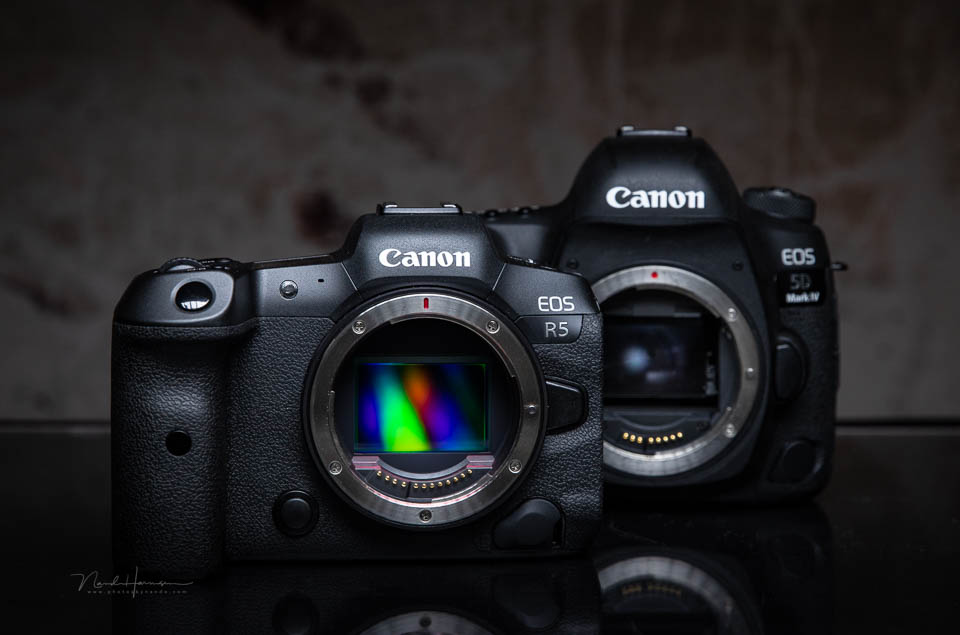
You can ask yourself whether you need to choose a mirrorless camera. Think about the advantages mirrorless offers. Are these advantages that you can benefit from? Or will you not use them?
The advantages include advanced autofocus systems. Eye AF and subject recognition, almost flawless AF tracking, and video features that make the dividing line between a stills camera and a video camera fade away.
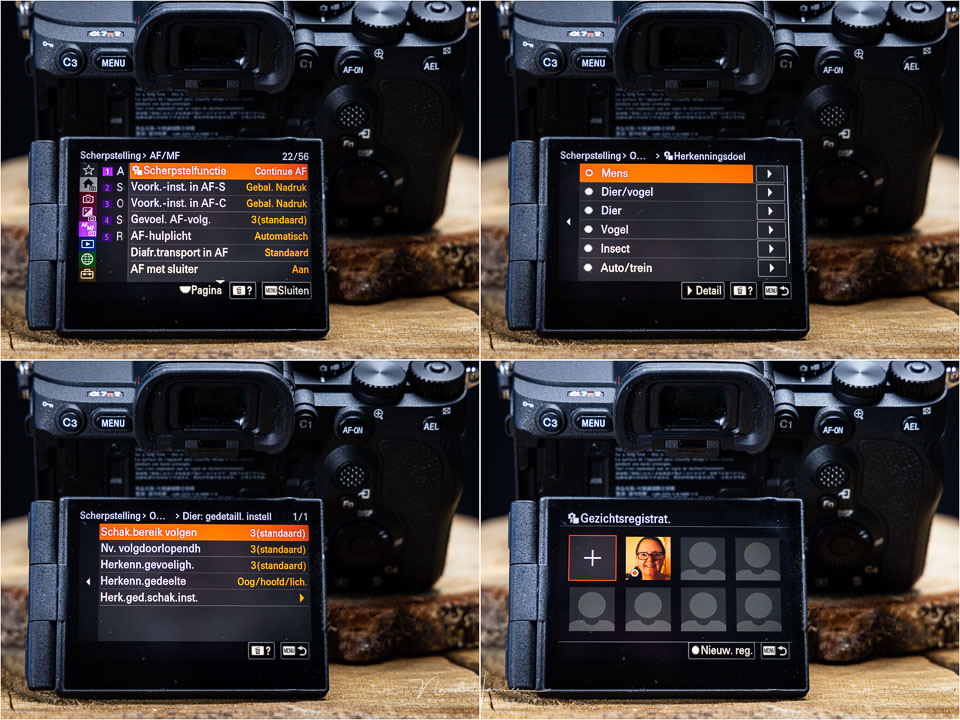
In fact, autofocus is the biggest difference between mirrorless and DSLR cameras. If you use the autofocus options of a mirrorless camera, the choice is not difficult. If you do not photograph people or animals, it offers no added value.
In the latter case, it may be worth looking at the old, familiar DSLR. You can choose a professional or semi-professional camera for an attractive price. And do not forget, those autofocus systems are fantastic too.
What is more, lenses for DSLRs are relatively cheap. The same applies here, as photographers who have switched to mirrorless often also want the lenses specially developed for mirrorless cameras.
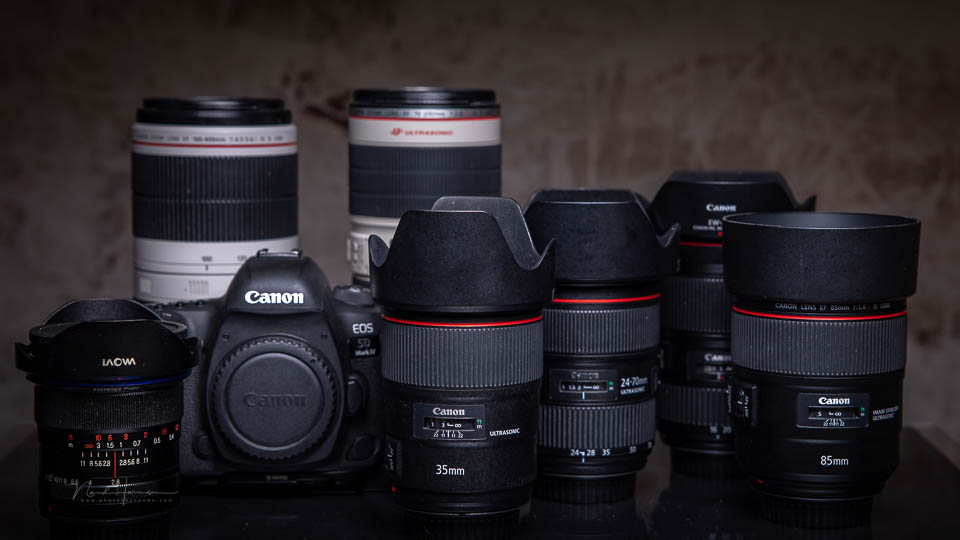
Of course, with a DSLR you miss seeing the exposure in the viewfinder. But that does not have to be a problem. It has never been a problem either. And if you do want to see the exposure on the LCD screen, you can use live view.
Are you a photographer who photographs landscapes, property, architecture or still lifes, to name just a few examples? Then a DSLR is still perfect for you. Mirrorless actually offers no major advantage for that type of photography.
If you think a mirrorless camera produces better photos, I am afraid I have to disappoint you. The technology is different, but it is still a sensor that captures the image. It is not the presence or absence of a mirror that makes the difference.
Perhaps I am overlooking something and mirrorless cameras offer more advantages than the ones I have listed here. Let me know in a comment below this post.
Personal preference still matters too, of course. Keep that in mind in your response.
About the author
Nando Harmsen has been photographing for more than 40 years. He specialises in wedding photography and landscape photography. Nando also gives talks, workshops, masterclasses and photo trips, and regularly reviews new and interesting equipment.
You might also like
-
 Choose DSLR lenses for your mirrorless camera
by Nando Harmsen
-
 Is Nikon stopping making DSLRs?
by Elja Trum
-
 DSLR lenses are still perfect
by Nando Harmsen
-
 6 Reasons to Stick with a DSLR and One Reason Not To
by Nando Harmsen
-
 The DSLR is dead, long live the mirrorless camera!
by Elja Trum
-
 Wildlife photography and switching to mirrorless
by Evert Doorn
43 comments
-

 MacBigfoot wrote on Tuesday 23 December 2025 at 00:55
| reply
MacBigfoot wrote on Tuesday 23 December 2025 at 00:55
| reply
My Olympus has pre-capture, and more and more cameras are capable of doing that, I can't remember ever seeing that function on a dSLR.
Translated from Dutch.
In addition, my Olympus also makes it very easy to apply multi-exposure: you bring the first photo up on the screen and compose the second photo over it.
In addition, the processors are becoming increasingly powerful: that offers possibilities for functions that older cameras, including older mirrorless ones, are not capable of.
So I have Live Time, newer cameras have a built-in ND filter and even a graduated filter. -
 Nando
wrote on Tuesday 23 December 2025 at 10:09
| reply
Nando
wrote on Tuesday 23 December 2025 at 10:09
| reply
That is a list of features. It is about whether you actually use them. If that is the case, mirrorless is a significant advantage. If you never use it, then it has no added value.
Translated from Dutch.
By the way, multiple exposures (multi-exposure) were already on my DSLR too, and moreover much more extensive than on the Olympus. -
MacBigfoot wrote on Friday 26 December 2025 at 12:38
| reply
I may have presented it as a list, but they are functions I actually use. Pre-capture in particular turns out to be very useful when shooting birds.
Translated from Dutch.
In addition, through my photography club I discover many more facets and subjects of photography than I would have occupied myself with on my own. And then it turns out afterwards to be very useful that the mirrorless camera has extra functions on board that you might not have considered before.
I had never considered portrait photography before, but with eye AF it becomes really fun and easy to give it a try. -
 Mac wrote on Tuesday 23 December 2025 at 08:37 | reply
I photograph with both. DSLR for action etc. and I have a mirrorless (also without a viewfinder) for most other things.
Translated from Dutch.
Why action with a DSLR? I'm one of those people who gets terribly nauseous from looking into an electronic viewfinder. (that apparently mainly occurs in people who have strong prescription glasses) -
 Rene Prevo wrote on Tuesday 23 December 2025 at 10:49 | reply
The low weight of the equipment is a major advantage, especially with MFT. The quality of the sensors is very good.
Translated from Dutch. -
Nando
wrote on Tuesday 23 December 2025 at 11:16
| reply
The weight of mirrorless is not particularly much lower. If you're talking about MFT, the low weight is due to the size of the sensor. You can make smaller cameras and smaller lenses. For full-frame, the difference between mirrorless and DSLR is negligible.
Translated from Dutch. -
 Tonny Eijnde van den wrote on Tuesday 23 December 2025 at 11:19 | reply
Weight and crop factor, the latter can be an advantage or disadvantage. Lenses and camera are smaller and lighter.
Translated from Dutch. -
 Jessie Jacobs wrote on Tuesday 23 December 2025 at 11:34 | reply
For me, a major advantage of mirrorless cameras is the weight. This becomes increasingly important as the years go by.
Translated from Dutch. -
-
RAWShooter wrote on Tuesday 23 December 2025 at 11:40 | reply
So according to you, more features isn't decisive, because it comes down to whether or not you use them.
Translated from Dutch.
OK, then I suggest you switch to a Leica from 1934. You can take just as beautiful photos with that, after all.
Get it? -
Nando
wrote on Tuesday 23 December 2025 at 11:53
| reply
Having more functions indeed makes no sense if you don't use them anyway. That's having it just to have it.
Translated from Dutch.
I switched to mirrorless specifically because of the new autofocus features. Because I benefit greatly from them in my wedding photography and wildlife photography.
If I were only a landscape photographer, that would have been pointless.
If you want to get rid of a Leica from 1934, I'll gladly take it off your hands. I'd love to take photos with it. But no wedding photography. For that, I like using the modern techniques at my disposal. -
 Tom van Weerd wrote on Tuesday 23 December 2025 at 11:56 | reply
I still have a Canon 400D, my only problem is the weight compared to my Fujifilm X-E3, otherwise it still takes really good photos. Yesterday I saw the body offered for €41...
Translated from Dutch. -
-
 Paulus van Aken wrote on Tuesday 23 December 2025 at 12:23 | reply
I'm glad you're writing it here, it doesn't have to be in the image.
Translated from Dutch.
Mirrorless offers me no advantages, all my lenses are F-mount, so I would either have to buy everything new or work with an adapter.
Moreover, mirrorless cameras are expensive, too expensive, given the fact that they contain much less, no mirrors, with all the mechanics that come with them, no prism, sometimes not even a mechanical shutter, while those mechanical things are more difficult, and therefore more expensive, to manufacture.
And I find those bodies hideously ugly.
I'm sticking with my D500. -
-
guest wrote on Tuesday 23 December 2025 at 12:38 | reply
I also find the silent mode in mirrorless cameras a great advantage. Especially during classical concerts
Translated from Dutch. -
Tom van Weerd wrote on Tuesday 23 December 2025 at 12:44 | reply
Last week I was at a camera shop in Nijmegen, where I got to hold an old Leica. Brilliant!
Translated from Dutch. -
 Pieter Bos wrote on Tuesday 23 December 2025 at 13:35 | reply
I attach great importance to location data. My Canon 5D mark4 has built-in GPS. A mirrorless device does not. Apparently it consumes too much power. But I find an external GP-E2 GPS inconvenient and a synchronization connection with with a smartphone is too much hassle for me.
Translated from Dutch. -
-
 Debby Dekeersgieter wrote on Tuesday 23 December 2025 at 13:56 | reply
Does anyone know what effect mirror or not has on filming ? Thank you ! Debby
Translated from Dutch. -
-
 Pixeldude wrote on Wednesday 24 December 2025 at 10:59 | reply
Eight years ago I predicted the end of the DSLR. By now that is a fact. However, I do not think that the choice lies in whether or not to use the possibilities. A professional or hobbyist wants to know and apply the possibilities of a mirrorless camera. If not, then you are a casual photographer. When someone who has no knowledge of photography yet asks me which camera he should choose, my question is “What do you want to do with it? Will it become a hobby or is it to capture photos of your travels, outings, births and family parties as memories? If the latter, then don’t buy a camera but a good smartphone and then you need to know little or nothing about photography.”
Translated from Dutch.
So I also predict the end of FF. By now, several very well-known nature and wildlife photographers have switched to M4/3 or another crop factor. They experience the gains in weight in their photography bag and € in their wallet every day. The difference is not in the body but in the tremendous difference in weight and price of the lenses. For them, there are no advantages to an FF anymore, only disadvantages. I am also certain that for the other forms of photography it will not take much longer before FF has to bite the dust. -
 Donald Willemsen wrote on Wednesday 24 December 2025 at 13:17 | reply
More than 2 years ago I switched from a DSLR to a mirrorless camera. The main reason is the AF system. With the DSLR I too often had photos that were not sharp enough. Now with the mirrorless camera I can use the additional AF aids such as eye detection, focus peaking, etc. That gives me more and sharper photos. My eyes are no longer the best, which is why I am grateful to be able to use the additional aids of the AF system in a mirrorless camera.
Translated from Dutch. -
 Jelle wrote on Thursday 25 December 2025 at 23:48 | reply
the AF system:
Translated from Dutch.
i still use my Nikon D500: focusing always good (and predictable), same with the exposure.
Flash photography with the CLS system also always good.
Now my XT1: great in terms of size, weight and lenses: so it comes along on trips. Only focus doesn't work (far too slow) in low light. Flash photography and EF500 is a gamble
XT5: is a lot better in terms of specs. Only the AF is a mystery to me: it focuses through built-in intelligence and that is usually unpredictable for me and i struggle to turn off the intelligence because i know exactly myself. So are those AF capabilities now an improvement ? -
Nando
wrote on Friday 26 December 2025 at 10:27
| reply
That the focus of the XT1 is slow in low light is not strange. Autofocus systems simply need a minimum amount of light to work.
Translated from Dutch.
That the autofocus of the XT5 does not work as desired means that you are using the wrong autofocus setting. You have multiple settings at your disposal, and you have to choose which one is most suitable for what you are photographing.
As Pixeldude and Donald already say, delve into the autofocus system of your camera. Learn what each AF setting does and what it is intended for. And if necessary, ask other XT5 users for advice. -
Pixeldude wrote on Friday 26 December 2025 at 09:43 | reply
@ Jelle,
Translated from Dutch.
The AF system works perfectly on my four OM cameras (the former Olympus). You do have to choose the appropriate settings for your subject. I suspect that you don't know/master your XT1 sufficiently. I can't help you further because I don't know the XT1, but owners of it can undoubtedly assist you. -
Donald Willemsen wrote on Friday 26 December 2025 at 10:05 | reply
Jelle, I have often heard that people have problems with the modern AF system. I understand that. But I also say that those people want to do too much at once with their new camera with the improved AF system supported by AI. You have to learn how to deal with that and, if necessary, attend a workshop where an expert gives a good explanation. When I switched from a DSLR to a mirrorless camera, I was also surprised by the AF system making choices I did not want. I attended a workshop that made it clear to me when I had to set what in the AF system.
Translated from Dutch.
When I understood that, the AF system no longer made surprising choices. Example: When you want to photograph a building, you should not set 'eye detection' or 'people tracking'. When you set the AF system correctly for the subject you want to photograph, the camera will not make strange choices and you decide yourself where you want to focus.
That does require the necessary practice. Get to know your camera well. -
Jelle wrote on Friday 26 December 2025 at 15:55 | reply
Agree with your response: I took a course and learned the book about the XT5 by heart. So I understand how it works
Translated from Dutch.
However, you have to dive into the menus to see how the camera is set up. Same thing to set the settings to your "preference'.
So plenty of choice and that is where the problem lies.
With the D500 I choose between single point AF or 3D continuous depending on what I want to photograph with 1 little button .
Less choice, reliable and no AI that chooses the focus point itself and does or does not follow it.
So probably if you do this every day then it works but not if you pick up that camera after a month, then you first have to practice for a few minutes. -
Nando
wrote on Saturday 27 December 2025 at 11:45
| reply
You need to learn when to use a setting. You also need to learn how to change that setting quickly and easily. Learn how to set a button to change the AF behavior 'on-the-fly'.
Translated from Dutch.
Memorizing a manual for a camera is not the way to understand something. -
Nando
wrote on Monday 29 December 2025 at 18:42
| reply
You indicate that you work a lot under dark conditions. The X-T5 may therefore not have been the best choice for you. In terms of AF, the X-T5 was already lagging behind the competition when the camera was introduced. I looked it up, the AF sensitivity goes down to -4 EV with an f/1 lens. That roughly corresponds to 0 EV at f/4 or +1 EV at f/5.6. In low light, that can be the difficulty. Combine that with not having a top-of-the-line autofocus system, and you get the problems you ran into or are running into under dark conditions.
Translated from Dutch.
Another autofocus mode might then help, such as single-point AF.
It is experience that can teach you how to use a camera optimally under the conditions in which you photograph. Does the D500 perform better? Then you just use that camera. Choose the equipment that makes your photography as easy as possible. -
Pixeldude wrote on Friday 26 December 2025 at 16:36 | reply
@Jelle
Translated from Dutch.
You can more than likely save preferred settings. At least, that's what I did. For example, you can save three AF methods that you prefer. And I have lenses that switch directly from autofocus to manual focus by moving a ring. Moreover, by a change in color on my screen I can see perfectly 'where' exactly the sharpness is. All of that is possible with modern mirrorless cameras. I have been using one for 8 years now and I often still learn about new possibilities. As a self-taught person, I find a lot on the internet. I do have a good command of English, which can be an advantage. -
Donald Willemsen wrote on Saturday 27 December 2025 at 09:08 | reply
Jelle, I understand that he doesn't like fumbling through the menu. Now, I am a Canon user and that camera has the option of putting together a custom menu. That's handy, because with it I put a number of frequently used menu options together, which are then easy and quick to access maybe your camera has something like that too.
Translated from Dutch. -
Paul van Aken wrote on Saturday 27 December 2025 at 12:33 | reply
When I read the comments on Jelle here, I get the impression (I don't follow all the new developments) that cameras are going to take over the thinking.
Translated from Dutch.
I find that extremely sad, the man/woman behind the camera should be in charge, and they should tell the camera what needs to happen.
I also have a D500, the AF is on single point 99 times out of 100, and I decide for myself where I focus. Leaving everything to AI I find a major shortcoming .
It may well be that it can be useful, but not to rely on it completely. Just do it yourself. -
Nando
wrote on Saturday 27 December 2025 at 16:04
| reply
Fortunately, they can never take over thinking. A camera doesn't know what I'm thinking, so it can't anticipate either. It can only recognize things (pretty well, these days) and can help you track things well. But it's nothing more than image recognition, and therefore it also often goes completely wrong. You will still always have to decide for yourself what the best settings are, as the difficulties Jelle encounters make clear. The thought that so-called AI can make the decisions for you only leads to disappointment.
Translated from Dutch.
But yeah, camera manufacturers like to tout those terms because it's good for sales. -
Donald Willemsen wrote on Saturday 27 December 2025 at 16:31 | reply
Nando, that last sentence is absolutely true. First megapixels were the big selling point and now it is AI as the biggest selling point.
Translated from Dutch.
Ultimately, it is about setting up the camera correctly for the kind of subject you are going to photograph. There is no point in turning on eye detection if you are going to photograph a tree, just to give an example.
Admittedly, I sometimes forget to adjust the settings when I come across a different kind of subject that is cool to photograph. If the result is no good, I cannot blame the camera for that. Then I am the one who made the mistake.
Indeed, thinking is what you have to do as a photographer. Or as a well-known proverb says: 'Look before you leap.' -
Pixeldude wrote on Sunday 28 December 2025 at 09:52 | reply
Paul, It is precisely because of the introduction of the many possibilities of a mirrorless camera that you can do much more, but you also have to learn to know and operate your camera 'properly'. Contrary to what you think, the camera does not take over the thinking. YOU, however, have to think more. Photographing with these cameras has not become any simpler because the number of choices has become so much greater. That is precisely the fun of these cameras ... you have to 'think'. People who do not enjoy that are better off with a high-end smartphone nowadays.
Translated from Dutch. -
Jelel wrote on Sunday 28 December 2025 at 10:36 | reply
The AI AF:
Translated from Dutch.
-has to be helped by specifying the type of subject (logical) and indicating on screen where that subject is (with multiple identical subjects)
-works with image recognition and CDAF (contrast detection: fine if there is sufficient light and the subject is recognisable .
-requires processing time --> some delay )to be compensated for by anticipating where the subject is at the moment of taking the photo.
There are cameras where this is implemented perfectly.
With the Fuji XT5 this is not the case: in about 50% of cases it does work (glass half full)
With DSLR cameras, the AF is a combination of contrast detection and phase detection (works quickly and also in low light)
I take many of my photos of people in an environment with little light. A matter of aiming quickly and pressing the shutter at the right moment to capture the facial expression/action at the right moment.'
That is the reason I am a fan of the D500 for those applications because the XT5 (also a sublime camera) lets me down in those cases (too slow and then I miss the moment, suddenly chooses the wrong person, does not follow movement and therefore focuses at the wrong point.
That is my experience and that was the question on this forum
PS am very curious how all this will go on my new purchase Fuji XT30 iii (according to the brochure, that one is even much smarter in A mode) -
Paul van Aken wrote on Sunday 28 December 2025 at 10:42 | reply
You are misinterpreting me.
Translated from Dutch.
The cameras take over things from you that you yourself should be able to do and should do.
Determining the focus point, choosing the exposure, that sort of thing. With a simple slr from 40 years ago I can take just as good a photo as with a Z9, it will only take a bit more time, because I have to turn more knobs
I have to be in control, not be controlled, if the man/woman behind the camera has to let the camera do that, he/she is not a photographer. -
 Peter Heins wrote on Sunday 28 December 2025 at 11:32 | reply
The weight can also differ depending on the brand. I compared it with a Nikon photographer. He had a Nikon Z8 with 3 lenses from 14 mm to 400mm in the bag , which weighed 11.5kg
Translated from Dutch.
I had a Canon R6 Mark II with the same range ( 2 f4 L lenses and 1 EF 100-400mm IS II ) in the bag and my bag weighed 5.5 kg. That does make a difference. I eventually chose mirrorless because of the weight , although I do sometimes look back wistfully at my 5D Mark IV , nothing wrong with it and technically it can still last for years. And indeed the EF lenses up to 105mm are relatively cheap , but my EF 100-400mm IS II still cost €1500 on the second-hand market. ( it does look like new though) -
Nando
wrote on Monday 29 December 2025 at 18:16
| reply
Now I’m very curious which three lenses weigh 11.5 kg together with the Z8.
Translated from Dutch.
A Z8 weighs 920 grams, and a Z 400mm f/2.8 weighs 2950 grams. Together, that’s not even 4 kilograms.
That would mean the two remaining lenses would have to weigh 7.5 kg. I wonder which ones those would be.
Or did he have a 3.5 kg bag and you one weighing three-quarters of a kilogram? -
Donald Willemsen wrote on Sunday 28 December 2025 at 12:42 | reply
@Paul van Aken, the cameras take NOTHING over from you. The cameras do exactly what you have set them to do. The camera determines nothing by itself. You choose a certain setting and the camera carries it out. If you set the camera to track people, then the camera will recognize a person and focus on them, because you have set the camera to track people. If there are multiple people in the frame, then the camera chooses the person it encounters first and that is usually the person closest to the camera. If you want to focus on another person in the frame, then that is no problem at all.
Translated from Dutch.
You as a photographer ALWAYS determine what the camera should do. -
weerd wrote on Sunday 28 December 2025 at 12:51
| reply
What an interesting discussion, I looked at some negatives I made with a Minolta, a long time ago. It was equipped with a Fresnel lens (Augustin Jean Fresnel (Broglie, May 10, 1788 - Ville-d'Avray, July 14, 1827, yes, nineteenth century). It took a while before it was focused, but the photos were no less for it. Bear with me, I am not against progress (I have ordered a Fujifilm X-T30iii), but in the end it is about the photographer who sits taking the picture or the moment.
Translated from Dutch. -
Paul van Aken wrote on Sunday 28 December 2025 at 14:20 | reply
Exactly what I mean.
Translated from Dutch.
I choose who should be in focus, I decide where I meter, I determine the depth of field.
And yes, my D500 has the necessary tricks too, which I make use of from time to time. But chosen by me.

Have your say
Please note: Articles older than a week can only be commented on by signed-in visitors.Would you still like to comment? sign in or create a free account.
Become a better photographer every week
A practical photography tip in your inbox every week.
39,079 photography enthusiasts already receive the tips! More about the weekly mail. Or keep up to date via  Facebook.

Elja Trum
Photofacts; everything to do with photography!
Would you like to take better photos and keep up with what is happening in photography? Photofacts publishes articles that teach you something about photography — from a product announcement to a practical shooting tip or a look at a website. Photofacts covers photography every day and is a hobby project of Elja Trum's that got out of hand. The articles are written by a team of volunteer authors. If you would enjoy writing one or more articles for Photofacts, do get in touch.More about PhotofactsPhotofacts is made possible in part by
