

Choose DSLR lenses for your mirrorless camera
Sunday 10 November 2024, 13:13 by Nando Harmsen | 3,466 views | 10 commentsThis article was translated from Dutch with the help of AI. Read the original.
The entire photography world has been taken over by the mirrorless camera system. That is not surprising, as this technology offers some useful advantages. Consider using your old DSLR lenses, as they can work perfectly.
Mirrorless cameras no longer have a mirror, hence the name, which means that the cameras can be made 'thinner'. However, this has consequences for the lenses. A lens made for a DSLR cannot simply be used, as it sits too close to the sensor.
For that reason, lenses have been specially made for mirrorless cameras. If you switch from a DSLR to a mirrorless camera, it can become an expensive exercise if you also have to buy new lenses.
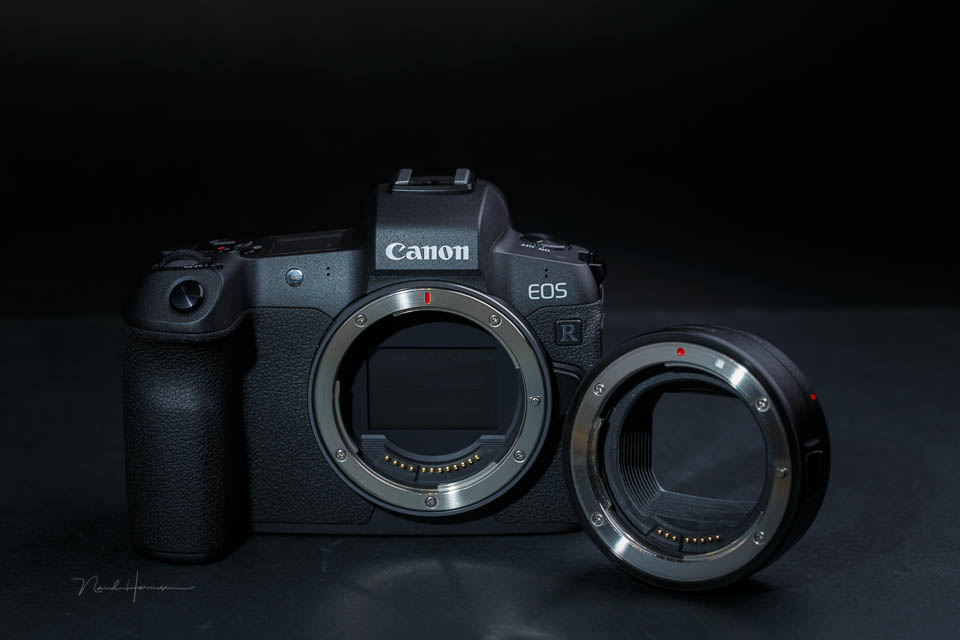
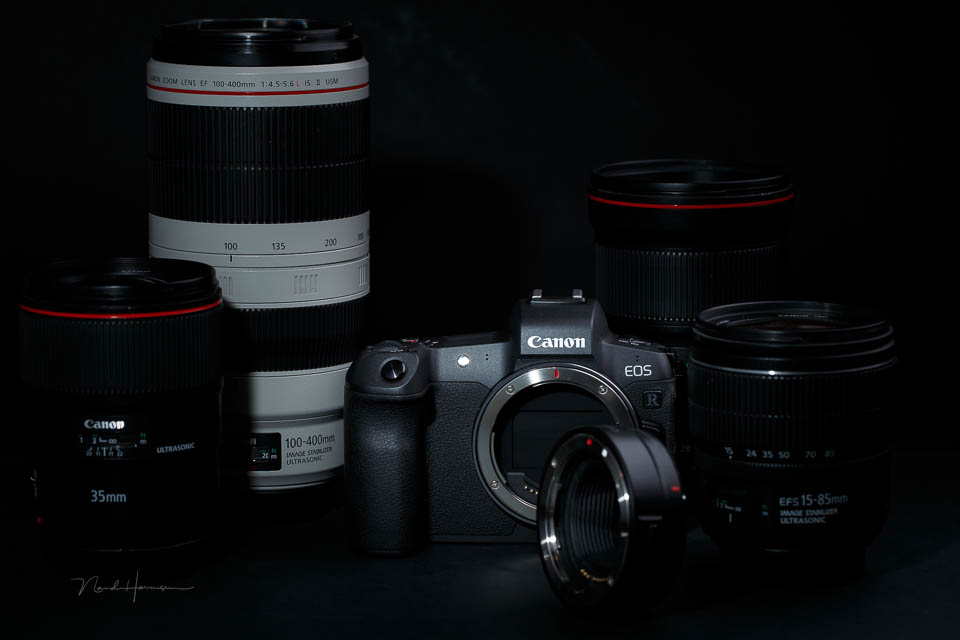
Fortunately, there is a simple solution: an adapter ring. This spacer, specially developed for this purpose, ensures that a lens made for a DSLR sits at the perfect distance from the sensor. This means you can continue using your 'old' lenses with your new mirrorless camera.
The big advantages
With an adapter ring, there is no need to replace all your lenses when switching to a mirrorless camera system. You do not lose any light and the quality does not suffer. But there are more advantages.
Autofocus also works without problems with DSLR lenses, especially when you use lenses from your camera brand. This is almost always seamless, and the speed and accuracy of the autofocus are maintained.
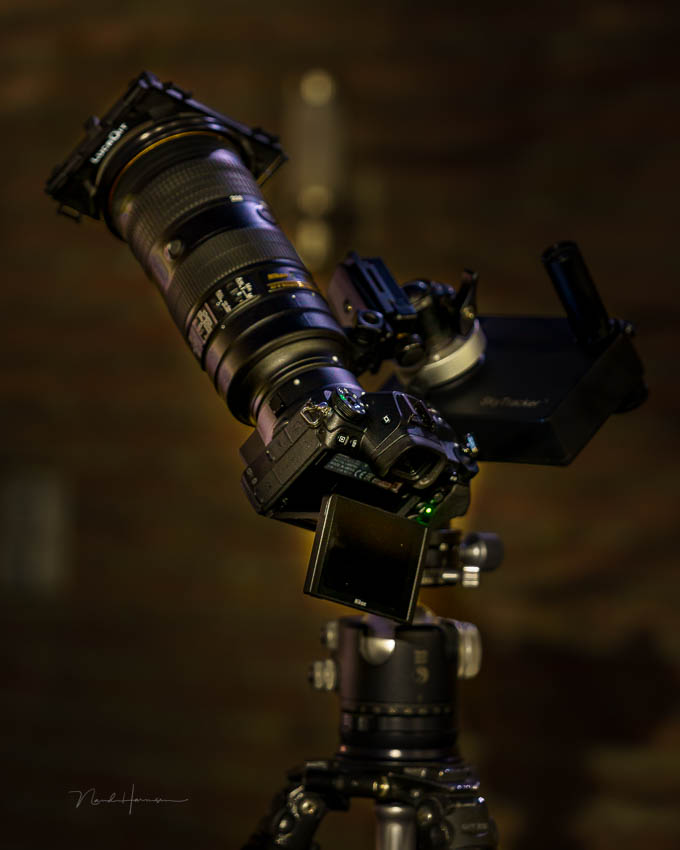
Are you looking for a new lens, or a newer version of a lens you already have? Choosing a DSLR lens for your mirrorless camera system can save you a lot of money. They are often cheaper.
Because everyone eventually switches, or has already switched, a large second-hand market for DSLR lenses has emerged. Many photographers want lenses for the mirrorless camera system and then sell their old lenses. They are often almost in mint condition.
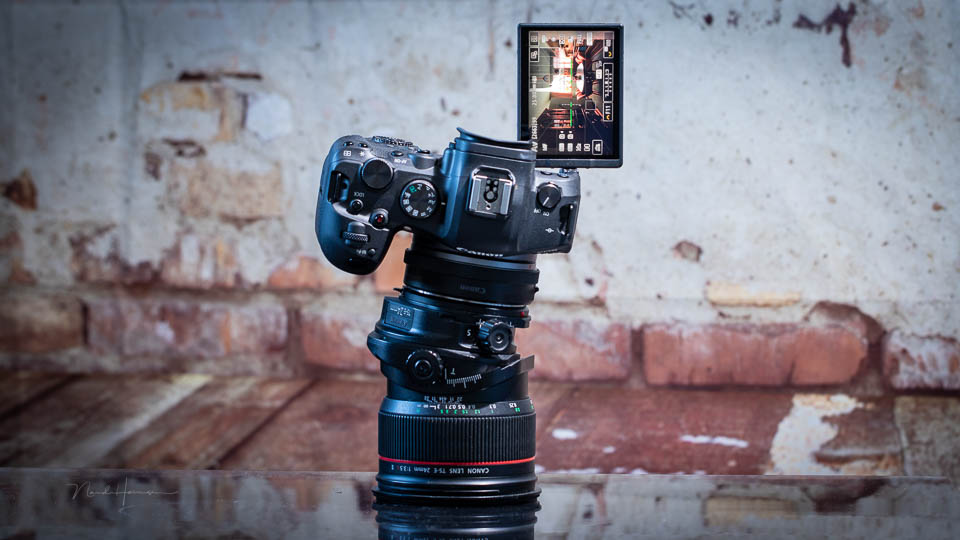
This makes it possible to get a top-class lens at a reasonable price. Your photos will not suffer, nor will the speed and accuracy of the autofocus. You just need to invest in a good adapter ring.
A few minor disadvantages
Of course, there are disadvantages too. These are the result of needing an adapter ring. It makes the lens a little longer. But perhaps it is better to say that your camera becomes just as 'thick' as your old DSLR.
You do not need to remove an adapter ring if you mainly or exclusively use DSLR lenses. If you switch between these and lenses for the mirrorless camera system, it can sometimes be a little awkward.
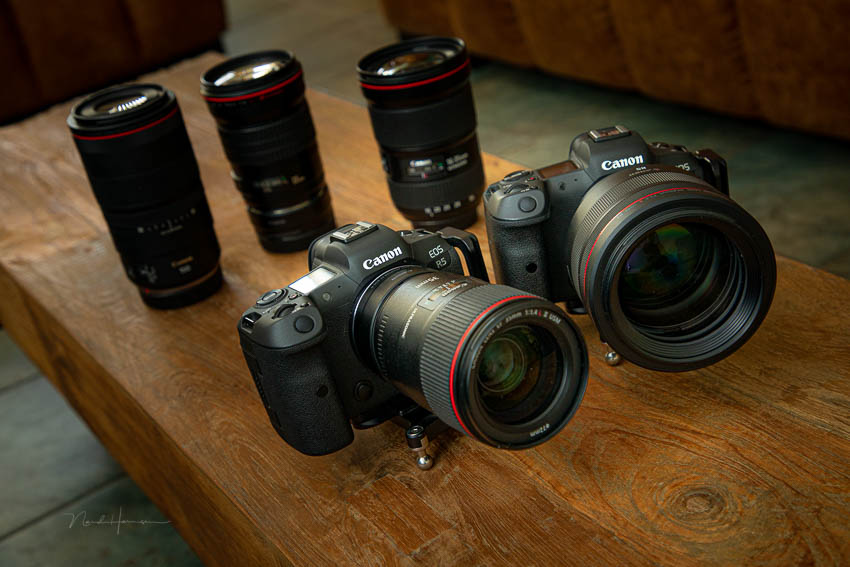
Third-party lenses can sometimes cause problems. Think of lenses from Sigma and Tamron, which may not work optimally with an adapter ring. If you use lenses from these brands, check whether you can expect any problems.
Usually, third-party lenses are not a problem, but forewarned is forearmed. Lenses from the camera brand itself will never cause problems.
Less image quality and speed?
Because you are using an older lens, its speed and image quality may not match those of the latest lenses for the mirrorless camera system. In almost all cases, this is not noticeable.
Bear in mind that the latest lenses are built using the most recent developments in autofocus and optics. It makes sense that they are marginally faster and sharper. In practice, you really have to use and compare both lenses side by side to notice it.
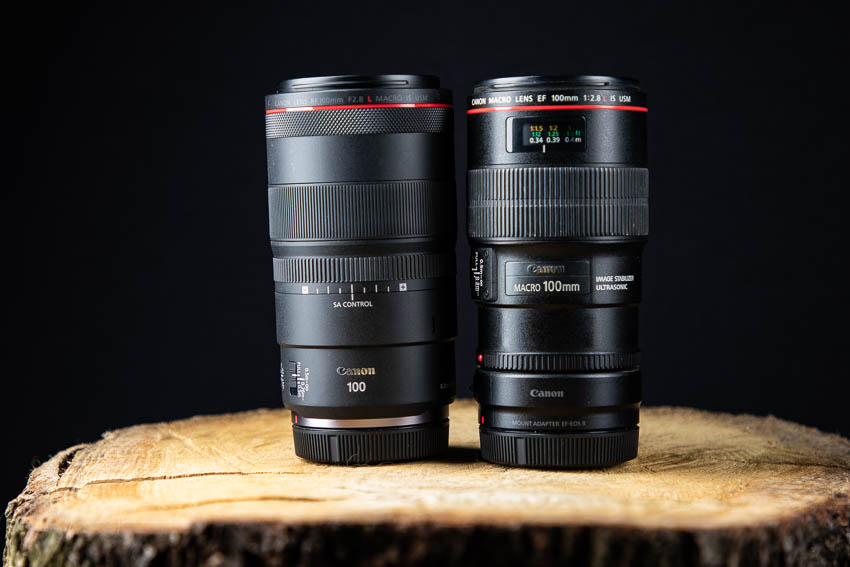
If the best speed and image quality are very important to you, you will need to invest in the latest lenses. You probably did that already when mirrorless camera systems were not yet on the market.
Choose an original adapter ring
The adapter ring needed to mount DSLR lenses on a mirrorless camera is nothing more than an empty tube. It contains no glass. This may give the impression that you do not need the expensive original adapter ring from the camera brand.
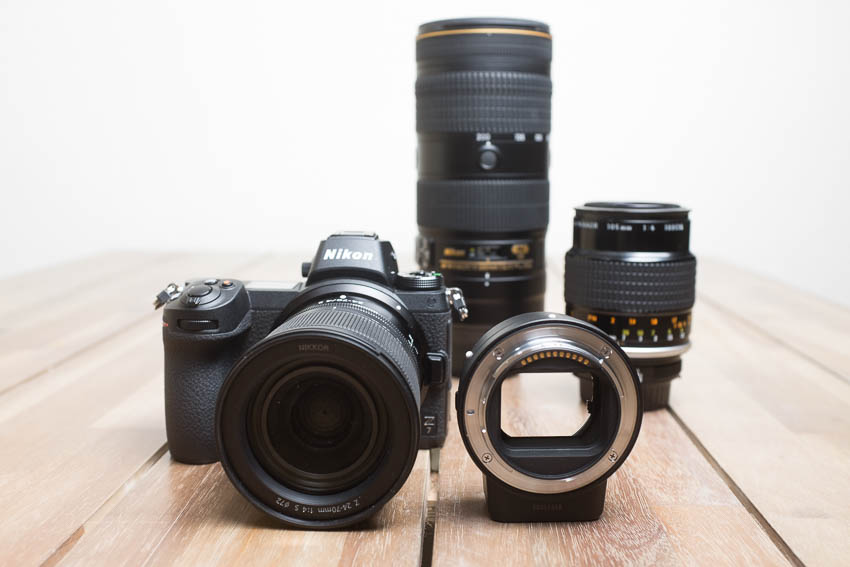
My advice is: do so. Choose the original adapter ring from your camera brand. Then you can be sure that all lens information is passed on correctly, the autofocus continues to work perfectly, and there is no play in the connection.
You may spend more money on an adapter ring than on a third-party adapter. But it still saves you a great deal of money because you do not have to switch to different lenses.
Do you use your old lenses on your new mirrorless camera? Tell us about your experiences in a comment below this post.
About the author
Nando Harmsen has been photographing for more than 40 years. He specialises in wedding photography and landscape photography. Nando also gives talks, workshops, masterclasses and photo trips, and regularly reviews new and interesting equipment.
You might also like
-
 The battle between DSLRs and mirrorless cameras
by Michelle Peeters
-
 Is a DSLR still a good choice in 2026?
by Nando Harmsen
-
 6 Reasons to Stick with a DSLR and One Reason Not To
by Nando Harmsen
-
 Is Nikon stopping making DSLRs?
by Elja Trum
-
 The DSLR is dead, long live the mirrorless camera!
by Elja Trum
-
 Wildlife photography and switching to mirrorless
by Evert Doorn
10 comments
-
 Kees Verwaard wrote on Tuesday 12 November 2024 at 10:40 | reply
Thanks Nando, This is a very useful article for when I switch to a mirrorless camera. My Canon Eos 6D Mark2 is still quite new. The idea of having to buy new lenses would certainly be an extra obstacle to switching.
Translated from Dutch.
Kind regards,
Kees -

-

 Liesbeth Verkade wrote on Tuesday 12 November 2024 at 13:46
| reply
Liesbeth Verkade wrote on Tuesday 12 November 2024 at 13:46
| reply
A very clear and above all useful article! Thanks.
Translated from Dutch. -
 Jef Langenaeken wrote on Tuesday 12 November 2024 at 14:42 | reply
I was also able to use the Sony lenses from my DSLR for quite some time on my new Sony A1 mirrorless camera, and in the meantime I have gradually switched to Sony's new lenses.
Translated from Dutch. -
 Pau wrote on Tuesday 12 November 2024 at 17:20 | reply
This:
Translated from Dutch.
"The autofocus also works with SLR lenses without any problems, especially when you use lenses from your camera brand"
Is a bit of an oversimplification. If the lens doesn't have its own motor(s), it isn't a given that autofocus will work with an adapter ring. -
Nando
wrote on Tuesday 12 November 2024 at 22:36
| reply
Isn't this a Nikon thing? They do have lenses without their own motor, so a motor in the camera has to be used, right?
Translated from Dutch.
This is then not specific to mirrorless, but it also applies to Nikon's DSLR, which doesn't have an AF motor built into the body.
But nevertheless, lenses without a motor, just like with the DSLR, also don't have AF with mirrorless. -
Paul wrote on Wednesday 13 November 2024 at 12:25 | reply
Of course, it was already a compatibility issue with Nikon DSLRs as well. But I thought it was worth pointing out that this hasn't been resolved in the adapters, something that could have been done in itself
Translated from Dutch. -
-
 Paul Laarman wrote on Wednesday 13 November 2024 at 14:18 | reply
Dear Nando, my old analogue Olympus OM1 has a beautiful 1.4 50 mm lens. If I put it on my OMD EM 10 mk IV via an Olympus adapter, the autofocus no longer works, only the light metering. This corresponds to what is stated in the manual of my camera in the chapter "lens and camera combinations". So apparently your story does not apply to all brands. Too bad for me.
Translated from Dutch. -
Nando
wrote on Wednesday 13 November 2024 at 14:34
| reply
Dear Paul,
Translated from Dutch.
You’re talking about an old 50mm from the analogue era, if I understand correctly. Does it have autofocus? Or is it a manual lens?
In my article I’m talking about the more recent autofocus lenses from digital SLR cameras that are used on mirrorless cameras. Not about using old lenses from analogue cameras.
Have your say
Please note: Articles older than a week can only be commented on by signed-in visitors.Would you still like to comment? sign in or create a free account.
Become a better photographer every week
A practical photography tip in your inbox every week.
39,013 photography enthusiasts already receive the tips! More about the weekly mail. Or keep up to date via  Facebook.

Elja Trum
Photofacts; everything to do with photography!
Would you like to take better photos and keep up with what is happening in photography? Photofacts publishes articles that teach you something about photography — from a product announcement to a practical shooting tip or a look at a website. Photofacts covers photography every day and is a hobby project of Elja Trum's that got out of hand. The articles are written by a team of volunteer authors. If you would enjoy writing one or more articles for Photofacts, do get in touch.More about PhotofactsPhotofacts is made possible in part by
