

DSLR lenses are still perfect
Thursday 21 May 2026, 20:20 by Nando Harmsen | 1,747 views | 15 commentsThis article was translated from Dutch with the help of AI. Read the original.
Switching from a DSLR to mirrorless also means getting a different lens mount. Instead of buying new lenses with that mount, you can still use your old ones. Most of the time, that is not a bad idea at all.
Switching from a DSLR to mirrorless does not mean you will take better photos. It means you get a camera that is put together differently. This gives you access to features that were previously impossible.
One important difference is the distance between the lens mount and the sensor. This flange distance, as it is called, is shorter. As a result, lenses have to be built differently. Or you use an adapter to compensate for the shorter distance.
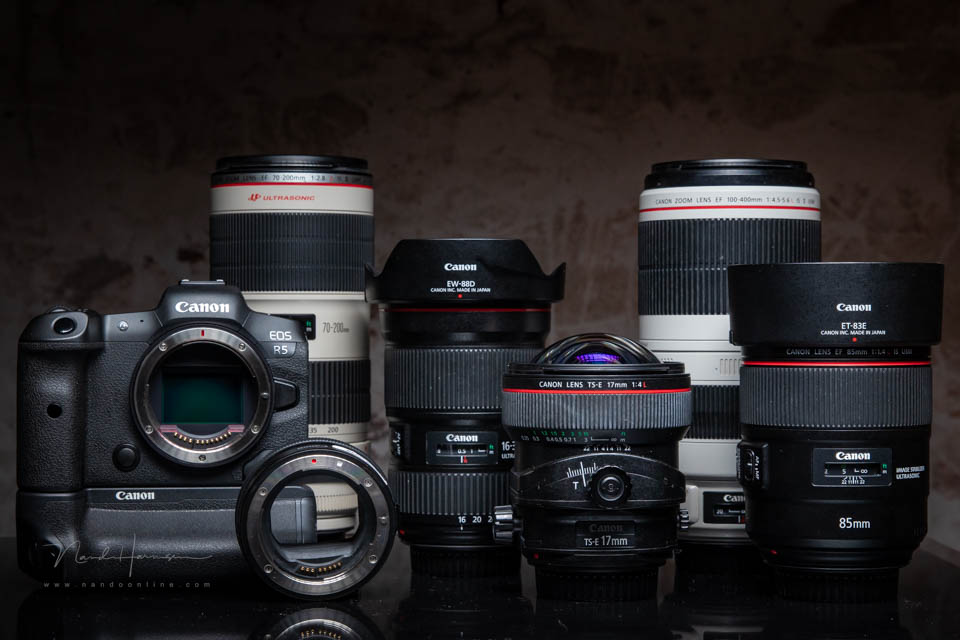
Using an adapter ring makes the 'old' lenses perfectly usable. And that is ideal, because replacing an entire range of lenses costs a fortune. Even if you sell the old lenses.
There are many photographers who replace their lenses with new ones. Sometimes all at once, sometimes step by step. This means that those 'old' lenses are offered second-hand everywhere at favourable prices.
Do you use a mirrorless camera? Then you have the chance to buy lenses that were previously unaffordable for a reasonable price. You do have to accept that you need an adapter.
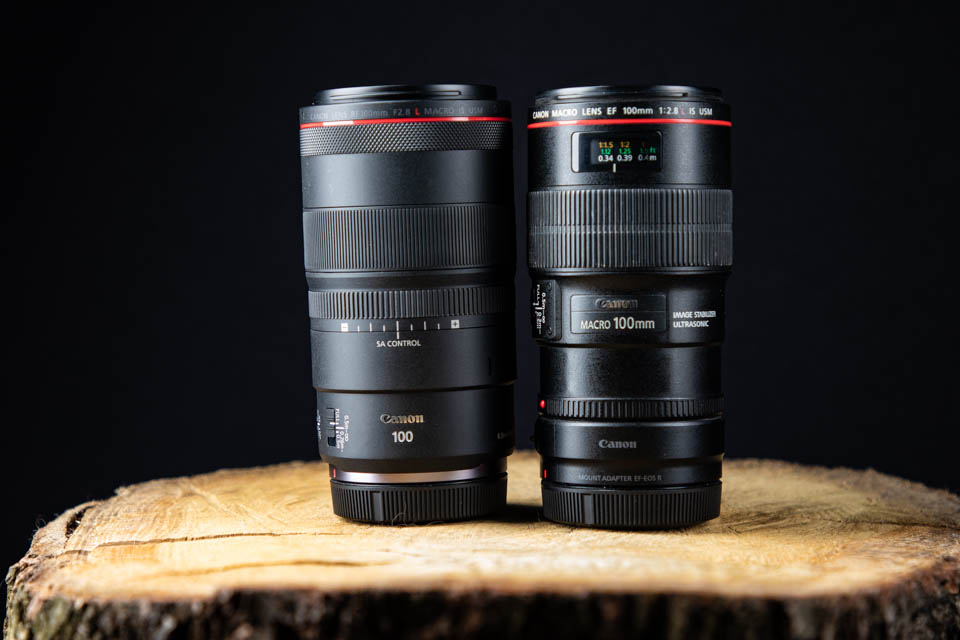
That adapter has little or no effect on using the lens. As long as you use the original brand adapters. This means you can use Nikon DX and FX lenses on a Nikon Z. Or Canon EF and EFs lenses on a Canon EOS R.
You still have the benefits of your mirrorless camera: fast autofocus, image recognition and in-body stabilisation if your camera has it. In almost all cases, everything works together seamlessly.
The 'old' professional lenses also have almost perfect image quality. You will not lose quality by using them. In fact, with modern mirrorless cameras, those lenses can even be more useful than they were in the past.
The new lenses for mirrorless cameras may be somewhat more compact and lighter, but they offer barely any improvement in image quality. You have to pixel-peep to see the difference. The gain in speed is often marginal too.
There is certainly a difference, and the latest lenses have definitely improved compared with the old ones. In practice, you will almost never see that difference. Ask yourself, is it worth the extra cost? Because, honestly, lenses are terribly expensive.
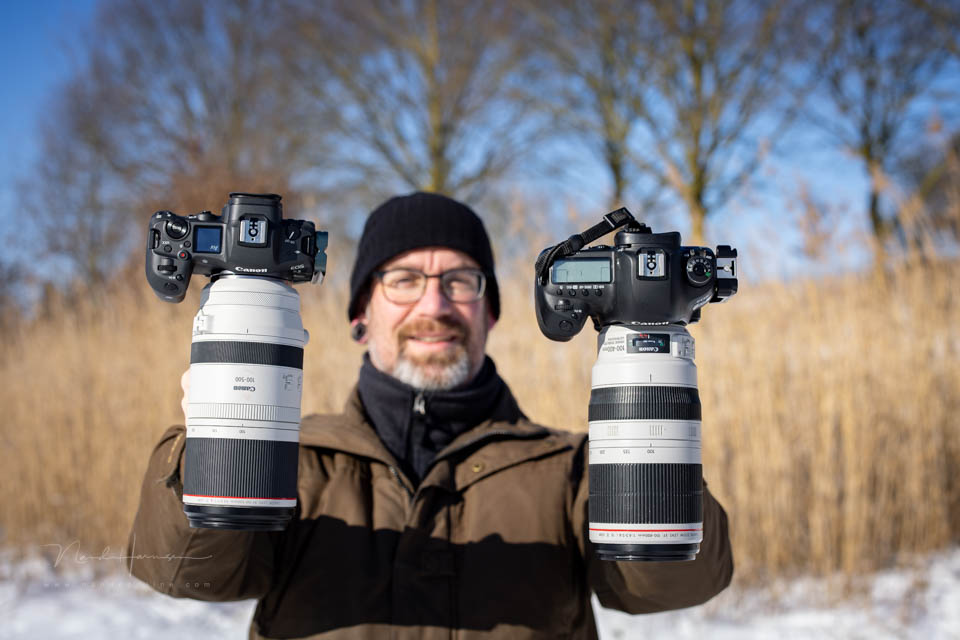
I will give you an example. A new Canon RF 100-500mm f/4,5-7,1L IS USM lens costs 3,349 euros. You could also choose a second-hand Canon EF 100-400mm f/4,5-5,6L II IS USM. That costs between 1,400 and 1,900 euros.
Or you could get a Nikon Z 70-200mm f/2,8 VR S. These cost 2,849 euros new. With a bit of searching, you can find a Nikon AF-S 70-200mm f/2.8E FL ED VR for between 1,000 and 1,600 euros.
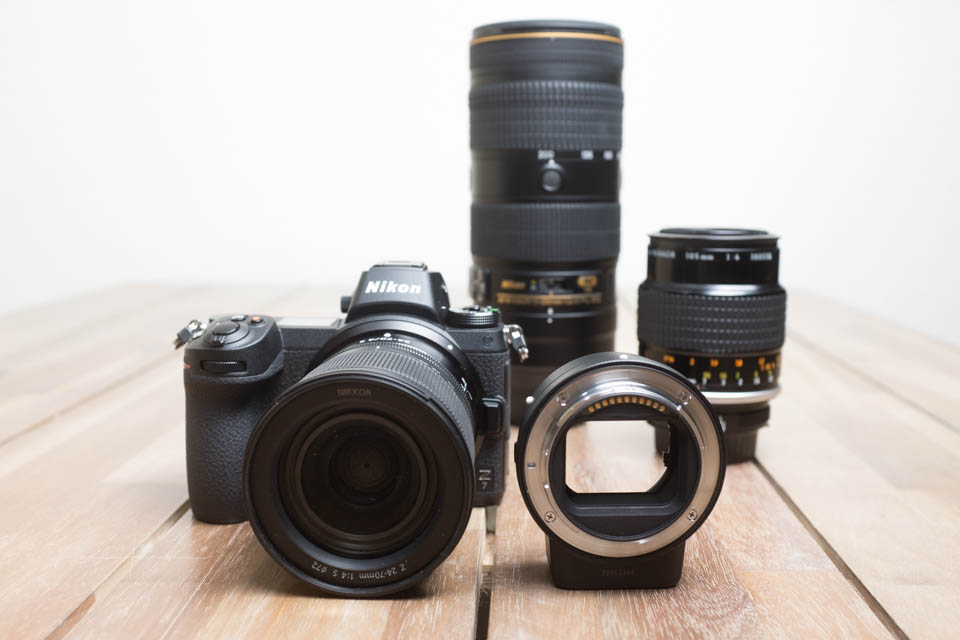
The price difference between a mirrorless lens and a second-hand DSLR lens is enormous. Although it is still a lot of money, this saving puts many professional lenses within reach.
Have you wanted a particular lens for a long time? Then consider buying one this way. It saves a lot of money. Your photos certainly will not be any worse for it.
About the author
Nando Harmsen has been photographing for more than 40 years. He specialises in wedding photography and landscape photography. Nando also gives talks, workshops, masterclasses and photo trips, and regularly reviews new and interesting equipment.
You might also like
-
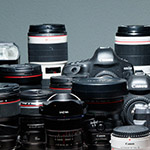 Choose DSLR lenses for your mirrorless camera
by Nando Harmsen
-
 Is a DSLR still a good choice in 2026?
by Nando Harmsen
-
 Is Nikon stopping making DSLRs?
by Elja Trum
-
 6 Reasons to Stick with a DSLR and One Reason Not To
by Nando Harmsen
-
 Wildlife photography and switching to mirrorless
by Evert Doorn
-
 The DSLR is dead, long live the mirrorless camera!
by Elja Trum
15 comments
-
 Rien Linthout wrote on Tuesday 26 May 2026 at 14:57 | reply
Due to the smaller flange distance with mirrorless, new-mount lenses (your term) are designed differently optically, and a shorter construction is possible as a result. The optical advantages are mainly with wide-angle lenses and less so with telephoto lenses (I am leaving aside the use of even more modern glass, even better aspherical lens elements, etc.). In practice, an "old" mount with a brand-specific adapter (which is a hollow tube) will not produce better images in practice for telephoto lenses (assuming the AF speed remains sufficient).
Translated from Dutch. -

 Nando
wrote on Tuesday 26 May 2026 at 15:55
| reply
Nando
wrote on Tuesday 26 May 2026 at 15:55
| reply
I’m not talking about better images with ‘old’ lenses either. What I’m saying is that the quality of the ‘old’ lenses is still more than sufficient and the AF speed does not decrease.
Translated from Dutch.
That applies to both wide-angle and telephoto.
The difference compared to the ‘new’ lenses in terms of quality and AF speed is only marginally better. The optical advantages you’re talking about are in almost all cases related to the construction. -
 Donald Willemsen wrote on Tuesday 26 May 2026 at 16:53 | reply
The Canon R cameras have 12 contact points in the mount. The RF lenses do too. The EF lenses have 8 contact points. Among other things, the adapter reduces the 12 contact points back to 8 contact points. The advantage of 12 contact points is that communication between the camera and RF lens can take place faster. With the faster AF system, that gives you a gain that you call marginal. You are right about Canon's EF lenses. But if you use EF lenses from Sigma. Tamron or other brands, you do notice the difference.
Translated from Dutch.
You know that many people buy a lens from another brand because of the price tag of Canon's L lenses. I have already read several posts from people who, for example, have an R7 and run into problems with their Sigma or Tamron EF lenses. -
rienlinthout wrote on Tuesday 26 May 2026 at 20:18 | reply
I think you can construct optically better lenses in the wide-angle range with a shorter flange distance. The laws of optics can then be followed better (less extreme retrofocus constructions) That is the benefit. Theoretically, you can then also construct even wider-angle lenses than before. In telephoto, I see no advantage in mirrorless lenses apart from their shorter construction.
Translated from Dutch. -
-
 Paulussie wrote on Thursday 28 May 2026 at 21:58
| reply
Paulussie wrote on Thursday 28 May 2026 at 21:58
| reply
Basically....
Translated from Dutch.
If you think that a wide-angle lens gets closer to the image plane, yes. But the angle at which the light then hits the sensor becomes so large that much more vignetting occurs, so no, it will not really make much difference. And telephoto lenses can at most make the difference between mirror and mirrorless shorter, so not really a big gain.
I do see a possible advantage with semi-wide-angle to short telephoto, where a larger maximum aperture could be achieved, but whether that is really useful?
The whole idea of mirrorless is only profitable for the manufacturers: selling lots of new stuff that is less labor-intensive=cheaper: no mirrors, no prisms''s no extra sensors for AF, so lower production costs, while the prices do go up. -
 Kees Verwaard wrote on Tuesday 26 May 2026 at 21:09 | reply
I have a Canon R6 Mark II to replace a Canon 6D Mark II. The biggest disadvantage with the DSLR is that all the focus points are around the center. Very difficult for portrait photography. Especially if, like me, you always look through the viewfinder. I also photograph a lot in poor lighting conditions. I can now use much higher ISO. All my lenses are for DSLR cameras. I can continue to use all of them, including my 70-200 f2.8 from Tamron. Even my old APS-C lenses work fine. I probably don't get all the possibilities out of my R 6. But for me it is a major improvement for my type of photography
Translated from Dutch. -
-
 Fred Schuurhuis wrote on Tuesday 26 May 2026 at 23:22 | reply
8 years ago traded my Canon 6D for a 5D Mark IV and then had to send my Tamron 70-200 2.8 in because the live view no longer worked on the new camera. Recently I switched to a Canon R6 Mark III (mainly because it all became too heavy) and traded in the 2 old Tamron lenses. I did buy an adapter so I could keep my Canon EF 100mm 2.8 L macro. That works fine, but not with everything. For example, I have already found out that the automatic focus bracketing in the R6 does not work with the EF lens, at least.
Translated from Dutch. -
Nando
wrote on Wednesday 27 May 2026 at 09:46
| reply
I am surprised by your claim that focus bracketing wouldn't work. So I tried it out straight away with the R6mk2 and the EF100mm f/2.8L.
Translated from Dutch.
The focus bracketing works perfectly.
I assume that the R6mk2 and mk3 won't be that different in that respect.
I recommend checking the settings after all. Lens on AF, starting at the minimum focusing distance, and things like that. -
Fred Schuurhuis wrote on Thursday 28 May 2026 at 19:32
| reply
Nando, thanks for your wise advice. I tried to reconstruct my failed attempt and fear that I took the photos at or beyond the edge of the set focusing range of 0.3m-0.5m. Focus bracketing indeed works perfectly, as long as you do it right yourself. You can remove my first comment, as far as I’m concerned. It is of no use to anyone and only causes confusion.
Translated from Dutch. -
-
Donald Willemsen wrote on Wednesday 27 May 2026 at 09:46 | reply
@Fred Schuurhuis: I use an R7 and the automatic focus bracketing works fine with an EF lens.
Translated from Dutch. -
paulus wrote on Wednesday 27 May 2026 at 09:50 | reply
Clear explanation about optics. There is one thing I disagree with, you write that the special mirrorless lenses can be more compact and smaller. I really don't see that, just compare a 1.8 50 mm Nikkor F mount with a 1.8 50 mm Z mount, and the diameter of all shorter focal lengths is larger, except for the extreme wide angles.
Translated from Dutch. -
Have your say
Please note: Articles older than a week can only be commented on by signed-in visitors.Would you still like to comment? sign in or create a free account.
Become a better photographer every week
A practical photography tip in your inbox every week.
39,079 photography enthusiasts already receive the tips! More about the weekly mail. Or keep up to date via  Facebook.

Elja Trum
Photofacts; everything to do with photography!
Would you like to take better photos and keep up with what is happening in photography? Photofacts publishes articles that teach you something about photography — from a product announcement to a practical shooting tip or a look at a website. Photofacts covers photography every day and is a hobby project of Elja Trum's that got out of hand. The articles are written by a team of volunteer authors. If you would enjoy writing one or more articles for Photofacts, do get in touch.More about PhotofactsPhotofacts is made possible in part by
