

Manual photography? Back to A(f)?
Monday 30 December 2019, 21:21 by Antonette de Groot | 8,410 views | 11 commentsThis article was translated from Dutch with the help of AI. Read the original.
'Learn to photograph in M mode'. Many photography courses use this to attract people. 'A real photographer only shoots in M' is something you have heard in photography circles for years. But is that really true? This article offers an alternative view.
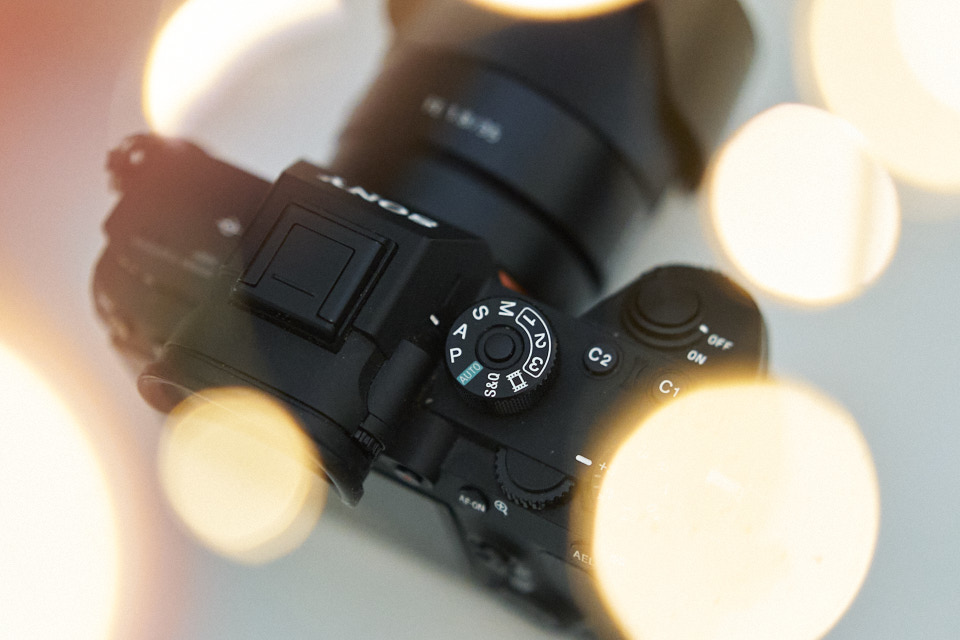
First of all: it is certainly true that as a serious photographer or enthusiast, you need to know how to photograph in M mode. There are always situations where you want to keep everything under your own control, for example when you are working with studio flashes.
But in almost all other situations, when you work in M mode, you set the aperture, shutter speed and ISO based on the exposure information provided by the camera. You adjust your settings accordingly.
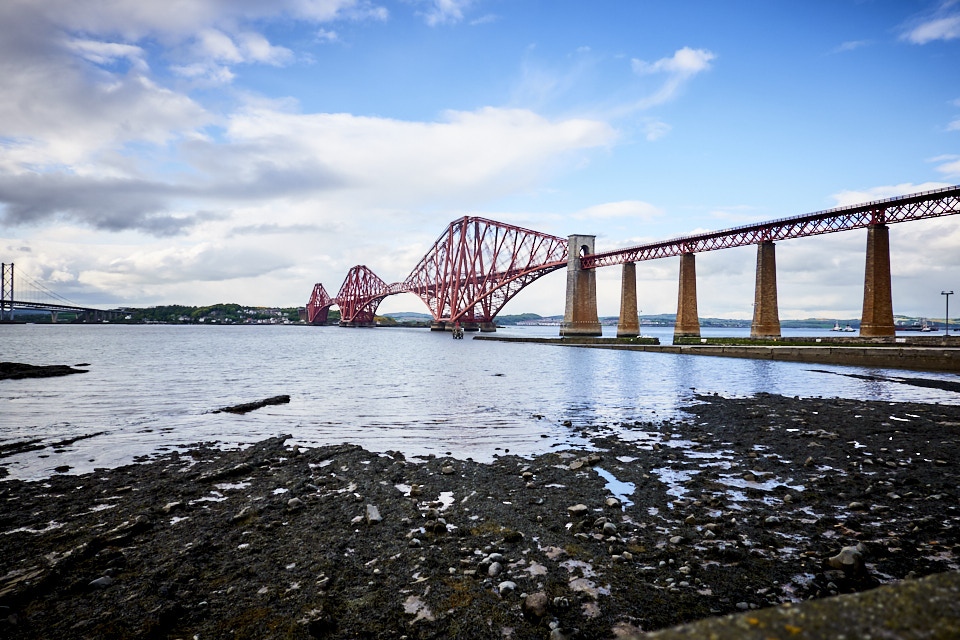
So how do you choose those settings when working in M mode, based on what the camera has metered? For me, it works like this: I have a number of ranges in my head that suit the situation.
For example: in a particular situation, I want my aperture to be around f4. My shutter speed can be no slower than 1/500, but faster is not a problem, and I would like to keep my ISO below 4000. What if I could set the same ranges in my camera as the ones I have in my head? Would I still need to set everything manually for every situation?
If you have a camera with an electronic viewfinder, you already have a big advantage. You can see what your final shot will look like in terms of exposure. And if you do not like that, you can adjust it before taking the photo.
How do I use what I have described above in everyday practice?
My camera is set to aperture priority mode: A. With other brands, this is also called Av. I have set my ISO to Auto, with an upper limit that suits the situation.
I often choose 4000. If it is a dark situation where getting the photo is more important than any noise, this goes higher. So: family shoot outdoors, ISO 4000 maximum. Event in poor lighting conditions, where the moment must be captured at all times? Then my ISO goes to 10,000 and higher.
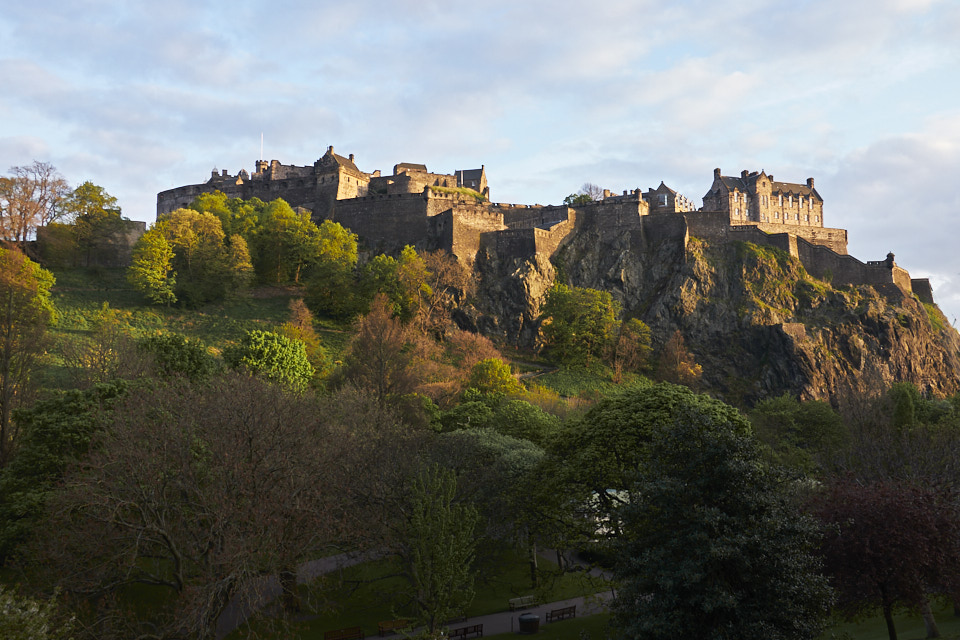
On my Sony camera, I can set a minimum shutter speed when using Auto ISO in A mode. I vary this minimum shutter speed depending on the situation. If I set it to the standard setting, the camera takes the focal length I am using into account. So with a 200 mm lens, the shutter speed will not drop below 1/200.
You can also set a fixed value, such as 1/1000 when photographing fast-moving subjects.
This is particularly useful in situations such as an outdoor photo shoot, where you want to focus more on the people you are photographing than on your settings.
Even though keeping an eye on my settings with one eye and adjusting them is second nature, not having to do so gives me a great sense of freedom, at least for me.
I usually combine these settings with continuous Autofocus and Eye Autofocus.
For a shoot like this, one possible setting, depending on the focal length of my lens and the number of people who need to be in the photo, is: aperture f4, Auto ISO between 100 and 4000, and minimum shutter speed 1/250.
If I want to adjust my exposure slightly and quickly, I use the +/- button on the camera. And even if you set your camera to A, M mode is still there, so if things really do not work, you can still switch from aperture priority to M.
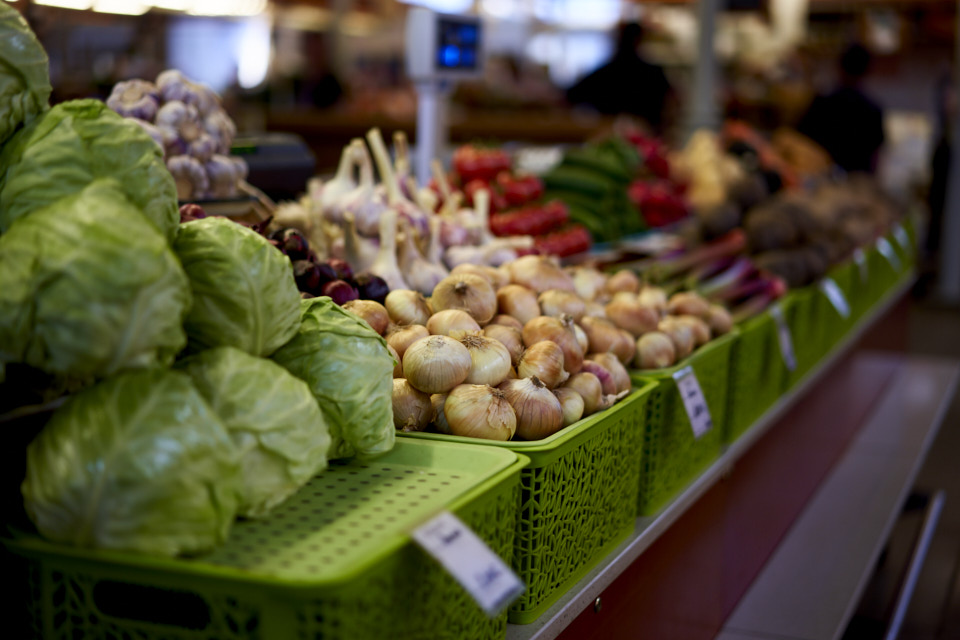
The atmosphere in a photo is largely determined by the aperture used. And that is exactly what I want to control myself as a photographer, given the type of photos I take. If I decide that myself, I am happy for the camera to determine the other settings in many situations, within the limits I have set.
Are there any disadvantages to this way of working? The only disadvantage I see here is that when the ISO reaches the limit you have set, the shutter speed is not fixed. The camera will not go beyond the ISO limit, but it will make the shutter speed slower than the minimum you set. So it is sensible to keep an eye on the shutter speed.
The metering mode you choose also becomes more important than when you set your settings 'by eye' in the viewfinder or on the screen on the back of the camera. Sometimes it makes a huge difference, for example with the highlight metering mode, when you choose a different metering mode.
I do not consider myself a 'lesser' photographer if I choose to hand some decisions over to the camera. Being able to choose which mode best suits the situation and knowing what your camera can do is more important to me than wanting to set every photo myself.
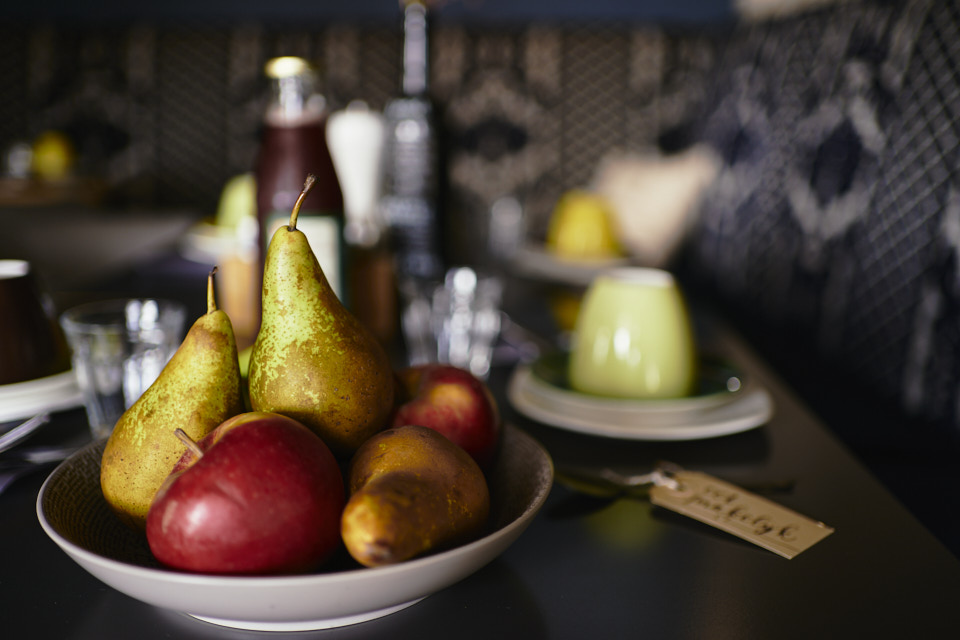
A major advantage, in my view, is that a change in the situation does not always mean that you have to set up your camera again. Does the sun disappear behind the clouds? As long as this still fits within the limits you have set, you will not suddenly get underexposed photos, for example.
Working this way also gives me a tremendous sense of freedom. After a short adjustment period, you know that you can rely on your camera. It frees your mind to put more into the creative process of taking photos, instead of, even as an experienced M photographer, constantly changing and checking your settings.
About the author
Antonette vindt veel facetten van fotografie leuk. In haar eigen studio Amfion fotografie maakt ze vooral portretten en geeft ze ook workshops. Getrouwd met Johan en moeder van Ghislaine. Hier op photofacts schrijft ze graag doe-het-zelf artikelen en productreviews.
You might also like
-
 Sony announces the 50-megapixel Alpha 1 camera
by Nando Harmsen
-
 Preview: Sony Alpha 7R IV
by Aäron Nasarany
-
 Shooting in Manual mode and zoom lenses
by Nando Harmsen
-
 Review: Sony A1 mirrorless camera
by Nando Harmsen
-
The only real reason to set the exposure manually
by Nando Harmsen
-
 Review: Sony Xperia 1 IV smartphone for photography
by Nando Harmsen
11 comments
-
 Hay Herben wrote on Tuesday 31 December 2019 at 14:47 | reply
I completely agree with you, why buy an expensive automatic camera and then not use it to its full potential. I have a Canon EOS 5 myself. It is always set to automatic mode for a first reaction when I see something. After this first photo I look to see if I can do it even better myself and take another one. If you don't work automatically during a reportage then you are usually too late for the photo you want to get.
Translated from Dutch. -
 Guill. wrote on Tuesday 31 December 2019 at 14:47 | reply
Interesting article. But why no course for the A6000 series.
Translated from Dutch. -
 Jan Spoel wrote on Tuesday 31 December 2019 at 16:35 | reply
Great article, M is not always decisive. As an action photographer, where you always have to have the camera ready, I set my camera to everything automatic by default. If I unexpectedly have to shoot something I always have something. My basic settings, which are also the settings with which I store my cameras, are ( Canon Eos 1DX ) with a 70/200 zoom lens and with a 20/35 zoom lens, White balance A, P, Al Servo H, ISO A , with upper limit 1600 ) spot metering.
Translated from Dutch.
Depending on the circumstances I make adjustments in M, Av, Tv, aperture, ISO, exposure metering etc
Ready for use also means full batteries, 1 spare battery and formatted empty cards. Storage always in Jpeg and RAW
Kind regards Jan Spoel
. -

 Ien wrote on Tuesday 31 December 2019 at 17:05
| reply
thanks for this info Antoinette, very educational, but it would have been even more educational if you had also mentioned the settings with the beautiful photos, because well, I really like learning from good photographers.
Translated from Dutch. -
 martinphili wrote on Wednesday 1 January 2020 at 10:31
| reply
That M was also for 'only when it Must', wasn't it?
Translated from Dutch.
You're absolutely right. That camera calculates MUCH faster than even the fastest photographer can. -
 guest wrote on Wednesday 1 January 2020 at 11:02 | reply
nice ! thanks for the tips... educational
Translated from Dutch. -

-
 Antonette de Groot
wrote on Wednesday 1 January 2020 at 22:35
| reply
Thanks everyone for the comments!
Translated from Dutch.
@guill We chose the a7/a9 series because actually all the functions of the 6000 series can also be found on the a7/a9 series, but not the other way around.
@ien Thanks for adding that, I hadn't thought of that at all! I'll try to adjust that. -
Mac wrote on Thursday 2 January 2020 at 09:28 | reply
M mode is the mode I use most. I do a lot of action photography and a lot of dance in the theater. And both with rapidly changing light. I just take an average reading, and lock everything. And yes, sometimes things end up being overexposed or underexposed, but that's too bad. And in the theater you always have a color cast because of all the lights, so I also lock WB to an average.
Translated from Dutch. -
 Bernard wrote on Thursday 2 January 2020 at 22:15
| reply
Good article and nice to talk about that for once. In my opinion, it is often exaggerated and sometimes it really seems like a hype. Don't you shoot in "M"? Man, what on earth is going to become of your photos then?
Translated from Dutch.
I like to keep things simple and have a few ironclad rules that I stick to:
1) I work as much as possible with the soft spot of the lens )*
2) if depth of field is important, then on setting "A"
3) if shutter speed is important, then on setting "T"
4) in principle I work with the lowest possible ISO, but I do use it to compensate for the "A" or the "T" if necessary. High ISO values are not much of a problem for the Canon EOS 5D4.
)* Most lenses perform optimally at half aperture. This is 1 stop smaller than the largest aperture. For example, an f/2.8 lens generally performs optimally at f/4.0 -
 ErikvanRosmalen
wrote on Friday 3 January 2020 at 09:34
| reply
Clear explanation, Antonette!
Translated from Dutch.
I myself mainly work in M, but that's because I take portraits in a static, staged setting, with flash. As soon as I have to capture more 'action', I also regularly choose Av or Tv. Especially when, for example, I had to follow production processes or something similar, where a second chance wasn't necessarily available....
Have your say
Please note: Articles older than a week can only be commented on by signed-in visitors.Would you still like to comment? sign in or create a free account.
Become a better photographer every week
A practical photography tip in your inbox every week.
38,983 photography enthusiasts already receive the tips! More about the weekly mail. Or keep up to date via  Facebook.

Elja Trum
Photofacts; everything to do with photography!
Would you like to take better photos and keep up with what is happening in photography? Photofacts publishes articles that teach you something about photography — from a product announcement to a practical shooting tip or a look at a website. Photofacts covers photography every day and is a hobby project of Elja Trum's that got out of hand. The articles are written by a team of volunteer authors. If you would enjoy writing one or more articles for Photofacts, do get in touch.More about PhotofactsPhotofacts is made possible in part by
