

Photographing owls nearby
Tuesday 14 April 2020, 20:10 by Erik Veldkamp | 9,954 views | 3 commentsThis article was translated from Dutch with the help of AI. Read the original.
Let me introduce myself... As this is my first article for Photofacts, I will briefly introduce myself. My name is Erik Veldkamp, nature photography has been my great passion for about 10 years and I am a professional musician.
I have been teaching trumpet at the Conservatory of Amsterdam since September 2019 and have been travelling around the world for about 30 years to perform concerts. From Vladivostock to Miami, from Oslo to Palermo. I also compose a lot of music and have published around 100 music books with various publishers.
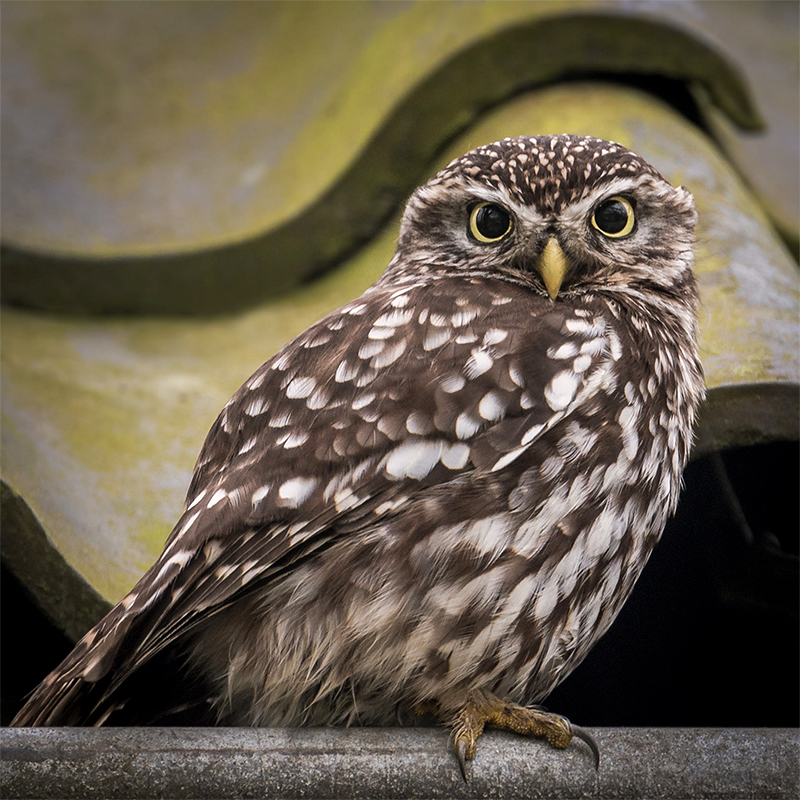
Clearing my head
To escape the busyness of my work and clear my head, and also to combat RSI complaints because I spent too much time behind the computer, I started cycling around Zwolle. That was when I realised how much beautiful nature there was to enjoy within cycling distance.
Within 10 minutes I can be at the IJssel in the Vreugderijkerwaard, a beautiful nature reserve with lots of birds, where I have spent many mornings with a flask of coffee and a camera. There are also lots of small areas close to home where you can find butterflies and dragonflies from April to October.
I also sometimes go to Lake Veluwemeer near Elburg, Vossemeer near Kampen, Giethoorn and other areas with a public bird hide. You can find all public bird hides on Vogelkijkhut.nl.
And occasionally I get in the car and drive into the polder near home or a little further away. I have never paid for a hide because I cannot plan around my freelance work anyway. Besides, that situation does not really appeal to me. You often see the same photos coming from there.
Specialisation
Although I sometimes branch out into other types of photography, such as landscape photography, concert photography or portrait photography, I have mainly focused on birds and macro photography. With macro photography, I find butterflies and dragonflies the most interesting.
I still find the whole process of metamorphosis incomprehensible, and I have captured it several times with dragonflies. You do need patience for that, because it can take around 3 hours! I mainly photograph birds along the IJssel and in the polders, either from public hides along the IJssel or from the car.
For photographing birds, I usually use my Nikon D500 + 500mm f/4 and a 1.4x converter. For macro, I use a Nikon D750 + 105mm macro lens in the morning, when the insects are not flying yet, and later in the day I usually fit the 300mm f/4. The D750 is now due for replacement…
Owls
In this first article, I want to give you some examples and tips for photographing owls. In the Netherlands, you mainly come across the tawny owl, long-eared owl, barn owl, short-eared owl and little owl. There is also the occasional eagle owl, and in 2014 a northern hawk owl visited Zwolle.
They normally live in Scandinavia, so it was a real treat to have one just around the corner for several months!
Every bird has its own behaviour, and owls are no different, of course. So if you want a chance of coming across these owls, you first need to know where and when to look… You can find all the information online, including on Wikipedia, Vogelbescherming and Waarneming.nl.
As well as searching myself, I sometimes get tips from other amateur photographers I meet from time to time. If you occasionally give someone else a good tip, you sometimes get one in return.
Owls usually sleep during the day and become active at dusk or later. So during the day, you generally will not get further than a portrait in a tree. I will start with the owls that are easiest to photograph.
Tawny owl
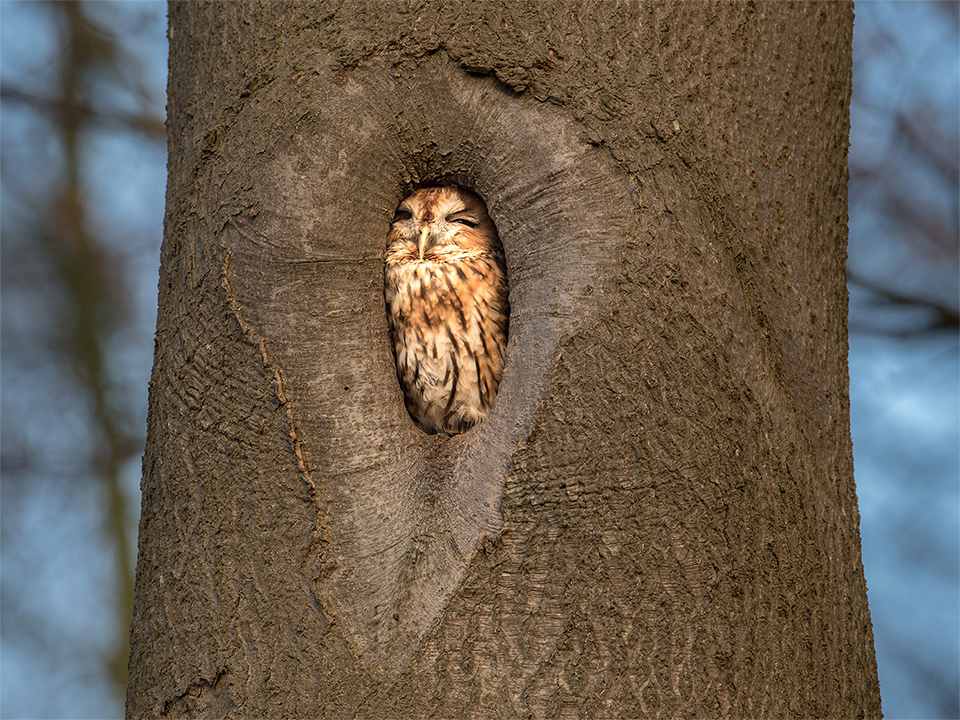
The tawny owls I have photographed were usually owls that could be found in the same spot for a very long time. Sometimes they are simply in a park around the corner, like the owl in this photo. It was sitting beside a footpath in a small park near a care home.
During the day, they sleep off the night in a tree hollow, so once you have taken a nice photo, you do not really need to return the next time because you will just take the same photo again. It is difficult to photograph a tawny owl in flight because they only start hunting at night.
Long-eared owl
You can find long-eared owls everywhere, sometimes right in the middle of a village or town. And sometimes several together if they have their roost there. This long-eared owl was photographed next to a primary school, where about four of them were sleeping in an oak tree.
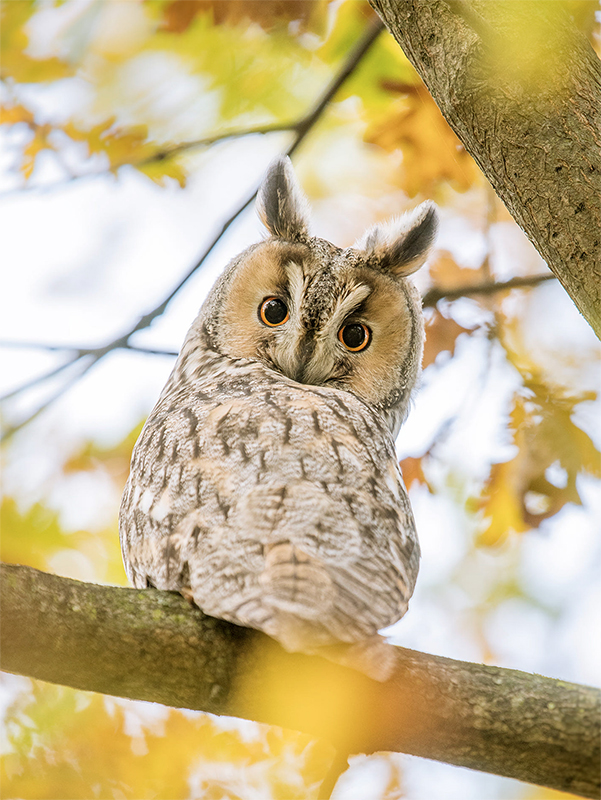
As I took this photo in autumn, the leaves had turned a beautiful yellow colour, which adds something extra to a photo like this, I think. Perhaps you can see them hunting at dusk during the breeding season, because they need to collect lots of food for their young, but I have not managed that yet.
Little owl
You can often find little owls in old willow trees or old barns. As they are so small, you can easily overlook them. I found most of the little owls I have photographed after receiving a tip, and even then you often have to search carefully!
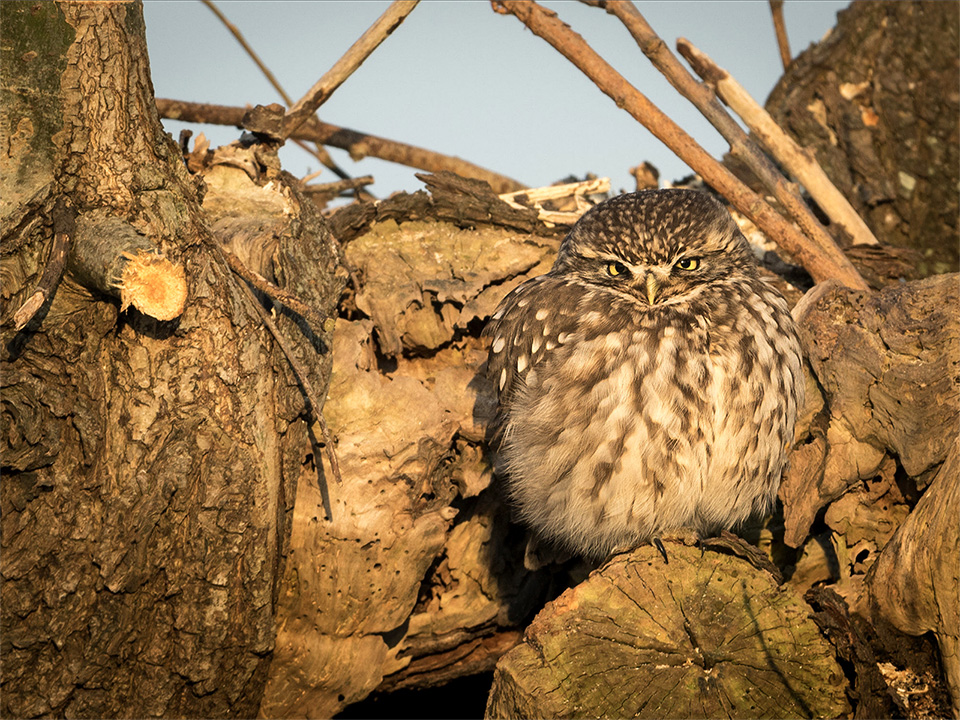
I have noticed that they like sunbathing, so they can be easier to find in good weather. They are also protected, and lots of nest boxes are put up to help them. So there is also a chance of finding them near one of those nest boxes.
Barn owl
So far, I have not photographed barn owls in the wild. This is mainly because they only become active when it is dark. They spend the rest of the day in a farmer's barn, so they cannot be found then.
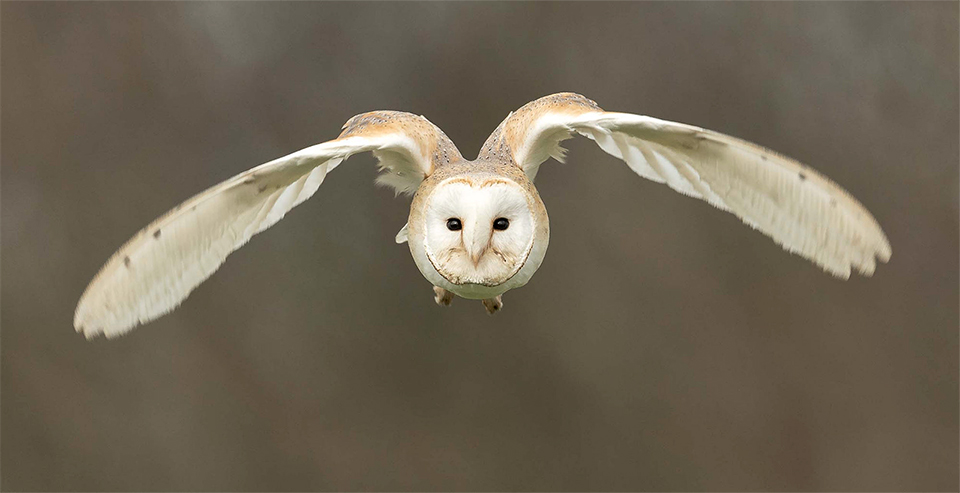
If you want to photograph them, you need to go out in the evening or at night and look carefully to see if one is sitting on a post by the side of the road. I have not done this so far because you always need to use flash to get them in the photo at all. Or point your car headlights at them.
That is not really my preference, but perhaps I will get around to it one day. The photo of the barn owl shown here was therefore taken during a bird of prey demonstration nearby… I think it was a case of once and never again, but I wanted to experience it once.
Short-eared owl
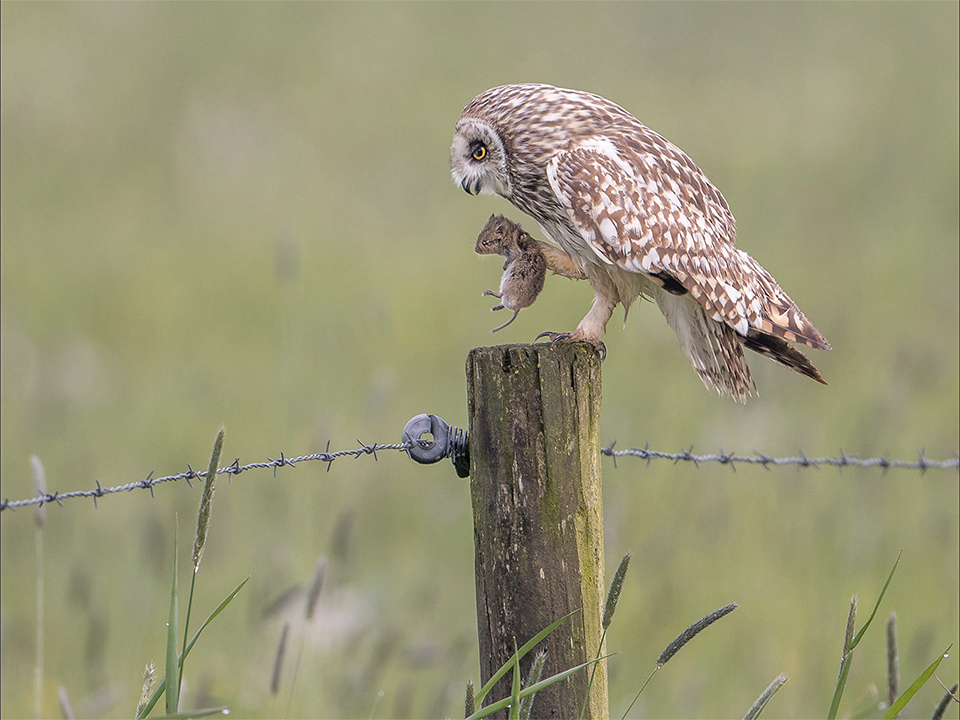
As the name suggests, you find short-eared owls in the fields. They usually sleep in the long grass during the day, so you will not find them then. At dusk they become active and start hunting. In 2016 I was lucky enough to find a few in the countryside around Zwolle that hunted early in the morning and late in the afternoon. These photos were taken there.
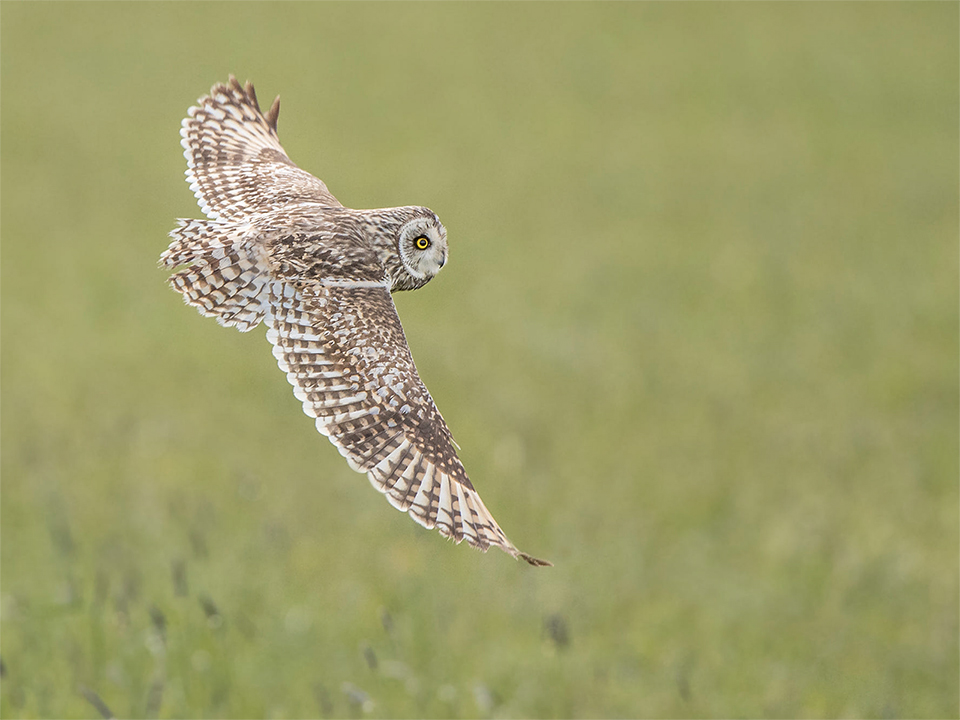
As there is little light, you need to use high ISO values if you want to photograph them in flight. But they also rest regularly, sitting on a post or in the grass. You can then reduce the shutter speed and ISO values.
Eagle owl
There are a few well-known places in the Netherlands where eagle owls have been breeding for years. But in 2015 there was one near Kampen that had probably escaped or been released, and it stayed in the same place for at least a month.
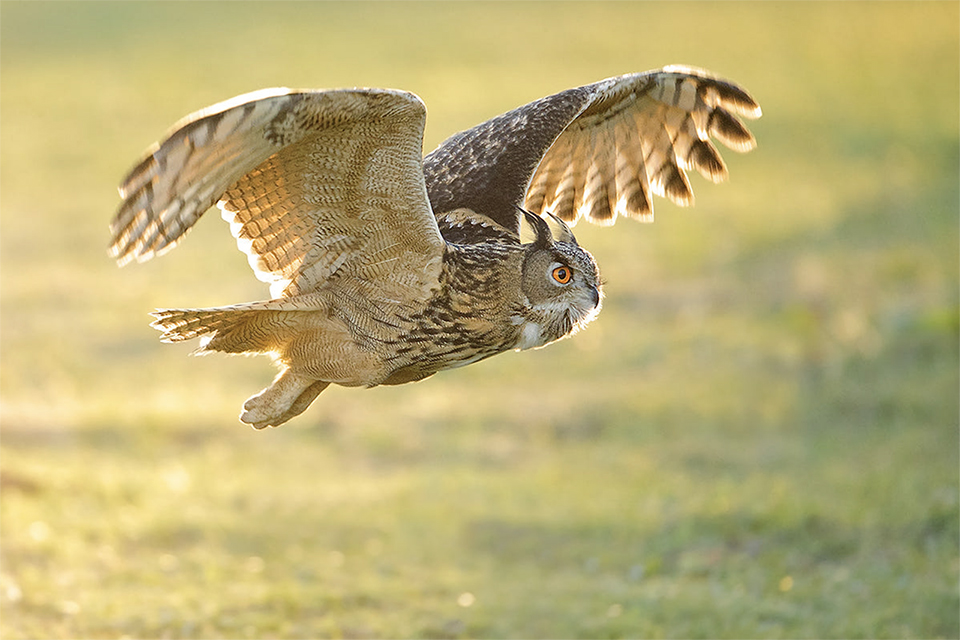
Because I went there often, I learned its flight patterns and stood in a place where I could photograph it backlit during golden hour as it flew from one favourite spot to another. With a 300mm f/4 lens in this case.
Northern hawk owl
As I said, there was a northern hawk owl in Zwolle in the winter of 2014. This owl was spotted by a train driver, who saw it sitting beside the railway. Nobody believed him, of course, but a few weeks later it was spotted again and it stayed in the trees next to the Enexis site for months.
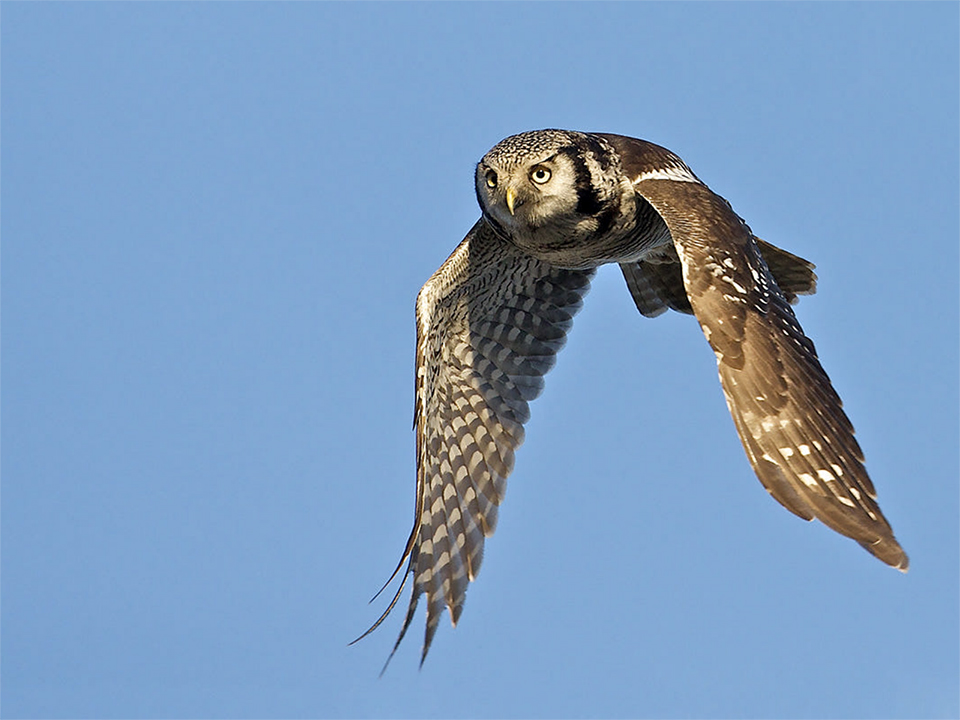
They were using bulldozers on the site, which I think brought lots of mice out into the open. The owl caught them expertly, one at a time. Sometimes it would fly towards you with a mouse and then eat it in a tree.
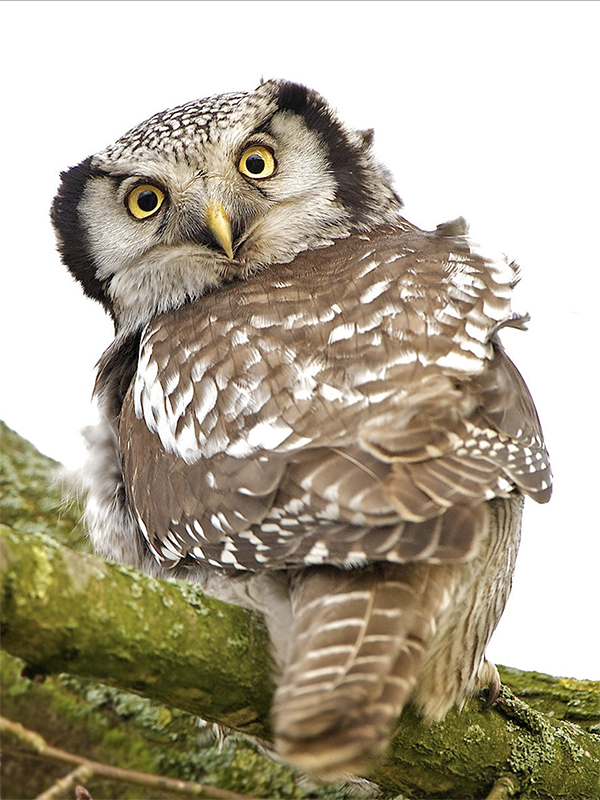
This attracted birdwatchers and photographers from the Netherlands and abroad. I sometimes found myself standing next to Englishmen and Belgians who had travelled especially for it… So this bird was easy to photograph, the exception to the rule…
Finally
In future articles, I will tell you more about how I photograph birds and insects. In general, I mainly go out at the start and end of the day, because that is when you get the best light. And as I said, an owl is not active during the day, so there is not much point in going out then if you want to take a good photo.
When I go out during the day, I usually go birdwatching, so that I have a better chance of coming home with something nice in the evening or the following morning.
About the author
Erik Veldkamp is natuurfotograaf en heeft zich vooral toegelegd op vogels en de macrowereld met de nadruk op vlinders en libellen. Het fotograferen gebeurt hoofdzakelijk in de gouden uurtjes in het voorjaar en zomer. Maar af en toe een uitstapje naar landschapsfotografie of concertfotografie schuwt hij ook niet. Sinds 2019 geeft hij ook workshops in onder andere macrofotografie voor Photo United.
You might also like
-
 Bird photography often requires a lot of patience
by Erik Nevels
-
 Bird hide: for lazy photographers or hard work?
by Roland Smanski
-
 Crash course in bird photography
by Michelle Peeters
-
 Bird photography? Don't forget the common species.
by Nando Harmsen
-
 Photographing birds? Practise first.
by Nando Harmsen
3 comments


Have your say
Please note: Articles older than a week can only be commented on by signed-in visitors.Would you still like to comment? sign in or create a free account.
Become a better photographer every week
A practical photography tip in your inbox every week.
38,982 photography enthusiasts already receive the tips! More about the weekly mail. Or keep up to date via  Facebook.

Elja Trum
Photofacts; everything to do with photography!
Would you like to take better photos and keep up with what is happening in photography? Photofacts publishes articles that teach you something about photography — from a product announcement to a practical shooting tip or a look at a website. Photofacts covers photography every day and is a hobby project of Elja Trum's that got out of hand. The articles are written by a team of volunteer authors. If you would enjoy writing one or more articles for Photofacts, do get in touch.More about PhotofactsPhotofacts is made possible in part by
