

Night photography tip: photograph the moon at twilight
Thursday 3 February 2022, 22:33 by Nando Harmsen | 4,602 views | 2 commentsThis article was translated from Dutch with the help of AI. Read the original.
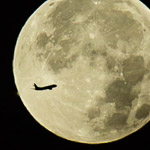
When there is a full moon, the photos appear on social media again. A disc with clear maria against a black background.
You have three days every four weeks to take this photo. But try photographing the full moon at twilight. It makes the photo much more interesting.
When the full moon is high in the sky, it is not difficult to take a photo of it. Choose a focal length of at least 400mm so that the moon appears large enough in the frame, set your ISO to 200 and use an aperture of f/8.
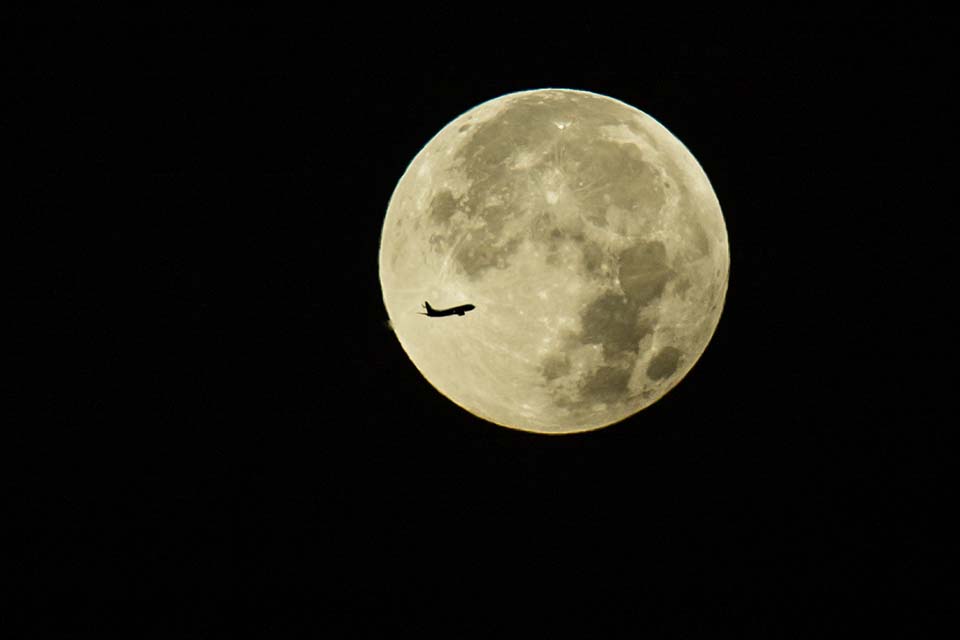
With around 1/250 second, you will have a successful photo. You do not even need a tripod if your lens or camera has image stabilisation. The photo will show a moon against a completely black background. Would it not be much more interesting to see some of your surroundings as well?
The full moon gives off a lot of light. That is why the settings mentioned above give you a well-exposed photo of the moon in the darkness of the evening and night. However, if you also want the surroundings to be properly exposed, you will need to use longer shutter speeds. The result is a moon that looks like a nocturnal sun.
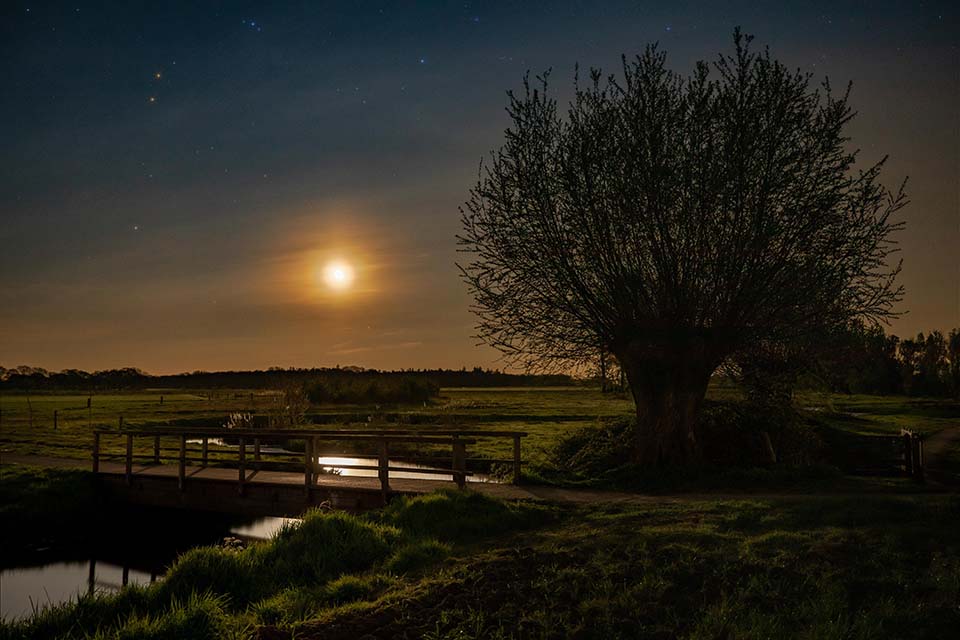
Without tricks such as HDR, it is not possible to properly expose both the full moon and the surroundings in the dark. But there is another solution that is much more interesting than struggling with HDR techniques. Photograph the moon at twilight.
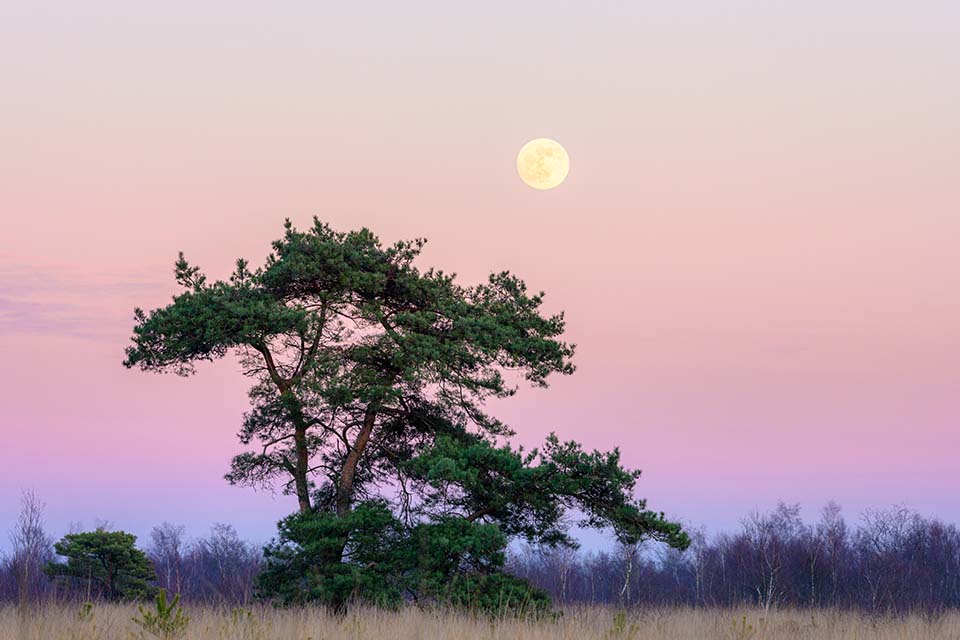
At twilight, there is still enough light in the landscape. In addition, the full moon always rises around sunset, or sets around sunrise.
That means the light from the moon is almost the same as the light in the landscape. So with a single exposure, you can get both properly exposed in the photo.
The moon is also low on the horizon, making it easy to include interesting surroundings in the photo. Just give it a try.
About the author
Nando Harmsen has been photographing for more than 40 years. He specialises in wedding photography and landscape photography. Nando also gives talks, workshops, masterclasses and photo trips, and regularly reviews new and interesting equipment.
You might also like
-
 Photographing the Full Moon creatively
by Nando Harmsen
-
 Night photography tip: photograph all the Moon phases
by Nando Harmsen
-
 Night photography tip: the eye is drawn to the brightest point
by Nando Harmsen
-
 Night photography on Schiermonnikoog, part 1
by Erik Nevels
-
.jpg "Night photography on Schiermonnikoog (part 2)") Night photography on Schiermonnikoog (part 2)
Night photography on Schiermonnikoog (part 2)by Erik Nevels
-
 Night photography tip: keep bright lights bright
by Nando Harmsen
2 comments
-
 FredVN wrote on Tuesday 8 February 2022 at 11:54 | reply
I once learned the Lunar-F11 rule.
Translated from Dutch.
A=11 and S=ISO. So Iso200 = 1/200.
Works excellently. -
 Bram de Landtsheer wrote on Tuesday 8 February 2022 at 12:03 | reply
Good ideas! If, however, it's about the moon itself, don't look at the full moon, but rather at the not full moon. Then you get shadow effects and can see the craters much better. During a full moon there is no shadow and everything is flattened.
Translated from Dutch.
Have your say
Please note: Articles older than a week can only be commented on by signed-in visitors.Would you still like to comment? sign in or create a free account.
Become a better photographer every week
A practical photography tip in your inbox every week.
39,023 photography enthusiasts already receive the tips! More about the weekly mail. Or keep up to date via  Facebook.

Elja Trum
Photofacts; everything to do with photography!
Would you like to take better photos and keep up with what is happening in photography? Photofacts publishes articles that teach you something about photography — from a product announcement to a practical shooting tip or a look at a website. Photofacts covers photography every day and is a hobby project of Elja Trum's that got out of hand. The articles are written by a team of volunteer authors. If you would enjoy writing one or more articles for Photofacts, do get in touch.More about PhotofactsPhotofacts is made possible in part by
