

The Earth's Rotation and Image Stabilisation
Tuesday 10 February 2026, 16:32 by Nando Harmsen | 1,646 views | 5 commentsThis article was translated from Dutch with the help of AI. Read the original.
Image stabilisation compensates for the movements you make. This lets you keep the camera steady even with slower shutter speeds. But there is a limit. The Earth's rotation plays a part in it.
Image stabilisation is fantastic. It allows you to break the age-old rule of one divided by the focal length. This rule indicated the slowest shutter speed at which you could still use the camera handheld.
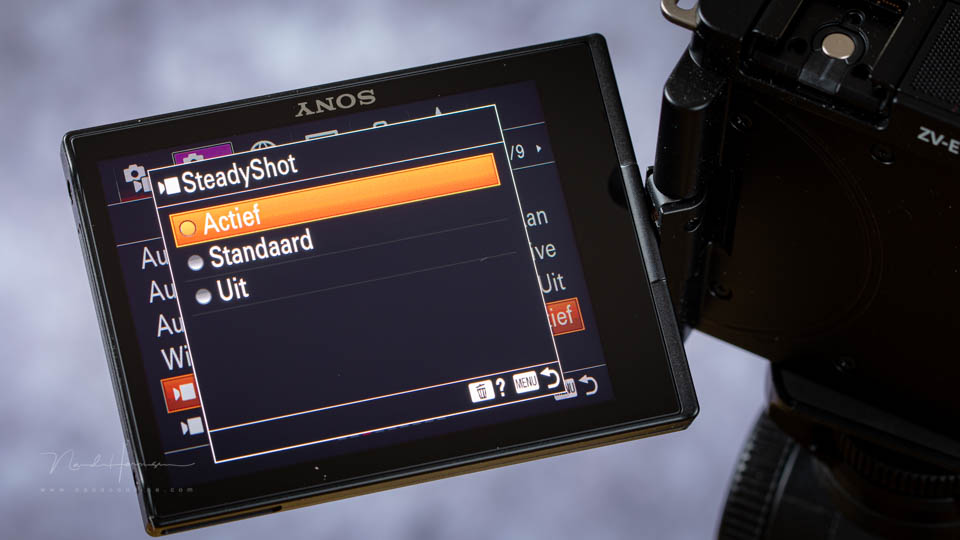
Modern IBIS systems (In-Body Image Stabilisation) ensure that movement is compensated for across five axes. Left and right, up and down, rotation around the central axis, rotation around the vertical axis, and rotation around the horizontal axis.
This makes it easier to take photos with slow shutter speeds, without needing a tripod or having to switch to higher ISO values.
It started simply with two or three stops of correction, but this quickly became more and more. Until Olympus launched the OM-D E-M1 mark II with 6.5 stops of image stabilisation. It was said that more was not possible.
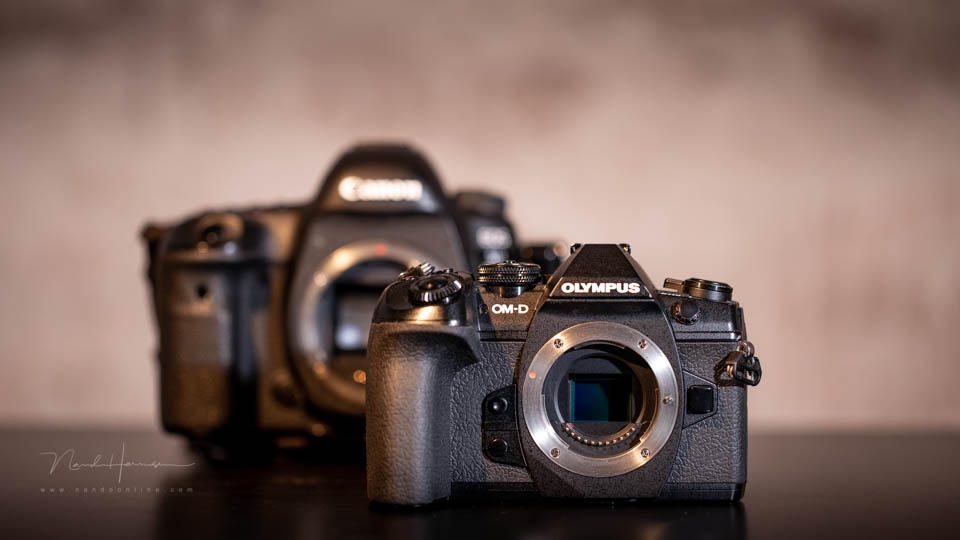
To understand this, you need to know that image stabilisation uses gyroscopes, among other things. They measure movement and allow the electronics to correct it. The more accurate the gyroscopes, the more stabilisation is possible.
However, the Earth rotates 360 degrees every day. That is 15 degrees per hour. You can measure this with... a gyroscope. This means that the Earth's rotation will eventually affect image stabilisation. That limit is 6.5 stops.
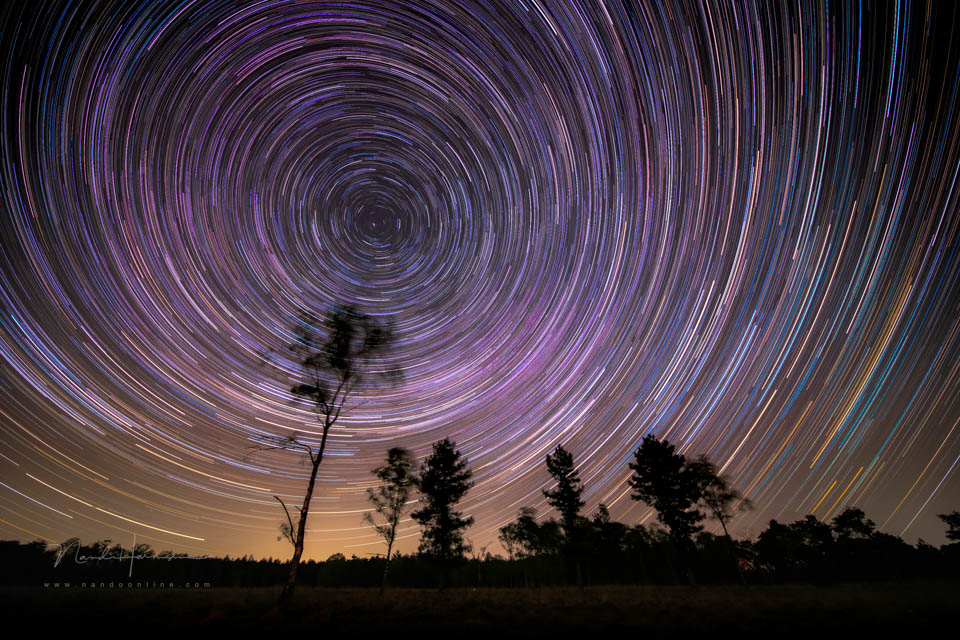
Yet there are now cameras that can correct more than 6.5 stops. The Hasselblad X2D II even has 10 stops of image stabilisation. So how is that possible? In the case of the Hasselblad, you need GPS information.
When you know the exact position on Earth, the software in the camera can take the Earth's rotation into account when controlling the image stabilisation. With the Hasselblad, you therefore need to load GPS data via your smartphone. At least once every four hours, or if you have travelled a long distance since the last measurement.
Yet there are cameras that claim to stabilise more than 6.5 stops. Canon, for example, says it can achieve up to 8.5 stops. No GPS data is used here. There is probably another system that can compensate for the Earth's rotation.
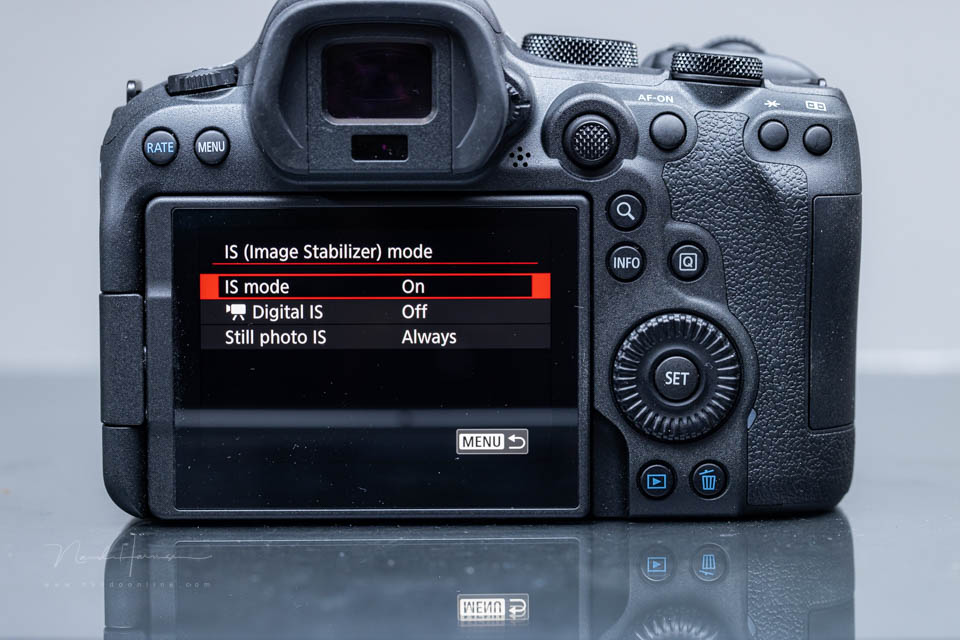
We take image stabilisation completely for granted. But this shows that there is more to it than you might expect. It is amazing how complex a camera has become and how the technology fits inside that little box.
Would you like to read more? Then take a look at the article on PetaPixel, which I partly used as a source.

Always bear in mind that image stabilisation only corrects camera movement. If your subject moves, it will still appear blurred in the image. It does not matter how many stops can be corrected.
You can read more about the point and nonsense of image stabilisation in an article that I wrote about it earlier.
About the author
Nando Harmsen has been photographing for more than 40 years. He specialises in wedding photography and landscape photography. Nando also gives talks, workshops, masterclasses and photo trips, and regularly reviews new and interesting equipment.
You might also like
-
 The sense and nonsense of image stabilisation in a camera or lens
by Nando Harmsen
-
 Sony announces the FE 300mm f/2,8 GM OSS telephoto lens
by Nando Harmsen
-
 Sony launches the A7 V and FE 28-70mm f/3.5-5.6 OSS II
by Nando Harmsen
-
 Nikon announces the Nikkor Z 600mm f/6.3 VR S super-telephoto lens
by Nando Harmsen
-
 10 tips for panning, moving the camera with the movement
by Nando Harmsen
5 comments
-
 Chiel wrote on Saturday 14 February 2026 at 08:26 | reply
I find it difficult to imagine that the rotation of the Earth plays a role in image stabilization. The Earth rotates, that's true ,but both your camera and your subject are fixed to that same Earth. So they do not move relative to each other as a result of that rotation. Moreover, that rotation is very, very slow (0.004 degrees per second). If you do a bit of calculating, the image shift that produces is smaller than one pixel on your sensor. The rotation of the Earth can play a role with longer shutter speeds and objects outside the Earth (for example the moon)
Translated from Dutch. -

-
 Nando
wrote on Wednesday 18 February 2026 at 16:02
| reply
Nando
wrote on Wednesday 18 February 2026 at 16:02
| reply
I've thought about it again, Chiel. In your comment, you talk about the Earth's angle of rotation per unit of time (15 degrees per hour, or 0.00417 degrees per second, as you say).
Translated from Dutch.
But where the influence of the rotation starts to play a role is in the gyroscopes used to detect the movement of the camera. Above 6.5 stops of stabilization, they need such accuracy that the Earth's rotation is also measured. Gyroscopes are sensitive to that as well.
This is also mentioned in the article. -
 Paulussie wrote on Tuesday 17 February 2026 at 12:54
| reply
Paulussie wrote on Tuesday 17 February 2026 at 12:54
| reply
I also read through the article on petapixel. The possibilities look wonderful, but I do wonder how that moving in the camera, the compensation, will ultimately affect its lifespan.
Translated from Dutch.
The example photo is quite nice, but why wouldn’t you just use a tripod in such a case? I know well enough that you don’t always have one with you, but even then, overkill because they can. It’s all going much too far, because it makes the equipment much more expensive, while it will never be used at s. -
Nando
wrote on Tuesday 17 February 2026 at 13:48
| reply
You don't have to worry about lifespan. If that is a concern, it is best to leave digital cameras alone altogether and start shooting analog again.
Translated from Dutch.
As for the technology; the boundaries are always being pushed and extended.
You complain that it goes too far and that everything is getting too expensive. If the manufacturer doesn't do this, people complain that the manufacturer is falling behind because 'that other brand is so progressive.'
Have your say
Please note: Articles older than a week can only be commented on by signed-in visitors.Would you still like to comment? sign in or create a free account.
Become a better photographer every week
A practical photography tip in your inbox every week.
39,079 photography enthusiasts already receive the tips! More about the weekly mail. Or keep up to date via  Facebook.

Elja Trum
Photofacts; everything to do with photography!
Would you like to take better photos and keep up with what is happening in photography? Photofacts publishes articles that teach you something about photography — from a product announcement to a practical shooting tip or a look at a website. Photofacts covers photography every day and is a hobby project of Elja Trum's that got out of hand. The articles are written by a team of volunteer authors. If you would enjoy writing one or more articles for Photofacts, do get in touch.More about PhotofactsPhotofacts is made possible in part by
