

Your ideal portrait based on brainwaves
Wednesday 17 January 2018, 22:22 by Michelle Peeters | 5,446 views | 3 commentsThis article was translated from Dutch with the help of AI. Read the original.
Many people have an ideal self-image in their head. An image that you can clearly see in your mind, but that does not seem to be represented or described well, so that others can also see what you would like to look like.
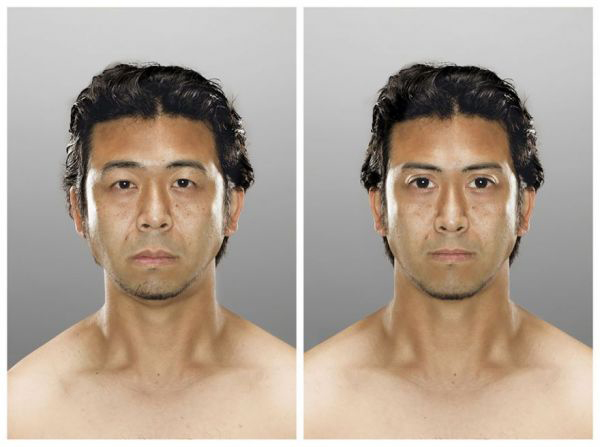
But photographer Scott Chasserot came up with a clever way to discover how people would like to look. He did this based on their brainwaves for his idealised portrait series Original Ideal.
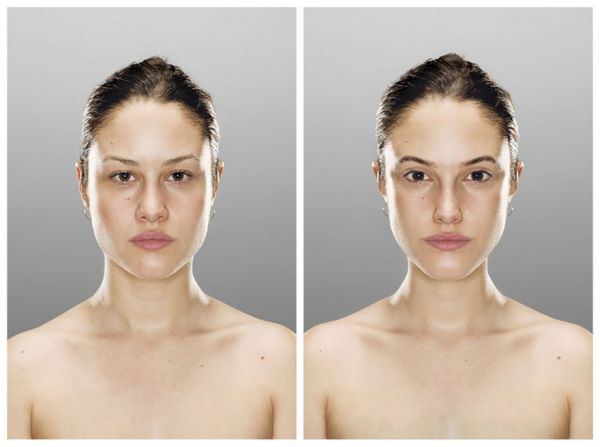
Chasserot took simple and unembellished headshots of his volunteers, then used editing software to create dozens of altered versions based on the 'scientifically established canons of beauty'.
By showing the edited photos to the volunteers while they were wearing EEG headsets, Chasserot was able to analyse their brainwaves and discover which version they preferred based on positive neural responses. The preferred photo was then labelled as their "ideal" appearance.
What do we instinctively find beautiful in the human face, and how does this translate into self-image? What assumptions would we make about another person if we could see their ideal self-image?
Original Ideal combines portrait photography and neuroscience to isolate the ideal self-image of the subjects. A rational and genuine preference obtained by bypassing conscious thought.
About the author
Michelle Peeters is fotografe en oprichter van DeuxBleus Fotografie. Michelle herkent het bijzondere in het gewone en het gewone in het bijzondere. Ze heeft zich nooit willen specialiseren en is daardoor van alle markten thuis.
You might also like
-
 Review: Portrait Photography with Natural Light by Scott Kelby
by Michelle Peeters
-
 Setting up a ball head
by Nando Harmsen
-
 Adjusting a gimbal head
by Nando Harmsen
-
 Review: Sirui L324F with KS-G3 geared tripod head
by Nando Harmsen
-
 Time for self-reflection
by Laura van der Burgt
-
 7 tips for creative self-portraits
by Michelle Peeters
3 comments
-

-
 Teun wrote on Tuesday 23 January 2018 at 11:47 | reply
I wonder what is achieved with this technique: you discover that your appearance does not correspond to the ideal image in your head. But I already know that. Is the ‘industry' of plastic surgery behind this technique? Hopefully not.
Translated from Dutch. -

 Michelle Peeters wrote on Tuesday 23 January 2018 at 12:04
| reply
@Teun: let's hope not indeed! I've been thinking about that too. As a photographer, it can be quite educational to discover how people like to see themselves (and thus how you should photograph them to get as close as possible to that ideal image). If I let clients choose their own best photo from a series, it is always a photo I would never have chosen myself!
Translated from Dutch.
Have your say
Please note: Articles older than a week can only be commented on by signed-in visitors.Would you still like to comment? sign in or create a free account.
Become a better photographer every week
A practical photography tip in your inbox every week.
38,884 photography enthusiasts already receive the tips! More about the weekly mail. Or keep up to date via  Facebook.

Elja Trum
Photofacts; everything to do with photography!
Would you like to take better photos and keep up with what is happening in photography? Photofacts publishes articles that teach you something about photography — from a product announcement to a practical shooting tip or a look at a website. Photofacts covers photography every day and is a hobby project of Elja Trum's that got out of hand. The articles are written by a team of volunteer authors. If you would enjoy writing one or more articles for Photofacts, do get in touch.More about PhotofactsPhotofacts is made possible in part by
