

Adjusting a gimbal head
Monday 14 July 2025, 14:41 by Nando Harmsen | 3,119 views | 2 commentsThis article was translated from Dutch with the help of AI. Read the original.
A gimbal head is perfect for using long and heavy lenses. You do need to make sure you set it up correctly. Only then can you make the most of this tripod head.
A gimbal head provides balance and freedom of movement when using large, heavy telephoto lenses. You can loosen all the knobs without having to worry about the camera tipping over or even falling.
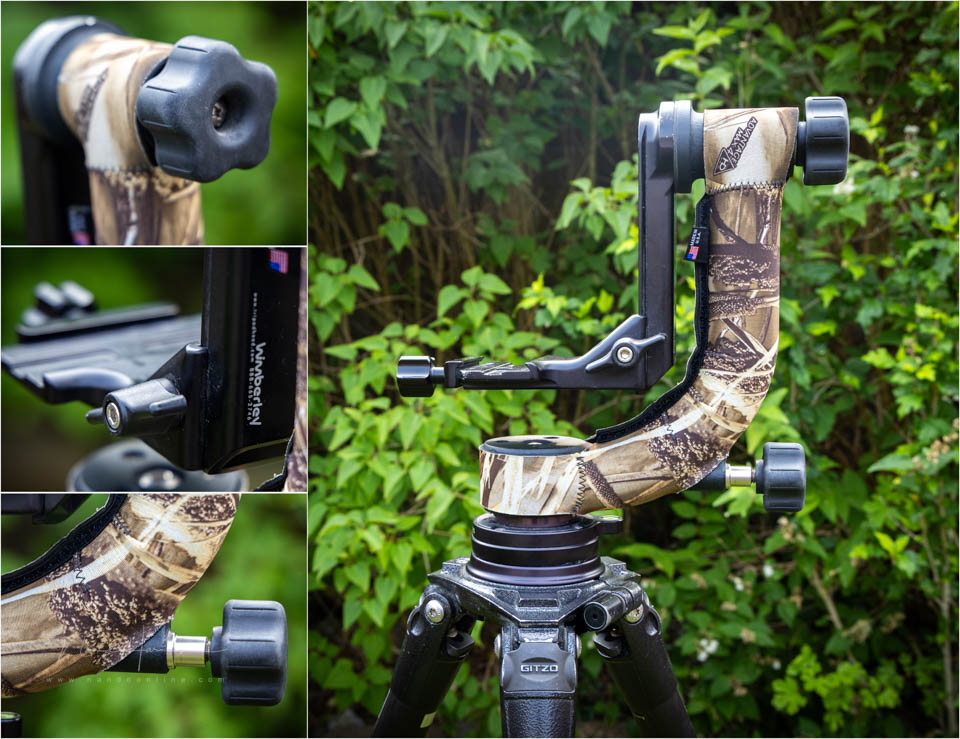
To use a gimbal head properly, it needs to be set up correctly. You can simply place the camera and lens on it, but that is not ideal. In principle, the name gimbal head is poorly chosen, because swinging is what you do not want.
A properly adjusted gimbal head keeps the camera in any desired position without you having to hold or lock anything in place. Turn the camera left or right, up or down, and let go. The setup should then stay in that position.
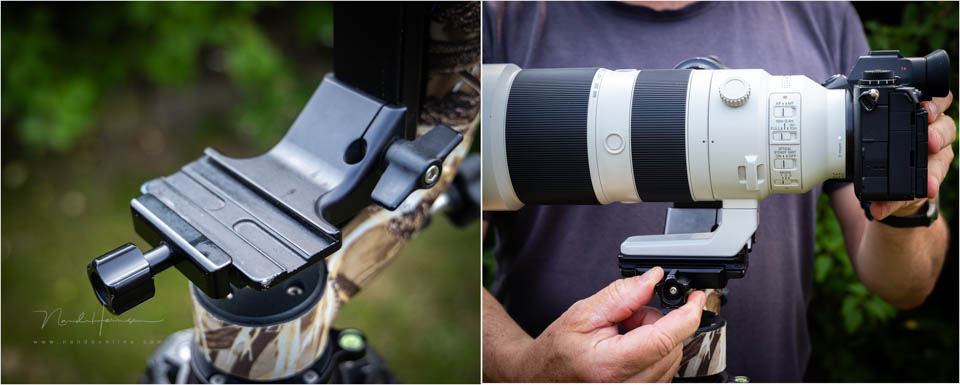
Once the camera has been placed on the gimbal head, you will notice that it is out of balance. After loosening the swing knob, everything will tilt forwards or backwards.
To prevent this tilting, you can slide the Arca-Swiss coupling plate forwards or backwards in the holder. Keep doing this until you find the balance.
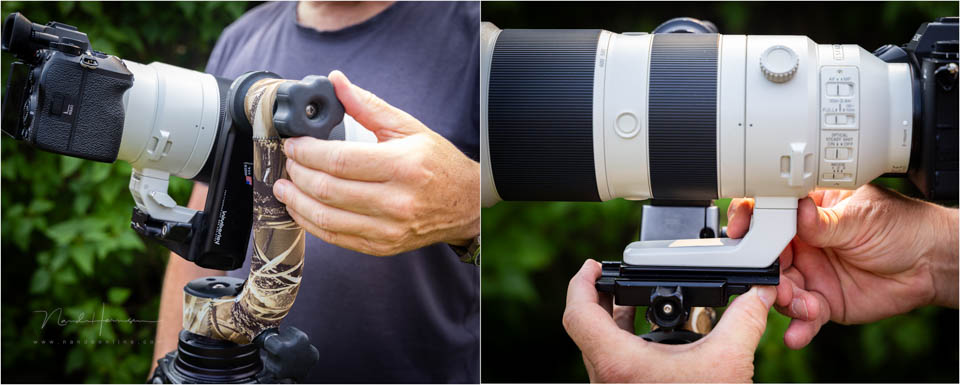
Always make sure you use a lens plate that is long enough. This gives you room to change the position of the lens on the base plate. If the lens plate is too short, you may not be able to achieve balance.
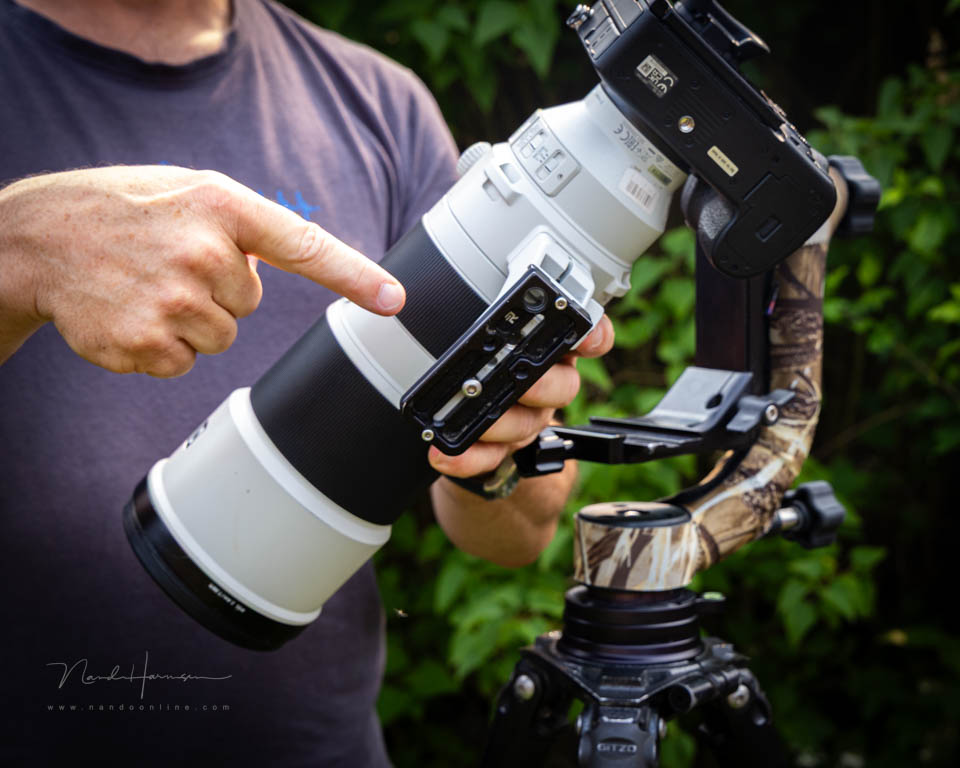
If you point the camera upwards or downwards, everything will still fall back downwards. You then have a real swinging gimbal head, which is not ideal. The camera must always be pushed away from the centre of gravity.
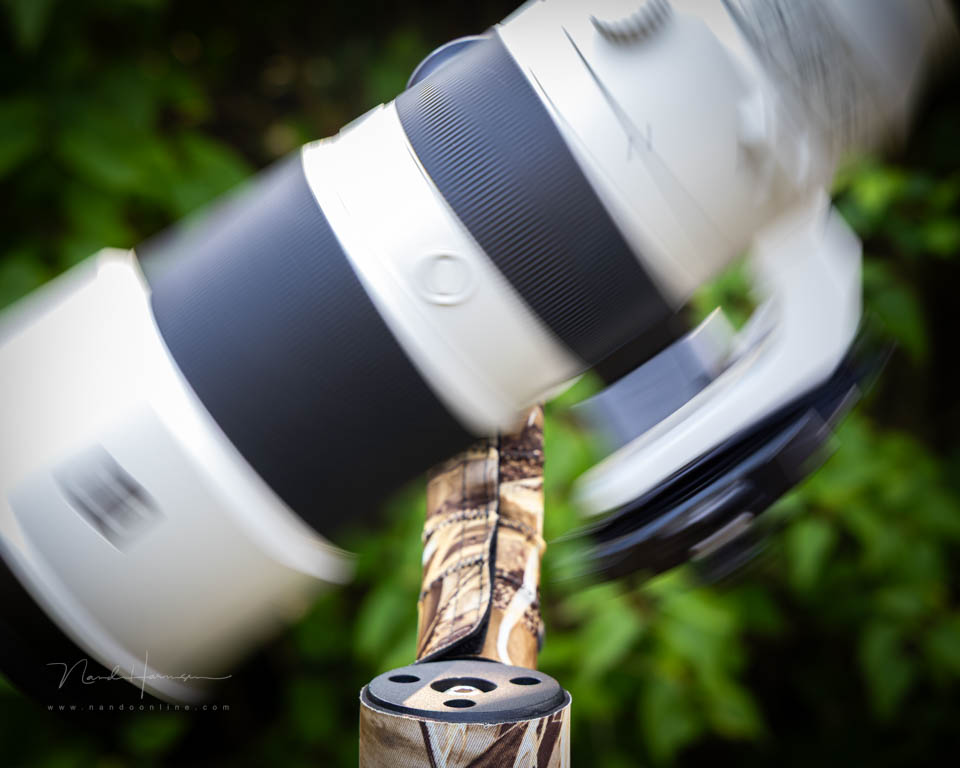
The reason for the swinging movement is the height of the camera in the gimbal head. Make sure the lens is positioned high enough for its centre to be level with the swing knob.
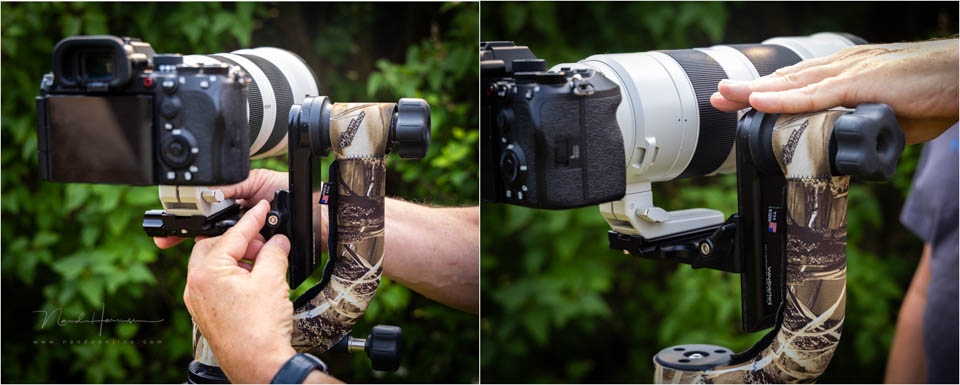
Once you have completed these steps, you can use the gimbal head without ever having to lock the knobs. Because everything is balanced, the camera remains in the position you choose.
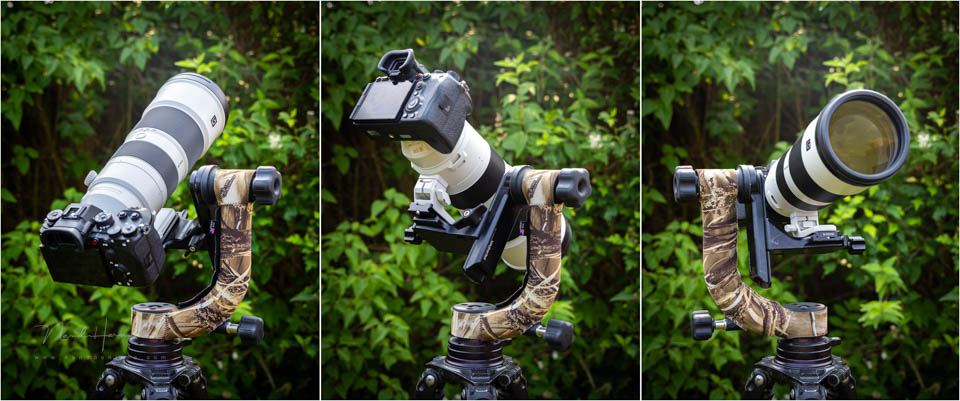
There is one caveat. If you have a zoom lens that changes length, the balance will be different for each focal length. In that case, it is best to adjust the Arca-Swiss lens plate for the focal length you use most often.
Are you going to use a different focal length after all? Then you can simply shift the position of the Arca-Swiss lens plate in the base plate slightly. The height of the camera on the gimbal head can remain unchanged.
About the author
Nando Harmsen has been photographing for more than 40 years. He specialises in wedding photography and landscape photography. Nando also gives talks, workshops, masterclasses and photo trips, and regularly reviews new and interesting equipment.
You might also like
-
 A tip for using telephoto lenses on a ball head
by Nando Harmsen
-
Setting up a ball head
by Nando Harmsen
-
 Which is best: a ball head or a 3-way head
by Nando Harmsen
-
 Review: Benro geared head
by Martin van Rooij
-
 Review: Sirui L324F with KS-G3 geared tripod head
by Nando Harmsen
-
 Landscape photography with a telephoto lens
by Erik Nevels
2 comments
-
 Rudolf Sipkema wrote on Tuesday 15 July 2025 at 17:20 | reply
All well and good, with a long telephoto lens such as my Sigma0 mm lens, the coupling plate is too short and caused imbalance. Bought a 200 mm plate on the internet and screwed it under the lens, perfect, now you can adjust the balance and equilibrium in the gimbal head
Translated from Dutch. -


Have your say
Please note: Articles older than a week can only be commented on by signed-in visitors.Would you still like to comment? sign in or create a free account.
Become a better photographer every week
A practical photography tip in your inbox every week.
39,079 photography enthusiasts already receive the tips! More about the weekly mail. Or keep up to date via  Facebook.

Elja Trum
Photofacts; everything to do with photography!
Would you like to take better photos and keep up with what is happening in photography? Photofacts publishes articles that teach you something about photography — from a product announcement to a practical shooting tip or a look at a website. Photofacts covers photography every day and is a hobby project of Elja Trum's that got out of hand. The articles are written by a team of volunteer authors. If you would enjoy writing one or more articles for Photofacts, do get in touch.More about PhotofactsPhotofacts is made possible in part by
