

Which is best: a ball head or a 3-way head
Friday 29 December 2023, 15:51 by Nando Harmsen | 4,799 views | 15 commentsThis article was translated from Dutch with the help of AI. Read the original.
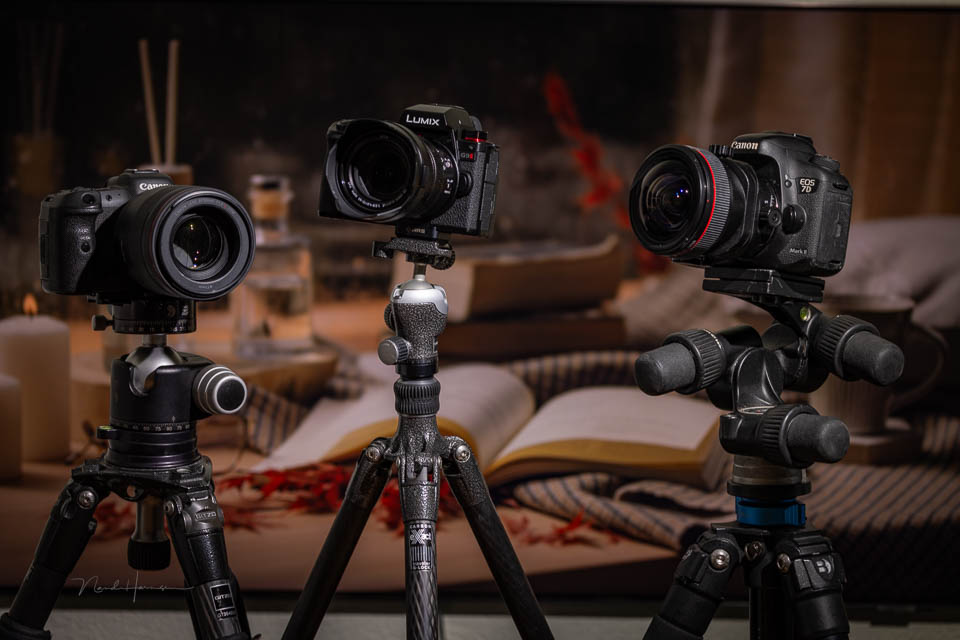
A tripod is essential when stability matters. It prevents your camera from moving while taking a photo. There are several ways to mount your camera on a tripod. A ball head is the most commonly used. Or is a 3-way head better?
Let me say right away that it is not simply a matter of what is better. The most important thing is that your camera is securely mounted on a tripod without any risk of movement. The choice between a ball head and a 3-way head depends on how you are going to use your tripod.
In fact, the choice is very simple. A 3-way head is designed for very precise work and adjustments. A ball head is designed for working and adjusting quickly and flexibly.
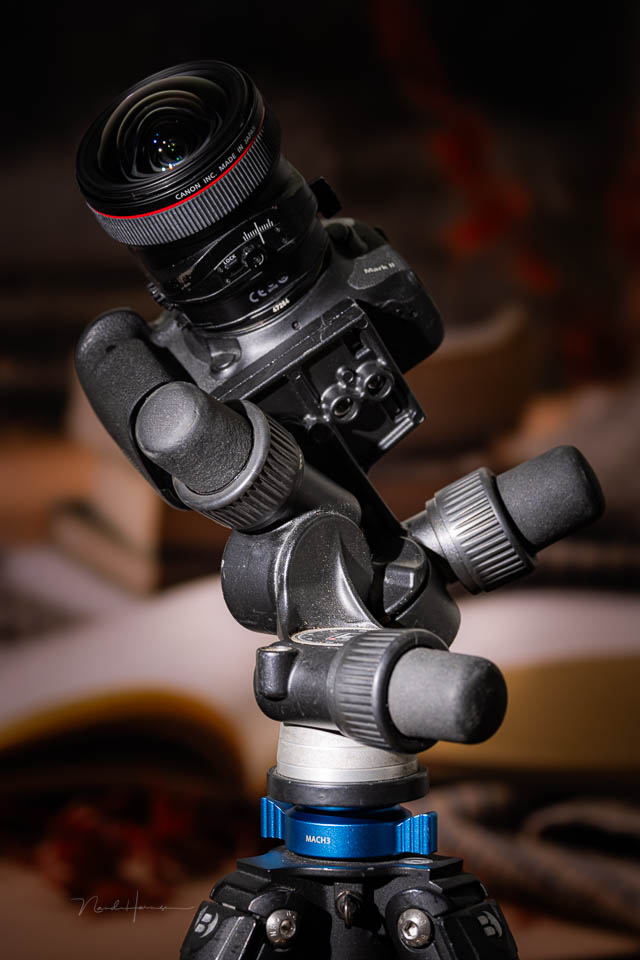
Is it necessary to work very precisely? Is it important that your camera can be positioned to the millimetre? Then a 3-way head is perfect for you.
It takes relatively a lot of time to position the camera exactly where you want it. You also need a reasonably substantial tripod to maintain that stability, because a 3-way head is often large and heavy. Once everything is set up and adjusted, it will stay perfectly in place.
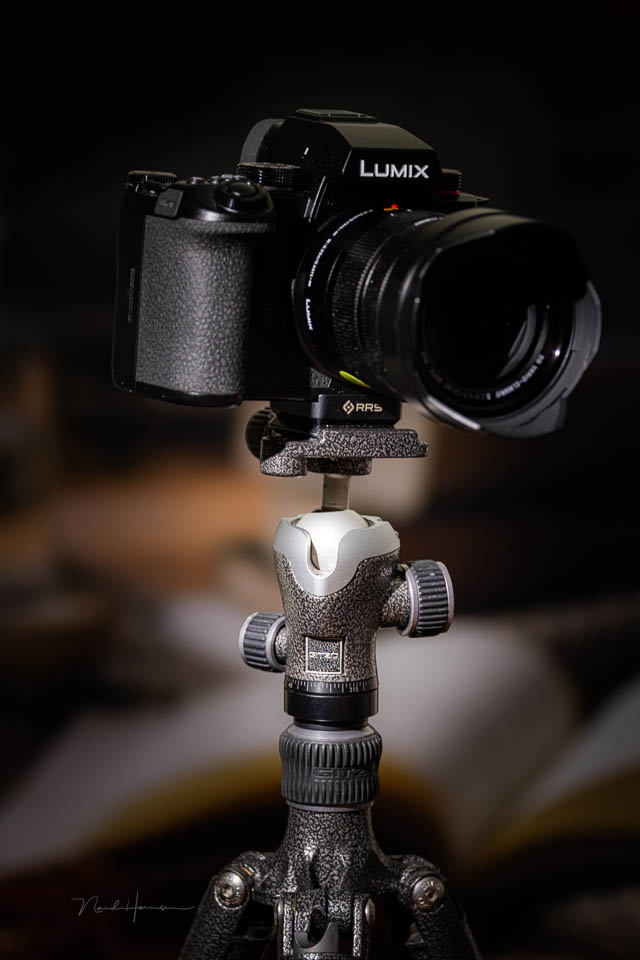
But are you often out and about, carrying your tripod everywhere? Then a 3-way head is far too large and heavy. A 3-way head takes up a lot of space, especially when travelling. Unless it is essential to your photography, a ball head may be a better choice.
A ball head is often more compact in shape, but above all, it is lighter too, although heavy versions are also available. A ball head is much easier to take with you when travelling or on a walk.
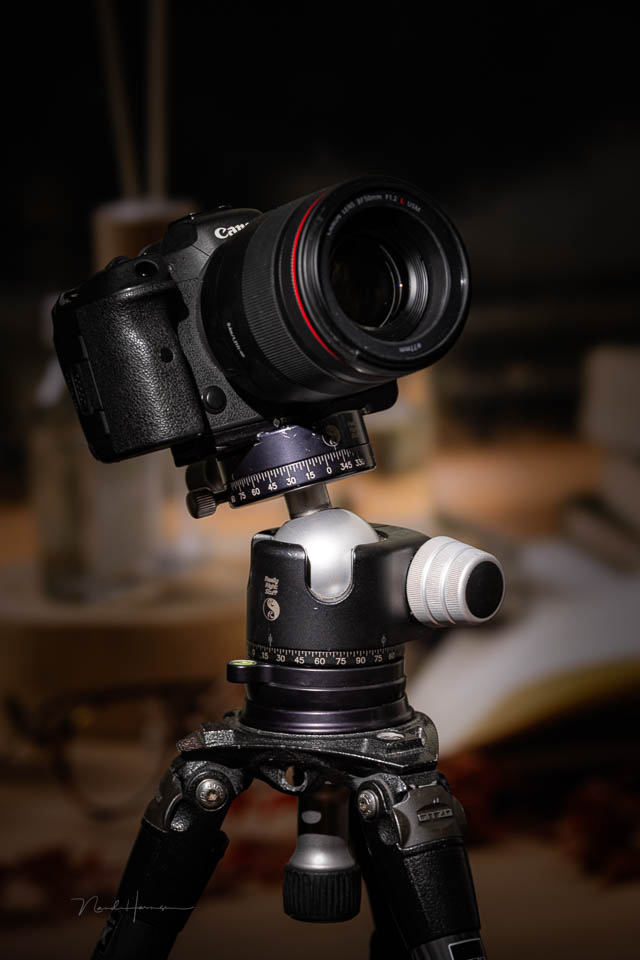
Besides its smaller size, which also lets you get closer to the ground, a ball head is quicker to adjust. You only have one knob or lever to move the camera in every direction. You can adjust it in a fraction of a second.
The disadvantage of a ball head is often its lack of precision. This means it can be difficult to get a camera perfectly horizontal or to aim it very precisely. This is particularly important in macro photography.
Do bear in mind that a small ball head is less suitable for large and heavy cameras. You need to choose a ball head size that is suitable for your camera and lens. A good ball head works fantastically, but it is often expensive too.
Both a ball head and a 3-way head are fantastic to use, but each has its own purpose. Choose according to how you use your tripod.
Finally, I want to mention the gimbal head. This is a third type of tripod head, suitable exclusively for large and heavy telephoto lenses and super-telephoto lenses. If you use such lenses, this is the best choice for you.
About the author
Nando Harmsen has been photographing for more than 40 years. He specialises in wedding photography and landscape photography. Nando also gives talks, workshops, masterclasses and photo trips, and regularly reviews new and interesting equipment.
You might also like
-
 Setting up a ball head
by Nando Harmsen
-
A tip for using telephoto lenses on a ball head
by Nando Harmsen
-
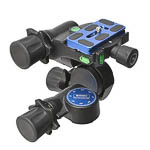 Review: Benro geared head
by Martin van Rooij
-
 Review: Sirui L324F with KS-G3 geared tripod head
by Nando Harmsen
-
 The World Through a Glass Ball
by Laura van der Burgt
-
 Review: RRS PG-01 panoramic head for landscape photography
by Nando Harmsen
15 comments
-
 Mac wrote on Tuesday 2 January 2024 at 08:22 | reply
Small addition.
Translated from Dutch.
A normal 3-way head cannot be adjusted to millimeter precision, these also suffer from drooping after you have tightened it. If you really want to set it with millimeter precision, you need to switch to a geared head. These are often available in a 3-way version, but can also be found as a ball head. -

 Nando
wrote on Wednesday 3 January 2024 at 14:10
| reply
Nando
wrote on Wednesday 3 January 2024 at 14:10
| reply
The 3-way heads I’ve had at home for this purpose really didn’t suffer from sagging. They could be adjusted to the millimeter and didn’t move anywhere.
Translated from Dutch.
I’ve never seen a geared ball head. Can you give me a link to such a ball head? -

-
 Donald Willemsen wrote on Tuesday 2 January 2024 at 11:31 | reply
Nando, Photofacts staff and readers, first of all, best wishes for the new year. I read the above article with great interest. Thanks for the tips.
Translated from Dutch.
A number of years ago I bought a tripod from Redged complete with a ball head. I always had the problem of it 'sagging' after setting it, which made precise adjustment simply impossible. I was advised to buy another ball head with a larger ball that could be clamped better. It became a fairly heavy ball head from Sirui. That solved the problem of the 'sagging'.
My own stability also became a problem over the years and then I thought I could solve this by also starting to use a monopod. That is less heavy than always having to carry a tripod. I bought a Carbon monopod from Sirui that has fold-out feet so it can stand independently and then put my Sirui ball head on it. The effect is that the ball head feels heavier than the monopod. Because the monopod has fold-out feet at the bottom, there is also a ball head on those feet. It is not wise to use portrait orientation by tilting the ball head. The camera then hangs 'beside' the monopod, meaning there is no stability anymore. That can also happen with a tripod. To solve that problem I bought myself an L-bracket and the camera is now always positioned exactly in the middle of the monopod or on the centre column of the tripod. -
Henri
wrote on Tuesday 2 January 2024 at 18:01
| reply
I don't entirely agree with the claim that a ball head would be much smaller and lighter than a 3-way head.
Translated from Dutch.
Both with 3-way heads and with ball heads there is an enormous choice between size, weight, design and materials used.
As Donald Willemsen already indicates above, there are indeed light, small ball heads, but they are hardly usable because the camera position changes as soon as you tighten the ball head and then let go. Only the large, heavy and therefore expensive ball heads don't suffer from this, or hardly at all.....
I use both a 3-way head and a ball head.
Each has its advantages: with a ball head, it is quite an adventure to get the horizon really horizontal, and then to adjust the composition. The whole thing always shifts so that the horizon ends up being tilted.
For landscape photography and everything that needs to be precise, I use a 3-way head (or 3D head). You can first straighten the horizon properly and then adjust the camera forwards or backwards without the horizon becoming tilted. You can also do some 'panning', provided you have levelled the tripod properly using the spirit level built into the tripod.
The ball head is great for action photos or portraits: you are much faster than with the 3D head.
Conclusion: buy both a 3-way head and a ball head. And don't skimp on this, because that inevitably leads to frustration....
You work much more pleasantly with your tripod when everything works smoothly and nicely: then your tripod comes out of the cupboard much more often! -
Nando
wrote on Wednesday 3 January 2024 at 14:07
| reply
Whether your ball head still twists after or during tightening often has to do with the quality of the ball head, and not the size of the ball. I know this from experience.
Translated from Dutch.
I have been working with a ball head for many years and have never had problems with leveling or positioning accurately.
During my workshops and masterclasses I often see the participants messing around with tripod and ball head. It is often inexperience, and turning the wrong knobs, which makes setting it up a misery. Besides, you can of course feel it in your clogs that a cheap ball head (I consider cheap to be less than 150 euros) does not work as well as a good ball head.
I would not quickly advise buying both. That depends entirely on your photography, the subjects you photograph, and under what circumstances. I would not trade my ball head for a 3-way head for anything in the world. -
Henri
wrote on Wednesday 3 January 2024 at 16:32
| reply
Well, it's a choice: I work with both a ball head and a 3-way head. For most jobs I simply prefer the 3-way head.
Translated from Dutch.
And why wouldn't you buy 2 heads? For all kinds of photo assignments you also use different lenses, tailored to the job and situation and to what you want to achieve.....
When you look up the test about ball heads on the DPReview site, by the way, you'll see that there is virtually no ball head that doesn't shift after you have tightened it. That is also my experience. Especially with a heavy lens such as the Canon TS-E 17mm F/4.0L in the photo above, it simply happens......
A geared 3-D head is actually a 3-way head with a rack-and-pinion mechanism so that you can adjust the 3 adjustment directions exactly with a rotary knob and then lock them. They are mainly used for architecture. (so it matches the mounted Canon TS 17mm lens in the photos quite well) -
 Paul Lefevere wrote on Tuesday 2 January 2024 at 19:05 | reply
I also started out with a ball head back in the day. The problem with that is working with longer lenses. When you loosen the main screw, you always have to hold the camera properly if you want to avoid the lens crashing into the tripod. As described in the article, I prefer to use the ball head when travelling. That is why I have been working with a gimbal head for years. Once properly adjusted in balance, the camera, even with a long zoom lens, always remains balanced when loosening it. The camera can be adjusted very smoothly in horizontal and vertical directions. With a longer lens, you soon have a foot (or little foot) underneath the lens, which makes it easy to switch from landscape to portrait orientation. But when the camera (with a shorter lens) itself is mounted on the gimbal, you have to use an L-bracket to be able to switch smoothly.
Translated from Dutch. -
Paul Lefevere wrote on Wednesday 3 January 2024 at 09:48 | reply
As Mac wrote, there is indeed a difference between a geared head and a simple 3-way head. Visually, the biggest difference is that the geared head has knobs on each axis, while the 3-way head has 2 (exceptionally 3) handles that need to be tightened to fix the camera in place. The knobs on the geared head are designed so that you can adjust them quickly but also set them precisely. After making an adjustment, you don't need to lock any axes anymore.
Translated from Dutch. -
-
Henri
wrote on Wednesday 3 January 2024 at 16:36
| reply
The first photo in your own article is also a geared head.
Translated from Dutch.
The caption "A 3-way head is large, heavy and takes time to set up properly. But it can then be extremely precise." is somewhat tendentious, because that photo shows more or less the largest and heaviest 3-way head available...... -
Paul Lefevere wrote on Wednesday 3 January 2024 at 15:42 | reply
Hello Nando:
Translated from Dutch.
The image you show is indeed a three-way head, but it is a "gear" version.
https://www.cameranu.nl/nl/p2394725/benro-gd3wh-precision-geared-3-weg-kop
"Gear" means that a worm and worm wheel are used to adjust the axis. The construction means that this axis is automatically locked.
Here is the image of an ordinary three-way head, which can also be adjusted along 3 axes.
https://www.cameranu.nl/nl/p2211605/benro-hd2a-arca-swiss-3-weg-statiefkop
In most versions it has 2 handles, one for the "tilt" movement and one for the "roll" movement. By tightening the handle, you clamp or release that axis. On the "pan" movement there is only a knob to lock and release it. This is the type of head that is often included with cheaper kits .
Tilt: from top to bottom;
Pan: from left to right;
Roll: rotating movement of the camera.
On certain three-way heads there can be a handle on each of the three axes:
https://www.kamera-express.be/manfrotto-229-3d-super-head -
Mac wrote on Thursday 4 January 2024 at 08:19 | reply
This is a geared ball head. It works like a regular ball head, but you can adjust the last millimeters extremely precisely
Translated from Dutch.
https://www.leofoto.eu/nl/ballhead-lh-40gr-geared-panning-clamp.html
This is a 3-way geared head
https://www.benro.nl/ida-Foto_FotoStatiefkoppen_BalhoofdGD_GD3WH_Geared-head-drieweg-statiefkop#menu
And this is a regular 3-way head
https://www.benro.nl/ida-Foto_FotoStatiefkoppen_BalhoofdHD_HD3A_3-Weg-Hoofd-arca-swiss-Driewegkop#menu
The difference between the geared and a regular 3-way head is that with the 3-way head you loosen an axis, move it and then tighten it again. With the geared version, when you turn the knob, the axis turns immediately. and as soon as you let go it is immediately locked, because it was never loose. You turn it over screws, so very precisely
And for videographers there are even geared heads in circulation that run on electric motors. -
Donald Willemsen wrote on Thursday 4 January 2024 at 10:21 | reply
Do you want a geared head? For the price, you don't have to leave it
Translated from Dutch.
See for example: Arca Swiss D4 Classic -
Have your say
Please note: Articles older than a week can only be commented on by signed-in visitors.Would you still like to comment? sign in or create a free account.
Become a better photographer every week
A practical photography tip in your inbox every week.
38,982 photography enthusiasts already receive the tips! More about the weekly mail. Or keep up to date via  Facebook.

Elja Trum
Photofacts; everything to do with photography!
Would you like to take better photos and keep up with what is happening in photography? Photofacts publishes articles that teach you something about photography — from a product announcement to a practical shooting tip or a look at a website. Photofacts covers photography every day and is a hobby project of Elja Trum's that got out of hand. The articles are written by a team of volunteer authors. If you would enjoy writing one or more articles for Photofacts, do get in touch.More about PhotofactsPhotofacts is made possible in part by
