

Setting up a ball head
Monday 2 June 2025, 15:30 by Nando Harmsen | 3,217 views | 2 commentsThis article was translated from Dutch with the help of AI. Read the original.
A ball head is the most common way to mount a camera on a tripod. Most ball heads need some adjustment. Make sure you use the friction control properly.
There are four different types of tripod head. You have a three-way head, a video head, a gimbal and, of course, the ball head. The latter is the most commonly used. But it is also often the least understood tripod head.
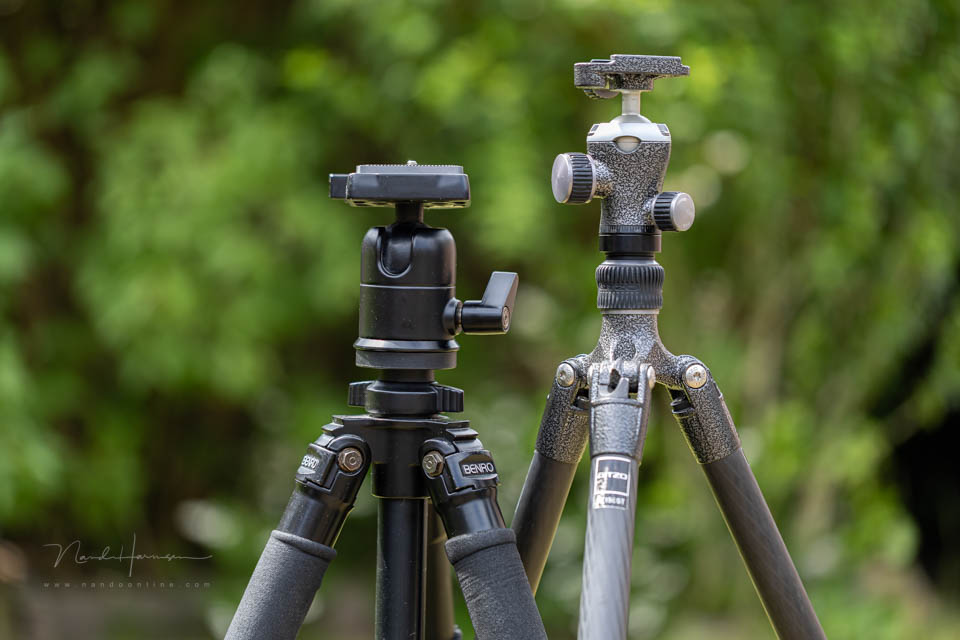
A ball head is a ball that can rotate freely inside a housing. You clamp this ball in place with a knob. It is a quick way to position a camera because you have complete freedom of movement.
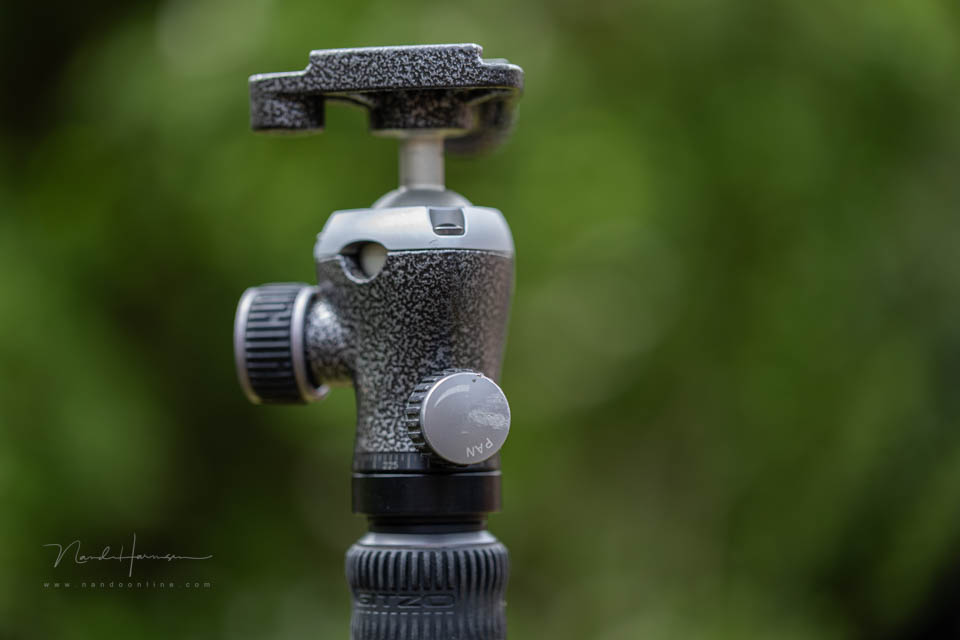
The simple ball heads have just one knob for locking the head in the chosen position. There is little you can do wrong with that. The more advanced ball heads have two or three knobs. Each knob has a different purpose.
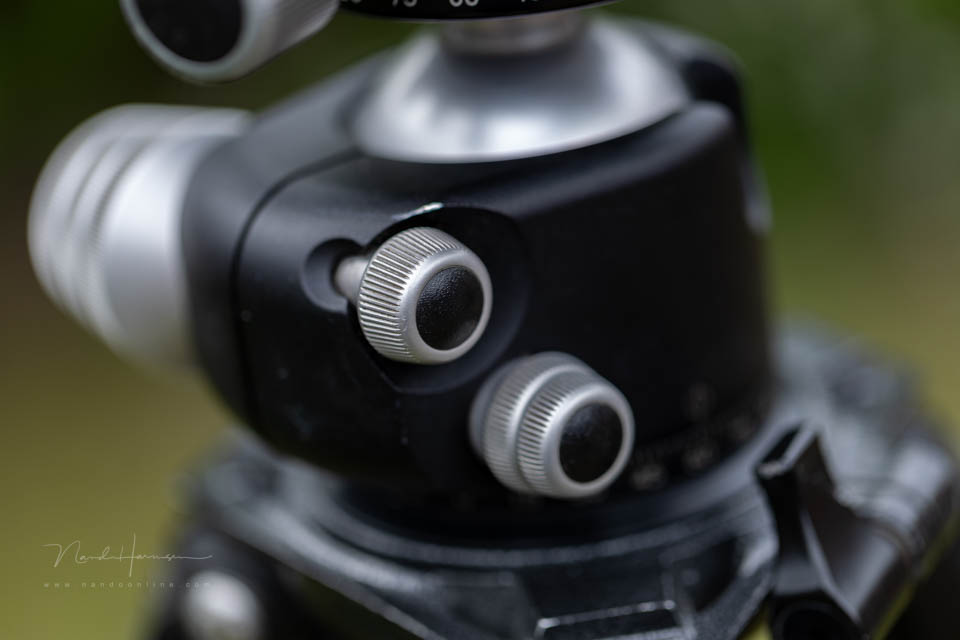
The most obvious knob is the panorama rotation knob. This is used to rotate the ball head around its base. There is often a scale in degrees as well. The use of this knob speaks for itself.
The other two knobs are sometimes confused with each other. In that case, the knobs look too similar, so it is not clear which knob does what. You have the knob for unlocking the ball and the knob for the friction.
The latter is important to set correctly. The friction determines how freely you can move the ball in the ball head. The higher the friction, the less freely you can move the ball. This means you have to apply more force to move it. You set the friction based on the weight of your camera and lens combination.
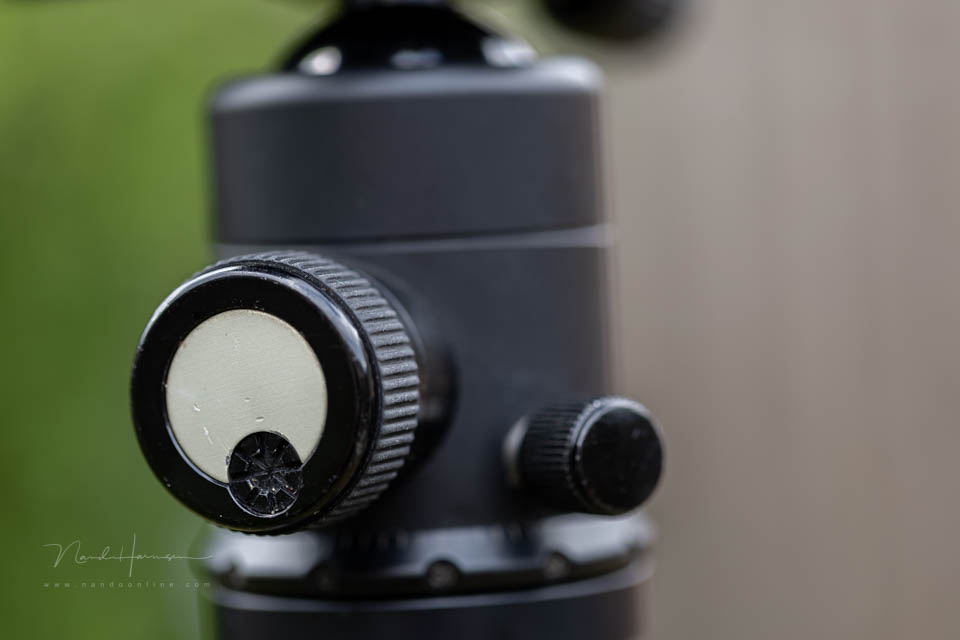
If you set the friction too high, it will seem as though the ball head is stuck. I regularly see photographers using the friction knob to loosen or tighten the head. That is not the right way. Usually, but not always, the largest knob is for loosening or tightening the ball head. The smaller knob is then for the friction.
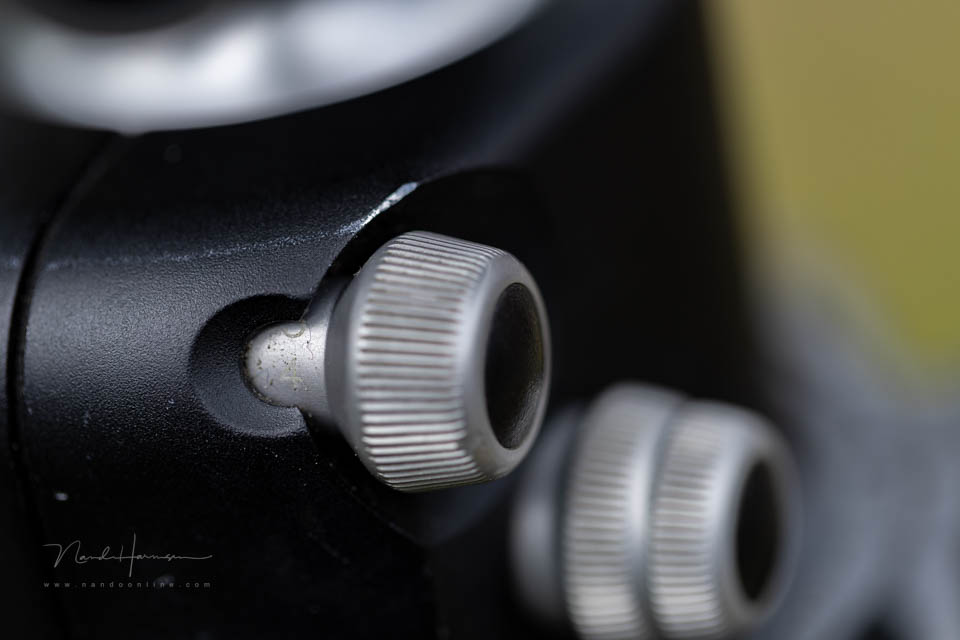
Set the friction high when you are using a heavy camera and lens combination. This minimises the risk of your camera tipping over. If you then switch to a lighter camera and lens combination, you should set the friction a little less tightly.
If you set the friction correctly, the knob for locking the ball head works optimally. Usually, a quarter turn is enough to lock or loosen the ball head.
A ball head is a real all-rounder. However, does your photography require precise positioning? Then a three-way head may be a better choice. You can position the camera to within a millimetre.
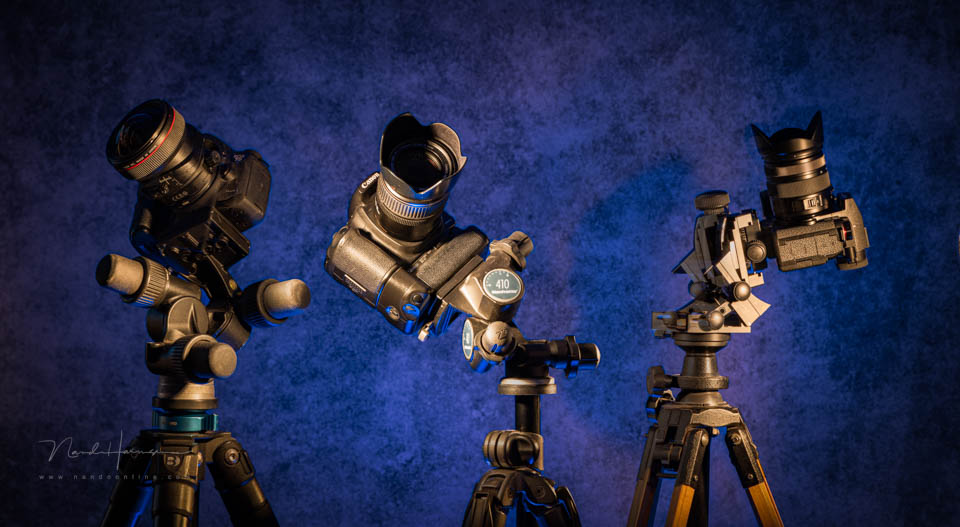
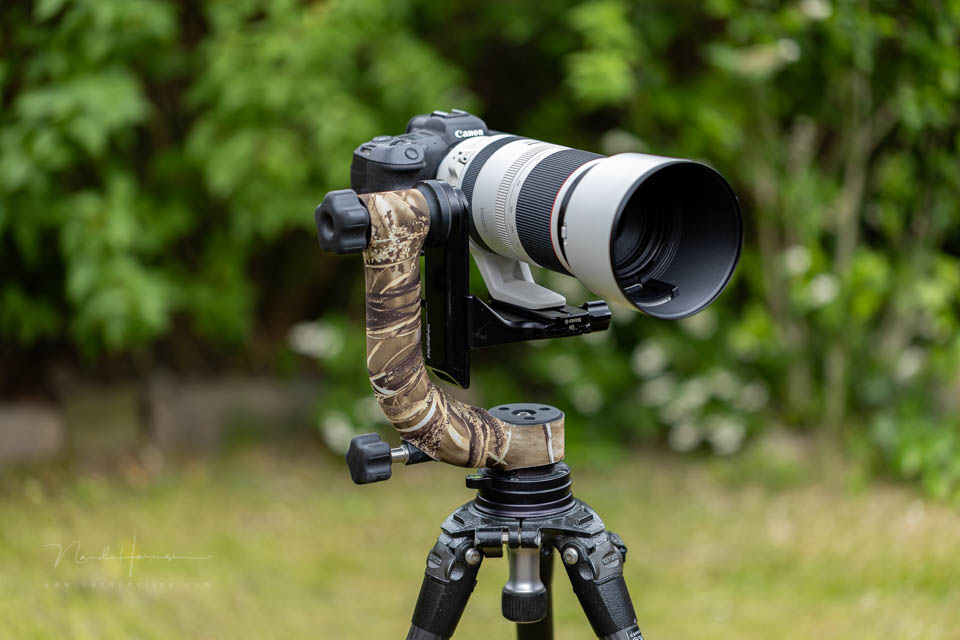
Do you always use huge telephoto lenses and want perfect balance and freedom of movement? Then a gimbal may be a better choice. They are designed for that purpose. A video head speaks for itself, of course.
A ball head is the ideal middle ground for photographers who want reasonably precise positioning of the camera, combined with the flexibility of speed and movement. It is often a compact and lightweight tripod head too, ideal for a travel tripod.
Can you adjust the friction on your ball head? Make sure you set and use it correctly. Only then will you get the most out of this type of tripod head.
About the author
Nando Harmsen has been photographing for more than 40 years. He specialises in wedding photography and landscape photography. Nando also gives talks, workshops, masterclasses and photo trips, and regularly reviews new and interesting equipment.
You might also like
-
 Which is best: a ball head or a 3-way head
by Nando Harmsen
-
 A tip for using telephoto lenses on a ball head
by Nando Harmsen
-
 Review: Benro geared head
by Martin van Rooij
-
 The World Through a Glass Ball
by Laura van der Burgt
-
 Review: Sirui L324F with KS-G3 geared tripod head
by Nando Harmsen
-
 Adjusting a gimbal head
by Nando Harmsen
2 comments
-
 Mac wrote on Wednesday 4 June 2025 at 08:14 | reply
To adjust to millimeter precision, you really need a geared head, and not just a 3-way one. An ordinary 3-way will still sag etc., and is also difficult to adjust. Precision alone is easier than with a ball head.
Translated from Dutch.
Yes, most geared heads are 3-way heads, but you also have geared heads with a ball head (Leofoto, among others) -


Have your say
Please note: Articles older than a week can only be commented on by signed-in visitors.Would you still like to comment? sign in or create a free account.
Become a better photographer every week
A practical photography tip in your inbox every week.
39,079 photography enthusiasts already receive the tips! More about the weekly mail. Or keep up to date via  Facebook.

Elja Trum
Photofacts; everything to do with photography!
Would you like to take better photos and keep up with what is happening in photography? Photofacts publishes articles that teach you something about photography — from a product announcement to a practical shooting tip or a look at a website. Photofacts covers photography every day and is a hobby project of Elja Trum's that got out of hand. The articles are written by a team of volunteer authors. If you would enjoy writing one or more articles for Photofacts, do get in touch.More about PhotofactsPhotofacts is made possible in part by
