

5G, a blessing for photographers?
Saturday 14 March 2020, 17:17 by Huub Keulers | 4,186 views | 14 commentsThis article was translated from Dutch with the help of AI. Read the original.
5G, no, it has nothing to do with the number of Gs that Max Verstappen experiences in his Formula 1 car. We are talking about the fifth generation of mobile wireless technology.
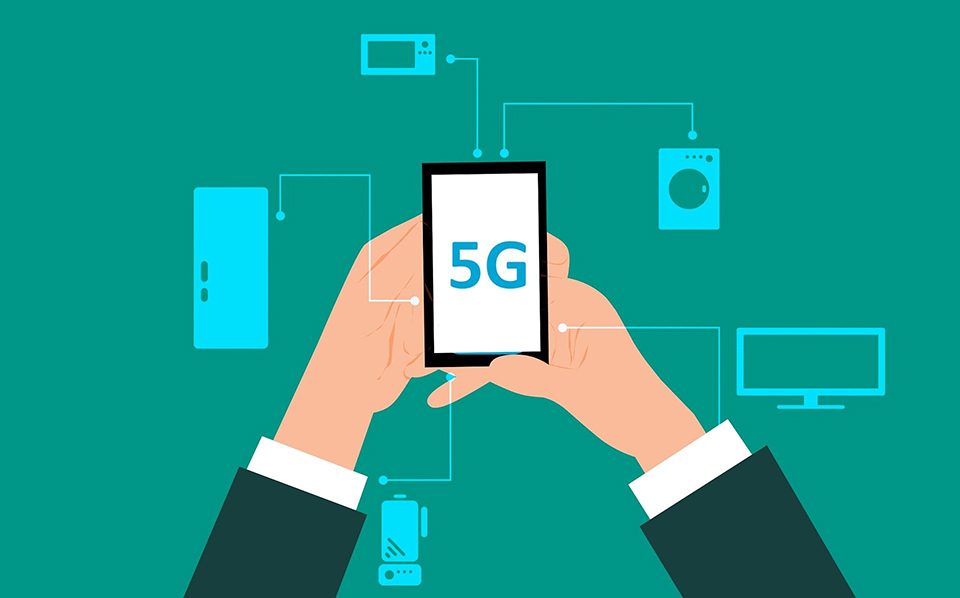
5G is also being rolled out in the Netherlands this year and promises lightning-fast Wi-Fi speeds that will rival some of the fastest wired network connections.
This makes me enthusiastic on the one hand because it could significantly change the way photographers work. But on the other hand, we still do not really know how safe radiation from a 5G network is for people and nature.
5G speeds
A 5G signal is characterised by its extremely high speed. However, it is not just faster, it can also send more data, is more reliable and provides much longer battery life for your mobile phone.
For example, tractors could drive themselves, crops could be fitted with sensors and continuously checked for diseases, and doctors could assess a patient in an ambulance remotely. Finally, network latency is many times lower because of the greater bandwidth used by 5G technology.
The possible speeds of 5G are so high that it could become a serious replacement for 'fixed internet'. This would mean that fibre, cable and DSL connections could become redundant.
5G could potentially reach speeds of 1.25 Gbit per second.
Many times faster than 4G, then. Although the speeds are certainly exciting and rival those of a reasonably fast home or business internet connection, another major aspect of 5G is its capacity.
While 4G can support 100,000 devices per square kilometre, 5G can support up to 1,000,000 devices, reducing congestion on the network.
5G and safety
5G will use existing and new masts. There will probably also be small antennas. A 5G network uses a new way of transmitting, employing a so-called two-dimensional antenna that can track users 'horizontally and vertically'.
However, because the highest frequencies required have a short range, many antennas will be needed that emit a relatively strong radio signal. This has led to discussions about the possible health effects of this network.
All 5G antennas must comply with international exposure limits for electromagnetic radiation. Small 5G antennas that are nearby must also meet these safety requirements.
Why is all this so exciting for photographers
OK, so that is all wonderful: our mobile phones will become considerably faster over the next few years. Why am I so enthusiastic about this when it comes to work or hobbies? Well, when 5G becomes a little more widespread and stable, we will have free access to speeds capable of transferring large amounts of files in real time.
Backing up files is always a necessary 'evil' for photographers. At least two local copies and one copy in the cloud are the standard method, but moving all that data to the cloud naturally takes a lot of bandwidth and often patience.
Let's say, for example, that a sports or wedding photographer comes home with 4,000 images, which is a fairly standard number. Normally compressed raw files on my Canon 1Dx are about 24 MB each. So 4,000 photos comes to 96 GB.
At the moment, with a fairly standard broadband connection in the Netherlands, it takes around 20 hours to back up those 4,000 RAW images over an average Wi-Fi connection.
That is not particularly fast, but it is not terrible to back up the number of images from a sports assignment or wedding: switch on the backup when you get home after the shoot and it will be ready the following evening. With 5G, however, the backup mentioned above would be reduced to a fraction of this time.
This means that it is quite possible that photographers will soon be able to keep their 5G phone in their pocket, with their camera connected to it wirelessly, and back up photos as they are taken.
Within seconds of pressing the shutter button, the unedited file is already in the cloud. The logistics of juggling external hard drives between breaks in a sports match to make a local backup have disappeared.
Files are simply backed up as they are created. It could also eliminate the frustrating stories we hear about photographers somehow losing their files before getting home to back them up.
It could even make a kind of remote tethering possible. Have you ever waited for Lightroom to create 1:1 previews for 4,000 images? It is far from a fast process.
But with this kind of real-time uploading, you could easily send the images to a Dropbox folder, for example, from where Lightroom would automatically import them and generate previews while you are still at the event. By the time you get home, the images would be ready to be selected and edited.
This could also be a major blessing for news organisations and photojournalists, who often need to upload images as quickly as possible, with every second feeling like an eternity.
Everything a photojournalist photographs on location could be sent immediately to the press agency, without using a wired network at the location.
Potential problems
Although all these scenarios sound fantastic, they are of course a little far-fetched at the moment, because there are many problems and potential obstacles to consider first. One of the frequencies needed for a faster 5G network, 3.5 GHz, is also still being used by the military.
This frequency is expected to become available sometime in 2021-2022. From that point on, everyone could in principle use the high internet speed.
Conclusion
We probably do not yet have the infrastructure to make these scenarios possible for a wide range of photographers, and there are other problems that also need to be addressed.
But the potential for 5G to make photography more efficient, simplify workflows on the move and protect data better is there, and that in itself is good news.
About the author
Huub Keulers is een enthousiasmerende veelzijdige freelance fotograaf woonachtig in Elsloo (Li). Hij is gespecialiseerd in sport-, bedrijfs-, straat-, honden en portretfotografie. Daarnaast is Huub auteur van diverse educatieve fotografieboeken en verzorgt hij allerlei fotoworkshops, masterclasses en lezingen.
You might also like
-
 Photographing from a mobility scooter
by Juliette Gribnau
-
 Street photography tip: Avoid cars in your photos
by Michiel Heijmans
-
 Lightpainting parked cars to stay creative during lockdown
by Michelle Peeters
-
 Accessibility at workshops and locations for people with disabilities
by Juliette Gribnau
-
 Mobile darkroom for analogue photographers
by Elja Trum
-
 Watch: Canon Talks at Home
by Michelle Peeters
14 comments
-
 Gert wrote on Saturday 14 March 2020 at 23:29 | reply
In 2020/21 more and more 5G mobile phones will come onto the market. Until now they are still relatively scarce. The speed will then still be at a maximum of 850 Mbit, whereby you need to have the transmission tower in sight to be able to reach that.
Translated from Dutch.
Once you have made that connection, you still have to transfer your files. That can be done via a WiFi connection, directly from the camera, via laptop, smartphone, iPad or a wired connection. That will have to be able to reach that speed one way or another. With 54 Mbit WiFi you're back to square one. That is still often the case at the moment.
A great deal of money will still have to be invested to get good 5G coverage across the whole of the Netherlands for the various networks, as well as a new phone, preferably an unlimited data plan and sufficient speed from the camera or card. In Amsterdam and The Hague the first networks have been built and are being tested.
All the signs are there that it is all coming. The networks of the various providers are getting faster and faster. In any case, a great deal of work is being done on these developments in the Netherlands, and who knows, we may soon get cameras with a built-in e-SIM card. One press of the button and everything goes to your online drive. That would really be fantastic. -

 Donald Willemsen
wrote on Monday 16 March 2020 at 00:27
| reply
Donald Willemsen
wrote on Monday 16 March 2020 at 00:27
| reply
There is still a dispute over who is allowed to supply the 5G network. Huawei is one of the contenders. Unfortunately, Trump is throwing a spanner in the works, with the result that the construction and delivery of 5G will be considerably delayed. Then there is the strength of the electromagnetic waves. Here in Belgium there are 6 governments, all of which want to have their say. Even now, the government of the Brussels-Capital Region has stricter standards for the 4G network than the rest of Belgium, and much stricter than the EU guidelines. As a result, there are already a number of places where you are deprived of 4G. The EU complains bitterly about it. That of course does not bode well for the 5G network. I also think that if we follow the US too much, we as Europe will never be able to make our own choices. At the moment, the US is putting enormous pressure on the various European countries, above all not to choose Huawei. So it looks very much like the European consumer will have to deal with much higher costs to be able to use 5G.
Translated from Dutch. -
 Lauran wrote on Tuesday 17 March 2020 at 11:57 | reply
5G is dangerous so totally unnecessary.
Translated from Dutch. -
Donald Willemsen
wrote on Tuesday 17 March 2020 at 12:21
| reply
@ Lauren, this is an unnuanced statement. Then also show why 5G is dangerous with scientific evidence. Just shouting something is much more dangerous.
Translated from Dutch. -
 Michelle Peeters wrote on Tuesday 17 March 2020 at 12:22
| reply
Michelle Peeters wrote on Tuesday 17 March 2020 at 12:22
| reply
@Donald: a lot of trees do have to be cut down for it, so in that respect Lauran does have a point...
Translated from Dutch. -
Donald Willemsen
wrote on Tuesday 17 March 2020 at 12:38
| reply
@ Michelle, I don't see the connection between 5G and cutting down trees. Please explain that to me.
Translated from Dutch. -
Michelle Peeters wrote on Tuesday 17 March 2020 at 12:42
| reply
@Donald: Facebook was completely full of it a while ago, but maybe it was fake news?...
Translated from Dutch. -
Donald Willemsen
wrote on Tuesday 17 March 2020 at 13:19
| reply
@Michelle, you think Facebook is a reliable news source? The biggest source of fake news is Facebook.
Translated from Dutch. -
Michelle Peeters wrote on Tuesday 17 March 2020 at 15:43
| reply
@Donald: that's true!
Translated from Dutch. -
 Huub Keulers
wrote on Tuesday 17 March 2020 at 18:24
| reply
Huub Keulers
wrote on Tuesday 17 March 2020 at 18:24
| reply
Dear Gert, thank you for your interesting addition!
Translated from Dutch.
Stay healthy above all!
Kind regards,
Huub Keulers -
 Michael de Roo wrote on Wednesday 18 March 2020 at 12:17 | reply
I thought it had already been scientifically demonstrated that 5G will affect the health of (sensitive) people, plants and animals. What has not been scientifically demonstrated is that 5G will have no effect whatsoever on health etc. Caution is called for but stopping it will not succeed.
Translated from Dutch. -
 Gert Kracht wrote on Wednesday 18 March 2020 at 15:27 | reply
Technology is my work and I am often right next to it. Yet I remain wary of every form of radiation. I can still remember the story Vincent Laforet told at the Beurs van Berlage in Amsterdam:
Translated from Dutch.
His photo appeared on the screen. At that moment he was hanging right at the top of the mast of the Empire State Building with a camera in one hand, without the strap around his neck, and two men right below him: Deke Johnson and Tom Silliman, who were working on the antenna together at a height of over 450 meters. A fantastic photo taken with a wide-angle lens.
One detail of that story has always stayed with me: just before Vincent climbed into the mast, he was fitted with a small device. 'If it starts making these beeps, you have to climb faster'. 'Why?' he asked the men. 'Because then you might not be able to have children anymore if you stay there too long'.
On the way up, the thing started beeping. Not short beeps, but one big long beep. Only when he was hanging in place at the top did it become quiet again.
We encounter radiation everywhere on this planet. In the Nikhef building in Amsterdam, there are a few wonderful examples of how you can make that visible. Especially cosmic radiation, which shoots straight through everything, is shown very impressively in an alcohol vapor chamber. I think that as people we should think carefully about everything we undertake from now on, what we are doing, for ourselves, nature, and ask ourselves with everything: do we really need this. That is the other side of the discussion, but certainly one that is worth examining properly.
p.s. Vincent has just become a father. -
Donald Willemsen
wrote on Wednesday 18 March 2020 at 15:45
| reply
@Michael, that's a comment that makes sense. Still, that influence will also depend on how far you are from a transmission tower and whether you are continuously exposed to that electromagnetic radiation.
Translated from Dutch. -
 Elja Trum
wrote on Wednesday 18 March 2020 at 15:51
| reply
Elja Trum
wrote on Wednesday 18 March 2020 at 15:51
| reply
I think the so-called harmfulness has not yet been scientifically demonstrated as much as many people think.
Translated from Dutch.
Kurzgesagt has a well-substantiated video about that. Recommended watching sometime (just like all their other videos, by the way).
Have your say
Please note: Articles older than a week can only be commented on by signed-in visitors.Would you still like to comment? sign in or create a free account.
Become a better photographer every week
A practical photography tip in your inbox every week.
39,024 photography enthusiasts already receive the tips! More about the weekly mail. Or keep up to date via  Facebook.

Elja Trum
Photofacts; everything to do with photography!
Would you like to take better photos and keep up with what is happening in photography? Photofacts publishes articles that teach you something about photography — from a product announcement to a practical shooting tip or a look at a website. Photofacts covers photography every day and is a hobby project of Elja Trum's that got out of hand. The articles are written by a team of volunteer authors. If you would enjoy writing one or more articles for Photofacts, do get in touch.More about PhotofactsPhotofacts is made possible in part by
