

4 second-hand purchases you need to be careful with
Monday 19 April 2021, 20:10 by Nando Harmsen | 11,076 views | 17 commentsThis article was translated from Dutch with the help of AI. Read the original.
Everything related to photography is expensive. Sometimes extremely expensive. It is tempting to look on the second-hand market and buy there. The market is very lively, and with some patience you can find anything. You need to be extra careful with some second-hand products.
There are many hobbyists who have a bit more money to spend and constantly go for the latest of the latest. They are happy to sell their old equipment. There are also many hobbyists who start with photography and then discover that it is not really for them.
All that equipment eventually appears on the second-hand market. Usually, the equipment belonging to these photographers and almost-photographers is in immaculate condition. It has been used very little, and taking over this equipment can be a good deal.
There are also photographers who work more professionally, or who actually do it as a job. They often want to get rid of their heavily used equipment when they make a new investment. That equipment has often been used very intensively and shows plenty of signs of use. At the same time, it is often well maintained.
Be careful and sensible
A lot has already been written about the second-hand market. You need to be careful when buying and paying, and you need to test the things you buy properly. A camera that has been used a lot should of course still work properly, just like the camera that always served as a back-up and never left the bag.
Everything you can think of is for sale, and if you check and test properly, you can safely and confidently take over a lot from the previous owner. However, there are also some things that you are better off not buying second-hand, or that you need to be extra careful with.
1. Batteries
A battery does not last forever. The more often it is charged, the less well it retains its capacity. This can be a particular problem with unbranded or non-genuine examples.
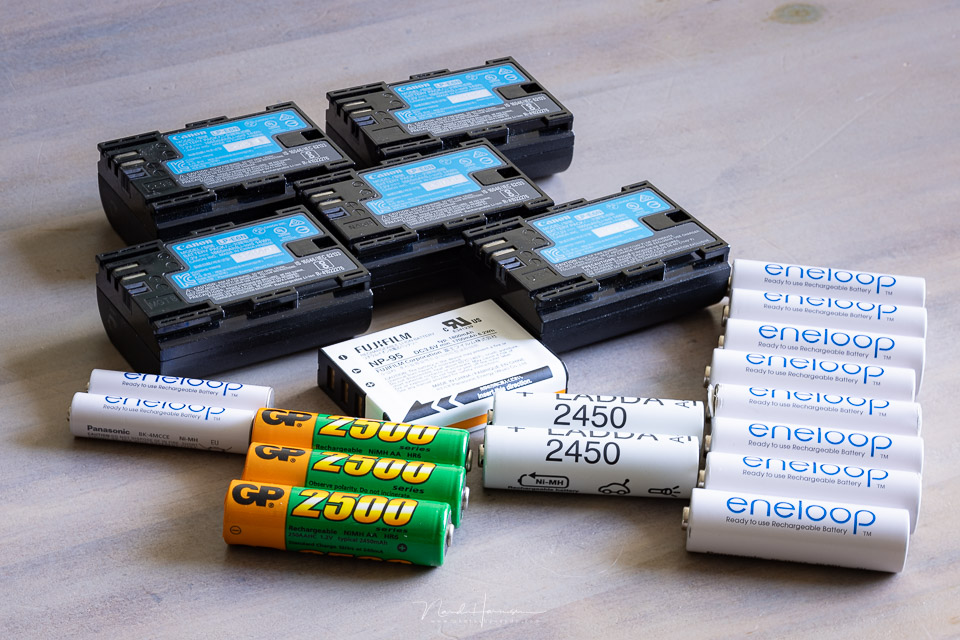
A battery can neatly show 100 per cent when it is checked in the camera, but it may suddenly happen that the charge drops drastically after 20 or 30 photos. Unfortunately, you only notice that when you are out and about.
2. Memory cards
Just like batteries, memory cards do not last forever. Repeated writing leaves its mark. Part of the memory can become corrupt, as it is called. An old card can also cause more write errors while photographing.
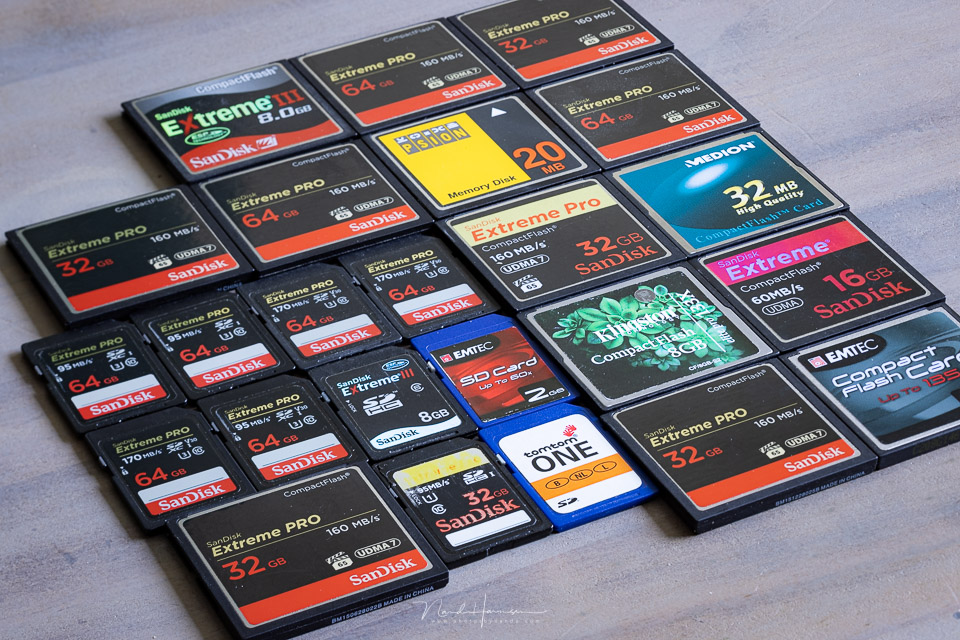
Do not take risks, because this is about the photos you take, your memories or even a job. Make things as reliable as possible, so that you do not lose your photos. It is a shame to discover that the card can no longer be read, or that photo files do not display a proper image.
You can often see when a card has been used frequently and intensively. Scratches and faded text on the card's stickers are a good indication. If you still want to buy second-hand, keep an eye out for this.
3. Camera strap or camera carrying system
There are many fantastic or ingenious camera straps and camera carrying systems available. They all have one thing in common: you hang your expensive camera from them and have to trust completely that it will not come loose or break.
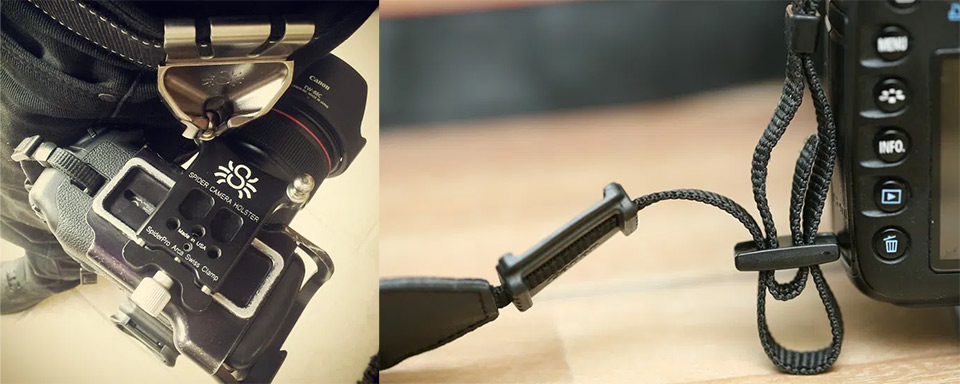
Camera straps and camera carrying systems are subject to wear. This is especially true of systems with a metal ball joint. You do not want to think about a strap or connector breaking after a few months because it is worn out or has suffered metal fatigue.
This of course all depends on how much the previous owner used it. You have to take them at their word when they say it is as good as new. So stay alert and be careful. Check everything very carefully before you go ahead with the purchase.
4. Tripod
A tripod is also a tool to which you entrust your camera. You assume that a tripod will remain upright and will not let your camera fall. Just like camera straps and carrying systems, tripods can also be subject to wear.
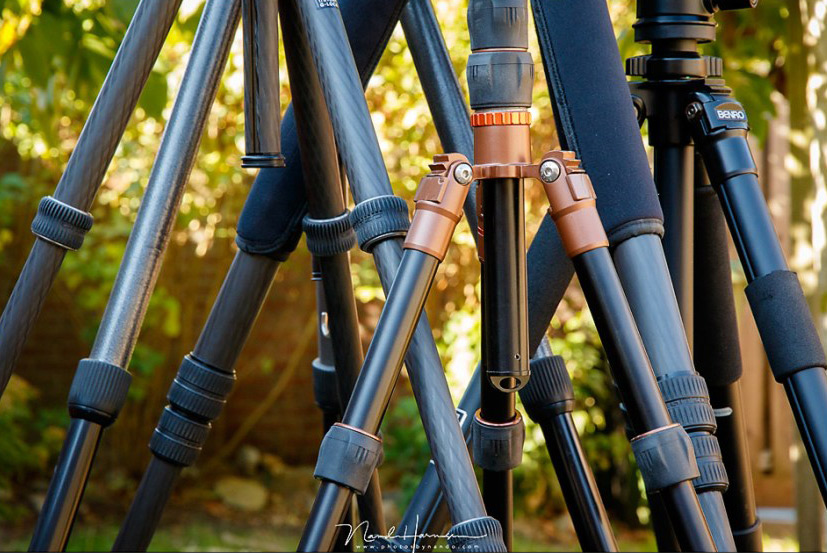
Many photographers buy an average of three tripods in their lifetime. A cheap one, a decent one, and only then a good one. In principle, you buy that good one for life. The other two are often sold on. This may be because they were not what the photographer hoped they would be, or because they simply no longer work properly.
So take extra care when buying a tripod second-hand. The clamping system on the tripod legs is especially important here. Look for damage, scratches or other defects. Everything should work smoothly and not stick.
A note about these 4 things
Of course, this does not mean that the second-hand market only has poor-quality products when it comes to these four things. Far from it. You can even find good batteries and memory cards second-hand. The only problem is that you cannot check the remaining life of either of them.
Buying the wrong memory cards or batteries is a waste of money, and may lead to the loss of some photos. It is a very different matter with a camera strap, camera carrying system or tripod. If something goes wrong with those, it can cause serious damage.
You can check camera straps, carrying systems and tripods properly. So do it. Does it not feel right when you hang your own camera from a carrying system or put it on a tripod? Even if everything looks good and works properly? Then that is a good reason not to go ahead with the purchase and to keep looking.
In short, you can find good deals on these 4 things too, as long as you keep your wits about you.
What would you never buy second-hand, and why? Or have you had good second-hand experiences with the 4 products I mentioned? Share it in a comment below this post so that others can learn from it too.
About the author
Nando Harmsen has been photographing for more than 40 years. He specialises in wedding photography and landscape photography. Nando also gives talks, workshops, masterclasses and photo trips, and regularly reviews new and interesting equipment.
You might also like
-
 Beware of Well-Meaning Photography Advice
by Nando Harmsen
-
 The Most Expensive Lenses in the World
by Nando Harmsen
-
 A new year, a new purchase?
by Nando Harmsen
-
 SanDisk Extreme SSD may not be a sensible purchase
by Elja Trum
-
 Be sensible, buy a good tripod
by Nando Harmsen

17 comments
-
 Lex wrote on Tuesday 20 April 2021 at 10:46 | reply
Talk about stating the obvious.
Translated from Dutch.
As if memory cards and batteries are only now being offered second-hand for cameras.
And the tripod and camera strap are easy to check and test to see whether they meet the requirements.
The only informative thing I find is that you can indeed suffer relatively extensive damage from consequential damage caused by an unreliable tripod or camera strap. -
 Matt wrote on Tuesday 20 April 2021 at 12:07 | reply
* Definitely don't buy batteries and memory cards second-hand.
Translated from Dutch.
* A camera strap, it would have to be something special.
* A tripod: depends. if it's e.g. a good brand product (Manfrotto or Gitzo), it can be interesting. The only second-hand tripod I ever bought was a Pedco mini tripod. Looked good and at the asking price I dared to take the chance. Turned out to be a fine little tripod.
What I have bought second-hand a lot: lenses. Of all the lenses I have, 4 were bought new, and 11 lenses are second-hand. Of those second-hand lenses, 1 came from a camera shop, the rest bought via Marktplaats.
Incidentally, buying second-hand through a camera shop is an option if you want more certainty: a reputable camera shop doesn't sell junk and there is often 6 months (or more) warranty. -
 Guy wrote on Tuesday 20 April 2021 at 13:27 | reply
I don't buy batteries and memory cards second-hand anyway.
Translated from Dutch.
With tripods and straps, you notice quickly if something isn't right.
A camera or lens is a different story, you can also get those second-hand in the shop. But I think there's always some gamble when you buy something second-hand. -
 andré janssen wrote on Tuesday 20 April 2021 at 13:55 | reply
Nando, what a great series of articles/contributions you provide for Photofacts. And even though it may be more or less useful or applicable to the different readers, the fact remains that it is very worthwhile.
Translated from Dutch. -
 henriette wrote on Tuesday 20 April 2021 at 14:17 | reply
I would never buy a lens second-hand..
Translated from Dutch. -
 Robert wrote on Tuesday 20 April 2021 at 16:45 | reply
Good experience at Cameranu in Urk with used cameras. And often a warranty period. With bodies, pay attention to the number of clicks. With a DSLR usually 150,000 without problems.
Translated from Dutch.
Sporting regards Robert -
 Jasper wrote on Tuesday 20 April 2021 at 18:36 | reply
Of course you should never buy memory cards and batteries on Marktplaats. E.g. lenses or a body can be fine, but I would do that at a camera store. It's always more reliable and comes with a warranty. Personally, I wouldn't be so quick to buy a camera, only lenses are a good option.
Translated from Dutch. -
 Pedro Moring wrote on Tuesday 20 April 2021 at 18:42 | reply
I bought a lot second-hand, that was back when I was on welfare (Social Services), sometimes from a good acquaintance of mine, both his camera bodies and lenses, a couple of times via Marktplaats and I bought a new body twice, in Feb. 2012 the Nikon D3200 at camera.nl in Barendrecht and in Feb. 2019 the Nikon D850 at Kamera-Express in Rotterdam. I did always pick up everything I bought via Marktplaats, so I never had a bad buy either.
Translated from Dutch. -

 Bernard wrote on Tuesday 20 April 2021 at 20:46
| reply
Bernard wrote on Tuesday 20 April 2021 at 20:46
| reply
Dear Nando, I have come to expect better from you. This is really minimal. I had hoped there would be something about lenses and camera bodies. As far as memory cards are concerned, I don't share your opinion. They don't "wear out", after all. A bit is switched on or off by means of a small electric current. If you don't trust the matter, suggest to the seller that you first want to format a card in your camera before buying it. If that works, then there is nothing wrong. Errors with cards are usually in the contact area. Dirty or worn, or in the case of a CF card, a damaged connector. The connector in the camera may also be dirty, or have a bent connector pin in the CF slot. The other topics mentioned are, in my opinion, far-fetched and stating the obvious. If you buy something second-hand, common sense, knowledge of the subject and a little healthy distrust are appropriate. The second-hand photo equipment I have bought was always good. There was always only one thing wrong with it: it wasn't new...
Translated from Dutch. -
Lex wrote on Tuesday 20 April 2021 at 21:44 | reply
@bernard,
Translated from Dutch.
It is not correct that memory cards do not wear out. They do. Flipping the bit can only happen a limited number of times. That is why writing to the memory is also distributed as much as possible.
With solid-state hard drives, extra memory is even reserved in case something breaks. A low-level format is also not recommended because it causes the memory to wear out very quickly. -
 wim hoppenbrouwers wrote on Wednesday 21 April 2021 at 09:10
| reply
wim hoppenbrouwers wrote on Wednesday 21 April 2021 at 09:10
| reply
Everything that's too good is too good to be true!
Translated from Dutch. -
Bernard wrote on Wednesday 21 April 2021 at 11:25
| reply
@Lex. In response to your comment "Flipping the bit can only happen a limited number of times", I would like to see a technical scientific substantiation for that.
Translated from Dutch. -
 Nando
wrote on Wednesday 21 April 2021 at 11:41
| reply
Nando
wrote on Wednesday 21 April 2021 at 11:41
| reply
@Lex:
Translated from Dutch.
I expect it's not obvious to everyone
@Henriette:
What is the reason you wouldn't buy a second-hand lens?
@Bernard:
It is generally known that memory doesn't have an unlimited lifespan. You asked for a link providing scientific evidence. I can't give you that, but Google is your good friend for that. I will help with this link: http://intelligence.agconnect.nl/content/13-vragen-over-flash-geheugen. Pay particular attention to points 5 and 7. -
 Lex wrote on Wednesday 21 April 2021 at 11:51 | reply
@Nando,
Translated from Dutch.
Apparently, it indeed isn't completely clear to everyone. Because of this, your story does add value after all.
Still, with this platform I would have expected much more that you would have gone into buying photographic equipment second-hand and what to look out for or avoid.
@Bernard
As Nando says, this is common knowledge and if you google it you will find enough evidence. I copied a section from a study between Google and the University of Toronto:
Do SSDs fail?
SSDs can fail, but in a different way than traditional HDDs. While the latter often fail because of mechanical issues, SSDs may fail due to the methods used to write information. To understand why and how SSDs fail, it’s important to understand more about the way they process, store, and access information in the first place.
As previously mentioned, SSDs use flash memory cells to store data. In this way, SSDs function almost like large flash drives, programming data onto these cells by changing their electric charges. However, once you fill the available memory on an SSD, the SSD can only add new information by erasing older data. This process is called a program/erase cycle, or P/E cycle for short.
Importantly, each SSD has a limited number of P/E cycles. Each P/E cycle gradually degrades the memory of an SSD’s cells until they eventually become worn down. At this point, you will no longer be able to rely on the SSD to store information. While the gradual wearing out of SSD flash cells doesn’t represent the same kind of failure as a mechanical malfunction on a HDD, it does mean the drive will no longer be usable.
While SSDs may fail with less frequency than HDDs, they do have a higher error rate that can affect the end-user experience. For example, so-called uncorrectable errors are relatively common in SSDs. Research shows that over 20% of SSDs develop uncorrectable errors over a four-year period, and 30% to 80% develop bad blocks. All of these errors can affect data retention and lead to effective failure. -
 guest wrote on Wednesday 21 April 2021 at 14:46 | reply
@Nando. Would you please stop spreading myths like this: "It is common knowledge that memory does not last indefinitely". Claiming something without being able to provide an explanation for it sounds rather unprofessional. It is true in itself that memory does not last indefinitely, but for a completely different reason than the one you put forward. SRAM and (EE)PROMS can lose their data. But not because a bit wears out or breaks. The bit remains intact, but the voltage drops so far that the contents of the bit are lost. You do have to think in terms of a period of about 20 years. Google is your good friend for this, I would also remove that. The statement that if it is on the internet, it is true, does not hold up in all cases.
Translated from Dutch. -
 linda wrote on Wednesday 21 April 2021 at 17:33 | reply
Very thoughtful to inform people about this for once. You often don't stop to think about what you should pay attention to, and it's too late once the purchase has been made. Good article.
Translated from Dutch. -
Have your say
Please note: Articles older than a week can only be commented on by signed-in visitors.Would you still like to comment? sign in or create a free account.
Become a better photographer every week
A practical photography tip in your inbox every week.
38,982 photography enthusiasts already receive the tips! More about the weekly mail. Or keep up to date via  Facebook.

Elja Trum
Photofacts; everything to do with photography!
Would you like to take better photos and keep up with what is happening in photography? Photofacts publishes articles that teach you something about photography — from a product announcement to a practical shooting tip or a look at a website. Photofacts covers photography every day and is a hobby project of Elja Trum's that got out of hand. The articles are written by a team of volunteer authors. If you would enjoy writing one or more articles for Photofacts, do get in touch.More about PhotofactsPhotofacts is made possible in part by
