

How do you invoice for your photography services?
Monday 4 March 2024, 16:32 by Wilmar Dik | 5,092 views | 8 commentsThis article was translated from Dutch with the help of AI. Read the original.
There are many different ways of charging for commissioned photography. One photographer always charges an all-in price per job. Another photographer only charges for their time on location, with image editing included in that rate.
Recently, I spoke to a photographer who, in addition to the time on location, charges a fixed amount per delivered photo.
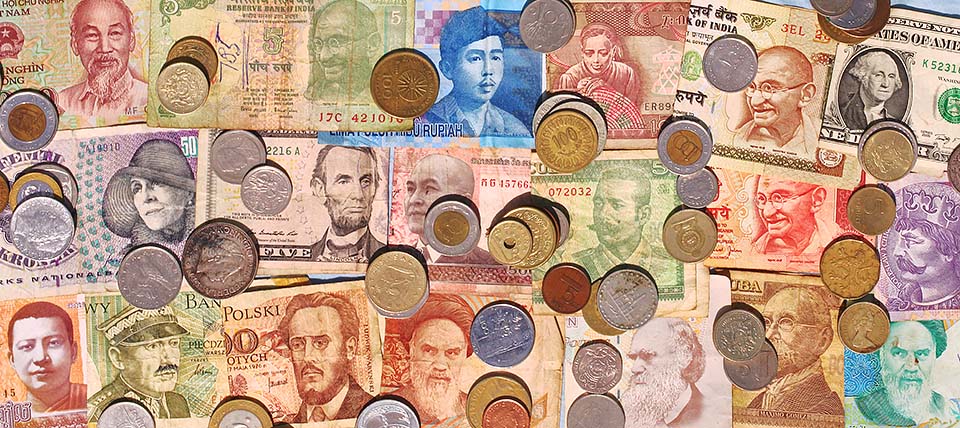
The longer I think about this, the more I believe in a fixed approach to photographers' rates.
Of course, every photographer is a business owner and must decide for themselves how to charge for their photography services. But would it not be better for clients if we all charged for our services in the same way?
That would make services easy to compare. I do not mean that we should all use the same rates. But we can think about how we prepare a quote and an invoice.
In this article, I would like to take you through the various ways of calculating photography services and discuss the advantages and disadvantages of each way of invoicing.
Commissioned photography and image rights
First of all, this article is about commissioned photography. So, the amounts you receive for the time you put into a photography job.
You can also charge extra for the use of photos. The usage rights you grant for the photos are entirely up to you as a business owner.
It makes quite a difference whether your client is allowed to send the photos all over the world without restrictions, and/or sell them, or whether they may only use the photos themselves, possibly with a specific usage period. Arrange this properly before taking the photos.
This article is not about usage rights, but about the rates for the hours you spend on a job.
Why should it be clear to clients?
Photography is great fun, but that does not mean you should not earn money from it. You do need to be able to explain your rates. If you cannot explain them clearly, the client may consider your service expensive.
If you simply charge 800 euros for 5 photos, clients may think that is a considerable amount for a few photos. But if the client knows that you worked for 10 hours to produce those 5 photos, they will understand why you charge 800 euros.
The clearer and more transparent something is, the more understanding you will receive for it.

Consciously or unconsciously competing on price?
I think it would be a good idea for photographers to structure the amounts in a quote and invoice in the same way. But by that I do not mean that you should lower your rates.
Competing on price is a bad idea, but photographers still do it a lot. Calculate a good rate and stick to it. That way, we can all earn a decent living.
I am not saying competition is bad. Do you want to compete? Fine! But do not compete with your rate. Compete with your service, your website, your customer service and so on.
If you have not calculated your rates properly, or at all, and you are happy to work for less than 40 euros per hour, you are unconsciously competing on price.
You might think you are working for 70 euros per hour. After all, you may offer a day rate of 600 euros on your website.
But if you also have to process the images the day after the shoot, you may end up working for two days, 16 hours, for those 600 euros. That works out at less than 38 euros per hour.
If your fellow photographer has calculated their rates properly and wants to stick to them, and therefore wants to work for at least 80 euros per hour, they will charge 1,280 euros for the same number of hours.
Photographers charge for their services in various ways.
These are the methods I have come across:
1 - An all-in price per job
Advantage: Very easy to quote and invoice. Everyone knows where they stand.
Disadvantage: Your worked hours are not clear to the client.
In addition, a client does not always know exactly what they want or what they are asking for. If everything goes according to plan, you are paid normally, but if something goes wrong, such as a schedule running over, you, and only you, carry the financial risk.
It may also happen that extra requests come up during the photography. If you do not indicate that this will incur extra costs, there is a chance you will not be paid for that extra time.
Of course, when quoting an all-in price, you should not set it too low. You can include a little margin.
Do you mainly work for private clients? Then there is a good chance that you work with package prices. Make sure you have calculated these properly and that you always end up with a healthy hourly rate.
2 - Charging only for your photography time
Advantage: The client often knows how much time you spent on location taking the photos. The invoice will therefore be reasonably predictable.
Disadvantage: What rate should you charge? If you only charge for your time on location, your final hourly rate for all the hours worked will vary considerably.
That is because your rate includes the time you need to process all the images, as well as your travel time. Suppose you charge 140 euros per hour and spend 1 hour on location. You will invoice 140 euros.
But if you also have one hour of travel time and spend another 2 hours processing and delivering all the images, you have ultimately spent 4 hours for 140 euros. That means you earn 35 euros per hour. That does not seem like a good idea to me.
You could increase your hourly rate. But it is difficult to sell the idea that you cost 200 or 300 euros per hour. Besides, you want to work at the same hourly rate all the time. You do not want to decide per job whether you are taking photos for 120 or 170 euros per hour.
3 - Photography time plus a mileage allowance
Advantage: Your client pays your travel costs and usually knows how long you are present at a location.
Disadvantage: You are not paid for the time you spend travelling for the job. Your client pays your travel costs, but not your travel time.
In my view, everyone should be able to accept any job, and it should not make a financial difference where that job is. So, if I travel from The Hague to do a job in Utrecht or Groningen, it should all be financially acceptable to me.
Of course, there are many other factors why people often prefer to hire a local photographer. But financially, it should not make a difference to a photographer where the job is.
If you agree with me, you cannot avoid charging an amount per hour of travel, rather than just a mileage allowance. If, for example, you charge 75 euros per hour for travel time, your travel costs are covered and you also earn a little while travelling for a client.
On the ANWB website, you can easily calculate the actual car costs per kilometre. For many cars, the actual costs are between 0.40 and 0.50 cents per kilometre.
If you spend an hour in the car and drive 75 kilometres, that costs between 30 and 37.50 euros. If you charge 75 euros per hour for travel time, you also earn something while working for your client.
4 - Charging a day rate
Advantage: A quote and invoice can be prepared quickly. You do not need to keep track of your hours that day, because you charge a day rate when you work for a day. For some larger jobs, this works well.
Disadvantage: Since photography often involves smaller jobs, it is not realistic to charge a day rate for many assignments.
Besides, what is a day? Is it 8 hours? Does that include or exclude travel time and/or post-processing? If you spend 1 day taking photos and process those photos on another day, do you charge for 1 or 2 days?
That can differ from photographer to photographer. And it is not clear.
5 - An amount per delivered photo
Advantage: A simple price agreement and easy to invoice
Disadvantage: It is difficult for you to work out how much time you spend on a job. This method of calculating completely removes the connection with the time it takes you.
A client also understands that producing a photo ultimately takes quite a lot of time. But they have no idea exactly how much. In most cases, they would rather not know either.
You can calculate that you want to earn 80 euros per hour, but make sure that if you spend 2 hours on something, you sell that photo for 160 euros.
If you only charge a fixed price for a photo, it is not clear to your client how much time it took you as the photographer.
If you know that a series of photos took you 8 hours to produce, you will ultimately want to earn, for example, 700 euros from it. But if your client only wants 1 photo, it is questionable whether they will want to pay 700 euros for it.
Many publishers, including Mediahuis, which owns De Telegraaf and Metro, and DPG Group, which owns, among others, AD, de Volkskrant, Het Parool and nu.nl, pay far too little per photo.
That is only beneficial to the publishers. If you look at what you are ultimately allowed to charge per hour, it does not make you happy as a photographer. An assignment always consists of travel time, photography time and the time needed to select, edit and deliver the photos.
Just work out how many hours you can work if you receive 65 euros for a photo.
6 - Photography time plus an amount per delivered photo
Advantage: You also earn a little when you do the post-processing
Disadvantage: Your earnings during post-processing depend on the number of photos you deliver. That is not useful, because you simply want to earn a fixed amount per hour.
By invoicing in this way, you are financially dependent on the number of photos you deliver.
7 - Travel time plus photography time plus post-processing
Advantage: Very clear for both the client and yourself. This way, everyone knows how many hours you have put into a job, because you invoice all the time.
As a photographer, you also run little risk. If a job takes longer than intended for any reason, you can always charge for the actual hours you worked. In a quote, you can make an estimate based on the travel time, time on location and the post-processing you think you will need.
For clarity, you can also state in the quote that you will send an invoice based on the actual hours worked. Not the estimate you give in the quote.
Disadvantage: You have to keep track of your hours because you invoice every hour.
What is the best way to invoice?
In my view, the last option, option 7, is the best, most transparent and fairest way to invoice. That means calculating travel time, photography time and the time needed to process and deliver the images.
If every photographer charges for all the time spent on a job, that is also the clearest approach for clients.
If clients understand how much time something takes, because they can see it, you can also more easily charge for the actual time you spend. Then it is completely clear to the client what something costs. And as a photographer, you receive payment for all the hours worked, even if you spend half an hour longer on the job.
I think it would be good for the photography market as a whole if all photographers charged for all the time they spend on a job, based on the actual hours worked.
Uniform invoicing is clearer and therefore better for the market. It is easy for clients to compare, and photographers are paid for all the time an assignment takes.
About the author
Wilmar Dik is beroepsfotograaf sinds 2008. Ook schrijft hij in diverse media over fotografie en is hij betrokken bij DuPho. Bij NVJ is hij vertegenwoordiger beleidsteam Werkvoorwaarden namens ledengroep NVF/Beeldmakers. Werk van Wilmar:mensen.photo, Reclamebeeld, Portfolio fotograaf en Tasfilms.nl.
You might also like
-
 Should you list photography prices on your website?
by Wilmar Dik
-
 Why You Don't Make Money From Your Photography
by Elja Trum
-
 Tip: examine your own success rate
by Elvira Smit
-
 7 ways to make money as a photographer in 2021
by Elja Trum
-
 What does Adobe ending its cloud services mean for Lightroom?
by Nando Harmsen
8 comments
-
 Donald Willemsen wrote on Tuesday 5 March 2024 at 11:59 | reply
Nice article for the professional photographer. The professional photographer has a VAT number, registration with the Chamber of Commerce, a payroll tax number, permits, etc.
Translated from Dutch.
I don't read anything anywhere in the article about calculating the depreciation of the equipment used, renting locations and, for example, models, insurance, etc. Those are also costs that have to be covered, aren't they.
So much for the professional photographer.
But now the amateur photographer. He is asked to photograph a wedding. The bride and groom think that they will be cheaper off with a 'friends' price'.
The amateur photographer also thinks, I'm putting my time into it, the equipment costs a fortune, etc. But this well-meaning amateur doesn't have a VAT number, doesn't file VAT returns, doesn't do it as a side business, so he may be paid under the table. He cannot provide an invoice. What may/must he charge for his services? Does he price the professional photographer out of the market?
Another concrete example: An amateur photographer publishes his photos on the internet. One of his photos catches the eye of an advertising agency and they want to buy a photo from you for a brochure for the advertising agency's client. The print run of the brochure is 5000 copies. The advertising agency does want to receive an invoice so that it can declare the costs to its client.
Nothing comes for free and so the amateur photographer thinks: What price may I ask for a high-resolution photo? I am a private individual and cannot issue an official invoice. I am not liable for VAT.
For a professional photographer, it is all reasonably clear. But what about the amateur photographer who every now and then has the chance to sell a photo or do an assignment? -

 Wilmar
wrote on Tuesday 5 March 2024 at 13:06
| reply
Wilmar
wrote on Tuesday 5 March 2024 at 13:06
| reply
Thanks Donald for your response. I wrote this article for professional photographers. This is very specifically about the different ways of invoicing clients. Not about calculating a good rate as a photographer and business expenses (including depreciation).
Translated from Dutch. -
 Debby Dekeersgieter wrote on Tuesday 5 March 2024 at 12:30 | reply
Would you then use the exact same application for video and editing work?
Translated from Dutch. -
Wilmar
wrote on Tuesday 5 March 2024 at 13:11
| reply
Hi Debby, thanks for your question. That's for you to determine. But ultimately, the intention is that you receive a normal hourly rate for the hours you work. For video, working with day rates is more common than for photography. If you can work as a freelancer based on invoicing all hours, then financially speaking you have no risk for that job.
Translated from Dutch. -
 kok.f@ziggo.nl wrote on Wednesday 6 March 2024 at 08:34
| reply
kok.f@ziggo.nl wrote on Wednesday 6 March 2024 at 08:34
| reply
It doesn't always have to be done the same way. The invoicing, or rather the way you charge, can vary depending on the type of assignment and the context in which it all takes place. However you calculate it, make sure that, all things considered, you have the hourly income you want to end up with. If someone doesn't want to pay for my back Office hours, fine, but then my hourly rate is twice as high. So you also have to be able to play around with it a bit yourself.
Translated from Dutch. -
Wilmar
wrote on Wednesday 6 March 2024 at 10:53
| reply
Hi Kok.f,
Translated from Dutch.
Thanks for your response. For me, it is useful to make all my invoices in the same way. So calculating travel time, time on location and image processing based on time. It indeed doesn't have to be that way, but it is convenient. If a client doesn't want to pay back office hours (do you mean image processing?) then that isn't transparent to that client. They have no idea how long you spent processing the images. Moreover, if you then multiply the hourly rate by 2, you run the risk that you sometimes don't get your hours paid. Because a 3-hour photo shoot can sometimes mean that you spend 4 or 5 hours processing those images. -
 Hans van Oers wrote on Wednesday 6 March 2024 at 12:30 | reply
Dear Wilmar, As a leisure / hobby photographer I have stopped photographing weddings and anniversaries, also capturing the party evenings that are often loathed by professionals. Why : my equipment and ability are almost not inferior to those of the professional, but in addition they can deliver an even better product, professional printing labs, photo books.
Translated from Dutch.
At a wedding report there is nowadays more involved than a slick little camera kit; knowledge of the location, interaction with the bridal couple and everyone involved, creativity in shooting and editing and printing. A professional may quite rightly ask something for that in my opinion. If I ask 10 euros per hour for a party evening a report or for a portfolio then it is still too much And I have not even mentioned the muscle injury you can get when you have been busy with a heavy camera for hours on end. And that is why all praise for the real professional photographer, despite everything that is just being recorded digitally by everyone, the best photographers have really managed to distinguish themselves, but it is hard work to put yourself on the map. -
Wilmar
wrote on Wednesday 6 March 2024 at 15:13
| reply
Hello Hans, thanks for your compliment
Translated from Dutch. It is indeed (sometimes) hard work. But above all making sure that as a photographer you invest your time in the right things. And only taking photos on commission if the value you assign to yourself (your hourly rate) corresponds with the value assessment of a client.
Have your say
Please note: Articles older than a week can only be commented on by signed-in visitors.Would you still like to comment? sign in or create a free account.
Become a better photographer every week
A practical photography tip in your inbox every week.
39,024 photography enthusiasts already receive the tips! More about the weekly mail. Or keep up to date via  Facebook.

Elja Trum
Photofacts; everything to do with photography!
Would you like to take better photos and keep up with what is happening in photography? Photofacts publishes articles that teach you something about photography — from a product announcement to a practical shooting tip or a look at a website. Photofacts covers photography every day and is a hobby project of Elja Trum's that got out of hand. The articles are written by a team of volunteer authors. If you would enjoy writing one or more articles for Photofacts, do get in touch.More about PhotofactsPhotofacts is made possible in part by
