
What hobby photographers often fail to realise
Thursday 22 August 2019, 14:41 by Huub Keulers | 17,285 views | 24 commentsThis article was translated from Dutch with the help of AI. Read the original.
Making a living from photography is not easy. You may have considered turning your hobby into your job. But there are some things many hobby photographers fail to realise.
Let's start with the fact that, in principle, every photographer may do whatever they think is right with their photos. Everyone is also entitled to an opinion about what happens to the photo after it is 'finished'.
This opinion is usually 'coloured' by personal experience and by which side of the process you are on as a photographer.
Are you a hobby photographer who mainly enjoys taking photos and wants to develop further, or are you a (semi-)professional photographer who really needs to make a living from it?
Both groups love photography, pursue their own goals and act accordingly. In this article, we want to highlight the professional photographer's side.
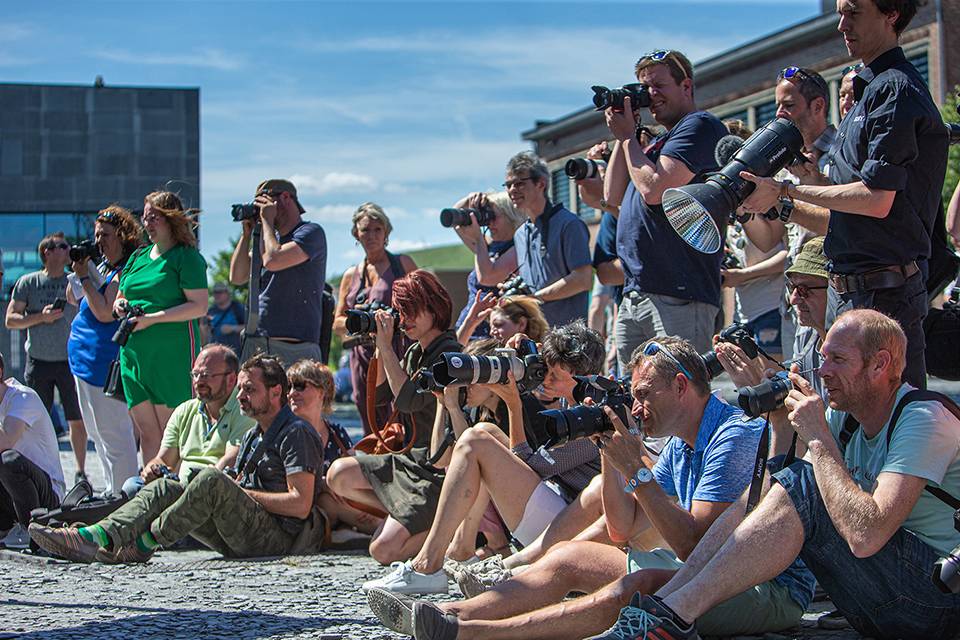
The years I have worked as a professional photographer, with my wife Lorette supporting me more and more, we have seen the market change, sometimes for the better and sometimes for the worse.
These are all matters our profession has to deal with every day and therefore needs to keep anticipating. That's what moving with the times means.
Precisely because we want to keep moving with the times, there are a number of aspects we would like to bring to your attention, simply because most hobby photographers, as well as quite a few organisations and companies, are completely unaware of them.
These days, photographers are increasingly asked to give away their images for free. The main reason usually given is that there is no budget, or hardly any budget, or that for the person in question it is simply a matter of pressing that button and surely that cannot involve any costs?!
For hobby photographers, this is usually not a problem either. Because, as everyone knows, a hobby costs money and hobby photographers often already have a regular income outside photography.
In addition, hobbyists often enjoy it or feel honoured when an organisation publishes their photos, especially if the photographer's name is also mentioned. Great fun and entirely understandable.
This does not apply to professional photographers, however, and it is becoming increasingly difficult for them to find assignments, agree a fair price and practise their profession seriously. It is not without reason that more and more professional photographers are having to take on a second job.
At the same time, they too would very much like to provide a few photos free of charge and with love for a good cause, a worthwhile initiative or a particular event. However, this is a luxury that many professional photographers usually cannot afford, which is what we are trying to make a little clearer with this article.
This is absolutely not intended as a complaint. We do hope for more awareness and understanding of our profession when you next give photos to an organisation for free.
What many people also do not know is that mentioning the photographer's name is not a favour, but is actually laid down by law, in Article 25 of the Copyright Act, and this applies to both the creator and their family for up to 75 years after their death.
Naming your name will probably earn you some nice compliments and comments, but it hardly brings you any new clients, covers none of your business costs and certainly does not provide your daily bread.
Even press agencies sometimes 'forget' to include the photographer's name, as shown by a photo of mine that was resold to another press agency by my client at the time.
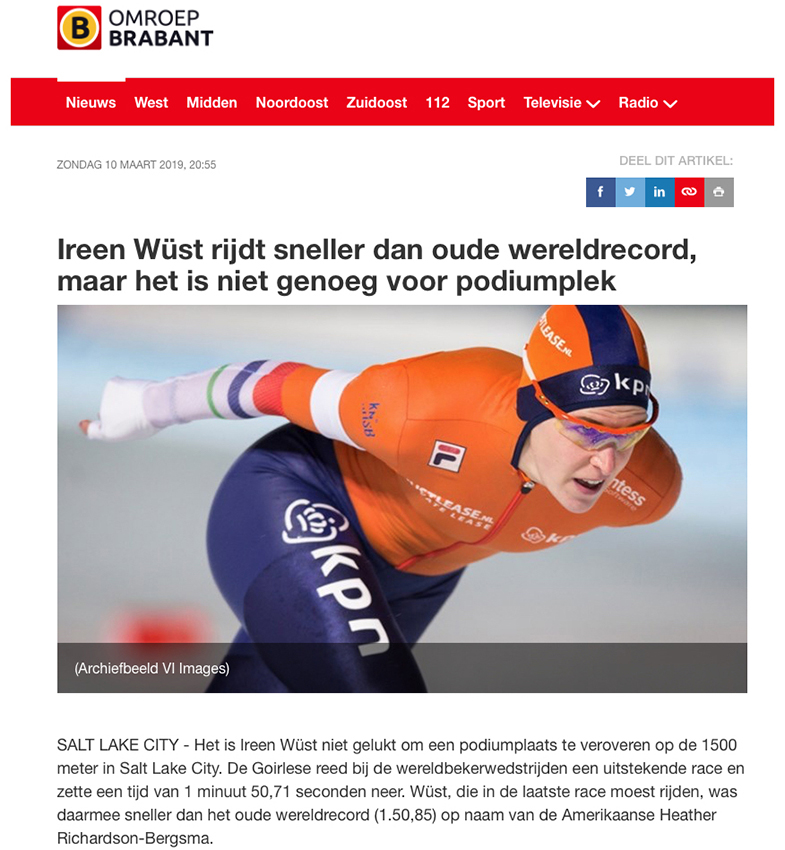
The profession is also not taken seriously enough by many people. You are often asked to just take a quick photo. It is also wrongly assumed that professional photographers are paid very well.
People simply do not stop to think about it, find all this perfectly normal and have no idea that, just as in any other profession, you have to put in a great deal of time, money and effort if you want to make a living from it.
The professional photographer does not just take a snap. They have to perform, set aside enough time, do their research, know the programme, bring the right equipment, remain creative and inventive, then load, archive, select and edit the images when they get home before the job is finally complete and the result can be delivered.
Just taking a quick snap does not exist in the professional photographer's world either.
On the other hand, we find it perfectly normal that you cannot simply ask a bricklayer to quickly build a wall, while the entire process for a professional photographer is at least as labour-intensive.
Images, in whatever form, should not be free or ever be the last item on the budget. Unfortunately, that is increasingly the case these days.
So, as a current hobby photographer, realise in good time what this means if you seriously want to continue as a professional photographer and actually be able to move with the times in this far-from-easy but also rather wonderful little world.
But as a hobbyist, also realise what the effect is if you provide photos to an organisation or company for free, or ask for a (too) small fee. You are short-changing yourself, the professional photographer and the photography market if you ask no money, or too little money, for your photo.
After all, you have invested time and energy in it, and you deserve that financial appreciation. Your hobby also costs money.
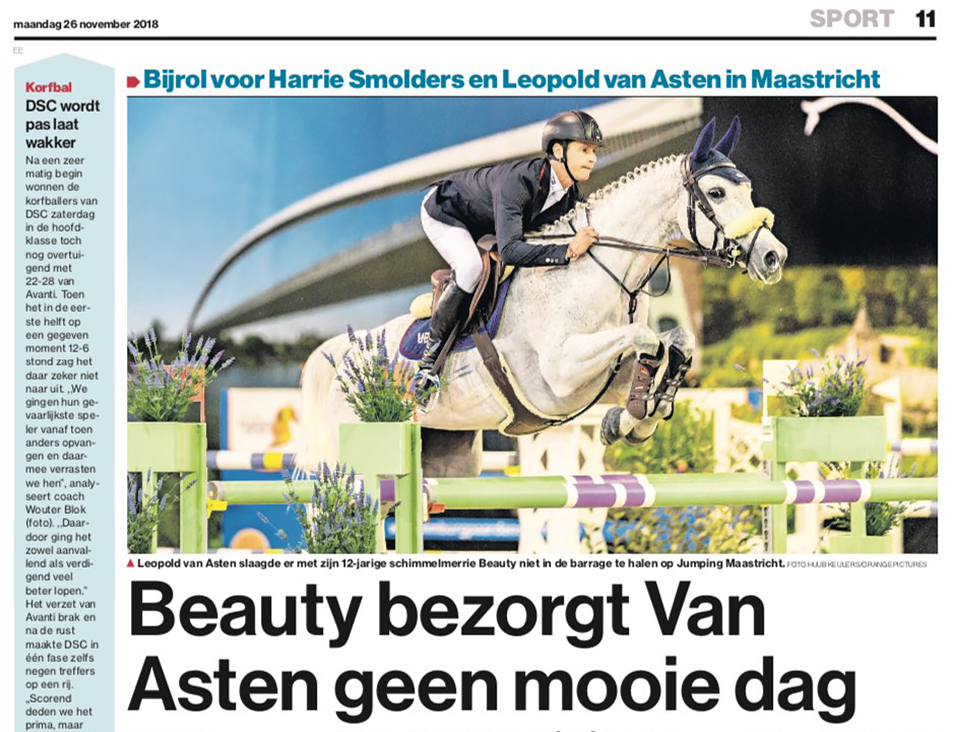
Some figures and facts
- About 85% of all professional photographers have a second job to make ends meet;
- On average, a freelance photojournalist earns 44 euros per hour gross, or 17 euros per hour net;
- A photo in a regional newspaper or online earns between 5 and 50 euros on average. For this, a photojournalist sometimes works for half a day, including preparation, research, communication, travel, waiting time on location, photography, post-processing, delivery, back-up and invoicing;
- 42% of professional photographers depend on their partner's income;
- The usual gross hourly rate for a professional photographer is 60-100 euros;
- Fixed costs that first need to be recouped, including buying and maintaining photography equipment, camera and lens insurance, transport, advertising, press card and software subscriptions, computer and back-ups, website and so on.
About the author
Huub Keulers is een enthousiasmerende veelzijdige freelance fotograaf woonachtig in Elsloo (Li). Hij is gespecialiseerd in sport-, bedrijfs-, straat-, honden en portretfotografie. Daarnaast is Huub auteur van diverse educatieve fotografieboeken en verzorgt hij allerlei fotoworkshops, masterclasses en lezingen.
You might also like
-
 Why You Don't Make Money From Your Photography
by Elja Trum
-
 7 ways to make money as a photographer in 2021
by Elja Trum
-
 Sensible or silly? A camera for your hobby and holidays
by Nando Harmsen
-
 How do you invoice for your photography services?
by Wilmar Dik
-
 Don't Be Afraid of the Failed Photo
by Nando Harmsen
24 comments
-
 Peter Reinders wrote on Thursday 22 August 2019 at 16:56 | reply
Clear message.
Translated from Dutch.
I’m an avid amateur photographer myself and I also occasionally visit an event. I sometimes post a photo on, for example, the FB page of the event in question.
This sometimes results in the question, may I “have” that photo, for the wall or even for an interview in the newspaper. What would you like in return is then the follow-up question. Oh, a photo credit is enough. It strokes the ego when a photo is considered beautiful.
Perhaps somewhat naively, I do this out of modesty, because I’m not a pro. And actually I think, if I ask money for it I’m taking the pro’s seat. Taking their bread away, so to speak.
The message above is then a different one. As an amateur I then have two choice's. Either I stop doing it and keep the photos solely for my own enjoyment or I ask a market-rate price for them.
Gives one something to think about. -

 Huub Keulers
wrote on Thursday 22 August 2019 at 17:00
| reply
Nice and honest response, Peter. And that is exactly what we aim to achieve with this article ...... food for thought and looking at something from a different angle. Ultimately, you are still the one who makes the choice that you feel happiest with. Thanks for your response
Translated from Dutch.
-
 Roelof Tooms wrote on Thursday 22 August 2019 at 17:38 | reply
For me it is a hobby with which I make the people around me happy and I am really not a professional yet, although it is getting better and better. I see the albums I post on FB reflected in thank-yous, sharing them and setting them as profile pictures, and even some people who want to have the original. Unfortunately, every now and then I also see flyers from clubs that have used your photos for that purpose without asking. I don't need to be paid for it, but if it is heading towards a commercial purpose, then indeed the simple question of whether it is allowed is quite desirable.
Translated from Dutch.
On the other hand, I also see many albums of the same events appearing online on FB by others. Lots of photos that have not been cropped, shot on the auto setting or even taken with a mobile phone, fine work for people who want to look back on the event in the form of a photo report, but no masterpieces to be seen in the reactions and sharing behavior either.
But I think that the professional photographer who uses this work as a business model is under heavy pressure due to the low prices of much of the current photographic equipment with reasonably good quality, but also due to the quality of current mobile phones.
Everyone with an entry-level DSLR can already call themselves a photographer (and I know them....) -
 Sjoerd de Roos wrote on Thursday 22 August 2019 at 17:40 | reply
Since I am currently looking for work, I am often advised to make photography my profession.
Translated from Dutch.
Besides not considering myself good enough for that, it is often inappropriate to ask for money for the photos I take. I mainly photograph athletics and running events. These events are held together by volunteers. If I start asking for money, I will probably be politely thanked for the honor.
To make money, I would have to become self-employed and try to get assignments. You have to be able to do that too. Moreover, I would then have to move into other areas, such as weddings and parties or portraits. Something I have little experience in.
The professional photographers I know all also give courses and workshops to earn some money. You have to be able to do that too.
People often say: you take such beautiful photos, you should do something with them. But it is not that simple. -
 Joop wrote on Thursday 22 August 2019 at 18:15 | reply
Nice and clear piece, Huub. I used to do a lot of sports photography and everyone could get the photos through my site. I haven't done that for quite some time now. Every now and then I still give something away, but that's mainly for a volunteer organization where I am a volunteer photographer. Besides that, as a passionate hobbyist I find it difficult to set a price. Am I not undercutting the professional photographer's work, and is my work of good enough quality. Nowadays I do dare to simply ask 100 euros if someone wants a shoot. They then get 5 good photos. Some think it's expensive and then I do indeed explain everything involved before there is even a photo ready. Then they understand it, but still think it's a lot of money. Then just take them yourself with your mobile phone, it's cheaper. But then they don't think that's the point either.
Translated from Dutch. -
 guest wrote on Friday 23 August 2019 at 07:37 | reply
Just look at the passport photos, you simply go into a booth there and Bob's your uncle. A robot that presses the button and for a few euros you have a good passport photo for a passport or a library card. So it isn't that difficult. That was once an answer I got from a bride-to-be. So I referred them to the booth for her wedding celebration. I myself am an amateur and sometimes do something like that for friends, sometimes they come and pose for me if I want to do or try something, so one hand washes the other because paying a model as an amateur.... Furthermore, I certainly don't try to enter the waters of the pros and I make sure myself that my photos are seen with hobby exhibitions and such. Furthermore, this bride had to ask someone else and I haven't seen those photos, only that they were taken with a compact camera and mobile phone. Barely a year later, the album together with the marriage boat had gone to the depths.
Translated from Dutch. -
 Rein Vrugt wrote on Friday 23 August 2019 at 12:20 | reply
Some of this is of course also a consequence of the changing world. In the past, when photos still had to be made in a darkroom, a lot more was involved in making good-quality photos. Nowadays, besides digital cameras, digital editing with Lightroom has also become much more accessible to everyone. Through YouTube, anyone can learn all kinds of photography techniques. So the hobby photographer can also take very beautiful photos.
Translated from Dutch.
I regularly take photos of my grandchildren. I am not going to say to my son and daughter-in-law afterwards "If you also want photos like these, you should go to a professional photographer." That is not going to work.
That the profession of professional photographer is coming under pressure as a result is, in my opinion, a logical consequence. Just as the existence of a whole lot of shops is coming under pressure because of the enormous number of webshops.
Welcome to the (angry) digital world of the 21st century.
I'm afraid that the profession of photographer will die a slow death. Unfortunately. Only those photographers who can still really distinguish themselves will find their place. But then it is more a matter of an art form than of photography.
It's not that I hope that will happen, but once again, I think it is a logical consequence of our changing world. -
 Rick wrote on Friday 23 August 2019 at 14:50 | reply
Nice and clear piece Huub, I largely agree with you too.
Translated from Dutch.
However, I do want to say one general thing to the professional photographers on this site.
Personally, I get the jitters from messages about hobbyists who are ruining the market, asking too little money, not understanding anything about copyright etc. etc. I hear it around me from fellow photographers, on forums, on other photography blogs, everyone has an opinion about it. (I'm not talking about this post by the way!)
Most people who have a problem with this are often the people who come from (or want to leave) salaried employment and have decided to become photographers. Some people get a rude awakening when it turns out that the costs of being an entrepreneur are much higher than expected, they no longer have a safety net and get into trouble if they have virtually no jobs for a month. These are the photographers who can't handle the uncertainty of being an entrepreneur, and therefore take it out on the hobbyists among other things. These hobbyists do indeed take away some of the potential clients from this photographer.
What I also see a lot is that 'the old guard' has a problem with the hobbyists. These photographers are used to practicing a craft, which is changing more and more quickly into a digital trick. The craft with which this photographer could distinguish themselves is no longer much more than the technical knowledge and skills this photographer has acquired over the years. You can master the technical knowledge with half a year's practice, but these photographers often don't offer the style that is in high demand nowadays. The family portraits that this photographer always takes in their studio in the city centre are now being made by a hobbyist on a little hill in the meadow.
The scenarios above are like this in every industry where it is easy to enter. This will always remain so and should be embraced by people who want to become passionate photographers. Photography is after all a profession that is very easy to enter, an average camera and a creative eye will take you a long way.
Do you want to earn your money as a (full-time) photographer? Then be prepared to work very much and very hard, give up your security and above all innovate.
The market is changing super fast, so the demand is changing too. I know photographers who are now super busy taking aerial photos with a drone. Anyone can buy such a thing, but the legal permission they have in combination with the quality and their perspective on things makes them successful. The question is how long the demand for drone photos and videos will remain, so these guys are already looking further than this too.
Don't hold on to 'how things used to be' but look ahead to which markets are opening up. There are more of these than ever. -
guest wrote on Friday 23 August 2019 at 18:53 | reply
A lot of information, actually everything to be judged as right, or not right; to my feeling there is a disruptive element in the differences of opinion, and that is the electronics. Or the technology, if you like. Everyone can operate a button on a camera.. just as earlier everyone could pick up one or more brushes, but whether a beautiful painting came out of that... And now people produce with that button, but a forger in the past had considerably more work to do than stealing images.. Recognizing a real artist is becoming more difficult. Fortunately I know a few..
Translated from Dutch. -
 Piet van Kroonenburg
wrote on Saturday 24 August 2019 at 20:41
| reply
Clear article that every hobby photographer should read.
Translated from Dutch.
There is only one small mistake in it, namely the duration of copyright, which is not 75 but 70 years.
See Article 37, paragraph 1 of the Copyright Act. -
 Hans Hoop wrote on Tuesday 27 August 2019 at 15:59 | reply
Clear story.
Translated from Dutch.
After having photographed as a hobby for more than 50 years, I made the decision when an opportunity arose. Since November last year, I have made photography my profession and until March 1, 2020, I will continue to have my job alongside it. After that I will stop working for an employer (after 48 years) and devote myself fully to photography for the years until I am entitled to AOW.
In the meantime, I am taking the professional training course at the Fotovakschool in Apeldoorn, and I am also taking various workshops to expand and improve my skills and interests.
Although the assignments are not exactly pouring in yet, I do charge a business rate. In the end, you do have to earn back your time and investments. I also notice that it is quite difficult to get assignments, but occasionally holding a lucrative promotion day does help to get more assignments.
Above all, lots of networking, so that people know who the person behind the photos is and want to entrust you with those assignments.
With a small early retirement, it should work out. I am looking forward to it and have confidence in it.
-
 RM wrote on Tuesday 27 August 2019 at 16:02 | reply
Finally someone who stands up for the professional photographer.
Translated from Dutch.
I hear even crazier things photographers who do it with their mobile phone for example wedding for 100 euros. it seems harmless.
If you name your price to a customer they say are you crazy someone can do it for nothing or a very low rate.
There should be more measures, Because if you walk around with your mobile phone you are never refused and if you walk around with a good camera then nothing is allowed anymore. Strange but true another professional group to the ... Hope there will be good times again am afraid not... -
 Alex wrote on Tuesday 27 August 2019 at 16:22 | reply
Don't put photos online like on Facebook, Instagram or Flickr without a watermark on the photo.
Translated from Dutch.
Guaranteed that it will be removed and placed on a website under their own name.
And no, placing your name somewhere at the bottom or top isn't recommended either.
When I'm on photo websites, I see often enough that they have either cropped the photo or made it unrecognizable.
That's why it's wise to simply let the text run right through the photo, whether transparent or not, but readable.
Don't want too much spam in your mailbox? then create a separate (G)(e)mail(*) address, but never post your personal information such as your phone number.
If they want to use your photo, an email is easiest, only when you're 100% sure that everything is okay can you give them a phone number.
*Gmail has a spam filter that you can set yourself. -
Huub Keulers
wrote on Tuesday 27 August 2019 at 16:30
| reply
Dear Hans,
Translated from Dutch.
Great that you took the chance to turn your hobby into your work. That's how it happened for me too. I still have six years to go until my regular retirement. With photography and workshops alone, it's difficult, so I have further expanded my services by writing texts and creating websites. This way, I can offer a reasonably complete package to a client.
I wish you lots of enjoyment, inspiration and clients. Enjoy your time as a professional photographer.
Kind regards,
Huub Keulers -
Huub Keulers
wrote on Tuesday 27 August 2019 at 16:35
| reply
Dear RM,
Translated from Dutch.
Thank you for your response. Of course everyone may and can do whatever they like, but I felt it was time to write something about this without offending people. Everyone has the right to take photos, but it is good for people to realise what it means when you really have to try to make a living from it, put a huge amount of energy into it and miss out on assignments because the current market situation is simply the way it is.
That was a reason for me to expand my services with writing texts and creating websites. That way being able to offer such a complete package.
I wish you lots of enjoyment and great clients,
Have a nice week.
Kind regards,
Huub Keulers -
Huub Keulers
wrote on Tuesday 27 August 2019 at 16:39
| reply
Dear Roelof, Rick, Rein, Joop and Sjoerd,
Translated from Dutch.
thank you for your responses. Your messages all make sense, are clear and well worded. It's always nice to see how other people look at things, and your responses also give me new insights. Thanks! -
Huub Keulers
wrote on Tuesday 27 August 2019 at 16:41
| reply
Dear Piet,
Translated from Dutch.
Thank you for your correction. You're absolutely right, it is indeed 70 years -
 Hans wrote on Tuesday 27 August 2019 at 20:07 | reply
Still, a little "counterpoint". The world around us is constantly and rapidly changing. An entrepreneur sometimes really has to start undertaking something, otherwise he/she will go under. It's brutally hard but it is the reality. (your figures and facts confirm that, by the way) Plenty of examples of professions that have to deal with this. I see it that way with photography too. Where it used to be a profession that required explicit knowledge and equipment, in today's digital age anyone can take a photo. Even with a phone you can sometimes take decent pictures. As a hobby photographer I can still see the difference and certainly appreciate it, but the majority of people don't look at a photo that way. With the rise of social media and mobile phones that everyone seems to be glued to, photos are also saying less and less. After all, an enormous mountain of digital information (including photos) passes by every day. Just try standing out with your photo. And yet that is the art. A good photographer is also distinctive. Takes photos that do stand out from the rest. That also catch the attention of people who don't know anything about it. It will only become more difficult to earn money as a photographer. More and more hobbyists call themselves photographers and that's fine too because nowhere does it say that you have to have attended photography school to call yourself that.
Translated from Dutch.
According to me, it is not much different from what the real bakers and butchers experience. With the rise of supermarkets, they too have to hold their own. Fortunately, the true gourmet tastes the difference and wants to pay for it. Perhaps that's how it works with photography too. -
 alex Terjeur wrote on Tuesday 27 August 2019 at 22:48 | reply
When I was at the academy, our teacher said that, if you take a photo for someone, you should either ask for nothing or ask a high (market-conform and fair) price. If you do it for free, they say yes, "nice, eh, got it for free". If you ask a fair price, they say "very nice, eh, but well, we also paid well for it". If you ask something in between, they always have something to say and it is never good enough. Whether that is still the case now, I don't know. I'm talking about the time when my teacher taught us to mix our own developer and fixer bath with the necessary chemicals
Translated from Dutch.
My idea is that, as an amateur, you can easily stand alongside a pro with a perfect photo. Only I wouldn't use a smartphone or "aifoon" for that!
But if you want to continue, persevere in the style you have in mind. Sooner or later you'll get your chance, with or without courses. And "I should know" said a photographer.😀 -
 Klaske Kuperus Fotografie wrote on Wednesday 28 August 2019 at 10:00 | reply
Article with recognizable actions and reactions. Good for creating awareness and understanding among both hobby photographers and (future) clients. I would therefore also like to share the article on my Facebook page, but I don't see a share button. Is there another way I can share this article?
Translated from Dutch.
Kind regards,
Klaske Kuperus -

-
 Dennis Tichelaar wrote on Wednesday 28 August 2019 at 11:03 | reply
It is a wonderful piece that I am already fairly aware of as a hobby photographer, and of course I have a lot of respect for professional photography/photographers, which I might also like to grow towards. Of course, there are also plenty of situations involving small organisations or foundations, clubs that do not have money for a professional photographer, such as at athletics and running events.
Translated from Dutch.
I recognise this at the RC model flying club I am a member of, where the membership is also declining.
I do think there should be better interaction between professional and hobby/amateur photography and that everyone can do their part without getting in each other’s way. And that this kind of piece should appear more on social media to raise more awareness as well, and I think especially among other people who are just starting out with photography. -
 Jan kruize wrote on Wednesday 28 August 2019 at 11:24 | reply
A valuable piece and I do have an opinion about it. I think the term professional photographer or hobby photographer could be replaced by the term photographer. Some do bad work, others do good work. Whether they have had training or not, everyone develops into a certain kind of photographer. I think that’s more or less how the world is currently put together. I think every photographer should ask themselves from time to time, am I not constantly being used by an organisation or private individual? I also see the fear here of yeah... if I ask money for it they might go to someone else. At that point you have to look at yourself and ask, are they really worth my work? The time, the money and the effort. You can also use that for other things that might be more worthwhile. Ask yourself what that organisation does when you come to them and ask my camera has been stolen and could you also chip in a bit? I think you’ll get a rude awakening. Free is fine.... but don’t be that sucker who does show up when they call him. You really do have to get something in return.
Translated from Dutch. -

Have your say
Please note: Articles older than a week can only be commented on by signed-in visitors.Would you still like to comment? sign in or create a free account.
Become a better photographer every week
A practical photography tip in your inbox every week.
38,982 photography enthusiasts already receive the tips! More about the weekly mail. Or keep up to date via  Facebook.

Elja Trum
Photofacts; everything to do with photography!
Would you like to take better photos and keep up with what is happening in photography? Photofacts publishes articles that teach you something about photography — from a product announcement to a practical shooting tip or a look at a website. Photofacts covers photography every day and is a hobby project of Elja Trum's that got out of hand. The articles are written by a team of volunteer authors. If you would enjoy writing one or more articles for Photofacts, do get in touch.More about PhotofactsPhotofacts is made possible in part by
