

Tip: examine your own success rate
Monday 29 July 2024, 20:20 by Elvira Smit | 3,378 views | 15 commentsThis article was translated from Dutch with the help of AI. Read the original.
On average, I discard 39 out of 40 photos. I know this because I keep track of the success rate for each project. The project I am currently working on contains 1,940 photos in total, of which I have printed fifty. A success rate of 2.5%. Not much.
In museums, you only see the end result
In museums and at exhibitions, you get a distorted view of the creative process: you only see the successful end result. All the hard work and shoddy attempts that came before it are at home with the maker, or already in the bin.
When you then get started yourself, it is confronting to see how many failed photos you have to work through.
For my current project, I am now at 1,890 photos that were not selected. But every one of those images was useful. Because at home, I saw what not to do. That I needed cloudy weather. That I had to take more distance from my subject. That I had to examine the surroundings much more closely than I did at the start.
Learning through training
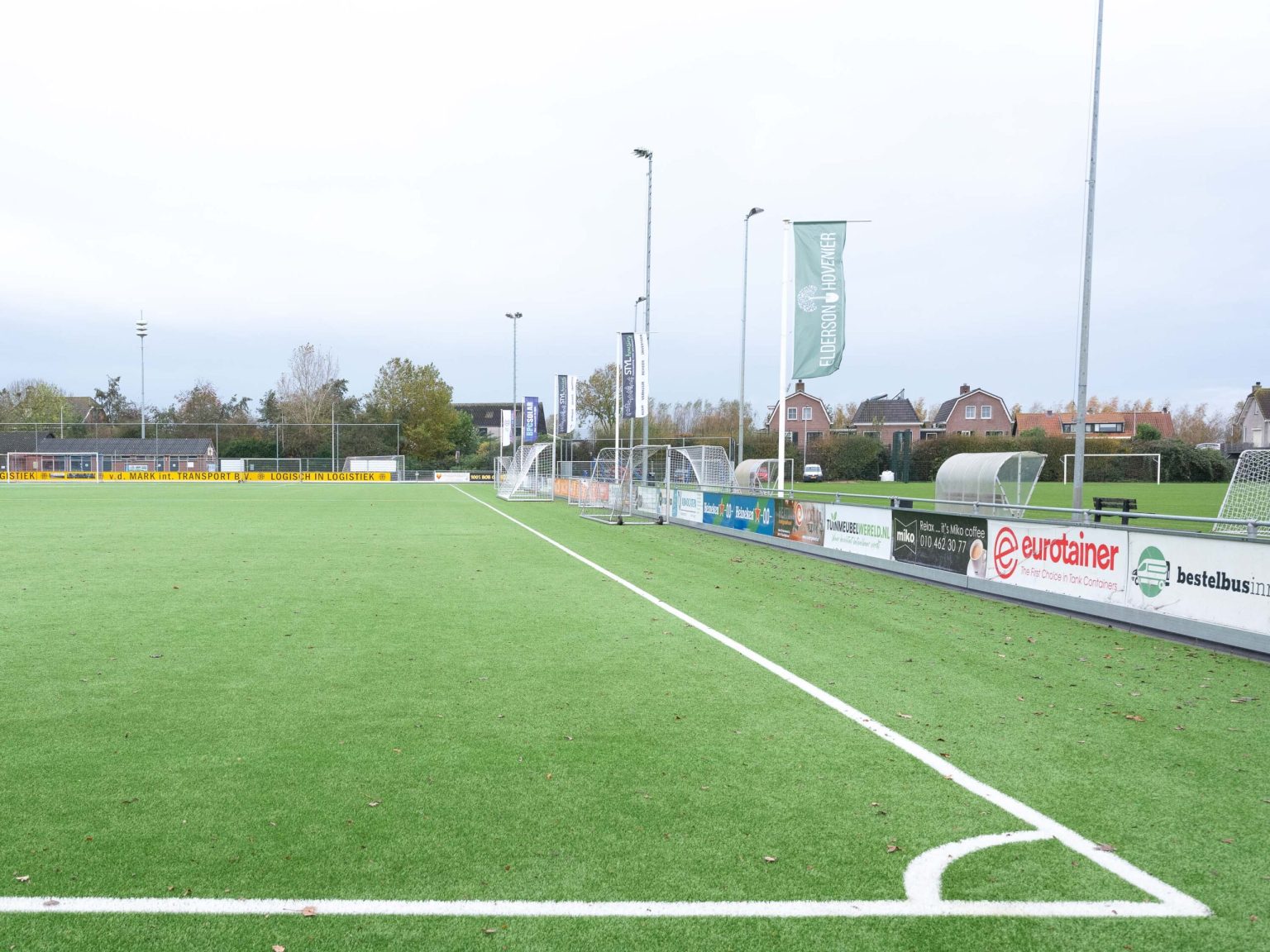
The 1,890 photos are the equivalent of regular football training. And the 50 selected images were the football match I won. Thanks to all that training. The process of making mistakes and learning from them is essential for every photographer.
Every failed photo offers valuable lessons and insights that contribute to your growth and development.
Celebrate failure
Every project is a journey where the road to the end result is often paved with failed attempts. It is important not to see these failures as failures, but as necessary steps towards success. They force you to look critically at your work and constantly improve yourself.
Comparison with other art forms
In many art forms, the process of trial and error is an essential part of the creative process. Think of writers who go through countless versions of their stories, or painters who make several sketches before completing their masterpiece.
Photography is no different. By experimenting and making mistakes, you refine your technique and develop your own style.
Examine your own success rate
If you have already completed a few projects, calculate the success rate for those projects. And keep that percentage in mind with every new project you start.
This gives you a more realistic view of your own skills, while also helping you remain patient and persistent. Remember that every failed photo is one step closer to a successful one.
About the author
Ik heb een eigen fotografieblog, Kronkeling. Daar schrijf ik om de week twee artikelen. Over hoe je je blik kunt scherpen, je creativiteit kunt aanwakkeren, en over fotografen die mij inspireren. Geen technische zaken, wél over hoe je leert kijken. En dat blijkt nog een hele klus. Een mooi startpunt zijn de Kronkeltips, die vind je hier.
You might also like
-
 Focus stacking: experimenting is learning
by Juliette Gribnau
-
 Should you list photography prices on your website?
by Wilmar Dik
-
 You have to practise to learn
by Nando Harmsen
-
 Learn How the Exposure Meter Behaves
by Nando Harmsen
-
 Loupedeck Creative Tool: small and highly versatile editing console
by Michelle Peeters
-
 Turn Your Most Successful Landscape Photo into Black and White
by Nando Harmsen
15 comments
-

 mousquito wrote on Tuesday 30 July 2024 at 10:45
| reply
mousquito wrote on Tuesday 30 July 2024 at 10:45
| reply
I haven't made this calculation yet, but I fear it will be even a little lower.... When I take photos of my pets or toddler, I do dare to use the machine gun every now and then, so clicking through. then you take 3 to 4 photos, of which maybe 1 is good. usually it's about the pose or it having moved too much after all and the background being wrong or something... Or for my bottle of whiskey that I wanted to have looking nice, I suspect over 150 photos and each time something different, the bottle turned a little, the flash just different, the reflector that wasn't in the right position, maybe a different background after all.... and then there was 1 photo that, with a bit of post-processing, was good enough to put up in an exhibition. but it could also be because I was a bit strict with myself
Translated from Dutch. I'll keep myself busy this evening looking at a number of projects and counting the photos.
 -
 Dies Groot wrote on Tuesday 30 July 2024 at 11:16 | reply
Nice article. A lot has changed in photography. I still think back to exactly 50 years ago when I started working for a professional photographer where we made wedding reports with 8 rolls of film of 12 exposures for an album containing 70 photos. Those were exciting times.
Translated from Dutch. -
 Donald Willemsen wrote on Tuesday 30 July 2024 at 12:06 | reply
Does the success rate in photography matter?, is my counter-question then. For me the answer is: absolutely not!! The success rate doesn't interest me one bit. Whether a photo is good and successful is always a personal conclusion. One person considers it successful and another thinks the same photo is nothing at all.
Translated from Dutch.
If I go out to take photos, I don't care how high/low the number of photos that I consider successful is.
For me, what matters is the pleasure I get from taking photos and then the successful photos come naturally.
You can't tell from a success rate how good or bad you are. The drive to perform is the worst adviser when it comes to making a good photo and being a good photographer.
Coming to the conclusion that, for example, only 1% of the photos you have taken can be considered successful can make you lose heart and spoil your enjoyment.
But if you come home with 1000 photos and, in your opinion, you have a few brilliant photos among them, then the project has succeeded and you look back with pleasure at how you went about it and enjoyed taking photos.
I think, for example, back to a day sitting in a bird hide together with a good friend to photograph birds. Hundreds of photos taken. Many successful photos? No, absolutely not, but I enjoyed that day enormously. That's what it's about for me, and having a few beautiful photos left over from it. -
 Liesbeth Verkade wrote on Wednesday 31 July 2024 at 13:22
| reply
Liesbeth Verkade wrote on Wednesday 31 July 2024 at 13:22
| reply
Thank you, Donald. Your comment really encourages me. I am quite critical of my photos and sometimes I get so insecure that I just leave the camera alone for a while. You help me to just go out and take photos and enjoy it, to enjoy what I’m doing. Once again, thank you!
Translated from Dutch. -
 Marcel Govaerts wrote on Tuesday 30 July 2024 at 12:35 | reply
I completely share the author's opinion; sometimes you think 'this is going to be a beautiful photo' and when you then want to get to work on your computer, you come to the realization that it is going to be absolutely nothing. Sometimes it is also the other way around. A beautiful result ultimately emerges from a photo you didn't have many expectations of after taking it
Translated from Dutch. -
 Jannes Nijkamp wrote on Tuesday 30 July 2024 at 14:07 | reply
I made slides for years. During our trips abroad, we took 14 slide films with us. 12 in the egg trays of the refrigerator in the caravan and 2 in the camera bag. Since 2006 I have been photographing digitally. And what do you know: I now discard 40% of the shots and end up with practically the same number of photos as I used to have slides, of which less than 1% were unusable. We always go away for the same number of weeks.
Translated from Dutch.
To be honest, I find shooting 2000 photos for one assignment rather excessive. You would be better off spending more time finding the right shooting position, exposure, etc. than assessing 2000 photos on the computer. -
 PK wrote on Tuesday 30 July 2024 at 16:29 | reply
Analyzing photos helps me: what makes me like one and not the other. That way, you can also look at your image before taking the shot. Your success rate (but always within the same branch of photography) could be a measure of your learning process. But whether it’s really useful is something you have to decide for yourself. Maybe.... you only take a few really good photos in your entire life...... and that would already be very nice
Translated from Dutch. -
 jean decoutere wrote on Tuesday 30 July 2024 at 21:37 | reply
a good photo , is a photo that you shouldn't edit I never do , you can see what's good and bad anyway I think.
Translated from Dutch. -
Donald Willemsen wrote on Tuesday 30 July 2024 at 22:51 | reply
@ Jean Decoutere, if you shoot in RAW, post-processing is necessary. You apparently shoot in JPG. Then you are apparently satisfied with what the camera delivers. Fine, no problem. You just have to adjust the 'picture style' every time you switch, for example, from nature photography to, for example, a portrait photo to get correct colors.
Translated from Dutch. -
 Paul eos wrote on Wednesday 31 July 2024 at 07:39 | reply
I think Donald does have a point.
Translated from Dutch. -
 Gerrit wrote on Wednesday 31 July 2024 at 08:55 | reply
With the possibilities we have nowadays, a percentage of 1 in 40 is not crazy at all. In the analog era, you looked three times before pressing the shutter. Every printed photo also came with a price tag back then. That is no longer the case. I now have cards in my camera that allow me to easily shoot 3000 photos in RAW. Whether that is a blessing is another question. There is less need to wait for the right moment, which can lead to a certain laziness. On the other hand, waiting for the right moment can lead to pressing the shutter when the moment has just passed again.
Translated from Dutch.
The question is also what a good photo is. Personally, I have nothing with 'the perfect picture'. A good photo, that is my view, must keep reasoning. From that point of view, 1 in 40 is very optimistic. -
 Stefanie wrote on Wednesday 31 July 2024 at 14:28 | reply
Digitally, I don't care about the success rate at all, I'm actually happy that I can take 100 photos for even just 1 successful shot. Back in the day with rolls of film it was important because every failed photo was a waste, especially if you only found out after it had been printed. So with digital I've become a lot more easygoing, just snap away and sort it out at home. Sometimes I think, maybe I should go back to shooting analog again, because it forces you to think carefully before you click ... but I also find it so easy the way it can be done now
Translated from Dutch. -
Donald Willemsen wrote on Wednesday 31 July 2024 at 16:07 | reply
@Liesbeth, you're welcome. Above all, keep enjoying photography. You're doing a great job and having fun!
Translated from Dutch. -
 herman wrote on Saturday 3 August 2024 at 22:30
| reply
herman wrote on Saturday 3 August 2024 at 22:30
| reply
once heard an interview on the radio with a photography teacher, who claimed that analogue photography is still used in education, because then you have to think about the result, unlike in the digital age, where people take photos "à volonté", most of which are discarded anyway
Translated from Dutch. -
 Elvira Smit
wrote on Saturday 10 August 2024 at 14:46
| reply
Elvira Smit
wrote on Saturday 10 August 2024 at 14:46
| reply
Nice to read that this article has prompted quite a few reactions! Gets me thinking again too. Thanks everyone for the stimulating insights
Translated from Dutch.
Have your say
Please note: Articles older than a week can only be commented on by signed-in visitors.Would you still like to comment? sign in or create a free account.
Become a better photographer every week
A practical photography tip in your inbox every week.
39,024 photography enthusiasts already receive the tips! More about the weekly mail. Or keep up to date via  Facebook.

Elja Trum
Photofacts; everything to do with photography!
Would you like to take better photos and keep up with what is happening in photography? Photofacts publishes articles that teach you something about photography — from a product announcement to a practical shooting tip or a look at a website. Photofacts covers photography every day and is a hobby project of Elja Trum's that got out of hand. The articles are written by a team of volunteer authors. If you would enjoy writing one or more articles for Photofacts, do get in touch.More about PhotofactsPhotofacts is made possible in part by
