

An elephant at five metres
Thursday 15 September 2022, 20:02 by Wilmar Dik | 3,186 views | 0 commentsThis article was translated from Dutch with the help of AI. Read the original.
At the start of this summer, my wife Francis and I, photographer Wilmar Dik, visited Botswana. We wanted to see lots of wildlife, and we succeeded!
Although it was very exciting to run after wild lions, the highlight of our trip was the near collision with a large elephant.
We went on a walking safari in the Okavango Delta for 3 days (2 nights). We did this in a mokoro. This is a kind of narrow canoe that is propelled with a long pole. It is the ideal way to see a lot of the delta.
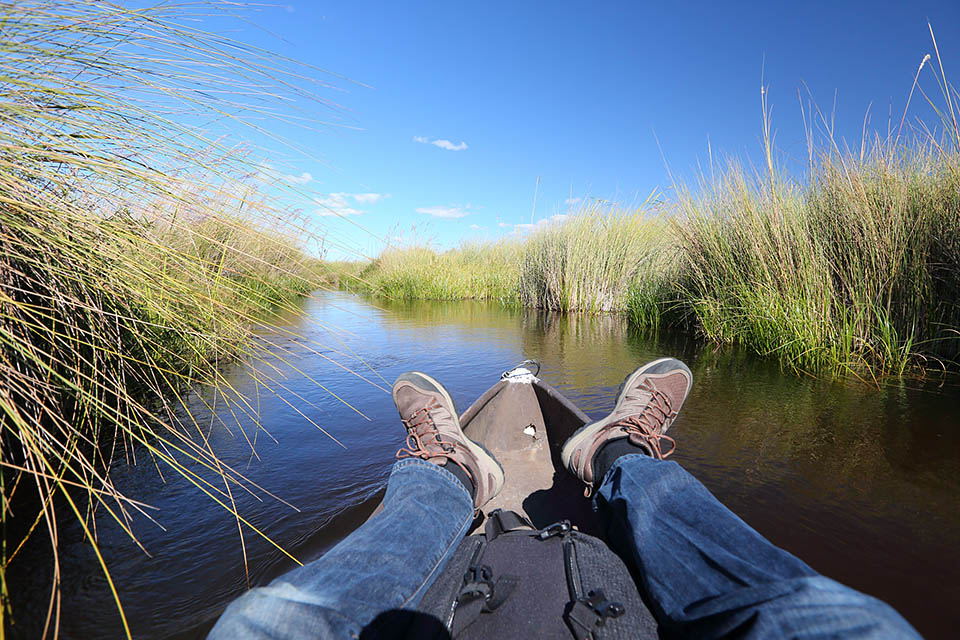
That afternoon, we went out in the mokoro for an hour for the second time. Our guide, Top Gun, wanted to surprise us with some spectacle. We had seen elephants before, but seeing those huge animals from a mokoro is very special.
We had never dreamed that we would come face to face with a large elephant. I have no idea how fast a mokoro can go, but an elephant is much faster, even in the water. So you feel quite vulnerable.
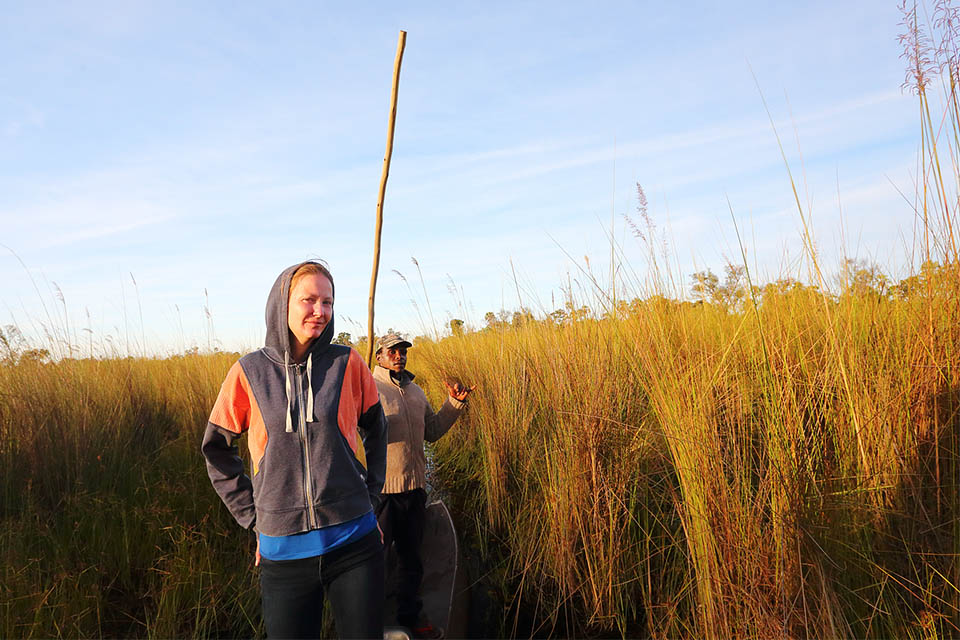
That feeling became much stronger when we saw an elephant nearby.
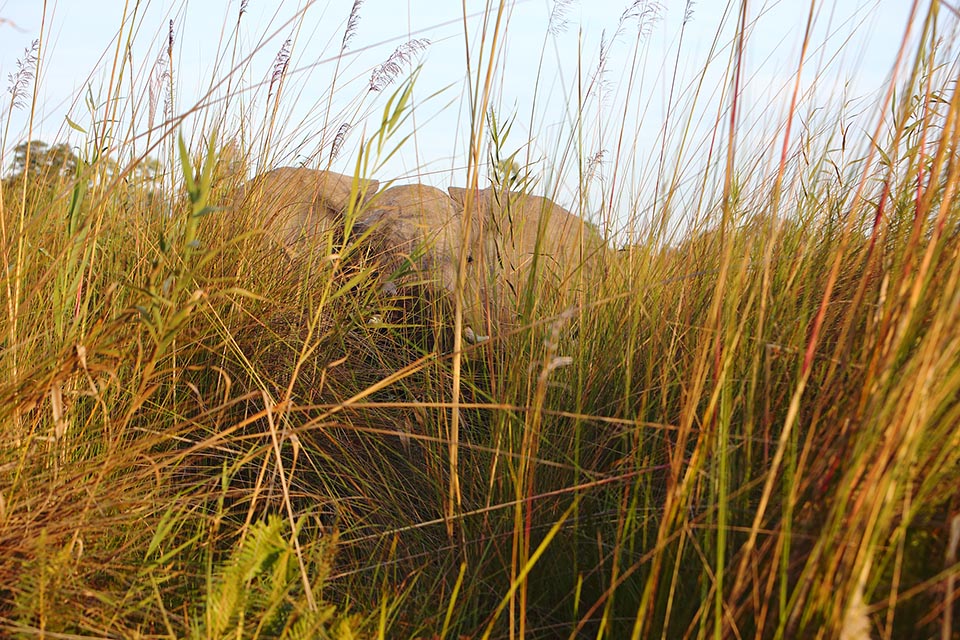
It had not seen or smelled us and was coming in our direction.
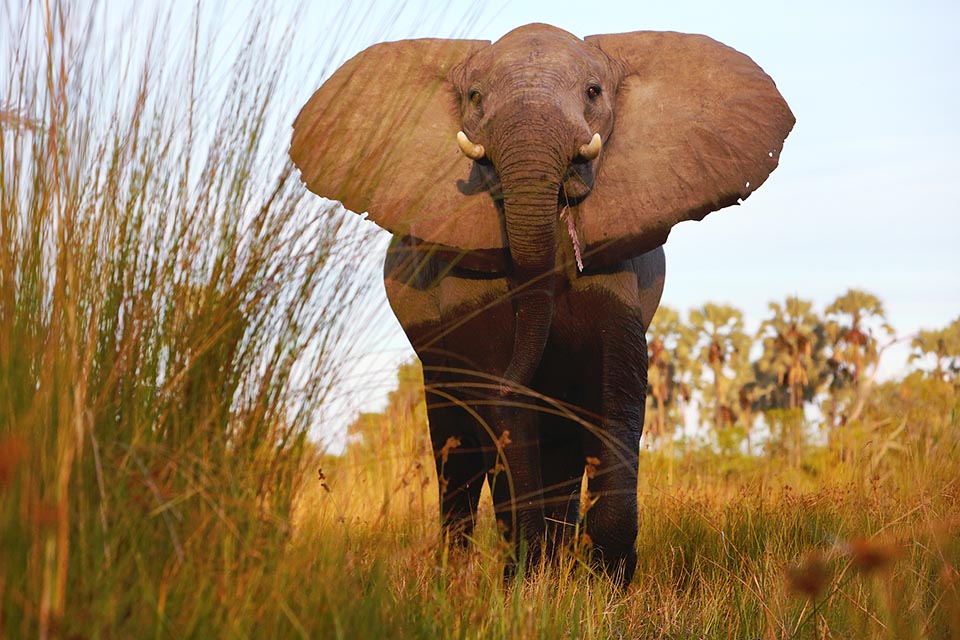
At one point, we were so close to the elephant that it only just fitted in my 200mm frame.
Top Gun whispered that I could stand up in the mokoro to take a better photo. I soon discovered that the autofocus did not work very well in that situation. There were lots of reeds between us and the elephant, causing the lens to focus everywhere except on the right point.
In a situation like that, and actually in most situations with animals, you want to get the eyes sharply in focus. I set my (70-200mm f/2.8 lens) to manual focus.
Focusing while standing in a mokoro and looking into the eyes of a large African elephant is quite a challenge.
Fortunately, the elephant stayed more or less in the same spot.
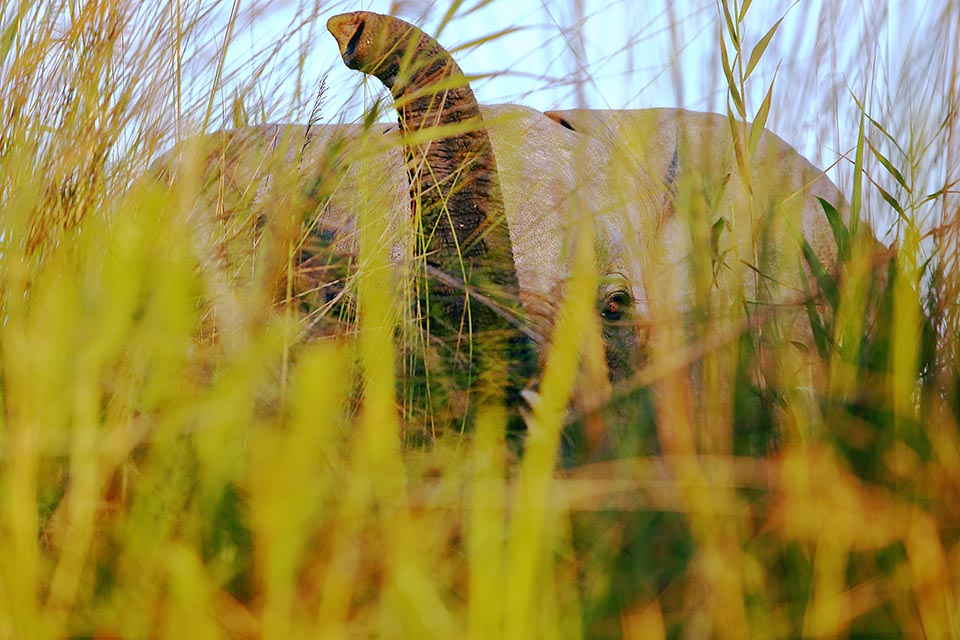
This photo, in which the elephant held its trunk up, was taken at 1/400 of a second, f/4.0 with an ISO of 800. I did not want a wider aperture, because manual focusing does not always work perfectly.
I am very pleased with the result. A sharp photo of an elephant about five metres away. That is partly why I will not forget that moment.
You can view this photo and many more here: Botswana travel photography. If you would like to see photos of this elephant experience, you can do so here: Photos of the Okavango Delta mokoro safari.
Shortly after I took that photo, the elephant backed away. We paddled a little further and came across it again a minute later. This time, the elephant also saw and smelled us more clearly.
Now it had had enough. It turned around and came towards us.
Top Gun started making quite a lot of noise. This made the elephant stop, and we were able to slowly move back. My heart was pounding hard in my throat.
In the moment itself, I managed to take some good photos. But when we were at a safe distance again, and the elephant had moved away too, I noticed that my arms were shaking quite badly. The tension had to go somewhere.
In the evening, around the campfire, Top Gun told us that when an elephant's ears are spread wide apart, as in my photos, it is not really serious yet. The attack is then a mock charge. Just showing who is the biggest and strongest.
Only when the ears are flat against the body and it runs in your direction do you really have a problem. Fortunately, I have no photos of that.
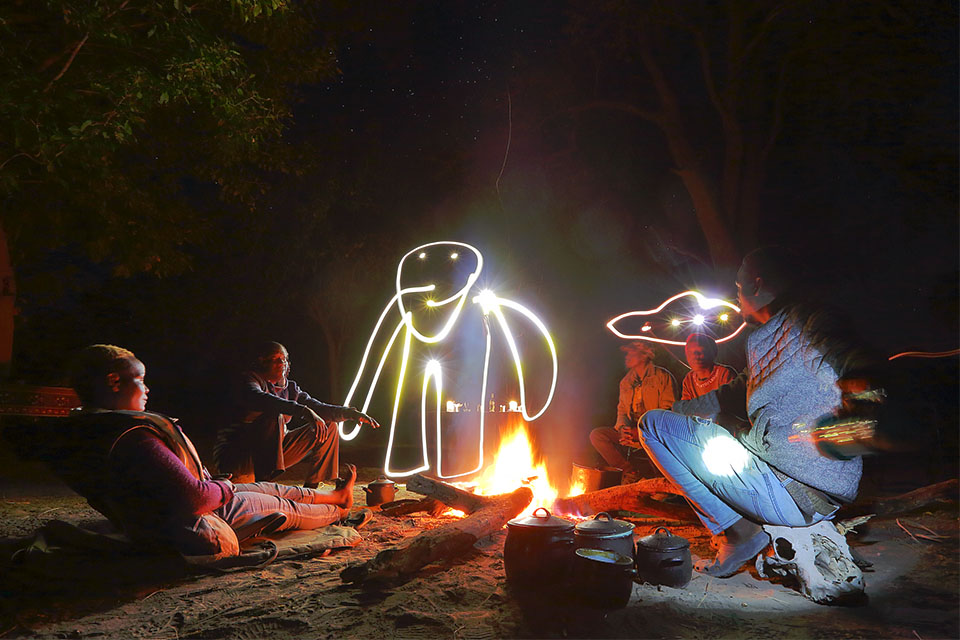
Because Top Gun had given us such a great experience, we also wanted to show him something special. That evening, we came across a UFO and an alien by the campfire.

About the author
Wilmar Dik is beroepsfotograaf sinds 2008. Ook schrijft hij in diverse media over fotografie en is hij betrokken bij DuPho. Bij NVJ is hij vertegenwoordiger beleidsteam Werkvoorwaarden namens ledengroep NVF/Beeldmakers. Werk van Wilmar:mensen.photo, Reclamebeeld, Portfolio fotograaf en Tasfilms.nl.
You might also like
-
 Wildlife photography and switching to mirrorless
by Evert Doorn
-
 Elinchrom launches new flash, the FIVE
by Elja Trum
-
 What Will a Camera Look Like in Five Years?
by Rob IJsselstein
-
 Street photography tip: Photograph the harsh shadows of summer
by Michiel Heijmans
-
 Get Low for Wildlife Photos
by Elja Trum

0 comments
Be the first to share what you think!
Have your say
Please note: Articles older than a week can only be commented on by signed-in visitors.Would you still like to comment? sign in or create a free account.
Become a better photographer every week
A practical photography tip in your inbox every week.
39,079 photography enthusiasts already receive the tips! More about the weekly mail. Or keep up to date via  Facebook.

Elja Trum
Photofacts; everything to do with photography!
Would you like to take better photos and keep up with what is happening in photography? Photofacts publishes articles that teach you something about photography — from a product announcement to a practical shooting tip or a look at a website. Photofacts covers photography every day and is a hobby project of Elja Trum's that got out of hand. The articles are written by a team of volunteer authors. If you would enjoy writing one or more articles for Photofacts, do get in touch.More about PhotofactsPhotofacts is made possible in part by
