

Just use depth of field, and don't make an issue of it
Monday 5 December 2022, 16:08 by Nando Harmsen | 6,320 views | 22 commentsThis article was translated from Dutch with the help of AI. Read the original.
What about depth of field? Which aperture should you choose, and do you need to consider focal length? And what about the crop factor, does it make any difference or not?
We make it harder than it is. Just use depth of field, and don't make an issue of it.
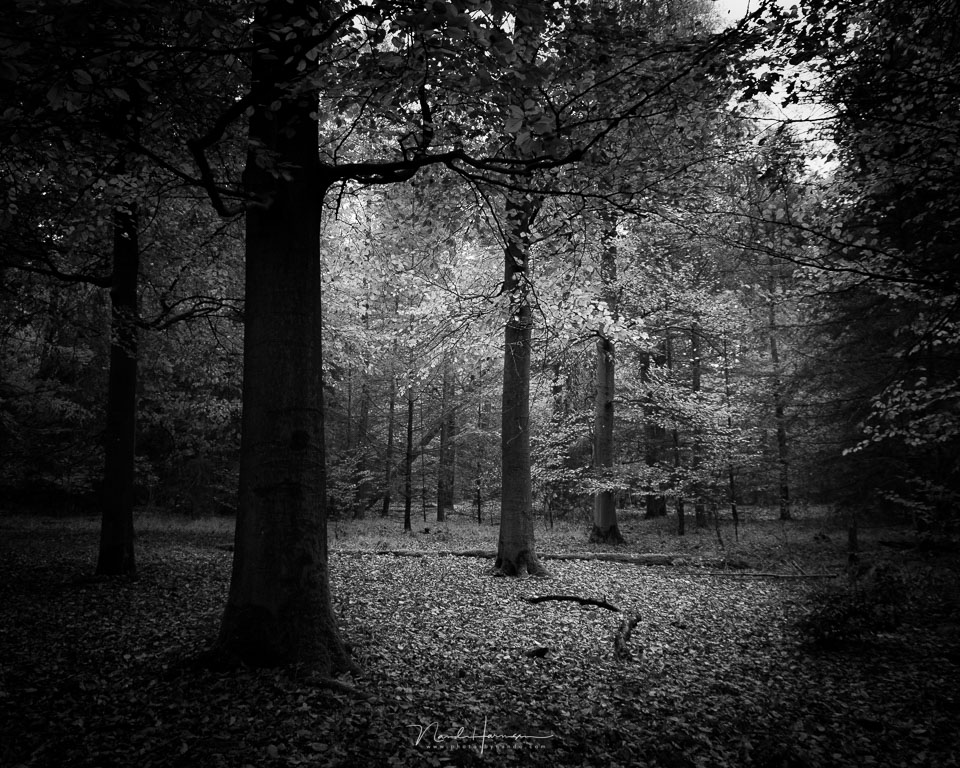
My course All about Depth of Field on Photofacts Academy has gone live. So I have once again become very aware of all the stories about depth of field that are doing the rounds on the internet and in the photography world.
There are always lots of discussions about exactly how depth of field works. Particularly about focal length, cropping, and crop sensors. Many persistent stories continue to circulate. They are based on the truth, but are usually placed in the wrong context.
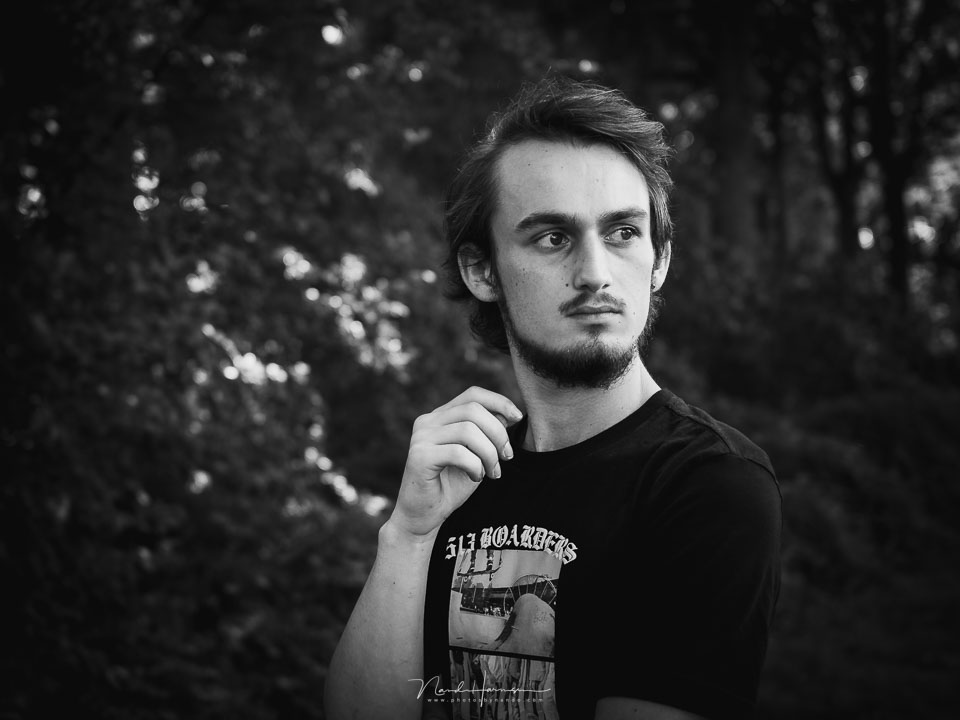
All that information on the internet can sometimes make things very confusing. What is true, and what is distorted truth? So let me ask you this: what difference does it actually make? How important is it really for your photography?
Did you know that I don't worry at all about the difference in depth of field between one camera and another? I don't care whether depth of field really gets larger when the sensor gets smaller, or not.
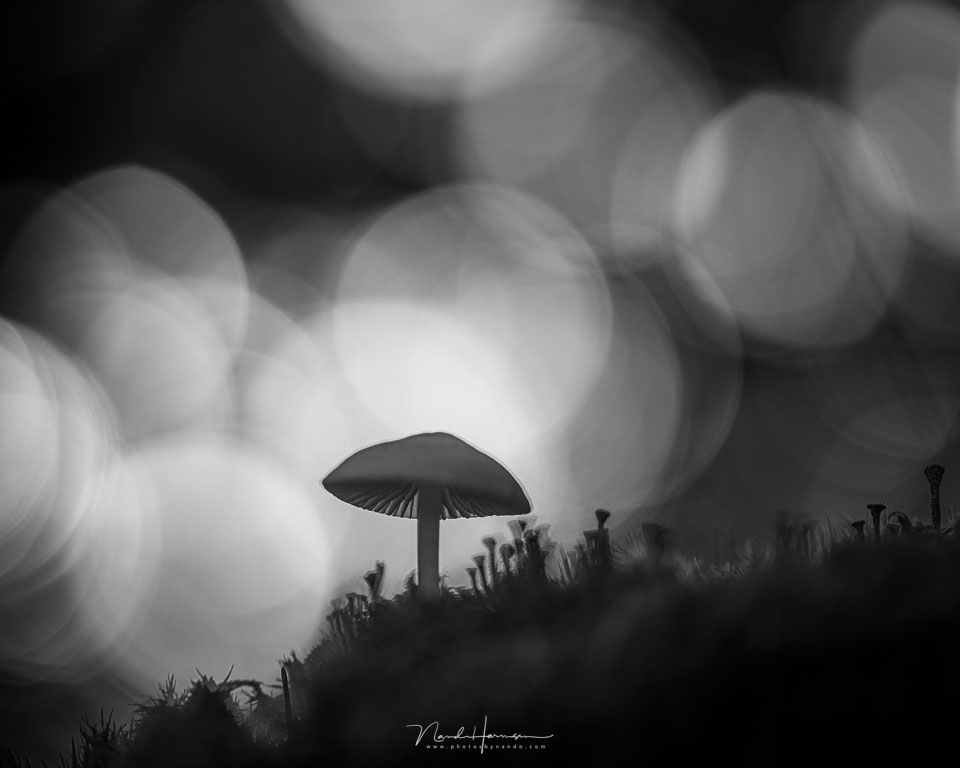
Why doesn't it matter to me? Because I don't use two cameras with different sensors side by side for photography. I simply use one camera, and get the depth of field that comes with that camera and sensor.
How it is on another camera, with a different focal length or a different sensor, is completely irrelevant.
The only thing you need to know is this: a wide aperture gives you a small depth of field, and a narrow aperture gives you a large depth of field. A short focal length naturally gives you a larger depth of field, while a long focal length gives you a smaller one. Don't forget that the distance to your subject also plays a major role.
Then you choose a large or small depth of field. In many cases, it makes little difference whether you use f/2.8 or f/4. An aperture of f/9 or f/11 does not produce a completely different image. But f/2.8 and f/11 do. Don't make it more difficult for yourself than that.
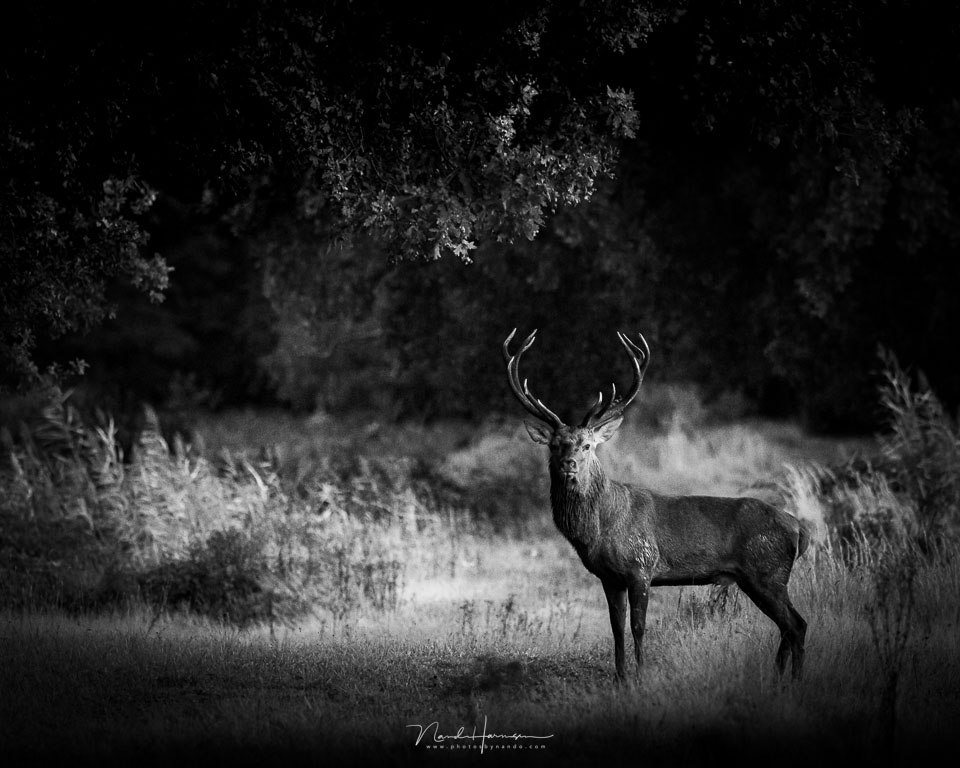
What do you think of all the discussions about exactly how depth of field and sensor size work? Do you want to know every detail, or do you keep it simple and take photos with whatever depth of field your camera produces? Share your opinion in a comment below this post.
About the author
Nando Harmsen has been photographing for more than 40 years. He specialises in wedding photography and landscape photography. Nando also gives talks, workshops, masterclasses and photo trips, and regularly reviews new and interesting equipment.
You might also like
-
 The difference between bokeh and shallow depth of field
by Nando Harmsen
-
 Mushrooms with bokeh
by Erik Nevels
-
 Night photography tip: using bokeh rings
by Nando Harmsen
-
 Electronic First Curtain Shutter and Bokeh
by Nando Harmsen
-
 Effect of focal length in portraits
by Nando Harmsen
-
 Would you consider a camera with an M43 sensor?
by Nando Harmsen
22 comments
-

 martinphili wrote on Monday 5 December 2022 at 21:06
| reply
martinphili wrote on Monday 5 December 2022 at 21:06
| reply
I also remember all kinds of discussions about depth of field, complete with DOF Calculator and the like. Yes, I took part in them too. Me too.
Translated from Dutch.
As time goes by, you learn what your lens does in terms of depth of field and you don't think about it all that much anymore. That's actually just the best
I have to admit that when switching to Full Frame, I occasionally did get tripped up by the incredibly shallow depth of field, obviously especially when you're very close to your subject. And in most cases you notice, as you yourself already indicate, little difference between F4 and F5.6. -
 RAWShooter wrote on Tuesday 6 December 2022 at 10:18 | reply
So what you're actually saying is that it doesn't matter whether you have a large or a smaller sensor in your camera. As far as depth of field is concerned, that is. Refreshing to hear. If only all those FF nerds understood that too, all that fuss on forums could go in the trash.
Translated from Dutch. -
guest wrote on Tuesday 6 December 2022 at 11:47 | reply
I agree with Nando's comment that you should simply use DoF and not make too much of a fuss about it. You can see through the viewfinder right away what is sharp and what is not. Now I am working with a recently purchased crop camera (Canon Eos R7) and for taking portraits I like to use a 50mm prime lens. When I photograph in my studio and space is limited, I run into the problem that with an aperture of F/1.8 and focusing properly on the eyes according to the rules, the edges of the ears AND the tip of the nose are out of focus. I don't like that. At the very least, the tip of the nose should also be sharp. If I stop down more, I soon see any folds in the background cloth. Because of the space, moving the model relative to the background is not an option. You then have to make choices and, for example, choose more DoF and then tackle and smooth out the background in post-processing. I don't find making those choices easy, because after all you want to have a photo you can be satisfied with.
Translated from Dutch. -
 Ronald Maas wrote on Tuesday 6 December 2022 at 12:07 | reply
If you would like to do macro photography, then a small sensor is more advantageous in terms of depth of field. My Nikon with a 105 mm macro lens is then at a significant disadvantage!
Translated from Dutch. -
 Lauran wrote on Tuesday 6 December 2022 at 12:18 | reply
FF nerds? Is this jealousy again. Nothing beats an FF with a good assortment of FF lenses.
Translated from Dutch.
And yes, that comes with a price tag. But you're either a photographer or you're not. -
 Hans wrote on Tuesday 6 December 2022 at 12:22 | reply
I find it interesting enough to follow all the discussions and theories, but in my own practice I share your opinion: you have to make do with what you have with you and f/2.8 means a shallow depth of field and f/11 a considerably greater one.
Translated from Dutch. -
 sluymer
wrote on Tuesday 6 December 2022 at 13:37
| reply
sluymer
wrote on Tuesday 6 December 2022 at 13:37
| reply
What I find funny: depth of field isn't an item. Less depth of field, large diagfragma and if you want more a smaller aperture. And for the rest just take photos and don't worry about anything. But uh... why a depth of field course then?
Translated from Dutch. -
 Nando
wrote on Tuesday 6 December 2022 at 13:40
| reply
Nando
wrote on Tuesday 6 December 2022 at 13:40
| reply
@Lauran:
Translated from Dutch.
Why would nothing be better than FF? Does that mean you consider a crop camera an inferior camera, if I understand correctly? That crop doesn't produce good results?
That's a bold opinion.
Moreover, it has nothing to do with jealousy. Sometimes crop is a conscious choice. -
-
 Peer Rees wrote on Tuesday 6 December 2022 at 13:58 | reply
Use the depth of field preview button and the set aperture lets you see the depth of field area plus any bokeh rings before taking the shot.
Translated from Dutch.. -
guest wrote on Tuesday 6 December 2022 at 14:22 | reply
Good to hear, Nando! Not everyone is a professional photographer with a wide range of lenses. Besides, it's good to learn to work with the equipment you have: 'In de Beschränkung zeigt sich der Meister!'
Translated from Dutch.
Sometimes quite a challenge, but very rewarding when the result is good. -
 Peter wrote on Tuesday 6 December 2022 at 15:52 | reply
I am happy with the article. Focusing on the composition is complicated enough without all that calculating. Sharp background high F number, blurry a small number.How simple can it be.
Translated from Dutch. -
 Maurice Debusschere wrote on Tuesday 6 December 2022 at 17:28 | reply
Interesting article dear Nando, I also use crop cameras and therefore also take those photos that my camera and lens allow me to take and don't lose sleep over what an FF or full-frame sensor makes possible. I do occasionally use a DOF calculator to take landscape photos from a moving bus or train. I then use a crop camera on manual with a fixed 23mm lens and 2.8 aperture, calculate the desired depth of field with a DOF calculator and use the ISO if necessary for the desired fast shutter speed. And I press the lens hood against the window to exclude reflections. On a large screen, not all images are satisfactory, then the DEL key comes in handy. But I do then have a number of photos that do meet the requirements and that otherwise would not have existed.
Translated from Dutch. -
 johan wrote on Tuesday 6 December 2022 at 21:10 | reply
Usually I focus on the most important element in a photo, e.g. a person's eyes, but if I want everything sharp in a landscape, I still get out the DOF calculator. Of course only if I don't have to make any compromises in terms of ISO or shutter speed.
Translated from Dutch. -
 Ronnie wrote on Tuesday 6 December 2022 at 22:25 | reply
@Nando
Translated from Dutch.
I don’t know which planet you come from but I’m on the sidelines at the Bundesliga every week with 3 cameras and 3 to 4 lenses in my bag and take around 2000/2500 photos per match, of which the 4 editorial teams I work for use about 3. The DoF of these 3 guys is different on all 3 and if I don’t use them properly I get a spanking. In this field you work with jpg as you know, and that makes it even more interesting. -
-
Lauran wrote on Wednesday 7 December 2022 at 09:27 | reply
@Nando. You misunderstand me. I swear by FF myself, but that doesn't mean I look down on crop. Far from it, even. I don't like looking down on anything or anyone at all. I see plenty of brilliant photographic work made with a crop camera. So let there be no misunderstanding about that.
Translated from Dutch. -
Ronnie wrote on Wednesday 7 December 2022 at 09:35 | reply
@Nando
Translated from Dutch.
1 moment that really matters without the right depth of field doesn't make it into VI or Kicker.
Fact. -
Nando
wrote on Wednesday 7 December 2022 at 10:57
| reply
@Ronnie:
Translated from Dutch.
Out of genuine interest; I have no experience with this kind of photography.
I assume you photograph with full-frame and a 500mm f/4 or thereabouts? A fast shutter speed to freeze action means at least 1/2000 sec (from my own experience with action photography).
I then assume that you choose the maximum aperture so you don't have to use too high ISO values.
Do you then still adjust your aperture based on the depth of field you want to have? For example to f/8 to get more depth of field?
I'm curious about your approach. Can you explain it a bit more? -
 Donald willemsen wrote on Thursday 8 December 2022 at 22:39 | reply
Nando, I can really relate to your article. There is, however, one but.
Translated from Dutch.
Speaking of DoF. In portrait photography, people often say to focus on the eyes. And rightly so. It is also said to photograph with as wide an aperture as possible, because that gives a shallow DoF and beautiful bokeh.
My experience is that this does not work in my studio due to the limited space and I cannot place the model far enough from the background to get a nice even background. On top of that, when I use, for example, an f/1.8 50mm prime lens on a Canon Eos R7 and focus on the eyes, I get both blur on the edges of the ears and on the tip of the nose. I don't think that looks good. I can live with blurred edges on the ears, but I don't like blur on the nose. So I have to stop down, and that also means a greater DoF. My flash meter also tells me I have to stop down, even when I set the flashes to their lowest setting and place them as far away from the model as possible.
Taking photos outside does not cause that problem. -
Nando
wrote on Tuesday 13 December 2022 at 09:47
| reply
@Donald Willemsen:
Translated from Dutch.
Focusing on the eyes is necessary in most cases when taking portraits. A shallow depth of field is just a choice, not a must.
If you want to work with a shallow depth of field in a studio, you will have to turn the flash intensity down considerably. If they are set to the lowest setting, a neutral density filter might be the solution. -
Donald Willemsen
wrote on Tuesday 13 December 2022 at 10:41
| reply
@Nando, I hadn't thought of a gray filter. I have a few ( HAIDA 😉). So thanks for the tip.
Translated from Dutch.
Have your say
Please note: Articles older than a week can only be commented on by signed-in visitors.Would you still like to comment? sign in or create a free account.
Become a better photographer every week
A practical photography tip in your inbox every week.
39,079 photography enthusiasts already receive the tips! More about the weekly mail. Or keep up to date via  Facebook.

Elja Trum
Photofacts; everything to do with photography!
Would you like to take better photos and keep up with what is happening in photography? Photofacts publishes articles that teach you something about photography — from a product announcement to a practical shooting tip or a look at a website. Photofacts covers photography every day and is a hobby project of Elja Trum's that got out of hand. The articles are written by a team of volunteer authors. If you would enjoy writing one or more articles for Photofacts, do get in touch.More about PhotofactsPhotofacts is made possible in part by
