

Would you consider a camera with an M43 sensor?
Friday 16 February 2024, 15:51 by Nando Harmsen | 5,741 views | 20 commentsThis article was translated from Dutch with the help of AI. Read the original.
A micro four-thirds camera, abbreviated to M43, has a sensor with a 2x crop factor. This offers several advantages, but also some disadvantages. It can be a very good choice for some photographers. In this article, we weigh up the pros and cons. Would you consider a camera with an M43 sensor?
Many amateur photographers are convinced that shooting with a full-frame sensor is the only serious option. This has led to cameras with smaller sensors often not being taken seriously. They are 'just' crop cameras.
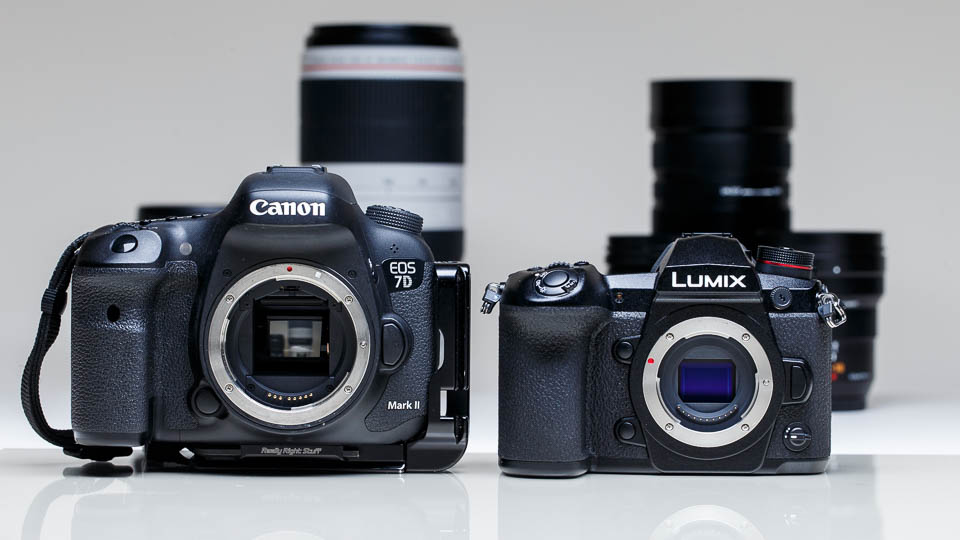
This is of course nonsense, because the sensor size has nothing to do with taking photography seriously or not. A smaller sensor does not produce worse photos either. It does, however, make it possible to make the camera smaller.
It is not difficult to understand. A smaller sensor takes up less space. This means a camera can be made smaller. The smaller the sensor, the smaller the camera. Just think of a smartphone.
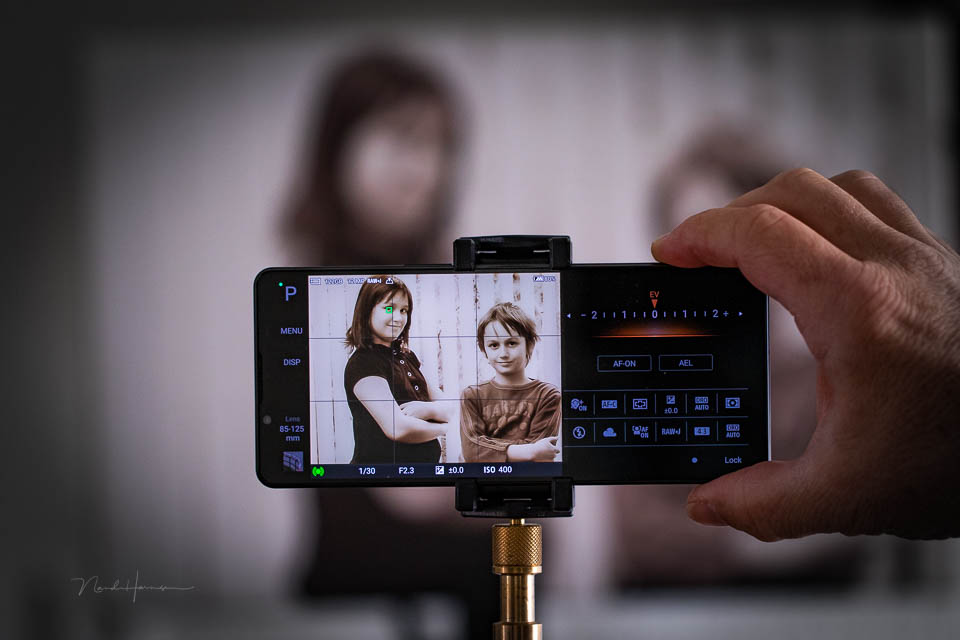
A smaller sensor also affects the angle of view. This is the crop factor, and it tells you how much of a lens's image circle is captured. A larger sensor captures more of the image circle than a smaller sensor.
This means that with a smaller sensor, it appears as though a longer focal length has been used. The crop factor tells you how much longer. With full-frame, the crop factor is 1x, while an APS-C camera has 1.5x or 1.6x. An M43 camera has 2x.
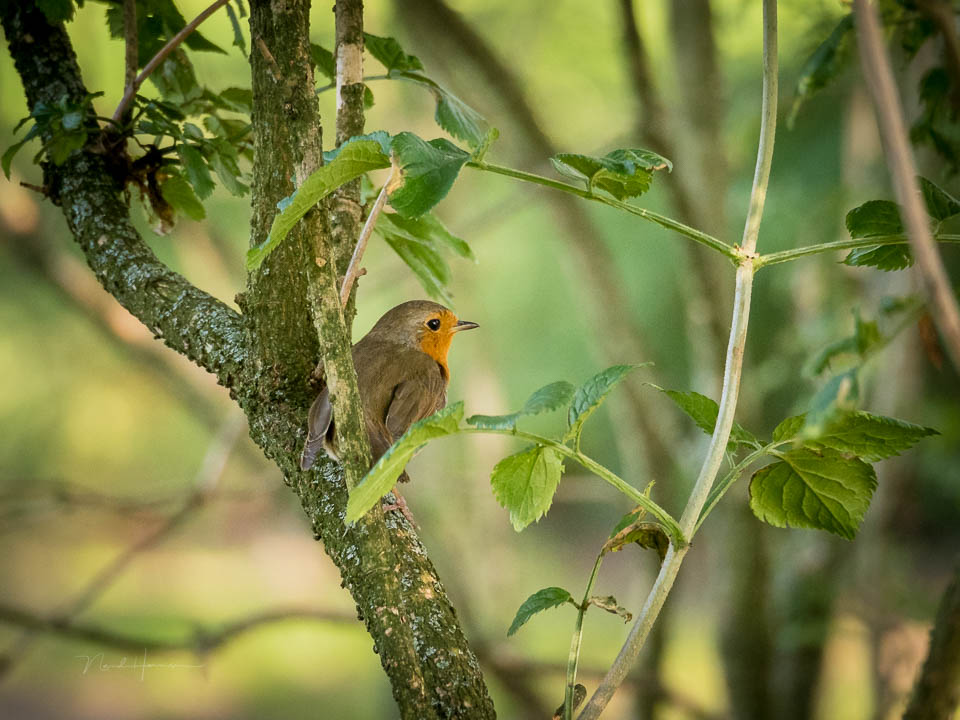
If you want to shoot with an angle of view equivalent to 50mm, you need a 25mm lens with an M43 sensor. For a 200mm angle of view, you need a 100mm lens. And if you want an 800mm angle of view, a 400mm focal length is sufficient.
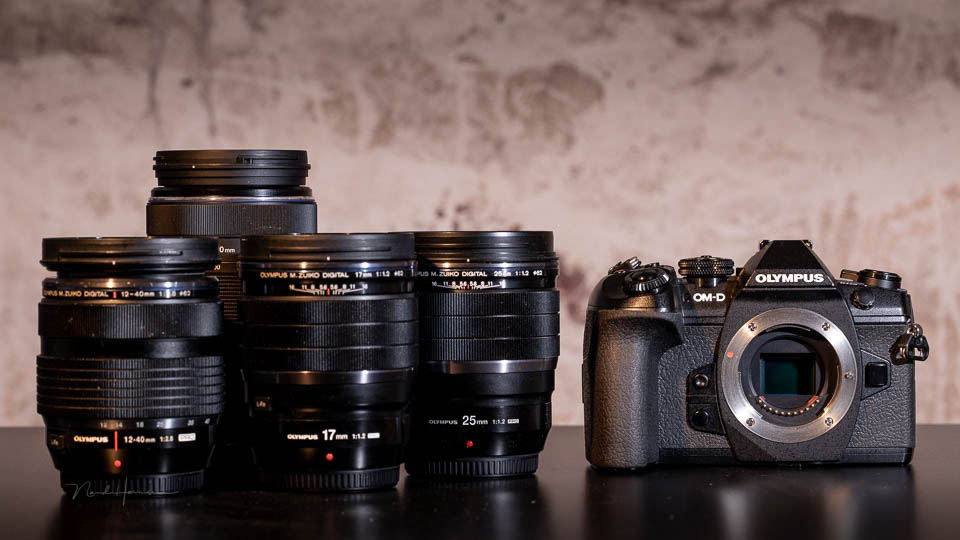
With an M43 camera, the focal lengths you need to use are half as long as on a full-frame camera. The required image circle is also smaller. That is why lenses for these cameras are much smaller and more compact too. This gives an M43 sensor an even greater advantage than an APS-C camera.
The advantages of an M43 camera
The advantages are actually very easy to sum up. A camera with an M43 sensor can be made smaller and therefore lighter. A shorter focal length is also needed, which means the lenses can be smaller and lighter too.
The biggest advantage is for photographers who want to use extremely long focal lengths. A 300mm works like a 600mm. A 300mm f/2.8 is also realistic, whereas a 600mm f/2.8 is not.
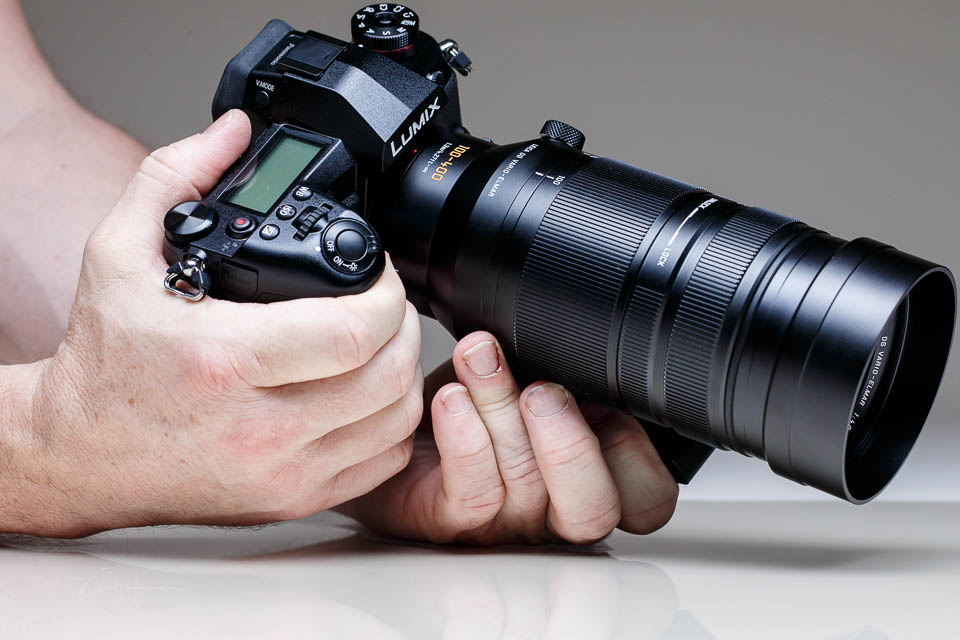
If you are working with an extremely large depth of field, an M43 sensor also has an advantage. The focal length you use is half that of the one you would use on full-frame. This automatically gives you greater depth of field.
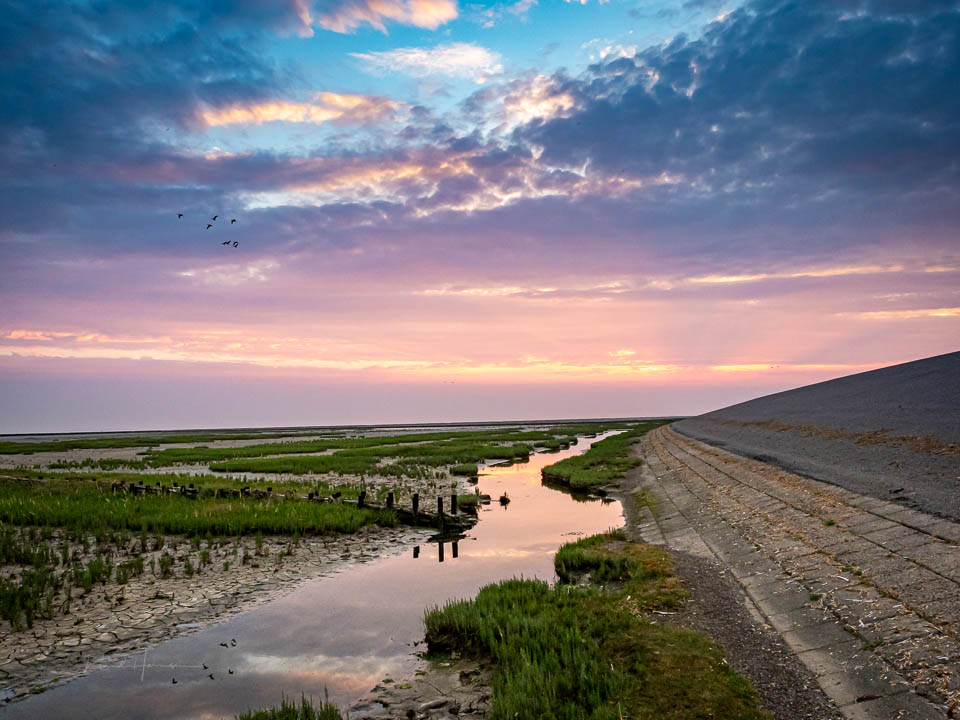
A travel photographer will also benefit greatly from a compact camera. A full-frame camera with two lenses takes up more space and is heavier than an M43 camera with comparable lenses. As a travel photographer, you could even take an extra lens with you if you choose an M43 system.
The disadvantages of an M43 camera
A smaller sensor size also has disadvantages. The most obvious, and perhaps the most important, is the noise level at higher ISO values. A smaller sensor shows noise sooner than a larger sensor.
The reason is easy to understand when you consider the size of a sensor. A resolution of 25 megapixels on a smaller surface means the pixels are packed more closely together. They are not actually pixels but light-sensitive sensors, but let's keep it simple.
When you increase the ISO value, you amplify the sensor's signal. When the pixels are closer together, the individual signals increasingly influence each other. This interference signal is noise.
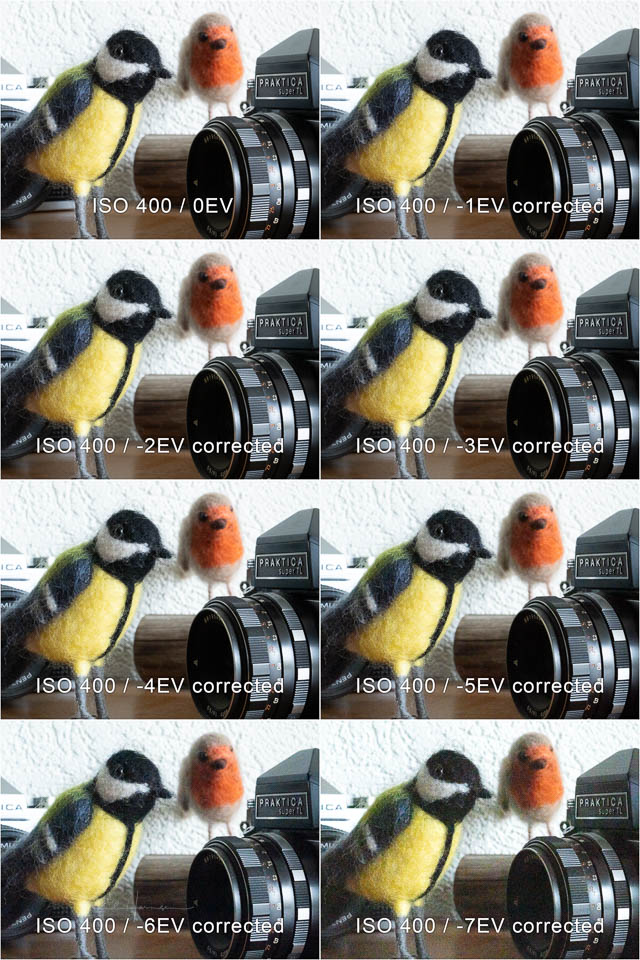
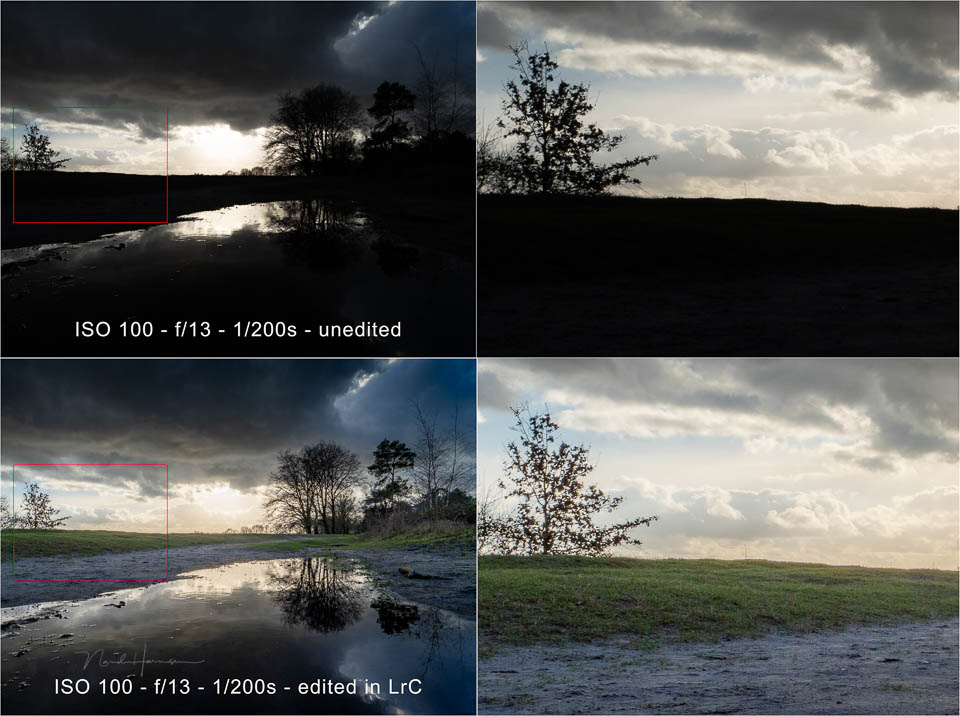
In short, an M42 sensor will show more noise at a higher ISO value than a full-frame sensor. This is especially noticeable when you still edit the photo and brighten dark areas.
However, if you can keep the ISO value low, the increase in noise is virtually negligible. The latest M43 sensors also perform much better than before. On the other hand, performance is still improving with larger sensor sizes too.
Another disadvantage is the limitation in resolution. Only so many pixels can be placed per square millimetre. If you want more, they have to be placed closer together or made smaller. There are simply limits to this, and with a smaller sensor that limit is reached sooner.
The advantage of greater depth of field thanks to the smaller sensor size has already been mentioned. However, this can also be a disadvantage. Photographers who like to work with an extremely shallow depth of field are disadvantaged by a smaller sensor size. In particular, the background blur will be less than what you can achieve with a larger sensor size.

An M43 sensor is not that bad
When you weigh up the pros and cons, an M43 sensor is not a bad choice at all. Of course, this also depends on the type of photography you do and your personal preference when it comes to cameras.
Noise levels are usually hardly a problem, unless you consistently need to shoot at high ISO values. Modern noise-reduction software can also work wonders. Unfortunately, many photographers are still convinced that a photo must not contain even the tiniest speck of noise.

Do you like a very shallow depth of field, with a beautiful creamy background? Then you are at a disadvantage when using an M43 sensor. The larger the sensor, the better the results can be. If you really want to excel at this, even a full-frame sensor is not large enough.
In the end, in practice it comes down to the size and weight of the camera, and its ergonomics. As far as sensor size is concerned, the size and weight of a camera no longer make that much difference, especially now that everything has become mirrorless. The differences are negligible.
Where it does make a difference is with the lenses. I have already covered that clearly in the advantages. Personally, I do not mind shooting with somewhat larger and heavier lenses. If weight is an important consideration, however, I would choose APS-C, or even an M43 camera. I am lucky enough to own all three.
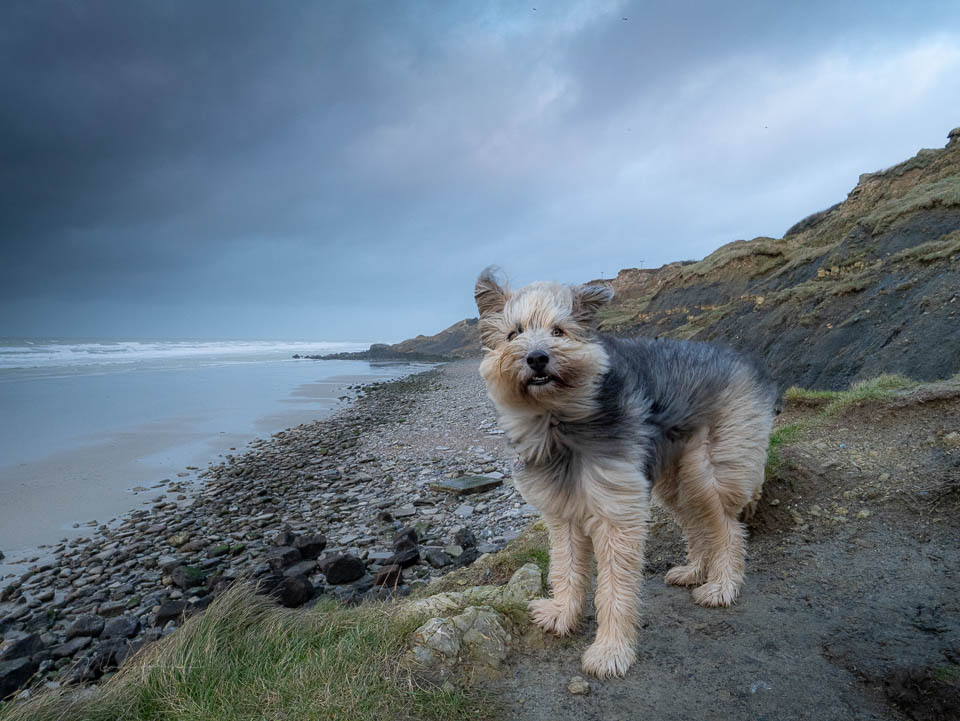
Would you consider a camera with an M43 sensor? Switching systems will always be costly, and perhaps not wise. But if you had to choose now, what would you do? Let us know in a comment below this post.
About the author
Nando Harmsen has been photographing for more than 40 years. He specialises in wedding photography and landscape photography. Nando also gives talks, workshops, masterclasses and photo trips, and regularly reviews new and interesting equipment.
You might also like
-
 Olympus OM-3 announced
by Elja Trum
-
 Olympus OM-1 micro four-thirds camera announced
by Elja Trum
-
 Why no Micro Four Thirds mirrorless camera?
by Luc Baert
-
 Which is better, cropping a full-frame image or using a crop sensor?
by Nando Harmsen
-
 The ideal all-round lens for Micro Four-Thirds
by Nando Harmsen
20 comments
-
 Van Erp wrote on Friday 16 February 2024 at 20:55 | reply
Another advantage of the latest MFT cameras (Om System cameras for example) is the IBIS, which is up to 8 times better handheld. This means you can still get sharp results handheld with a low ISO and longer shutter speed, which helps keep noise low
Translated from Dutch. -

 Nando
wrote on Sunday 18 February 2024 at 10:58
| reply
Nando
wrote on Sunday 18 February 2024 at 10:58
| reply
Every modern camera nowadays has IBIS, and with some other brands it also achieves up to 8 stops. As a result, the advantage isn't big enough to be decisive.
Translated from Dutch.
But you are certainly right that OM-Systems performs very well in this area. -
 MacBigfoot wrote on Saturday 17 February 2024 at 00:58
| reply
MacBigfoot wrote on Saturday 17 February 2024 at 00:58
| reply
My old camera needed replacing. In the end I even found the old kit lenses in need of replacement (too much plastic that was starting to deteriorate, wear out).
Translated from Dutch.
The choice was either to gradually replace parts, or to get rid of everything rigorously all at once and gradually build it up again.
I chose the latter, and after considering all the options for a long time, I chose M43. Indeed, the advantages really appeal to me, they outweigh the disadvantages, especially when I go on holiday further away.
The most important thing in my view: get to know your equipment, not just the buttons and settings, but also the effect on the results. Know the limitations and possibilities, and make good, positive use of them.
I think I can be satisfied with the results, especially when I take the comments on my photos into consideration. -
-
 Jan wrote on Saturday 17 February 2024 at 09:13 | reply
Is it really the sensor size that causes background blur? Imo it’s caused by the focal length of the lens. To get the same image on the sensor with m43, this distance would have to be halved (from 100m to 50mm), and that causes less blur. Or walk a little further back with the same lens and the background blur will be the same, right?
Translated from Dutch. -
Nando
wrote on Sunday 18 February 2024 at 11:03
| reply
Because due to the sensor size you have to use a shorter focal length for the angle of view you want (compared to larger sensors), the sensor size is (in)directly responsible for it.
Translated from Dutch.
If you keep the same focal length, then the depth of field does not matter. But the angle of view changes (becomes smaller), resulting in a completely different photo
If you compensate for that smaller angle of view by standing farther away, the depth of field automatically becomes smaller again. -
 r0bert wrote on Saturday 17 February 2024 at 10:07 | reply
Although I have also photographed with other systems and brands, I have always had and still have a strong preference for M43.
Translated from Dutch.
The compact size and limited weight invite you to always take the camera with you, and I find that very important. In addition, M43 is relatively affordable, also because there is a reasonably large second-hand market available. With a modest budget, you can put together a nice setup.
I don't experience any possible noise as a problem. I don't like photos that are too clean anyway, in post-processing I add a load of “grain” regardless.
Maybe not important, but a nice bonus: Olympus (and now OM System) have always stuck to the classic camera appearance. And as someone who photographed with a beautiful Olympus OM during the analogue years, I can certainly appreciate that. Looks matter too. -
 jeepee wrote on Sunday 18 February 2024 at 18:32
| reply
jeepee wrote on Sunday 18 February 2024 at 18:32
| reply
Not having the luxury of using 3 systems side by side, I would rather choose the combination of full frame and DX, because that way I could use the same lenses (same mount) The advantage besides relative compactness is indeed that with a still somewhat affordable 300-400 mm FF lens you then have 450-600 to photograph birds, for example (with a FF with lots of pixels you can also achieve this with a crop, that is my approach because I only have 1 FF body).
Translated from Dutch. -
 Mac wrote on Monday 19 February 2024 at 07:57 | reply
Actually, crop factor is a really wrong term.
Translated from Dutch.
Because what actually is crop factor. Yes, if you put FF lenses on an APS-C or mFT camera, then that lens has a "crop factor", because it will have a smaller angle of view. but if you buy lenses that are made for those systems, then those lenses don't have a crop-factor at all, because they do exactly what they are intended for.
And we don't say that an FF camera has an x crop factor compared to a medium format camera either, so why do we do that towards APS-C and MFT.
( obviously it can be used to make something clear to people. And in the early days of digital photography it was useful, because people only had FF lenses that they used on APs-C bodies. but actually we should just get rid of it) -
Nando
wrote on Monday 19 February 2024 at 21:04
| reply
Full frame has a crop factor of 1x - this is what the standard is.
Translated from Dutch.
APS-C has a crop factor of 1.5x or 1.6x
Medium format has a crop factor of 0.8x (approximately)
Focal length is independent of that, but the angle of view that is captured does depend on the crop factor.
A lens specifically for crop with 24mm is the same as a lens specifically for full frame. That 24mm focal length is a physical fact.
If you want to capture the same angle of view with a crop sensor as with a full-frame sensor, you will have to divide the focal length by the crop factor.
For an angle of view corresponding to 24mm on full frame, a 16mm will have to be used on APS-C,12mm on MFT, and 30mm on medium format.
However, you are right that it is pointless to do all those conversions, unless you really want exactly the same framing as the person next to you with a camera with a different sensor size. Then you have to see what focal length he/she has, and convert it to your sensor size.
For the rest, all that converting has little to no value. -
Van Erp wrote on Monday 19 February 2024 at 08:58 | reply
MFT from OM System (and Panasonic for example) is definitely worth considering. A shame that the MFT system is somewhat stuck in the damned corner and in the shadow of Nikon, Canon, Fuji etc... Probably also their own fault because they come out of the shadows so little themselves. It will have to get better if they still want to mean something anywhere. Especially now that OM System has only just arrived as a replacement for Olympus. If that doesn't get better, it will become difficult to keep their heads above water
Translated from Dutch. -
 Janfotoman wrote on Tuesday 20 February 2024 at 13:08 | reply
I've been using m43 for years, for portraits for example, with a 45 mm 1.8. Great photos, super sharp and no problem filling a full A4 page in a magazine.
Translated from Dutch. -
 Ron A.B. wrote on Tuesday 20 February 2024 at 13:16 | reply
For several years now, I’ve had the luxury of having an Olympus EM1markII with a decent series of lenses alongside my Canon 5DMark4. I use the Olympus for longer walks because then I can take everything from 6mm to 300mm, including the 60mm macro lens, in a smaller bag. In addition, an important reason for choosing Olympus was the possibilities with bulb and such...
Translated from Dutch.
Sometimes I do have problems with too much noise when the ISO really has to be raised, but fortunately it doesn’t happen very often.
If I find something really special and I really want beautiful quality, I do go back with the Canon. Still, for the internet, the quality of the Oly is actually more than sufficient almost all the time. -
guest wrote on Tuesday 20 February 2024 at 14:11 | reply
Your clients see you coming.....
Translated from Dutch. -
-
 Erik010 wrote on Tuesday 20 February 2024 at 19:37 | reply
After years of being a fervent Nikon supporter (Nikon D300 plus lenses), I switched to the first version Panasonic Lumix DC-G9. Mainly because of the weight you constantly had to carry around. Now I have had the DC-G9 Mark II for a short while and I am super happy with it, sharp, and yes, noise at high ISO, that is something you have to (can) take into account. That is of lesser importance to me. Everyone has their own preferences....
Translated from Dutch. -
 Blondeel wrote on Wednesday 21 February 2024 at 09:56 | reply
I have been using an Olympus camera for more than 15 years and am also a member of a photography club where my photos of birds, animals and landscapes are absolutely not inferior to FF cameras. Recently my friend bought a 33 MP camera and what you see there in terms of noise is not normal!
Translated from Dutch.
I also see no difference between MFT and FF in dynamic range . -
 René Prevo wrote on Wednesday 21 February 2024 at 11:48 | reply
Have been using Olympus/OM System for years
Translated from Dutch.
See also https://www.photofacts.nl/fotografie/rubriek/productaankondiging/de-nieuwe-om-systems-om-1-mark-ii-en-de-150-600mm-supertelezoom.asp
The stacked sensor delivers very good noise-free images, image stabilization is 8.5 stops. -
 Ton van der Linden wrote on Thursday 22 February 2024 at 09:17 | reply
Since the 70s, I have been photographing with Olympus (OM-1 and -2) and during that time I also acquired a number of Zuiko lenses. I can still use them on my OMD and PEN cameras, and I am very happy about that. They are wonderful lenses, with beautiful bokeh. I can still photograph the way I used to, with aperture priority and taking a little more time. The newer lenses also help me take the photos I have in mind. The compact size and reasonable weight are advantages that are becoming increasingly important to me as the years go by. The quality of the photos when making photo books and prints is excellent for me.
Translated from Dutch. -
 miessie wrote on Tuesday 3 December 2024 at 17:14
| reply
miessie wrote on Tuesday 3 December 2024 at 17:14
| reply
Good piece. I happen to come across it (?) right at the moment that I am wondering whether to switch from full frame to MFT.
Translated from Dutch.
I own a Canon Eos R (the 1st one that is) with a beautiful set of RF lenses. (25-105 f4, 14-35 f4, 70-200 f4, EF 100 macro 2.8L). But it is all getting quite heavy at 67. During hikes I only took the eosr with the 24-105 along anymore but already found that quite an awkward thing on my capture clip attached to the backpack.
So looking for something lighter, I bought an OM5 with the 12-45 f4 pro a few months ago.
What a relief to take along! Nice and light and can handle a heavy rain shower. Unfortunately a terribly bad menu...
I have to say that I find the quality of the images very much ok. Not quite that of my Canon set.
What I am especially very happy with is the image stabilisation. I am not used to that on my eosr.
The live ND is also very nice, now already touring Scotland with the camper for 5 weeks. Do you know how many little waterfalls and streams there are here?
Digging a little deeper into MFT, I am getting quite tempted by the OM 1 mark II with for example the 12-100 f4 and then the wide-angle 7-14 f2.8.
That saves me so much in weight and space, and I can leave my tripod at home much more often. And ND filters. Because I am a bit of a lazy photographer.
But if I trade my eosr for an R5, I naturally also get good ibis.
And of course it would be a shame about all that beautiful RF glass too.
Another dilemma: I rather like 16:9. And then I do have to crop a lot again from the 4:3 format of the OM.
The 4:3 feels so illogical to me. Except vertically, then it is completely ok.
Dilemmas, dilemmas. Difficult, difficult.....
Have your say
Please note: Articles older than a week can only be commented on by signed-in visitors.Would you still like to comment? sign in or create a free account.
Become a better photographer every week
A practical photography tip in your inbox every week.
39,024 photography enthusiasts already receive the tips! More about the weekly mail. Or keep up to date via  Facebook.

Elja Trum
Photofacts; everything to do with photography!
Would you like to take better photos and keep up with what is happening in photography? Photofacts publishes articles that teach you something about photography — from a product announcement to a practical shooting tip or a look at a website. Photofacts covers photography every day and is a hobby project of Elja Trum's that got out of hand. The articles are written by a team of volunteer authors. If you would enjoy writing one or more articles for Photofacts, do get in touch.More about PhotofactsPhotofacts is made possible in part by
