

Which is better, cropping a full-frame image or using a crop sensor?
Monday 17 August 2020, 20:02 by Nando Harmsen | 13,682 views | 54 commentsThis article was translated from Dutch with the help of AI. Read the original.
Most photographers know that when you use a crop sensor, the focal length appears to be longer. This is because only part of the image is captured compared with a full-frame sensor.
Photographers who like shooting with very long focal lengths, such as bird photographers, particularly benefit from using a crop sensor.
You can achieve the same result by cropping a photo taken with a full-frame camera during post-processing. In that case, you are also using a smaller part of the image projected by the lens, making it appear as though you used a longer focal length.
To make this very clear, a full-frame sensor uses a part of the image circle measuring 24x36 mm. A 1.5 crop sensor uses only 15x23 mm of the same image circle.
By cropping the full-frame image 1.5 times during post-processing, you end up with exactly the same image as a 15x23mm sensor would capture. When viewed on your screen, or in a print, it will look as though the photo was taken with a longer focal length.
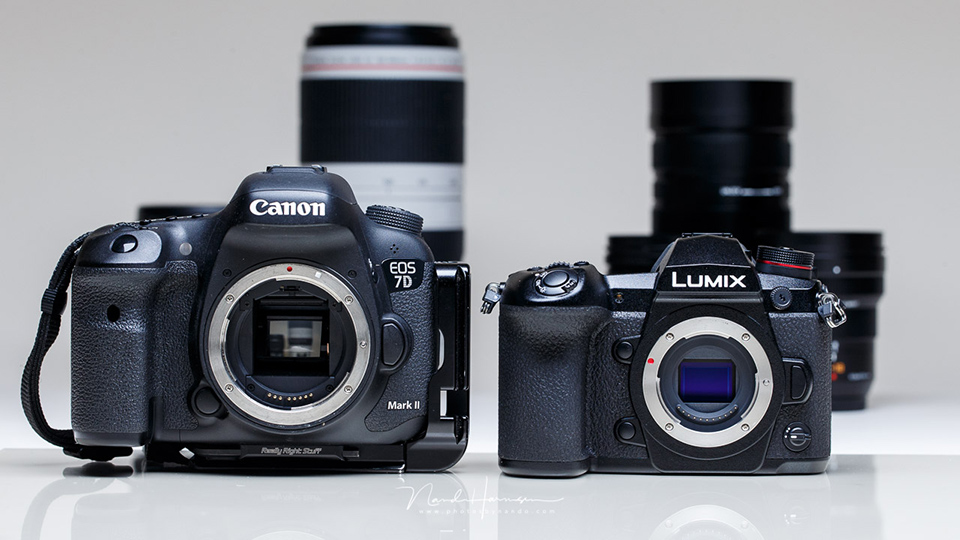
This allows you to benefit from the magnifying factor of a crop sensor. A 24mm lens will have the angle of view of a 36mm lens, a 50mm will function like a 75mm, and if you use a 400mm lens it will look as though you are shooting at a 600mm focal length.
With Micro Four-Thrids cameras, which have a crop factor of 2, a 400mm lens will have the magnification of an 800mm lens.
Use a crop sensor when using longer focal lengths
If you mainly use long focal lengths, a crop sensor offers a significant advantage because the focal length has to be multiplied by the crop factor, provided you compare the magnification of your subject with the same focal length on a full-frame camera.
This effect becomes really clear when you look at a camera such as the Nikon Coolpix P1000, which has a very small sensor, making the focal length of this superzoom equivalent to 3000mm on full-frame.
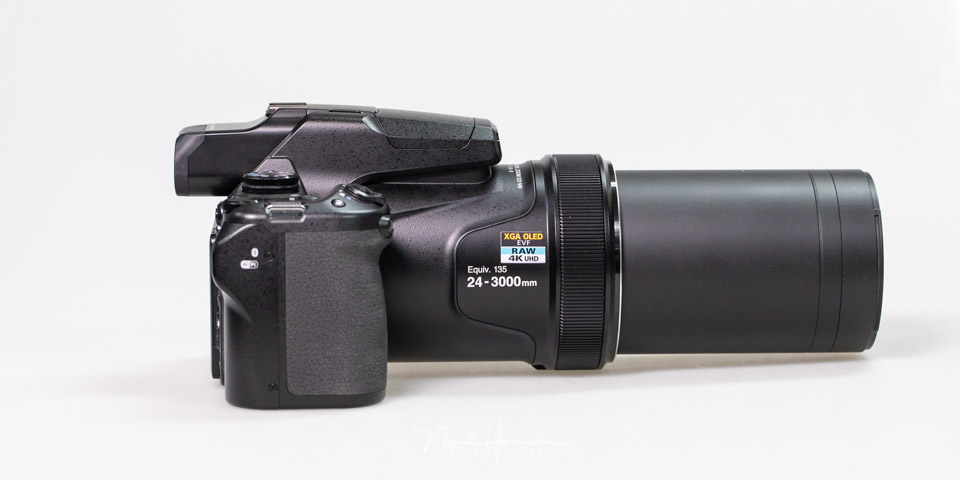
However, let's ignore superzoom cameras for now and keep the comparison to cameras with interchangeable lenses, the DSLRs and their mirrorless cousins.
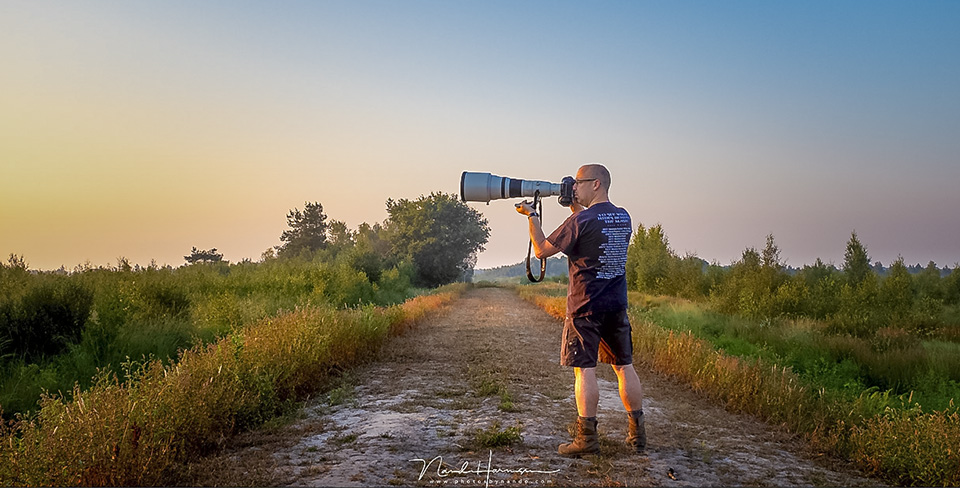
On a 1.5x crop camera, a 400mm lens works like a 600mm lens. On a 2x crop camera, this becomes 800mm. So you achieve 800mm with a lens that fits in your camera bag. Compare that with a real 800mm lens.
Use cropping of your full-frame image to imitate a crop sensor.
If you have a full-frame camera, you can of course also take the photo with a 400mm lens and then crop it during post-processing so that you are left with an angle of view equivalent to what you would get with a 1.5x crop camera or a 2x crop camera.
The end result is the same, with the subject appearing the same size in the image.
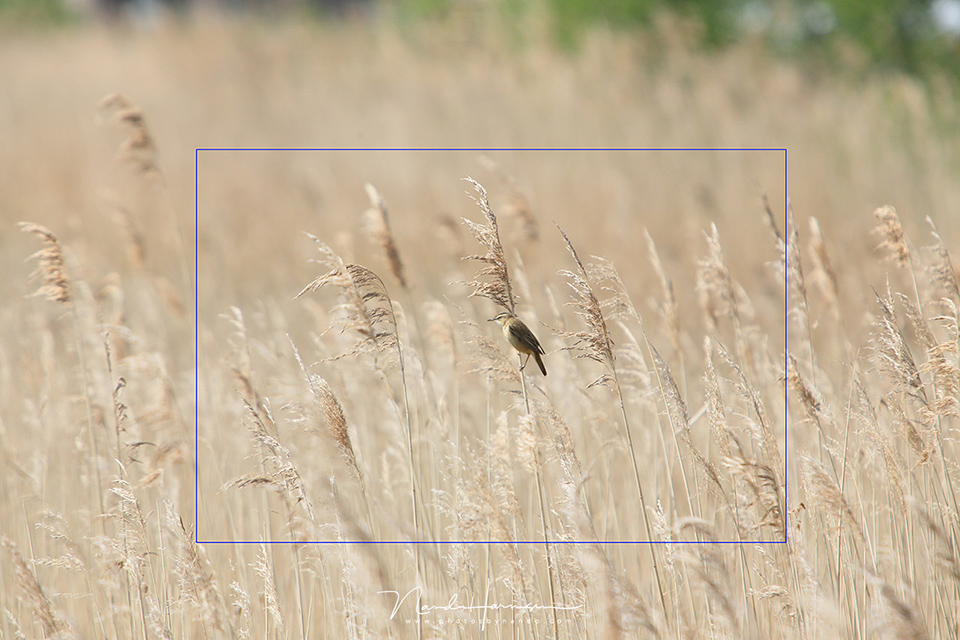
This is where the catch becomes clear. By cropping your full-frame image, you throw away some of your pixels. In other words, the resolution of your image is reduced.
When you crop a full-frame image 1.5 times, you are left with somewhere between 30% and 40% of your image. A 2x crop means throwing away 75% of your resolution.
With today's high-resolution sensors, this is not necessarily a problem. In general, you will still have enough resolution left for a large-format print.
Which is better? A crop sensor or cropping your full-frame image?
Most crop sensors have a resolution somewhere between 18 and 24 megapixels (at the time of writing). Full-frame sensors generally have between 24 and 30 megapixels. These figures naturally increase with every new camera, for both crop and full-frame sensors.
Let's do a small calculation. I want to compare the 20-megapixel sensor in the Canon EOS 7D mark II with the 30-megapixel sensor in the Canon EOS 5D mark IV (I'm a Canon user, after all).
The surface area of the sensor in the 7D mark II, with its 1.6x crop sensor, is 336 square millimetres. This gives us 59,500 pixels per square millimetre.
The surface area of the full-frame sensor in the EOS 5D mark IV is 864 square millimetres. Here we find 34,800 pixels per square millimetre. In other words, there are fewer per square millimetre than on the EOS 7D mark II.
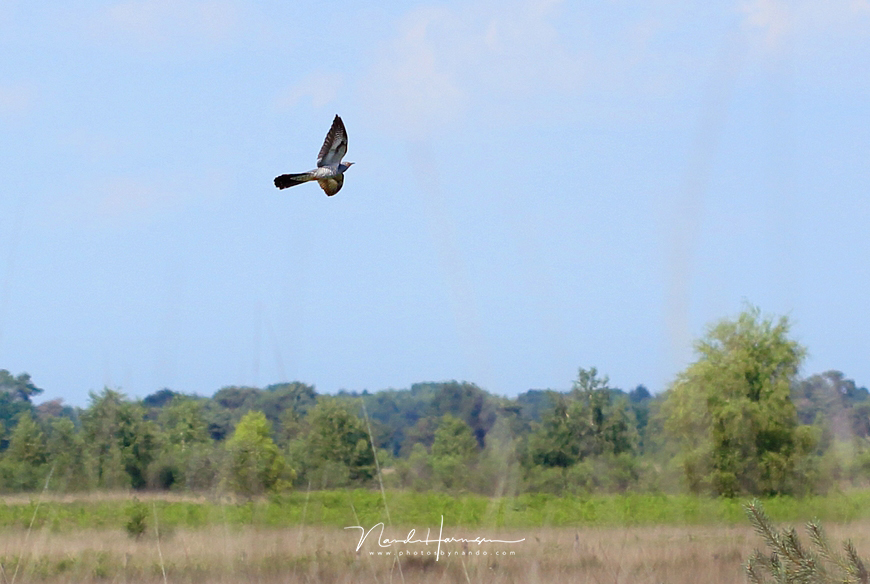
If we use a 400mm lens on both cameras and crop the image from the EOS 5D mark IV to the same magnification as the EOS 7D mark II, meaning 1.6x, the resolution of the latter will be much higher.
You retain many more pixels over the same surface area. This means you can also capture much more detail.
But what about image quality?
In terms of resolution, you lose out when cropping a full-frame image. This is simply because there are fewer pixels per unit of surface area. When more pixels are present on the same surface area, they are closer together, allowing smaller details to be visible.
There is, however, a major disadvantage to having many pixels close together. All those pixels produce small electrical currents when light hits them. If the pixels are too close together, these currents can start to influence each other and interfere. We see this as noise in a photo.
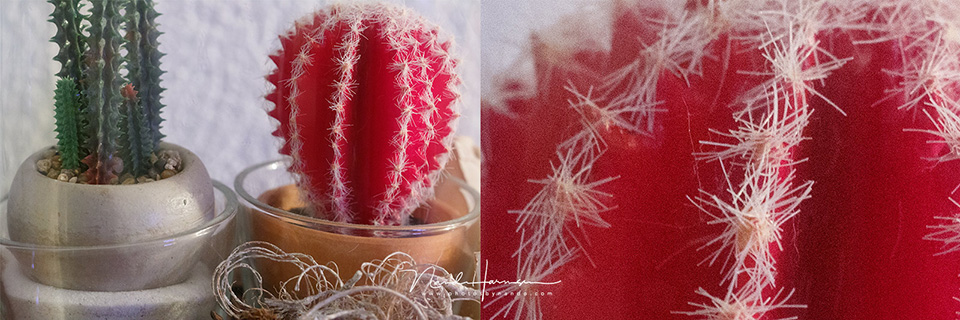
When the number of pixels per unit of surface area increases, the noise level also rises. This is especially true when you increase the ISO. You are effectively amplifying those small electrical currents, and amplifying the noise as well. An increase in noise means a loss of detail.
This means that the increase in noise can counteract the increase in detail. As a result, there are situations where one advantage is cancelled out by the disadvantage.
What is the best choice?
What should you do? Crop a full-frame image, or choose a crop camera straight away? Before I try to answer that, I first want to emphasise that the huge increase in the resolution of full-frame sensors is definitely something to take into account.
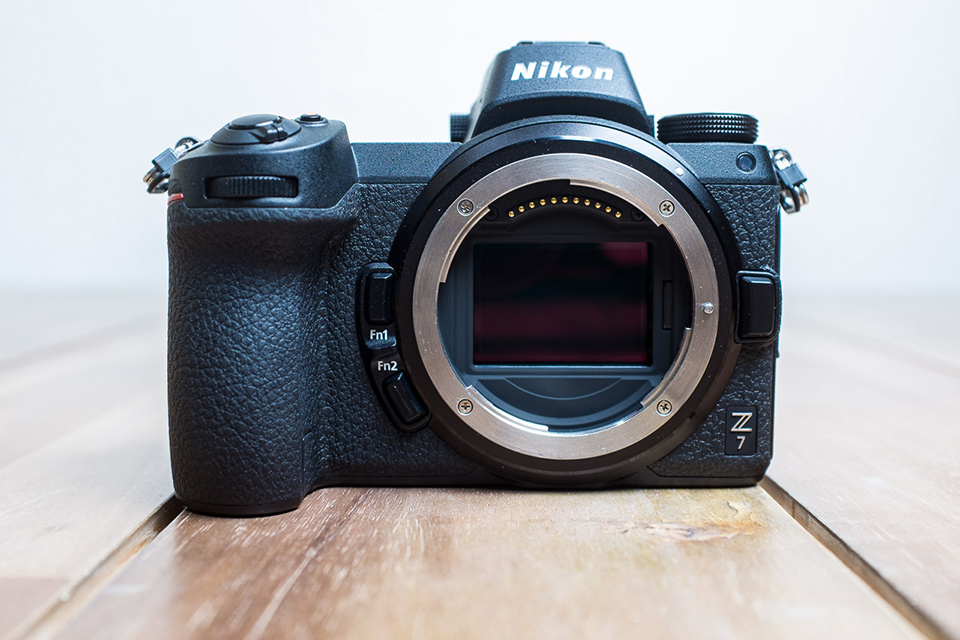
I used a Canon EOS 5D mark IV with 30 megapixels as an example. New full-frame cameras such as the Sony A7R IV, the Nikon Z 7 and the Canon EOS R5 have as many as 45 to 50 megapixels on the sensor.
This also means that the distance between individual pixels is becoming smaller on full-frame sensors. This is happening so quickly that eventually the pixels will be almost as close together as those on the 1.6x crop sensor of the EOS 7D mark II.
On the other hand, newer crop cameras such as the Canon EOS 90D are also increasing in resolution.
From this perspective, I would certainly recommend using a full-frame camera and cropping the image as desired. It gives you a lot of flexibility, while retaining the option of continuing to use extreme wide-angle lenses or very shallow depth of field.
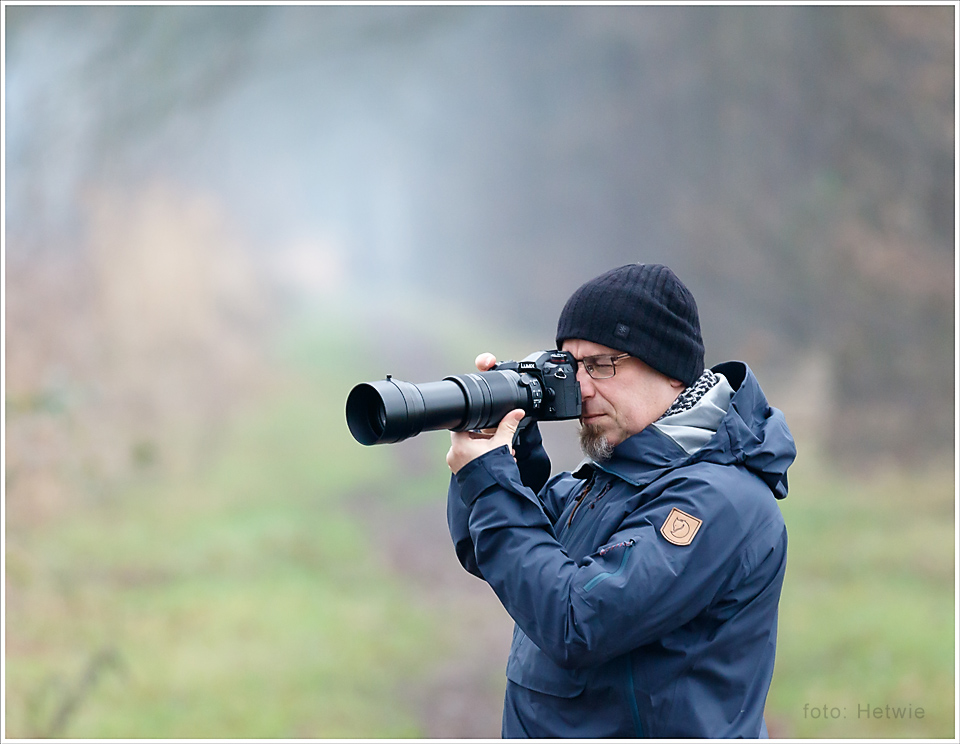
On the other hand, there is the matter of size, weight and portability. A crop sensor makes it possible to use shorter focal lengths as very long focal lengths. This means you can put an 800mm equivalent in your camera bag, something that is not possible with an 800mm lens for a full-frame camera.
The cost will also be much lower. That may be enough to make the possible disadvantage of higher noise levels worth accepting.
What would you choose? Crop sensor or full-frame and cropping?
The choice you make here is naturally a very personal one, depending on many choices and decisions. When you shoot with long focal lengths, which way do you lean?
What matters most to you, and why?
Let us know in a comment below this article.
About the author
Nando Harmsen has been photographing for more than 40 years. He specialises in wedding photography and landscape photography. Nando also gives talks, workshops, masterclasses and photo trips, and regularly reviews new and interesting equipment.
You might also like
-
 Why the crop factor also affects depth of field
by Nando Harmsen
-
 The advantage of a crop sensor in landscape photography
by Nando Harmsen
-
 Converting focal length to full-frame is pointless
by Nando Harmsen
-
 Crop or use a teleconverter?
by Nando Harmsen
-
 A panorama or a panorama crop?
by Nando Harmsen
-
 Photographing or cropping a panorama
by Nando Harmsen
54 comments
-
 Mac wrote on Tuesday 18 August 2020 at 07:41 | reply
My preference is for APS-C (I hate the term crop, because you don't actually crop anything on an APS-C sensor, since the entire sensor is exposed). Because that's what I have, and what I take photos with.
Translated from Dutch. -
 Carla de Haan wrote on Tuesday 18 August 2020 at 10:50 | reply
I regularly do bird photography. With a 100-400 lens on my Canon 6D mII. And then cropping. Under certain lighting conditions, it gives a better result than using the crop factor on my 70D to zoom in. So it depends on your camera, your lens, the lighting conditions and the subject. Personally, I am very satisfied with this way of working, but it is not a black-and-white fact that one is always better than the other.
Translated from Dutch. -
 A H M Kerkhoff wrote on Tuesday 18 August 2020 at 10:59 | reply
If Nando can photograph as well as he can explain, he must be a star photographer. I found the piece very enlightening - an eye-opener. The theory isn't that difficult, but I never realized that the differences between the number of 'pixels' per m2 could be so huge. Such a short article does more good than three photography magazines full of overly superficial pieces. Kudos!
Translated from Dutch.
A somewhat related issue concerns the question of whether and to what extent depth of field varies with the size of the sensor, the focal length and the aperture. To give an example: Suppose I take a frame-filling photo with a 50 mm standard lens on a 35 mm format and the same photo with an 80 mm standard lens on a 4.5 x 6 sensor. Can or should I now work with the aperture to get the same effect in the focus transition on 35mm as on MF?
If Nando ever has the time and inclination (it's raining or the groom hasn't shown up) then I would be most grateful for his undoubtedly excellent explanation. -

 Nando
wrote on Tuesday 18 August 2020 at 11:02
| reply
Nando
wrote on Tuesday 18 August 2020 at 11:02
| reply
@Mac:
Translated from Dutch.
I agree with you. You don't crop with an APS-C sensor. You only have a smaller image area compared to a full-frame sensor.
But yeah, everything is compared to full-frame anyway, and you have to crop a full-frame sensor to get the same sensor size as APS-C, with the corresponding magnification at a given focal length. Actually, that’s a better approach, now that I think about it. -
 Donald Willemsen
wrote on Tuesday 18 August 2020 at 11:07
| reply
Donald Willemsen
wrote on Tuesday 18 August 2020 at 11:07
| reply
Suppose you have a crop camera with a 24MP sensor and you have a Full-Frame with a 24MP sensor as well. Then my conclusion is that the pixels on the full frame are larger than those on the crop camera. By definition, the full frame would then produce a better image.
Translated from Dutch.
I don't understand then why the image gets worse due to the resolution when you crop a Full-Frame. Okay you have slightly fewer pixels per inch, but the pixels are larger than on a crop sensor. -
 Lex wrote on Tuesday 18 August 2020 at 11:08 | reply
It depends on the subject. For bird photography where you are always short of reach, I prefer to use an APS-C (21MP). To photograph mushrooms or landscapes and portraits, I use a FF (24MP). If I were to use the FF for bird photography, I would throw away a lot of image information and have far fewer details left. The Nikon D850 would be a nice compromise because it is a high-density sensor camera with 46MP on FF. If you crop these images, you still retain (virtually) the same information as that of the APS-C with 24MP.
Translated from Dutch.
So it depends on the number of MP per surface area, or rather the photosite size, and whether you can photograph the subject filling the frame. -
-
Donald Willemsen
wrote on Tuesday 18 August 2020 at 11:23
| reply
I’ll stick with my crop cameras, otherwise I’d have to replace my EF-S lenses and I can’t afford that. If I still had to buy lenses now, I would of course buy lenses that can also be used on a Full-Frame.
Translated from Dutch. -
 Hans wrote on Tuesday 18 August 2020 at 12:10 | reply
Dear Nando,
Translated from Dutch.
The use of wide-angle on full frame and telephoto on a crop camera, it is all correct as you explain it. But if you put the beautiful 24-70mm L on, for example, a 90D, you get visually the ideal portrait lens, namely 38-112 mm.
That combination is very pleasant to work with. -
 Ton van Schilt wrote on Tuesday 18 August 2020 at 12:18 | reply
I want to address the term crop (crop means cropping), because what do cropping and full image (full frame) actually mean. For that, we have to go back in time, to the time of film rolls. (they are still available, by the way). The term FF, or full image, comes from the fact that the 35mm negative was taken as the standard, and the sizes derived from that are smaller and are therefore called crop, depending on the crop factor compared to that 35mm film. But 35mm itself was once also a crop compared to the film formats commonly used at the time. Those included, with roll film: 6×4.5, 6×6, 6×7, 6×9 and 6×17, and with sheet film, all kinds of sizes including 4×5" inch. It also took some time before the professional photographer of the time dared to switch to 35mm film. So yes, what do you take as the standard?
Translated from Dutch. -
Nando
wrote on Tuesday 18 August 2020 at 13:09
| reply
@A H M Kerkhoff:
Translated from Dutch.
Thank you for your compliment. Of course I can't tell you whether my photos are as good as what you think of my explanation. My opinion is biased in that regard. Take a look at my website and judge for yourself.
The bit about depth of field is a good idea. I'll think about it. -
-
-
 Huub wrote on Tuesday 18 August 2020 at 13:12 | reply
A different approach: take a number of steps forward, this is effective with lenses up to 100 mm
Translated from Dutch. -
 Jean-Pierre wrote on Tuesday 18 August 2020 at 13:14 | reply
I have a Canon 6D, 7D, 5DIII and a Sony A7RIII at my disposal, all with Canon L glass. Detail reproduction with the Sony after cropping is very nice, but actually you really have to be a pixel peeper to properly notice the differences. or view it at 400 percent in your editing program. Really focusing carefully and using a tripod gives much more quality result, than FF or crop... is my idea...
Translated from Dutch. -
Nando
wrote on Tuesday 18 August 2020 at 13:16
| reply
@Ton van Schilt:
Translated from Dutch.
Very simple. Full frame was simply chosen as the standard.
There are indeed larger sensors, medium format, and smaller ones, which we always talk about. Not much has changed compared to the analogue days. The only thing that has changed is the discussions.
In the past, you simply took photos, regardless of your sensor size, and chose the focal length that gave you the angle of view you needed.
Nowadays we want to be more concerned with the theoretical approaches instead of taking photos, and we like comparing it so much with what is called the standard. -
 Lauran van Schilt wrote on Tuesday 18 August 2020 at 13:34 | reply
Why would you crop with a full frame.....
Translated from Dutch. -
 Wouter J wrote on Tuesday 18 August 2020 at 13:37 | reply
FujiFilm-X cameras are APS-C cameras. My previous Nikon D-7000 was also an APS-C camera. Yet I am much more satisfied with my FujiFilm-X camera, because the lenses are lighter and have smaller filter sizes. The lenses, all FujiFilm lenses, for those cameras are really designed and calculated for that APS-C system. There are some heavier and more expensive primes and they do not have the disadvantage of the consumer zooms, because they are much faster and therefore wonderful for close-up and portrait photography with beautiful (un)sharpness transitions.
Translated from Dutch. -
Donald Willemsen
wrote on Tuesday 18 August 2020 at 13:40
| reply
@Nando, correct. You end up with fewer pixels, but those pixels are larger and therefore receive more light and possibly also more detail.
Translated from Dutch. -
 4BYE
wrote on Tuesday 18 August 2020 at 13:57
| reply
4BYE
wrote on Tuesday 18 August 2020 at 13:57
| reply
I've been using Sony for about a year now after having used Canon for 40 years (always an FF and APS-C body). After purchasing the A7 III, I wanted a second body as a backup. I spent a long time hesitating between the A6600 (the newest APS-C) and eventually took advantage of a great deal on the A7R III. With the 42MP, I can crop myself or use the 18MP crop mode beforehand. I have some difficulty with the very small Sony APS-C body and the fact that the viewfinder isn't in the middle and that it therefore lacks some buttons and functionality. Moreover, I can now work with practically two identical cameras. I can only endorse what I just read. The A7R III will indeed start to suffer from noise a little sooner, but with DxO PhotoLab I get very nice results anyway, even at higher ISO values. The Sony cameras are very good at that.
Translated from Dutch.
I assume that in my case, with the A7R III, cropping afterwards and using the 18MP crop mode give the same result?
And then the following: I also own an Olympus OM-D E-M 1 II with a 60mm macro and, since recently, a second-hand 300mm F4. In practice, the latter is a 600mm 4.0 that focuses sharply from as close as 1.4 meters. In good lighting conditions, a nice option for focus stacking and PreCapture. Options that aren't available on the Sony. I also suspect (I'm not technical enough) that those options are only possible because it is a Micro 4/3 system due to the smaller sensor and MP. For my other photography, I mainly use Sony FF. In my opinion, Sony has a better AF system for tracking and picking up action.
So my motto (I stole it from the man who pointed me to Olympus for macro) is "different tools for different jobs". After all, you always have to weigh up what ultimately gives the best result. -
 ruud van de steeg wrote on Tuesday 18 August 2020 at 14:31 | reply
I always have to laugh a little... commercially this is very applicable, always works... a full frame is for me the largest camera with a film format of e.g. 1 by 1.5 mtr.. development has not stood still. The only thing I believe in with my 50 yrs of photography experience, keep the number of Mp moderate I photograph with fujiX always used canon and nikon of which "fullframe' everything sold.. fuji since 2012, good image rendering, and a decent Dynamic range. regards ruud
Translated from Dutch. -
Mac wrote on Tuesday 18 August 2020 at 14:48 | reply
@lauran
Translated from Dutch.
because you can't always get close enough to your subject. -
-
-
Nando
wrote on Tuesday 18 August 2020 at 14:56
| reply
@Donald Willemsen:
Translated from Dutch.
That capturing more light only has to do with the noise/signal ratio, something I also mentioned in the article.
But more light has nothing to do with detail, unless your ISO is so high that the noise becomes too much
But at ISO100 there really won't be more detail just because your pixel is larger -
Donald Willemsen
wrote on Tuesday 18 August 2020 at 15:29
| reply
@Nando, having more pixels at your disposal does not necessarily produce a better photo. The first thing a salesperson touts is the number of mp's on an image sensor. But at some point it is no longer perceptible to the human eye. For a screen, 72ppi is enough to view a photo at 100%. If you want to make a decent print, 300ppi is usually sufficient. What is the point of cramming more and more pixels onto a Full-Frame sensor if the dimensions of the sensor remain the same? The pixels will then also have to become smaller and smaller.
Translated from Dutch.
The question remains: Do I need more and more pixels to achieve my goal? A large-format photo on the wall and the rest on my own website and/or social media. In the latter case, you only need a resolution of 72ppi. So the rest of what you have, you basically just throw away (not really, because of course I keep my RAWs) to show a photo to the general public. -
 PixelDude wrote on Tuesday 18 August 2020 at 16:32 | reply
Nando, beautiful article.
Translated from Dutch.
Because I am mainly interested in nature photography and landscapes, I am rarely or rather never found in a studio or at a wedding or christening or sports event.
Walking and photographing in nature does, however, mean 'lugging equipment around'. That is why I chose micro 4/3. A huge saving in weight and size, not so much for the body but certainly as far as lenses are concerned … and … money. I chose Olympus without hesitation.
My latest acquisition, an E-M1X, has 21Mpixels on the crop 2 sensor. Olympus has come up with something for this camera to increase the photo resolution ‘without’ increasing the number of pixels on the sensor (I don't know whether several brands use this system?): namely, high-resolution shooting, so with a resolution higher than that of the sensor.
The camera takes a series of photos while the image sensor moves and combines these images into one single photo with a high resolution … without any loss of sharpness, on the contrary, with ‘increasing’ sharpness. Details that are normally not visible, even at high zoom ratios, are captured. My Olympus micro 4/3, crop 2, thus produces handheld photos of up to 50Mpixels (8200x6132) max ISO1600 and up to 80Mpixels (10400x7792) on a tripod, max ISO6400.
I have already tried out this technique, but have not yet needed it in nature. -
Lauran van Schilt wrote on Tuesday 18 August 2020 at 16:32 | reply
@Nando: I always get to my subjects just fine. Lots of lenses is the solution. But I understand that not everyone has the money or the means for that.
Translated from Dutch. -
-
-
Nando
wrote on Tuesday 18 August 2020 at 16:56
| reply
@PixelDude:
Translated from Dutch.
A good reason to choose Olympus.
That high resolution isn't anything new, you know, and it isn't something only Olympus uses either, several camera brands have that technology built into their systems.
It has quite a few limitations in terms of applicability, but it can indeed provide a pretty high resolution. -
Lex wrote on Tuesday 18 August 2020 at 17:48 | reply
@Nando,
Translated from Dutch.
If you "crop" a 24MP FF image to APS-C format, you don't end up with 18MP but 10!
The image is 1.5x1.5=2.25x smaller.
This loss in resolution is huge, especially when you go for a lot of detail (e.g. bird photography).
And even with an APS-C camera you still regularly have to crop when photographing birds... so then an FF is often less interesting. I only have FF glass but mainly shoot with my D500 and use my D750 for subjects that I can get fully in frame on FF. -
 Andre wrote on Tuesday 18 August 2020 at 17:51 | reply
What I'm missing is a clear answer, so at the same moment a photo with APS-C and full frame under the same lighting conditions and then assess the cropped photos, if necessary in the lab...and what is better then..that answer is what I'm missing
Translated from Dutch. -
PixelDude wrote on Tuesday 18 August 2020 at 18:14 | reply
@André
Translated from Dutch.
Can you really compare the difference in quality between an FF and a crop in this way, I wonder?
Just the distance to the object will already have to be adjusted to get the same image. The DOF will therefore look different. You will get different apertures because you are using different lenses … etc. etc.
That leads me to conclude that you cannot simply compare quality between an FF and a crop, not even in a lab. What you can compare is what application you use the camera for, and then it is mainly the weight, size and price (of the lenses) that carry the most weight. A 300mm crop 2 is a 600mm FF. Huge differences. When you are in a studio and have enough money to spend, that plays a smaller role. When, however, you go photographing in nature or cover a football match, and whether you are a hobbyist or a professional, those are the things that can be compared. -
PixelDude wrote on Tuesday 18 August 2020 at 18:17 | reply
@ André
Translated from Dutch.
I obviously mean that a focal length of 300mm on crop 2 is equivalent to 600mm FF. In other words, much stronger telephoto performance for a cheaper price, smaller size and weight. So much better handling. -
PixelDude wrote on Tuesday 18 August 2020 at 18:32 | reply
@ Nando
Translated from Dutch.
I think you made a mistake in calculating the number of pixels when the size of the pixels remains the same, and that Lex is therefore right.
The calculation assuming equally large pixels.
FF: 36x24mm = 864mm²
APC Nikon: 23.6x15.7mm = 370mm²
864/370= 2.33.
In other words, only 10MP of the 24MP remain.
BUT: often the dimensions of the pixels of a crop are smaller again. So here too: compare?? -
 Paulussie wrote on Tuesday 18 August 2020 at 18:53
| reply
Paulussie wrote on Tuesday 18 August 2020 at 18:53
| reply
You’ve written such a clear piece, and there are still people who misunderstand it.....
Translated from Dutch.
I’ve had Nikon Dx cameras since 2007, the D80 first, 10 MP, later switched to the D7000, not for the pixels (it has 16 MP) but for the possibilities, and for the past year and a half the D500, again for the possibilities, mainly the viewfinder.
This one has 20 MP. So I also have a lot of specific Dx glass, especially wide-angle, and for Dx that ranges from 10 to 24 mm, so on FF 15-36. It can be even better, because Sigma has the 8-16, which is 12-24.
So the wide-angle argument isn’t entirely valid.
At the telephoto end, however, Dx has a big advantage with the one-and-a-half-times magnification. I don’t have bags of money lying around somewhere, so I’m very happy that a telephoto lens brings so much less into the frame. And my macro. 105 becomes 160, and then 1:1, wonderful, and my Sigma 150-600, which gets a range of 225-900.....try getting that with FF.
But for portraits I can imagine having an FF, with the 24-70 or the 80-200. -
 Rik wrote on Tuesday 18 August 2020 at 19:19 | reply
an interesting article!
Translated from Dutch.
As the owner of a Nikon D810 (full-frame) and Nikon D7200 (APS-C), I also started testing which of the two is best suited for telephoto photography. I went one step further and compared the results when using the same lens under the same conditions. Both cameras have a different sensor(-quality), which means there are quite some differences in terms of details / sharpness, dynamic range and possibly ISO noise. I only use the D810 now, and crop when necessary. My daughter is very happy with the D7200. It stays in the family after all
-
 Robert Lerou wrote on Tuesday 18 August 2020 at 19:25 | reply
You write that the new full-frame cameras have 45 to 50 million pixels on the sensor. This is not correct. A photograph consists of pixels. The sensor has receivers on it.
Translated from Dutch. -
Wouter J wrote on Tuesday 18 August 2020 at 19:37 | reply
In many of the responses so far, there is rather a lot of mention of comparisons based on zoom lenses. Understandable when it comes to photographing birds or wildlife. For quality photos at closer range, close-up, portrait and macro, a lot of quality can be gained by paying more attention to the choice of lenses than to FF or APS-C. Good lenses retain their value, bodies rarely or never.
Translated from Dutch. -
PixelDude wrote on Tuesday 18 August 2020 at 20:07 | reply
@ Robert Lerou
Translated from Dutch.
Technically speaking, they are indeed 2 different hardware data points. The sensor receives, the image projects (and when you print, they are in turn dots).
But even 'all' camera manufacturers (at least the ones I know) use the term pixel for the sensor. So let's just stick to pixels, including for the sensor. -
 Jacques Klarenbeek wrote on Wednesday 19 August 2020 at 06:23 | reply
The article is clear and very enlightening. Of course, you have an advantage with a Full Frame camera. But what may perhaps be overlooked a little is that a Full Frame, with all kinds of lenses, compared to an APS-C, with all kinds of lenses, is considerably more expensive than an APS-C. I do think that among advanced amateurs, the choice is also influenced by this. At least it is in my case.
Translated from Dutch. -
PixelDude wrote on Wednesday 19 August 2020 at 11:02 | reply
@ Jacques Klarenbeek.
Translated from Dutch.
You state unequivocally: “Of course you have an advantage with a Full Frame camera.” Well … for me that would mean a huge ‘disadvantage’.
First, a few facts that a priori have nothing to do with this article by Nando but are more than worth mentioning.
Know that I am a lover of nature, landscapes and macro.
1. Weight and size. As a 67-year-old with some physical limitations, a reduction in size but mainly in weight means a huge advantage: less pain, walking farther.
Moreover, everything becomes bigger and heavier, just to name one: tripod (to guarantee the same stability). A tripod that you will need much sooner, so indispensable to take along.
2. Budget. The price difference is not always in the body (one of my micro 4/3 bodies also costs €3000) but in the much higher cost of FF lenses when you want to achieve the same low F value. And it doesn’t stop there: for example, much larger and more expensive filters.
Now the actual question: “What is better, cropping a full-frame image, or using a crop sensor?”
I use micro 4/3 and will make the comparison with that. (I am not taking actual size and working size into account.)
FF sensor size: 864mm²
Micro 4/3 size: 225mm²
Ratio: 864/225 = 3.84
Let us assume a sensor that can generate 24 megapixels. Obviously, with a FF you can go to more pixels when you put the necessary EUR next to it.
To crop the FF to the same size as micro 4/3, you therefore retain 24/3.84 = 6.25 megapixels, while the micro 4/3 has 24 megapixels. What a difference. So cropping with a FF: negative result.
Yes, but I can already hear many saying: NOISE.
Well, over the past 5 years I have not taken 10 photos with an ISO higher than 6400 as part of my hobby. I always photograph in RAW, in JEPG the following story may be somewhat different.
(Chromatic) color noise (caused by temperature and length of exposure) is distracting but, up to ISO6400, not noticeably present even in the darkest parts of the photo and can easily be removed with good editing programs (which you can then still apply locally), and … with minimal loss of sharpness.
Monochrome or luminance noise can also be easily removed. And I don’t always find that distracting. Sometimes I don’t remove it or only reduce it minimally.
My conclusion: noise, no longer a problem with a 4/3.
I also photograph close-up and macro 1/1 and higher (2/1, …). What an advantage with a 4/3! I can stay much farther away from my subjects and still get them just as large in my photo as with an FF.
General conclusion (for my applications): “Of course you have an advantage with a crop camera.” -
 Philip wrote on Wednesday 19 August 2020 at 11:08 | reply
Nando, you write: "By cropping the full-frame image 1.5 times in post-processing, you end up with exactly the same as what a 15x23mm sensor would capture." But a wide-angle lens has a different perspective than a telephoto lens. So in your FF image, the objects in the background will appear larger than in the shot with your crop sensor.
Translated from Dutch. -
Nando
wrote on Wednesday 19 August 2020 at 14:35
| reply
@Andre:
Translated from Dutch.
in my opinion, there is no unambiguous conclusion to be drawn about what is better. That is what I wanted to bring forward in my article. If you are looking for laboratory results - so no practical results - then you should study a website like DXO.
@PixelDude:
I am not assuming a particular pixel size, but the number of pixels per area. That is what this piece is about.
Robert Lerou:
Let's not get hung up on this kind of terminology This is totally irrelevant.
@Wouter J:
The quality of lenses certainly matters for the sharpness of a photo. That is just not what this article is about. It is about the difference between cropping or a crop sensor. Not about the difference between zoom or prime lenses. That is a different discussion -
PixelDude wrote on Thursday 20 August 2020 at 08:03 | reply
@ Nando
Translated from Dutch.
You misinterpreted the following sentence because I didn't phrase it very well: "I think you made a mistake in calculating the number of pixels when the size of the pixels remains the same, and therefore Lex is right."
I didn't mean the dimensions of the pixels themselves by 'size', but the size of the 'number'. Hence, probably, your well-intentioned response to my little argument that went into the mist. But Lex is right. -
Nando
wrote on Thursday 20 August 2020 at 09:47
| reply
@Lex
Translated from Dutch.
@PixelDude
You are right. How stupid of me to have calculated this incorrectly.
This just goes to show how confusing playing with numbers can become. hahaha
Thank you for the justified reprimand and correction. This of course immediately makes it clear that cropping with a full-frame results in quite a bit of loss in resolution. -
Paulussie wrote on Thursday 20 August 2020 at 11:30
| reply
After reading all the reactions once again, I still have something to add. FF or aps-c really does make a difference.
Translated from Dutch.
Cropping a 24 MP FF to aps-c gives you 10 MP. With the D850 it will be more in the direction of 18, I think.
So a 20 or 24 MP aps-c camera has more pixels at its disposal, and more pixels means more detail (provided the optics are good enough).
So it comes down to this, if you prefer telephoto, you are better off choosing aps-c.
Only, as someone already said, if you mainly make your photos for the screen, it doesn't matter at all, the best screens (at the moment) have 8Mp. The upcoming 8k screens (unaffordable) 33Mp. Then it may play a role, but I don't know what the color depth is.
For a somewhat nice print in a slightly larger format, more pixels are an advantage.
For developing and post-processing, a disadvantage, the more pixels, the heavier your pc (or Mac) is loaded, and the longer everything takes....... -
 Wouter wrote on Thursday 20 August 2020 at 17:38 | reply
That is indeed the dilemma I am struggling with.
Translated from Dutch.
I like photographing in nature (wildlife) at the edges of the day and preferably in the forest: Always too few mm's and too little light. With my Sigma 150-600S at F6.5, therefore often a lot of noise and motion-blurred photos on my 7D mkII. So I am now considering a (second-hand) 5D mkIV. -
 Tonny wrote on Thursday 20 August 2020 at 20:56 | reply
Reading this, I don't regret buying the EOS 7D mark 2 a number of years ago yet. Affordable, handy and yes, you do miss something every now and then. But the built-in flash was also a deciding factor.
Translated from Dutch. -
 Guido wrote on Friday 21 August 2020 at 12:09 | reply
Hello Nando,
Translated from Dutch.
I will soon be the proud owner of an EOS R6, that is, if it gets delivered.
This body has 'only' 20.1 MP, which is exceptionally low, but the pixel size is 6.56µm.
It is not only the max resolution that matters, but also the pixel size. Is this correct?
Guido -
Paul wrote on Saturday 22 August 2020 at 17:01 | reply
@Guido:
Translated from Dutch.
Your question can be answered positively, but with this camera you can largely forget about cropping. If you do that to APS c, you'll only have about 8 Mp left.
It has actually become a specific "low-light" camera.
But indeed, 20 Mp is normally more than sufficient, a print of this at 300DPI is almost A3+........ -
Lex wrote on Sunday 23 August 2020 at 11:34 | reply
My take is:
Translated from Dutch.
With a comparable number of MP and the same generation of sensors, a FullFrame sensor has the advantage when you can get the subject fully in the frame. Your image will then have a higher dynamic range due to the larger photosites (pixels) and therefore capture more information (less noise). As soon as your subject covers less than 2/3 of your image, the APS-C will have the advantage because more details are retained. If you often have to crop with an APS-C, then don't switch to an FF either (the exception is a high pixel density FF such as the D850, but that is not comparable either. -
Nando
wrote on Tuesday 25 August 2020 at 09:40
| reply
@Guido:
Translated from Dutch.
Those 20 MP aren't exceptionally few. That's a nice number that is more than sufficient for virtually all applications.
This could mean that the R6 can produce a very clean image at high ISOs. Whether it is a low-light camera, as Paul suggests, I don't (yet) know. That will become clear when more reviews appear. One thing is certain, it gives you less room to crop, if you do that often
Have your say
Please note: Articles older than a week can only be commented on by signed-in visitors.Would you still like to comment? sign in or create a free account.
Become a better photographer every week
A practical photography tip in your inbox every week.
39,027 photography enthusiasts already receive the tips! More about the weekly mail. Or keep up to date via  Facebook.

Elja Trum
Photofacts; everything to do with photography!
Would you like to take better photos and keep up with what is happening in photography? Photofacts publishes articles that teach you something about photography — from a product announcement to a practical shooting tip or a look at a website. Photofacts covers photography every day and is a hobby project of Elja Trum's that got out of hand. The articles are written by a team of volunteer authors. If you would enjoy writing one or more articles for Photofacts, do get in touch.More about PhotofactsPhotofacts is made possible in part by
