

Film location in Sicily
Thursday 3 May 2018, 23:46 by Michelle Peeters | 7,445 views | 4 commentsThis article was translated from Dutch with the help of AI. Read the original.
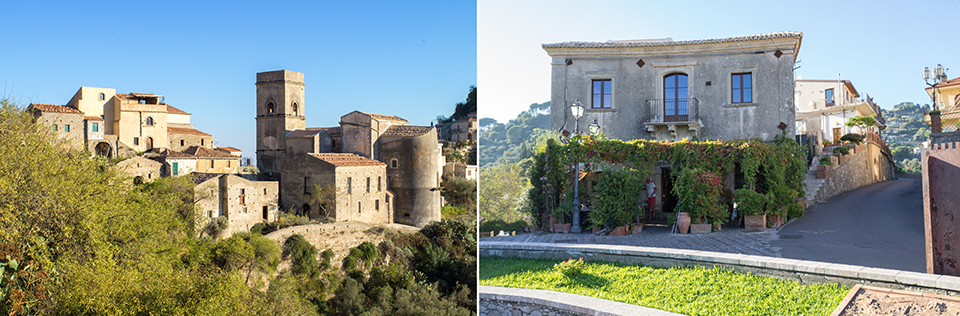
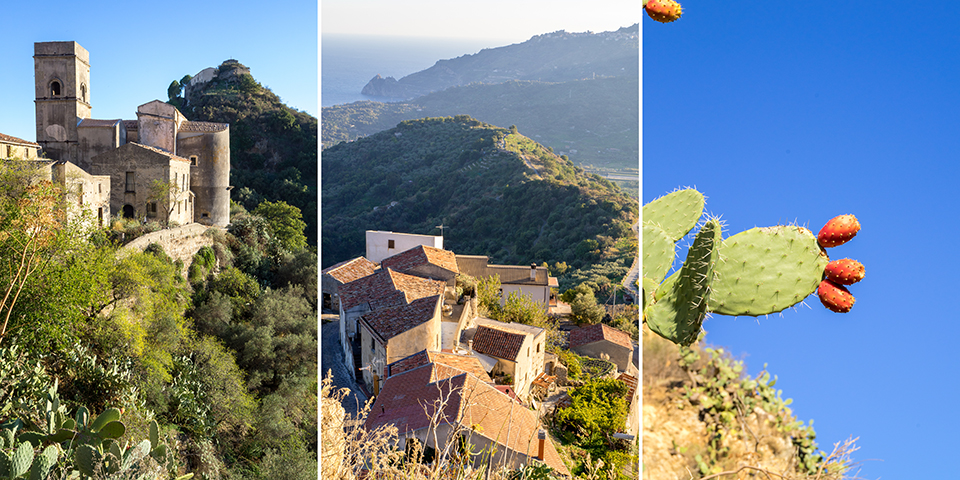
In the hilltop paradise of Sávoca on Sicily's northeastern coast, you can see where Al Pacino sat at a table. Filming for The Godfather took place here in 1971.
Sicily and The Godfather, Il Padrino are inseparably linked. The world-famous American mafia film by Francis Ford Coppola was partly filmed on the island. The places that once formed the backdrop for the film still have the atmosphere of the film set from that time.
Do you remember? The wedding of Michael Corleone, played by Al Pacino, and the beautiful Apollonia Vitelli. Michael, the youngest son of the Corleone clan, has shot a few men in New York and is keeping a low profile.
He does not really want to become the family's 'Don' (but he does later). Not long after the wedding, Apollonia walks to the car one day. She wants to show how well she can already drive. The car explodes.
Bar Vitelli
In Sávoca, you can hardly believe your eyes. What a place, quiet, peaceful and with breathtaking views. Apollonia's father's café, Bar Vitelli (at Piazza Fossia 7), and the church where the wedding took place are easy to find.
If you go there, you should watch the film again first. The table at which Al Pacino sat when he asked the padrone for his daughter's hand is still there.
Filming
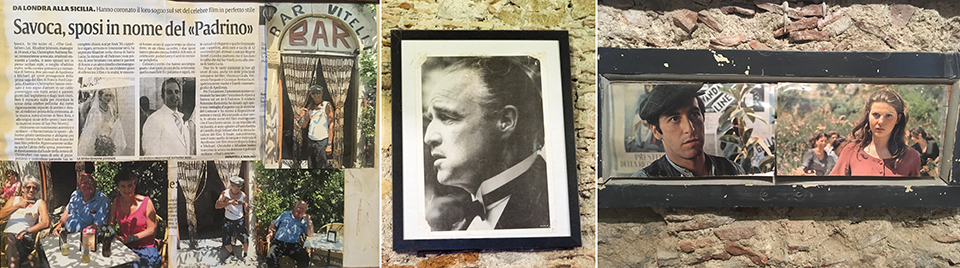
The old villagers remember the days of filming all too well. On the way to the nostalgic Bar Vitelli, which has a prominent role in The Godfather, an older man tells us that his brother appeared in the film as an extra, riding past on a bicycle.
His father can also be seen, his hair blowing in the wind. His eyes shine with pride. Il Padrino is forever etched on his mind.
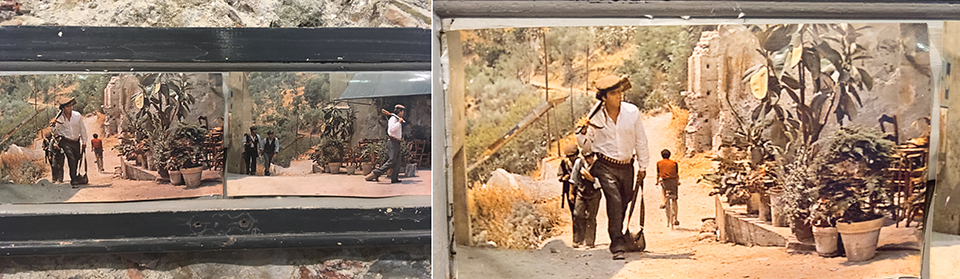
Thanks to the film, Bar Vitelli is world-famous. Just after arriving in Corleone, Michael meets Appolonia for the first time and falls instantly in love. In the next scene, you see Michael and his two bodyguards emerge from the street to the left of Bar Vitelli, after which they sit down on the bar's terrace.
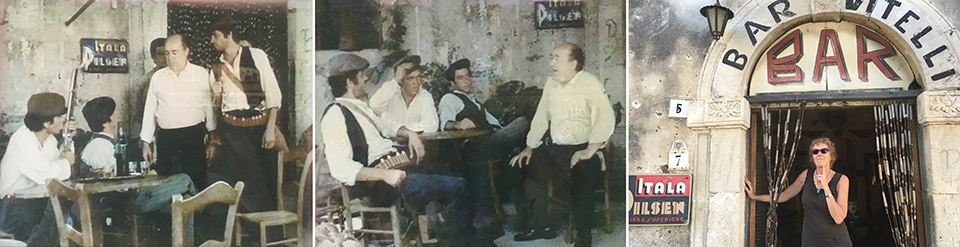
Michael then asks Appolonia's father (the owner of Vitelli) if he will arrange a meeting between him, his daughter Appolonia and the family. They first meet at Vitelli's home. Then at Bar Vitelli, where they sit together at a long table outside.

Fly curtain
You can still have a drink on the terrace of Bar Vitelli, under a pergola covered with grapevines. While enjoying a Limoncello, you can imagine yourself in the film for a moment.
But Il Padrino is not far away inside either: the bar is covered with old photos and newspaper articles from the time of filming.
A funny detail: the fly curtain you walk through to enter is still exactly the same as in the film. It has been keeping flies out for forty-seven years now…
Stand-in for Corleone
Sávoca, with its many narrow, steep streets, played a double role as a stand-in for the town of Corleone. Corleone itself was already too modern, even in the 1970s, to serve as the setting for the mafia film.
To shoot authentic scenes, they therefore had to look for another village where time had stood still a little more.
Sculpture for Coppola
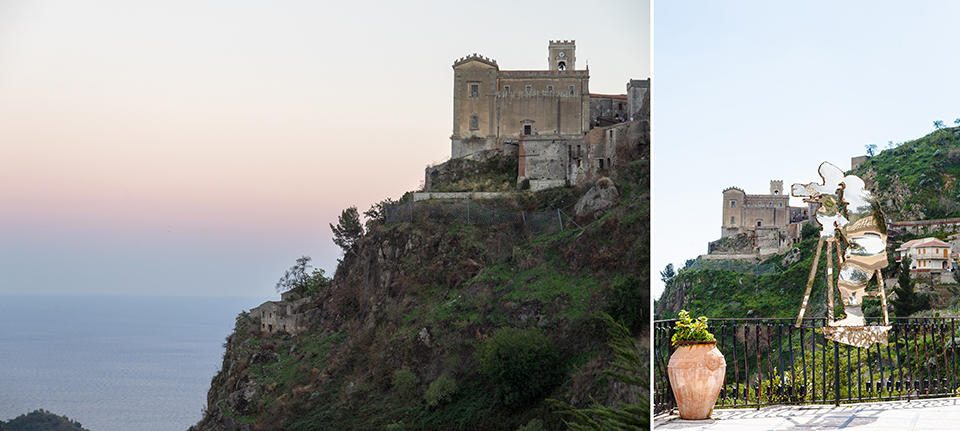
On Piazza Fossia stands a tall stainless steel sculpture erected as a tribute to Francis Ford Coppola, who filmed in Savoca. Francis Ford Coppola is depicted filming, with the camera pointed towards the surroundings, symbolising the reach of the film.
Bar Vitelli, an important setting in the film, is constantly reflected in its shiny material.
Mafia
Since Francis Ford Coppola's three films, The Godfather 1, 2 and 3, the term 'mafia' has had a romantic ring to it. At odds with the grim reality of violations of the rule of law, terror, torture and murder.
Apparently, few tourists come to Sicily. Why is a mystery. Sicily has everything needed to be a Mallorca or a Crete: natural beauty, magnificent stone buildings, works of art, Roman remains, beaches...
Yet the island remains free from mass tourism. Politician Christina Matranga of Berlusconi's Forza Italia once said: The mafia does not like tourism. And that seems to be true.
They apparently call themselves men of honour, because you never get to speak to them. They do not like to refer to themselves as mafia (spelled with one f in Italian). It does not sound very nice. They follow strict codes, the best known of which is omertà, the code of silence.
In modern Sicily too, citizens and businesses still have the 'honour' of being offered protection by the men of honour. Unfortunately, they have to pay a substantial amount for it, the so-called pizzo.
La Cosa Nostra ('Our Thing'), as the Sicilian mafia is also known, earns a nice income from it: according to the University of Palermo, protection brings the men of honour ten billion a year.
You can see the consequences of these and other practices especially in the outskirts of Sicilian cities. Run-down blocks of flats built from inferior concrete, hideous multi-storey car parks, rubble and poorly processed waste.
Businesses or families that finance the whole operation often cannot afford the pizzo. Construction then comes to a standstill. It is bizarre to think that every charming little restaurant where you can enjoy a nice meal has to pay protection money.
The mafia is therefore still active. The turnover of organised crime in Italy was estimated at around 90 billion a year. That makes it the country's largest industry.
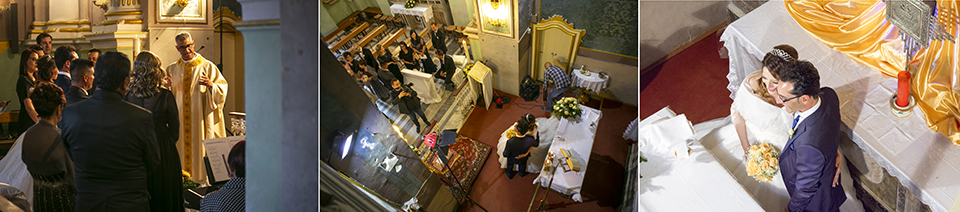
Quite lavish
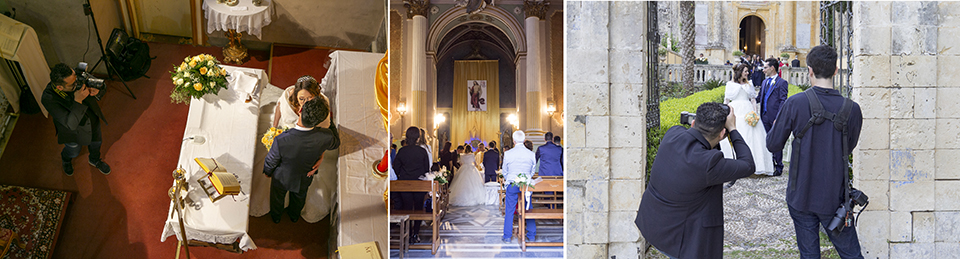
At a wedding in Sicily, however, no expense is spared. It does not matter who pays for that expensive wedding car or how many photographers are able to earn their living from it.
About the author
Michelle Peeters is fotografe en oprichter van DeuxBleus Fotografie. Michelle herkent het bijzondere in het gewone en het gewone in het bijzondere. Ze heeft zich nooit willen specialiseren en is daardoor van alle markten thuis.
You might also like
-
 Must Do in Sicily: Photographing Mount Etna
by Michelle Peeters
-
 Photographer in Sicily: Luca Migliore
by Michelle Peeters
-
 This is how Ilford film rolls are made
by Elja Trum
-
 Digitise your film with Pixl-latr
by Michelle Peeters
-
 The joy of shooting with a roll of film
by Elja Trum
-
 Cameras used in films
by Elja Trum
4 comments
-

-

 Michelle Peeters wrote on Friday 4 May 2018 at 18:33
| reply
Thank you Michael (Corleone)?
This comment was written in another language and has not been translated yet. -
 Huub wrote on Friday 4 May 2018 at 18:34 | reply
Met dank aan Vito....
This comment was written in another language and has not been translated yet. -
 Robert Vogels wrote on Tuesday 8 May 2018 at 13:31 | reply
Wow....wat een fijne vakantie plek Michelle. Dank voor het delen.
This comment was written in another language and has not been translated yet.
Met fotoschietgroeten Robert Vogels
Have your say
Please note: Articles older than a week can only be commented on by signed-in visitors.Would you still like to comment? sign in or create a free account.
Become a better photographer every week
A practical photography tip in your inbox every week.
38,890 photography enthusiasts already receive the tips! More about the weekly mail. Or keep up to date via  Facebook.

Elja Trum
Photofacts; everything to do with photography!
Would you like to take better photos and keep up with what is happening in photography? Photofacts publishes articles that teach you something about photography — from a product announcement to a practical shooting tip or a look at a website. Photofacts covers photography every day and is a hobby project of Elja Trum's that got out of hand. The articles are written by a team of volunteer authors. If you would enjoy writing one or more articles for Photofacts, do get in touch.More about PhotofactsPhotofacts is made possible in part by
