

Photographer in Sicily: Luca Migliore
Sunday 3 June 2018, 13:13 by Michelle Peeters | 5,847 views | 0 commentsThis article was translated from Dutch with the help of AI. Read the original.
Luca Migliore is a portrait and wedding photographer on this beautiful Italian island. How difficult is it to make a living here and what challenges do you face?
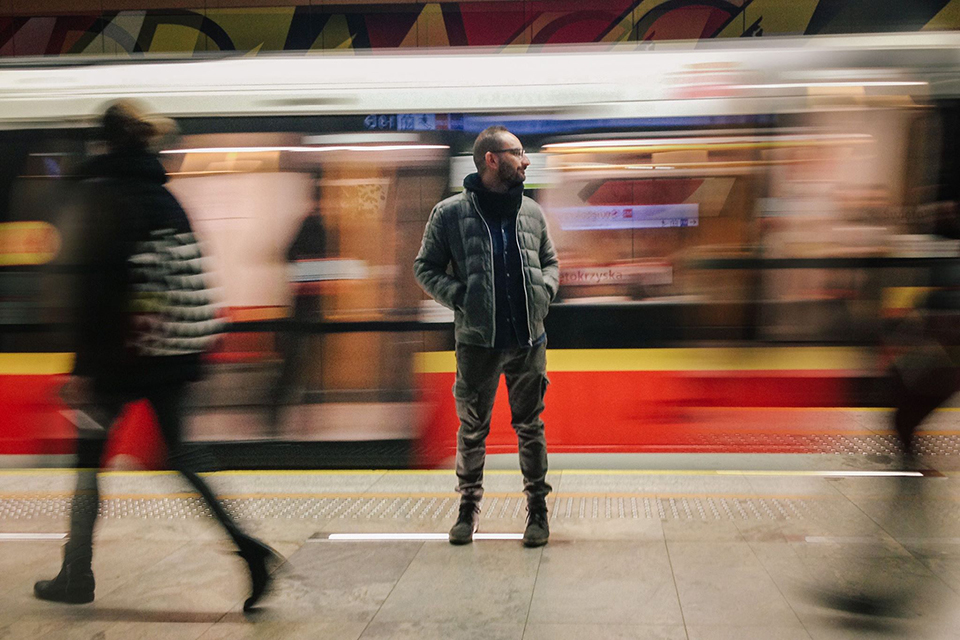
This article profiles a versatile photographer who is always looking for extreme and difficult lighting conditions that most photographers tend to avoid. Luca is an artist who has devoted his work and inspiration to visual art and conceptual photography.
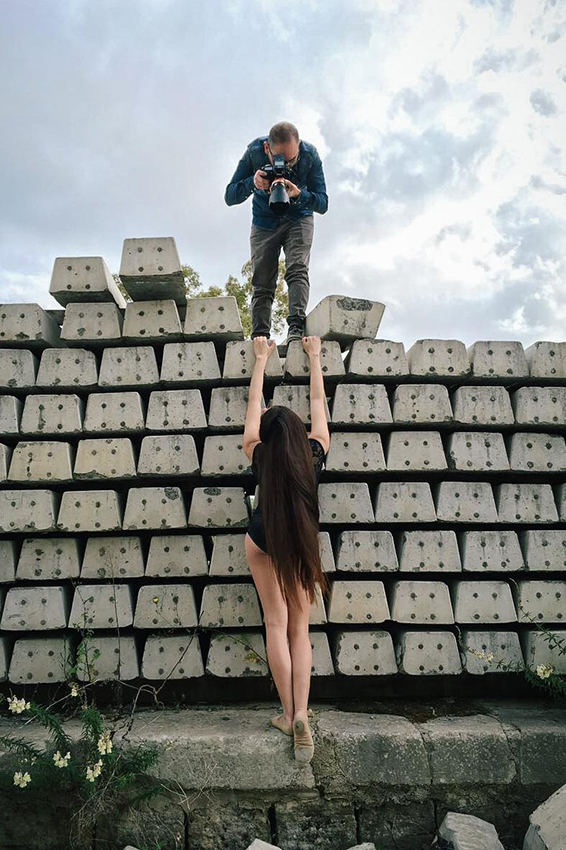
About Luca Migliore
Luca was born in Bergamo (Italy) in 1978 and now works in Modica, Sicily. He studied Art and Theatre, but discovered a capacity and need within himself to create beautiful compositions from what his eyes observe.
He therefore decided to become a photographer, which in hindsight was the best decision he has ever made.
Luca has now been working as a wedding photographer for Maurizio Mélia Wedding Photography for 10 years and has quite a lot of work there. In proportion, however, the income does not make up for the huge number of hours he has to put in, working 6 days a week.
He does all the project work for his own company MA.RION Photo-Irrealism in his spare time. This thematic and surrealistic portrait photography for himself is what he actually enjoys doing most.
This work has already taken him to the most beautiful places in Europe. His best and most enjoyable collaborations were with dancers from Spain, Germany, Poland and Belgium.
For example, he made Deinte Florentia, a beautiful portrait series in Florence. He also made a series in the ghetto of Warsaw and a dance series in Berlin.
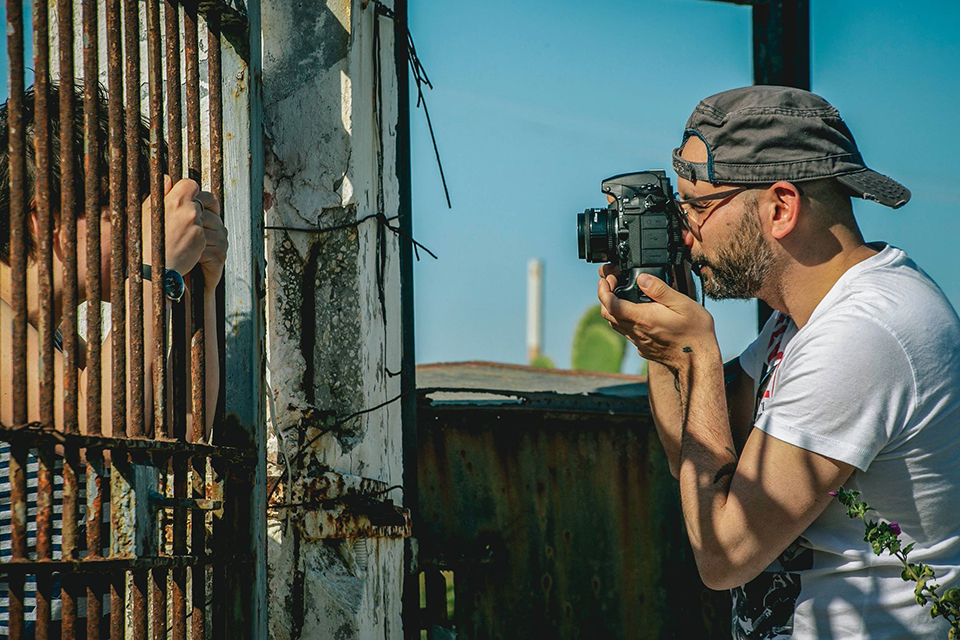
He plans to travel to Germany in a few months, where he will try to start a new life as a photographer. He has always felt drawn to the country.
He always shoots his photos in RAW, for the well-known reasons. He also always sets his camera to Manual so that he has the best control over the exposure.
He can photograph in any lighting conditions, from natural daylight to using flash. It all depends on the atmosphere he wants to give his photos.
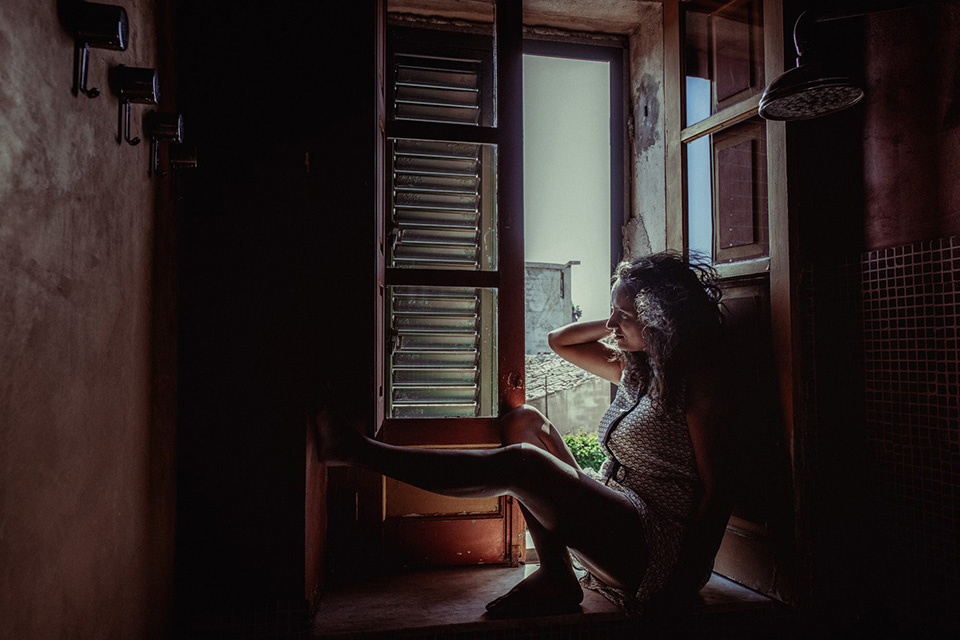
When doing urbex photography, he rarely uses flash because natural light can be very useful in the interplay of shadow and light. Even in bright sunlight, which is naturally difficult to manage, he knows how to get the best out of it. This is something you can learn yourself by practising a lot and learning from your mistakes, especially as a professional.
He edits most of his photos with Adobe and his favourite workflow is Bridge + Camera RAW + Photoshop. He uses a number of vintage filters that he has modified himself and that are ready to use with the matching photo.
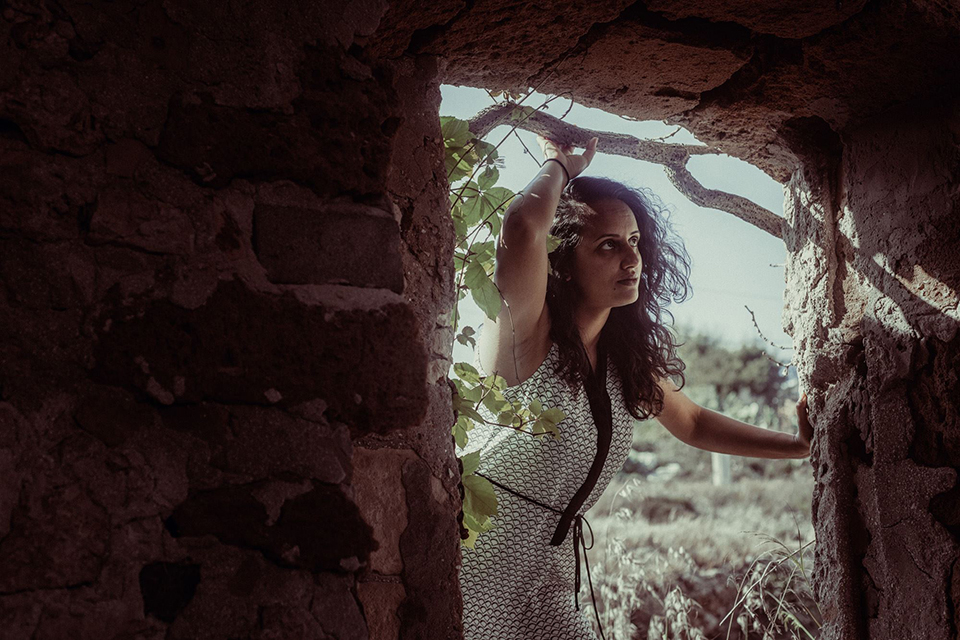
Photography week in Sicily
I met Luca during a photography week in Sicily. At the end of April, we stayed for a week with a group of photographers at Villa Torrefano in Portopalo, run by photographer Joyce Fabriek and her Sicilian boyfriend Vincenzo Sessa.
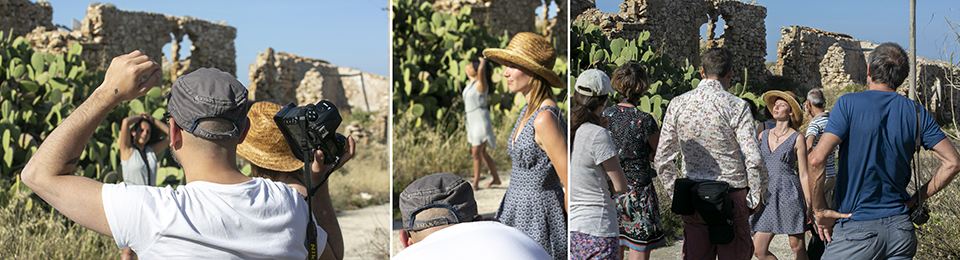
Joyce and Luca organised a portrait session in an old, abandoned Tonnara (tuna factory), where we could observe Luca's art.
Luca pays a great deal of attention to building a relationship with his model or models. The first photos he takes are purely intended to break the ice. The final selection often does not include these.
He constantly gives compliments and helps the models, especially when they are temporarily having difficulty walking, past all kinds of obstacles. He is constantly talking to them.
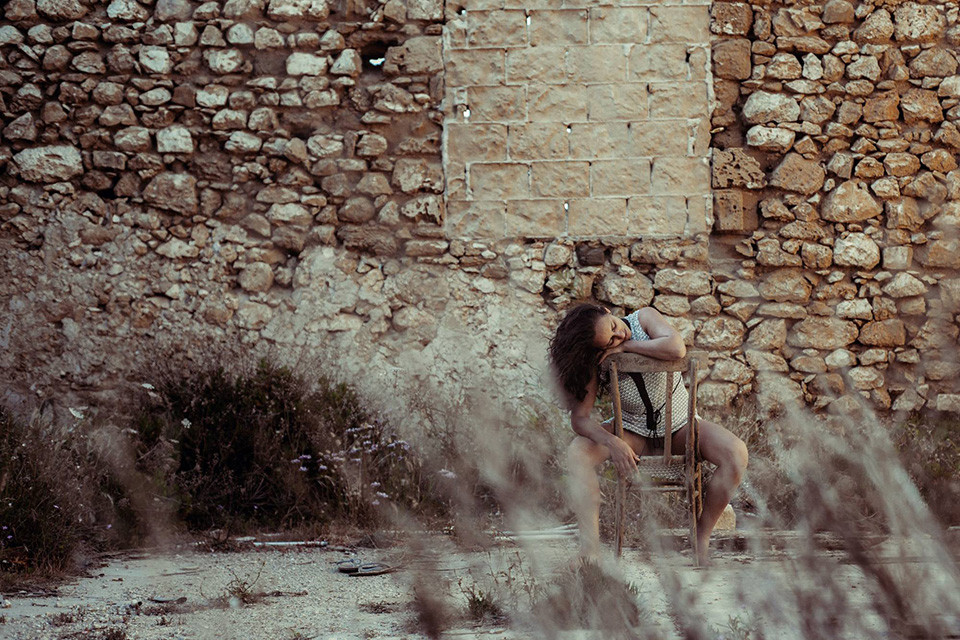
He regularly chooses 'ugly' backgrounds that we would never have chosen ourselves. For example, the ugly beige electricity pole.
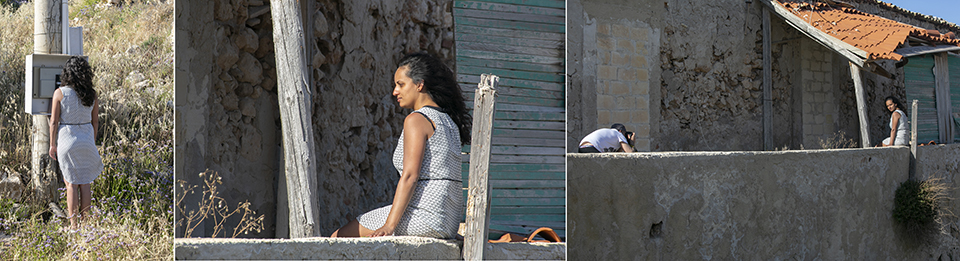
The end result is very surprising, however, and this is how he consciously distinguishes himself from other photographers who often copy each other's work.
Portrait photos in bright sunlight
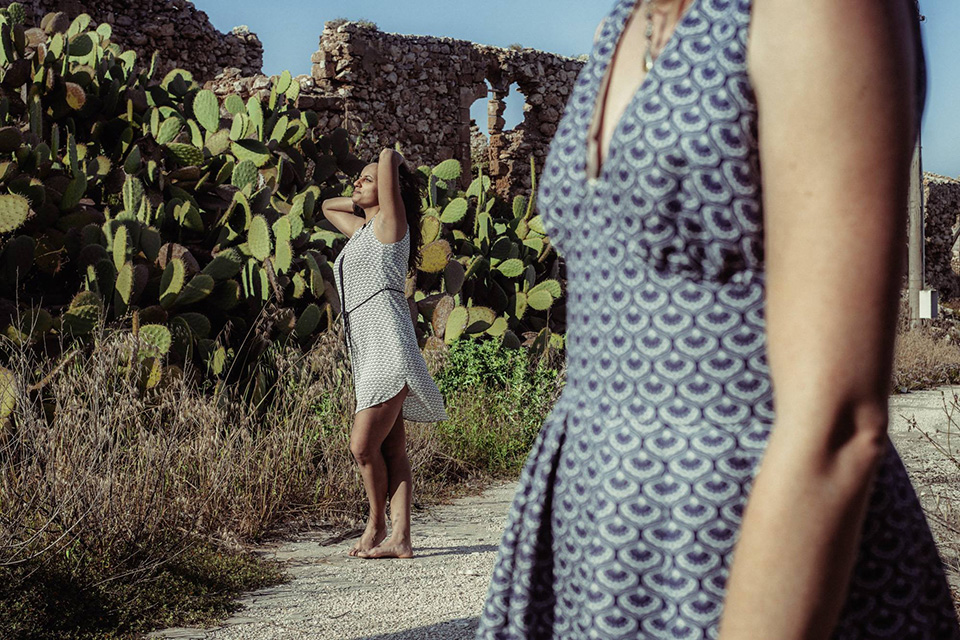
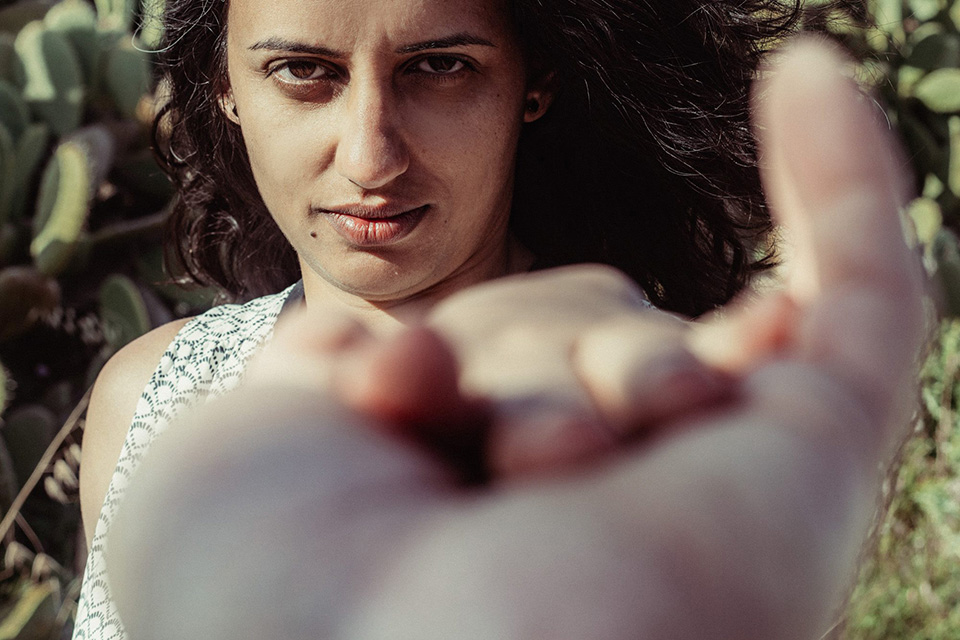
We noticed that Luca is happy to take his portraits in bright sunlight in the middle of the day. Photographing in full sunlight is almost impossible for portrait photos, because you are dealing with strong contrasts that a camera can sometimes find difficult to record.
There are also often ugly shadows and blown-out highlights on the face. It is not impossible, however, as Luca shows. He likes doing things differently from other photographers and plays with the light, carefully observing how it falls and how the shadows run.
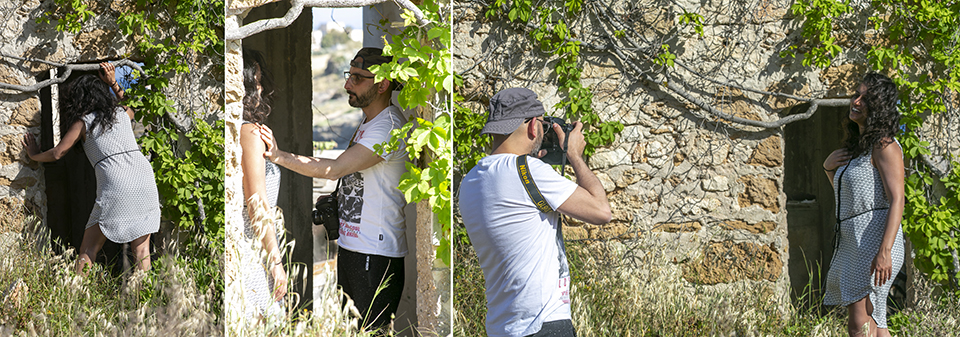
Luca could solve the problem in several ways, although he does not do so. The simplest is using flash. By adding a little light, you fill in the shadows so that they are less deep.
They do not need to disappear completely, reducing them is enough. Do not make the shadows disappear completely by using very strong flash, though. This creates a somewhat flattened effect.
It is better to reduce the flash using flash exposure compensation on the camera or external flash. You can recognise this by a button or menu setting with a lightning bolt icon and a plus-minus sign next to it. Set a negative value, such as -1 or -2.
You can also soften shadows without a flash. For example, using a white cloth that reflects sunlight onto the shaded face. Naturally, you keep the cloth out of the frame. You can have someone hold it. Instead of a white cloth, you can also use a sheet of polystyrene or a real reflector from a photography shop.
In full sunlight, preferably use a white reflector. We used one with a silver surface. This did reflect rather harsh light, so we had to wait until the sun was lower before taking photos.
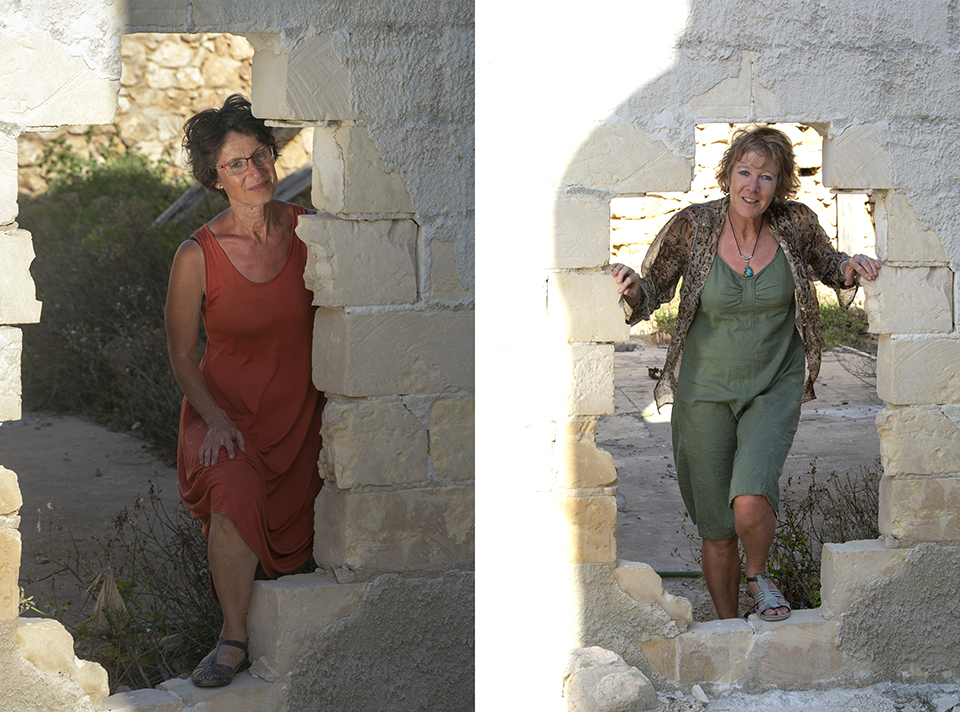
It may seem obvious, but if the shadows remain too harsh and the contrasts too high, look for shade. Such as under a tree, behind a house or in a doorway. You can also stay in the sun and use a diffuser.
This is a cloth that lets only part of the sunlight through. By holding it above your model, you reduce the sunlight enough to get rid of the 'sharp edges'.
Below are the very surprising final results of a number of photos taken by Luca:
About the author
Michelle Peeters is fotografe en oprichter van DeuxBleus Fotografie. Michelle herkent het bijzondere in het gewone en het gewone in het bijzondere. Ze heeft zich nooit willen specialiseren en is daardoor van alle markten thuis.
You might also like
-
 Film location in Sicily
by Michelle Peeters
-
 Must Do in Sicily: Photographing Mount Etna
by Michelle Peeters
-
 Photo series 'Firenze' by Augusto De Luca
by Michelle Peeters
-
 Review: Platypod Delta and Extreme
by Nando Harmsen
-
 Photographing Italian ghost towns
by Michelle Peeters
-
 Why the Farne Islands Should Be on Your Bucket List
by Michelle Peeters
0 comments
Be the first to share what you think!
Have your say
Please note: Articles older than a week can only be commented on by signed-in visitors.Would you still like to comment? sign in or create a free account.
Become a better photographer every week
A practical photography tip in your inbox every week.
38,890 photography enthusiasts already receive the tips! More about the weekly mail. Or keep up to date via  Facebook.

Elja Trum
Photofacts; everything to do with photography!
Would you like to take better photos and keep up with what is happening in photography? Photofacts publishes articles that teach you something about photography — from a product announcement to a practical shooting tip or a look at a website. Photofacts covers photography every day and is a hobby project of Elja Trum's that got out of hand. The articles are written by a team of volunteer authors. If you would enjoy writing one or more articles for Photofacts, do get in touch.More about PhotofactsPhotofacts is made possible in part by
