
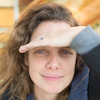
Interview with documentary photographer Thatcher Cook
Sunday 1 January 2017, 15:51 by Elja Daae | 5,841 views | 0 commentsThis article was translated from Dutch with the help of AI. Read the original.
On 4 and 5 February 2017, documentary photographer Thatcher Cook will be visiting the Netherlands for the second time to give a workshop. But what does he like photographing most? What are his favourite destinations? And what does he always take with him when travelling?
I asked Thatcher some questions about photography and got a good idea of how he works and what drives him.
When did you first become interested in photography?
My father was a curator at a museum, so I spent a lot of my childhood in galleries and at exhibitions. At one of those exhibitions, I saw Robert Frank's Santa Fe New Mexico, 1955, a photograph of petrol pumps beneath a sign saying 'Save'.
I had a strong internal reaction to that image. Even though I could not really understand the metaphor of the petrol pumps beneath that word with its religious context at the time, I knew it was an important photograph.
I got my first camera for my twelfth birthday. Shortly afterwards, I took all the clothes out of my wardrobe and turned it into a darkroom.
Around the same time, I asked my father if he could drop me off at the circus one day so I could photograph there. He said yes. So the next morning I woke him up before sunrise and managed to get him to take me to the circus grounds.
I photographed the process of putting up the circus tent and stayed until the evening performance. I only had three rolls of film with me, but I ate with the circus performers and hung around with the animal trainers and clowns. Looking back, it was great training in documentary photography.
What are your favourite places to photograph?
My favourite city to photograph is Istanbul. I love the distances you can travel by ferry and the fact that the city limits are so spread out that the northernmost point of the city looks more like a rural fishing village. I often return there to photograph the women repairing the nets and the men crewing the boats.
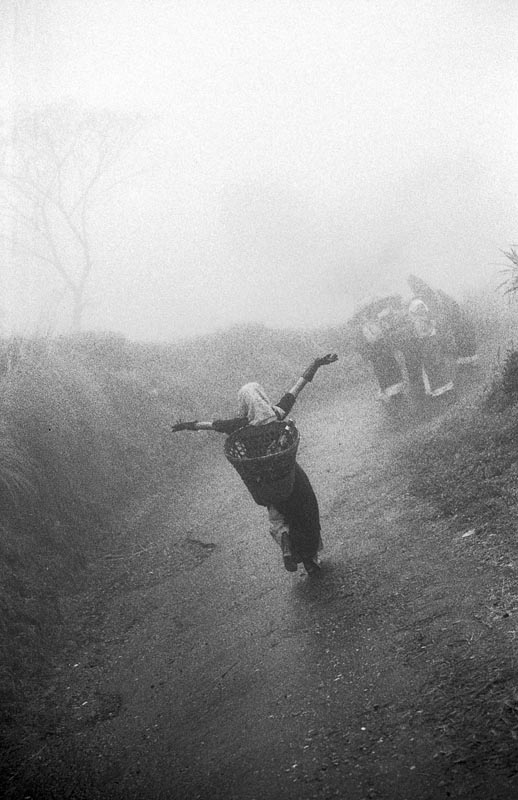
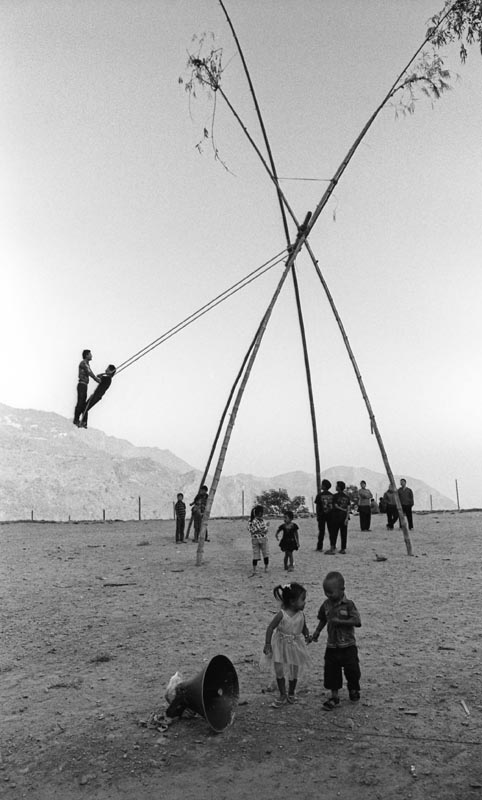
My favourite region to photograph is Central Asia. There is no place in the world that is more exotic. The mix of Soviet and Islam, combined with agriculture and nomadic mountain cultures, leads to a loneliness, a remoteness far beyond the familiar. It fills my soul with a melancholic tenderness.
Are there specific places or environments you like to photograph, wherever you are?
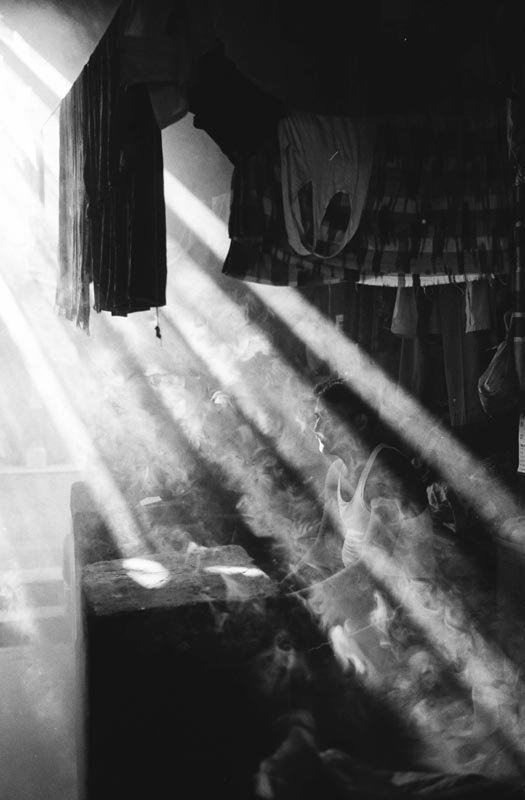
I always try to find places where lots of people come together or where people are doing something that requires concentration. I go to old bars, hairdressers, livestock markets, boxing gyms and neighbourhoods in motion. Then I have a cup of tea in the most luxurious hotel in the area. That extreme contrast allows you to look at the world through opposing prisms.
The basis of finding a good environment to photograph is finding a place where you can photograph a process. It is important that the people you photograph are distracted by what they are doing. That way, instead of only being able to make static, posed photographs because your subject keeps looking directly at the camera, waiting for you to click, you can capture something happening.
Who are some of your favourite photographers?
Some of my favourites are the usual suspects: Cartier-Bresson, Robert Frank, Josef Koudelka, August Sander and Atget. I always enjoy Cartier-Bresson's book The Early Work, which is the catalogue of his exhibition at the Museum of Modern Art in New York.
The Corcoran Gallery in Washington organised an exhibition called London/Wales of the work Cartier-Bresson made before The Americans came about. The book contains photographs of men in bowler hats marching to work, interspersed with blurred photographs of Welsh coal miners washing the coal dust off themselves.
Lee Friedlander is also high on my list. If there was ever a photographer who worked in riddles, I would have to say that Friedlander is a riddle I cannot solve. Every photograph he makes is a Friedlander, whether it is a landscape, a street, a nude or a self-portrait ….
I think his book Factory Valleys is a wonderful, creative look at America. It is a unique, inimitable and heartbreaking view of a part of America that is often overlooked.
More contemporary photographers I enjoy include Jason Eskenazi and his book Wonderland, and Mark Cohen's new book Mexico, with its rough, poetic descriptions of Mexico's urban culture. Paulo Nozolino's book Far Cry is one of my favourite photobooks of all time.
Sergio Larrain's large book with the same title is a masterpiece. And Pentti Sammallahti is a photographer who has a particularly distinctive way of photographing, cropping, editing and printing each image to suit that individual photograph, rather than looking at all the photographs as a whole.
You travel all over the world for your work. What things are absolutely essential for you to photograph? Are there any special objects you always take with you?
A camera and a lens, at the very least. I have photographed with a 50mm and 28mm, and I also often took my panoramic cameras with me, either my Xpan or my Widelux.
I try to stick to 35mm film. I still photograph with rolls of film, but for a while now, at home in Charleston, I have been experimenting with a square 6x6 format.
Years ago, when I lived in the former Soviet Union and travelled extensively there, I always carried the window handle from a Lada Zhiguli with me, a Russian car that looks like an old Fiat. I often hired drivers with those sorts of cars and, without exception, the window winder was missing when I wanted to open the rear window. I would then produce my own window handle, to the driver's astonishment.
In Asia I often have a plastic bowl in my hand luggage. It comes in handy when there is no running water and I want to shave, etc … and Asian culture does not have sandwiches like we do in the West. The bowl is useful for takeaway curry and Thai fish soup, which is usually taken away in a bag.
You were in the Netherlands earlier this year. What did you notice about photography or the country in general?
I loved the Netherlands. I had hardly ever been outside Amsterdam, and Utrecht, Rotterdam and the countryside were a visual treat. I really enjoyed walking along the beach in The Hague and around the harbours of Rotterdam.
I spent a morning hanging around in a café for dockworkers, where I not only had some nice conversations but also took a few photographs of the regulars who came in every morning.
I am curious about the little houses and gardens [red:allotments] I saw from the train between Utrecht and Rotterdam. I would like to stop there sometime, talk to the people working there and photograph their gardens.
Whenever I am in Amsterdam, I make time to go to the flea market in the Jordaan. I do not always take photographs there, but it is a great place to spend a day.
What is your next destination and which projects are you currently working on?
My next destination and project is parenthood. My wife and I are expecting our first child in March! So I am busy editing ten years of my own work.
People who have attended my workshops know that I like working with 10 by 15 centimetre prints. I am going through more than 14,000 prints and working on reducing my work to around 30 portfolios.
I was going to spend a few weeks in Shanghai this year, but that trip was cancelled. Between now and February 2017, I still have Portugal, Mexico and Istanbul on the schedule.
Which place you have never visited would you still like to see, and why?
That is a difficult question. A place I would like to visit with my wife is sometimes very different from where I want to go to photograph. For example, I have been to more than 80 countries, but I have never really been to Greece.
A trip to the Greek islands would be wonderful. I would also like to spend some time in Tokyo and visit the pyramids in Egypt. I would also like to take a boat trip along the Niger River in Mali. Sleeping on deck, photographing the other passengers and stopping now and then.
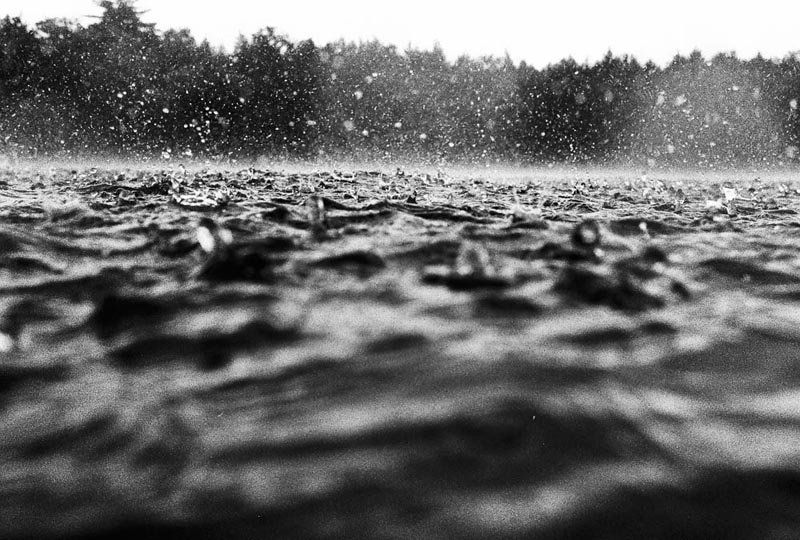
Would you like to attend a workshop with Thatcher Cook?
Would you like to attend one of Thatcher Cook's workshops? He will be in the Netherlands at the beginning of February and will be giving a street photography workshop in Utrecht.
During Thatcher's workshop, after a lecture, you will head out with Thatcher to photograph in the heart of Utrecht. You can find a report from last year here on Photofacts.
» More information about Thatcher Cook's workshop
You might also like
-
 Interview with photographer Bob van Zalm
by Michelle Peeters
-
 Interview with photographer Anja Ligtenberg
by Michelle Peeters
-
 15 Favourite Architecture Locations in the Netherlands
by Michelle Peeters
-
 A workshop must not be an escape from your own uncertainty
by Michiel Heijmans
-
 Accessibility at workshops and locations for people with disabilities
by Juliette Gribnau
-
 Netflix documentary a must-watch for photographers
by Michelle Peeters
0 comments
Be the first to share what you think!
Have your say
Please note: Articles older than a week can only be commented on by signed-in visitors.Would you still like to comment? sign in or create a free account.
Become a better photographer every week
A practical photography tip in your inbox every week.
38,765 photography enthusiasts already receive the tips! More about the weekly mail. Or keep up to date via  Facebook.

Elja Trum
Photofacts; everything to do with photography!
Would you like to take better photos and keep up with what is happening in photography? Photofacts publishes articles that teach you something about photography — from a product announcement to a practical shooting tip or a look at a website. Photofacts covers photography every day and is a hobby project of Elja Trum's that got out of hand. The articles are written by a team of volunteer authors. If you would enjoy writing one or more articles for Photofacts, do get in touch.More about PhotofactsPhotofacts is made possible in part by
