

Review: Platypod Delta and Extreme
Friday 7 November 2025, 14:07 by Nando Harmsen | 2,858 views | 0 commentsThis article was translated from Dutch with the help of AI. Read the original.
The Platypod is a useful tool for your camera when a tripod is not allowed or possible. They come in two sizes and offer many possibilities. How does the Platypod perform, and how useful are they in practice?
Platypod is a small family business founded in 2014. It is the creator of a flat, easy-to-carry platform on which you can place your camera. It is named after the platypus.
The latest models are the Platypod Delta and Extreme. The Delta is a compact model with three feet. The Extreme is larger, with four feet. I received both models for a review.
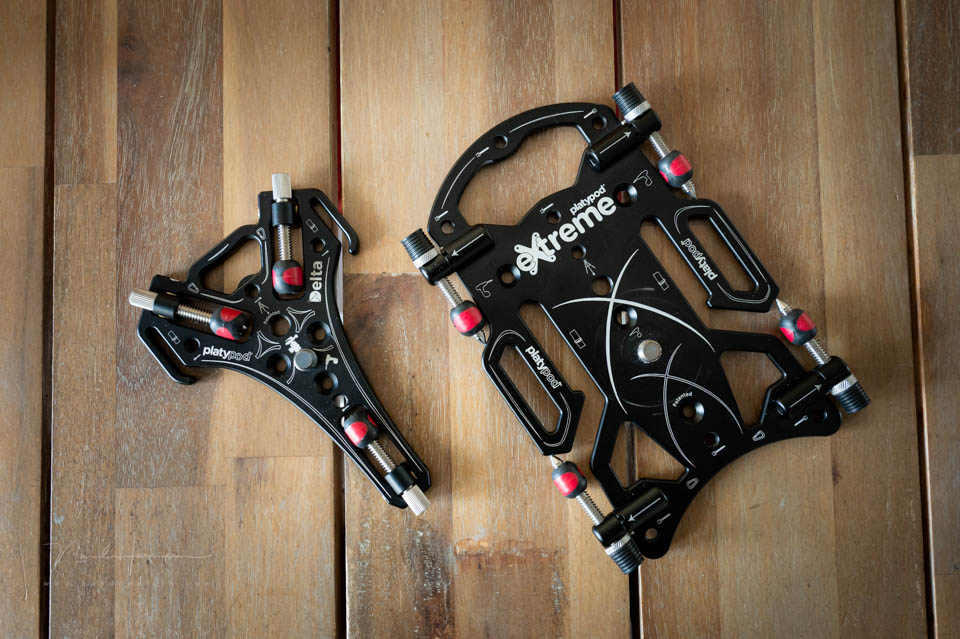
The Platypod is a very interesting concept that caught my interest some time ago. It gives you the opportunity to place your camera very close to the ground, using a simple metal plate as a base.
The advantage of the Platypod is that it is easy to carry. It is a flat object that fits easily in any bag. So you always have something available to place your camera on when you do not have a tripod available.
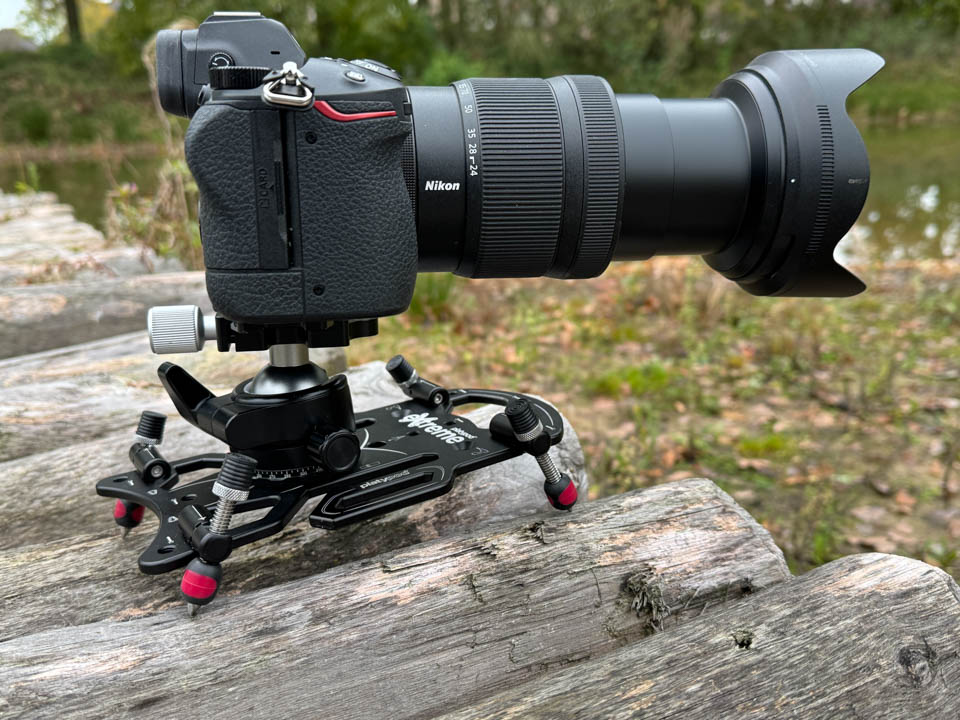
Appearance
Both the Extreme and the Delta are well made. They have been improved in several ways compared with their predecessors. The plates have icons showing what the various holes are for.
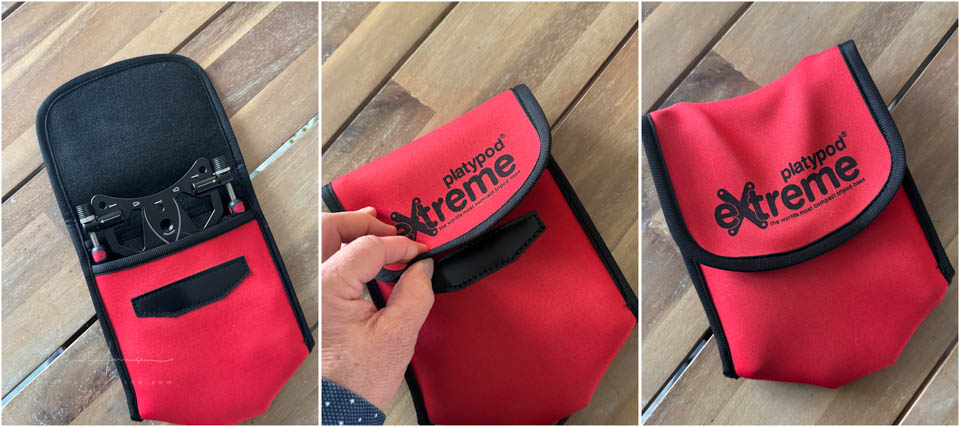
The Extreme version measures 19.7 x 13 centimetres and is 14 millimetres thick. It weighs just 272 grams. There are four adjustment screws that serve as feet. A neoprene pouch is included, which is unfortunately just too small.
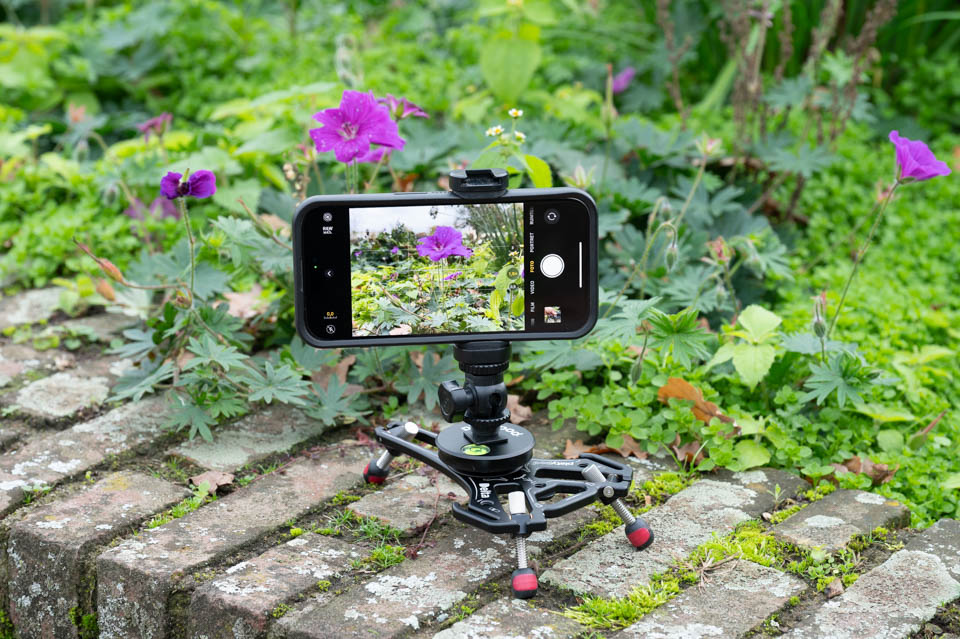
The Delta version is the smaller sibling. Its name comes from its shape, a triangle with an adjustment screw serving as a foot at each 'corner'. It measures 14.7 x 9.9 centimetres. It is just 6 millimetres thick and weighs 119 grams.
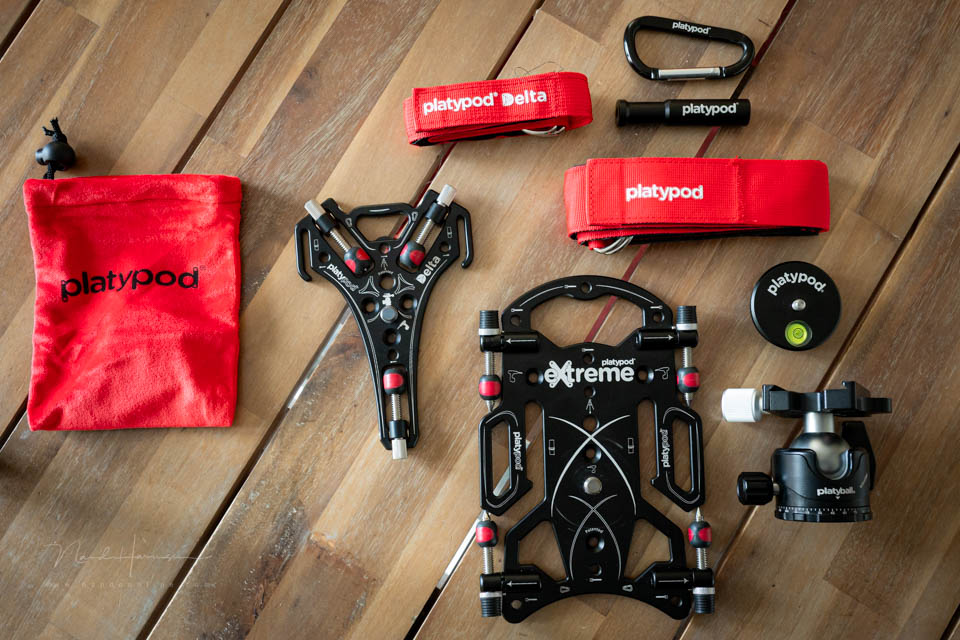
Each version has a 3/8-16 inch thread onto which a ball head can be screwed. A round Arca-Swiss compatible plate is included, which also serves as an adapter to a 1/4-20 inch thread.
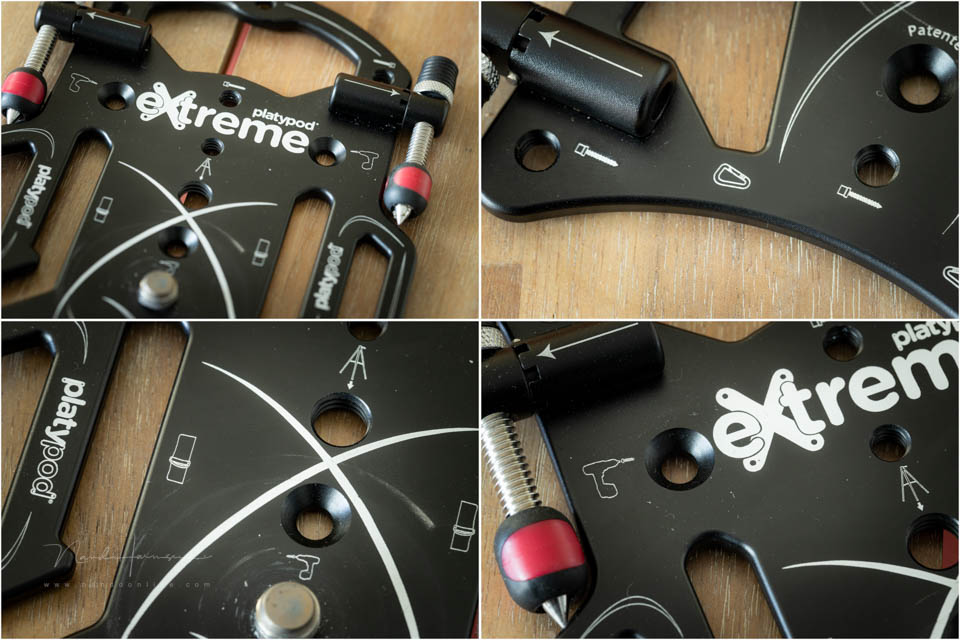
The plate itself also has several 1/4-20 inch threaded holes. Accessories such as lights can be mounted here. The Platypod also has several countersunk screw holes. Screwing it onto wood is therefore possible.
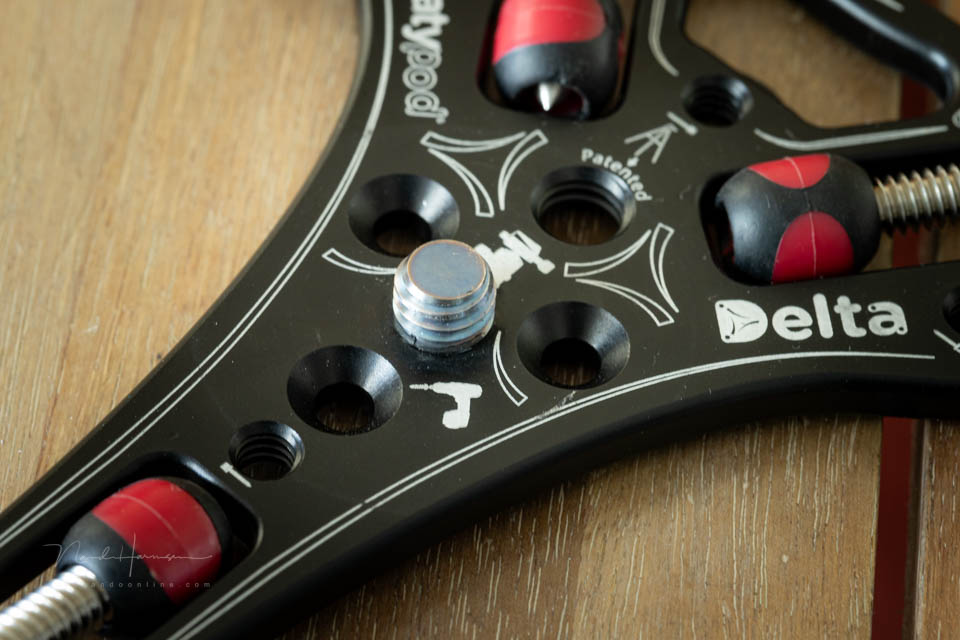
Both models can carry up to 10 kilograms, which is more than enough for most camera and lens combinations.
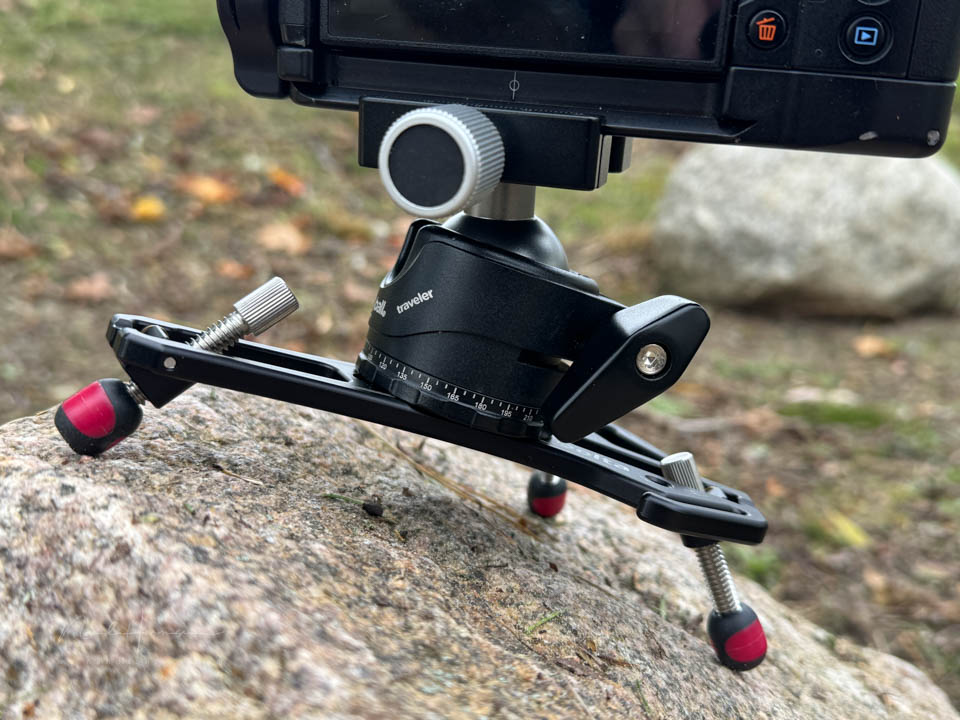
The Platypod is best used with a small ball head. The Platyball Traveler is ideal for this. It is not too large, and certainly not too small. It gives you the opportunity to aim the camera.
The feet
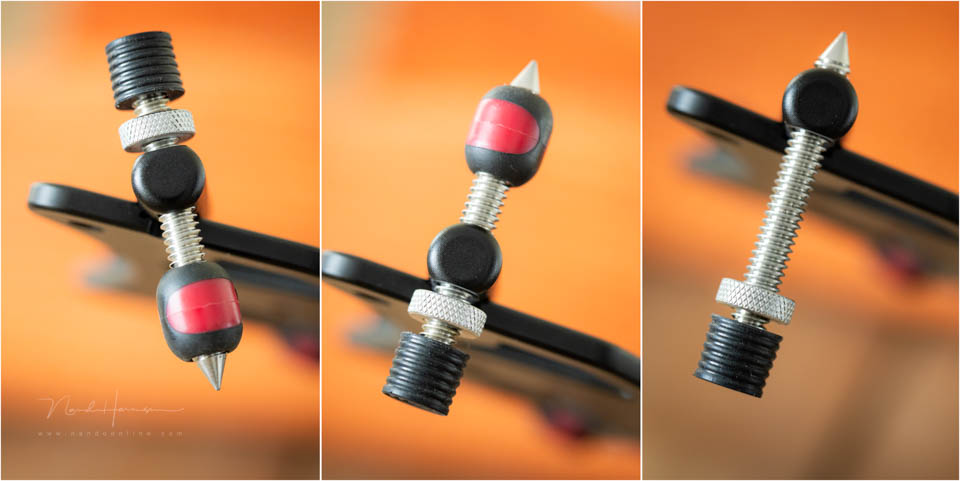
Both models use screws as feet. They consist of a long screw with a sharp point. They have a rubber screw cap to protect delicate surfaces. This cap can be unscrewed completely.
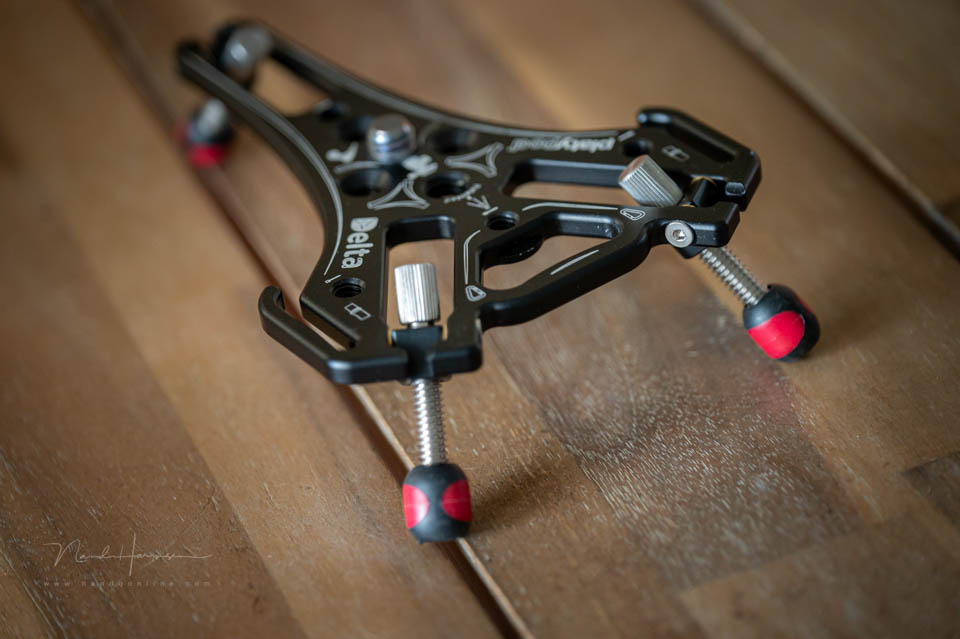
The Delta has three feet that can be rotated into position. There is one possible position, but the feet can also be unscrewed completely if desired. You can then screw them into one of the 1/4"-20 threaded holes.
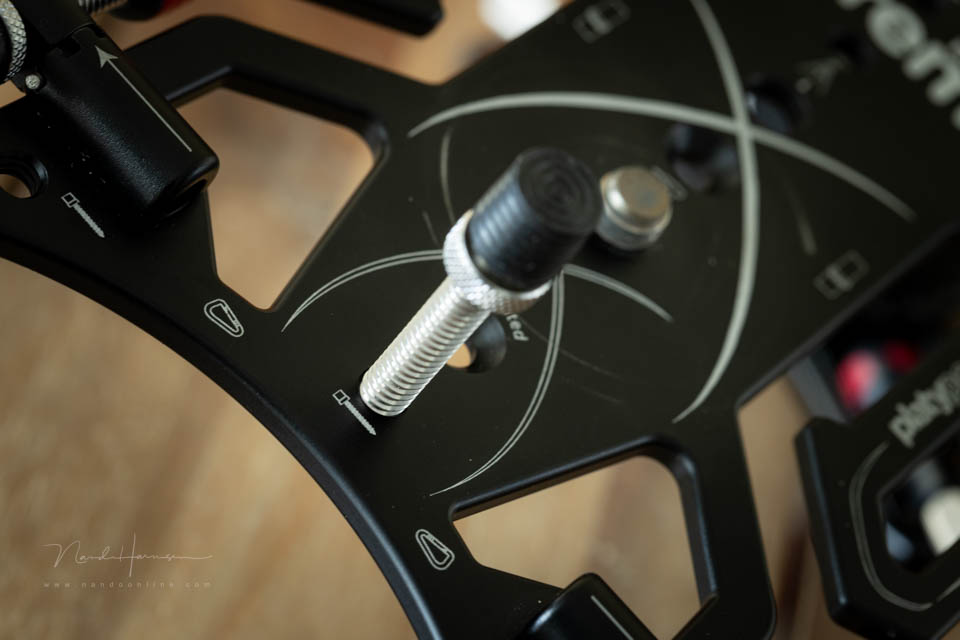
The Extreme has four feet. They can be clicked into five positions. One side has a black cap, while the other has the point with the rubber screw cap.
When do you use the Platypod?
The idea behind the Platypod is to replace a tripod when you are not allowed to use one, or when you want to go out without a tripod. You should be able to set up the Platypod easily in a wide variety of places.
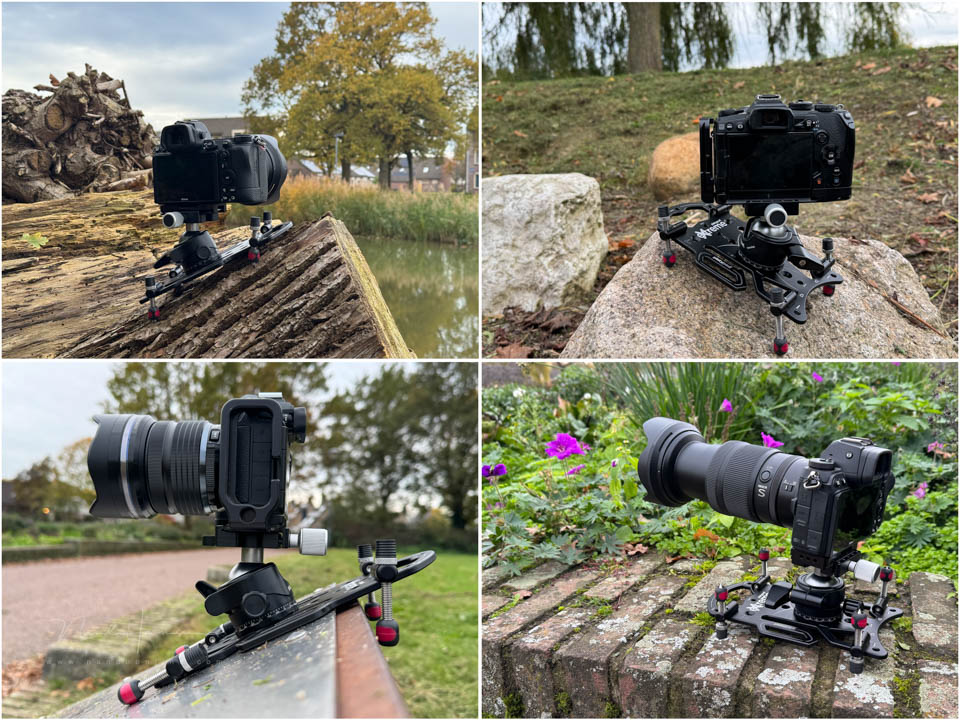
Because they are very flat, they will always fit somewhere in your camera bag. Or, in the case of the Delta, in your trouser pocket. The supplied carabiner also lets you hang them from the outside of your bag, or from your belt.
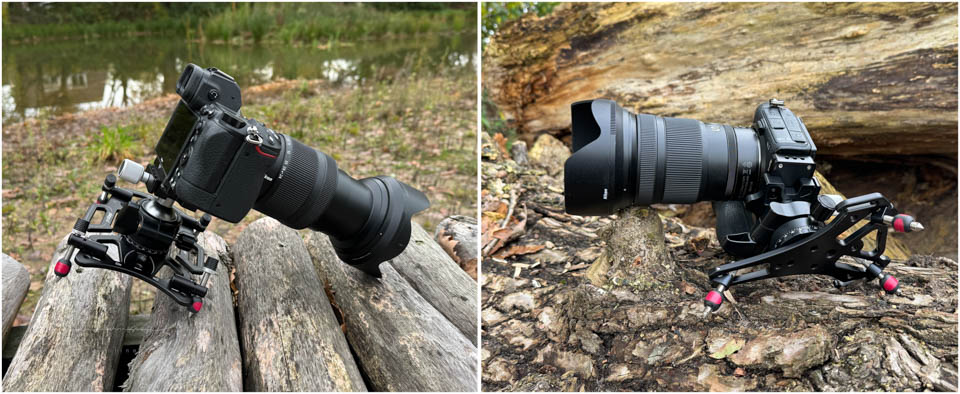
Place the Platypod on any surface you want, whether sloping or level. The rubber caps or spikes provide the necessary grip. With the Extreme, you can position the feet in the most suitable way.
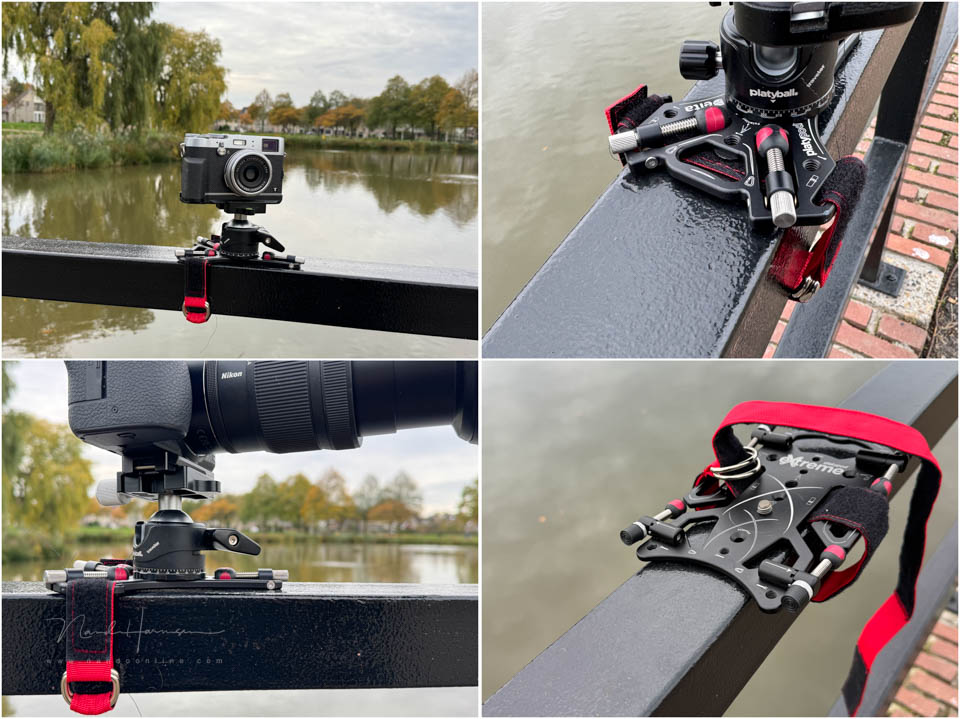
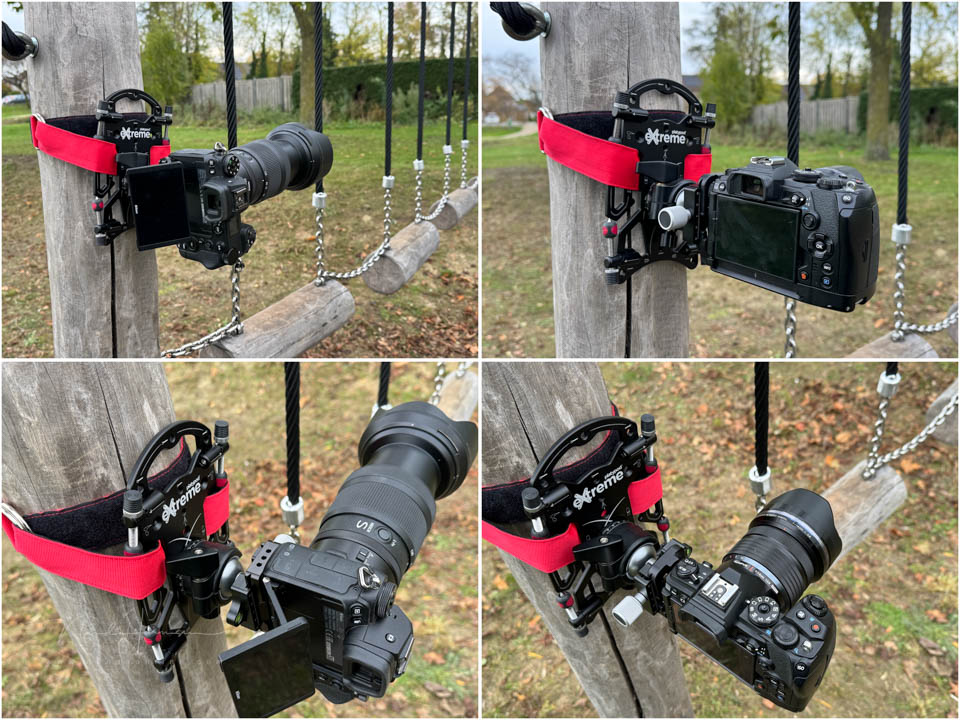
The strap allows both Platypods to be attached to vertical pillars. Or to a narrow railing, so you do not have to worry about your equipment falling off.
There is a caveat, which is also mentioned quite clearly on the website. Because of its low profile, it is important to balance a camera properly. Especially with heavier or larger camera and lens combinations.
Using it in practice
Because of its short feet, the Platypod can only be used in a low position. You depend on a bench, stone, or something else to use a higher viewpoint. That does have to be available.
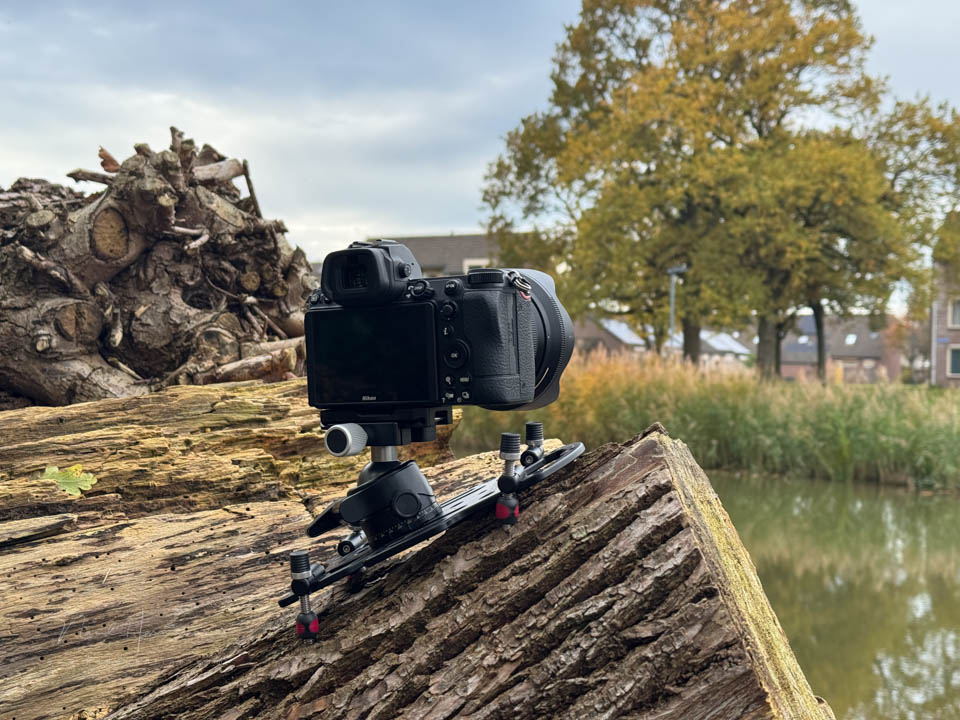
Photographing mushrooms on the forest floor seemed like a perfect test. Unfortunately, it soon became clear that the Platypod is not suitable for this. The forest floor is not a flat or stable surface, which made the Platypod simply unusable.
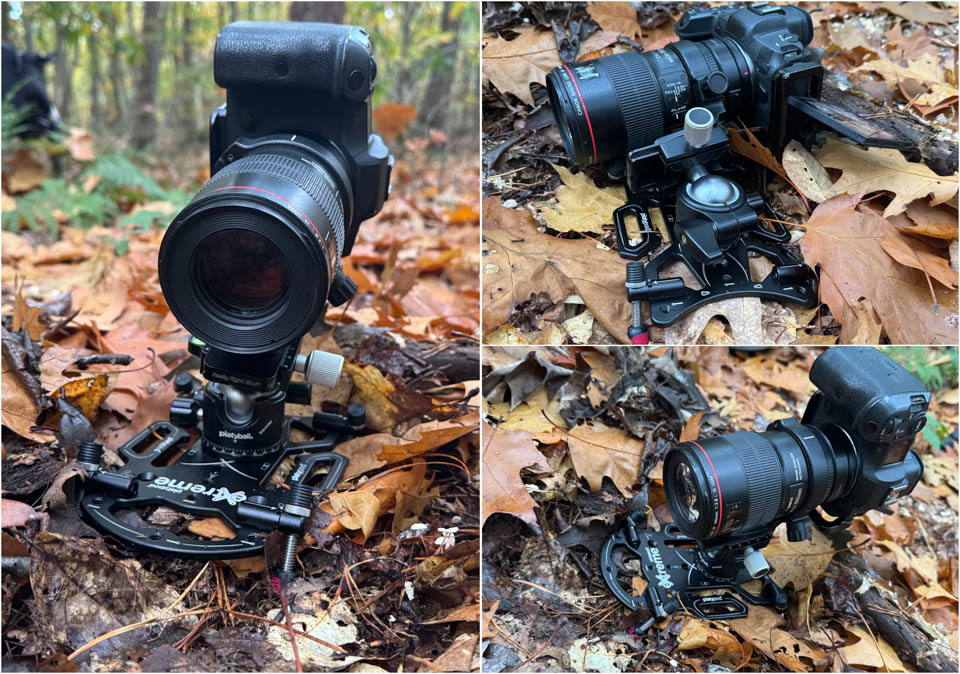
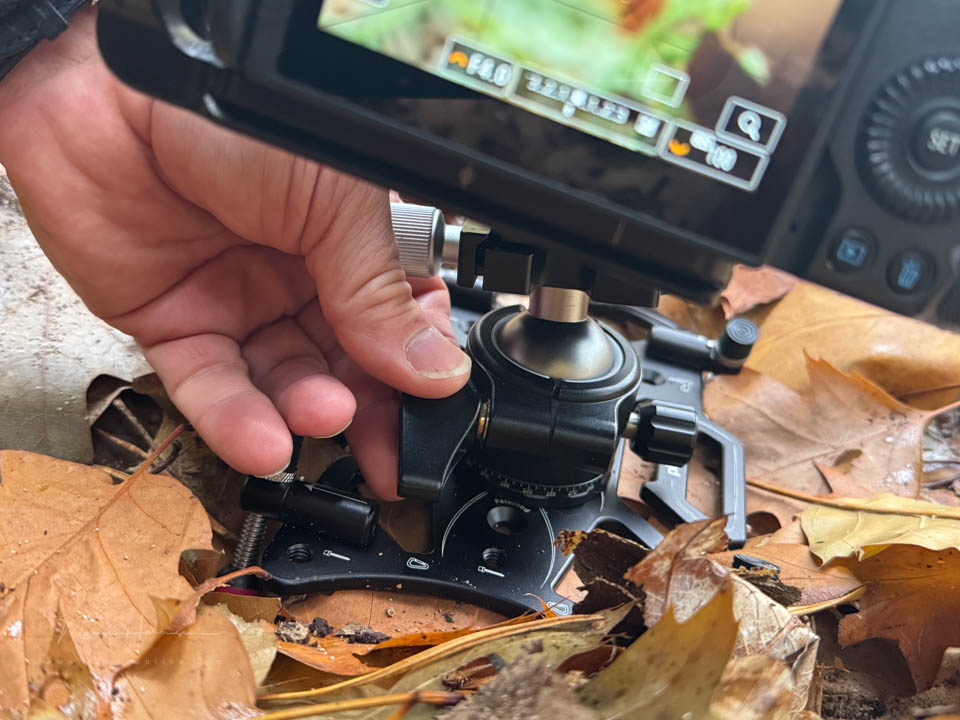
Apart from the unstable surface, it was virtually impossible to position the camera. Because of the limited space between the camera and the Platypod, operating the ball head was very difficult.
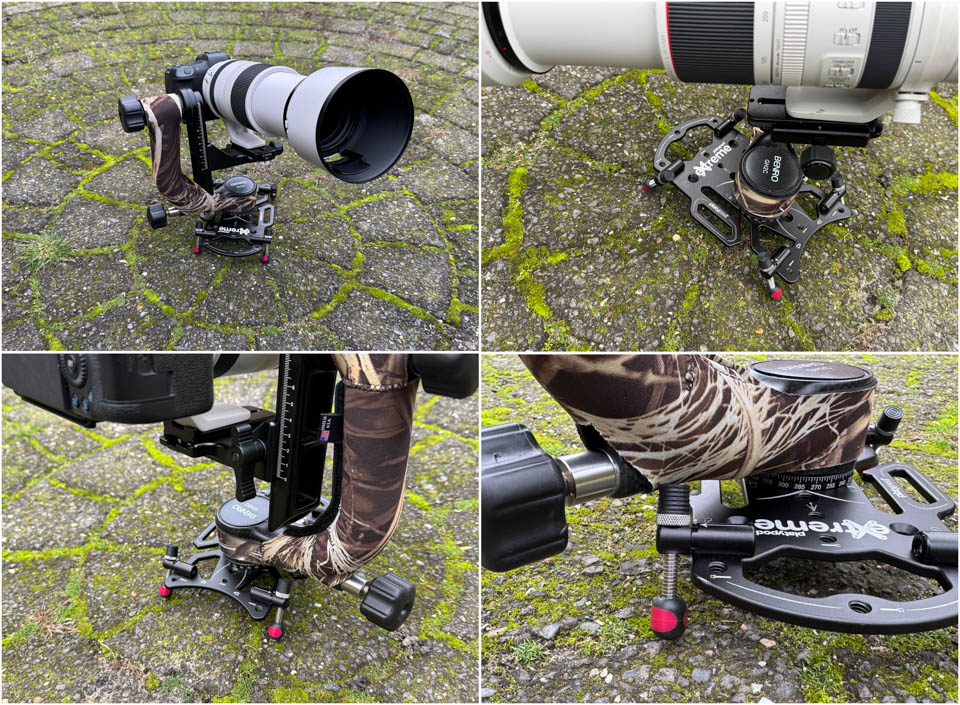
The second purpose I wanted to use the Platypod for was with a gimbal head. It seemed ideal to stay close to the ground in this way, or to photograph from the windowsill in a hide.
With a properly adjusted gimbal head, the weight stays centred. This means it should not be too unstable even with very large lenses. The Delta is too small for this, but in principle the Extreme is not.
Although the Extreme seems ideal for this purpose, the feet stick out too far above the platform. This means there is no complete freedom to rotate the gimbal head. This is far from ideal. You also need to be careful because the centre of gravity is high.
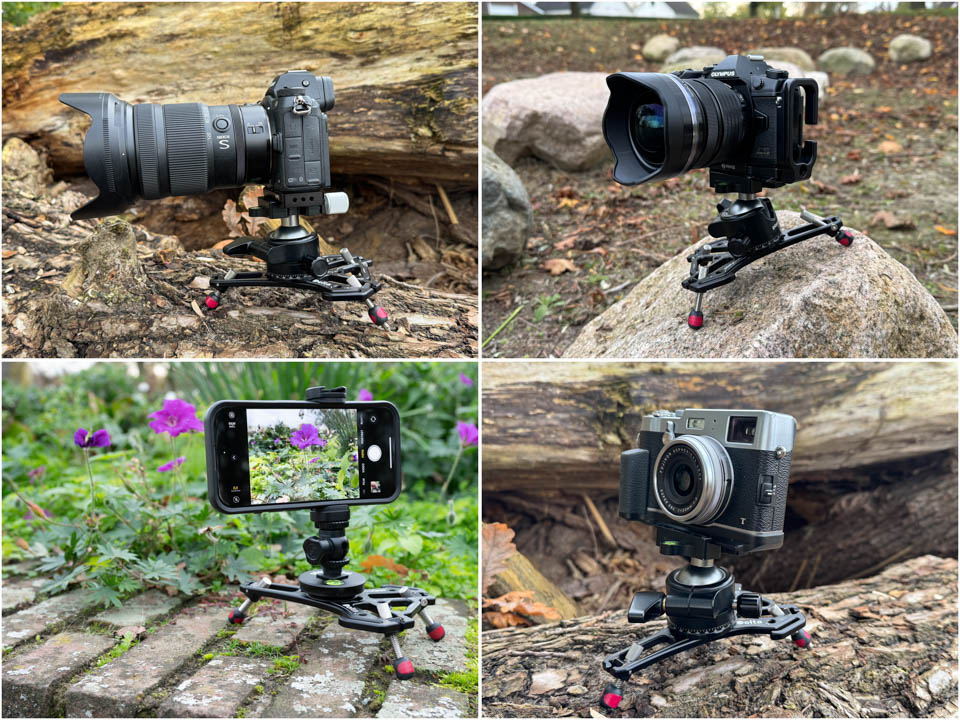
The Platypod can work well on a simple surface that is also hard or firm. A bench, a stone, or simply hard ground. The feet provide a few centimetres of clearance to deal with small irregularities.
What is particularly noticeable is the time needed to set up the Platypod properly and, above all, safely. It takes a long time to screw the feet and rubber caps into the desired position and height.
Things to bear in mind
There are a few things that stood out during use and that you need to bear in mind. One of them is using it with a strap on vertical pillars.
Because the ball head has hardly any room, a camera can only be used in portrait orientation. Only using an L-bracket makes it possible to mount the camera in landscape orientation.
A more important point to bear in mind is the sharp points on the feet. The spikes are sharp enough to scratch surfaces or punch holes in them. You need to be especially careful when using it on tables and cabinets.
If you put the Platypod on a car, also make sure that the rubber caps are screwed out properly so that the points do not damage the paintwork. Be very precise about this.
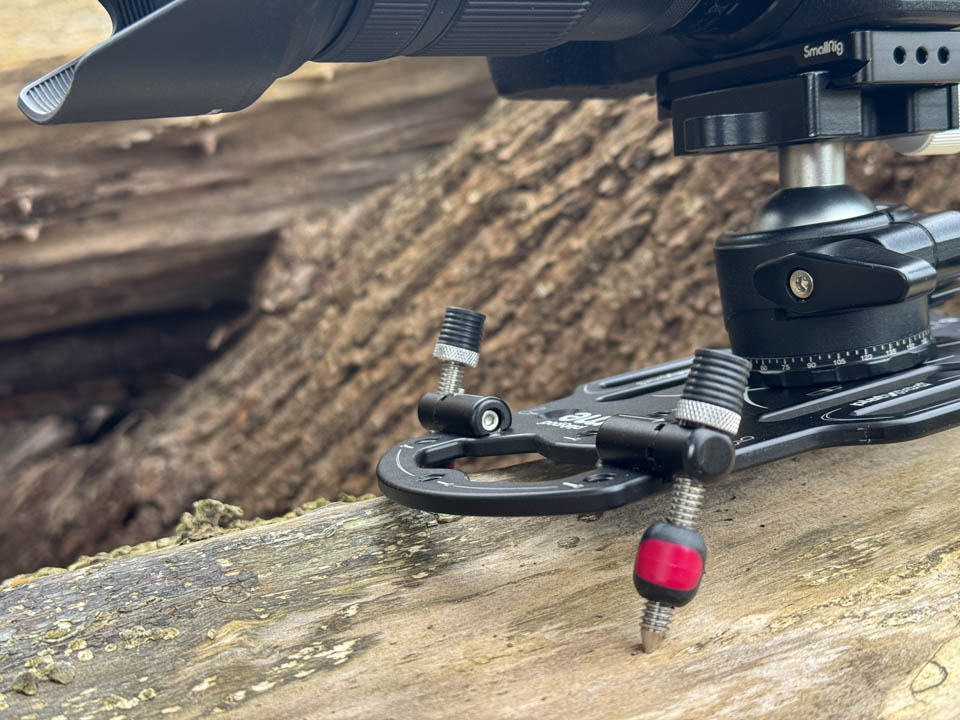
The sharp points on the feet pose a much more important danger. It is very easy to injure yourself. I have found that they can draw blood. It happens more quickly than you think.
Although the rubber caps offer some protection, they need to be screwed in when folding the feet away. If you put the Platypod in your trouser or coat pocket, there is a risk of snagging your clothing.
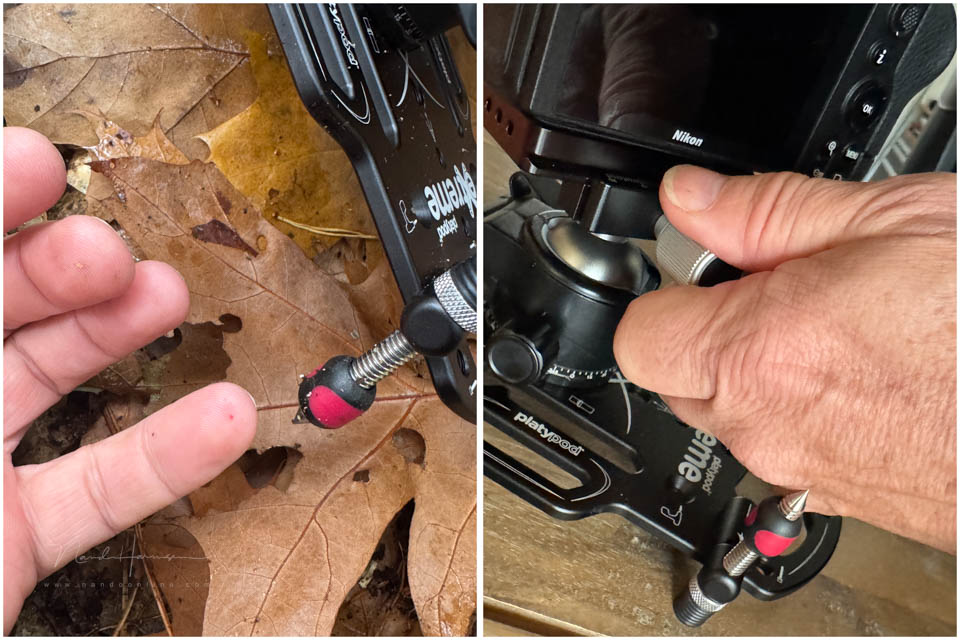
The rubber caps are very stiff and are not particularly easy to screw on. That turned out to be fortunate. It prevented the feet from coming completely loose while carrying it on the outside of my camera bag.
If you do not have the caps on and carry the Platypod by the carabiner on the outside of your camera bag, check the feet regularly to make sure they are not unscrewing downwards. If you lose one, you can fortunately buy a replacement set separately.
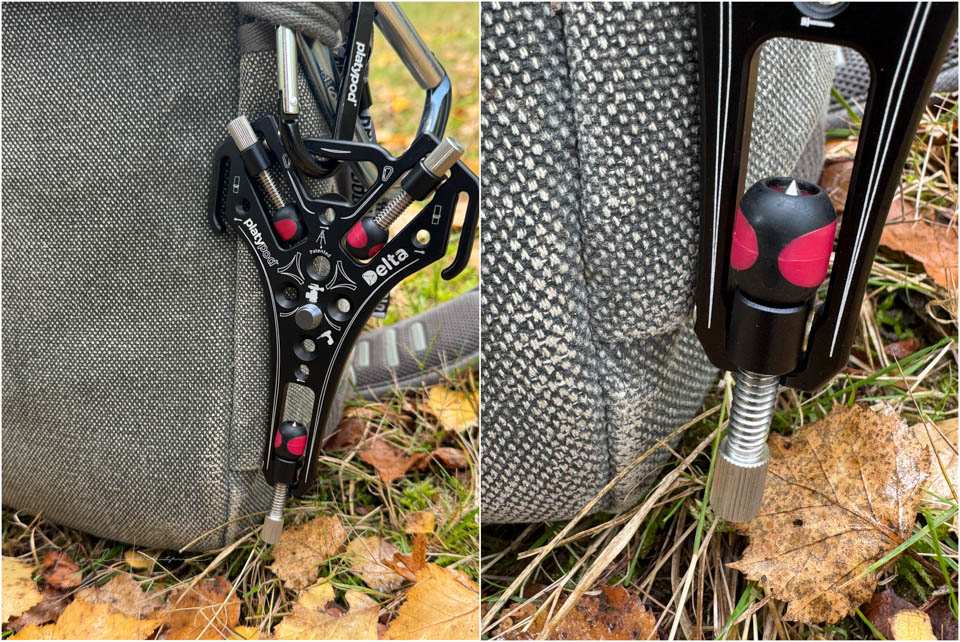
The Platypod has a very slim profile. It fits easily in your bag and takes up hardly any space. However, bear in mind that you need a ball head. That has to come along too. It is not so much a disadvantage as something you need to take into account.
If you forget the ball head and do not have an adapter from 3/8"-16 to 1/4"-20, you cannot mount the camera on it.
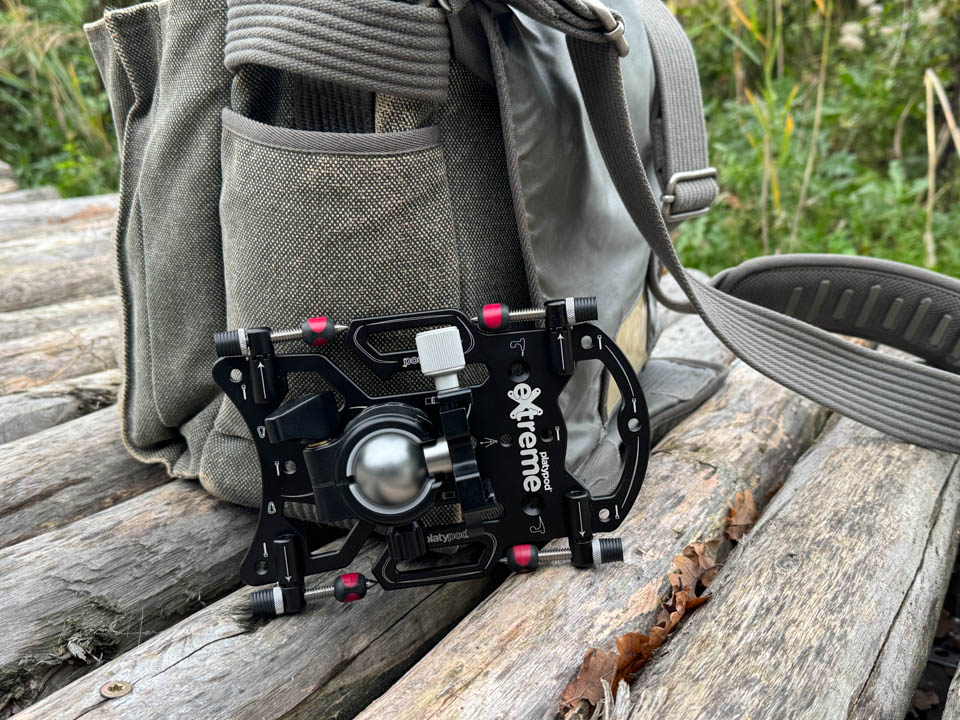
All these things can simply be taken into account. The important thing is to be aware of these points. It comes down to using the Platypod thoughtfully.
Conclusion
After using it for several weeks, I discovered that the Platypod can be useful in some situations. It makes it possible to set up your camera in a large number of different places.
The spikes on the feet caused a lot of annoyance and concern. The risk of damaging furniture and clothing is high. They can also cause injuries if you are not careful. But you can work around that, as long as you remain very alert and careful.
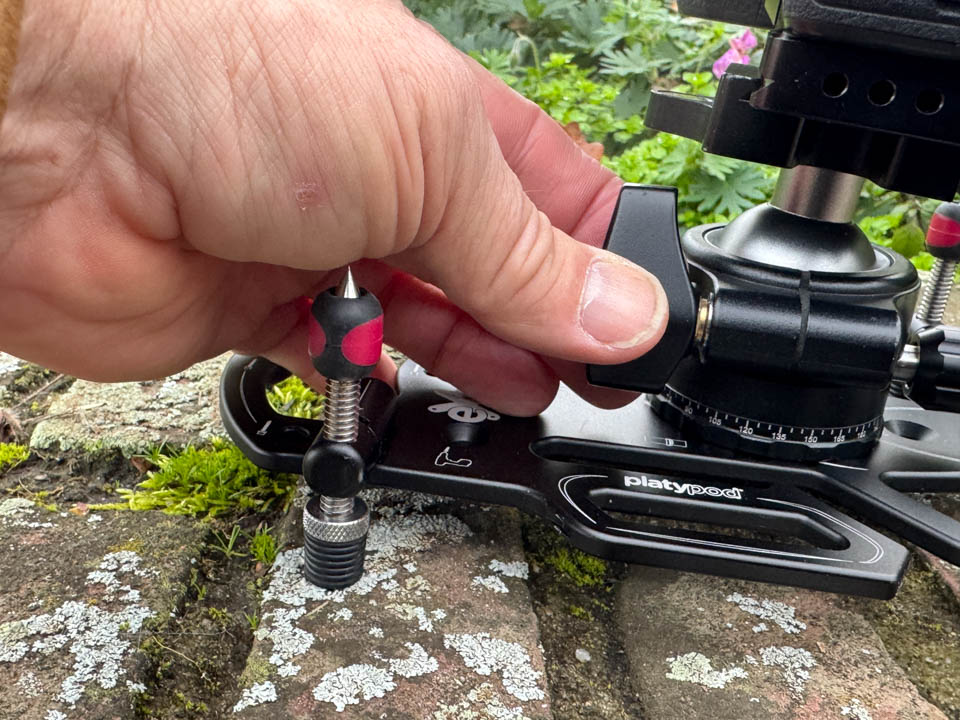
Setting up the Platypod takes much longer than I expected. You have to adjust the feet one at a time, while paying close attention to the surface. Positioning the camera is very critical because it needs to be properly balanced.
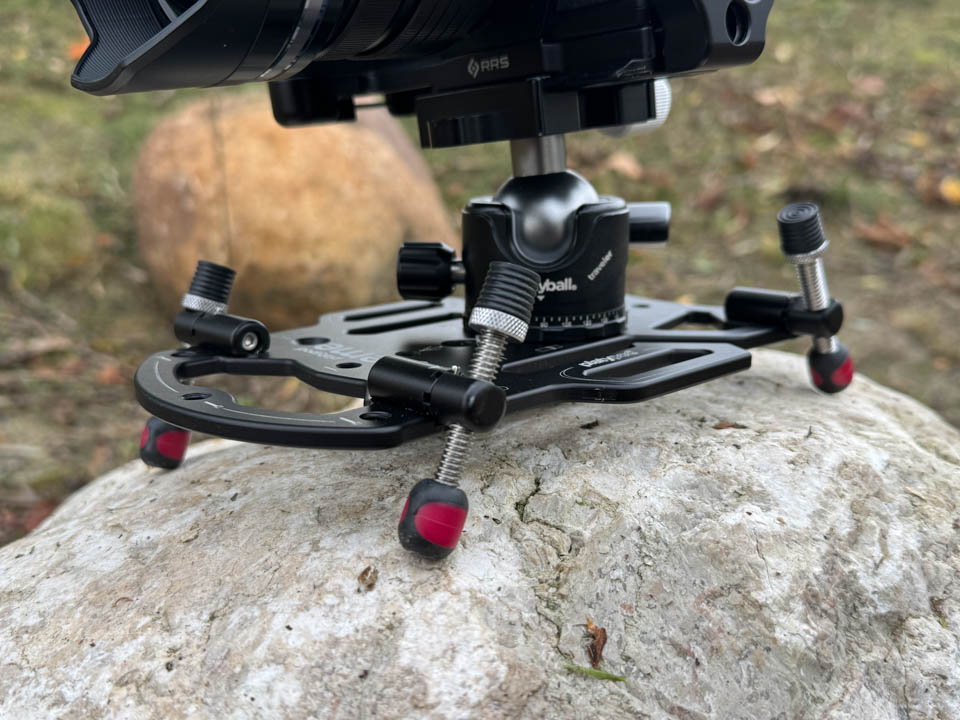
Using the strap also takes some time. A tree trunk is quickly too thick, while a railing is too thin. It takes attention and skill to do it properly. The larger and heavier your camera, the more important balance and securing it with the strap become.
This brings me to the option of mounting extra accessories on the 1/4"-20 connections. On the Extreme, the rotating bushings for the feet can get in the way. The other points are mainly in the centre of the plate.
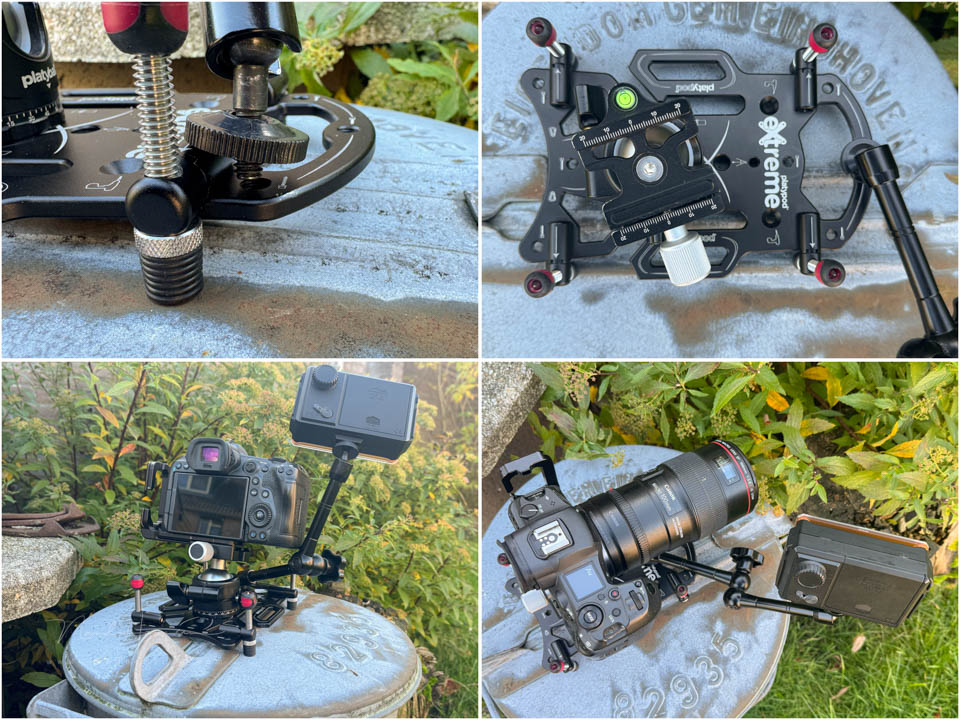
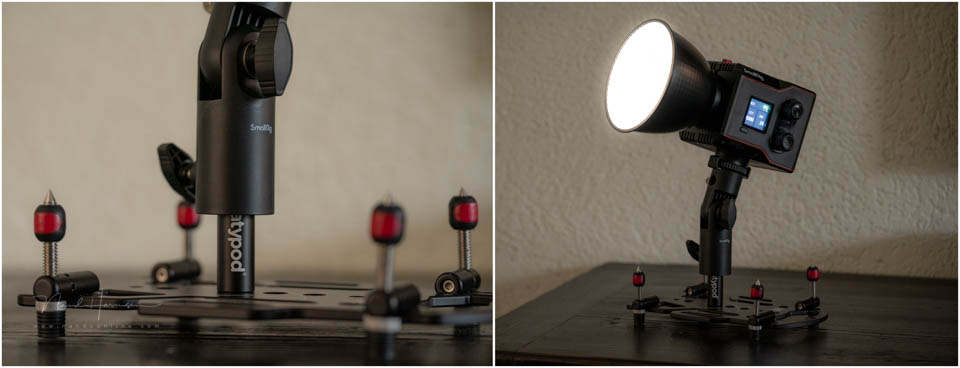
Platypod also offers a spigot for mounting lights. This makes it easy to place a light somewhere. Bear in mind that a softbox can upset the balance. Good positioning is essential.
The Platypod has screw holes for screws so that the Platypod can be fixed firmly in place. This is a more permanent solution. A clamp can also provide extra stability. You do need to have screws, a screwdriver, or a clamp available.
In theory, the Platypod offers an enormous number of options for placing a camera or light. In practice, positioning the Platypod is very critical. This makes it more of a niche product than an all-round tool.
The Platypod is not a replacement for a tripod. It is an accessory that should be seen as an extension of a tripod.
Pros
- Lightweight and slim profile
- Easy to carry
- Ideal for getting close to the ground
- Easy to carry with a ball head as well
- Many connection options and attachment points
- Feet integrated into the unit and not separate, although they can be unscrewed
- Extreme feet can be placed in several positions
- Strap increases the range of uses
- Countersunk screw holes included
- Rubber caps for scratch-sensitive surfaces
- Can be ideal for placing COB lights or mini LED panels
Cons
- Limited or unsuitable for uneven or soft surfaces
- Spikes are very sharp, causing scratches and injuries
- Operating the ball head is difficult because of the lack of space
- Camera and lens must be positioned exactly above the centre of gravity
- Position of the 1/4"-20 connections on the Extreme
- The Extreme just does not fit in the supplied pouch
- The Delta is only suitable for light, small cameras and smartphones
- Screws can come loose when carrying it on a bag
- Positioning the rubber caps is very critical on scratch-sensitive surfaces
- Without an L-bracket, when attached to a vertical object you can only shoot in portrait orientation.
- Setting it up properly and safely takes much more time and effort than using a real tripod
- The price of the Extreme becomes high with the accessories and ball head.
Is the Platypod for you?
Only you can answer whether the Platypod is for you. It is important to be aware of the Platypod's limitations. If those limitations do not affect you, it is a useful tool.
Do choose the right version. The Delta is the smallest, but is only suitable for cameras that are not too large. Or for smartphones. It also comes with a bottle opener, if that matters to you.
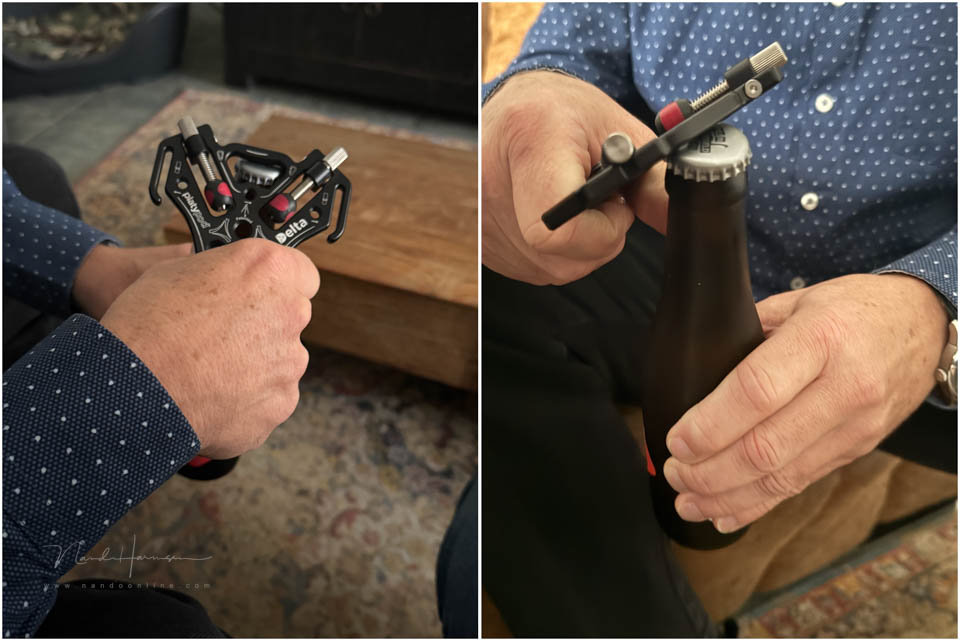
The Extreme is more versatile and can carry somewhat larger cameras. It provides a little more stability, so you might be able to mount a small light or another accessory. Bear in mind that you need a small ball head with both models.
For me, the Platypod did not prove to be a suitable platform. It is not useful for the things I would use it for. I also find setting it up too time-consuming, while it creates too many limitations at the same time.
That does not mean that the Platypod is a bad product. It is attractively and carefully designed and feels like a quality product. It is up to you to decide whether it is suitable for your photography.
The Platypod Delta is available for 90 euros, including the strap. The Extreme costs 169 euros. If you want the strap and some accessories with the Extreme, that costs an extra 44 euros. The Platypod Traveler ball head costs 51 euros.
The Platypod and a large number of accessories are available from Studio Frank Doorhof.
About the author
Nando Harmsen has been photographing for more than 40 years. He specialises in wedding photography and landscape photography. Nando also gives talks, workshops, masterclasses and photo trips, and regularly reviews new and interesting equipment.
You might also like
-
 Review: Canon EOS R5
by Nando Harmsen
-
 Review: Sony A7 IV
by Nando Harmsen
-
 Review: Canon EOS R50 mirrorless camera
by Nando Harmsen
-
 Review: Canon EOS R6
by Nando Harmsen
-
 Review: Canon EOS R7
by Nando Harmsen
-
 Review of the Canon EOS M50 mark II
by Nando Harmsen
0 comments
Be the first to share what you think!
Have your say
Please note: Articles older than a week can only be commented on by signed-in visitors.Would you still like to comment? sign in or create a free account.
Become a better photographer every week
A practical photography tip in your inbox every week.
39,079 photography enthusiasts already receive the tips! More about the weekly mail. Or keep up to date via  Facebook.

Elja Trum
Photofacts; everything to do with photography!
Would you like to take better photos and keep up with what is happening in photography? Photofacts publishes articles that teach you something about photography — from a product announcement to a practical shooting tip or a look at a website. Photofacts covers photography every day and is a hobby project of Elja Trum's that got out of hand. The articles are written by a team of volunteer authors. If you would enjoy writing one or more articles for Photofacts, do get in touch.More about PhotofactsPhotofacts is made possible in part by
