

Better Flash Photos in Four Simple Steps
Monday 13 September 2021, 23:32 by Elja Trum | 8,998 views | 14 commentsThis article was translated from Dutch with the help of AI. Read the original.
Blown-out highlights, harsh dark shadows. Flash photography is often seen as something difficult. Many photographers try it a few times and then put their flash back in the cupboard. I did exactly the same myself. But using flash can improve your photos enormously.
1. Forget your built-in flash
The main reason why many photographers prefer to work with natural light is probably the built-in flash. It is practically impossible to take beautiful photos with it.
The built-in flash guarantees those harsh shadows and ugly highlights I mentioned earlier. So leave that built-in flash folded away. You really don't need it.
Instead, you can use an external flash. Don't buy the flash made by your camera brand. It is far too expensive. There are cheap flashes available that are just as good or even better, for a fraction of the price.
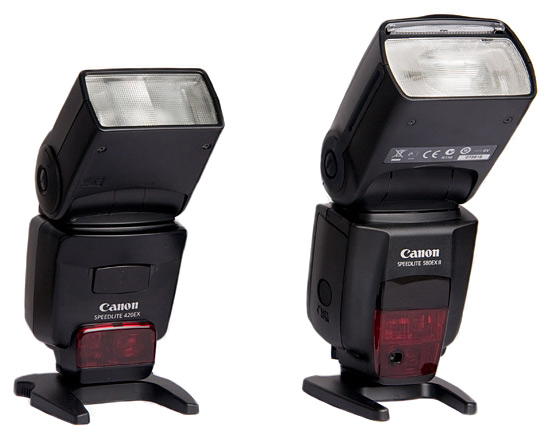
Make sure you buy an external flash with a flash head that can be rotated. Oh, and while you're looking: you'll definitely also want a radio wireless control (see tip 3).
2. Bounce your flash
The whole problem with the built-in flash is that the flash is positioned just above your lens. It is also very small. This creates harsh light (hard shadows), and because the light comes straight from the front, everything feels very 'flat' in the photo.
That isn't pretty.
The trick is that your flash should not come straight from the front, but from an angle. When light falls on something from the side, you see structure and depth in the photo. The shadows created by the light (from the side) allow you to see the depth and shape.
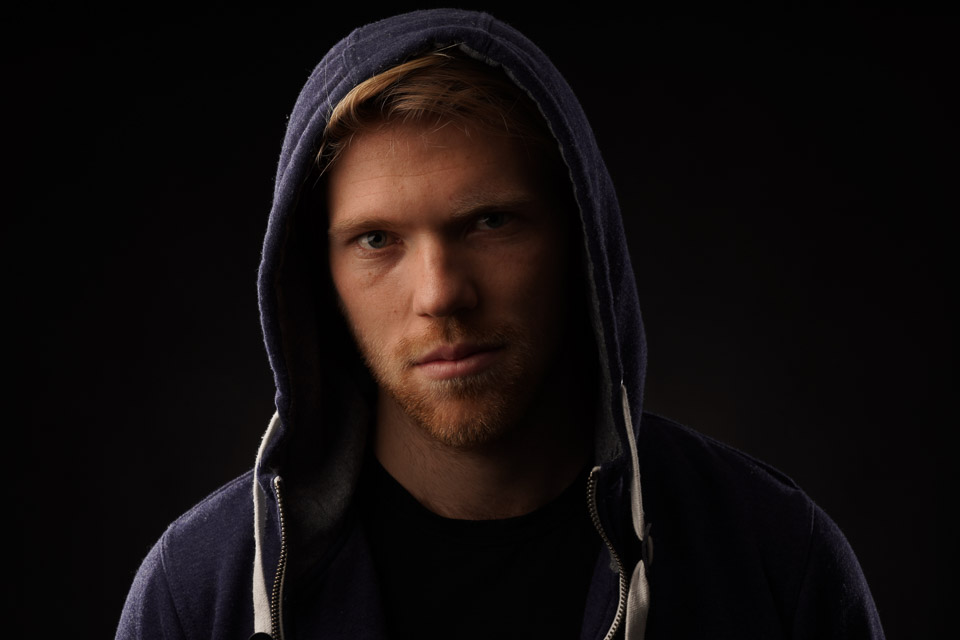
You can use indirect flash by rotating the flash head of your flash. You bounce that light off a wall, ceiling or reflector, so it falls on your subject from the side.
3. Take your flash off your camera
Want to be even more flexible with indirect light? Take your flash off your camera. The light can then come from any direction. Maximum control!
Of course, your flash still needs to be connected to your camera. In the past, this was done with a cable, but these days it is very easy to do with a wireless radio connection.
In most cases, you therefore need to put a trigger on your camera that wirelessly passes the signal from your camera (flash now) on to your flash.
4. Increase the size of your light source
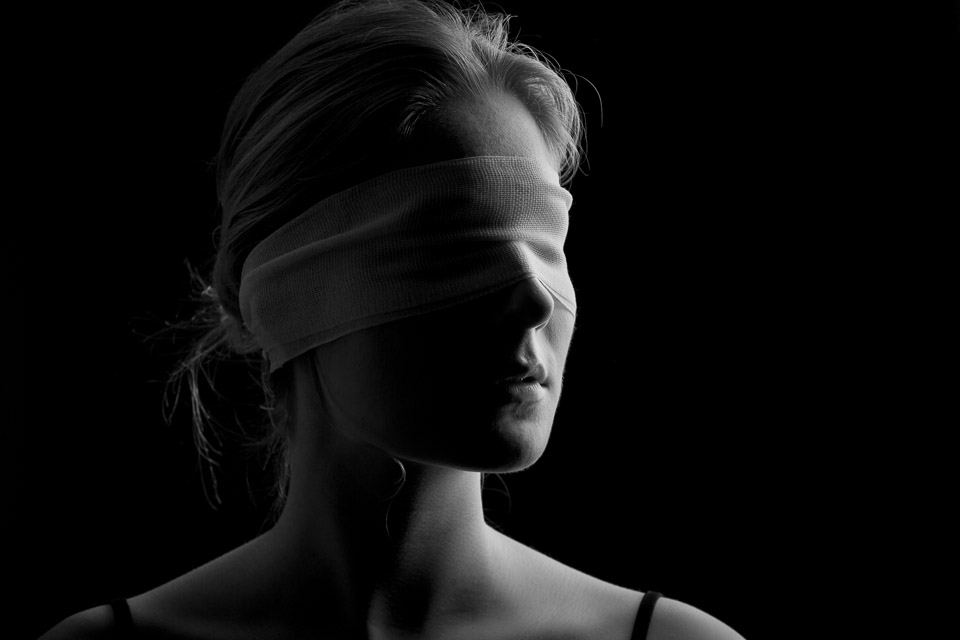
A flash is only a small light source. A rectangle a few centimetres across. That produces harsh light. The larger your light source is, the softer the light will be. I don't mean the strength of your flash, but the softness of the edge of the light.
Soft light is generally seen as more attractive. It is certainly easier to take a beautiful photo with soft light than with harsh light.
There are several ways to increase the size of your light source. The best-known is probably using a large softbox.
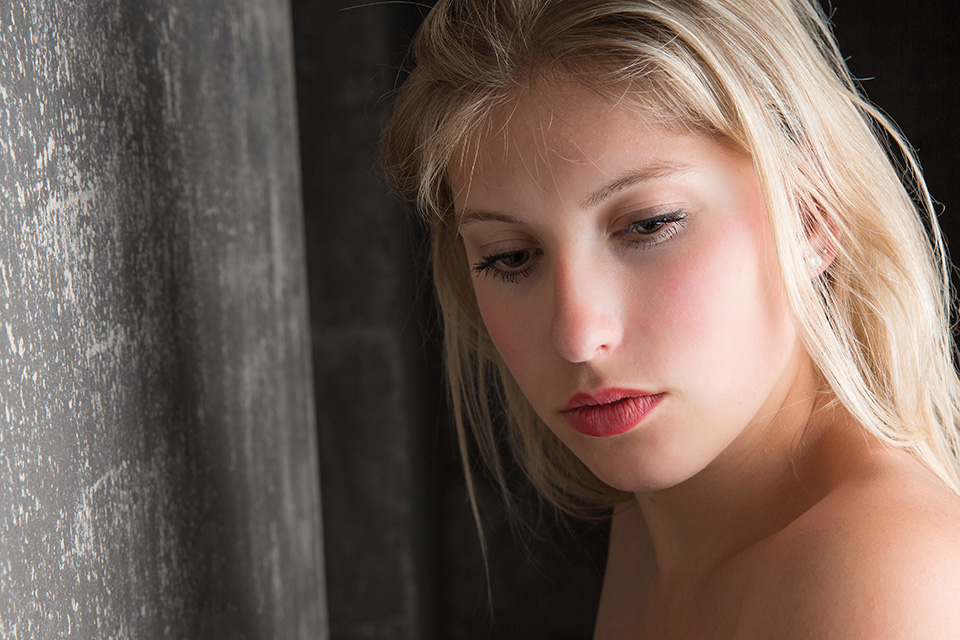
It can also be simpler. Turn the flash head of your flash to the side and bounce the flash off a wall. The wall has now effectively become your light source. The reflected light is much larger (and therefore softer) than that small rectangle on your flash.
Other options include using an umbrella, a reflector or a shoot-through screen.
So, are you not happy with your flash photos? Start by applying these steps and you'll discover that flash photos become much more interesting.
About the author
Elja Trum is the founder of Photofacts and online photography course website Photofacts Academy. He has been writing about photography since 2006. Elja is also the author of (Dutch) books on composition, black-and-white photography, flash photography and portrait photography.
You might also like
-
.jpg "Tip: try photographing from a step ladder!") Tip: try photographing from a step ladder!
Tip: try photographing from a step ladder!by Elvira Smit
-
 Step by step: Adding flash to daylight
by Elja Trum
-
 Using flash outdoors in 3 steps
by Elja Trum
-
 Take the Same Photo (Almost) Four Times
by Elvira Smit
-
 Workflow tips for Lightroom Classic in 7 steps
by Nando Harmsen
-
 Street photography tip: Embrace the shadow
by Michiel Heijmans
14 comments
-
 Matt wrote on Tuesday 14 September 2021 at 09:20 | reply
I disagree with the statement that the built-in flash is useless. There are definitely situations where the built-in flash adds value, such as using it as fill flash in strong backlight. Or to freeze action.
Translated from Dutch.
You always have the built-in flash available; you don't always have an external flash with you.
Furthermore, the built-in filter on more expensive DSLRs and mirrorless cameras can be used as a controller for wireless flash. -

 Donald Willemsen
wrote on Tuesday 14 September 2021 at 10:46
| reply
Donald Willemsen
wrote on Tuesday 14 September 2021 at 10:46
| reply
I agree with you, Elja. Still, one comment. You write about bouncing flash via, for example, a wall. In itself that is good, but then that wall does have to be white. Walls with any colour will reflect coloured light and that is usually not the intention. The same applies to ceilings.
Translated from Dutch.
Your advice not to use the built-in flash has my full support. The argument that you do not always have a flash with you does not apply to me. Just like a filter set, which I also always carry with me. So a reportage flash as well. You do not always know in advance what lighting conditions you will encounter, so you are prepared to have to use a flash.
But when it comes down to really having to work with flashes, I still prefer to retreat into my studio. There I can manage well with my 3 studio flashes. -
 Robert wrote on Tuesday 14 September 2021 at 10:55 | reply
A built-in flash basically gives light from your camera. That's difficult to aim. A monoblock, on the other hand, you can place wherever you want.
Translated from Dutch.
And ...does nobody use a separate flash meter anymore these days. It is oldschool but very accurate.
Photo-shooting regards Robert -
 Dies Groot wrote on Tuesday 14 September 2021 at 11:33
| reply
Dies Groot wrote on Tuesday 14 September 2021 at 11:33
| reply
I completely agree with Matt's comments.
Translated from Dutch.
I'll add to that:
- DO NOT buy the flash made by the brand of your camera. Of course, there are brands that are somewhat cheaper and can sometimes do more, but you decide yourself which brand/system you choose. I could tell you how many photographers can't figure out how off-brand flashes work and/or communicate poorly with the camera body.
- For a FRACTION of the price. So what is an alternative to, for example, the popular Canon 430EX-3-RT at € 250,- and does that cost € 50,- or so?
- Flash light via the ceiling is not SIDE LIGHT.
In short, it's all very much oversimplified. -
 Susan Rekers wrote on Tuesday 14 September 2021 at 11:38 | reply
Any tips for using an external flash at an evening wedding party, for example? I prefer not to use flash, but that isn't always possible. I often find there's less atmosphere with flash.. But maybe someone has the golden tip, in terms of settings? I have a Nikon D7000
Translated from Dutch. -
 Elja Trum
wrote on Tuesday 14 September 2021 at 12:17
| reply
Elja Trum
wrote on Tuesday 14 September 2021 at 12:17
| reply
@Susan; bounce flash, as I also indicate in the article. Bouncing it off the ceiling or wall often works excellently.
Translated from Dutch.
Do indeed pay attention to the color of the wall, anything from white to gray to black works fine (the darker it is, the more flash power you will need). If the wall has a color, your light will get that color too.
Increase your ISO to, for example, 1600 ISO. Your flash then has to work much less hard, and you also bring back a bit more ambient light (so you don't photograph someone in a black hole, but can still see something of the party). If your camera can handle it, increase your ISO even further.
@Dies; You do indeed have to look carefully at which flash you buy, but financially it is really worth it.
A Canon 600EX II RT costs 548 euros, for example. The Yongnuo version of this, the YN600EX-RT, costs 149 euros.
I have both, by the way, and the Yongnuo is more flexible and convenient.
Flash light via the ceiling is not side light, no, but it is a lot better than flashing directly.
@Matt; A built-in flash indeed has limited possibilities, such as fill flash. And for emergencies it is better than nothing. But most results with this will be quite disappointing.
More expensive cameras, such as a 5D, often don't even have a built-in flash. -
Donald Willemsen
wrote on Tuesday 14 September 2021 at 13:07
| reply
@Dies Groot, for Canon flashes that are quite expensive, there are good alternatives such as Metz flashes. They are software-adjusted to the camera you use, for example Canon. If you buy a camera from another brand, you can adjust the flash's software to that brand. So buying a flash from the same brand as the camera is absolutely not necessary.
Translated from Dutch. -
 PixelDude Raoul
wrote on Tuesday 14 September 2021 at 15:19
| reply
PixelDude Raoul
wrote on Tuesday 14 September 2021 at 15:19
| reply
@ Mat and Elja
Translated from Dutch.
Not every camera has a built-in flash, and certainly not those in the higher-end range.
In other words, I can only either use the smaller included flashes, which I then mount on the cameras, or much better use speedlights, which Elja is also an advocate of. -
 Hans Egelmeers wrote on Tuesday 14 September 2021 at 18:17 | reply
Hello Susan, I would first measure the existing light without flash, e.g. iso 800 - f3.2 focal length 25 mm. set the camera to that value, and only then turn on the flash. Flash at -1. Bouncing off the ceiling or wall usually doesn't work at a party. At f 3.2 and a focal length of 25 mm you still have enough depth of field. Regards Hans
Translated from Dutch. -
 Francis wrote on Wednesday 15 September 2021 at 09:19 | reply
@Donald; software-wise adapting a Metz flash for Canon to a camera from another brand? I'm afraid not, but if that is possible, I would like to hear how you can do that. I switched from Canon to Nikon, which means the (Metz) flash no longer works.
Translated from Dutch. -
Donald Willemsen
wrote on Wednesday 15 September 2021 at 10:15
| reply
@Francis, my Metz flash has a USB port, so you can connect it to a PC or Mac. On the Metz website you can download software and install it on the flash. On the support page of Metz you can find one thing and another. See https://www.metzflash.ca/firmware/
Translated from Dutch. -
-
 Martin Smit
wrote on Sunday 6 March 2022 at 21:47
| reply
Martin Smit
wrote on Sunday 6 March 2022 at 21:47
| reply
I have a question about preserving the atmosphere when using flash. I use an on-camera flash at events where there is often little light. Bouncing is not possible. I want to use a little fill flash, but otherwise preserve the atmosphere. At ISO 3200 and f/1.4, the shutter speed is just sufficient. The problem, however, is that there is often too much flash light, even at the lowest power (or also in TTL with a flash compensation of -3 stops). What could be the solution here?
Translated from Dutch. -
Donald Willemsen
wrote on Monday 7 March 2022 at 07:12
| reply
@Martin Smit, if you can rotate or tilt the flash head, the light is also reduced in the direction you're photographing. Another option is to put a diffuser on the flash . That spreads the light and therefore also the intensity of the light in the direction you're photographing. Give it a try. Who knows, it might help.
Translated from Dutch.
Have your say
Please note: Articles older than a week can only be commented on by signed-in visitors.Would you still like to comment? sign in or create a free account.
Become a better photographer every week
A practical photography tip in your inbox every week.
39,083 photography enthusiasts already receive the tips! More about the weekly mail. Or keep up to date via  Facebook.

Elja Trum
Photofacts; everything to do with photography!
Would you like to take better photos and keep up with what is happening in photography? Photofacts publishes articles that teach you something about photography — from a product announcement to a practical shooting tip or a look at a website. Photofacts covers photography every day and is a hobby project of Elja Trum's that got out of hand. The articles are written by a team of volunteer authors. If you would enjoy writing one or more articles for Photofacts, do get in touch.More about PhotofactsPhotofacts is made possible in part by
