

5 tips for environmental portraits
Monday 24 May 2021, 21:12 by Elja Trum | 5,542 views | 1 commentThis article was translated from Dutch with the help of AI. Read the original.
A portrait photograph is about the subject. You usually frame them large and clearly. An environmental portrait is a different form of portrait photography, where the surroundings also play an important role. In this article, 5 tips for environmental portraits.
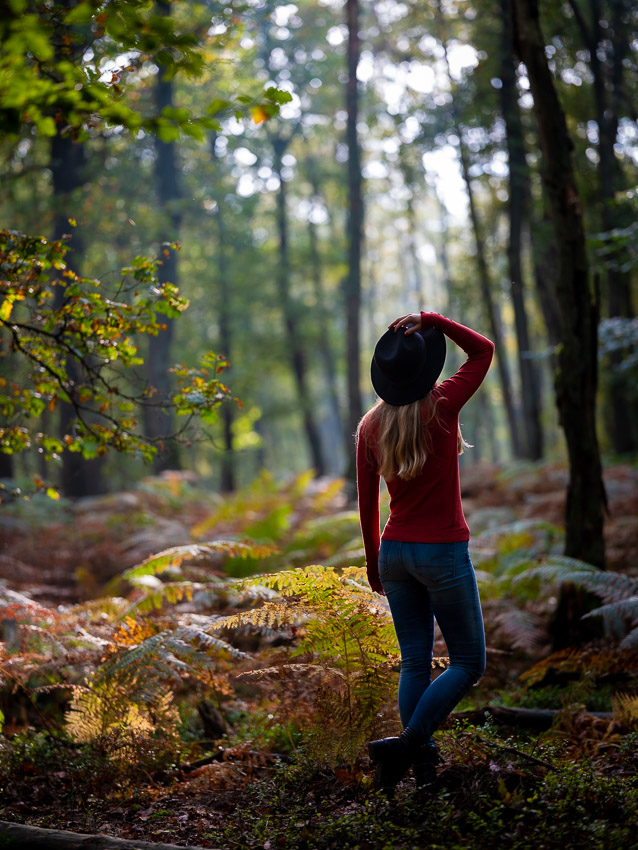
1. Take a little more distance
One of the most common tips in portrait photography is to move closer. An environmental portrait is the exception to this. With an environmental portrait, you should take a little more distance instead.
You often take portraits with a focal length between 70 and 135mm. You can continue to use this perfectly well for an environmental portrait, but you really do need to take quite a bit of distance.
The advantage is that the surroundings will quickly become nicely blurred as well. Ideally, you should still keep the surroundings recognisable. With an environmental portrait, you do not want everything to be a blur. The surroundings would no longer be visible.
2. Use a 35mm lens
An environmental portrait is also well suited to using a lens that you would not usually use for portraits. For example, a 35mm lens.
If you get too close to your subject with this kind of lens, you will get distortion. The lens therefore forces you to take a little more distance and consciously include the surroundings in your photo.
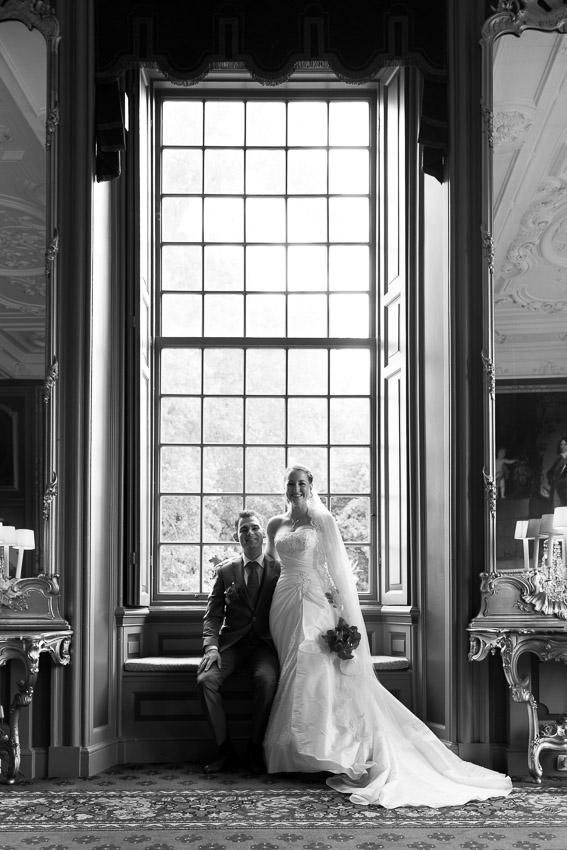
I sometimes like to go out with just a 35mm lens, for example, or even spend an entire holiday with only this lens. It forces you to be creative with your composition and often gives you a different perspective from the one you normally use.
3. Find an unusual setting
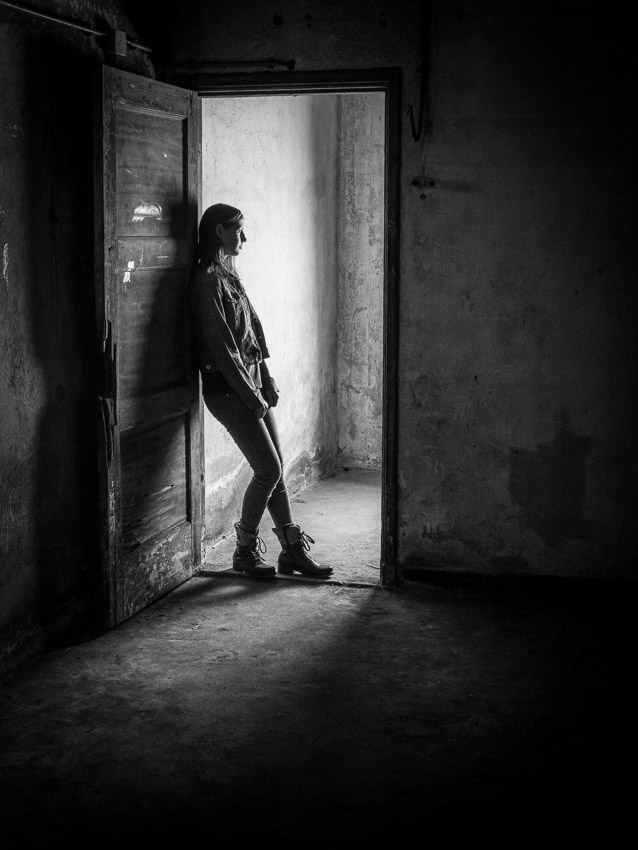
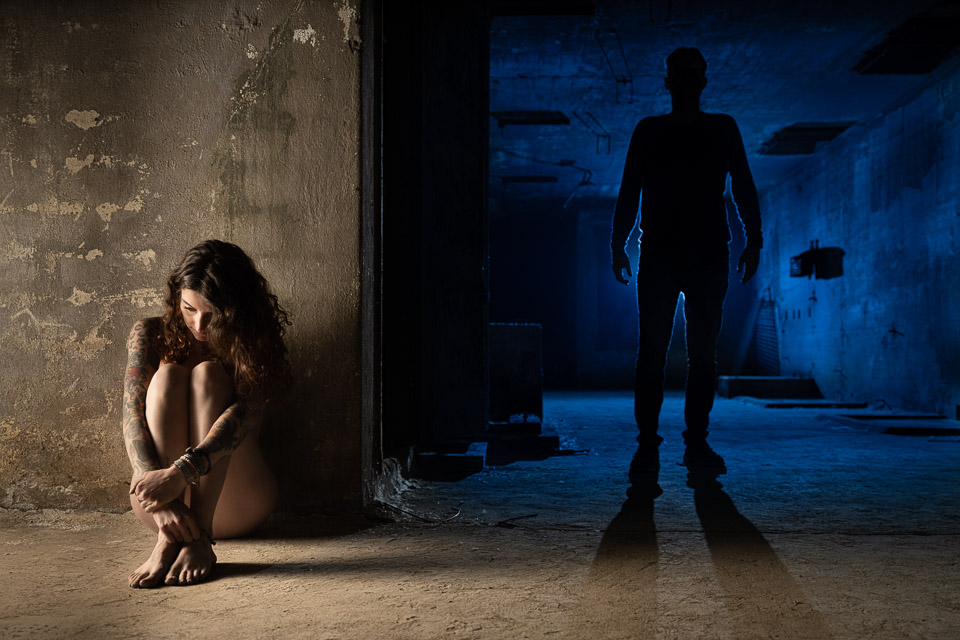
When you let the surroundings play a role in your photo, it naturally works especially well if you are also in an unusual setting. So, for your environmental portrait, look for a location that is different from normal and where the surroundings are genuinely interesting.
I am personally a fan of Urbex settings, for example, old buildings where the decay is clearly visible.
4. Use your surroundings as a frame
In an environmental portrait, you can also use the surroundings to draw attention to the model. For example, by using the surroundings as a frame around your model.
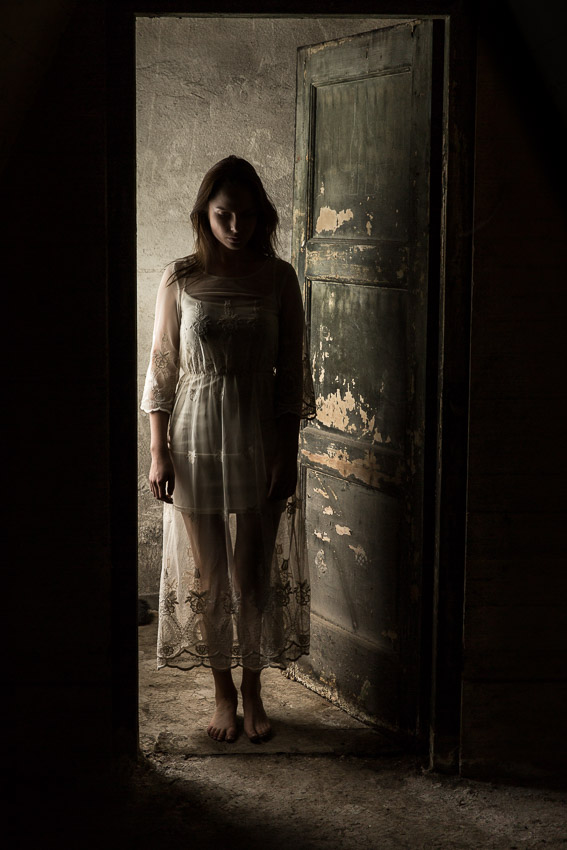
You can also use lines in your photo to lead towards your model. This helps the viewer to 'read' the photo. So look carefully at where you place the model and how he or she fits into the surroundings.
5. Create a story
The most powerful photos tell a story to the viewer. The surroundings play an important role in this. Together with the styling and pose, you can tell a story and make the photo more interesting to look at.
About the author
Elja Trum is the founder of Photofacts and online photography course website Photofacts Academy. He has been writing about photography since 2006. Elja is also the author of (Dutch) books on composition, black-and-white photography, flash photography and portrait photography.
You might also like
-
 Tips for editing photos of shooting stars
by Nando Harmsen
-
 12 tips for atmospheric autumn photography
by Laura van der Burgt
-
 Workflow tips for Lightroom Classic in 7 steps
by Nando Harmsen
-
 Make the Most of Your Camera as a JPEG Photographer
by Nando Harmsen
-
 10 tips for photographing mushrooms
by Nando Harmsen
-
 10 Tips for Beginner Photographers
by Elja Trum
1 comment
-
 Rob Gipman wrote on Tuesday 25 May 2021 at 13:25 | reply
Nice that you mention the 35mm, This one is now almost permanently on my 5D4. For portraits outdoors and in my home studio, the 35mm still works fine too.
Translated from Dutch.
Have your say
Please note: Articles older than a week can only be commented on by signed-in visitors.Would you still like to comment? sign in or create a free account.
Become a better photographer every week
A practical photography tip in your inbox every week.
39,102 photography enthusiasts already receive the tips! More about the weekly mail. Or keep up to date via  Facebook.

Elja Trum
Photofacts; everything to do with photography!
Would you like to take better photos and keep up with what is happening in photography? Photofacts publishes articles that teach you something about photography — from a product announcement to a practical shooting tip or a look at a website. Photofacts covers photography every day and is a hobby project of Elja Trum's that got out of hand. The articles are written by a team of volunteer authors. If you would enjoy writing one or more articles for Photofacts, do get in touch.More about PhotofactsPhotofacts is made possible in part by
