

Canon EOS R6 Mark II announced
Wednesday 2 November 2022, 06:12 by Elja Trum | 3,429 views | 13 commentsThis article was translated from Dutch with the help of AI. Read the original.
Canon has just announced the successor to the popular Canon R6. It is called the Canon EOS R6 Mark II. We were able to try it out in practice last week.
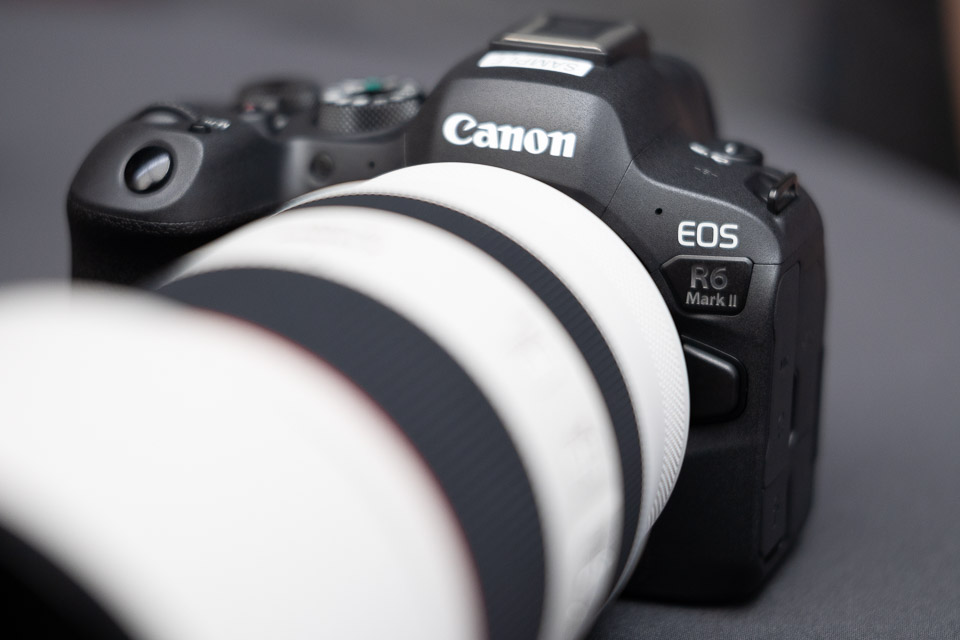
Canon EOS R6 Mark II specifications
- 24.2-megapixel CMOS sensor
- 40 photos per second with the electronic shutter
- 12 photos per second with the mechanical shutter
- In-body image stabilisation on the sensor, with up to 8 stops of benefit
- 4K/60p video, using 6K image information
- 6K ProRes RAW video with an external Atomos recorder
- RAW burst mode, which starts recording before you press the shutter
- HDR mode for moving subjects
- 3.68-million-dot electronic viewfinder, 120 fps
- 1.62-million-dot 3-inch screen
- 2x SD(XC) card slots
The Canon EOS R6 Mark II has a new 24.2-megapixel full-frame CMOS sensor. In terms of appearance, it looks very similar to its predecessor. The biggest difference is its speed.
The R6 Mark II can take up to 40 photos per second, using the electronic shutter. The fastest shutter speed you can use to take a photo has also increased from 1/8,000th to 1/16,000th of a second.
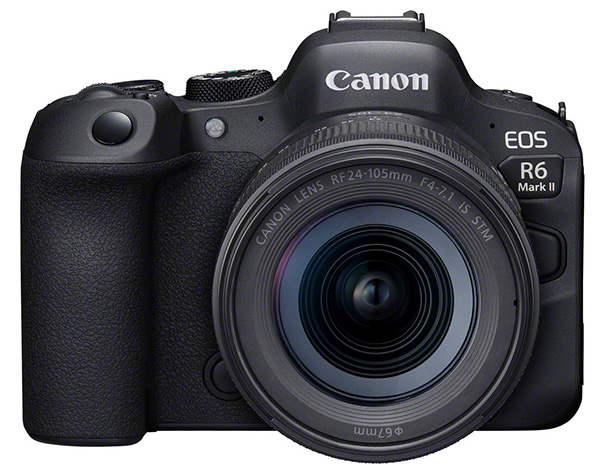
The autofocus has also been improved. The R6 Mark II has clearly borrowed quite a bit from the R3 in this area. The R6 now has the same autofocus system.
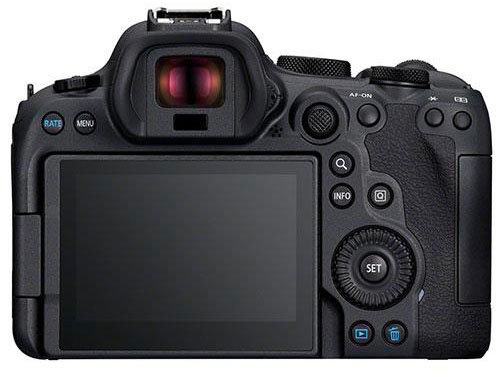
There is good news for videographers. The R6 has been given a dedicated button for switching rapidly between photography and video. In video mode, you can also set the C modes on the PASM dial separately from those in photo mode.
It is also very useful that, when shooting video, the autofocus no longer automatically starts focusing in the background if the subject you were filming briefly disappears from view. Focus then stays where it was.
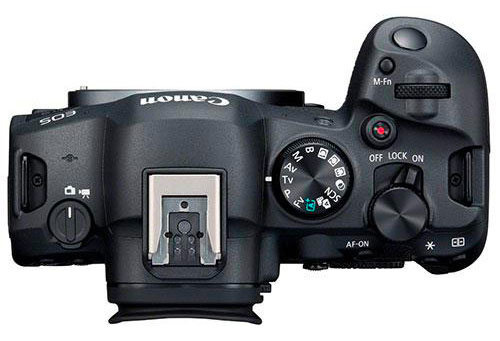
The Canon R6 Mark II has therefore received quite a few useful, though relatively small, updates compared with the original Canon EOS R6, which is now two and a half years old.
For most photographers, this probably is not an immediate reason to upgrade from the R6. But switching from, for example, a 6D has of course become even more interesting.
Price and availability
The Canon EOS R6 Mark II will be available from 29 November and will cost 2,929 euros.
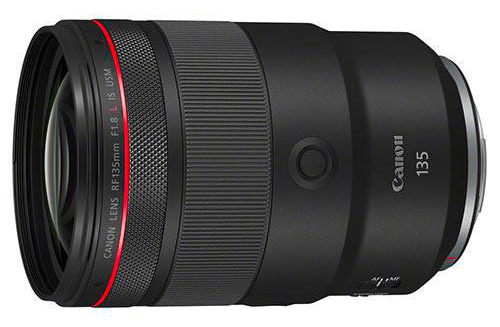
Alongside the new R6, a new lens, the Canon RF 135mm f/1.8L IS, 2,739.99 euros, and a new flash, the Canon Speedlite EL-5, 509.99 euros, have also been announced.
About the author
Elja Trum is the founder of Photofacts and online photography course website Photofacts Academy. He has been writing about photography since 2006. Elja is also the author of (Dutch) books on composition, black-and-white photography, flash photography and portrait photography.
You might also like
-
 Review of the fantastic Canon EOS R6 Mark II
by Nando Harmsen
-
 Review: Canon EOS R6 mark III
by Nando Harmsen
-
 Review: Canon EOS R6
by Nando Harmsen
-
 Will the Canon EOS R5 Mark II Arrive in Mid-2023?
by Elja Trum
-
 Canon introduces the EOS R8 Mark II
by Nando Harmsen
-
 Canon introduces the EOS R6 Mark III and the RF 45mm f/1.2 STM
by Nando Harmsen
13 comments
-
 P. Heins wrote on Wednesday 2 November 2022 at 16:02 | reply
Personally, I think €1500 price difference between a 6D Mark II and this R6 is quite a lot. Especially for portraits landscapes etc. It seems like an expensive switch to me. I myself use a 6D and 6D Mark II for landscapes,Macro,portrait and an occasional wedding and in combination with somewhat older but qualitatively excellent L-lenses I see no reason to switch. As a result I also don't have to charge top dollar for a wedding. Moreover, I prefer having something heavy on my tripod, given my bad experiences with a light Canon RP . And I do find the grip of the 6D more pleasant than the R series. But that's how everyone makes their choices. Moreover , are you really going to take better photos with such an expensive camera, if you don't sell them in poster format anyway , you are the one who presses the button, determines the composition,etc. It's a tool, for a hobby photographer it doesn't seem like a necessity to me. My wife can already see me coming:"honey, I bought a new camera for €3000.......".
Translated from Dutch. -
 wim wilmers wrote on Tuesday 8 November 2022 at 10:13 | reply
P. Heins, the difference between a 6d and 6r is really quite big, especially at weddings where you have a lot of different situations and the focusing simply has to be right in one go, the 6r is really much better. I understand that with a landscape and or portrait you have more time to focus, but for a wedding you’re not going to let the price depend on your equipment, are you? You ask a price because you’re, for example, good at what you do and charge a lot for it, right?
Translated from Dutch. -
P. Heins wrote on Tuesday 8 November 2022 at 10:36 | reply
wim wilmers . That's everyone's choice. Every time a new camera comes out , there are the same marketing texts. Why isn't a 5D or 6D good enough for weddings? When these cameras came into being they were, and these cameras also have perfectly good detail and focus. Surely a couple getting married will at most make a 30x40cm print or perhaps 1 a bit larger but that can work perfectly fine with these cameras. I myself have a 150x80cm print hanging in the room of a vineyard made with the Canon M5 and in it you can even distinguish the veins of the front leaves. Sometimes photos are also too sharp, which can be distracting. With a wedding I find soft focus more beautiful for a dreamy atmosphere.
Translated from Dutch. -
wim wilmers wrote on Tuesday 8 November 2022 at 10:51 | reply
sure, everyone's choice P. Heins but when you shoot a lot of weddings then you really do see many more shots that are 100% sharp with an R-type camera than with a 5D or 6D. I certainly agree with you that you can take good photos with a 5D and any camera for that matter. I'm talking about the fast moments that often pass by on a wedding day.
Translated from Dutch. -

 Donald Willemsen
wrote on Tuesday 8 November 2022 at 11:32
| reply
Donald Willemsen
wrote on Tuesday 8 November 2022 at 11:32
| reply
@Wim Wilmers and P. Heins: A few weeks ago I switched from a DSLR to the mirrorless R series. I have to say that I’m happy I made the switch. The autofocus on my current R7 is many times better than on my previous 70D and 80D. That difference in autofocus quality will also be there if you compare a 6D with an R6. Moreover, with DSLRs you are limited in the number of focus points, whereas with the R series you can use the entire sensor area to choose a focus point.
Translated from Dutch. -

-
P. Heins wrote on Tuesday 8 November 2022 at 13:09 | reply
Marcel , I had an RP, but went back to the 6D mark II . As far as focusing at weddings is concerned, I’ve never had any problems with it, and I only use 1 focus point, works fine or an area of 4 points. To each their own pros and cons.
Translated from Dutch. -
P. Heins wrote on Tuesday 8 November 2022 at 14:07 | reply
And after the R6 Mark II there will be a Mark III , IV and V etc, and then those will be the best again...all marketing, fine then I’ll be able to switch to a used R6 Mark II cheaply later because if it’s super good now, it’ll still be that way in 5 years.
Translated from Dutch. -
Donald Willemsen
wrote on Tuesday 8 November 2022 at 15:29
| reply
@P. Heins in a certain sense you are right with your last remark. But you should also dare to acknowledge that a lot has changed and even improved over the years since the 6D appeared. To begin with, the image sensor has improved enormously. The cameras from the R series have, besides the mechanical shutter, an electronic shutter which allows even shorter shutter speeds for certain types of photography. The autofocus system has improved. Improved software. There are more arguments to mention. But nothing is required. Switching to a camera from the R series therefore isn't either.
Translated from Dutch.
But.... if you run into limitations of the camera or of yourself, then it might still be worth considering.
You write that you used an RP. That was one of the first mirrorless models from the R series and I can understand that you have criticism of it. After that, the R models were further developed and became much better.
I already wrote about running into the limitations of my previous cameras and limitations that were on my side. After months of weighing up and assessing the different R models, I chose the R7 partly based on those limitations and financial resources.
Especially the limitations on my side no longer play any role and my photos look technically better, partly thanks to IBIS.
So you should not switch as long as you are and remain satisfied with the 6D. As long as you are not ready for a new camera, you can keep the money in your pocket. I am convinced that when you are ready for a new camera, you will make a well-considered decision. It may then still be a camera from the R series that is the ideal choice for you at that moment. -
 Frederick wrote on Tuesday 8 November 2022 at 19:32 | reply
I myself switched from the 6D mII to the Eos R6 a year ago too, and not regretted it for a second. Indeed, a serious difference when it comes to autofocus, never searching for the eye again, the camera does it for you. Shooting images extremely quickly, and what is personally the biggest step forward for me with the R6 is the ISO, you can now really set it very high without seeing any noise at all. You don't see ISO 6400 in the photo, with my 6D mII I was already afraid to go above 800 because you were already starting to notice noise. The R6 can be used in so many more situations than the 6D, you can work so much faster through the electronic viewfinder, super autofocus and eye detection, tracking vehicles. ...No, I will never go back to a DSLR either. And the image quality is simply super. All of this together is, as far as I'm concerned, still a serious difference from the 6D mII
Translated from Dutch. -
P. Heins wrote on Tuesday 8 November 2022 at 20:53 | reply
Frédéric, coincidentally that you bring up noise. Here on photofacts there is an article about noise. Very interesting and true. It is also strange that with the 6D mark II you already see visible noise at iso 800. I shot a wedding with Dirk Zelenberg as the civil registrar, that was in a very dark farmhouse, so I had to shoot at iso 6400 iso and in combination with a flash I was able to shoot perfectly clear images where no noise could be seen on a 27inch screen. You already had to look at 200/300 percent to see anything. And besides, no posters are printed from the photos of such a ceremony anyway, so then a little noise is not a problem. But just as you say, as long as you don't run into limitations there is no reason to switch and that also allows me to keep the prices low.
Translated from Dutch. -
 wilmers
wrote on Wednesday 9 November 2022 at 09:23
| reply
wilmers
wrote on Wednesday 9 November 2022 at 09:23
| reply
P. Heins, You keep writing that you can keep your prices so low for your wedding photography but when a bridal couple still manages to hire Mr. Zeelenberg for 5 to 6,000 euros, while the gentleman is always done fairly quickly, I would also think about your own prices
Translated from Dutch. and the assumption that a photo of a ceremony never needs to be large is also something that is by no means always true. But anyway you are still satisfied with the possibilities of your 6d compared to an r6 and that is the most important thing.
 -
 peterheins
wrote on Wednesday 9 November 2022 at 10:53
| reply
peterheins
wrote on Wednesday 9 November 2022 at 10:53
| reply
@wilmers what you say about Dirk Zeelenberg is not correct. If you don't know how someone works, you shouldn't judge them. The bridal couple spent 3 hours talking to him. Then he writes a piece, and the ceremony he conducts also lasts an hour and then of course you still have his travel time. And it is his profession, he has to make a living from it and I don't.
Translated from Dutch.
Have your say
Please note: Articles older than a week can only be commented on by signed-in visitors.Would you still like to comment? sign in or create a free account.
Become a better photographer every week
A practical photography tip in your inbox every week.
39,079 photography enthusiasts already receive the tips! More about the weekly mail. Or keep up to date via  Facebook.

Elja Trum
Photofacts; everything to do with photography!
Would you like to take better photos and keep up with what is happening in photography? Photofacts publishes articles that teach you something about photography — from a product announcement to a practical shooting tip or a look at a website. Photofacts covers photography every day and is a hobby project of Elja Trum's that got out of hand. The articles are written by a team of volunteer authors. If you would enjoy writing one or more articles for Photofacts, do get in touch.More about PhotofactsPhotofacts is made possible in part by
