

Quadralite A1: flash photography with your smartphone
Friday 10 November 2017, 15:30 by Michelle Peeters | 8,117 views | 0 commentsThis article was translated from Dutch with the help of AI. Read the original.
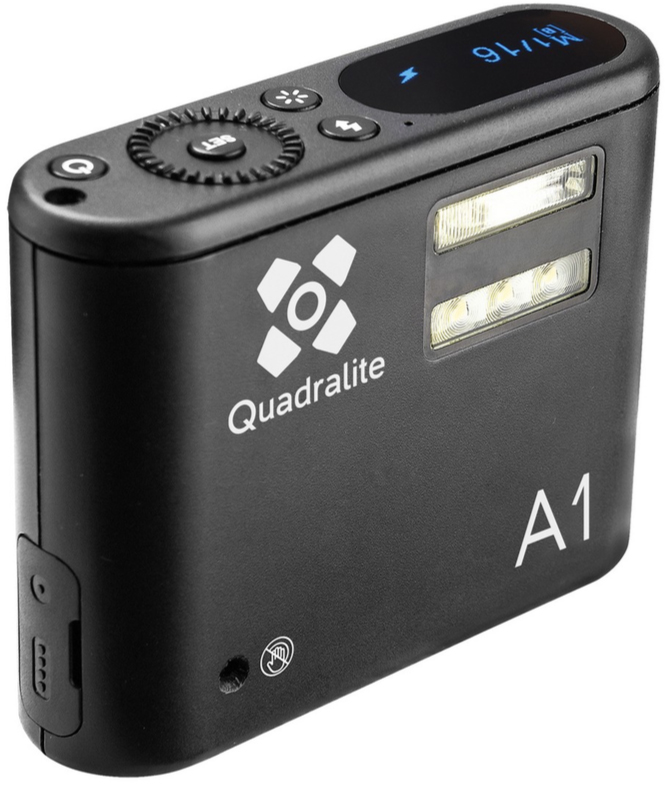
The Quadralite A1, designed for smartphones, combines the functions of a flash, LED light and wireless trigger. A promising little device that lets you take much better-lit photos with your smartphone. It also makes it easy to set up your studio lights.
We had the chance to play with the device at Quadralite in Krakow. Here are our first impressions.
Press event in Krakow
The Polish company Quadralite has announced the launch of its 3-in-1 flash, lamp and radio trigger, the Quadralite A1. It is their own rebranded version of the Godox A1, with the same features and specifications.
The distributor organised an exclusive press event in Krakow, Poland, on 7 November to show the possibilities of the Quadralite A1 in combination with the latest Quadralite studio lights and accessories.
The Quadralite A1 functions both as an independent wireless trigger and flash, and as a wireless trigger and controller for additional Quadralite lights, both flashes and LED lighting.
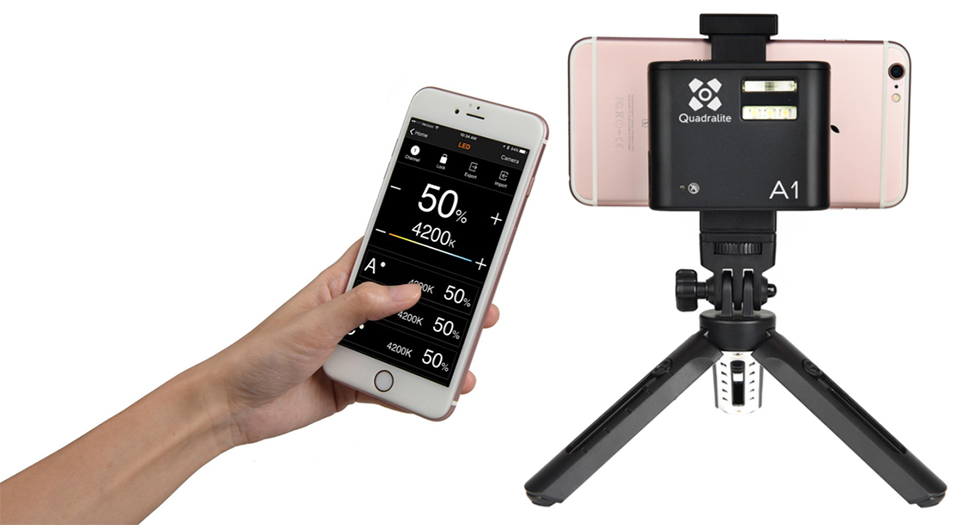
The accompanying app turns your smartphone into a kind of control centre that lets you manage a complete studio lighting setup.
Studio lighting with your smartphone
The Quadralite A1 is a device with the characteristics of a smartphone flash and can be used as a trigger for reportage flashes and studio lights. With this device, you can enter the world of strobe photography as a smartphone photographer.
The A1 model is equipped with three LED lighting diodes, 1 Watt, so it can serve as a mobile light source. But this is not the device's most important feature.
Above all, the A1 is an autonomous flash, 8 Watts, with a colour temperature of 6000 Kelvin (± 200 Kelvin), which can be synchronised wirelessly with your smartphone's camera.
To use the Quadralite A1, you first need to install the Quadralite Photo App on your phone. The device and software together will ultimately transform your phone into a camera that can control additional light sources in the studio and elsewhere.
The A1 can be integrated into a wireless control system that can trigger Quadralite and Godox flashes.
You also get a built-in Bluetooth 4.0 module with a maximum range of 50 metres, which enables wireless communication, as well as a built-in wireless module, the Quadralite Navigator X, which operates at 2.4 GHz.
The very compact Quadralite A1 is equipped with a 1Ah lithium-ion battery, which can fire 700 flashes at full power.
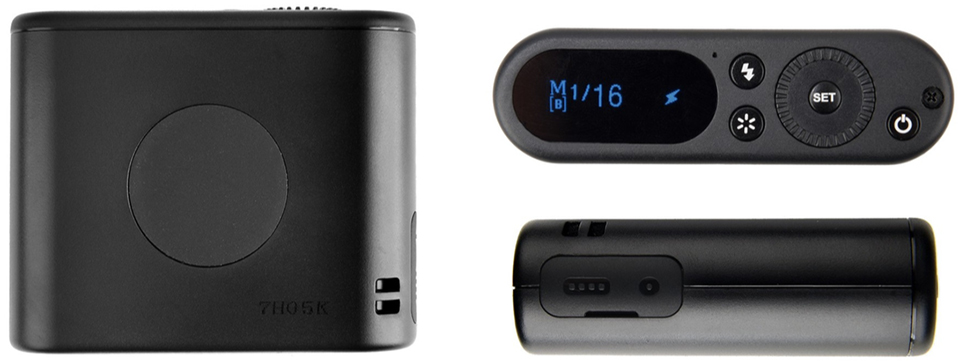
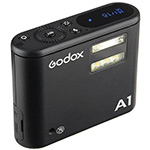
Its dimensions are 80 x 23 x 65 millimetres and it weighs approximately 110 grams. The back has a magnet that allows the device to be mounted on metal surfaces.
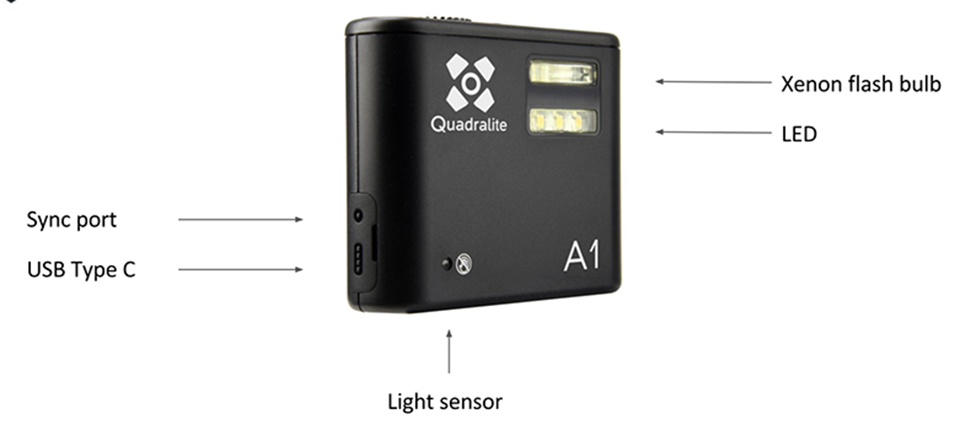
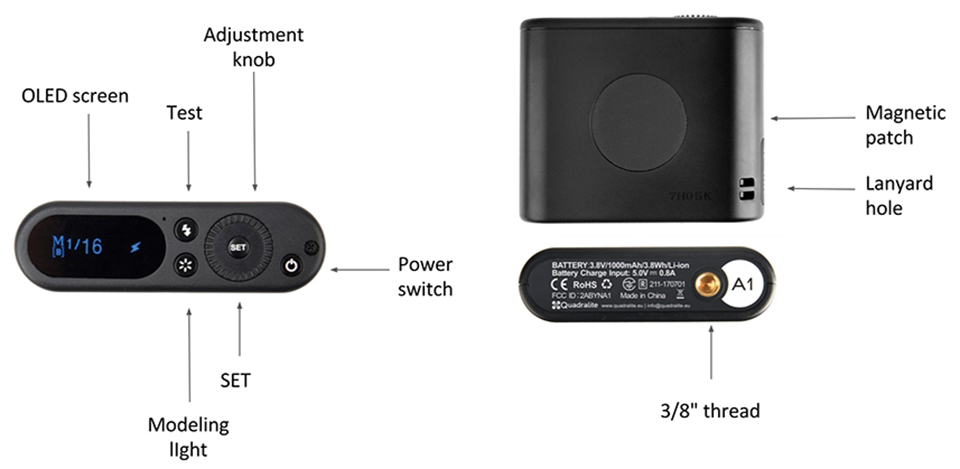
On top, you will find a small but clearly readable OLED screen that provides basic information about the condition of the devices. Three buttons on the right-hand side of the panel let you activate the test flash and LED lighting, and switch the device on and/or off.
There is also a control dial and an extra button for changing various setup options. At the bottom is a 3/8" thread that is compatible with most studio tripods and accessories. The front consists of the flash and LEDs.
Testing
We were able to test the device for an entire afternoon. It is indeed very small and compact, and fairly easy to operate. As an off-camera flash for your smartphone, it works well and is also easy to adjust.
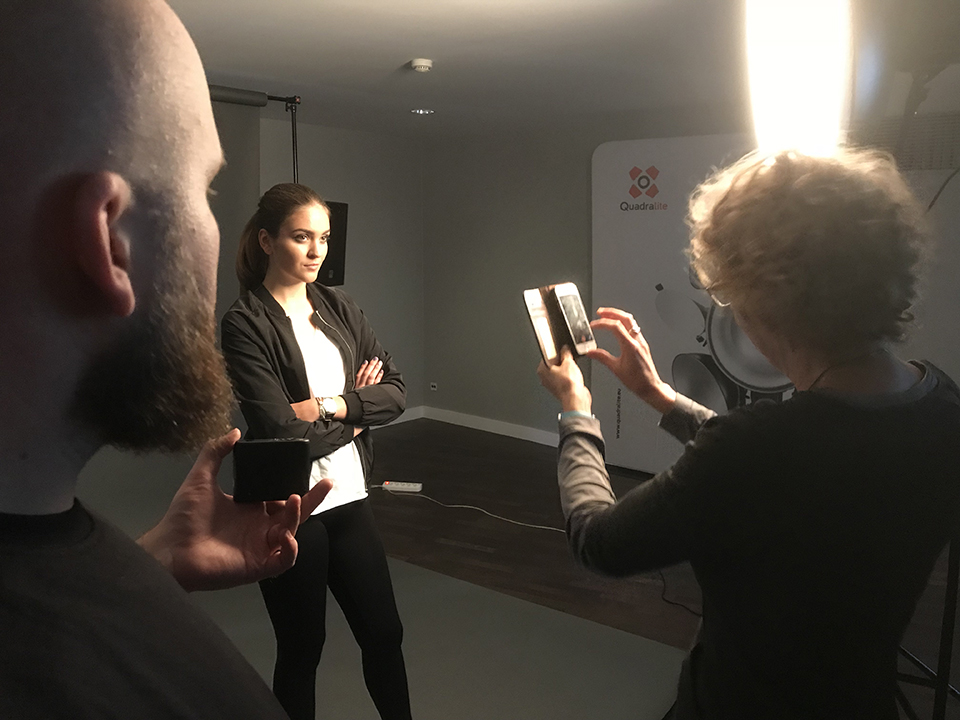
Using the app on your smartphone, you can adjust ISO, white balance and shutter speed. You can also reduce or increase the flash intensity. You only need an assistant, or you need to put the A1 on a tripod, to aim it at your model from the side.
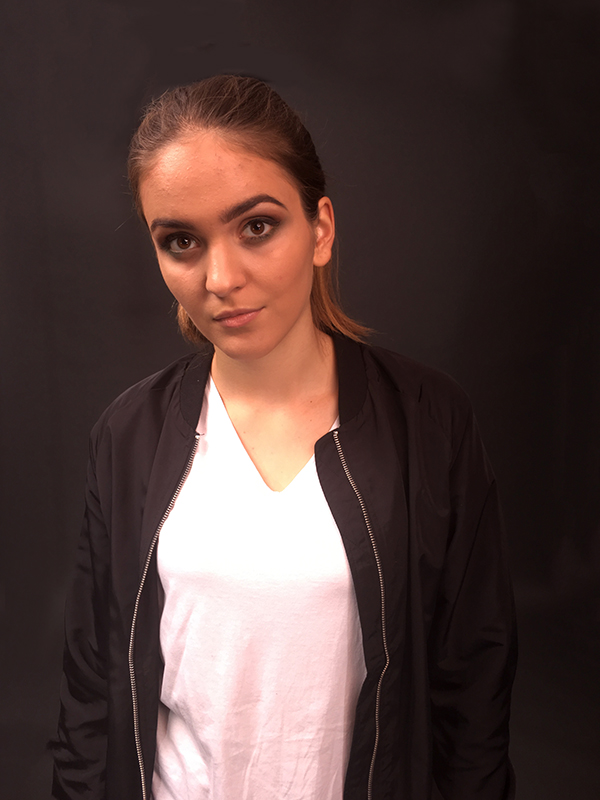
By choosing a channel, you can also use the device to control flash units, Quadralite ones, as they have a built-in receiver, as do their reportage flashes, fitted with attractive light modifiers, allowing you to create a good studio portrait.
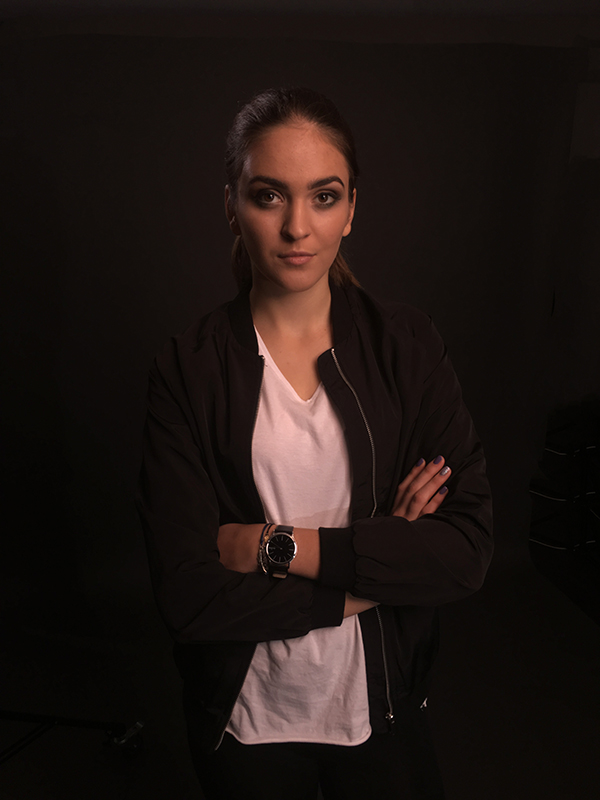
This looks considerably better than taking a portrait with just the A1 as a flash. And of course, this is still much better than the 'flash' on your smartphone. You can indeed adjust the lights using the app on your smartphone, which is very handy!
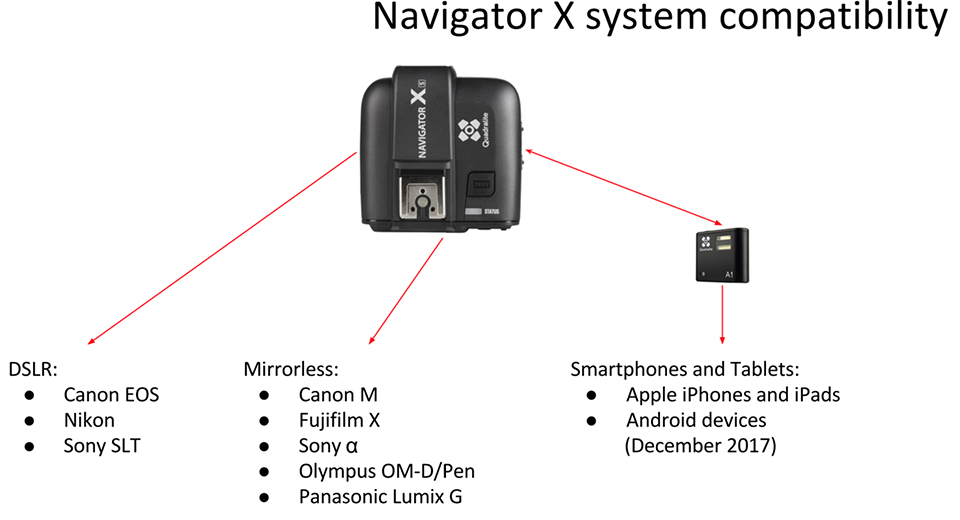
If you want to take photos with your SLR camera using several studio lights and still use the Quadralite A1, you need a Navigator X transceiver mounted on your camera.
The A1 then provides the link with your smartphone, which you can use to adjust the lights, among other things. The A1 combined with the app is a useful tool in the studio.

Conclusion
What I find disappointing is that if you want to use and control additional flashes or reportage flashes, you have to use Quadralite equipment for this. This is because these lights have a dedicated Quadralite receiver built in.
If you do want to use studio lights or hotshoe flashes from other brands, you need an additional Quadralite receiver to allow everything to communicate with each other.
But as an additional flash for your smartphone, it is a useful little device that you can take with you easily, as it fits in your trouser pocket, to give your smartphone photos just that bit extra, especially in poor lighting conditions.
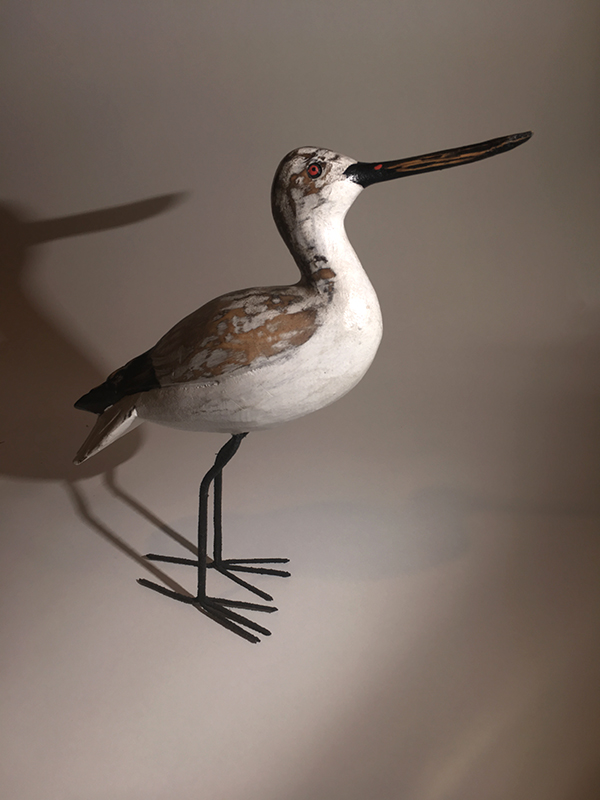
It is also possible to connect several Quadralite A1s to your smartphone at the same time for a more strobist effect.
Price and availability
The Quadralite Photo app is available free of charge from the iOS App Store, with an Android version due to be released around the end of this year. The recommended retail price of the Quadralite A1 itself is 79 euros and it will be available in mid-November 2017.
About the author
Michelle Peeters is fotografe en oprichter van DeuxBleus Fotografie. Michelle herkent het bijzondere in het gewone en het gewone in het bijzondere. Ze heeft zich nooit willen specialiseren en is daardoor van alle markten thuis.
You might also like
-
 Review: Pictar grip for the iPhone
by Michelle Peeters
-
 Review: DigiEra external SSD for iPhone video
by Nando Harmsen
-
 7 tips for photographing with a smartphone
by Nando Harmsen
-
 New iPhone X with OLED display, Portrait Lighting and 4K
by Michelle Peeters
-
 Is my smartphone replacing my system camera?
by Laura van der Burgt
0 comments
Be the first to share what you think!
Have your say
Please note: Articles older than a week can only be commented on by signed-in visitors.Would you still like to comment? sign in or create a free account.
Become a better photographer every week
A practical photography tip in your inbox every week.
38,836 photography enthusiasts already receive the tips! More about the weekly mail. Or keep up to date via  Facebook.

Elja Trum
Photofacts; everything to do with photography!
Would you like to take better photos and keep up with what is happening in photography? Photofacts publishes articles that teach you something about photography — from a product announcement to a practical shooting tip or a look at a website. Photofacts covers photography every day and is a hobby project of Elja Trum's that got out of hand. The articles are written by a team of volunteer authors. If you would enjoy writing one or more articles for Photofacts, do get in touch.More about PhotofactsPhotofacts is made possible in part by
