

Is my smartphone replacing my system camera?
Monday 9 January 2023, 15:51 by Laura van der Burgt | 13,234 views | 63 commentsThis article was translated from Dutch with the help of AI. Read the original.
As phones keep getting better, it is a relevant question whether you should buy a new camera or spend your money on the latest smartphone instead?
Prices are no longer so far apart, so you get two birds with one stone.
The latest iPhone has been given a larger sensor, and the latest Samsung already has a 10x optical zoom! That makes a considerable difference when it comes to buying an expensive telephoto lens.
You always have a phone with you. After all, people say that 'the best camera is the one you have with you'. Until recently, I only used my smartphone as a snapshot camera and my professional camera for more serious photos.
But I am gradually moving away from that belief and have turned smartphone photography into a new challenge. I am curious whether I can take just as good photos with it as with my system camera.
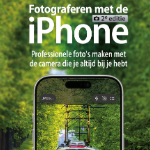
But first I need to delve into some theory. Eagerly, I read the latest books on the subject, such as Scott Kelby's “Photographing with the iPhone” and Jeroen Jazet's “Smartphone Photography”. I watch YouTube videos and browse through Photofacts Academy.
On Photofacts Academy, you can also watch Jeroen's video course of the same name. In it, Jeroen explains clearly and pleasantly how to get the best out of your phone camera. As a result, I am learning much more about using the phone camera in a short time.
The limitations of a phone camera are also covered. The limitations when it comes to digital zooming and taking photos in low light are probably the most important.
This is emphasised once again in the short video in which Nando gives 7 tips for improving your smartphone photography (link at the bottom of this article).
But as long as you do not print your images at billboard size, the image quality is perfectly adequate. In addition, manufacturers solve the limitations as much as possible through software, not least with the help of AI, artificial intelligence. Night mode and portrait mode are examples of this.
Night mode is brilliant! As soon as you take a photo at dusk or in (semi-)darkness, a half moon appears at the bottom of the screen. When you press the shutter button, you then have to hold the device as still as possible for a few seconds.
And then something magical happens. The camera takes several images one after another and combines them into one sharp and clear photo! Give it a try.
To get the best quality from your phone camera, it may be advisable to shoot in RAW (DNG), rather than JPEG (with some exceptions). However, you always need to edit and sharpen these images considerably afterwards.
If your camera does not have the option to shoot in RAW, but you would like it to, you can install the external app "Adobe Lightroom Camera". You do need to create an account, but otherwise it is highly recommended!
This app is free and also offers the same editing tools as the Lightroom web version (Lr). On your phone, you can edit a photo fairly quickly and easily share it on social media. No more hassle with loading photos onto your computer and exporting them again. For both RAW and JPEG files.
One advantage of the Lightroom app, in my opinion, is the use of masks. Select the sky to make it just a little darker or more striking, or make the subject a little lighter. Once you get the hang of it, you quickly become attached to it and it is a phenomenal tool.
After photographing for a few weeks with both my Samsung phone and my Canon system camera, I notice that there is no insurmountable difference in quality between the images.
Landscapes and action shots in particular are much easier to take with the phone. You can choose more creative viewpoints, and making a video is easy too.
In PRO mode, it gives you full control over the photo, including ISO, exposure, shutter speed and manual focusing. I am very pleased with the (recent) additions such as the histogram and focus peaking.
By practising, experimenting and trying things out a lot, I am getting to know the camera functions better and better. I have now set up PRO mode so that I can activate it straight away.
Fortunately, PRO mode also has an automatic mode in which you only need to adjust the exposure compensation. Ideal. Especially when speed is essential, I no longer have to think about shutter speed or ISO, while still getting a well-exposed photo.
My opinion of the smartphone's capabilities as a camera has changed for the better. It can do more than I had previously thought. Using certain apps, such as Photoshop Mix, it is even possible to make and blend multiple exposures. The free Snapseed app also offers plenty of functionality for editing.
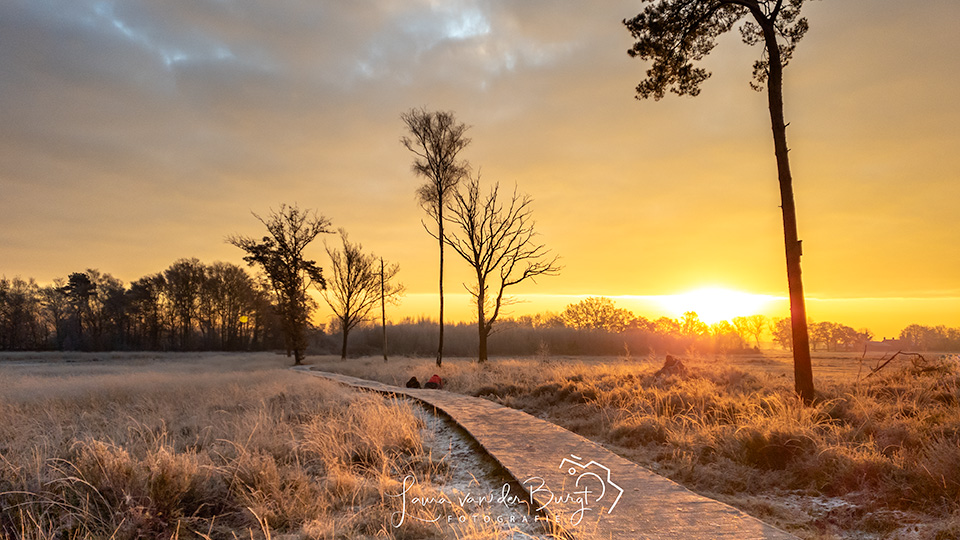
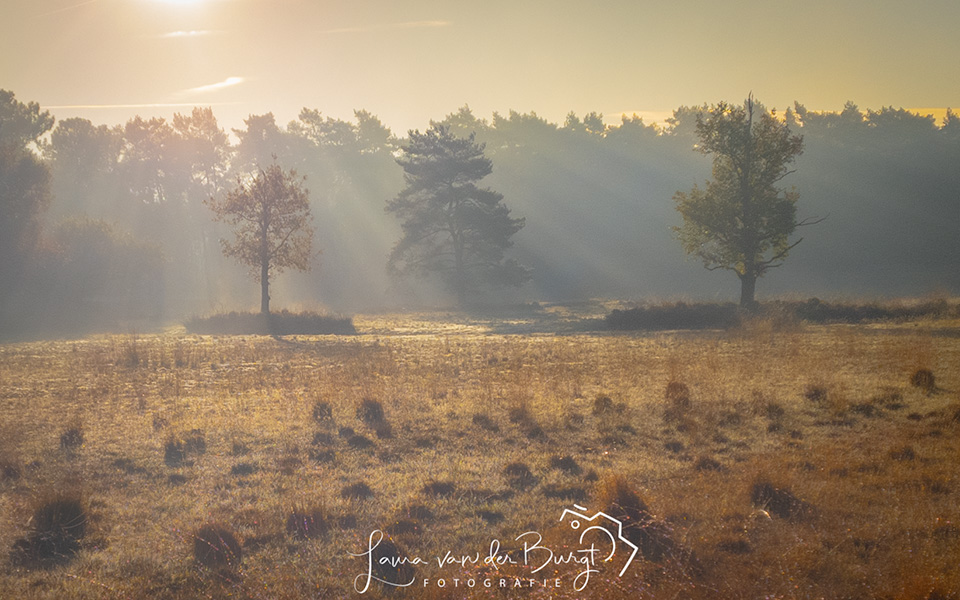
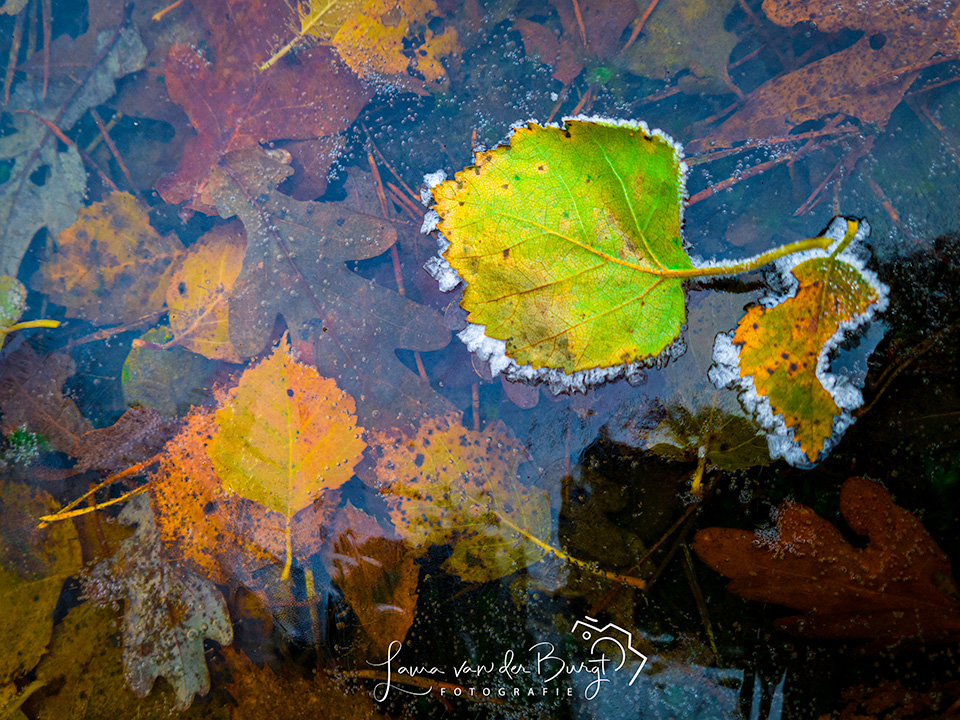
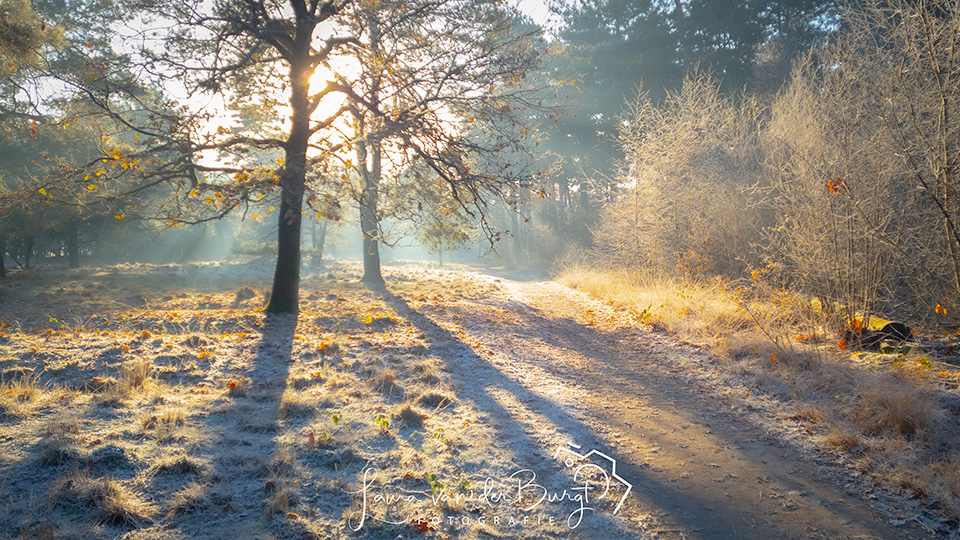
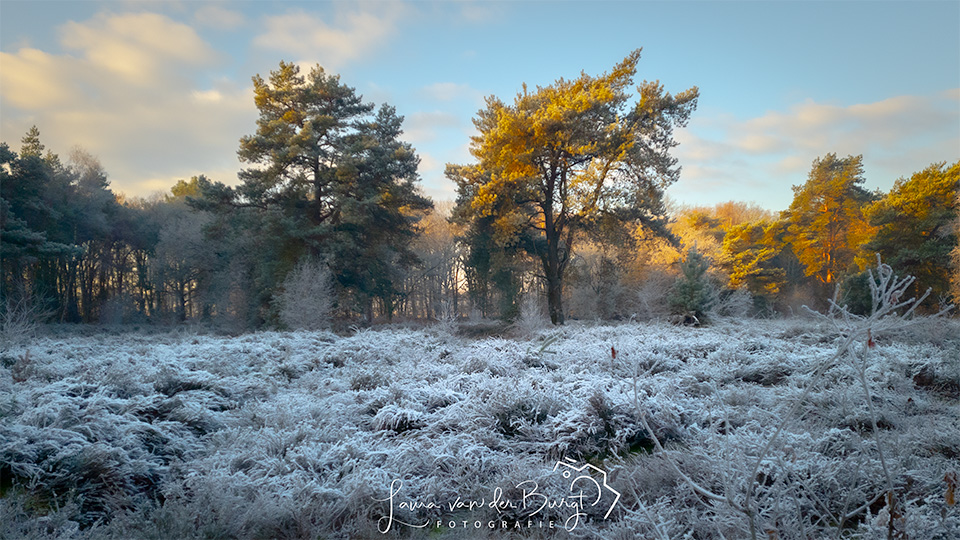
All photos were taken with a Samsung S20+ and edited in Adobe Lightroom Web. I am a fan of the presets suggested by Adobe, which immediately give you an idea of what is possible with editing.
Still, I remain loyal to my system camera because I enjoy working with vintage and zoom lenses. Best of both worlds 
During my search, I came across the following links for extra inspiration and knowledge about smartphone photography. Worth a look.
- Nando's 7 Tips for photographing with a smartphone
- Smartphone Photography Nick Franken
- Lisa Carney @ Adobe Max 2022
- Amelie Satzger YouTube Creative Mobile Photography
About the author
Natuurfotografie is voor Laura een samensmelting van het ongelooflijk genieten van in de natuur zijn en haar passie voor fotografie. Het fotograferen met een minimale scherptediepte is favoriet en ook trekt ze er vaak met de lensbaby op uit.
You might also like
-
 Choosing between a camera and a smartphone
by Nando Harmsen
-
 Review: Sony Xperia 5 III smartphone for photography
by Nando Harmsen
-
 Smartphone photography and travel
by Nando Harmsen
-
 Review: Sony Xperia 1 IV smartphone for photography
by Nando Harmsen
63 comments
-
 Arjan wrote on Tuesday 10 January 2023 at 10:49 | reply
Hi Laura,
Translated from Dutch.
Interesting article!
What exactly do you mean by 'But as long as your images aren't printed at billboard size, the image quality is perfectly adequate.' ?
Are you referring to the number of pixels? or the lack thereof?
For comparison: My Nikon DSLR has 24Mpx and my iPhone 14 Pro has 48Mpx -

 Laura van der Burgt
wrote on Wednesday 11 January 2023 at 20:08
| reply
Laura van der Burgt
wrote on Wednesday 11 January 2023 at 20:08
| reply
Hello André,
Translated from Dutch.
To be honest, I haven't printed any smartphone photos yet to assess the image quality on paper. I shot the photos shown here in RAW. These are approximately 24 MB and have enough pixels to be printed in A3/A4 format. What I wonder is whether, because the pixels are packed so closely together on a very small sensor, this benefits the print quality. -
 Donald wrote on Tuesday 10 January 2023 at 11:09 | reply
When it comes to taking photos with my smartphone, I am very clear: I simply REFUSE to take photos with a smartphone. I only take photos with a DSLR or with my current mirrorless camera.
Translated from Dutch.
Those smartphones come with a ridiculously small sensor onto which as many pixels as possible are crammed. Those pixels are then so small and so close together that you lose detail. Besides, those little lenses are nothing to write home about either, and the photos have to be digitally enhanced by software to make them presentable.
As far as I am concerned, a smartphone does not need to have a camera, just as a mirrorless camera does not need to have the ability to record video. That's what good video cameras are for. As far as I am concerned, a CAMERA only needs to take PHOTOS and nothing more. A smartphone should be able to make calls, access the internet, use social media, use GPS and use various useful apps. Nothing more. -
 Melina wrote on Tuesday 10 January 2023 at 11:13 | reply
Beautiful photos. I just don't understand what is fun about photographing with a smartphone.. To me, it remains a phone, a flat thing with a screen (which probably also gives distracting notifications in between) and not a 'real' camera that you can hold properly, with all kinds of physical (rotary) buttons, with a beautiful lens on it. That is and will remain a very important part of the whole experience of photographing for me.
Translated from Dutch. -
 Andre wrote on Tuesday 10 January 2023 at 11:22 | reply
Nice for static photography and vacation snapshots, hopeless story with sports/wildlife or BIF
Translated from Dutch. -
Laura van der Burgt
wrote on Wednesday 11 January 2023 at 20:26
| reply
Hello André,
Translated from Dutch.
Unfortunately, everything has its limitations. Even my expensive mirrorless camera is too slow for sports photos. -
 Patrick van Zundert wrote on Tuesday 10 January 2023 at 11:44 | reply
The moment you start editing in Lightroom, you see all the limitations of a smartphone. Making skies look better is almost impossible due to the compression applied by the smartphone. Nice contrast and depth in the colors, without having the HDR function turned on? Difficult. Taking good sunset photos? Virtually impossible (compared to my camera). I sometimes use the smartphone, but am confronted with its limitations time and time again.
Translated from Dutch. -
Laura van der Burgt
wrote on Wednesday 11 January 2023 at 20:14
| reply
Hello Patrick, isn't it the case that the compression is applied specifically to .jpg? I shoot the photos in RAW and these are quite large files. In Lr Mobile I select the sky and/or subject to edit it. Either in Lr on my phone or Lr on my computer. Works perfectly imo.
Translated from Dutch. -
 Rob wrote on Tuesday 10 January 2023 at 12:25 | reply
In my opinion, the answer to the question whether a smartphone can replace a mirrorless camera is YES and NO. There are bad and very good mirrorless cameras and smartphones. A good smartphone camera can be better than a bad mirrorless camera. A good mirrorless camera is better than a bad smartphone camera. But generally speaking, in every respect, a good mirrorless camera with good lenses on it is of course always much better compared to a smartphone camera! When is it acceptable to start using a smartphone camera or precisely not! I can't imagine, for example, being allowed to make a high-quality wedding reportage with a smartphone camera, that won't be a good reportage anyway! Too bad the gist of this story lacks some depth regarding when or when not it is sensible to use a smartphone camera.
Translated from Dutch. -
Laura van der Burgt
wrote on Wednesday 11 January 2023 at 20:18
| reply
Hello Rob,
Translated from Dutch.
You're absolutely right and some nuance is in order. I think I would use both for a wedding reportage, smartphone and camera. -
 guest wrote on Tuesday 10 January 2023 at 12:26 | reply
Hi Laura,
Translated from Dutch.
Thanks for the info & tips in advance, quite interesting!
What beautiful photos... Out of curiosity: in which region were these taken? (I'd quite like to go cycling & photographing there!) Could it happen to be somewhere in the Netherlands? -
Laura van der Burgt
wrote on Wednesday 11 January 2023 at 20:22
| reply
You're welcome!
Translated from Dutch.
The photos were taken in West Brabant. Well worth cycling and photographing there. But that actually applies to the whole of the Netherlands -
 Gert-Jan wrote on Tuesday 10 January 2023 at 12:39 | reply
Lately, I have been using my smartphone as a supplement to my mirrorless camera.
Translated from Dutch.
This of course depends on the situation, but this time I was walking around with a large zoom lens (100-400 crop 2) on my mirrorless camera for details such as birds and animals, and then I took the "landscape photos" with my smartphone.
The advantage was that I had my mirrorless camera constantly ready to react quickly and didn't have to change lenses countless times -
Laura van der Burgt
wrote on Wednesday 11 January 2023 at 20:23
| reply
Hello Gert-Jan,
Translated from Dutch.
Yes exactly, that way works very well for me too! -
 remco wrote on Tuesday 10 January 2023 at 12:40 | reply
Translated from Dutch. I read a lot of reactions from photographers who think this goes a bridge too far. I too recently bought a lens that costs 3x as much as my smartphone. What people do forget is what it is all about: taking a beautiful picture.
And modern phones are very good at that. Manual settings are also possible, allowing you to experiment with e.g. longer shutter speeds and flash....
Recently, a client delivered HDR photos to me from his iphone13, shot handheld. Beautiful dynamic range, perfectly sharp, for which I have to use a tripod and do a lot of post-processing to achieve the same effect with my 5D-III.
This did make me adjust my opinion somewhat, that the era of blurry pixels from your flip phone is really over, and you can take very acceptable pictures with your phone... -
 PixelDude Raoul
wrote on Tuesday 10 January 2023 at 14:24
| reply
PixelDude Raoul
wrote on Tuesday 10 January 2023 at 14:24
| reply
@ Remco and Rob
Translated from Dutch.
Compare it to racing and just driving a car.
If you want to race, then you have to go to Zolder and get into a race car.
With your car, like any other non-professional racer, you ‘drive’ on the streets.
Expected conclusion: with your car you won't be able to hold a candle to an F1 at Zolder.
Same applies to a smartphone versus a camera.
To drive an F1, you need to have quite a lot more knowledge and skill than an ordinary driving licence for a car. -
Laura van der Burgt
wrote on Wednesday 11 January 2023 at 20:35
| reply
Hello Remco,
Translated from Dutch.
I agree with you and have had a similar experience. -
 danny wrote on Tuesday 10 January 2023 at 12:44 | reply
I partly agree with this article. I also take a lot of photos with my phone. But one thing remains with my phone, a Samsung s20fe, I can't hold it with one hand and take a picture, then that thing is guaranteed to end up on the ground and certainly in landscape mode. On the other hand, I can operate my heavy Nikon D500 with a battery grip underneath and a 24/120mm lens on it with one hand without the whole thing falling to the ground. In addition, there is also a very clear difference in speed between that phone and camera.
Translated from Dutch. -
Laura van der Burgt
wrote on Wednesday 11 January 2023 at 20:38
| reply
I always hold the smartphone with both hands or place it on a tripod and, if necessary, use a remote control.
Translated from Dutch. -
 rob wrote on Tuesday 10 January 2023 at 12:45 | reply
completely agree!!!!!!!!!!!!
Translated from Dutch. -
 Piet Alberts wrote on Tuesday 10 January 2023 at 12:51 | reply
I agree with what Donald writes, although I do see that you can do a lot with the top smartphones that you always have with you. You simply miss your prism viewfinder in bright daylight. You don't hear anything anymore about the much-praised way a camera sits in your hand. Putting photos on the computer so you can edit them is simply awkward with an iPhone. How do you take a group photo that you want to be in yourself?
Translated from Dutch. -
Laura van der Burgt
wrote on Wednesday 11 January 2023 at 20:41
| reply
Hello Piet,
Translated from Dutch.
I place the smartphone on a tripod and use a remote control. Works fine. -
PixelDude Raoul
wrote on Tuesday 10 January 2023 at 13:53
| reply
In my opinion and judgment, using a smartphone to take photos and using a (system) camera are different.
Translated from Dutch.
If you want to take a beautiful photo as a professional or hobbyist, use a camera.
Use a smartphone that you usually have with you anyway for ‘personal’ travel memories, family outings or gatherings, or … to at least still have a photo of a (fantastic) coincidence when you don’t have your camera with you.
However, don’t try to convince anyone that a smartphone today can produce images of the same or even remotely comparable quality as a camera, that’s a bridge too far.
How things will evolve in the future is anyone’s guess. With that, I want to emphasize that the images from a smartphone in the near or distant future may well match the quality of a camera. -
PixelDude Raoul
wrote on Tuesday 10 January 2023 at 14:06
| reply
One more little bonus.
Translated from Dutch.
I would like to summarize it as follows:
A professional can do nothing other than use a camera.
The true hobbyist can't do without a camera either.
The majority of people who don't belong to these two categories ... use your smartphone. -
Donald wrote on Tuesday 10 January 2023 at 14:49 | reply
I said that I refuse to take photos with my smartphone. Literally speaking, that is also true. But....... I still use my smartphone to take photos; I use my smartphone namely as a remote control for my system camera to take my photos that way. 😃😉
Translated from Dutch. -
PixelDude Raoul
wrote on Tuesday 10 January 2023 at 14:55
| reply
@ Donald
Translated from Dutch.
I have that option via my smartphone too ... and have tried it successfully once. But be honest, do you use it regularly or even ever? I don't. 8-) -
Arjan wrote on Tuesday 10 January 2023 at 15:22 | reply
@Piet Alberts, what exactly is difficult about connecting your iPhone to your computer with the USB cable? Open Windows Explorer and just copy away...
Translated from Dutch.
And how do you take a group photo with a DSLR then? -
Donald wrote on Tuesday 10 January 2023 at 15:27 | reply
@Raoul. Yes I do use that option. Not overly often, but especially in winter when I photograph garden birds. I then put my camera outside on a tripod aimed at the feeding place and I go sit inside and use the smartphone to operate the camera. It doesn't always work well, but when it does work well, I still get a few cool photos
Translated from Dutch. -
 Hans Slagter wrote on Wednesday 11 January 2023 at 09:42 | reply
What about the (c) rights to the photo. When sharing on social media, it is not always clear who owns the rights.
Translated from Dutch. -
Donald wrote on Wednesday 11 January 2023 at 11:22 | reply
@Hans Slagter, although it has nothing to do with the subject (smartphone or system camera), I can tell you that when you have taken a photo yourself, you always retain the rights unless you voluntarily waive them. As for the rights when you publish something on social media ( facebook, Instagram, WhatsApp), Meta (the parent company of, among others, the aforementioned social networks) is very clear. Look at their terms and conditions where it concerns the content that you publish there. Meta, for example, claims the ownership rights to what you publish and can do whatever they please with it ( up to a certain point ). All social networks have a number of terms and conditions for what you publish with them. For more info I refer you to these social networks and do some searching on the internet as well, because there is enough to be found there if you search for subjects such as : 'copyright' or 'authors' rights'. Good luck.
Translated from Dutch. -
 Heuschen wrote on Wednesday 11 January 2023 at 12:48 | reply
I almost never use my smartphone to take photos, only in emergencies.
Translated from Dutch.
Such ugly images! On a small screen one would say wow but no, I stick to my system camera. -
 Hans wrote on Wednesday 11 January 2023 at 15:44 | reply
Why is a digital phone called a smartphone and a digital camera not a smartcamera?
Translated from Dutch.
It can do much more than I understand! -
Andre wrote on Wednesday 11 January 2023 at 16:04 | reply
All those explanations mentioned here…….as said..! great for static photography and snapshots. But hopeless for sports wildlife or birds in flight or detailed macro. Also pretty cool, by the way, that the author joins in the discussion.
Translated from Dutch. -
 Evert wrote on Wednesday 11 January 2023 at 20:38 | reply
In general I remain loyal to my DSLR and mirrorless camera, but now that I can't use these properly due to shoulder surgery, the phone is fun for the time being.
Translated from Dutch.
I take a photo but can't see whether it's in JPG or RAW after I installed the Adobe Lightroom Camera, and I see that I first have to look up the photo via the gallery and then the background is removed by default. Strange, because you should be able to adjust that easily, right? what am I doing wrong then? I use the Samsung S20 -
Laura van der Burgt
wrote on Thursday 12 January 2023 at 14:07
| reply
Hello Evert,
Translated from Dutch.
In the Lr camera you can choose DNG or JPG.
It’s very strange that the background is removed automatically. Did you perhaps install a plugin that does this automatically? Otherwise I have no explanation for it. -
Laura van der Burgt
wrote on Wednesday 11 January 2023 at 21:02
| reply
Thank you for all your responses and opinions about photographing with the smartphone camera.
Translated from Dutch.
Something that got me thinking and convinced me was a paragraph from the book Photographing with an iPhone by Scott Kelby, who writes: "Your intention, how you think about your smartphone and the way you use it to tell your story, has a major influence on the kind of photos you take with it. If you see it as a 'second camera' or simply as an alternative to your 'real camera' that you don't have with you, then you will almost certainly take second-rate photos. But if you photograph with the right intention and treat your smartphone as a serious camera, then you will take photos that can rival the results of a 'real' camera. In this case, it's not about the technology, but about yourself. Your intention makes the difference....." -
René wrote on Wednesday 11 January 2023 at 21:59 | reply
Somewhere, I am afraid that the smartphone will win out over the more expensive cameras.
Translated from Dutch.
If you own a fortune in lenses, the mobile phone can pretty much take all the lenses along at once.
Not to mention that it is becoming increasingly difficult for a photographer to carry out his work.
Everyone is pretty much a potential competitor.
The newspaper and press are a good example of that.
-
 Philip Braem wrote on Thursday 12 January 2023 at 03:51 | reply
I would say: try it first, then respond. As a professional photographer, I am amazed by the quality of those little things. My full-frame camera is having a hard time keeping up. DSLRs are passé by now too.
Translated from Dutch. -
Andre wrote on Thursday 12 January 2023 at 10:22 | reply
Hi Laura, that's not entirely true. Even people with an entry-level camera like a Nikon D3200 can take this kind of photo, your camera is of less importance, your glass, on the other hand, is not. But you know that yourself too
Translated from Dutch.
-
Donald wrote on Thursday 12 January 2023 at 11:24 | reply
It seems quite useful to me to have an independent laboratory conduct a comparative study into the quality of the photos from a smartphone, a DSLR and a mirrorless camera, all with the same number of MP's.
Translated from Dutch.
I fear that such a study is virtually impossible because of the different types of image sensors and software, even if the number of MP's is the same. You would be comparing apples and oranges, even though they are both fruit. -
guest wrote on Thursday 12 January 2023 at 13:54 | reply
Hello Patrick van Zundert
Translated from Dutch.
Unfortunately, your link to your website doesn't work: https://ww.patrickopreis.nl. Just make a small change -
guest wrote on Thursday 12 January 2023 at 14:03 | reply
Hello Evert,
Translated from Dutch.
In the Lr camera, you can choose DNG or JPG.
It’s very strange that the background is automatically removed. Have you perhaps installed a plugin that does this automatically? Otherwise, I have no explanation for it. -
Arjan wrote on Thursday 12 January 2023 at 22:50 | reply
@Heuschen, Then it's time for a new phone!
Translated from Dutch.
Don't get me wrong, I also photograph with a DSLR. But less and less, because the quality of the photos from my iPhone 14 Pro is really very good. And no, I don't do sports photography and I don't print billboard size. -
 Jos Geusens wrote on Friday 13 January 2023 at 12:21 | reply
A smartphone doesn't give me the feeling of taking photographs. In my mind they remain snapshots and that is reflected in the result.
Translated from Dutch.
As far as I know, no smartphone has an aperture. That's one less creative aspect.
You always use the same lens. Another dampener on creativity and the way of photographing. Because a different lens requires a different approach.
You are obliged to use the screen. That can be particularly difficult in bright light. Moreover, focusing is a disaster when things need to happen quickly(er). Although my cameras have live view, I only use it when it is easier (very low viewpoint, very critical focusing on celestial bodies...)
I wonder why you think a RAW photo needs to be sharpened heavily. Even if we use a lens with less resolving power, sharpening will not produce the desired result.
I admit that many of my photos receive a (very slight) sharpening if they are printed large, but never to the point where it is even slightly visible. In DxO Photo Lab (which stands head and shoulders above others for beautiful results), an algorithm is used that is based on the lens aberrations and thus produces an optimal result. Often it is the spherical aberration that disappears, without any artificial sharpening being applied. And that is more than enough. -
Laura van der Burgt
wrote on Sunday 15 January 2023 at 19:29
| reply
Dear Jos,
Translated from Dutch.
The heavy sharpening applies specifically to the RAW images from my smartphone camera, if they are to achieve the same sharpness as the JPEGs. For that reason, I now only shoot RAW with the Lightroom camera, which does not have this problem. -
Jos wrote on Friday 13 January 2023 at 12:27 | reply
The enormous depth of field and the use of a screen for both evaluating and focusing, as well as the lack of an aperture, do not allow me to achieve the same result with a smartphone.
Translated from Dutch.
That is not to say that someone who knows about photography cannot create gems with it. It does limit the kinds of photos you can take, though. -
 smartzine
wrote on Friday 13 January 2023 at 12:29
| reply
smartzine
wrote on Friday 13 January 2023 at 12:29
| reply
I often compare the looking down on ‘the smartphone as a camera’ by photographers who think very highly of themselves to serious classical music enthusiasts looking down on André Rieu’s shows. Those concerts introduce people who have never attended a classical concert to this genre of music. Even if it is not your taste in music, you cannot deny that people get an incredible amount of enjoyment from it. The same applies to smartphone photography. Why would you want to curb the enthusiasm of people discovering photography through a smartphone by saying that a smartphone is unsuitable as a camera? I still see that happening far too often. Of course, a smartphone has limitations. Indeed, you should not want to use one to shoot weddings or sports photos, but isn’t photography primarily about learning to look? And besides: it is in limitation that the master reveals himself. I have already seen many a photographer change their tune at the sight of a photo from a newer type of smartphone. I made that turn myself too. I have photographed with DSLRs and expensive Mamiya cameras, but now the smartphone is my only camera.
Translated from Dutch. -
Laura van der Burgt
wrote on Sunday 15 January 2023 at 19:41
| reply
Smartzine, nice to read about your experiences and visit your site! My experience is that people become more enthusiastic about photography when they learn to use their smartphone better, and especially appreciate learning to look at things differently.
Translated from Dutch. -
Donald wrote on Friday 13 January 2023 at 14:48 | reply
@smartzine: To put smartphone photography on the same level as André Rieu concerts really goes too far for me. You are doing smartphone photography an injustice by doing that. What André Rieu does is throw an uptempo sauce over a masterpiece, with which you teach no one to love classical music as it should be played.
Translated from Dutch.
Smartphone photography does not aim to throw sauces around to ruin a photo. That is a big difference from André Rieu.
I establish that the quality of photos coming from smartphones is getting better and better. You do have to buy a smartphone from the more expensive price range, and then you end up paying about as much as for a mid-range DSLR or a system camera. The results from a smartphone still cannot match the results from a DSLR or system camera. This has to do, among other things, with the difference in hardware and the extent to which a photo has to be digitally manipulated to obtain a comparable result.
That is why I advocate a purely technical study in which exactly the same photo of the same subject is taken on a tripod with a smartphone, a DSLR and a system camera, all with the same number of pixels, aperture, shutter speed, focal length and ISO values. Everything in RAW and all post-processed in the same way with the same software. View all the photos on the same screen at 100%. Finally, make a print of all of them at, for example, A4 size.
I expect that the photos will not look the same and will differ from each other in quality.
In any case, I do not want to claim that I am a good photographer, but not a hair on my head (there are fewer and fewer of them) is thinking of using a smartphone to take photos now. -
PixelDude Raoul
wrote on Friday 13 January 2023 at 15:19
| reply
Now I hopefully won't step on the toes of the Photofacts staff ... but yes, every opinion counts.
Translated from Dutch.
The more I read all this, the more this article seems to me to be a legitimate and apparently successful method of promoting the smartphone photography course, nothing more.
As I said before, I believe in the various applications of smartphones and cameras, snapshots and more serious photography. And smartphone photography can give a layperson the idea to also start doing better photography with a camera. -
 Elja Trum
wrote on Friday 13 January 2023 at 15:37
| reply
Elja Trum
wrote on Friday 13 January 2023 at 15:37
| reply
Laura wrote this article without any input from us. Afterwards, I made the title a bit more provocative and added the reference to our course (I always try to refer to relevant courses in articles).
Translated from Dutch.
So the article itself was not written with promoting the course in mind. Although Laura also briefly mentions the course in her article. -
Jos wrote on Friday 13 January 2023 at 16:30 | reply
It is not possible to get different types of cameras on the same level and that cannot be the intention either. Every device has its pros and cons. The (extensive) knowledge of these makes it possible to get everything out of it. For someone who wants to show an image in their head to someone else, much more is needed than comparing technical specifications.
Translated from Dutch.
That you cannot do with your smartphone what you can do with an 8x10" bellows camera, also applies the other way around. -
Donald wrote on Friday 13 January 2023 at 17:35 | reply
@Jos, to compare a result, a photo, it nevertheless seems sensible to me to equalize a few things. The number of megapixels, for example, so that each photo has an equal number of pixels. Then comparing the different photos in terms of color, sharpness, details, etc. is nevertheless possible.
Translated from Dutch.
Of course, every device is different. But what matters to me is being able to compare whether the differences in the photos are so great that you can form an opinion on whether or not a photo is technically acceptable. -
Melina wrote on Friday 13 January 2023 at 19:20 | reply
Hmm.. I don't see myself as a very good photographer. For me, it's the experience that I love (very mindful and relaxing and nature..). But I do see people around me putting their DSLR/mirrorless cameras aside for a smartphone camera. And so a family member bought the latest Samsung because of the camera and is completely thrilled with it, because just look at that quality.
Translated from Dutch.
What I see are extremely vivid unnatural colors, extremely sharp photos and (when used) extreme blur. I think that's such a shame, this way people don't know/learn what aperture is, but they do know 'blurry background' or maybe 'bokeh'. And then it gets applied so extremely.. what a shame. And so I think that a whole lot of people don't really learn anything about photography this way.. -
 Donald Vrooman wrote on Saturday 14 January 2023 at 12:07 | reply
I think this is a very nice story, or actually a familiar consideration.
Translated from Dutch.
I have been photographing since I was 12, I am 80 now.
Every year I consider whether it isn't time to switch to taking photographs with a phone.
I still have a somewhat older Apple, but it actually takes remarkably good photos that can even be printed well on A4.
The photos taken with the phone are often, without editing, so good that I can barely replicate that with photos from my Fujifilm X-T3.
Yet I still haven't switched.
Why not? I still have the idea that photography is more than playing around with the phone.
Strange really, because the phone actually has everything that makes photography attractive at my age.
Quickly produces good images by using Ai, is easy to take along and actually much cheaper too.
Yet I didn't take that step this year either and even bought a new telephoto lens.
Still, I am convinced that the moment will come when I switch,
Donald. -
Laura van der Burgt
wrote on Sunday 15 January 2023 at 19:45
| reply
Dear Donald, I sincerely hope that, when I am 80, I will still be photographing just as enthusiastically as you are! And I would buy that new smartphone
Translated from Dutch.. -
 martinphili wrote on Saturday 14 January 2023 at 12:16
| reply
martinphili wrote on Saturday 14 January 2023 at 12:16
| reply
For everyone who is still desperately clinging to their "real" camera: in a few years, you too will mostly have a smartphone in your hands.
Translated from Dutch.
When the first digital camera appeared on the scene, we had the same discussion and "real" photographers claimed that "real photos" could really only come from a "real" analogue camera.
And where are we now?
Guys, technology moves on. You might as well get used to it now.
And yes, of course. For some types of photography, a camera with a lens is still much better and will probably remain so for the time being. At the circuit, I can't get anywhere with my phone either. But that doesn't mean you should disqualify the smartphone outright. -
Melina wrote on Saturday 14 January 2023 at 13:22 | reply
To each their own, but as long as a smartphone camera is a shapeless flat thing, I am not going to 'photograph' with it. If no 'real' cameras were to be released anymore, and my camera has died, then no more photography for me..
Translated from Dutch.
I really don't like anything about it with that smartphone.. -
Jos wrote on Saturday 14 January 2023 at 13:58 | reply
@melina
Translated from Dutch.
If you can live without taking photographs, it probably isn't deep enough. In my case it actually doesn't matter, but with a camera with interchangeable lenses, I can feel at home. Moreover, I can't imagine that a system so deeply embedded in artistic photography could ever disappear. It is also an evolved system, which finds its origins in plate cameras. -
Jos wrote on Saturday 14 January 2023 at 14:18 | reply
I understand perfectly well what you mean, but for me photography is an experience that first takes place within myself. Then I start wondering whether it can be done with the available equipment. So I realised that photographing fast planes wasn't possible with my Nikon 28-300 and bought myself the Sigma 150-600. And then it's good to be able to compare technical specifications before buying. In this case I was particularly positively surprised by the quality of this zoom. Especially considering the price. But even with this way of selecting, I have bought lenses that for one reason or another didn't suit me. Resolution, colour, or whether it feels good in the hand, ... there are many factors that determine whether a camera-lens combination works for me and those are rarely the comparative figures. For that reason, it may be that a smartphone is sometimes enough. The number of megapixels makes absolutely no difference, because I still use cameras from 12 to 24 and my smartphone has 16, just like my Olympus. No product photos with the smartphone, because that lens is absolutely no good for that.
Translated from Dutch.
Moreover, no jpg for me, unless as the end result. -
PixelDude wrote on Saturday 14 January 2023 at 16:32 | reply
Either you want to quickly take some photos or you want to have a tool in your hands that gives you control and allows you to fulfil your wishes. For the layperson or the less photography-savvy, the smartphone is therefore an excellent solution. Those who wish to pour their heart and soul into a photo know what they need to have in their hands.
Translated from Dutch. -
Donald Willemsen wrote on Sunday 15 January 2023 at 19:54 | reply
@Laura, which Donald?. There are 2 with the same first name. Hopefully it will be a very long time before you turn 80. Developments in photography are progressing so incredibly fast that by then you'll be photographing with your glasses
Translated from Dutch. -
Laura van der Burgt
wrote on Tuesday 17 January 2023 at 16:12
| reply
@Donald Willemsen - I thought I had replied inline to Donald Vrooman. Indeed, developments are moving very fast! Who knows what we'll be photographing with in 5 or 10 years.....
Translated from Dutch.
Have your say
Please note: Articles older than a week can only be commented on by signed-in visitors.Would you still like to comment? sign in or create a free account.
Become a better photographer every week
A practical photography tip in your inbox every week.
39,078 photography enthusiasts already receive the tips! More about the weekly mail. Or keep up to date via  Facebook.

Elja Trum
Photofacts; everything to do with photography!
Would you like to take better photos and keep up with what is happening in photography? Photofacts publishes articles that teach you something about photography — from a product announcement to a practical shooting tip or a look at a website. Photofacts covers photography every day and is a hobby project of Elja Trum's that got out of hand. The articles are written by a team of volunteer authors. If you would enjoy writing one or more articles for Photofacts, do get in touch.More about PhotofactsPhotofacts is made possible in part by
