

3 Tips for Successful Sports Photography (and get my book free)
Tuesday 28 June 2022, 09:54 by Nico Delmeire | 4,339 views | 7 commentsThis article was translated from Dutch with the help of AI. Read the original.
I’m over the moon! My book about sports photography is at the printer! Within a month, it could be landing on your doormat too. In this article, here are three tips from my new book to help you get started with sports photography.
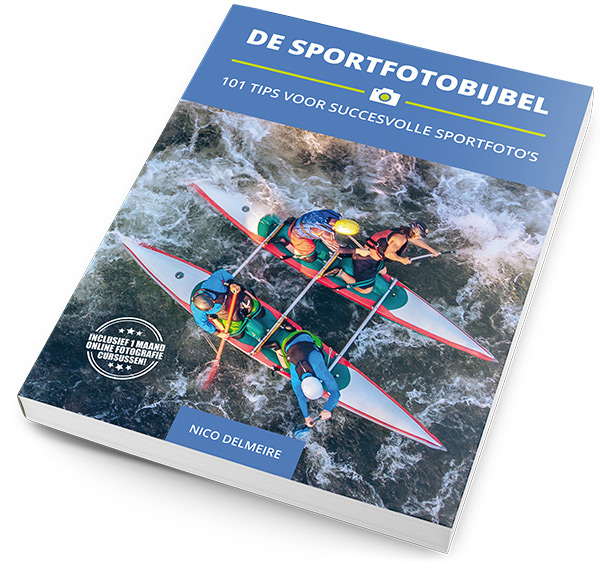
This month, so just three days left, there’s a great offer at Photofacts Academy. You’ll now receive my book The Sports Photo Bible, with 101 tips for Successful Sports Photography, completely free with a membership to their online courses.
They’re also giving you 50 euros off the regular membership price. A great deal, then, and you can immediately watch my video course about Sports Photography too.
» Photofacts Academy + The Sports Photo Bible (75 euro saving)
1. Shoot in JPEG
Sports photography moves fast and your camera needs to keep up. The quality of JPEGs from your camera is more than good enough for a good result. There’s no need to shoot in RAW.
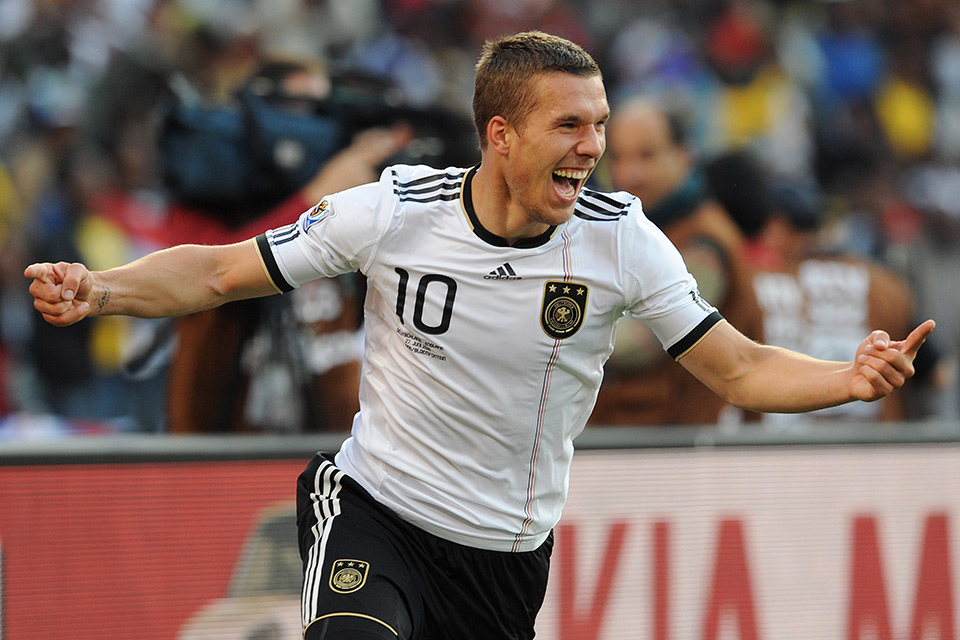
Saving a RAW image takes longer than saving a JPEG. You also always need to edit RAW images afterwards, even if it’s only to convert them. Selecting the best images therefore always takes longer in RAW than in JPEG.
There’s nothing to change in the action, so Photoshop isn’t needed for it. Speed is the most important thing, which is why you should always shoot in JPEG.
Say your camera is still processing your last burst of photos when someone scores. You need to have that goal. You never know exactly when the next interesting moment will happen. Your camera needs to be ready.
2. Always start with the shutter speed
Your shutter speed is the basis of sports photography. You should always set it manually. For example, by using shutter priority or working fully manually. Your aperture is of secondary importance.
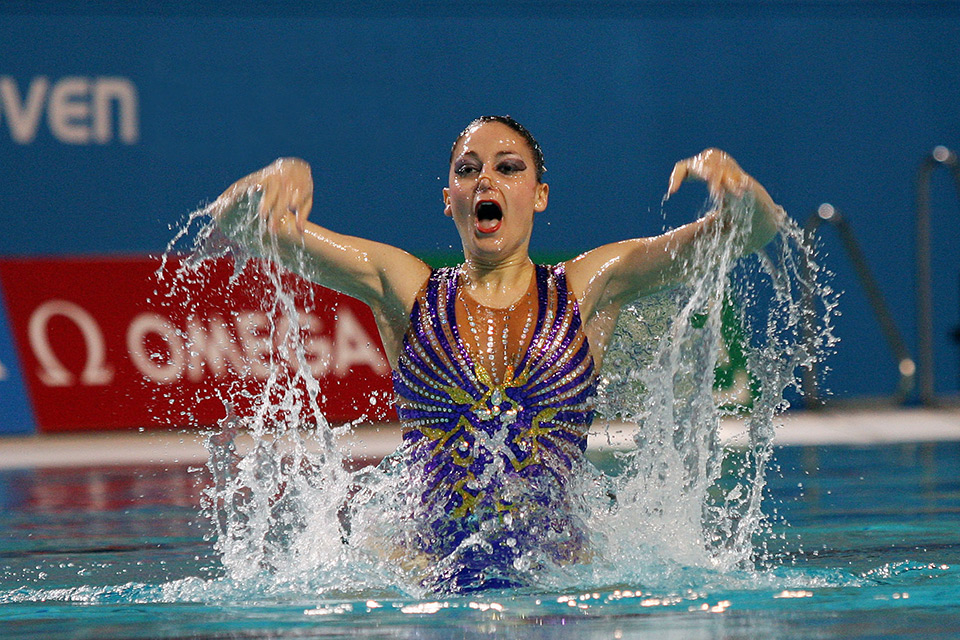
The shutter speed must always be fast enough to freeze your image. Everything happens quickly, so a fast shutter speed is essential.
The fastest possible shutter speed varies from one sport to another. In Formula 1, it’s obviously faster than in cyclocross, for example. You need to try out what’s possible at that moment and under those conditions.
3. Multiple frames per second
Always set your camera to take multiple frames per second. An action or emotion often lasts longer than that split second. By setting your camera to take multiple frames per second, you capture everything, or at least more of it.
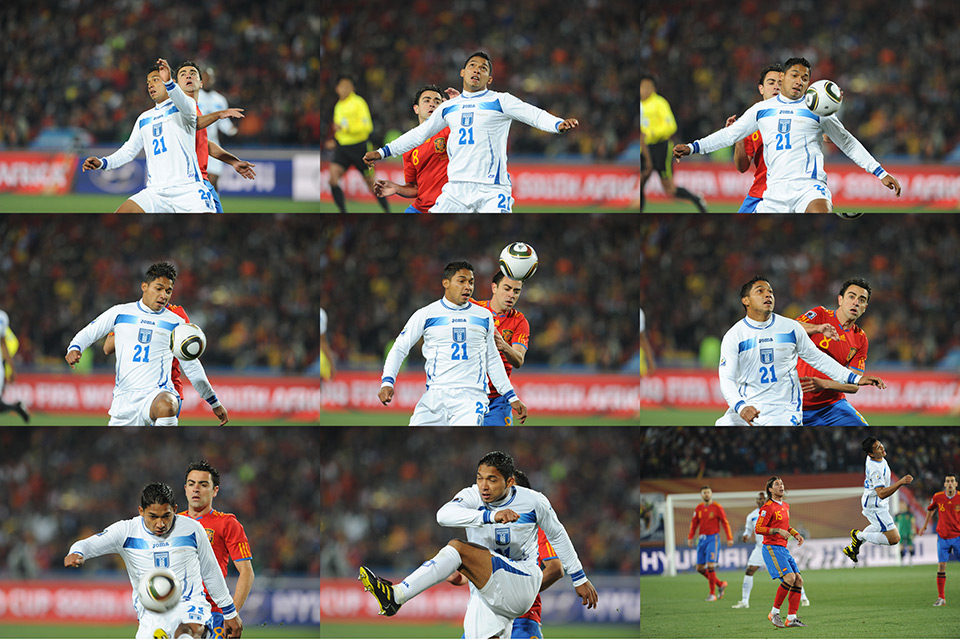
A single action can produce several great images, and you never know in advance what will happen during an action. A foul in which someone flies through the air is also great to see. The cause and the effect.
An emotion can go from a shout to a clenched fist. And you want both. Everything happens in a fraction of a second.
The Sports Photo Bible free this month with a Photofacts Academy membership
Do you want to be the first to have The Sports Photo Bible at home? You’ll receive it completely free, it will cost 25 euros in shops, with a membership to Photofacts Academy, our online courses for photographers.
We’re also giving you a great discount on the courses themselves. Instead of 159 euros, you’ll pay just 109 euros this week. That’s a total saving of no less than 75 euros!
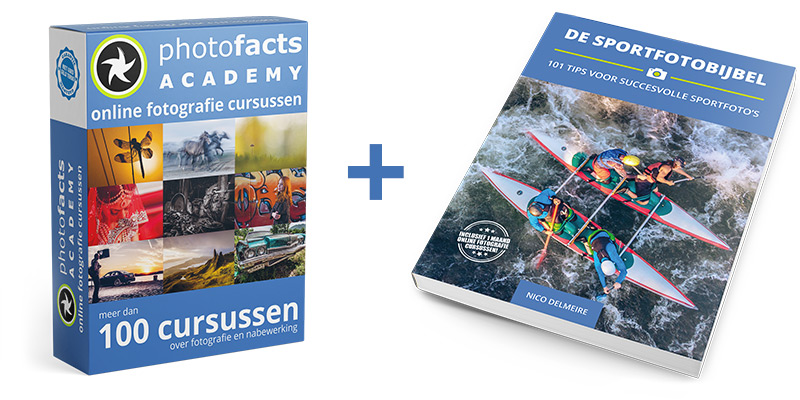
Alongside the book, which will probably drop through your letterbox at the end of July, you’ll get a year’s access to more than 100 different courses on photography, creativity and editing your photos.
My Sports Photography course is included too, of course. 
Are you already a member of Photofacts Academy? Then you’ll also receive the book completely free when you renew your membership. This is also possible if your membership hasn’t expired yet, we’ll simply add 12 months to your end date.
» Photofacts Academy + The Sports Photo Bible (75 euro saving)
You might also like
-
 Sports photography tip: Creating an abstract sports photo
by Nico Delmeire
-
 Sports photography tip: Think like an athlete
by Nico Delmeire
-
 Sports photography tip: Focusing while panning
by Nico Delmeire
-
 Review: Blurb photo books via Lightroom Classic
by Nando Harmsen
-
 Sports photography tips from Jean Fruth
by Elja Trum

7 comments
-
 Wim Hendriks wrote on Tuesday 28 June 2022 at 10:40 | reply
Judging by your beautiful images, only a few amateurs will be able to attend a European Championship, World Championship and the Olympics, and then only in the stands. I would rather see amateur images and applied photos at such an event. For the professional, no value at all.
Translated from Dutch. -

 Elja Trum
wrote on Tuesday 28 June 2022 at 10:46
| reply
Elja Trum
wrote on Tuesday 28 June 2022 at 10:46
| reply
@Wim; I understand your point, but in itself it of course doesn't matter whether you apply these tips at amateur competitions or at major events. The tips Nico mentions here are indeed aimed at the beginner sports photographer.
Translated from Dutch. -
 Jax wrote on Tuesday 28 June 2022 at 10:51 | reply
Interesting, the choice of shutter speed. I take photos at soccer matches and always choose a fixed aperture setting (lens at F2.8 because then you have a nice blurry background).
Translated from Dutch. -
 Evert wrote on Tuesday 28 June 2022 at 12:31 | reply
Beautiful photos and I would really like to try it more often. I have done it often enough with cycling, but in my opinion football is more difficult given the speed when an action starts. For an amateur like me, your basic rules are sufficient for now and I will definitely use them sometime at amateur clubs, where you will surely be allowed to photograph once if you ask nicely and say that you are learning it, like me. Thank you
Translated from Dutch. -
 Maarten wrote on Tuesday 28 June 2022 at 12:54 | reply
Of course, you can also set both your shutter speed and aperture manually and then set the ISO to automatic, if your camera offers that option. Do try it out, of course, because in bright light you still run the risk of overexposure
Translated from Dutch. -
 Ineke wrote on Tuesday 28 June 2022 at 16:44 | reply
I photograph sports photos on DF priority 2.8 and in RAW. Good tip to photograph sports in JPEG and in shutter speed priority. I’ll definitely test it sometime.
Translated from Dutch. -
 guest wrote on Wednesday 29 June 2022 at 08:11 | reply
I always set my camera fully manually. The shutter speed is the starting point (the shorter the better) and always within the possibilities. I also set ISO manually. This way I always have full control over the image myself.
Translated from Dutch.
@wim; I also understand your approach. The tips apply to all variants, both at amateur and professional level. For the best results I think like a pro, this was my approach here. Simply because as an amateur photographer you can achieve the most fun, beautiful and best results that way.
Have your say
Please note: Articles older than a week can only be commented on by signed-in visitors.Would you still like to comment? sign in or create a free account.
Become a better photographer every week
A practical photography tip in your inbox every week.
39,079 photography enthusiasts already receive the tips! More about the weekly mail. Or keep up to date via  Facebook.

Elja Trum
Photofacts; everything to do with photography!
Would you like to take better photos and keep up with what is happening in photography? Photofacts publishes articles that teach you something about photography — from a product announcement to a practical shooting tip or a look at a website. Photofacts covers photography every day and is a hobby project of Elja Trum's that got out of hand. The articles are written by a team of volunteer authors. If you would enjoy writing one or more articles for Photofacts, do get in touch.More about PhotofactsPhotofacts is made possible in part by
