

Tips for creative backgrounds
Monday 24 October 2016, 22:11 by Frank Doorhof | 15,659 views | 21 commentsThis article was translated from Dutch with the help of AI. Read the original.
When I started photographing models, I used a lot of paper roll backgrounds, and I don't think I'm the only one. Anyway, the more I photographed, the more bored I became with these backgrounds. I started using the studio walls more and more, and I became enthusiastic about working on location.

Of course, it isn't possible to work at great locations all the time, and let's be honest... the background does need to have something interesting about it, think of the texture or the roughness, for example. Walls can be great to use if the walls are great.
Walls in the studio
At one point I thought, if I can't always go to locations, why not bring the locations to our studio? If you look at my portfolio, you can see that I use models in much of my work and often place them directly in front of a wall.
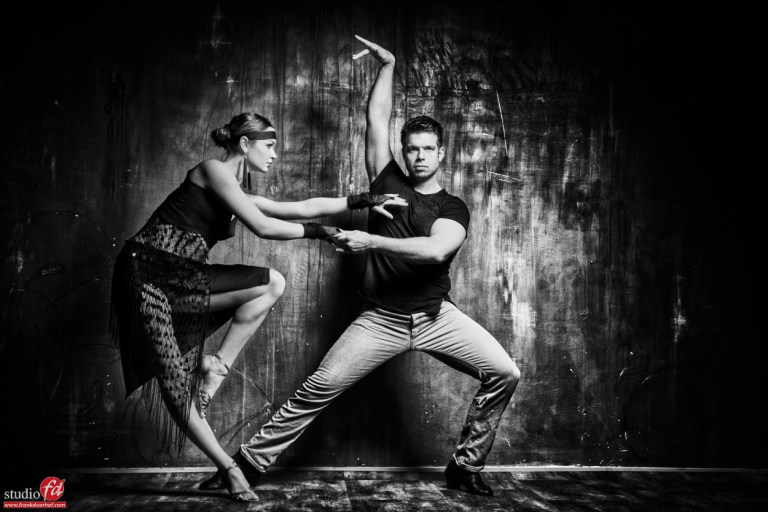
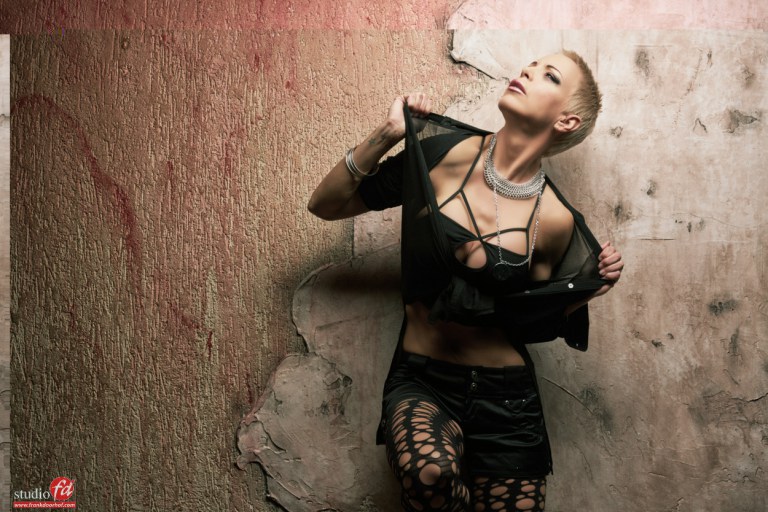
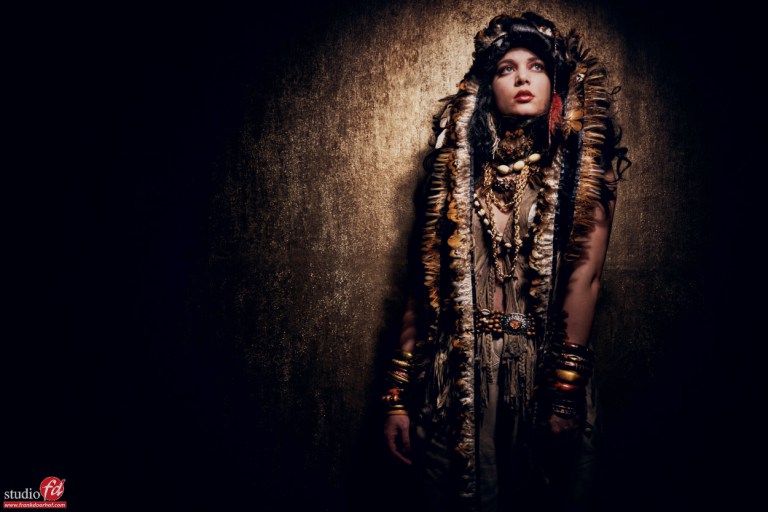
In our studio, we have painted all our walls in different themes and looks, ranging from fine and dark to completely damaged, with wallpaper hanging down and broken plaster.
Sometimes people comment on these walls and ask me when I'm going to do them up. Until I tell them that it's a set, then they all respond with: 'Oh, that's great, I need that too'.
It's nice to hear, because then I know that the workshop I give has already been of value to that person. The biggest problem photographers struggle with is seeing possibilities.
So if you see an old, damaged wall, don't see it as something that needs to be removed or repaired, but see it as a great photographic opportunity.
Our studio is quite large and there isn't a single wall in the studio that we can't use as a background. I'm always astonished when I visit large studios and see that all the walls are one colour. I just don't understand it.
Of course, a space for photographing cars, for example, does need to be one colour, but there are many more walls, spaces and so on that you can use. They are often not used. To me, the studio is a workshop, not an office. (Okay, even my office has different themes. I don't think I like flat, bare walls.)
Wallpaper
What do you do if you can't make your walls like ours? Actually, all walls can be covered with wallpaper, can't they? So look for interesting wallpaper, like in this photo, for example:

If it's not possible for you to do this to the walls, make 'small' panels, 2.50 by 2.50 metres, and cover them with wallpaper.
Painting
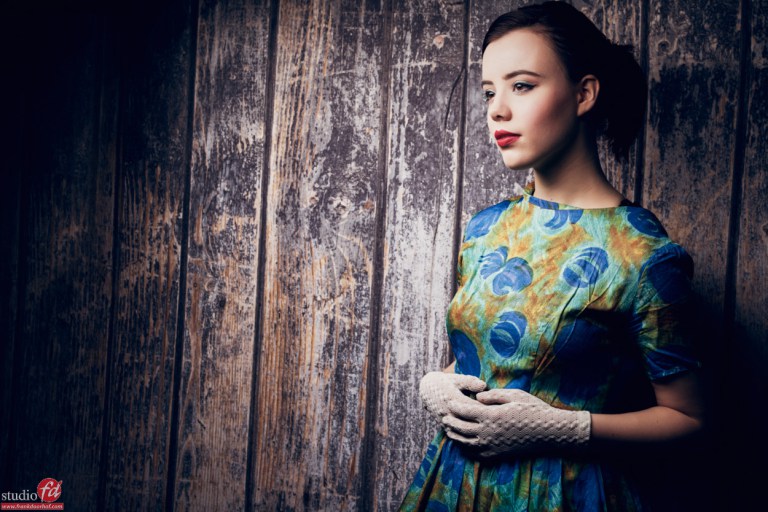
You can paint the panels too. In this case, one of our interns did a fantastic job, and as you can see, the photo immediately has more character. The image in the foreground is already great, but the walls really finish it off, and they also help improve the styling.
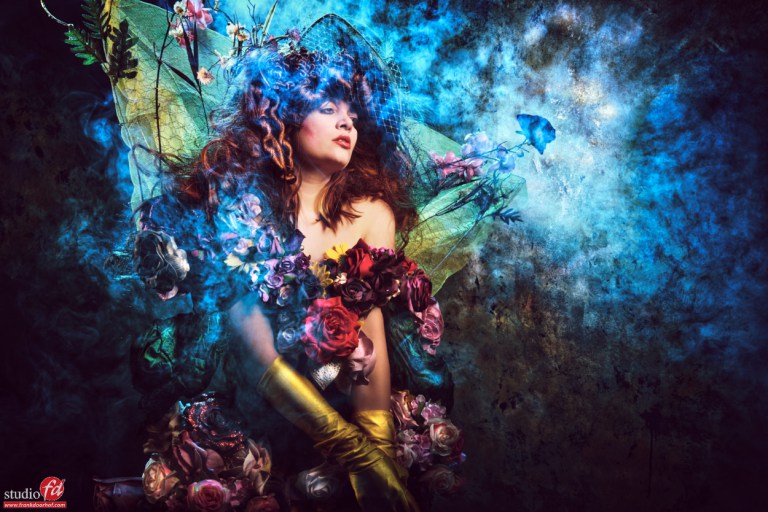
Indeed, all the texture you can see is in the wall. We used a little smoke to finish the set off a bit more, but the wall combined with Nadine's fantastic styling completes the photo.
But much more can be done.
See below for some examples of our walls in action.
If you don't have the options for panels or wallpaper...
Then there is always another option. Lastolite is a brand you probably know, right?
They have some great, foldable backgrounds with fantastic prints, and the funny thing is... They take up no space at all and look fantastic in a photoshoot. I always take a few with me when I teach on location, just in case.
Here are some examples of Lastolite.

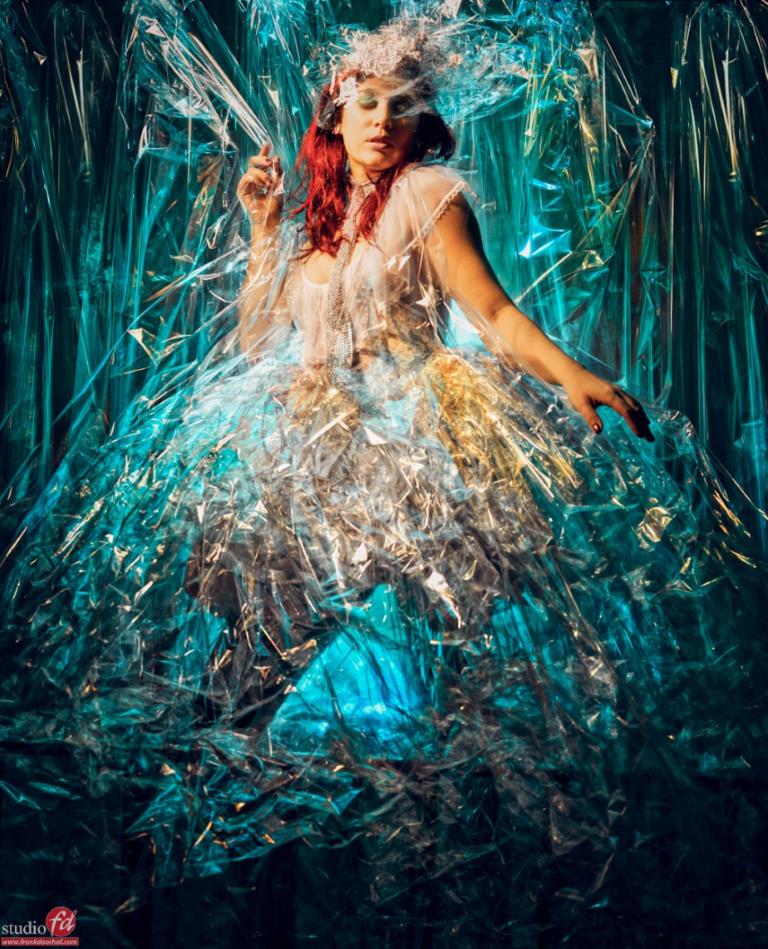
If you think this is far too expensive for me, (man, it's hard to convince you), you can always make a background system and attach plastic to it to play around with.
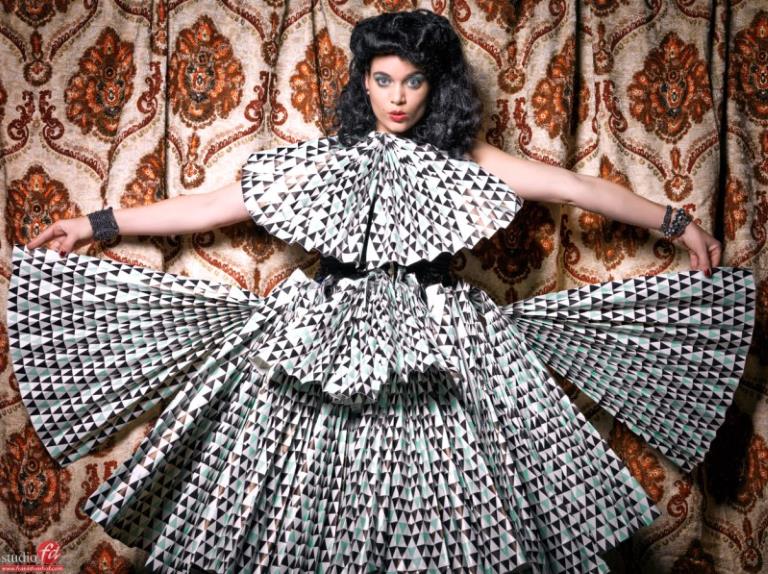
Or use curtains.
So the next time you work with paper roll backgrounds, try to be a bit more creative and use the walls, spaces in your studio and so on.
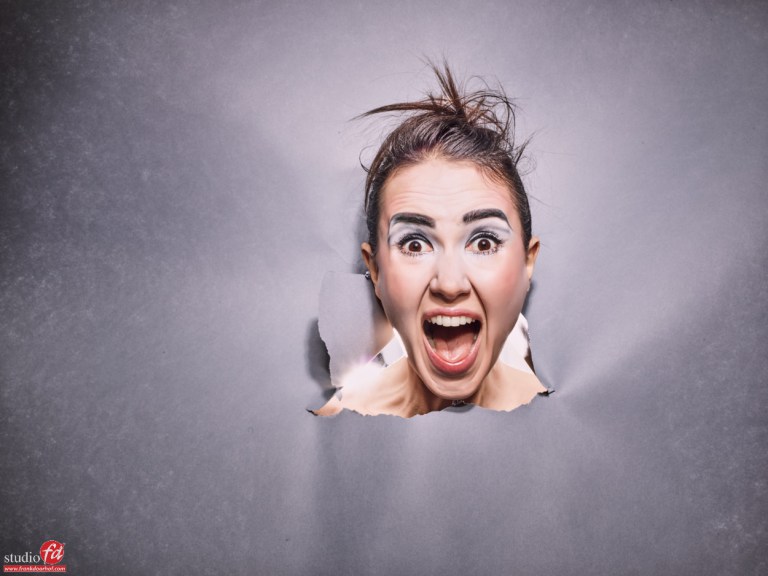
But of course, you can also use paper roll backgrounds in a different way.
About the author
Frank Doorhof blogt dagelijks in het Engels op zijn website en geeft wekelijks workshops model fotografie in zijn studio in Emmeloord, maar ook op locatie in binnen en buitenland. Van beginners tot gevorderde, iedereen kan bij Frank terecht. Ook voor specifieke 1 op 1 workshops, of maatwerk voor groepen.
You might also like
-
 The flexibility of a grey studio background
by Elja Trum
-
 Recreating a Room in Your Studio
by Elja Trum
-
 5 Tips for Variety in the (Home) Studio
by Elja Trum
-
 A tripod in the studio?
by Leen Koper
-
 A creative studio setup for just one dollar
by Michelle Peeters
-
 Photographing dogs in the studio
by An Smedts
21 comments
-

 ErikvanRosmalen
wrote on Tuesday 25 October 2016 at 08:21
| reply
Nice story Frank and I wholeheartedly agree. And this one belongs on a tile: 'The biggest problem photographers struggle with is seeing possibilities.' Less is more, but try explaining that
Translated from Dutch.
-
 Winm Hendriks wrote on Tuesday 25 October 2016 at 10:52 | reply
Hi Erik,Less is more,in photography isn't entirely true.
Translated from Dutch.
There are books and ideas written full of that, but what it is about is looking at where the possibilities are. -
 guest wrote on Tuesday 25 October 2016 at 11:30 | reply
Stunning.
Translated from Dutch. -
 Marlies wrote on Tuesday 25 October 2016 at 14:50 | reply
Nice creative ideas!
Translated from Dutch. -
ErikvanRosmalen
wrote on Tuesday 25 October 2016 at 16:26
| reply
@Wim - I am referring here to the context of the story. That many photographers who search for locations search far too grandly and pompously and therefore overlook the small things.
Translated from Dutch. -
 Rudy Langstraat wrote on Tuesday 25 October 2016 at 17:27 | reply
Good and clear article. Great result, this combination of photo and background. Wouldn't know myself how to find an affordable studio and work out ideas like this either....
Translated from Dutch. -
 martinphili wrote on Tuesday 25 October 2016 at 19:40
| reply
And I would actually use a white background, and then Photoshop an image into it. Then your possibilities are even greater
Translated from Dutch. -
 Pie Pierre wrote on Wednesday 26 October 2016 at 00:22 | reply
Now that's something you can actually use...
Translated from Dutch. -
 Donald Willemsen
wrote on Wednesday 26 October 2016 at 08:31
| reply
I think it’s an interesting article with cool ideas. When I then look at Lastolite backgrounds, I’m shocked by the prices, which range between €250 and €300. That is affordable for the professional photographer, but absolutely not for the amateur with a small budget.
Translated from Dutch.
And that’s immediately where the problem lies. A professional photographer writes a cool article with examples of how he works, but his suggestions are often so expensive that they are unaffordable for an amateur with a small budget. You could say that there are also cheap solutions or even solutions that cost nothing. Okay, that’s true, but as a professional photographer, try putting yourself in the shoes of an amateur who has to make ends meet on an income just above the poverty line.
It would be nice if articles were also published with cool ideas that cost nothing.
Frank, just like you, my preference lies with model photography. Preferably, I work in a studio or indoor location where you have the most influence over the light yourself. The examples you show in the article really appeal to me. 'I’d like to be able to work like that too,' I think then. But yeah, that small wallet, huh? -
 Frank Doorhof wrote on Wednesday 26 October 2016 at 09:10 | reply
Donnie
Translated from Dutch.
If you read carefully, you'll see that I only use a Lastolite backdrop once. The rest is wallpaper, plastic, painted walls etc. Plastic costs you less than 5.00 and wallpaper is cheap too. -
guest wrote on Wednesday 26 October 2016 at 09:43 | reply
I'm curious how often Frank uses and replaces a background. Because:
Translated from Dutch.
Whether it's worth the investment also naturally depends on how often you use the Lastolite background. Using the same background over and over might also get boring. If you already have access to a studio or space where you can paint, wallpaper ect. the walls without any restrictions, a wallpaper hanger, painter or even an artist may well be busy wallpapering/painting for some time. What if you don't do/can't do it yourself? These people would probably also like to be paid... In short: For (enough) paid photography assignments, wonderful to do! Someone with a small budget will have to make do with a photo editing program and a background photo... -
Frank Doorhof wrote on Wednesday 26 October 2016 at 10:05 | reply
You don't have to photoshop. If you also read the other articles in this series then you'll see that beautiful backgrounds are everywhere, from a standard wall that you can turn into something beautiful to a dirty corner somewhere that's photographically awesome.
Translated from Dutch.
How often you use a background depends on your style. Some people prefer to shoot everything the same. For commercial work, 1 background in combination with paper can be ideal and for example determine the look of your studio work, which is what brings people in.
I think I give loads of ideas, from wallpaper to curtains and plastic and backgrounds. And please don't misunderstand this, but these kinds of reactions actually show how important these kinds of articles are. People simply don't think about what they can use cheaply, or they don't see it, it doesn't have to be expensive at all. Don't focus on the things you can't afford but focus on the possibilities you have and believe me, for under 10.00 you can use different backgrounds for years. -
Donald Willemsen
wrote on Wednesday 26 October 2016 at 10:58
| reply
Frank, of course there are inexpensive means you can work with. In that respect, you give enough ideas. I do have a suitable space to serve as a studio, but that alone is not enough. You also have to purchase a reasonable flash system, and those aren't cheap either. Now, it doesn't have to be a professional system costing €10-15000, but one costing a few hundred euros is also insufficient. Then you also have to incur costs for models. I'm not even talking about professional models, but amateur models also need to be compensated in some way. Even if it's only their travel expenses.
Translated from Dutch.
There is therefore more to it than just the backgrounds. The total cost needs to be considered. Especially if, as an amateur, you want to get into model photography. Portrait and model photography are among the most beautiful forms of photography, because you work with people on a product that both the model and the photographer can be proud of and derive satisfaction from. -
Frank Doorhof wrote on Wednesday 26 October 2016 at 11:00 | reply
1. You can even take beautiful photos with an incandescent bulb, fluorescent tube, iPhone flashlight, etc.
Translated from Dutch.
2. Well, you also need to get a camera, and lenses and a memory card.
You could go on like this of course
This article is written for people who photograph models and would like to do more with that. -
Donald Willemsen
wrote on Wednesday 26 October 2016 at 11:22
| reply
Aha, the article was written for a specific target audience. Not for people who would also like to start with fashion photography because they got the taste for it after a workshop. The target audience was not described in the article.
Translated from Dutch.
In the 90s I built up a lot of experience. Due to circumstances, I had to stop model photography as a hobby because I could no longer afford it. Now that digital photography has arrived and has become affordable, I would like to pick up model photography again. Hence my interest in this article. Apparently, this article is not intended for me. So I should have saved myself the trouble of reading the article and responding to it in a serious manner. Okay, then just consider me a whiner. -
 Frank Doorhof wrote on Wednesday 26 October 2016 at 12:37 | reply
Who is calling you a whiner?
Translated from Dutch.
I’m only pointing out that there are many possibilities. You can even take fantastic photos with sunlight and a nice wall.
In the studio with paper, plastic, wallpaper, curtains etc.
As for lighting, a light bulb, a flashlight etc. are also enough. If you visit my YouTube sometime and then go to Digital classroom, there are a few episodes where I work with, for example, Christmas lights.
Don’t immediately see everything as a personal attack. I’m here voluntarily and am only trying to help. -
Donald Willemsen
wrote on Wednesday 26 October 2016 at 13:11
| reply
Frank, by now I have learned to make do with what I have. I have to. My argument is mainly aimed at making professionals realise that, when they write on an accessible platform, they are also addressing, in this case, hobby photographers with a small budget. That is sometimes overlooked. By saying this, I do not mean to detract from the article above, because I have learned quite a bit from it.
Translated from Dutch. -
Frank Doorhof wrote on Wednesday 26 October 2016 at 13:58 | reply
And that's exactly why I don't understand your comment. But it must be me. I thought I gave a nice overview from cheap to somewhat more expensive.
Translated from Dutch.
Anyway. Glad you still learned something from it, let's put it that way -
A.S. wrote on Sunday 30 October 2016 at 11:35 | reply
Donnie,
Translated from Dutch.
You think way too complicated.
Frank, gives plenty of cheaper solutions in terms of backgrounds and such. A wall, for example, is practically free everywhere. Go into a city or village, and you will find really nice walls.
So this has nothing to do with whether someone is a professional or amateur photographer. -
guest wrote on Sunday 30 October 2016 at 17:20 | reply
Great article, for both the big and the small budget. I am also an amateur photographer, with a small budget, but I see beautiful backgrounds when I look around me. A wall of a farmhouse, a shed, even one from a garage. I also have 1 black paper backdrop, and behind it a wallpapered wall. With PS, that wallpapered wall can always be made darker or lighter or have its color changed so you don't have just 1 type of background. I make a lot of textures myself, by photographing plastered walls or something like that and then I lay those over the white wall when editing the photos. So no, if you look closely you see possibilities everywhere. And the costs you save by doing that you use for a new lens or something. Being creative and thinking.
Translated from Dutch. Playing with light and possibilities. Wonderful that that's already in my mind. -
 peterheins
wrote on Wednesday 8 March 2017 at 11:41
| reply
Nice ideas , I have already made several wallpaper backgrounds , been allowed to take a roll of wrapping film from my work and aluminium bubble foil, and the one with that hole in the wallpaper is nice too, I'm going to do something with that as well. I'm getting 2 models on Saturday so it will be nice to capture them both like this. And indeed you often see that a lot of emphasis is placed on the model and actually too little is done with the background. Good article and I got some more ideas again.
Translated from Dutch.
Have your say
Please note: Articles older than a week can only be commented on by signed-in visitors.Would you still like to comment? sign in or create a free account.
Become a better photographer every week
A practical photography tip in your inbox every week.
38,680 photography enthusiasts already receive the tips! More about the weekly mail. Or keep up to date via  Facebook.

Elja Trum
Photofacts; everything to do with photography!
Would you like to take better photos and keep up with what is happening in photography? Photofacts publishes articles that teach you something about photography — from a product announcement to a practical shooting tip or a look at a website. Photofacts covers photography every day and is a hobby project of Elja Trum's that got out of hand. The articles are written by a team of volunteer authors. If you would enjoy writing one or more articles for Photofacts, do get in touch.More about Photofacts Photos

Photofacts is made possible in part by
