

Choose white balance to suit your taste and create the right mood
Monday 13 May 2024, 16:32 by Nando Harmsen | 3,974 views | 9 commentsThis article was translated from Dutch with the help of AI. Read the original.
White balance allows you to get white to actually appear white in your photo. That does not guarantee the right colour temperature, though. Sometimes it produces an incorrect image that distorts reality. Sometimes you need to deliberately deviate.
You know the examples, where you can see the differences between the white balance settings. Comparisons like these are not much use. You should see this under different lighting conditions.
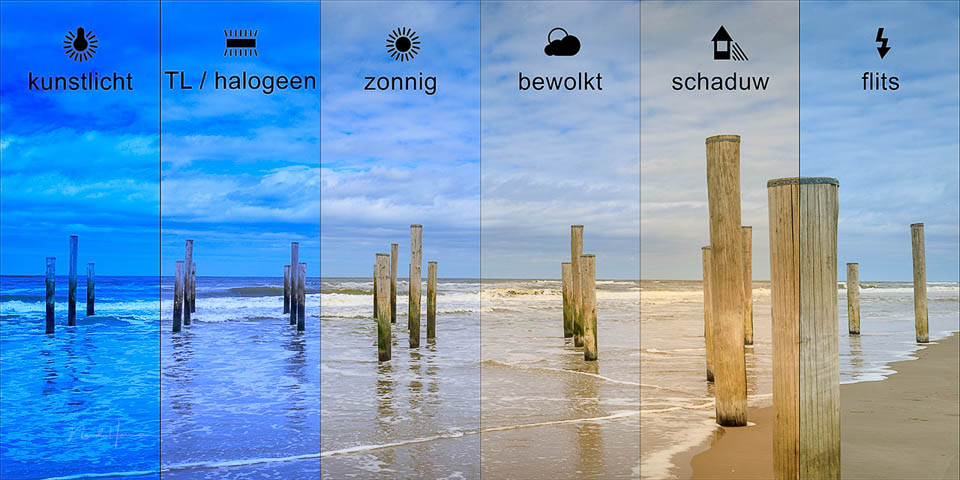
The camera's auto white balance setting (AWB) measures the colour temperature of the situation. The camera then sets the white balance automatically so that white is shown as white. The question is, does that always have to happen?
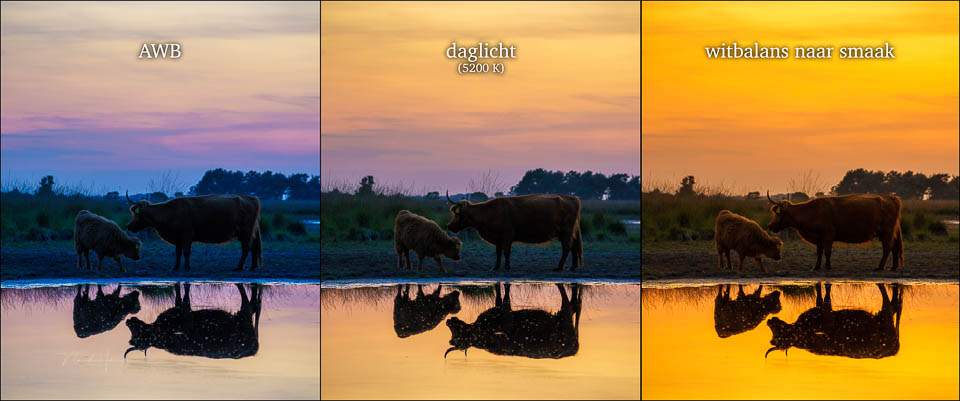
A calculated white balance setting does not take mood into account. It is a cold, impersonal calculation of the 'correct' value. That can actually destroy the mood.
It is better to choose a colour temperature yourself that properly conveys the mood of the moment. You can go to extremes if you want, as long as this does not produce an overly artificial image. The colour you choose gives the photo the look you like.
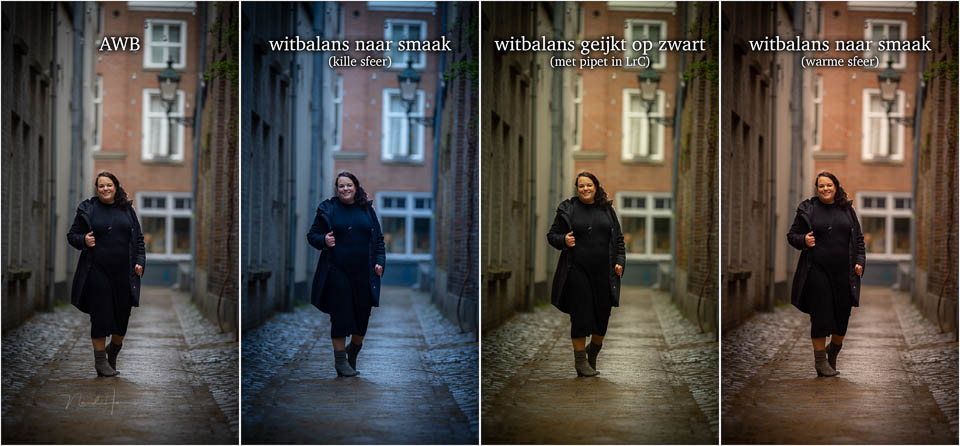
Do not be afraid to deviate from the white balance, and choose a colour temperature to suit your own taste. Sometimes the adjustment is subtle, sometimes more extreme. It is a personal choice, so stand by your choice.
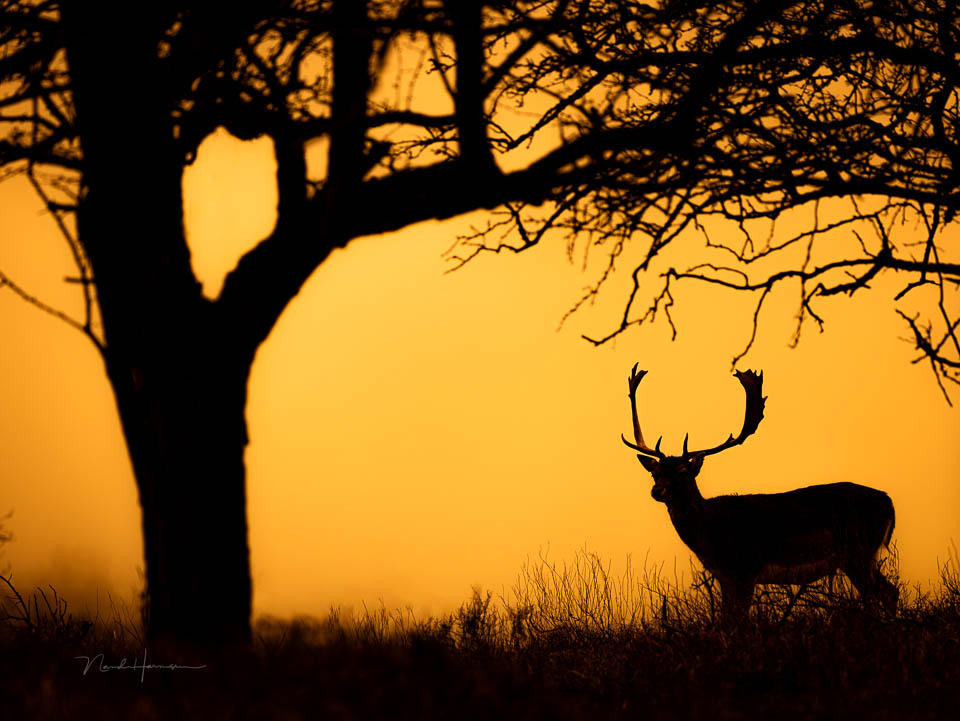
These days, many manufacturers offer an auto white balance that takes mood into account. That helps with the end result, but it remains an approximation. If you are happy with it, that is fine too.
About the author
Nando Harmsen has been photographing for more than 40 years. He specialises in wedding photography and landscape photography. Nando also gives talks, workshops, masterclasses and photo trips, and regularly reviews new and interesting equipment.
You might also like
-
 Beware the so-called perfect white balance
by Nando Harmsen
-
 Night photography tip: Choose the right white balance
by Nando Harmsen
-
 Playing with light and white balance during a portrait session
by Nando Harmsen
-
 Choose a Good Balance in Your Photo
by Nando Harmsen
-
 Using Daylight for a Natural Effect
by Anniek Snoeijs
-
 White balance and exposure in snow
by Nando Harmsen
9 comments
-
 Donald Willemsen wrote on Monday 13 May 2024 at 17:37 | reply
Nando, in this article you mainly write about deliberately setting a different white balance than AWB. I also consider atmosphere in a photo important. Yet I always leave the setting on AWB. Later in post-processing I adjust the white balance to my own taste to match the atmosphere I sensed while taking the photos.
Translated from Dutch. -

 Nando
wrote on Wednesday 15 May 2024 at 09:22
| reply
Nando
wrote on Wednesday 15 May 2024 at 09:22
| reply
For the RAW photographer, the white balance setting doesn't matter. But it is a workflow that saves me a lot of work in post-processing. A fixed value that is the same for every photo works more comfortably and quickly than a series of photos that each have a different white balance. Because that's what AWB does.
Translated from Dutch. -
 PixelDude wrote on Tuesday 14 May 2024 at 11:29 | reply
@Donald,
Translated from Dutch.
I do too. Perhaps because we both shoot in RAW. For jepg photography it can be important. -
 Roland wrote on Tuesday 14 May 2024 at 11:35 | reply
I completely agree with Donald's opinion. Shooting RAW is the way to go. Only for a series of flash shots do I use the fixed flash setting to get closer to the target in terms of settings.
Translated from Dutch. -
 Paul van Aken wrote on Tuesday 14 May 2024 at 12:25 | reply
I agree with Donald.
Translated from Dutch.
In post-processing, you can see much better what happens when you start adjusting the white balance.
The steps on the camera are fairly coarse, and choosing a numerical value yourself..... -
PixelDude wrote on Wednesday 15 May 2024 at 09:30 | reply
@ Nando,
Translated from Dutch.
I think this is more an observation from a wedding photographer who takes large series of the same subject, the wedding, rather than from nature and landscape photographers who shoot RAW.
And as Roland also wrote, only when using flash (which I do very exceptionally) will I choose the flash setting as WB.
But as a nature and landscape photographer I will probably never deviate from AWB. -
Nando
wrote on Wednesday 15 May 2024 at 09:39
| reply
I do this with landscape and nature photography too. And I do it very consciously.
Translated from Dutch.
The light changes throughout the day. Daylight, blue hour, golden hour... I want to see this characteristic light color reflected. I don't want the camera to see that color as a color cast and start correcting the white balance for it.
It makes it easier in post-processing to create a consistent series of photos from a particular time of day.
Of course, it's a personal preference. -
Donald Willemsen wrote on Wednesday 15 May 2024 at 14:25 | reply
Nando, if you want to do it perfectly, you'll need a color temperature light meter as well. That will cost you several thousand euros. So setting your camera to a particular color temperature is only approximate too.
Translated from Dutch. -
Have your say
Please note: Articles older than a week can only be commented on by signed-in visitors.Would you still like to comment? sign in or create a free account.
Become a better photographer every week
A practical photography tip in your inbox every week.
39,009 photography enthusiasts already receive the tips! More about the weekly mail. Or keep up to date via  Facebook.

Elja Trum
Photofacts; everything to do with photography!
Would you like to take better photos and keep up with what is happening in photography? Photofacts publishes articles that teach you something about photography — from a product announcement to a practical shooting tip or a look at a website. Photofacts covers photography every day and is a hobby project of Elja Trum's that got out of hand. The articles are written by a team of volunteer authors. If you would enjoy writing one or more articles for Photofacts, do get in touch.More about PhotofactsPhotofacts is made possible in part by
