

Different Metering Methods Don't Make Better Photos
Monday 23 September 2024, 17:17 by Nando Harmsen | 3,697 views | 13 commentsThis article was translated from Dutch with the help of AI. Read the original.
In the past, it was simple. You had an exposure meter and it measured the available light. Today, you have several metering methods. Which one should you use for the best results? The answer may surprise you: it doesn't matter.
You know them: matrix metering, spot metering, centre-weighted average metering and partial metering. There may be other names, but this covers the types fairly well. It is claimed that one metering method produces better results than another. Nothing could be further from the truth.
An exposure meter does nothing more than measure the amount of light and give a value at which the average brightness of the measured area corresponds to 18% reflected light. Yes, this is 50% grey.
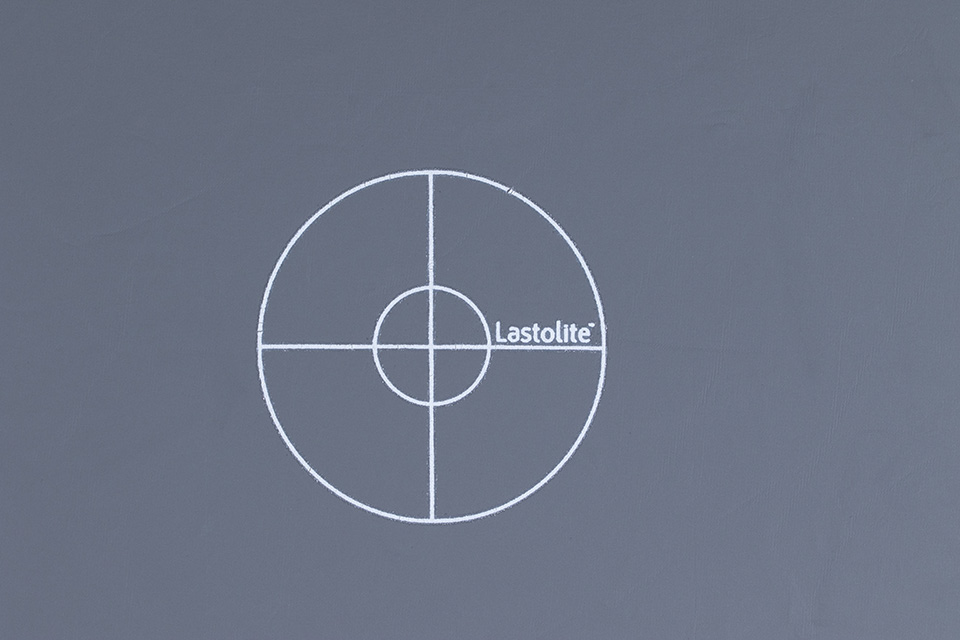
Every metering method does this, whether you use matrix metering, partial metering or spot metering, whatever they are called. A value is always given that produces 50% grey as the average brightness of the measured area.
The different metering methods therefore work in exactly the same way. The only difference is the part of the photo that is measured.
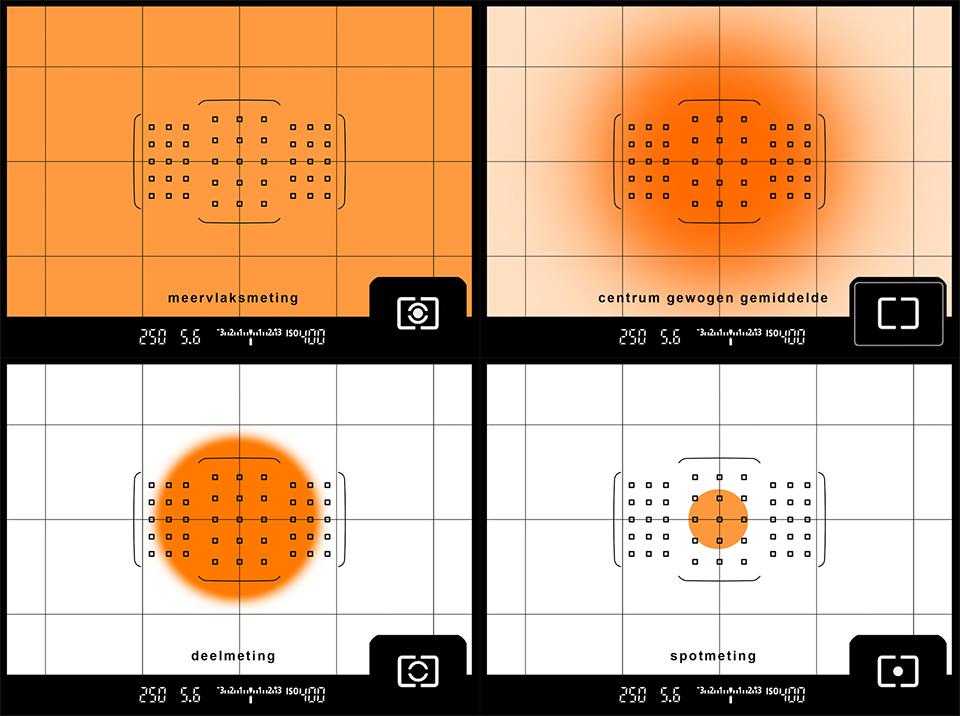
Matrix metering measures the average across the entire photo. That is 100% of the photo. Partial metering does this over just 10% or thereabouts of the photo. Spot metering measures just 6% or thereabouts of the photo.
Another metering method does not produce a better photo. It does give a different reading for the amount of available light. But that does not mean you cannot take a good photo with those other metering methods.
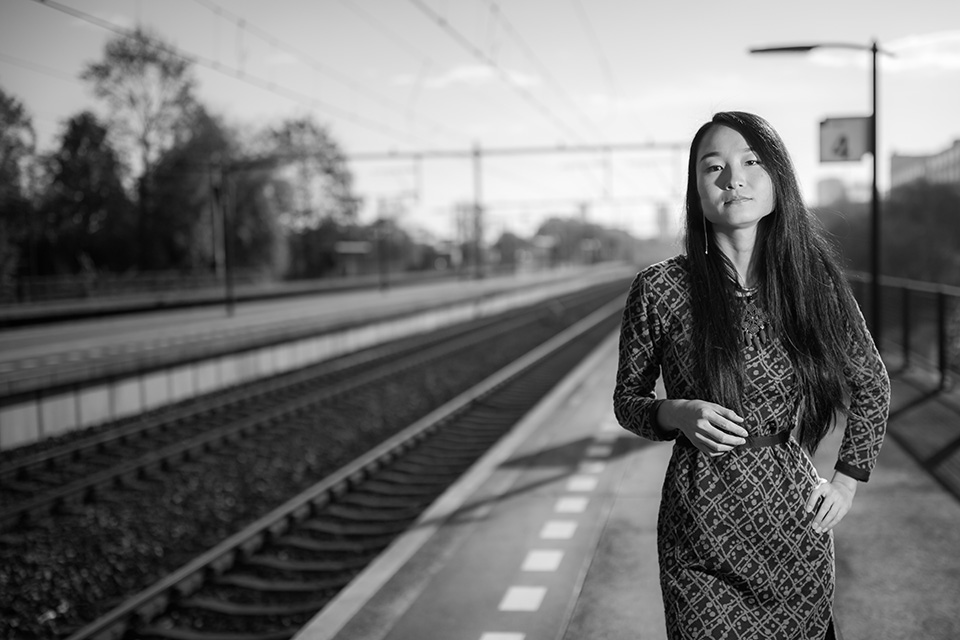
If you know what is being measured and see what the light is doing, you can anticipate. By gaining this insight, you can get the exposure right straight away. It then does not matter which metering method you use. It does not even matter whether you work in M or Av mode.
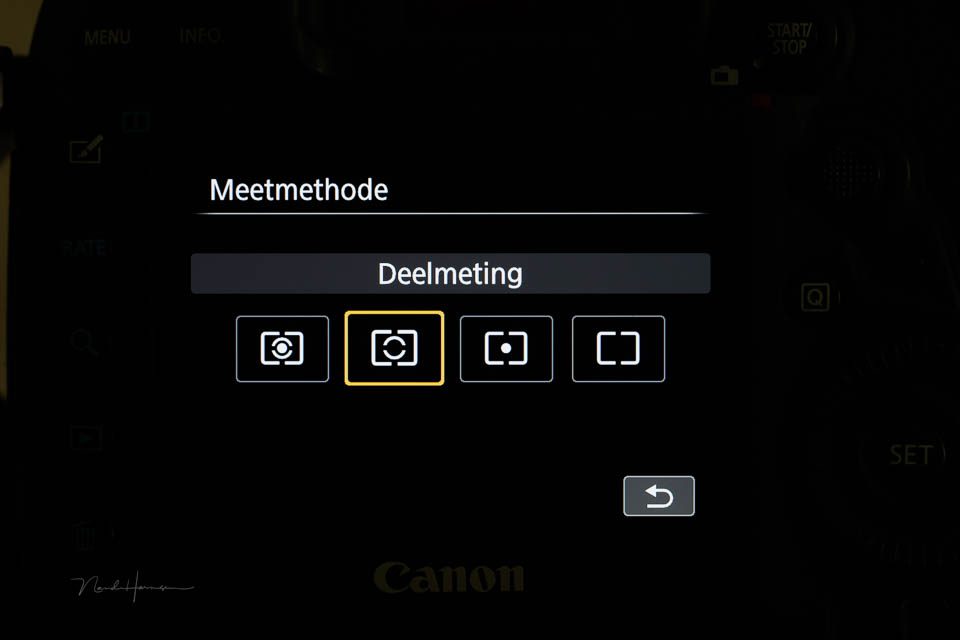
The only difference is the way you work. If you find that you achieve the desired result fastest with a particular method, use it. Someone else may achieve this with a different metering method. The end result is the same.
So remember, the metering method is not a way to get a better exposure. It is a way of working. Use the method you find most comfortable.
About the author
Nando Harmsen has been photographing for more than 40 years. He specialises in wedding photography and landscape photography. Nando also gives talks, workshops, masterclasses and photo trips, and regularly reviews new and interesting equipment.
You might also like
-
 Street photography tip: Create beautiful silhouettes with spot metering
by Michiel Heijmans
-
 Learn How the Exposure Meter Behaves
by Nando Harmsen
-
 The Light Meter, How Do You Read It?
by Frank Doorhof
-
 Flash photography tip: Consider a flash meter
by Elja Trum
-
 Control your light with an optical spot
by Elja Trum
13 comments
-
 Gina Heynze wrote on Monday 23 September 2024 at 17:27 | reply
I do find that a bit "shocking". If I photograph into the sun and I force my camera towards the subject using spot metering, that still gives a better result than when I don't do that. If I meter differently, I only get a silhouette. So I'm pretty confused now.
Translated from Dutch. -

 Nando
wrote on Monday 23 September 2024 at 22:55
| reply
Nando
wrote on Monday 23 September 2024 at 22:55
| reply
When you use spot metering, the camera sets the exposure to an average 50% gray (18% reflected light) of the part in your spot. The rest of the photo is ignored by the exposure meter.
Translated from Dutch.
If you set your metering method to measure the entire image, the result is 50% gray (18% reflection) of the entire image. That indeed produces a different value, in your case a silhouette. If the metering is not to your liking, choose exposure compensation.
When I see a dark object against a bright sky, I don't choose spot metering but set my exposure compensation to +2EV or even +3EV.
So, you can use any metering method, as long as you read the light and compensate so that your desired exposure is obtained. -
 Donald Willemsen wrote on Monday 23 September 2024 at 17:39 | reply
Correct me if I'm wrong. Whichever metering method you choose, it's always from the center of the image, even if the focus point (the part you focus on) isn't in the center. That means you have to point the center at your subject to meter, and then determine the composition.
Translated from Dutch. -
-
Donald Willemsen wrote on Monday 23 September 2024 at 23:17 | reply
Thanks for your response Nando, then I wasn't far off. By the way, I have a Canon Eos R7. This camera will correspond with your graphical representations. For example, with a lot of backlight and you want the subject to be properly exposed, you have to take the measurement with the center aimed at the subject (possibly using spot metering). Another solution is of course to use a separate light meter.
Translated from Dutch. -
 Wim Vanparijs wrote on Tuesday 24 September 2024 at 08:09 | reply
I only partly agree with that.
Translated from Dutch.
This is correct as long as you work fully manually.
If you work automatically or semi-automatically or manually with Auto ISO, you will have a big difference in exposure with a dark subject against a bright background (or bright subject against a dark background) between multi-segment metering and partial metering or spot metering on the subject.
A studio photographer who works with a separate light meter will also measure the light as close to the subject as possible.
You can indeed see what happens and anticipate this if the subject does not move too quickly.
With a bird in flight this is not so simple, and if the flight path also causes a change in the incidence of light, I still prefer to work with spot metering or partial metering. -
Nando
wrote on Tuesday 24 September 2024 at 09:45
| reply
The exposure is done in the same way: averaged over the surface that the measurement consists of. That surface is different for each measurement. If you know what the surface is, I can anticipate and expose more or less to arrive at the desired value.
Translated from Dutch.
I can photograph that flying bird from your example just as well with matrix metering. I only take the light into account and use exposure compensation. However, I will never photograph that bird with spot metering, because if that spot is even slightly off, the exposure is completely different.
It is a matter of preference which metering you use. You can use any metering, as long as you know what the camera is measuring. Then you can anticipate it. -
 Mac wrote on Tuesday 24 September 2024 at 08:45 | reply
Not entirely correct after all.
Translated from Dutch.
It does depend on which metering mode you use whether or not you get a good photo. Especially if you photograph theater etc. Because if there is a spotlight on the performers and you take an overview shot with matrix metering, your photo is guaranteed to be overexposed. -
-
 kok.f@ziggo.nl wrote on Friday 27 September 2024 at 10:49
| reply
kok.f@ziggo.nl wrote on Friday 27 September 2024 at 10:49
| reply
Nando is absolutely right. You can get different results with different settings, but that is the result of the area being measured. The metering, however, is always 18% middle gray. If you teach yourself to keep an eye on the contrasts, you are indeed much faster in practice with metering over a wide area and using the + or - compensation. You will then rarely need spot metering and especially with moving subjects you prevent yourself from being ‘off’ with your spot metering.
Translated from Dutch. -
 Arthur Wittendorp
wrote on Wednesday 9 October 2024 at 15:01
| reply
Arthur Wittendorp
wrote on Wednesday 9 October 2024 at 15:01
| reply
Dear Nando, In my opinion, the issue of different light measurements with the new generation of system cameras is no longer an issue at all. Both on the display and through the viewfinder, with these cameras you no longer see what one 'normally' sees, but in fact you already see what the photo is going to look like. If you are not satisfied with the exposure of your photo even then, you can still adjust it according to your own judgement using the exposure triangle. With the 'old' DSLR cameras, I can imagine that depending on your goal and subject, you do choose a specific metering method.
Translated from Dutch. -
Nando
wrote on Tuesday 15 October 2024 at 09:46
| reply
Nothing has changed with regard to light metering with the advent of mirrorless cameras. That screen makes no difference, apart from the fact that you can already see the result of the exposure beforehand. Just as that was already possible with the mirrorless function of DSLR cameras.
Translated from Dutch.
Use it to your advantage. -
Donald Willemsen
wrote on Wednesday 9 October 2024 at 17:28
| reply
@Arthur, seeing through the viewfinder or LCD what a photo is going to look like is a setting on a mirrorless camera that you can turn on or off. If you turn this setting off, you see the same bright image as with the DSLR. Then, imo, you can rely even better on the histogram, which you can also make visible in the viewfinder or on the LCD before you take the photo.
Translated from Dutch.
But that is not really the point. You have to tell the light meter WHAT it should measure to get a correctly exposed photo the way you want it. Example: you put a model in front of a light background and use an integral metering method, then there is a good chance that the model will become too dark. So you have to tell the light meter that the light reflected from the model should be measured.
That light meter will always measure 18% gray, regardless of the light metering method, and you have to determine yourself where it should measure.
Have your say
Please note: Articles older than a week can only be commented on by signed-in visitors.Would you still like to comment? sign in or create a free account.
Become a better photographer every week
A practical photography tip in your inbox every week.
39,024 photography enthusiasts already receive the tips! More about the weekly mail. Or keep up to date via  Facebook.

Elja Trum
Photofacts; everything to do with photography!
Would you like to take better photos and keep up with what is happening in photography? Photofacts publishes articles that teach you something about photography — from a product announcement to a practical shooting tip or a look at a website. Photofacts covers photography every day and is a hobby project of Elja Trum's that got out of hand. The articles are written by a team of volunteer authors. If you would enjoy writing one or more articles for Photofacts, do get in touch.More about PhotofactsPhotofacts is made possible in part by
