

What should you use, spot, matrix, or one of the other metering modes?
Monday 1 April 2024, 20:10 by Nando Harmsen | 9,897 views | 20 commentsThis article was translated from Dutch with the help of AI. Read the original.
The days of a simple exposure meter are over. These days, you have many choices: centre-weighted, matrix, spot metering, and several other options. In reality, they are not that different from the old simple exposure meter. Which one should you use?
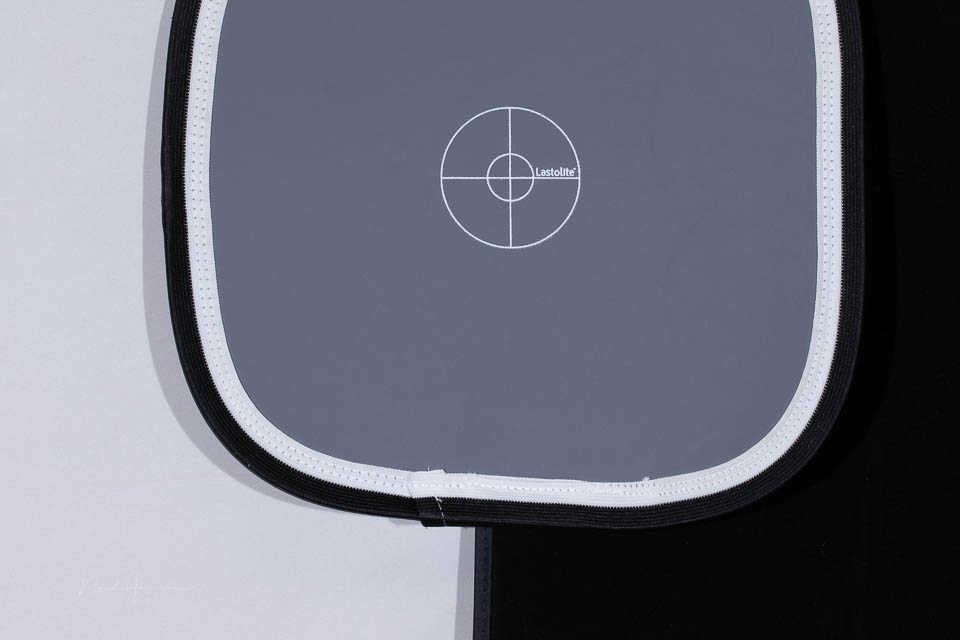
An exposure meter is actually very simple. It measures the amount of light coming through the lens. The average of that amount of light is taken, and it should sit exactly between white and black. That is 50% grey, which is equal to 18% reflected light.
The different metering modes your camera has determine how much of the photo is used to measure that light. This can be the entire image, which is often called matrix metering or multi-segment metering. Or it can be part of the image, using centre-weighted or spot metering.
There can also be an intermediate option. The entire image is measured, but the centre of the image counts more than the edges. Canon calls this centre-weighted average metering.
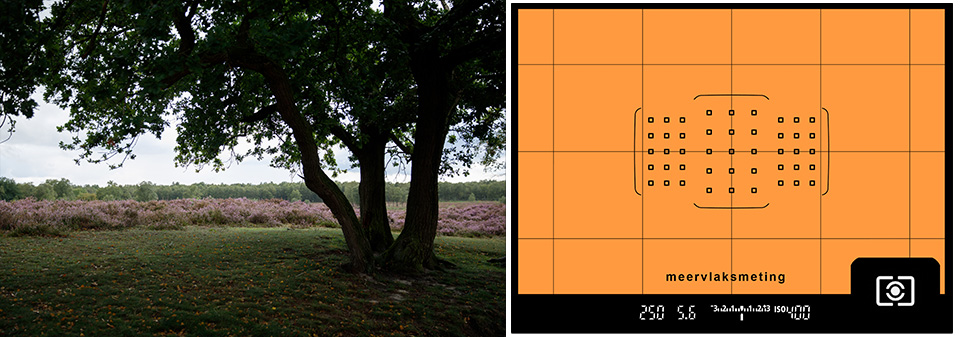
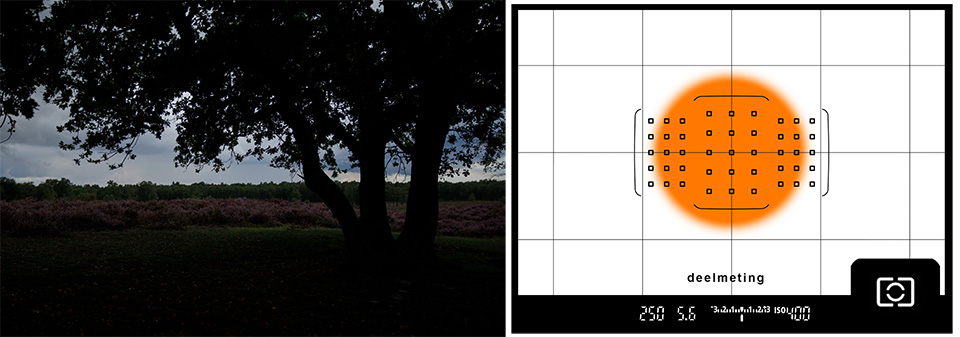
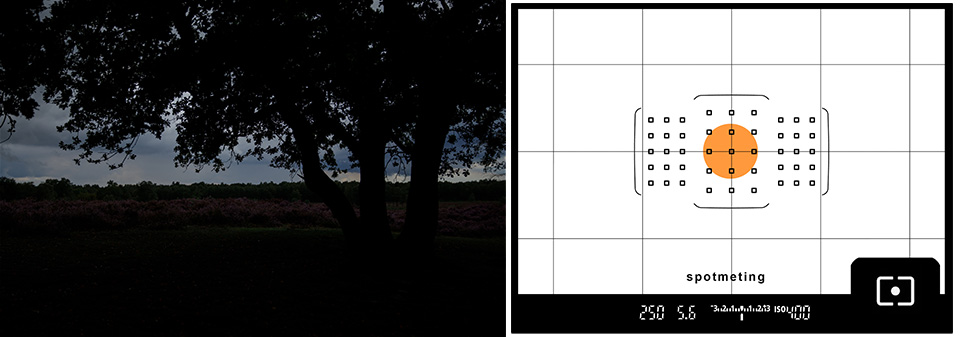
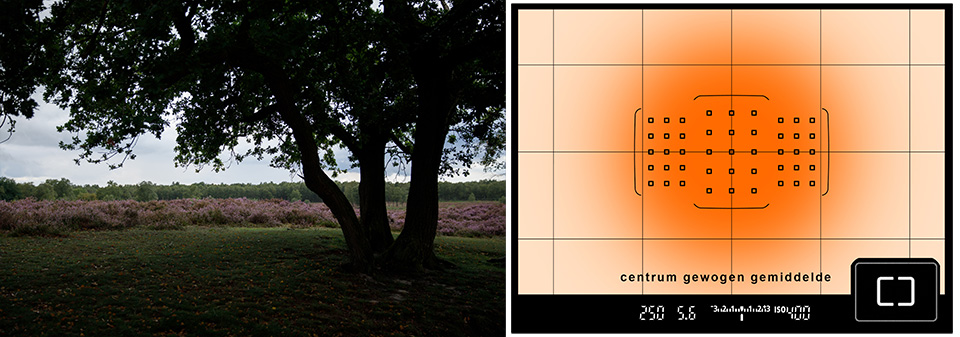
Each of these four options works exactly the same way, but the area being measured is different. This lets you measure the exposure precisely, or across the entire area.
Partial and spot metering are sensitive to human error. If the partial area or spot is even slightly off, the reading will differ greatly from what you want. A reading across the entire image does not have this problem.
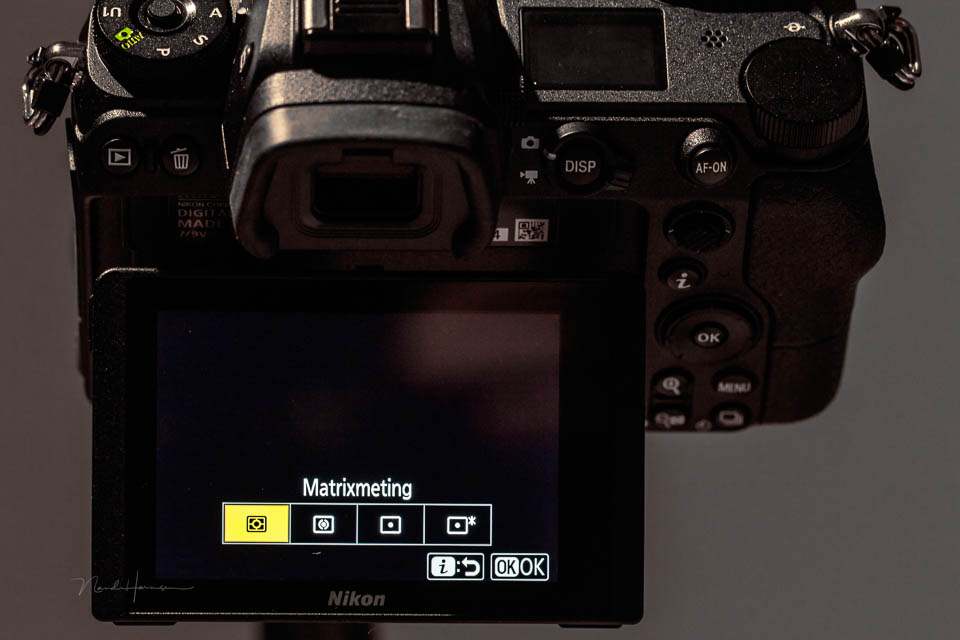
Which one should you use for your photography? The answer is: it does not matter. Ultimately, these metering modes all do exactly the same thing. The only difference is the size of the area being measured. If you know how your metering works, you can account for it.
So it is important to know how the metering mode you choose works. You need to know the pitfalls and how to correct for them. Use whichever method you prefer. There is no best method, only a preference.
About the author
Nando Harmsen has been photographing for more than 40 years. He specialises in wedding photography and landscape photography. Nando also gives talks, workshops, masterclasses and photo trips, and regularly reviews new and interesting equipment.
You might also like
-
 Different Metering Methods Don't Make Better Photos
by Nando Harmsen
-
 Learn How the Exposure Meter Behaves
by Nando Harmsen
-
 Street photography tip: Create beautiful silhouettes with spot metering
by Michiel Heijmans
-
 The Light Meter, How Do You Read It?
by Frank Doorhof
-
 Be careful when removing power lines and dust spots in Luminar NEO
by Nando Harmsen
20 comments
-
 Mac wrote on Tuesday 2 April 2024 at 08:08 | reply
I would say, it does make a lot of difference what you use. Because not every exposure metering method is the same in all circumstances.
Translated from Dutch.
you therefore need to know well when to use which exposure metering method.
recently photographed a dance competition in a theater.
So spotlights, black background etc. If you use multi-segment metering there, the dance part becomes heavily overexposed because the meter measures a lot of darkness around it.
Then I always do a spot metering on the spotlight, and after that I don't change the exposure anymore (except if they suddenly change the lighting). Because you can't use spot metering anymore then either. Whether the dancer is wearing a white shirt or a black shirt already makes a difference as to whether he is under- or overexposed.
ps
I photograph with pentax, and when I use multi-segment exposure metering, it takes the focus point into account, and uses that area as middle gray. -

 Nando
wrote on Tuesday 2 April 2024 at 09:43
| reply
Nando
wrote on Tuesday 2 April 2024 at 09:43
| reply
I photographed performances for years, and always with matrix or multi-segment metering. That was never a problem, because I know what is being metered. It is a matter of using exposure compensation.
Translated from Dutch.
I have tried spot metering a few times, several times even, But keeping a moving performer within the spot is very difficult, resulting in more incorrect exposures than correct ones because the spot was once again just beside them.
Of course you should use whatever you find most comfortable, and if that is spot metering then you should of course keep using it.
I only want to say that regardless of what you choose, light metering happens in exactly the same way; based on 18% reflected light. Only the surface area of the metered part is different. -
 Viviane wrote on Tuesday 2 April 2024 at 11:34 | reply
Dear Nando,
Translated from Dutch.
Recently I asked you this question and you gave me the answer that it depends a bit on the situation and what you find most comfortable.
However, with these examples I now completely understand your answer.
For general landscapes like the first photo, I would personally choose evaluative metering.
I think that if I want to photograph, for example, a daisy in a meadow, and I want to keep that orange centre nicely orange and the petals white, can I then assume that I can use spot metering on the orange centre? Or will the white petals then be somewhat greyish and would I be better off using partial metering in this case? I think it will take a lot of practice to assess the situations properly. In any case, thank you for this article.
Kind regards, Viviane -
Nando
wrote on Tuesday 2 April 2024 at 11:52
| reply
The metering depends on the amount of brightness levels present. There is no guarantee that it will produce a perfect result. There never is, regardless of the metering method you use.
Translated from Dutch.
You should therefore always check the exposure using the histogram. -
 PixelDude wrote on Tuesday 2 April 2024 at 11:47 | reply
When you use a modern system camera where you can see the actual exposure of the photo in the viewfinder or on your screen, it makes no difference. You turn the control dial for aperture or shutter speed until the exposure is right. When you then have the blue colour for underexposure and the red-pink for overexposure switched on as a tool … then you're getting your money's worth. Blue and red-pink areas at the same time? HDR !
Translated from Dutch. -
 Hans van Vreeswijk wrote on Tuesday 2 April 2024 at 13:43 | reply
Exposure can be wrong if, for example, you use matrix metering and adjust the composition a bit with the shutter button half-pressed.
Translated from Dutch.
In my experience, center-weighted average works better because the camera then assesses the exposure more accurately. -
Nando
wrote on Tuesday 2 April 2024 at 17:01
| reply
You can lock the exposure by pressing the AEL button. The measured and set exposure will then remain maintained regardless of where you point the camera. I know that with Canon this metering is held for 8 to 16 seconds. I don't know about other cameras.
Translated from Dutch. -
 Paulus van Aken wrote on Tuesday 2 April 2024 at 13:46 | reply
I agree with you that matrix metering (Nikon) gives excellent results in almost all cases. Spot metering can sometimes be tempting, but my experience is that it isn't quite so precisely at the focus point, and then gives an incorrect value. With a photo of a full moon using a powerful telephoto lens, it is accurate, but I have difficulty with a small object.
Translated from Dutch. -
 Hans Smits wrote on Wednesday 3 April 2024 at 10:21 | reply
If you know how to handle the different correction options well, it doesn't make much difference, but the light meter and method were devised so that you wouldn't have to correct afterwards, right?
Translated from Dutch. -
Nando
wrote on Wednesday 3 April 2024 at 10:37
| reply
It was designed to measure as accurately as possible, but that does not necessarily produce the exposure you as a photographer want.
Translated from Dutch.
The exposure meter is nothing more than software that cannot think and only follows programmed rules. It cannot anticipate. Reality is not that simple. -
PixelDude wrote on Wednesday 3 April 2024 at 11:00 | reply
I think the choice of spot, matrix or yet another metering method is more important to apply to DSLRs and perhaps the older mirrorless cameras. Modern mirrorless cameras allow you to choose the more correct or desired exposure directly via the viewfinder or screen. Also viewing the histogram is no longer necessary at all with modern mirrorless cameras when you enable the tool for underexposure and overexposure. I look (usually through the viewfinder) and adjust with the two dials as needed, either the aperture for depth of field or the shutter speed for moving subjects … or both until I see the exposure I want. And I keep ISO adjustments and HDR as a solution at hand when necessary. Spot, matrix or another exposure metering method makes no difference at all in that.
Translated from Dutch.
I stick almost exclusively to nature and landscape photography. Perhaps the choice is important for flash photography and special techniques? -
-
 Bernie Benz wrote on Wednesday 3 April 2024 at 16:31 | reply
I have a Sony A7 IV mirrorless camera, and use matrix metering. You can see what the exposure is like on the screen or through the viewfinder, but I don't always find this reliable.
Translated from Dutch.
In the bottom right corner I also always have the histogram.
The A7 IV has a handy exposure compensation button for correction, plus the zebra marking as an exposure warning.
In addition, there are 18 continuous and 18 single EV bracketing combinations.
Finally, there's always post-processing, for fine tuning or as a last resort.
You can almost always get the exposure right. -
PixelDude wrote on Thursday 4 April 2024 at 09:16 | reply
Nando, I would put it more simply.
Translated from Dutch.
My conviction tells me that the answer lies in the following question: “Do you see in the viewfinder or on the screen an almost real image of the exposure measured ‘through’ the lens”. If the answer is yes, then the metering method is not important, if the answer is no, then it is. And so there can indeed be a difference between types of cameras.
And for other applications.
The answer may perhaps be no with, for example, flash photography. Right or not? After all, even with a system camera you don't see an image in the viewfinder or on your screen of what the exposure will look like during the flash. Or am I completely wrong?
Can you say a bit more about that? -
Nando
wrote on Thursday 4 April 2024 at 10:31
| reply
You check exposure using the histogram, in combination with the image you see.
Translated from Dutch.
If it is right, then it is good.
If it is not right, then you need to use exposure compensation.
This is the case with every metering method, there is no distinction in that.
Because every metering method measures a different area of the image, it certainly does affect the metering. But changing the metering method because the image is not correct amounts to missing the moment. That all takes too much time. A simple turn of the exposure compensation works more easily, faster and more accurately. After all, a different metering method is no guarantee for a correct measurement.
However, do not confuse this with light metering for flash. That is something completely different and that does not fit into this story. -
PixelDude wrote on Thursday 4 April 2024 at 10:52 | reply
I wouldn't know why I would still check the histogram when I can directly observe underexposure and overexposure with appropriate tools. On my cameras, those are the dark blue marked zones where there is underexposure and the red-pink ones for the places where overexposure reigns. This goes much faster than evaluating a histogram. That could really mean 'missing the moment'. I have removed the histogram from my viewfinder image.
Translated from Dutch. -
Nando
wrote on Thursday 4 April 2024 at 11:01
| reply
This is very personal and it is very camera-specific: not every camera has reliable clipping information.
Translated from Dutch.
If this works well for you, that's fine.
Personally, I have the experience that all those blue and red areas in the image only cause distraction, which makes it very difficult to create a good composition.
However, this has nothing to do with the metering method itself, but with preferences in how the camera is used. -
Paulus van Aken wrote on Thursday 4 April 2024 at 12:00 | reply
As Nando already points out, this is personal. I always have that function turned off, for example, it bothers me. Besides, if the meter is a little off once, you can easily straighten that out in your editing program, so unless you shoot in jpg it isn't an (insurmountable) isue. Modern cameras and meters are so good, so make it easy on yourself, concentrate on your image/composition, because the camera can't do that.
Translated from Dutch. -
PixelDude wrote on Thursday 4 April 2024 at 16:55 | reply
Paulus, that is exactly what I am trying to make clear. When it is within the capabilities of your camera, why make it more difficult when it can be easier. 🤔😚 Or ... when she/he enjoys it, a photographer may make it as complicated as they like. That may well be part of her/his enjoyment. Why not?
Translated from Dutch. -
 Rene wrote on Friday 5 April 2024 at 11:21 | reply
I always use the histogram, which is displayed in the viewfinder, and overexposure and underexposure are also shown there
Translated from Dutch.
Have your say
Please note: Articles older than a week can only be commented on by signed-in visitors.Would you still like to comment? sign in or create a free account.
Become a better photographer every week
A practical photography tip in your inbox every week.
39,079 photography enthusiasts already receive the tips! More about the weekly mail. Or keep up to date via  Facebook.

Elja Trum
Photofacts; everything to do with photography!
Would you like to take better photos and keep up with what is happening in photography? Photofacts publishes articles that teach you something about photography — from a product announcement to a practical shooting tip or a look at a website. Photofacts covers photography every day and is a hobby project of Elja Trum's that got out of hand. The articles are written by a team of volunteer authors. If you would enjoy writing one or more articles for Photofacts, do get in touch.More about PhotofactsPhotofacts is made possible in part by
