

How dark is dark? Photographing in the evening and at night
Thursday 13 December 2018, 12:35 by Michelle Peeters | 11,794 views | 21 commentsThis article was translated from Dutch with the help of AI. Read the original.
When the sun goes down, it gradually gets dark. But how dark is dark? And how dark does it need to be if you want to photograph stars, for example? What kind of photos can you take during twilight? In this article, I explain four phases of the night, along with the photos you can take during each phase.
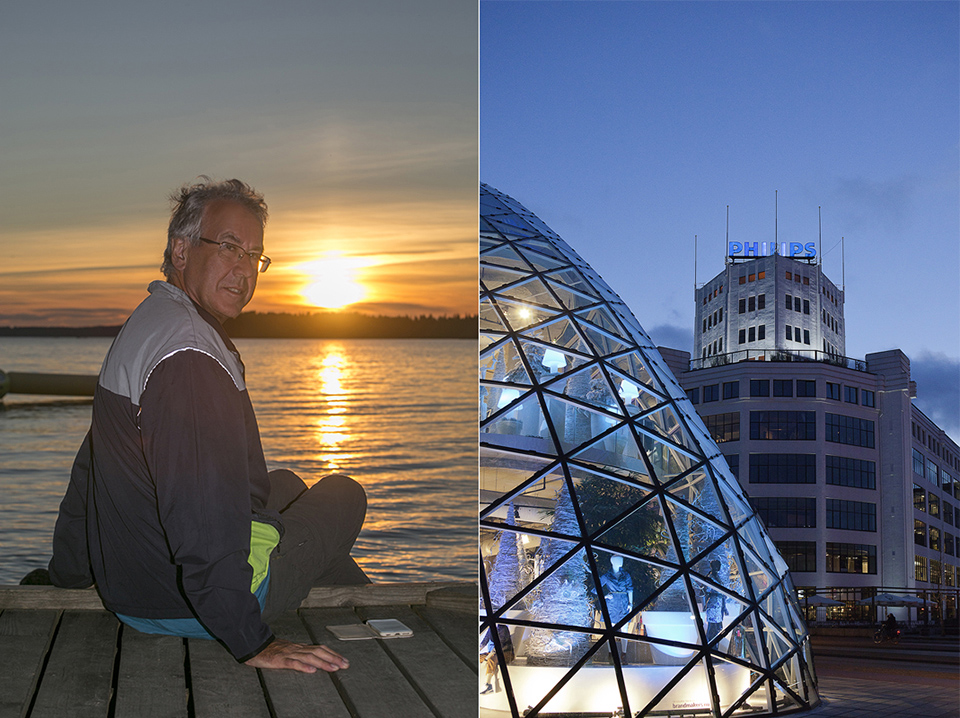
1. Civil twilight
When the sun goes down, it first starts to get dark. The sun is then less than 6 degrees below the horizon. Everything can still be seen clearly. The 'golden hour', with its warm light just before sunset, now changes into the 'blue hour'.
Because you no longer have direct sunlight, the colours immediately become much cooler, with a bluish tint.
Many people put their camera away straight after that beautiful sunset. That's a shame. It's better to keep photographing during the blue hour, a wonderful time for evening photography.
Clouds reflect the sunlight, which can produce beautiful colour variations in your landscape photos.
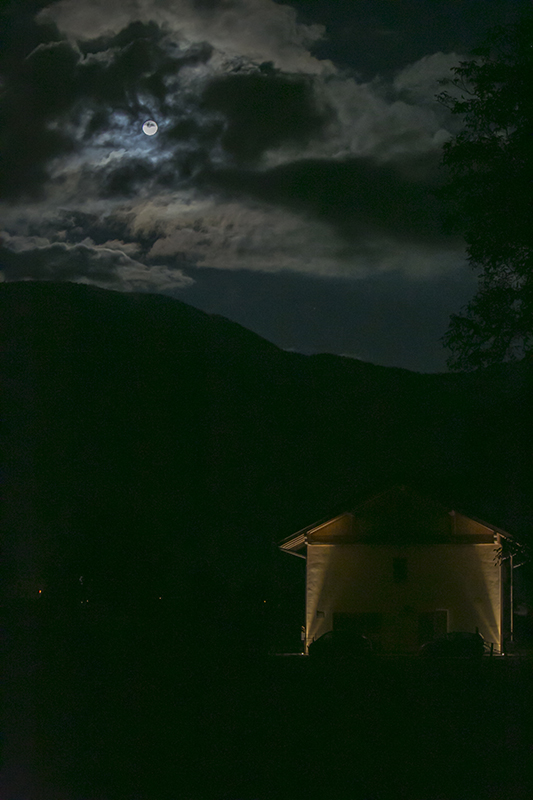
2. Nautical twilight
When the sun is between 6 and 12 degrees below the horizon, civil twilight has changed into nautical twilight. The brightest stars are now visible, and you can still make out the silhouettes of subjects against the horizon.
The lights have now been switched on and, combined with the remaining daylight, you can take some really beautiful photos, for example of illuminated cityscapes.
You can also photograph the moon well now. The contrast with the moon is less than when it is completely dark. You can see more detail in the moon and include the landscape in your photo at the same time.
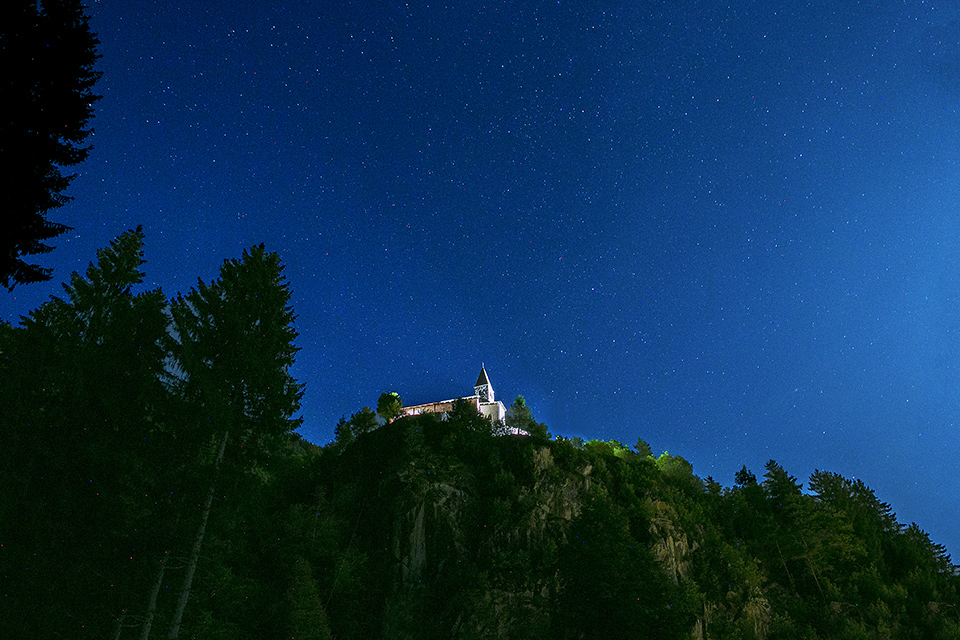
3. Astronomical twilight
This phase begins when the sun is between 1 and 18 degrees below the horizon. It is now quite dark. Only in the north can you still find some remaining light on the horizon. Faint stars can also be seen now.
This is the darkest phase of the night from the beginning of June to the beginning of August. In the Netherlands, the sun does not get lower than 18 degrees below the horizon during this period.
In the early morning, astronomical twilight changes back into nautical twilight and then into civil twilight. It therefore does not become completely dark.
During astronomical twilight, it is dark enough to photograph stars. For example, you can photograph star trails or shooting stars, also known as meteors. Here you can take Nando Harmsen's free Photographing Star Trails course on Photofacts Academy.
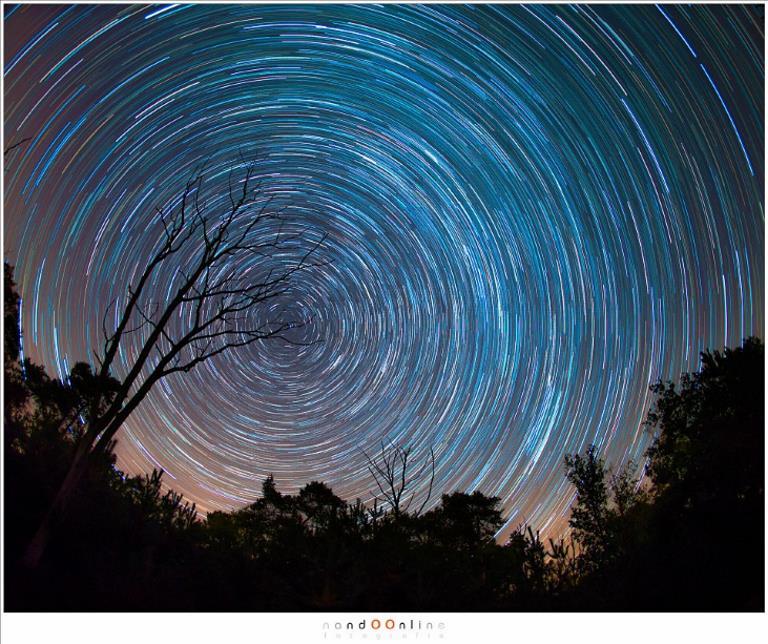
4. Astronomical darkness
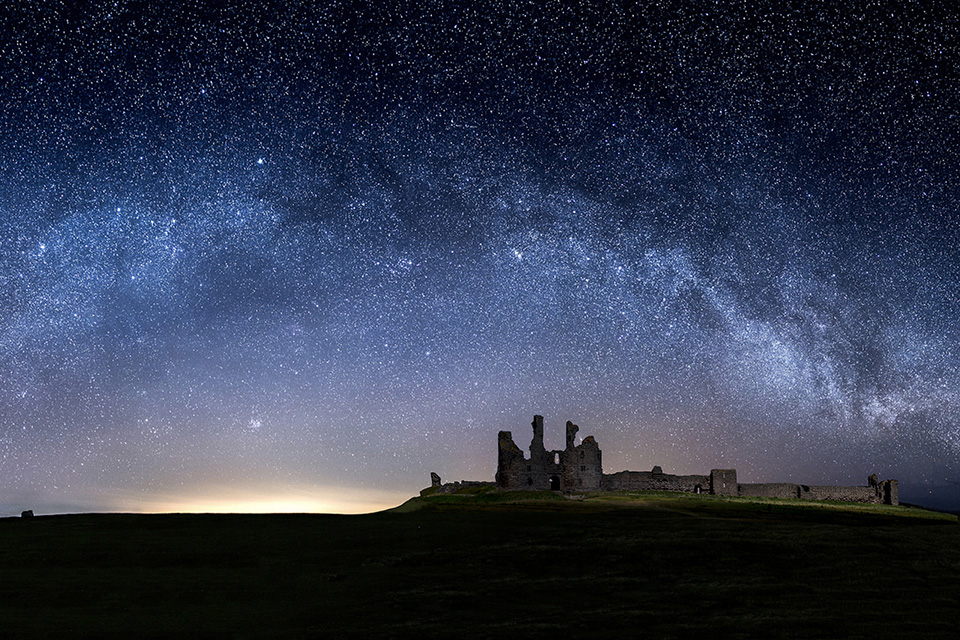
As soon as the sun is more than 18 degrees below the horizon, phase four begins: astronomical darkness. If there is no ambient light, it is now completely dark.
As a result, all the stars, including the faintest ones, are visible. At some photo locations with little or no ambient light, it is theoretically even possible to photograph the Milky Way.
Conclusion
Each phase of the night therefore brings different photographic opportunities. Which phase do you prefer?
Courses on Photofacts Academy
On Photofacts Academy, you can take the Transform a photo from day to night course in Photoshop.
You can take this and other courses for two weeks with a free trial membership.
Dit artikel is voor het laatst bijgewerkt op 13 december 2018.
De eerste publicatiedatum is maandag 3 september 2018, 22:22.
About the author
Michelle Peeters is fotografe en oprichter van DeuxBleus Fotografie. Michelle herkent het bijzondere in het gewone en het gewone in het bijzondere. Ze heeft zich nooit willen specialiseren en is daardoor van alle markten thuis.
You might also like
-
 6 Tips for Creating Star Trails
by Nando Harmsen
-
 Night photography tip: turn light sources into stars
by Nando Harmsen
-
 Falling stars (Lyrids), photographic contributions
by Michelle Peeters
-
 Night photography on Schiermonnikoog, part 1
by Erik Nevels
-
 Night photography tip: keep bright lights bright
by Nando Harmsen
-
 Use a foreground for star photos
by Nando Harmsen
21 comments
-
 Rob Gipman wrote on Tuesday 4 September 2018 at 11:44 | reply
Well written and I was so happy that we were in France with many times less light pollution than in the Netherlands. https://flic.kr/p/27HG1oh and https://flic.kr/p/295Eot3 could be taken there. I ordered a new filter for NL called clear sky, but I’m very curious whether it’s going to help at all.
Translated from Dutch. -
 Mars van den Heuvel wrote on Tuesday 4 September 2018 at 11:57 | reply
Interesting, but not a word is said about light pollution, which is quite severe in many places in the Netherlands and really gets in the way of astro photos.
Translated from Dutch.
See also:
https://www.lightpollutionmap.info
Greetings from Mars -
 Arie Van Der Laan wrote on Tuesday 4 September 2018 at 12:35 | reply
of course, it also depends on which camera you have. I have a Canon 5 D mark 4 and can also take very beautiful photos with the 24-105 lens when it is almost dark
Translated from Dutch. -
 Stephanie wrote on Tuesday 4 September 2018 at 13:23 | reply
Hi Michelle! Is it possible to also include the technical details for the photos above? I would also like to get started with them, but I wonder which shutter speed, ISO and aperture are optimal?
Translated from Dutch. -
 Bart wrote on Tuesday 4 September 2018 at 13:48 | reply
Thanks, I never knew about these different phases and names of the evening and night!
Translated from Dutch. -
 Marco Brugmans wrote on Tuesday 4 September 2018 at 13:55 | reply
wonderfully beautiful photos and a clear explanation.
Translated from Dutch.
I just can't reconcile the astronomical darkness with the light on the horizon??? (very beautiful photo) -
 Leysen Marcel wrote on Tuesday 4 September 2018 at 14:09 | reply
is it possible to mention the ISO value and shutter speed with the photos ?
Translated from Dutch.
nice photos by the way ! -
 guest wrote on Tuesday 4 September 2018 at 15:59 | reply
beautiful photos and I never knew there were so many stages! It would be nice if the exif data were included, but perhaps this is impossible?
Translated from Dutch. -

-

 Michelle Peeters wrote on Tuesday 4 September 2018 at 17:43
| reply
That thing about light pollution in the Netherlands (except on the islands) is indeed correct. I already described that in the article about the Farne Islands. At the bottom of this article there is a section about photographing the Milky Way and exactly how to do it. This is the biggest challenge because it absolutely has to be dark for this. And you may/can’t expose for longer than 30 seconds. Stars give off almost no light, so you have to work with high ISO values and open your aperture all the way. And with astrophotography you will have to do a lot of post-processing to make them more visible (contrast and clarity). It doesn’t make much sense to provide EXIF info for all those photos. It’s always a matter of trying out a lot, looking back, correcting and trying again. Every situation is different.
Translated from Dutch. -
Michelle Peeters wrote on Tuesday 4 September 2018 at 17:51
| reply
@Rob Gipman: your link doesn't work!
Translated from Dutch.
@Marco Brugmans: yes, I was also puzzled by that, that spot of light on the horizon. The Milky Way does have multiple spots of light, which you can only see when it's absolutely dark. -
Rob Gipman wrote on Tuesday 4 September 2018 at 17:55 | reply
That's right Michelle, the EXIF is missing from my photos for my Samyang 14mm lens because its chip got lost. I need to put it back on. My Milky Way was at 20 sec at f/2.8 iso 3200 (5d4) This to prevent trails. My circle around the North Star consists of multiple photos at F/2.8 30sec (so there are trails) and once again iso 3200. I shoot in RAW so the white balance is unimportant to me.
Translated from Dutch. -
Rob Gipman wrote on Tuesday 4 September 2018 at 17:58 | reply
They work fine for me with the shot link, so here then the old-fashioned link https://www.flickr.com/photos/gipukan/43372302504/ and https://www.flickr.com/photos/gipukan/42478615260/
Translated from Dutch. -
Michelle Peeters wrote on Tuesday 4 September 2018 at 18:04
| reply
Wow, those are beautiful photos Rob Gipman! Thanks for sharing! That lightning photo is also very beautiful. The Milky Way photo is great, well done! And indeed, to prevent streaks you shouldn't expose for longer than 20 seconds. Although those streaks are much less noticeable with a wide-angle lens...
Translated from Dutch. -
-
Rob Gipman wrote on Tuesday 4 September 2018 at 18:24 | reply
Thx Michelle, also took these photos that first evening right away and for the North Star I went to sleep after setting it up the camera drained the battery that night, shooting every 2 sec and 30 after it. Well wrapped up against the morning moisture
Translated from Dutch. Could even get our tent under the Milky Way nicely in the photo
-
Michelle Peeters wrote on Wednesday 5 September 2018 at 10:55
| reply
@Rob: last night I gave photographing the starry sky from the campsite another try (in Abruzzo National Park, Italy). Even here there is still some light pollution, but it's fairly manageable.
Translated from Dutch.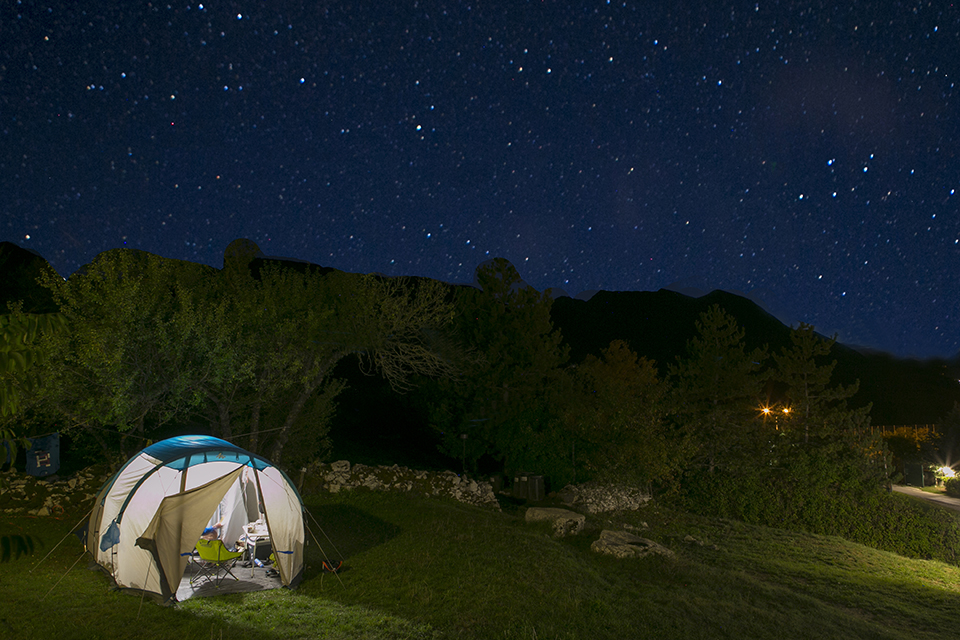
-
Rob Gipman wrote on Wednesday 5 September 2018 at 11:41 | reply
Yes, nice Michelle
Translated from Dutch. Quickly looked for our tent, but I don't think it's edited optimally yet https://www.flickr.com/photos/gipukan/44439121442/ -
Michelle Peeters wrote on Wednesday 5 September 2018 at 14:50
| reply
@Rob: wow, beautiful! Well, you can hardly avoid the tent being somewhat overexposed. Or you'd have to make composite photos with multiple exposures. The stars (a great many, even) can be seen clearly!
Translated from Dutch. -
 Marty wrote on Wednesday 5 September 2018 at 22:58 | reply
Nice informative piece I agree with others that the info of the photos could have been included as well even though it's different every time, we can only learn from that
Translated from Dutch.
But still such a shame that people so quickly resort to editing all sorts of things, they didn't have anything more than the darkroom back then either and I still have some magazines from yeeears ago with amazingly beautiful clear photos of night shots etc.
but okay that will be the times, you can really take photos with any camera it's the art of looking and composing and then sitting down afterwards to fiddle and mess around I have still made winners with a handheld Fuji with 6mp and with Minoltas with slides of course, Kodak ekta chrome gave that little bit extra. how I miss 'real' photography... -
Michelle Peeters wrote on Thursday 6 September 2018 at 10:42
| reply
@Marty: it is exactly as you say: what they used to do in the darkroom in terms of editing (and that was quite a lot, you often paid for the quality of the print too) is now done with Photoshop or other photo editing software. Not really all that different, but a lot easier and with many more possibilities!
Translated from Dutch.
Have your say
Please note: Articles older than a week can only be commented on by signed-in visitors.Would you still like to comment? sign in or create a free account.
Become a better photographer every week
A practical photography tip in your inbox every week.
38,885 photography enthusiasts already receive the tips! More about the weekly mail. Or keep up to date via  Facebook.

Elja Trum
Photofacts; everything to do with photography!
Would you like to take better photos and keep up with what is happening in photography? Photofacts publishes articles that teach you something about photography — from a product announcement to a practical shooting tip or a look at a website. Photofacts covers photography every day and is a hobby project of Elja Trum's that got out of hand. The articles are written by a team of volunteer authors. If you would enjoy writing one or more articles for Photofacts, do get in touch.More about PhotofactsPhotofacts is made possible in part by
