

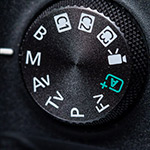
Use M mode to learn, but not necessarily while taking photos
Monday 17 August 2026, 20:10 by Nando Harmsen | 3,523 views | 25 commentsThis article was translated from Dutch with the help of AI. Read the original.
During workshops, I see many participants struggle with M mode. They have been told it is the only proper way. It is even required at some workshops. Why make things difficult with M when it can be easier? It does not make your photo any better.
I do not want to force anyone to move away from M mode. I want to make that clear from the start. The title is therefore somewhat misleading, because M mode can certainly help in situations where the light meter 'loses its way.'
I use M mode when it adds value. I prefer to use A(v) mode (aperture priority) or T(v) mode (shutter speed priority). That way, I can concentrate on composition and subject.
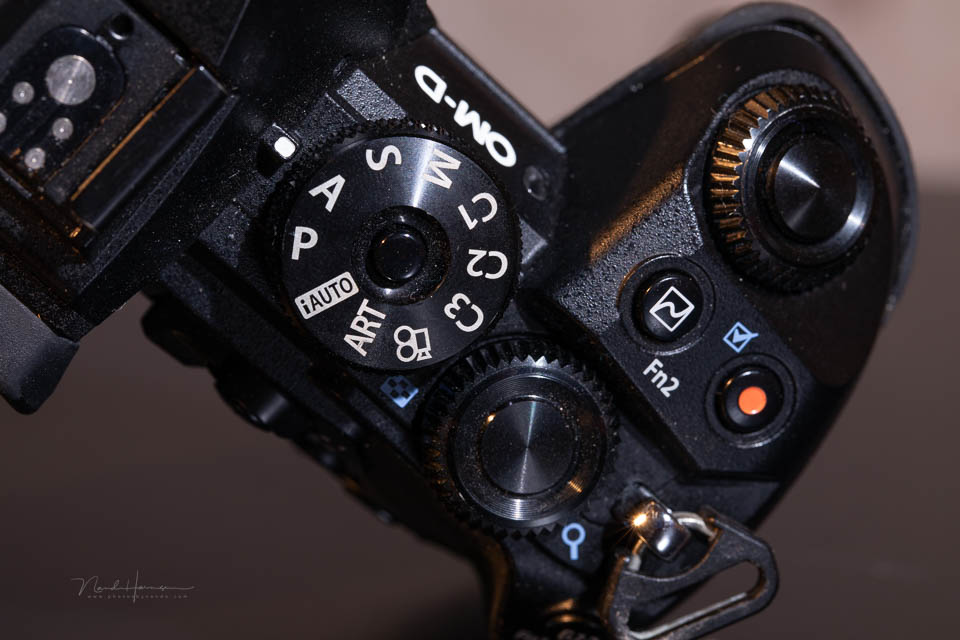
Photographing in M mode should never be compulsory. Choose a setting that lets you take photos without too many worries. Struggling with the settings in the field because you 'have to' use M mode makes no sense.
A good understanding of the relationship between aperture, shutter speed and ISO value is important in photography. Indeed, M mode can help you discover that relationship. You can then play around with the settings.
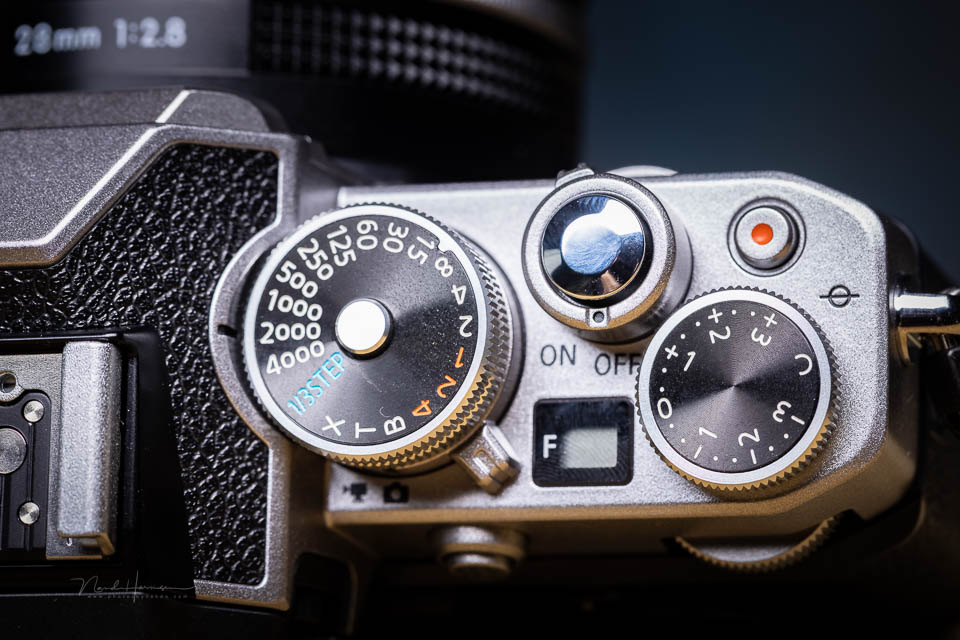
Change one setting in M mode and watch the exposure change. See how changing another setting makes everything correct again. Take your time with this. Try things out. Do it at your leisure at home or while sitting in the sunshine in the park.
When you are on location, you want to take photos. There is no time to 'practise' with your exposure settings. You want to get the correct exposure straight away. If you have to struggle with setting up your camera, the moment will have passed.
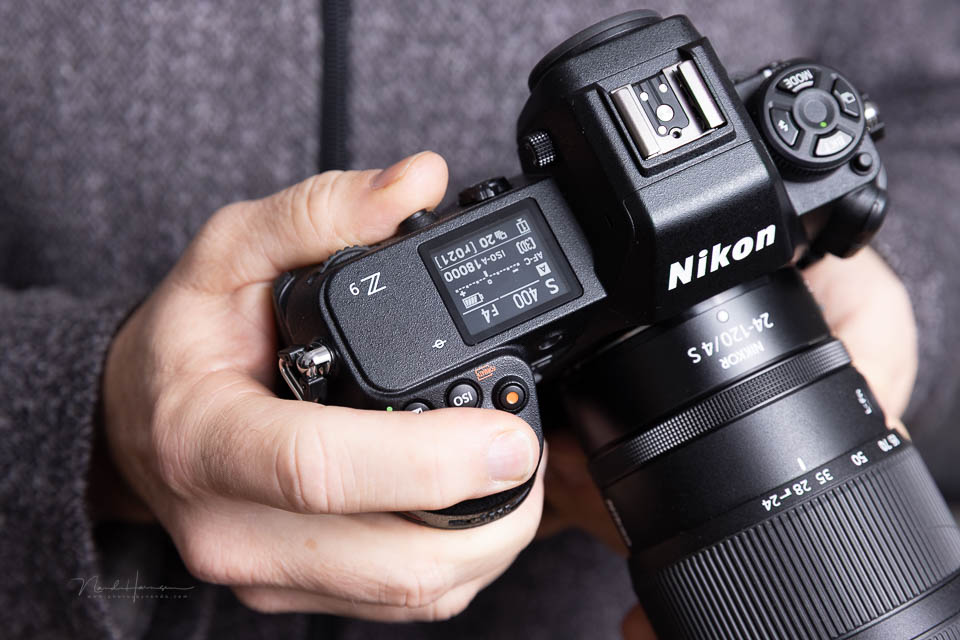
M mode can help you understand how to set the exposure on your camera. Do that at home, and give yourself plenty of time to practise. That way, you have the peace and quiet to try things out.
Are you travelling, attending a workshop or having a day out? Then take the easy option. Choose aperture priority for worry-free photography. Use exposure compensation if necessary.
Then concentrate on taking photos, the composition, the subject, and enjoy the things around you. Choose M mode when you discover that it works better in a particular situation. But do not choose it because someone told you it was better.
About the author
Nando Harmsen has been photographing for more than 40 years. He specialises in wedding photography and landscape photography. Nando also gives talks, workshops, masterclasses and photo trips, and regularly reviews new and interesting equipment.
You might also like
-
 A workshop must not be an escape from your own uncertainty
by Michiel Heijmans
-
 The only real reason to set the exposure manually
by Nando Harmsen
-
 The point or nonsense of a photography workshop
by Nando Harmsen
-
 Situations where manual mode is (actually) perfect
by Nando Harmsen
-
 Accessibility at workshops and locations for people with disabilities
by Juliette Gribnau
-
 You have to practise to learn
by Nando Harmsen
25 comments
-

 jef@gees.be
wrote on Tuesday 18 August 2026 at 11:07
| reply
jef@gees.be
wrote on Tuesday 18 August 2026 at 11:07
| reply
Hi Nando, I use M mode a lot, where I set the aperture and shutter speed manually and set ISO to automatic. This way I have control over both the depth of field and shutter speed.
Translated from Dutch. -
 Nando
wrote on Tuesday 18 August 2026 at 11:16
| reply
Nando
wrote on Tuesday 18 August 2026 at 11:16
| reply
That’s of course possible if you prefer that.
Translated from Dutch.
Just make sure you choose the combination wisely, because you don’t want the camera to have to choose an extremely high ISO to get the exposure right.
Or for the ISO not to be able to go low enough.
In other words, you don’t automatically have complete freedom in choosing the aperture/shutter speed. -
jef@gees.be
wrote on Tuesday 18 August 2026 at 11:48
| reply
Hi Nando ... right ... but "experience comes with age ... AND especially lots of DOING" ... 😉👍👊🙋
Translated from Dutch. -
 Jos wrote on Saturday 22 August 2026 at 21:41 | reply
I rarely or never set the ISO to automatic. I want to decide that myself.
Translated from Dutch. -
 C. Buskermolen wrote on Tuesday 18 August 2026 at 11:27 | reply
I usually photograph in aperture priority, so A mode. Under- or overexposing by one stop is simple on the Olympus.
Translated from Dutch.
I adjust ISO if necessary.
For night photography or something similar, then in M mode. -
 Paul van Aken wrote on Tuesday 18 August 2026 at 11:58 | reply
I hear that often, that people think the M mode is what makes you a photographer. For years, no, decades, I only had an M mode, a separate light meter, choosing the aperture, adjusting the shutter speed, focusing: and then you took your pictures.
Translated from Dutch.
Now you can trust your device 98% of the time, just put it on A and keep an eye on whether the shutter speed doesn't get too crazy, or vice versa, then you can adjust the iso if necessary, and you miss far fewer moments.
M is really for the difficult subjects, where the light meter no longer knows what to do. -
Mac wrote on Friday 21 August 2026 at 07:56 | reply
@Paul
Translated from Dutch.
Whether you shoot in M, A or any other mode. It makes no difference in terms of the exposure meter (the one in your camera). That one is the same in all modes, and will therefore see the same exposure as okay in every mode. -
 Philippe Barbé wrote on Tuesday 18 August 2026 at 12:03 | reply
I once met a retired war photographer and he always shot in P mode (Canon, though). Since then I do this too and am always satisfied with the result.
Translated from Dutch. -
-
 Paul Lefevere wrote on Tuesday 18 August 2026 at 13:14 | reply
I am 73 years old and bought my first SLR (Canon Ftb) when I was 17. Everything had to be set manually, light metering and focusing. My brother bought an A1 a little later, which had, among other things, shutter speed and aperture priority available, and I was actually never jealous of him...
Translated from Dutch.
But when the digital age was ushered in, I started thinking radically differently. I also switched to Nikon then. Not "because Nikon was better", but because it felt better to me. I also started comparing shots that I had taken both manually and in program mode. Contrary to my expectations, the "automated" results, except for photos with specific requirements, were usually no worse than the manual ones. Since then, I have photographed almost exclusively with preset settings. But when it really is necessary, for example with macro photography or in low light, I am very glad that I had the opportunity to learn manual settings.
Maybe another tip for the fanatical M users: I always store my camera in P mode (program mode). If something unexpected suddenly happens, I have the best chance of still taking a decent photo, without wasting time on the perfect focusing and exposure settings. As a fervent M supporter, you do risk disappointing yourself or even coming home without a photo!
If I do have the time, little energy is lost setting the right priority... -
 Dick Eduard wrote on Tuesday 18 August 2026 at 14:17 | reply
I am a lazy photographer and generally use the Tav mode, setting the shutter speed and aperture beforehand with automatic ISO linked to it. I photograph with a PentaKp, which can handle high ISO very well. I do specify the ISO range, though.
Translated from Dutch.
I photograph a lot of moose in the wild and they have the habit of showing themselves in low light, although they also regularly make an exception to that. Yesterday evening, a young bull, 1 year old, suddenly appeared, saw me and took off sprinting. Thanks to the Tav settings mode, he was captured in action on my camera. -
 Mirjam Koot wrote on Tuesday 18 August 2026 at 14:32 | reply
If I understand correctly, the only real difference between M and Av or S is the following: if you're in a very difficult lighting situation that calls for impossible combinations of settings, then in Av or S the shutter button doesn't work and in M it does
Translated from Dutch. -
-
Paul Lefevere wrote on Tuesday 18 August 2026 at 15:10 | reply
If the shutter button doesn't work, this is normally not due to the exposure, but to the focusing. You could then set the focus to M. The exposure priority will not change anything in my opinion...
Translated from Dutch. -
Mirjam Koot wrote on Tuesday 18 August 2026 at 15:43 | reply
I once also only tested it out to find out what the difference is between the M mode and the other options.
Translated from Dutch. -
 Donald Willemsen wrote on Tuesday 18 August 2026 at 15:58 | reply
Nando, I completely agree with you.
Translated from Dutch.
That doesn't happen very often😉. Usually that's because of a difference in vision. Maybe I'm (too) old-school
There is no difference in vision here. I agree with you that there is nothing wrong with using Av or Tv.
I often use Av for landscape, street and architectural photography because I consider depth of field important for this. Often in combination with ETTR.
I mainly use Tv for moving subjects, to get the subjects sharp or blurred or to emphasize speed.
I always use M mode in my studio.
I usually use Av and Tv mode in combination with AUTO ISO, where I have set an upper limit of ISO 6400. -
 Vercauteren Freddy wrote on Wednesday 19 August 2026 at 10:29 | reply
Hi Nando, I'm 78 and when I started taking photographs in 1963 with a Pentax SLR (I was 15 then) there was only the M mode. But that way I did understand the relationship between aperture and shutter speed and also depth of field, something many photographers nowadays no longer understand. But as soon as there was a choice I almost always continued taking photographs in A mode. As I understand from your message, learn to work with it but don't use it, the auto mode of today's cameras really works fine. And yes, I too missed quite a few photos in M mode and then I still had to focus as well, those were the days!
Translated from Dutch. -
-
Mac wrote on Friday 21 August 2026 at 08:11 | reply
I personally shoot a lot in M mode. But that is indeed a conscious choice, because I photograph a lot of action under changing lighting conditions. And then M really is the best choice (sometimes Tav as well).
Translated from Dutch.
but when I walk in nature or through the city, it's really set to A mode or Tav -
Paul van Aken wrote on Friday 21 August 2026 at 14:25 | reply
A bit strange reasoning, precisely when the changing circumstances arise, a P, A or S mode is more convenient, with the camera compensating for the circumstances. Unless, of course, you mean that your image shows the changing circumstances, but that is quite unusual.....🤔
Translated from Dutch. -
mac wrote on Monday 24 August 2026 at 08:09 | reply
@Paul,
Translated from Dutch.
No, exactly not.
I’ll take an example from surf photography. I take a metering and see whether the exposure is correct. It is correct and I start photographing. A big wave suddenly breaks and there is a lot of white foam, the camera thinks, oh too much light is coming in, so for example Tv has to go up, which makes the photo too dark.
Or indoors. I take a metering when there is some light, and set my shutter speed etc. accordingly. I’m photographing, suddenly there is a scene where there is only a spotlight and the rest of the stage is dark. The meter thinks oh it is very dark, so the settings have to be different, and suddenly my photo is overexposed (or blurred).
And yes, there will also be over- or underexposed photos in M mode, but I know that, and I’ll have to live with that. but still less often than in 1 of the automatic modes -
Paulus van Aken wrote on Monday 24 August 2026 at 10:45 | reply
Mac,
Translated from Dutch.
I can see your point with the first image, but you won't manage that in M mode either. The second example is a typical example where you should always use M mode, preferably with spot metering. I've done that myself more often in the past, and experience also turns out to be an important factor.
For more than 95% of cases when shooting outdoors, I think that A or S mode combined with weighted metering gives better results. -
 rik wrote on Sunday 23 August 2026 at 11:15 | reply
To each their own ... 😉
Translated from Dutch.
My favorite mode is M mode because I prefer to set the depth of field myself, and adjust shutter speeds to the situation. The ISO value is the variable.
Once learned that way in the analog era, and I really did try out the other modes on my DSLRs but I think I'm too much of a perfectionist (or control freak 😂) -
Donald Willemsen wrote on Sunday 23 August 2026 at 13:35 | reply
@Rik, depth of field is mainly determined by the focal length in combination with the aperture. Then you can just as well use aperture priority (Av).
Translated from Dutch. -
Paulus van Aken wrote on Sunday 23 August 2026 at 20:02 | reply
Seems unlikely to me that you could play around with the ISO in the analogue era. Film had a fixed value......
Translated from Dutch.
Have your say
Please note: Articles older than a week can only be commented on by signed-in visitors.Would you still like to comment? sign in or create a free account.
Become a better photographer every week
A practical photography tip in your inbox every week.
39,077 photography enthusiasts already receive the tips! More about the weekly mail. Or keep up to date via  Facebook.

Elja Trum
Photofacts; everything to do with photography!
Would you like to take better photos and keep up with what is happening in photography? Photofacts publishes articles that teach you something about photography — from a product announcement to a practical shooting tip or a look at a website. Photofacts covers photography every day and is a hobby project of Elja Trum's that got out of hand. The articles are written by a team of volunteer authors. If you would enjoy writing one or more articles for Photofacts, do get in touch.More about PhotofactsPhotofacts is made possible in part by
