

Not enough depth of field in your landscape? Use focus stacking.
Friday 25 August 2023, 20:02 by Nando Harmsen | 3,907 views | 1 commentThis article was translated from Dutch with the help of AI. Read the original.
Sometimes you come across a landscape where you cannot achieve enough depth of field for the result you have in mind. What do you do then? There are a few options. But if that is not enough, choose focus stacking.
To bring more depth of field into your photo, you have three options available, each with a disadvantage.
You can choose a shorter focal length, but that means the relationship between foreground and background changes. That may not be desirable, as it gives you a different composition.
You focus at the hyperfocal distance instead of on your subject. This ensures that the depth of field starts as close as possible, while the depth of field ends at infinity. But this sometimes requires an aperture that causes too much diffraction.
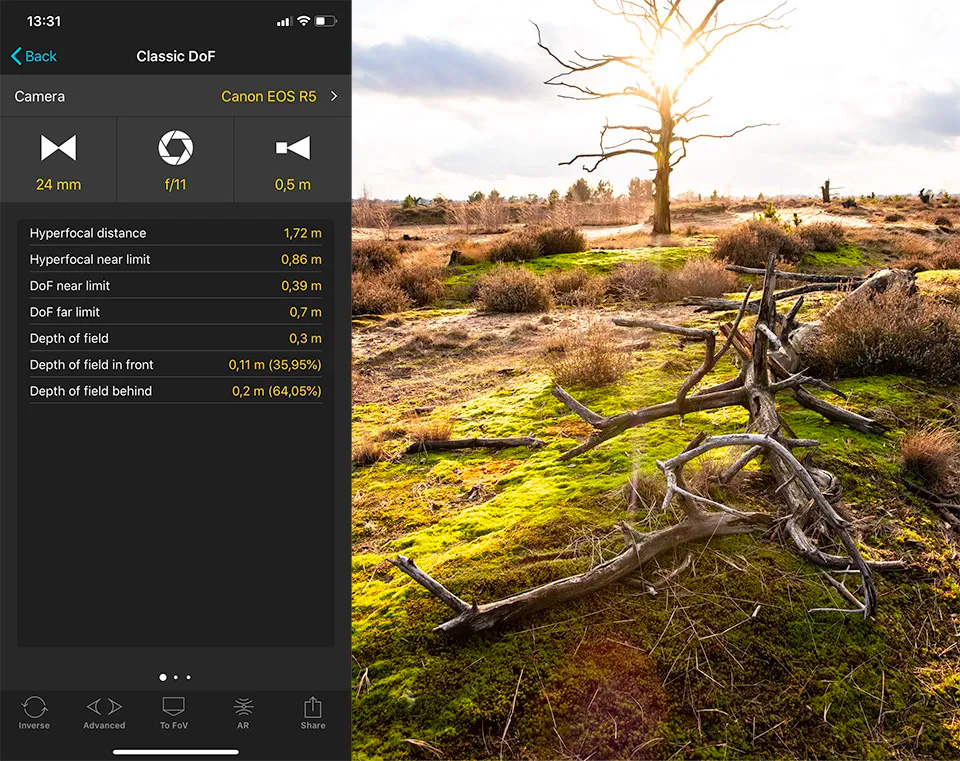
You can use a tilt-shift lens. The tilt allows you to position the plane of focus parallel to the landscape. However, you need to have a tilt-shift lens, and it does not work equally well in every situation.
Is the hyperfocal distance not enough, and is a shorter focal length not desirable? Do you not have a tilt-shift lens available? Then there is only one thing left to do: focus stacking, the fourth way to achieve an extremely large depth of field.
By taking multiple photos and shifting the focus point for each photo, you spread the depth of field across several photos. You can then use software to blend these photos together almost seamlessly. This gives you a depth of field that is virtually unlimited.
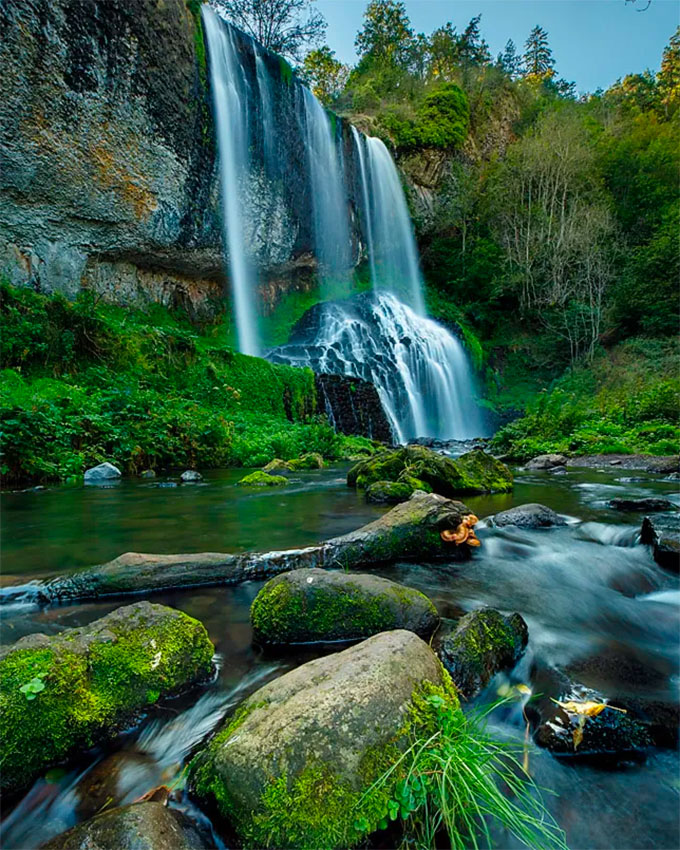
For landscapes, you can often manage with a series of two, three or four photos. Think of it as follows: one for the foreground, one in the middle, and one on the horizon. If possible, combine this with a large depth of field by choosing a small aperture.
Combining them is very easy these days. With Photoshop, Luminar NEO (extension), or Affinity Photo (the course is linked below, where this is also covered), it only takes a few clicks. Moreover, it is much easier with landscapes than with macro, where you often have to combine hundreds of photos.
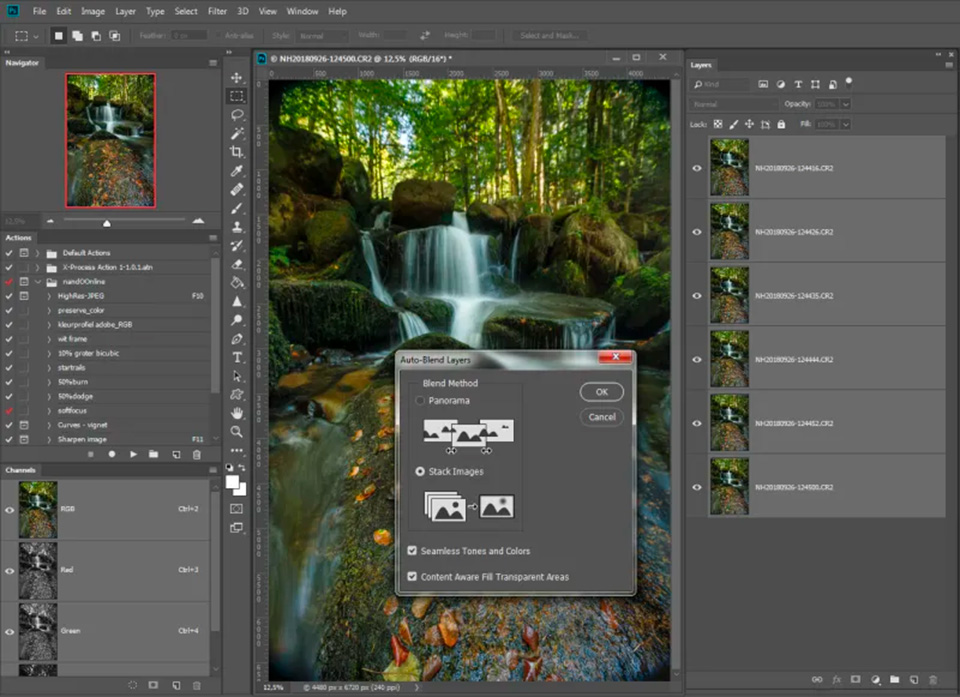
Are you on location and do you want an extremely large depth of field? Give it a try. If it does not work, you can always throw the photos away.
Do work from a tripod, as this significantly increases the chance of a successful result. Is there also a disadvantage? Certainly, movement of elements in your composition can make it very difficult to combine everything properly.
About the author
Nando Harmsen has been photographing for more than 40 years. He specialises in wedding photography and landscape photography. Nando also gives talks, workshops, masterclasses and photo trips, and regularly reviews new and interesting equipment.
You might also like
-
 To stack or not to stack
by Erik Nevels
-
 Focus stacking: experimenting is learning
by Juliette Gribnau
-
 How does focus stacking work?
by Michelle Peeters
-
 Which is better? Stacking or noise reduction?
by Nando Harmsen
-
 Photograph your hand as a bookmark
by Nando Harmsen
-
 Using a long exposure without an ND filter
by Nando Harmsen
1 comment
-
 Theo Voorbij wrote on Tuesday 29 August 2023 at 12:33 | reply
With Photoshop, Luminar NEO (extension), or Affinity Photo
Translated from Dutch.
Have your say
Please note: Articles older than a week can only be commented on by signed-in visitors.Would you still like to comment? sign in or create a free account.
Become a better photographer every week
A practical photography tip in your inbox every week.
38,982 photography enthusiasts already receive the tips! More about the weekly mail. Or keep up to date via  Facebook.

Elja Trum
Photofacts; everything to do with photography!
Would you like to take better photos and keep up with what is happening in photography? Photofacts publishes articles that teach you something about photography — from a product announcement to a practical shooting tip or a look at a website. Photofacts covers photography every day and is a hobby project of Elja Trum's that got out of hand. The articles are written by a team of volunteer authors. If you would enjoy writing one or more articles for Photofacts, do get in touch.More about PhotofactsPhotofacts is made possible in part by
