

Photographing inexperienced models
Monday 18 July 2016, 13:31 by Erik van Rosmalen | 16,406 views | 14 commentsThis article was translated from Dutch with the help of AI. Read the original.
It works brilliantly: a (semi-)professional model who needs only half a word. Completely 'zen' in front of the camera. And who gives you the shot you were looking for in no time. And perhaps even more.
In practice, of course, we mainly photograph lots of 'models' who are not at all used to being photographed. So how do you approach it? Elja already gave you more 'technical' tips in an earlier article. But how do you create a good atmosphere and therefore better photos?
Don't photograph
Stop. Camera away. A successful portrait session does not begin with photography, but with talking.
Who is actually sitting opposite you? What is on their mind? What sort of person are they? Flamboyant? Introverted? Quite apart from what you get out of the conversation as a photographer and can use in practice, it is also a good way to break the ice.
Start close
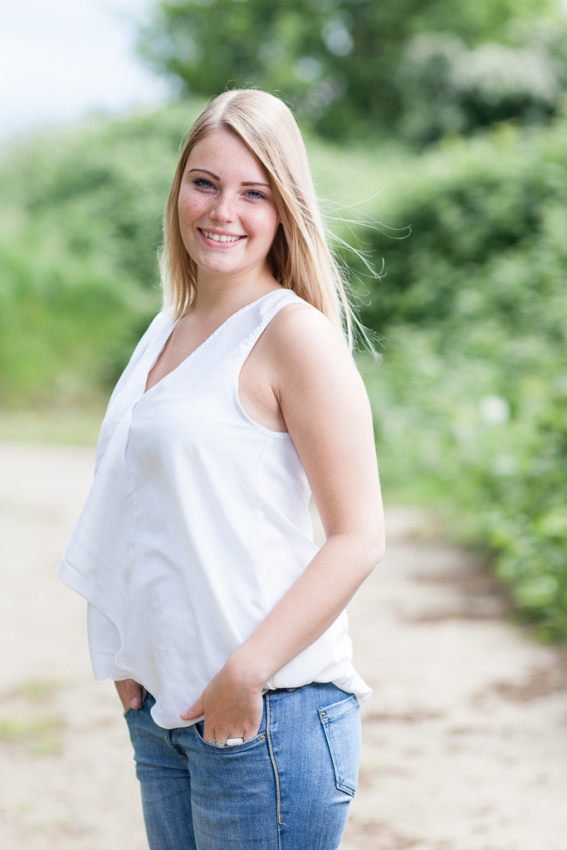
Opinions differ on this. I know plenty of photographers who deliberately start with full body shots. Their idea is that you are less 'on top of' your model, so he or she can get used to the camera more easily. There is something to be said for that, of course.
Yet I usually do the opposite. I start with a short telephoto lens, my 85mm lens, for example. I first take some closer portraits of the face and, at most, the shoulders.
I have two reasons for this. Firstly, with these close-ups, my model does not yet have to worry about all the other things. Posture, pose, feet, 'how does my jumper look' and 'what do I do with my hands': none of it matters yet.
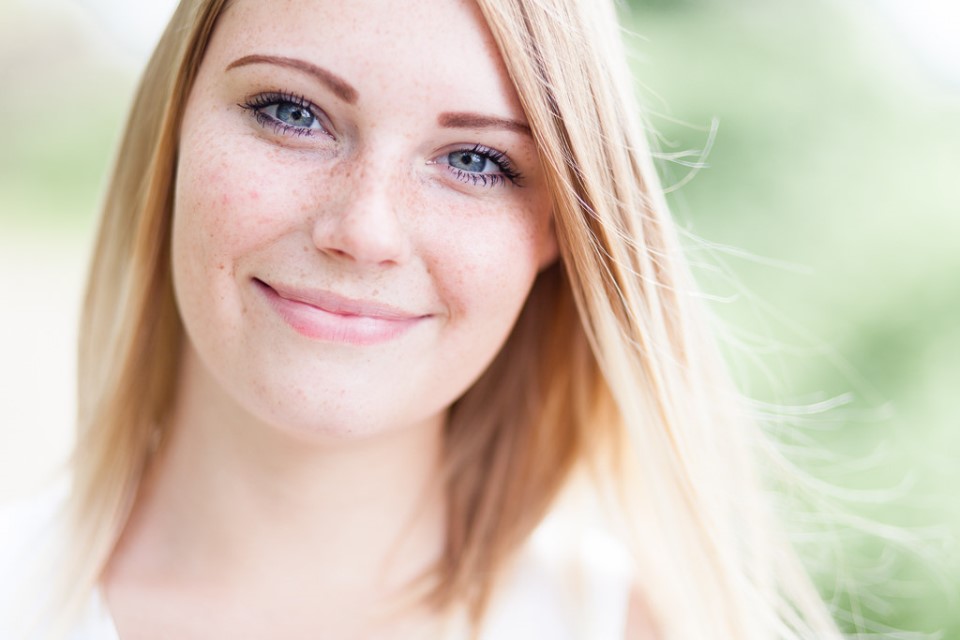
But perhaps the more important reason is that I stand a little closer than when I take full body shots with, say, a 35 or 50mm lens. This allows you to keep talking to your model and put him or her at ease. Without really standing in someone's personal space.
Take the lead
You generally need to direct an inexperienced model. So take the lead confidently. Put him or her at ease. Especially when it comes to poses: make sure you have thought about them beforehand. Do not be afraid to demonstrate things.
Something else that works well these days: simply bring your inspiration with you. You can easily bring example images on your phone or tablet, for example from a Pinterest board.
Show the photos
Should you show your model what you have taken on your camera in between shots? Yes! But depending on your model, be somewhat selective. A photo that is very unflattering for a model who you know is a little insecure? Perhaps best not to show it.
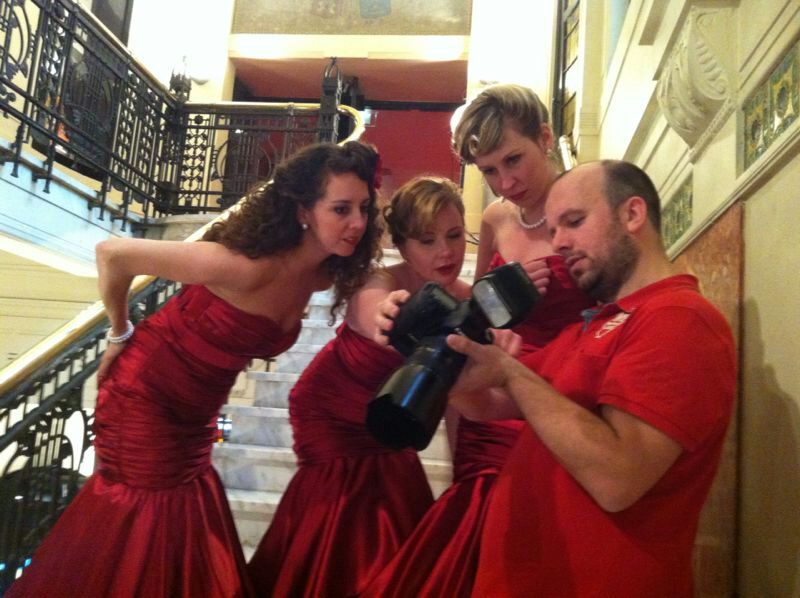
And above all: explain that the photo on the display is not yet the finished product. Someone can fixate on a small spot or mole, while the photo has plenty of potential.
Leave the acting out
The idea was so appealing: I will get my model to act something out. 'Pretend that...' But the phrase gives it away: it is not real. And you can ultimately see that in the photo. People without a background in acting or theatre will quickly come across as too contrived. Let them be themselves and leave their aspirations to become a film star behind.
There are exceptions, of course. These are often the well-known Dutch celebrities, theatre-makers or artists. They often know very well what they can show and are more or less used to unusual photo shoots.
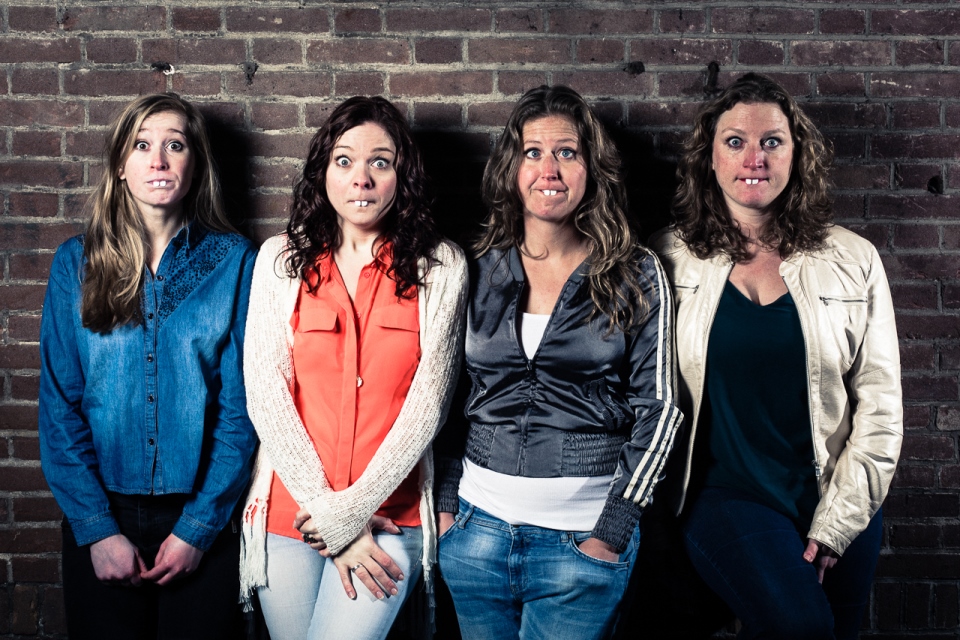
A strange idea that fits a theme or performance can work, though. That was the case with the girls from the cabaret group Dan Tien in de Lucht, for example:
Props... yes or no?
Props often fall into the same category as role-playing. If it works, it is fantastic. In all other cases, it is mainly awkward. Keep it simple and only introduce props when they are really needed and tell a story.
There is nothing wrong with a portrait of a bicycle mechanic holding a tool. But only if he is actually working in his workshop... In other cases, the surroundings can tell the story of your subject much more naturally, without him or her standing there holding a 'thing'.
Put them to work
It sounds a little contradictory, because you do not want to make someone 'act'. But with a location portrait of someone in their working environment, or a child in the playground, you have the opportunity to actually set them to work.
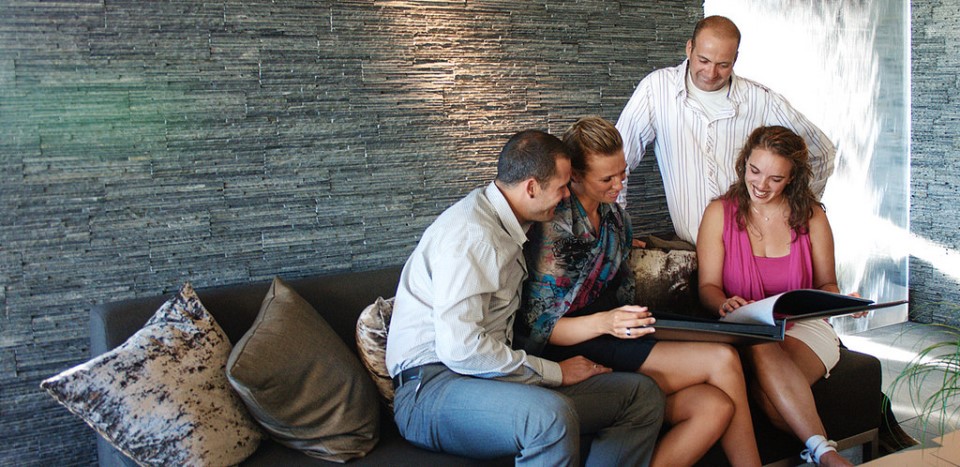
Do not take 'at work' too literally, by the way. It can be a simple activity, as long as it is sincere and real. That takes someone out of the photography setting. Give it a try and you will see that a candid portrait can work.
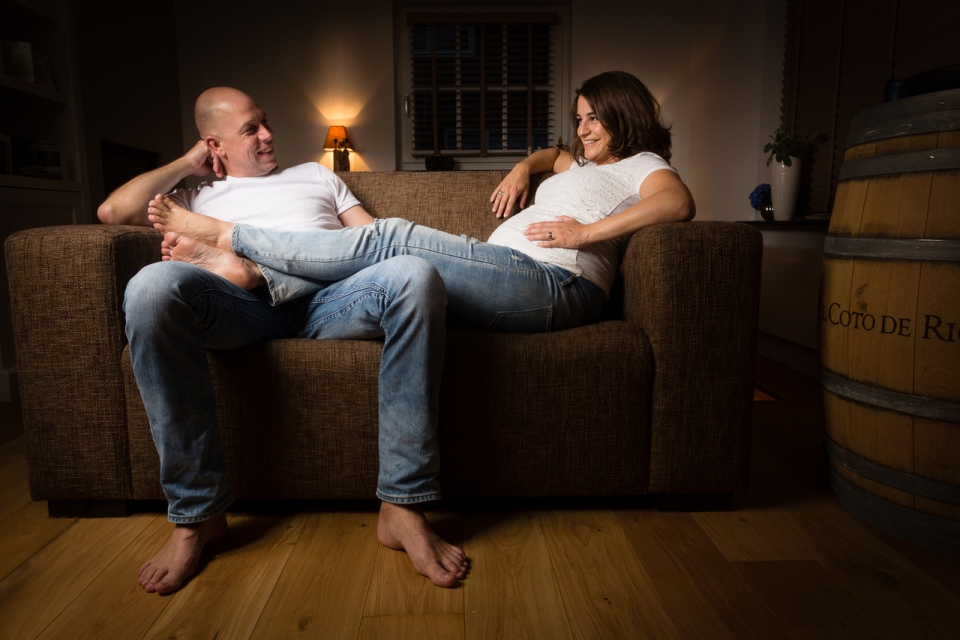
Keep them moving
Following on from putting people to work: if that is not an option, at least try to get your model moving. A pose often quickly becomes stiff. Why not actually get someone to walk, actually run a hand through their hair, or actually turn around?
It may take a little more effort from you as a photographer, but the movement, pose and posture will look more natural.
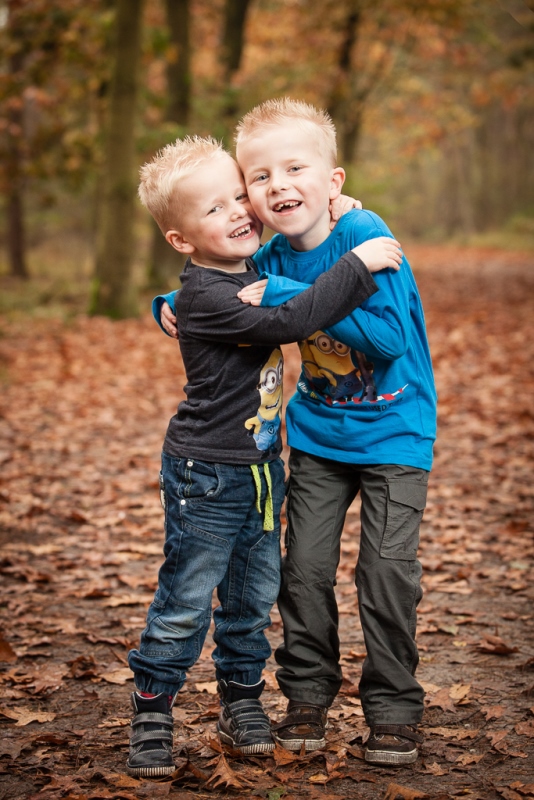
Capture the moment 'after'
Try doing something silly now and then. Take your model out of their comfort zone. Just for a moment. Perhaps by bringing out a strange prop. Or by asking someone to do something unusual. Not because you want to capture a strange moment, but precisely to capture the moment just after or before it.
When someone has briefly forgotten about the camera. A slightly riskier step is to find a special location with your subject that tells the story well.
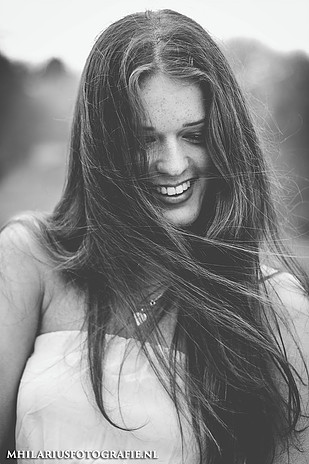
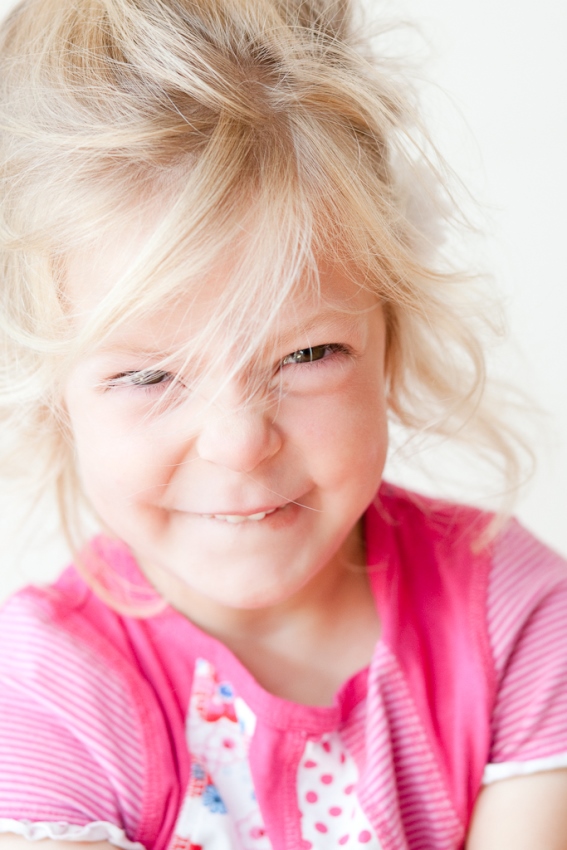
In any case, make sure you also take a shot when there is no standard 'camera smile' directed at you, as fellow blogger Marit Hilarius did in this portrait:
Make it fun!
Most importantly: make it fun and keep it relaxed. That immediately shows in your model!
About the author
Erik werkt als content specialist. Daarnaast is hij freelance tekstschrijver en fotograaf. Mensen vormen daarbij het hoofdonderwerp: portret- en reportage-fotografie. Volg Erik ook op Instagram!
You might also like
-
 Your ideal portrait based on brainwaves
by Michelle Peeters
-
 Reversing the Front Lens Element of a Vintage Lens
by Nando Harmsen
-
 Workflow for the ideal camera settings
by Michelle Peeters
-
 The ideal all-round lens for Micro Four-Thirds
by Nando Harmsen
14 comments
-

 Donald Willemsen
wrote on Tuesday 19 July 2016 at 10:40
| reply
A nice story with good tips. I think starting 'close' is a really good tip, in particular. You should already start putting the model at ease during the first 'intake interview' and during the shoot you keep doing that continuously by radiating calm yourself as well.
Translated from Dutch.
If you work with a theme, props can actually be important and determine the atmosphere in the photo.
If you work on location, make sure you are not bothered by too many 'onlookers'. That can be enormously distracting for the model and your own concentration. Always prepare a shoot well. And last but not least: Make sure you have a model release. -
 ErikvanRosmalen
wrote on Tuesday 19 July 2016 at 10:49
| reply
Thanks for your response donniebelg!
Translated from Dutch.
Props can certainly set the mood. I'm not saying you should leave them out either, but sometimes they're still dragged in by the hair. So keep it simple and only use them if they help tell the story. So not 'just to have something to hold', so to speak.
Good addition with the peeping Toms, by the way!
And as for the model release: yes, depending on the situation. I often work on commission and then those lines are a bit different, but with TFP it is wise. -
 OK wrote on Tuesday 19 July 2016 at 11:11 | reply
Erik,
Translated from Dutch.
Good Article!
With inexperienced models, I simply plan in more time, so that I have plenty of time to calmly chat with my inexperienced model beforehand. That is really important...!
Another tip I would like to share: Even if things perhaps aren't going as well as you would like, always tell the model that things are going well. This gives more self-confidence, and perhaps you will still get wonderful shots at a later stage. Say that things are going well, but don't overdo it either.
And yes, getting people to move, for example by letting them walk calmly, also breaks through a whole lot. -
guest wrote on Tuesday 19 July 2016 at 11:22 | reply
Good story with beautiful example photos. Taking your time and always staying positive are indeed very important too
Translated from Dutch. -
 Brian wrote on Tuesday 19 July 2016 at 14:25 | reply
Good article again Erik,
Translated from Dutch.
I recognize a lot in your story.
Might sound strange, but my photo sessions almost always start in the pub with a cup of coffee. When I meet the model, we duck into a little place to discuss over a cup of coffee (on neutral ground) what we're going to do. Only then do we go to the studio or the location where we're going to take photos. It's only at that point that the camera comes out too, it simply isn't even there before that.
Maybe as an addition, project that you're confident in yourself. Nothing is more difficult for a model than a photographer who doubts his work. If you show doubts when assessing your photos on your little screen, that makes you wonder. If the model is the beginner, then really project that you aren't, as a photographer.
For that reason, I also never have bad photos. Just lots of better ones. -
ErikvanRosmalen
wrote on Tuesday 19 July 2016 at 14:37
| reply
Thanks everyone!
Translated from Dutch.
@Brian:
Unfortunately, there's not always time to dive into the pub, but my opening argument 'camera away' does indeed amount to the same thing: try to get to know your model/subject first and put them at ease. I regularly do interviews myself where I also take a portrait photo. That's ideal, because then I've naturally already been able to talk to someone for quite some time before the camera comes out.
And... I never take bad photos either. I often say it right after my first or second photo. 'There, we've already got the good photo, everything that comes after this is a bonus, nice huh?'
-
 Gerard Bolhuis wrote on Tuesday 19 July 2016 at 15:10
| reply
Hi Erik,
Translated from Dutch.
Nice candid photos!
My compliments -
 Kees wrote on Tuesday 19 July 2016 at 15:18 | reply
Thanks for this tip because now I find it difficult to talk to the person ,I will definitely get something out of it
Translated from Dutch. -
ErikvanRosmalen
wrote on Tuesday 19 July 2016 at 15:57
| reply
Thanks Gerard!
Translated from Dutch.
@Kees:
Well, that's three quarters of photographing people, if you ask me...
So practice! -
 martinphili wrote on Tuesday 19 July 2016 at 22:49
| reply
Creating a good atmosphere, that's indeed what it comes down to.
Translated from Dutch. -
 Jan van Asveldt wrote on Wednesday 20 July 2016 at 11:25 | reply
Thank you very much for these tips. I have been a member of a portrait group for half a year and my favorite photos are the "close" portraits, spontaneous facial expressions, etc. I find the tips valuable and will certainly make use of them in the coming period.
Translated from Dutch. -
 Philip
wrote on Sunday 7 August 2016 at 11:26
| reply
Models often ask me whether they should look into the camera, just past it, or completely in another direction. Of course, the answer depends on the photo you want to take, but still... I know what I say then, but I'm curious for a moment how others handle that. Can you say anything sensible about it?
Translated from Dutch. -
 Elja Trum
wrote on Monday 8 August 2016 at 14:30
| reply
@Philip; I always suggest that they alternate it. I prefer anyway that they change their pose or look just a little after each photo. That's what I usually tell them.
Translated from Dutch.
If there's something I really like, I ask them if they want to hold that for a moment. -
ErikvanRosmalen
wrote on Monday 8 August 2016 at 16:20
| reply
What Elja says: I also always ask them to alternate. Although it is indeed of course very dependent on the purpose of your photos, what you want to say with them (or what the briefing asks) whether you want eye contact or not in posed portraits.
Translated from Dutch.
I sometimes have a model look just over the camera when I’m looking for a tough/confident/self-assured look. In combination with a viewpoint that does have an effect, plus models often unconsciously stand a bit straighter then.
Have your say
Please note: Articles older than a week can only be commented on by signed-in visitors.Would you still like to comment? sign in or create a free account.
Become a better photographer every week
A practical photography tip in your inbox every week.
38,729 photography enthusiasts already receive the tips! More about the weekly mail. Or keep up to date via  Facebook.

Elja Trum
Photofacts; everything to do with photography!
Would you like to take better photos and keep up with what is happening in photography? Photofacts publishes articles that teach you something about photography — from a product announcement to a practical shooting tip or a look at a website. Photofacts covers photography every day and is a hobby project of Elja Trum's that got out of hand. The articles are written by a team of volunteer authors. If you would enjoy writing one or more articles for Photofacts, do get in touch.More about Photofacts Photos
Photofacts is made possible in part by
