

Photographing with a vintage lens, or a manual lens
Friday 25 October 2024, 13:31 by Nando Harmsen | 4,619 views | 12 commentsThis article was translated from Dutch with the help of AI. Read the original.
I bought a vintage lens. One from the 1960s with an M42 screw mount. It is fun to photograph with, but there are a few things you need to keep in mind. The same goes for modern manual lenses.
A few years ago, I bought an ultra-wide-angle lens. This was the Laowa 12mm f/2.8 Zero-D, a fully manual lens. I still use it, because it is a fantastic lens when you want to fit an extreme amount into the frame.
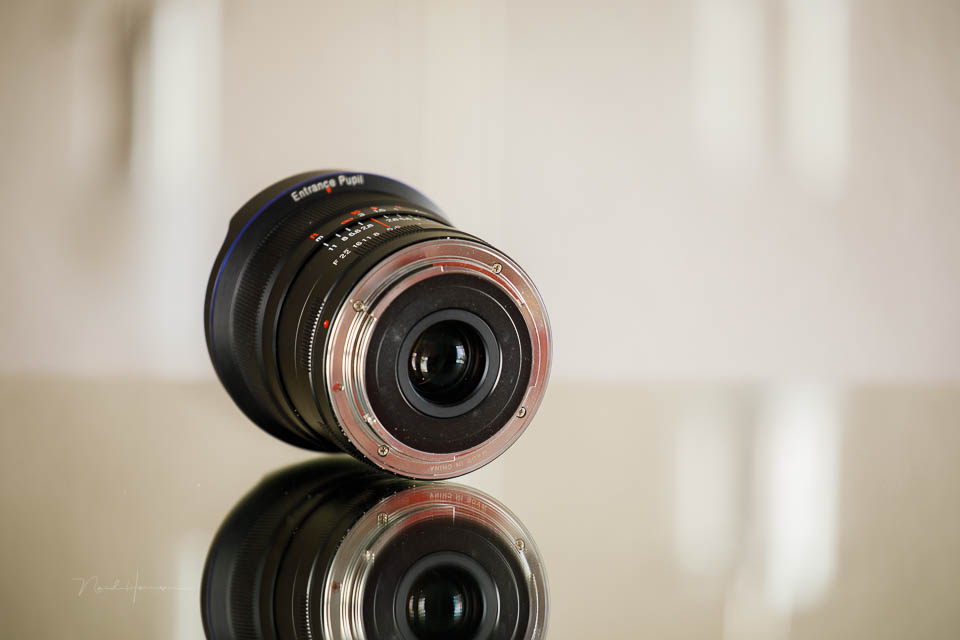
I had a few problems when I first used it. There are no electronic contacts, so the camera thinks that no lens is mounted. You therefore have to change a setting in the menu. At least, that is the case with Canon.
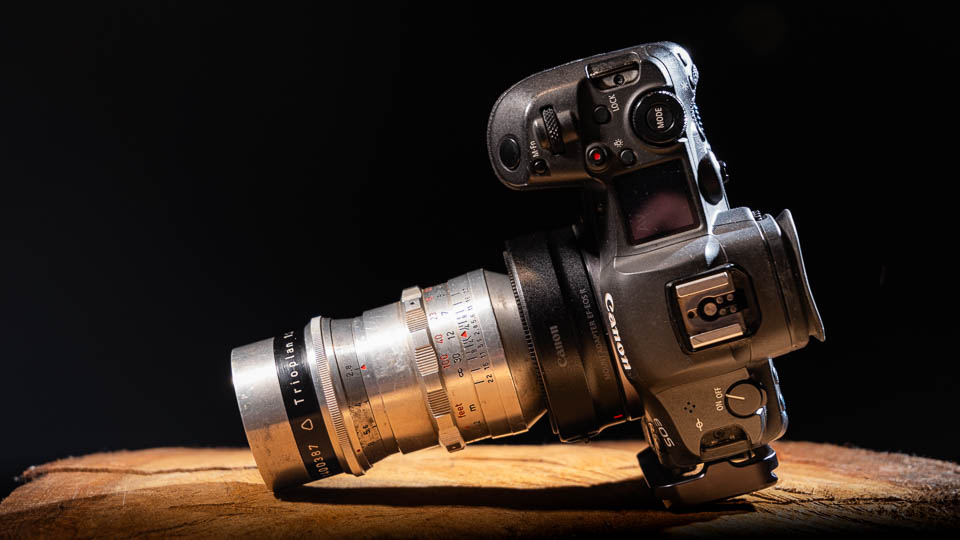
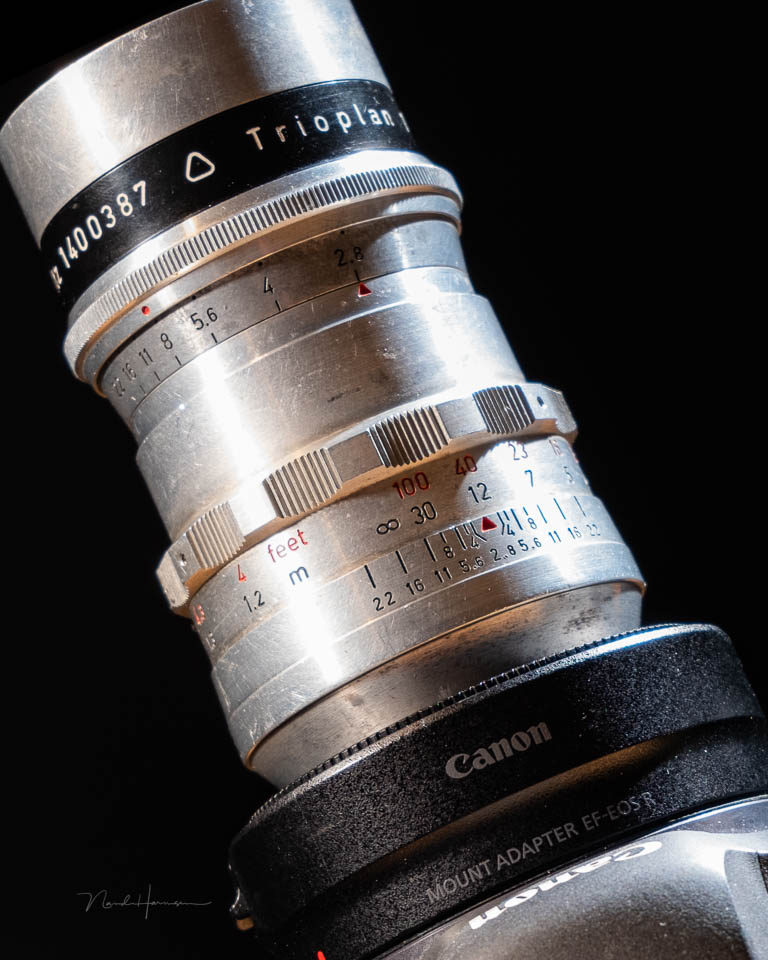
I have now bought a Meyer-Optik Görlitz Trioplan 100mm f/2.8 from 1954. This lens is known for its distinctive soap-bubble bokeh. I also have a set of antique extension tubes, which make the minimum focusing distance a little shorter.
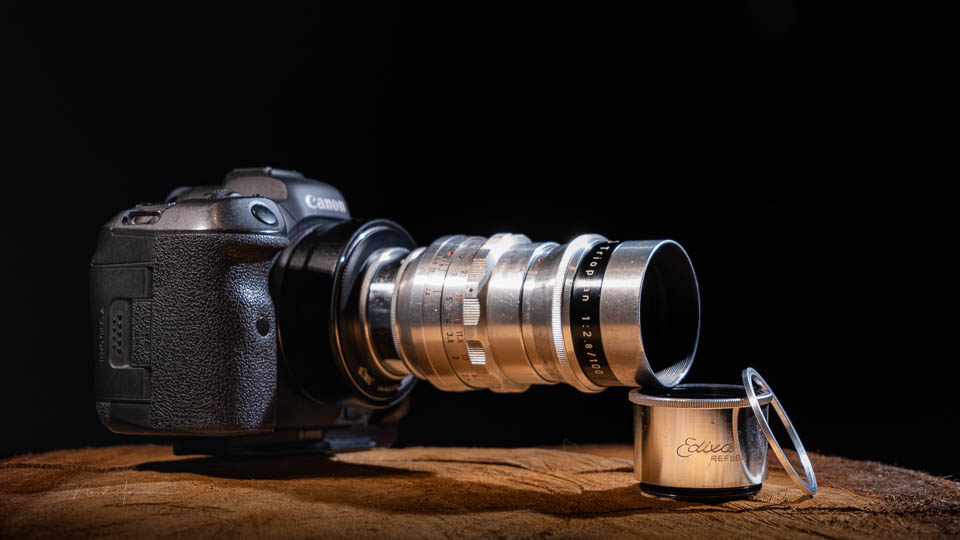
The Meyer-Optik Trioplan and the extension tubes both have an M42 thread. An adapter is needed to use this lens on my Canon EOS R5. There are no electronic contacts, so this lens is not recognised by the camera either.
M42 to Canon EF and RF adapters
To mount a lens with an M42 thread on a modern camera, you need an adapter ring. I still had one lying around, an M42 to Canon EF adapter. This is a simple ring that you screw the lens with the M42 thread into.
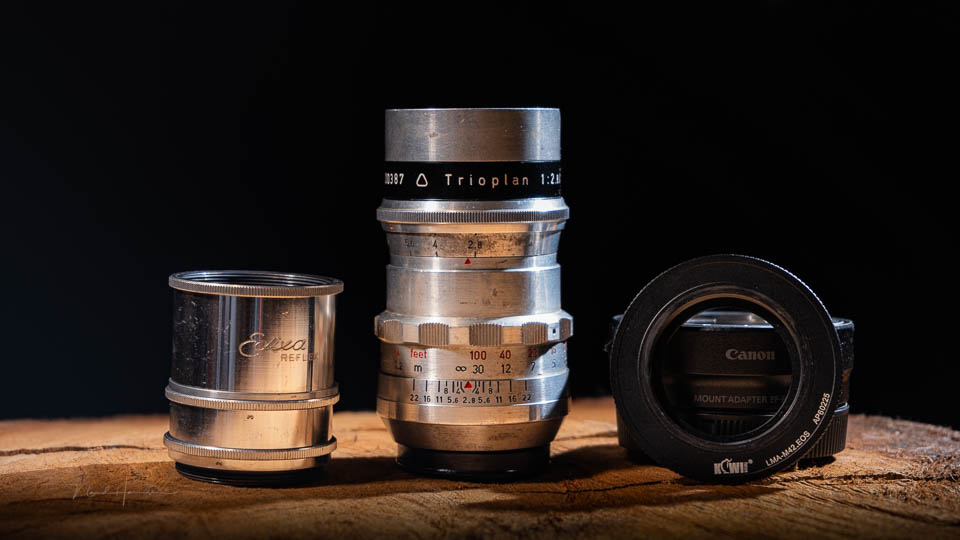
At that point, you can mount the lens on the camera without any problems. However, I now have a Canon mirrorless camera, so I also need to use an EF to RF adapter. M42 to RF adapters are also available.
You can get adapters for Canon, Nikon, Sony and Olympus. I believe there are also versions for Fujifilm and Leica mount. Do pay attention when buying one. Avoid buying the cheapest adapter ring. Make sure you get one of good quality with no play.
Photographing without a lens
I mentioned it at the beginning of the article. The camera does not detect that a lens is mounted. This means you have to enable the 'shoot without lens' option in the menu. Only then can you photograph with a lens without electronic contacts.
I know this is the case with Canon. Check this for your own camera. It is something you can easily forget. That can leave you puzzled when your camera refuses to take a photo.
Manual focusing
If there are no electronic contacts, autofocus is not possible either. But you knew that, because you chose a manual lens. So you have to focus by hand.
This can be difficult with a digital SLR. They are not really designed for manual focusing either. You have to do it by eye, or use the hyperfocal distance with ultra-wide-angle lenses.
Mirrorless cameras offer more tools. Some have a distance scale on the screen, but it does not work. After all, the camera thinks that no lens is mounted. Focus peaking can work, however.
With focus peaking, you get a coloured outline around elements in the image that are in focus. Turn this on and you have a useful tool at your disposal.
Keep in mind that some mirrorless cameras do not show focus peaking without a lens. In that case, you have to focus by eye. Magnifying the image on the LCD screen can also help.
Aperture
With manual lenses, the aperture opening becomes smaller when you stop down. Modern lenses with electronic contacts do not do this until you take the photo. This means the image always remains bright, even when you set a small aperture.
If there is no communication between the camera and lens, stopping down the aperture will always produce a dark image. This can make it difficult to see anything through your viewfinder or to focus manually.
With an SLR, you can use live view with exposure simulation enabled. This is basically the standard setting on mirrorless cameras. The image therefore remains bright, even when you stop down the aperture.
How do I like the Meyer-Optik Trioplan?
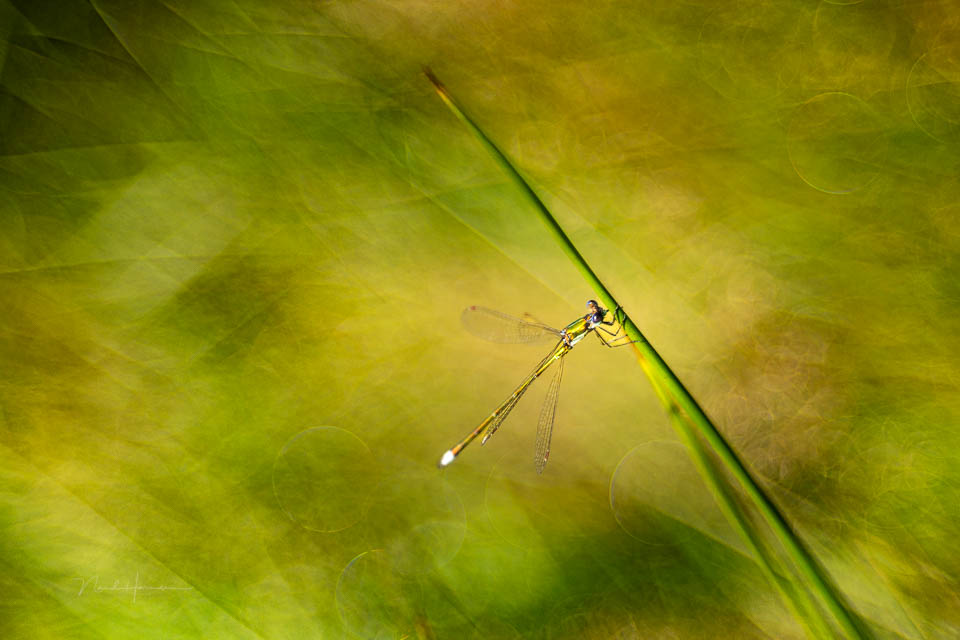
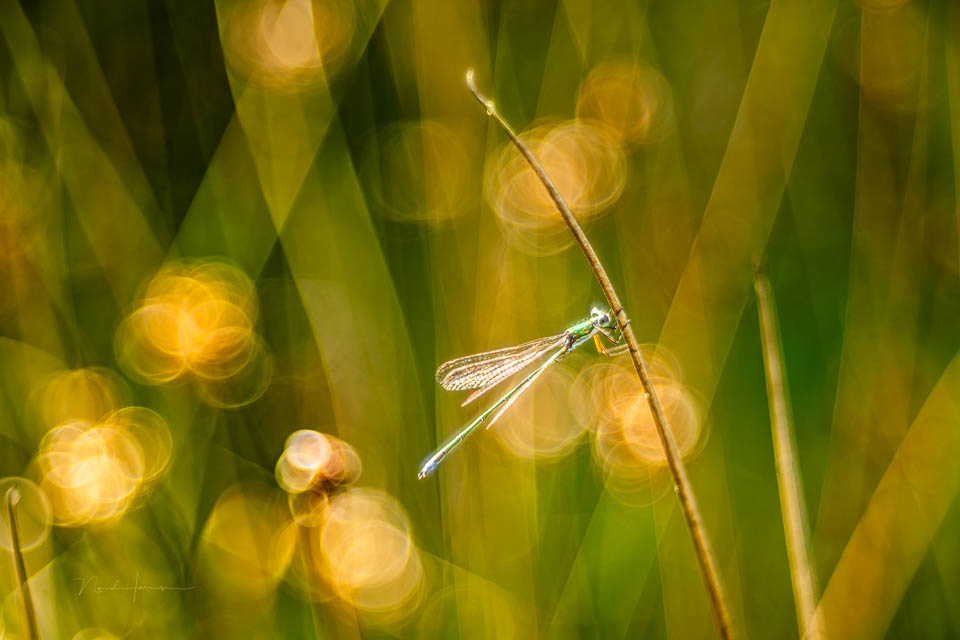
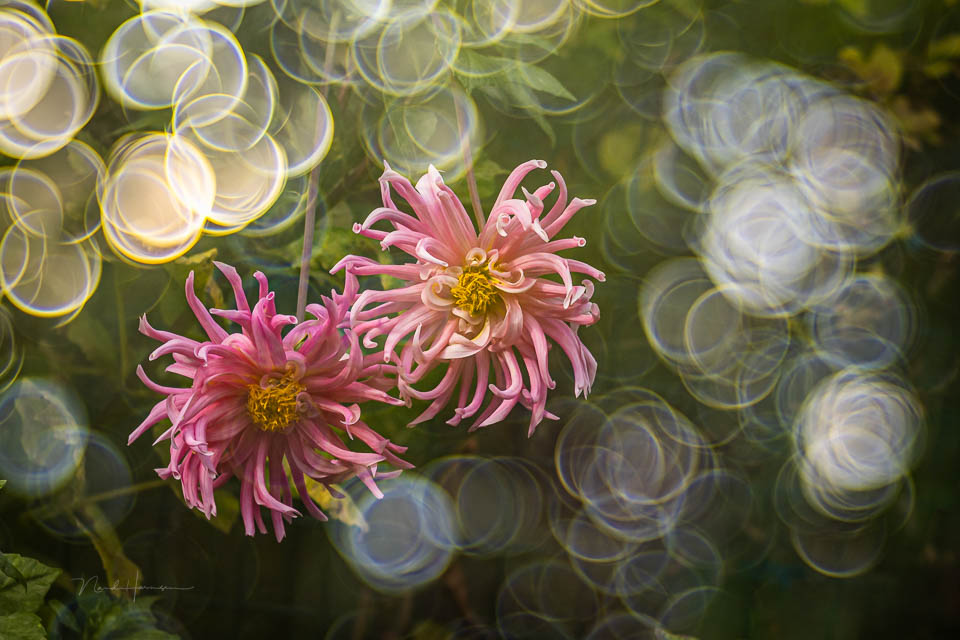
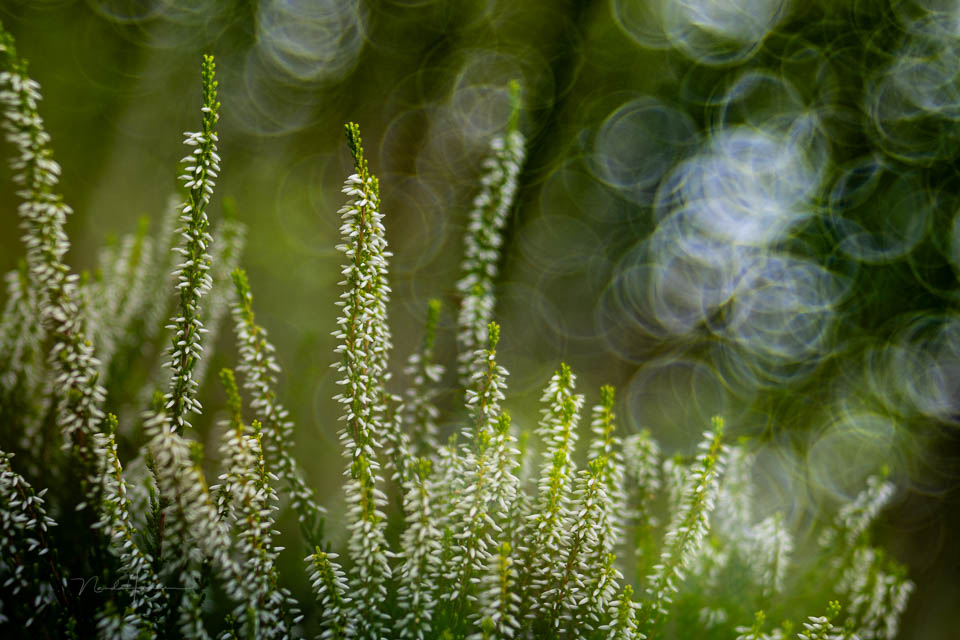
I have not yet been able to take many photos with the Meyer-Optik Görlitz Trioplan 100mm f/2.8. But it is definitely in the plans. I find the results I have so far very appealing. I often combine its use with a double exposure to make the soap-bubble bokeh prominent in the image.
Of course, you have to like this kind of bokeh. It is often a case of you love it, or you hate it. I think it is fantastic. I am now also thinking about looking for a lens with swirl bokeh, such as the Helios 44-2.
Did you know that TTartisan makes M42 lenses that are modern versions of these old vintage lenses? They are cheaper, have modern build quality, and improved coatings and image quality.
But they are still modern lenses. Photographing with a 70-year-old lens does have its charm. Oh well, you either love it or you do not. One thing is certain, with this kind of lens you are much more intensively involved in photography, I find. I enjoy it.
Do you also use manual lenses? Which ones do you use and why? Let us know in a comment below this post. I look forward to hearing about your experience.
About the author
Nando Harmsen has been photographing for more than 40 years. He specialises in wedding photography and landscape photography. Nando also gives talks, workshops, masterclasses and photo trips, and regularly reviews new and interesting equipment.
You might also like
-
 The follow-up to photographing with a vintage lens
by Nando Harmsen
-
10 tips for photographing with a vintage lens
by Nando Harmsen
-
 Reversing the Front Lens Element of a Vintage Lens
by Nando Harmsen
-
 Take fewer portrait photos with a vintage lens
by Nando Harmsen
-
 The costs of getting started with vintage lenses
by Nando Harmsen
-
 Bringing Spring to Life in Photos
by Nando Harmsen
12 comments
-
 Donald Willemsen wrote on Friday 25 October 2024 at 14:00 | reply
Nando, what a cool inspiring article you have written. Being creative with vintage lenses seems enormously fun to me. Good too that you point out certain things regarding a setting in the camera's menu. In my case that is the Canon R7. You have to set photographing without a lens when you use a lens without electronic communication. You wrote about the Laowa 12mm wide-angle lens that works fully manually. I have a 7.5mm super wide-angle lens from Ttartisan. This lens does have an RF mount but no communication contacts with the camera. I think it is a cool little lens.
Translated from Dutch.
Then just one small mistake in the text:
Quote: 'If there is communication between the camera and lens, then stopping down the aperture will always produce a dark image. ' end quote. 'there is communication' should be: 'there is no communication'.
Thanks for the inspiring story -

-
 Gina Heynze wrote on Friday 25 October 2024 at 17:07 | reply
Can only add that working with a vintage lens is a lot of fun. I have a few now and they all have their own charms. I'm currently looking for a Trioplan 50 or 100 so if anyone reading this has one lying around.....
Translated from Dutch. -
-

 jeepee wrote on Saturday 26 October 2024 at 19:57
| reply
jeepee wrote on Saturday 26 October 2024 at 19:57
| reply
I have various vintage lenses from the 1950s to the beginning of this century. I get an enormous amount of pleasure from them, I also have modern lenses but find the result too perfect and for me photos therefore often lack character. This might be an interesting perspective: https://yannickkhong.com/blog/2016/2/19/the-lens-intention-diagram
Translated from Dutch. -
-
 Mac wrote on Monday 28 October 2024 at 08:38 | reply
I also have a number of old lenses, and since I shoot with Pentax, it’s a lot easier. Because of their legacy, which they build on, they have all kinds of little aids built in to make it easier.
Translated from Dutch.
I also have a small correction in your text. You write that SLRs are not made for focusing manually. This should be modern SLRs. At home I still have enough old SLRs that you can’t do anything but focus manually with. 9in my Pentax I can even change the focusing screen, which makes focusing manually a lot easier again) -
-
 Arjan Spaander wrote on Tuesday 29 October 2024 at 11:55 | reply
Long live Pentax: started more than 40 years ago with a Pentax P50, then a K10D and now a K3III. But I can still use my first lenses. For the K10D, I custom-made a focusing screen from an old camera so I could focus manually with ease.
Translated from Dutch. -
 Stefanie wrote on Tuesday 29 October 2024 at 14:16 | reply
I did without it for years, so I don't see manual focusing as a problem, autofocus is often handy but sometimes it isn't, so even with modern lenses I often switch over to MF for a moment. For macro I have a 60mm 2x from Laowa, fully manual, not really a handicap for macro. And a while back I bought an adapter to be able to use my old Praktica lens (50mm 1.8) on my digital Canon, but I haven't gotten any further with it than a few test shots. My camera doesn't make a fuss about analogue lenses, but good to know that with some of them it's a setting you need to enable to be able to use them
Translated from Dutch. -
 Paul van Aken wrote on Tuesday 29 October 2024 at 21:33 | reply
With a mirrorless camera you of course have the advantage that the distance to the image plane does not form an obstacle. I still have a single lens with T mount (who still remembers them?) which I can therefore use on my D500. A P-thread lens + adapter will always sit too far away for infinity.
Translated from Dutch.
Wonderfully enough, a 50+ year old 2.8 35mm lens can still be used very well with that adapter without generating really old-fashioned aberrations, I bought that thing in 1971 for my first SLR, a Zenith B, a hammer with built-in photo capability. -
Nando
wrote on Tuesday 19 November 2024 at 14:34
| reply
A P-thread lens is no problem for Canon. The diameter of an M42 thread (the same as a P-thread) is smaller than the EF mount.
Translated from Dutch.
Because the Nikon mount has a smaller diameter, it is indeed problematic. I hadn't thought of that before. Thanks for the addition.

Have your say
Please note: Articles older than a week can only be commented on by signed-in visitors.Would you still like to comment? sign in or create a free account.
Become a better photographer every week
A practical photography tip in your inbox every week.
39,024 photography enthusiasts already receive the tips! More about the weekly mail. Or keep up to date via  Facebook.

Elja Trum
Photofacts; everything to do with photography!
Would you like to take better photos and keep up with what is happening in photography? Photofacts publishes articles that teach you something about photography — from a product announcement to a practical shooting tip or a look at a website. Photofacts covers photography every day and is a hobby project of Elja Trum's that got out of hand. The articles are written by a team of volunteer authors. If you would enjoy writing one or more articles for Photofacts, do get in touch.More about PhotofactsPhotofacts is made possible in part by
