

Take fewer portrait photos with a vintage lens
Monday 27 April 2026, 16:32 by Nando Harmsen | 2,623 views | 10 commentsThis article was translated from Dutch with the help of AI. Read the original.
It is very easy to take lots of photos during a portrait session. Even if you shoot short series, the number of photos quickly adds up. Some people take many hundreds of photos in an hour. Choosing a vintage lens will make you photograph differently.
Taking lots of photos is no problem these days. Even at three or five frames per second, the number quickly adds up. Sometimes that makes sense, sometimes it can be pointless. You can decide for yourself what you think.
All those hundreds of photos taken during a session are almost always perfectly sharp thanks to autofocus. You then have to select all those photos. Software can help you with that, using all kinds of 'smart' functions.
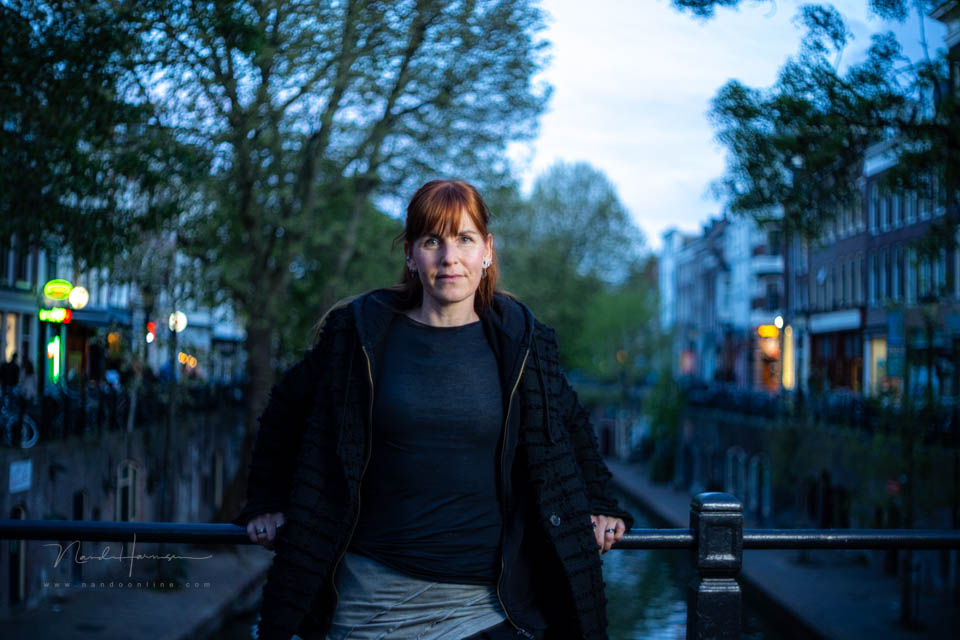
Taking fewer photos makes the selection work easier. But taking fewer photos is easier said than done. This changes when you photograph with a lens that you focus manually.
This simply takes more time to focus accurately. You are no longer just 'spraying and praying'. You have to pay attention to your photo, the settings, your composition, and your model's pose. Instead of taking 500 photos per hour, you may then take 100 per hour.
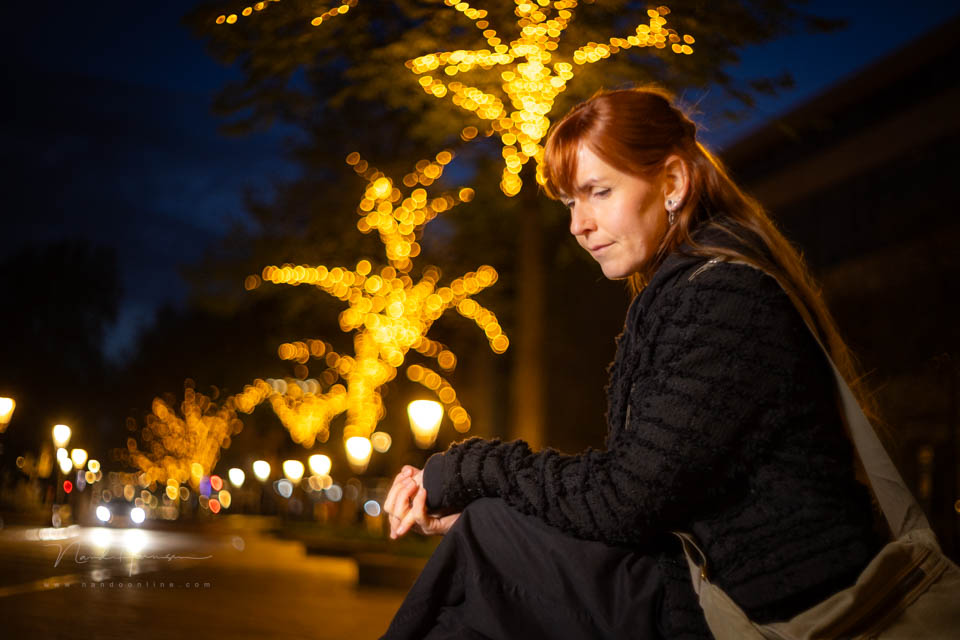
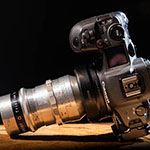
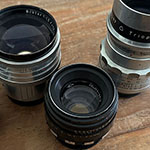
I use vintage lenses for this. Preferably a 50mm or 58mm lens. For this, I use a Meyer-Optik Görlitz Domiron 2/50mm from 1963 or a Carl-Zeiss Jena Biotar 2/5,8cm from 1949.
You can of course do this with modern lenses too. You can focus manually with those as well. However, it is much more fun to use a lens that only has manual focus. It does not necessarily have to be a vintage lens.
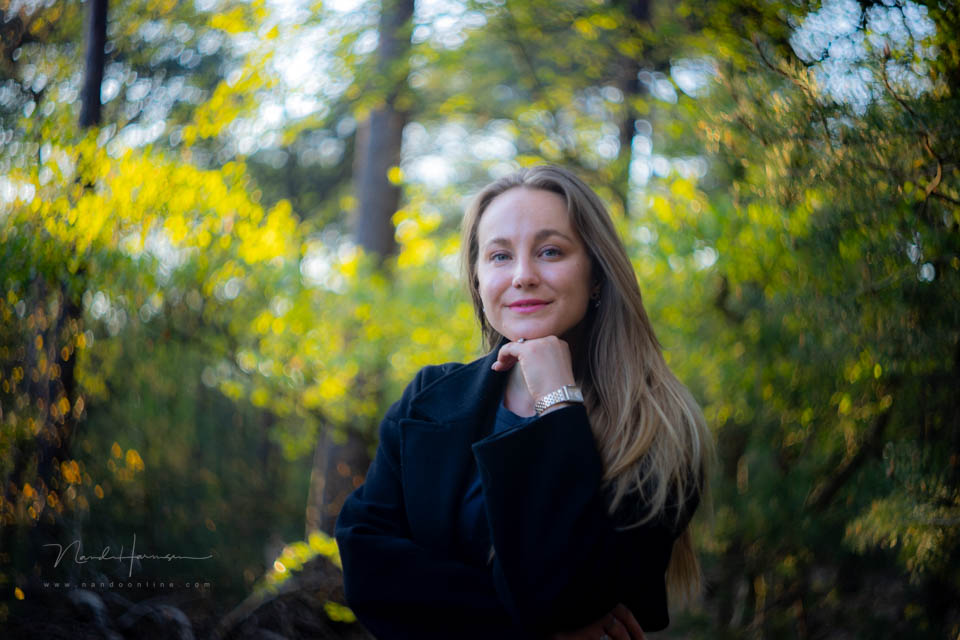
Manual focusing means that you have to take things slowly. You should not expect all your photos to be perfectly in focus either. It does not matter if every photo is not perfectly sharp. But it does give you more satisfaction.
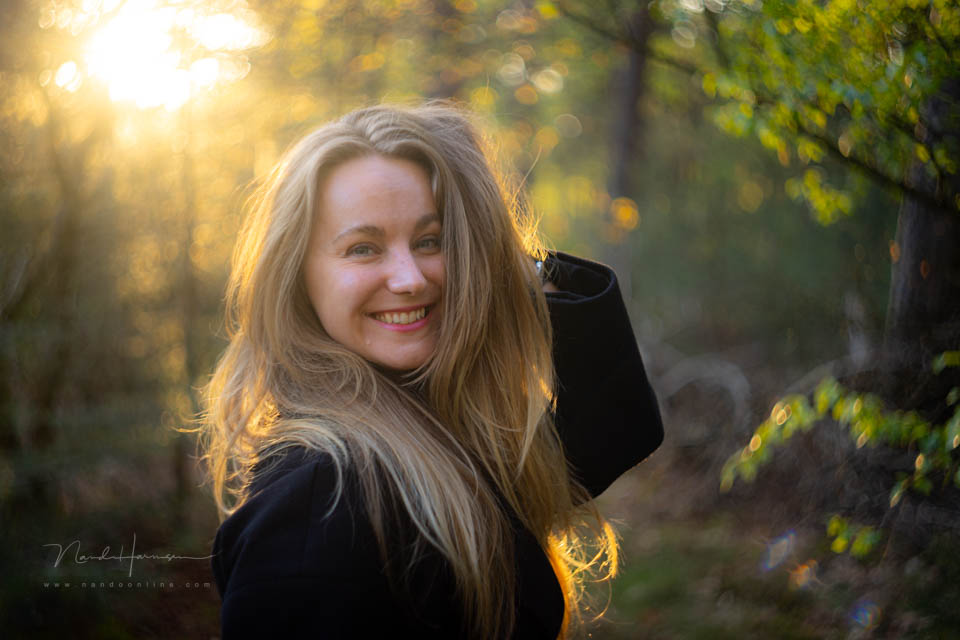
I understand that this is not suitable for everyone, as it requires a completely different way of working. I feel like I am really photographing again, I notice. And that also makes it more enjoyable.
Will I always photograph this way now? No, of course not. There are situations where all the automation and 'perfect' autofocus are simply essential. Then I am happy to use them again.
About the author
Nando Harmsen has been photographing for more than 40 years. He specialises in wedding photography and landscape photography. Nando also gives talks, workshops, masterclasses and photo trips, and regularly reviews new and interesting equipment.
You might also like
-
 The follow-up to photographing with a vintage lens
by Nando Harmsen
-
 Reversing the Front Lens Element of a Vintage Lens
by Nando Harmsen
-
10 tips for photographing with a vintage lens
by Nando Harmsen
-
 The costs of getting started with vintage lenses
by Nando Harmsen
-
Photographing with a vintage lens, or a manual lens
by Nando Harmsen

10 comments
-
 Paulus wrote on Tuesday 28 April 2026 at 12:06 | reply
You put into words something that is also a thorn in my (photographer's) eye.
Translated from Dutch.
People don't photograph anymore, they just fire away, hoping there'll be a good one among them. I started out shooting analog myself, buying a "roll" from Hema with my pocket money, at the time fl 1.25, you could take 12 photos. Then you were careful. Later 135 film, you had 36 shots, for about fl 3.00. (Everything excluding processing)
I have a daughter who is a wedding photographer, and she comes home with 1000+ photos. When I occasionally did that for acquaintances, I took 6 rolls with me, there was usually 1 left, so about 150-170 shots. But 80% was good, she throws 80% away.....
Recently came across a good Zenit TTL with Helios 44M for a bargain price, and used up a roll with it again, a relief to work so calmly like that.
With an adapter on a mirrorless that will be a little less, but you do gain different insights, and it makes for ( much) less sorting. -
 Cor Broeders wrote on Tuesday 28 April 2026 at 12:47 | reply
After years of shooting with a 6x7 for that reason, I had no choice but to switch to a digital contraption; nobody developed slides anymore. And chemicals were no longer made for it in Hardenberg.
Translated from Dutch.
The problem with modern cameras is that the focusing screen is no longer suitable for focusing properly with it. Livevieuw is only a solution if you also lug around a tripod. -

-
 Hans De Smaele wrote on Tuesday 28 April 2026 at 12:48 | reply
A while ago I bought myself a Voigtländer 50 mm F/1.0 to use on my Nikon Z9. Pure enjoyment with this manually operated lens ! And of course I also have lenses with autofocus for doing sports photography and, for example, photographing birds. But I now use that Voigtländer as a replacement for my old Nikon 50 mm F/1.2 (was on my D5). Manual and 50 mm, you don't need more than that to have fun.
Translated from Dutch. -
-
Paulus wrote on Tuesday 28 April 2026 at 14:36 | reply
I do agree with Cor, focusing on the screen is very difficult, especially if that screen is very touch-sensitive. Nothing beats a good ground glass.
Translated from Dutch.
My first SLRs had a pure ground glass, all later ones had "aids", a split-image wedge, or microprisms, including the ones I just scored from my previous message, but the best is that pure ground glass.
The semi-bright image in my Nikon dslr''s does come close, but still doesn't feel like anything.
Screens are hopeless -
 Nando
wrote on Tuesday 28 April 2026 at 15:03
| reply
Nando
wrote on Tuesday 28 April 2026 at 15:03
| reply
I’ll keep saying it: use the electronic viewfinder to enlarge the image.
Translated from Dutch.
It takes some getting used to, but it works perfectly. I even think it’s more accurate than a focusing screen from the past, or prisms, or whatever.
By the way, for my old Canon EOS 20D I bought a separate focusing screen. You could replace the standard screen back then. -
 Han Gerretsen wrote on Thursday 30 April 2026 at 05:58 | reply
Digital photos are easy to edit with software such as Photoshop or Picasa. You can correct colors, crop, sharpen and apply creative effects.
Translated from Dutch. -
-
Paulus van Aken wrote on Thursday 30 April 2026 at 09:44 | reply
Dear Han,
Translated from Dutch.
That’s right, but that’s not what it’s about, it’s about the way photographs are taken, the shot itself. Almost everyone nowadays just shoots away, dozens or even hundreds of photos in 1 day of the same subject, only to look at the PC screen afterwards to see if there’s a good one among them.
I started with analog, and I still do it (almost) the same way as I did back then, one or two, sometimes a small series of a subject.but then calmly compose, determine depth of field( if necessary) I leave exposure to the camera, it’s good at that. Only in very difficult situations do I take a few test shots and then check them on the little screen.
Yesterday went to the Eiffel, ,Perlenbachtahl, came back with 170 shots.
Have your say
Please note: Articles older than a week can only be commented on by signed-in visitors.Would you still like to comment? sign in or create a free account.
Become a better photographer every week
A practical photography tip in your inbox every week.
39,079 photography enthusiasts already receive the tips! More about the weekly mail. Or keep up to date via  Facebook.

Elja Trum
Photofacts; everything to do with photography!
Would you like to take better photos and keep up with what is happening in photography? Photofacts publishes articles that teach you something about photography — from a product announcement to a practical shooting tip or a look at a website. Photofacts covers photography every day and is a hobby project of Elja Trum's that got out of hand. The articles are written by a team of volunteer authors. If you would enjoy writing one or more articles for Photofacts, do get in touch.More about PhotofactsPhotofacts is made possible in part by
