

The follow-up to photographing with a vintage lens
Monday 14 April 2025, 20:02 by Nando Harmsen | 4,202 views | 21 commentsThis article was translated from Dutch with the help of AI. Read the original.
In the summer of 2024, I bought my first 'vintage' lens. I liked the first results so much that I wanted more. I started looking for lenses with their own unique character. Is it time to leave modern lenses in the bag?
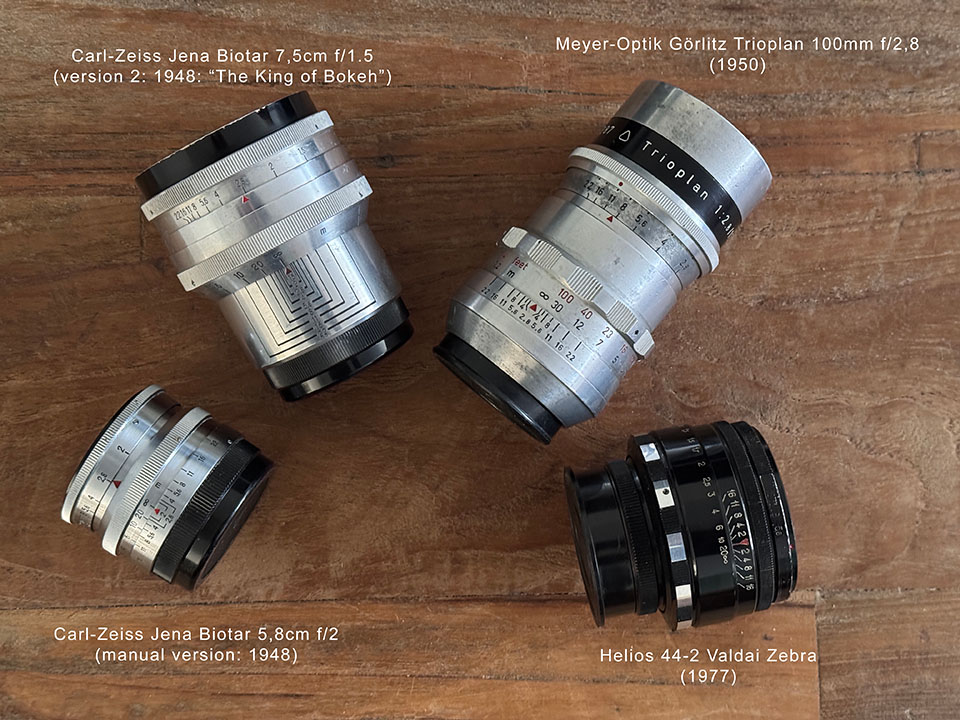
I wrote an article about the Meyer-Optik Görlitz Trioplan 100mm f/2,8 in October, which was my first step into the world of old lenses. This lens is known for its bubble bokeh.
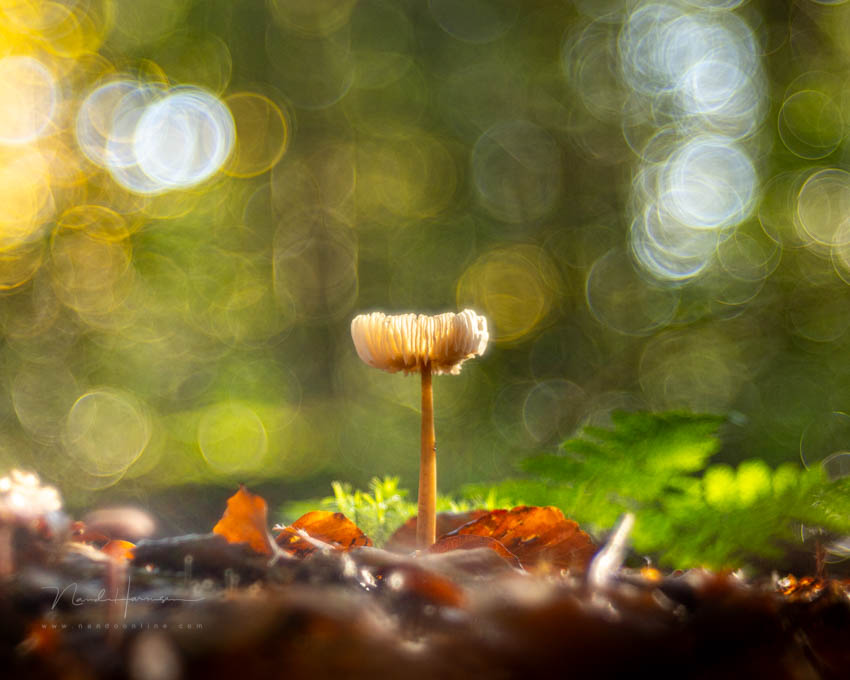
Later, I bought an antique Helios 44-2 lens, which may well be the best-known of them all. Laura van der Burgt wrote an article about it back in 2011. In that respect, I was very late to the world of these kinds of lenses.
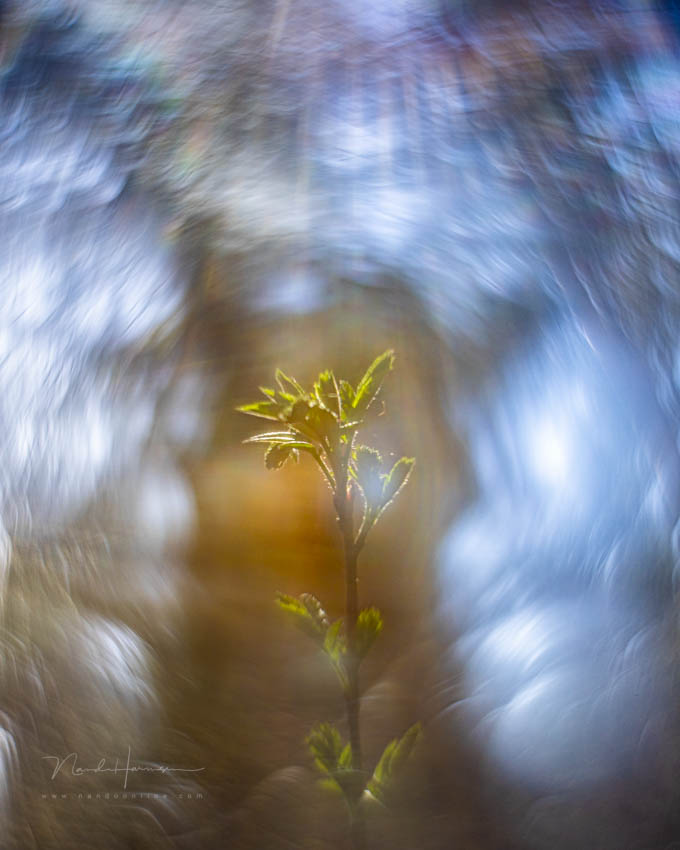
I took it a step further and turned the front lens element of the Helios 44-2 around. This created a unique, distorted and especially enhanced swirl bokeh effect, which of course came at the expense of image quality. You can read more about it in this article.
Photographing with these two lenses, the Meyer-Optik Görlitz and the Helios 44-2, was so enjoyable that I started looking for other lenses. The antique Carl-Zeiss lenses soon caught my attention.
The Helios 44-2 is a Russian version of the Carl-Zeiss Jena Biotar 5,8cm f/2. They both have the much sought-after swirl bokeh effect. Since I had reversed the front lens element of the Helios, this seemed like a great addition. This also led me to the 7,5cm version of the Carl-Zeiss, which became known as the King of Bokeh.
I now have both the Carl-Zeiss Jena Biotar 7,5cm f/1,5 and the Biotar 5,8cm f/2. These two are beautiful lenses that are over 75 years old. They produce sharp images and have unique bokeh.
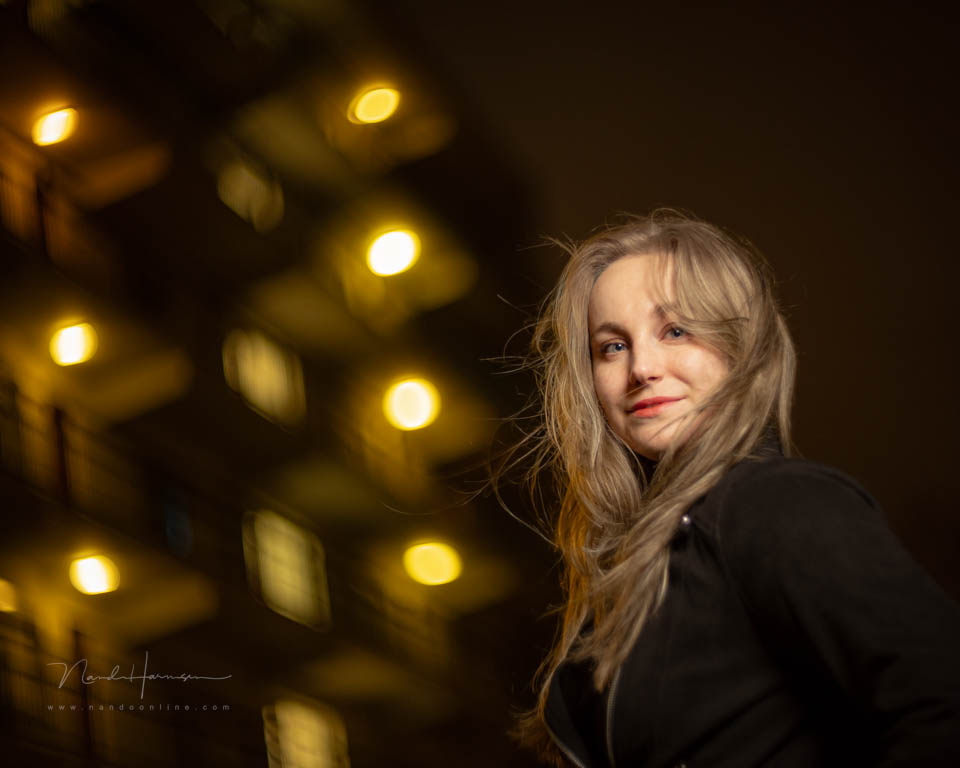
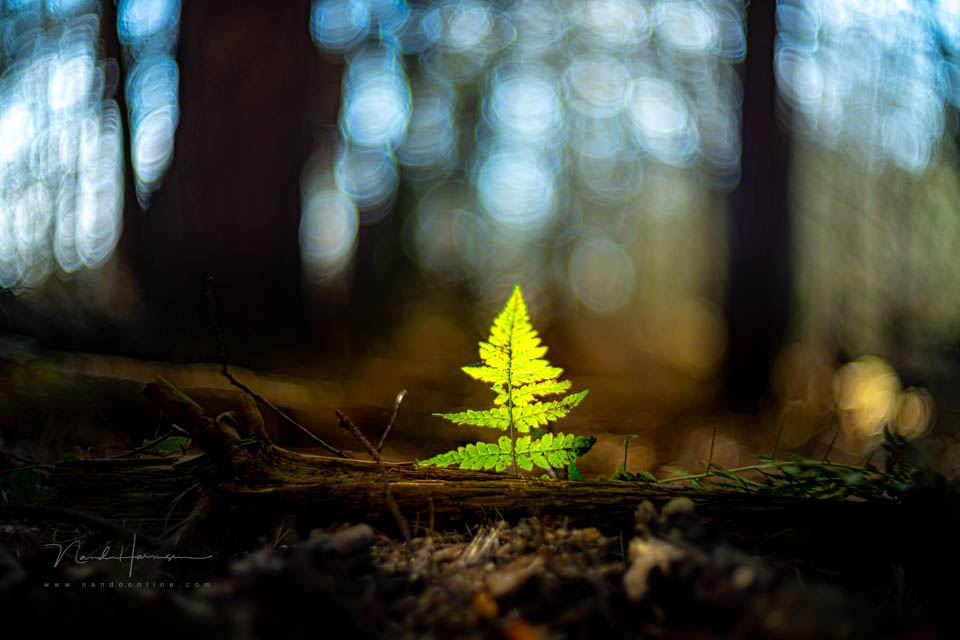
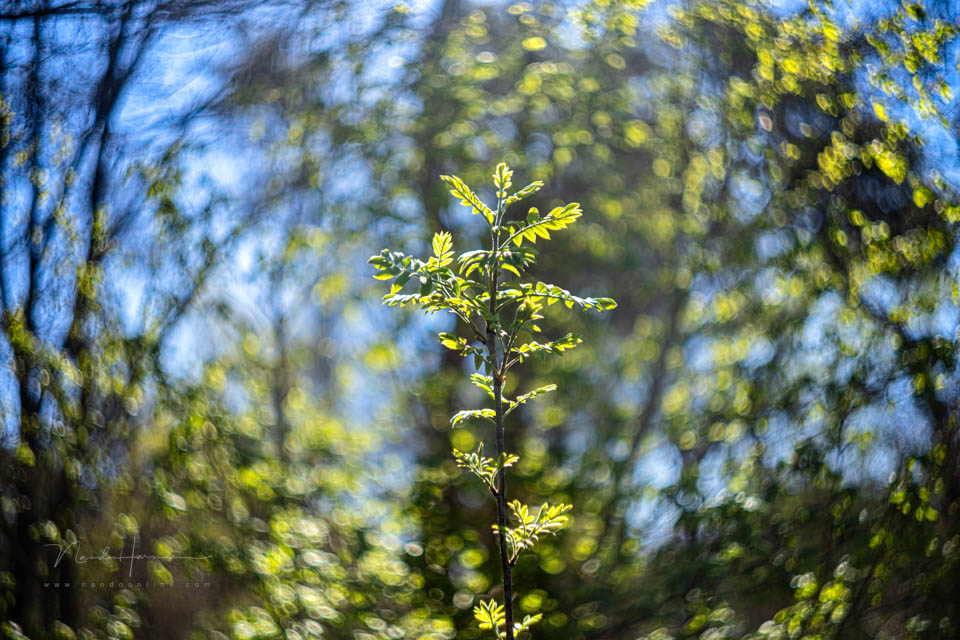
Photographing with these old lenses is very rewarding. It is a step back, though. You cannot just take a photo quickly. It takes a little more effort and time to get your focus right. In that respect, modern cameras are not optimised for manual focusing.
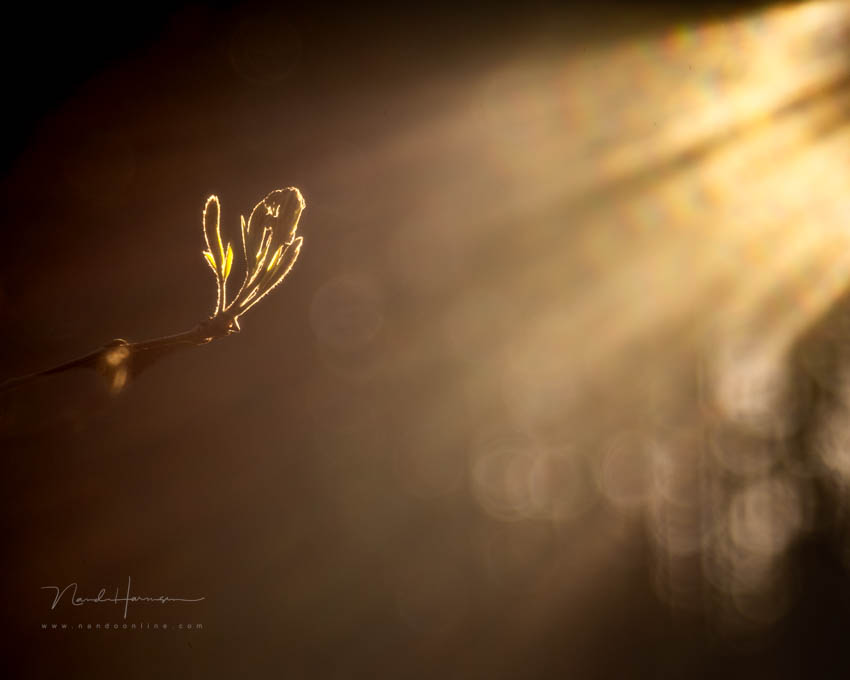
Fortunately, mirrorless cameras offer the option to magnify the image and use focus peaking. If you set the camera to a black-and-white profile, you can see the focus peaking even better. Do make sure you photograph in raw to retain colour.
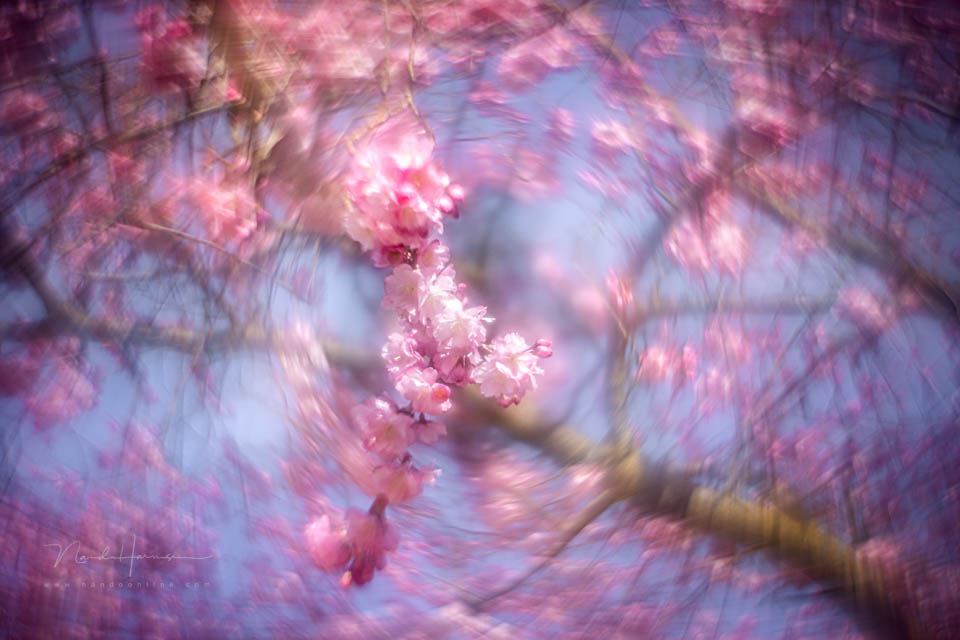
Is it time to leave modern lenses in the bag? No, not quite. Although you could switch completely for some types of photography, using modern lenses for reportage has simply become essential.
Old lenses like these are also unsuitable, or barely suitable, for action photography and wildlife, where speed is important. If speed is not important, these lenses are perfect to use. They also make you slow down, so you spend more time on your hobby.
Vintage lenses are not for everyone. You have to like them. But in my view, they can enrich your photography. Especially if you are looking for more creativity in your photography.
About the author
Nando Harmsen has been photographing for more than 40 years. He specialises in wedding photography and landscape photography. Nando also gives talks, workshops, masterclasses and photo trips, and regularly reviews new and interesting equipment.
You might also like
-
 10 tips for photographing with a vintage lens
by Nando Harmsen
-
Photographing with a vintage lens, or a manual lens
by Nando Harmsen
-
 The costs of getting started with vintage lenses
by Nando Harmsen
-
 Reversing the Front Lens Element of a Vintage Lens
by Nando Harmsen
-
 Take fewer portrait photos with a vintage lens
by Nando Harmsen
-
 Bringing Spring to Life in Photos
by Nando Harmsen
21 comments
-
 Donald Willemsen wrote on Tuesday 15 April 2025 at 10:27 | reply
Nando, I think it’s a really cool article. However, you do need to purchase quite a bit of equipment before such a lens fits on the camera.
Translated from Dutch.
I think you can achieve the same effects with Lensbaby lenses. They fit directly onto the camera if you buy them with the right mount. I have a Lensbaby Composer Pro. You can insert different lensjed into it, with which you can achieve fun effects. They also have quite a few other lenses.
Maybe an idea to devote an article to that sometime or make a short course about it.
In any case, thanks for the nice ideas. -

 Nando
wrote on Friday 18 April 2025 at 14:04
| reply
Nando
wrote on Friday 18 April 2025 at 14:04
| reply
If you read up on it a little, and also look at my previous article, you’ll see that a single adapter costing a few dozen euros is enough to use old lenses.
Translated from Dutch.
It’s cheaper than a Lensbaby lens, which moreover produces a completely different kind of photo. That’s something totally different.
There’s an entire course on Lensbaby at Photofacts Academy. -
 Lauran van Schilt wrote on Tuesday 15 April 2025 at 14:45 | reply
Nice article. I always say creativity knows no time. That's how I started photographing in soft focus. Let's say the same style as the one David Hamilton used in the 70s and 80s of the last century. Without using Photoshop. I do have to explain well to each model what the intention is, but the enthusiasm is quite great. Not every model is suitable for it. The important thing is that you create the right atmosphere and I also regularly travel to France.
Translated from Dutch.
Certainly not to everyone's taste but overall very positive reactions. -
-
 etienne dezutter wrote on Tuesday 15 April 2025 at 15:13 | reply
Hello I think that with Lensbaby you don't get the same effects as with the Carl Zeiss or Helios . By the way, Andrea had already reserved a spot on the site for a discussion of the Lensbabies and their applications .I do suspect that the focus is shifted in Lensbaby but that doesn't necessarily give you more bokeh balls .This is really something for these old lenses. I would also like to work with the Helios 44 sometime to bring people into the frame using ICM and long shutter speeds . I am crazy about experimental research...
Translated from Dutch. -
Donald Willemsen wrote on Tuesday 15 April 2025 at 16:23 | reply
@Lauran, many of today's (hobby) photographers don't even know David Hamilton anymore. You hardly ever hear him mentioned. I also find his style very beautiful. In response to your message, I have a little question. Do you use soft-focus filters while photographing? In the '80s I used those from Cokin. They were plastic filters of which I now have serious doubts about the quality. I also know that Lensbaby has soft-focus lenses.
Translated from Dutch.
I would also like to take up Hamilton's style again. I do wonder which choice I should make: filters or soft-focus lenses. A UV filter with Vaseline on it works too, by the way??. -
 Elja Trum
wrote on Tuesday 15 April 2025 at 16:34
| reply
Elja Trum
wrote on Tuesday 15 April 2025 at 16:34
| reply
David Hamilton's work was an important inspiration for me to pick up the camera as well.
Translated from Dutch.
Recently I also did some more shoots in his soft-focus style. There will also be a video about this on Photofacts Academy. I already have an English-language version on Youtube.
I tested with, among other things, Vaseline on the filter, a Cokin soft-focus filter and a Canon 135mm soft-focus lens.
I'm not really enthusiastic about the soft-focus effect of the lens. The Vaseline and the Cokin filter worked quite well for me, but in the end I still prefer adding a soft-focus effect afterwards in Photoshop. More control over where you do and don't have focus.
My experiment was also based on the work of Vivienne Mok, by the way. She also makes beautiful photos in a style that is very similar to that of David Hamilton. -
 sjaak buis wrote on Tuesday 15 April 2025 at 17:54 | reply
I have several Carl Zeis lenses all older than 50 years and from the Jena period , my favorite lens is the f2 - 50mm Pancolar what sharpness and color separation it has
Translated from Dutch. -
 Rob Dikkers wrote on Tuesday 15 April 2025 at 18:25 | reply
Nice article, as luck would have it I was in Bonn last weekend and there is a photography shop there, on the market square, where I saw old lenses and cameras lying on the floor at a very reasonable price. I didn't buy anything because I have no idea how I could put those lenses on my camera, I have a Canon EOS 7D Mark II. Maybe write an article about that sometime?
Translated from Dutch. -
-
 Robert wrote on Tuesday 15 April 2025 at 19:49 | reply
I have a Tokina 135 mm 2.8 myself, it gives buttery-smooth bokeh and is really beautiful. Moreover, this lens is fantastic for headshots on my APS-C camera (Nikon D7200). I have one of those Helios lenses too.
Translated from Dutch. -
etienne dezutter wrote on Tuesday 15 April 2025 at 19:53 | reply
I myself like working with my analogue Pentax lenses on the Fuji T20. A K and F Concept adapter allows me to do this without any problems. I still work a lot with analogue cameras (the Pentax collection) and in medium format the simple bellows camera Agfa Isolette L ( which does very well despite having few buttons) and the Mamiya TLR for the "heavier work"
Translated from Dutch. -
 Gemma Toussaint wrote on Wednesday 16 April 2025 at 09:54 | reply
I have one of those Helios lenses too and I find it a challenge to photograph with it. I often use an extension tube as well. It remains a matter of experimenting to get a good background. An abundance of bokeh balls is not always beautiful to me.
Translated from Dutch. -
Nando
wrote on Friday 18 April 2025 at 14:10
| reply
It indeed isn't something everyone will appreciate. Nor is the shape of the bokeh.
Translated from Dutch.
In the past, they were labeled as lens flaws, but nowadays that's precisely what it's all about.
Taste is always something personal, after all. -
 Michiel Oostvogel wrote on Wednesday 16 April 2025 at 17:03 | reply
I see many examples of specific, clearly defined subjects close by in these articles.
Translated from Dutch.
Have you ever used the vintage lenses for landscape photography as well?
And if so, what stands out about the result? -
Nando
wrote on Friday 18 April 2025 at 14:13
| reply
Certainly, but it is precisely the bokeh that it's about. It becomes clear when there is a clear separation between the distance between subject and background.
Translated from Dutch.
For landscapes, where often 'everything' has to be sharp, it is simply a landscape photo with an old lens. Moreover, you are not likely to use 58, 75 and 100mm for landscapes, although of course that is perfectly possible. -
Lauran van Schilt wrote on Thursday 17 April 2025 at 10:51 | reply
@Elja. I think you have to be very careful about lumping soft focus together. This technique is still applied in many ways by enthusiasts, but I never see the real Hamilton effect. Too often I hear: it's so simple, but when I ask them to demonstrate it, they back out. The reason: not having the right knowledge, not having the patience and not having the perseverance.
Translated from Dutch.
Vivienna Mok certainly makes beautiful photographic work that I also greatly appreciate, but I still find it too far removed from Hamilton's work. The real Hamilton effect requires a lot of patience from both photographer and model. So don't mix them up. Greetings from France. -
Donald Willemsen wrote on Friday 18 April 2025 at 15:02 | reply
Nando, if you already have old lenses, you are indeed better off with an adapter costing a few tens. The question then is: But what if you don't have those old lenses?
Translated from Dutch.
The Lensbaby course (which does indeed exist) does not cover all the options that Lensbaby can offer.
For now I only have 1 Lensbaby lens and therefore know the effect that can be achieved with it from my own experience.
But if you are faced with the choice of buying vintage lenses or Lensbaby, then I don't have a ready-made answer to that.
Your story encourages people to get creative with vintage lenses and they are also becoming increasingly popular, which means that prices will gradually start to rise as well. -
Nando
wrote on Friday 18 April 2025 at 15:58
| reply
You should look into it sometime, Donald, rather than already expressing prejudices and immediately saying what you think it costs. Then you'll see that you can also get antique lenses for a few tens. There is also a wide choice and an enormous diversity of prices in that. But it doesn't have to be expensive. I have written that before as well.
Translated from Dutch.
You choose antique lenses because you want to do that and because of what kind of image you can get. You choose a Lensbaby because you like its effect. Don't compare them; it's apples and oranges. -
Donald Willemsen wrote on Friday 18 April 2025 at 18:20 | reply
Nando, I want a lot when it comes to photography. And by that I especially mean in the creative area as well. But in any case, I first have to keep an eye on the costs. You simply earn a better living than I do. And you wholeheartedly deserve that. I have to count every penny with high medical costs. What is cheap for you can be expensive for me. It has nothing to do with prejudices. If the wallet can't keep up, that's the end of it. I make do with what I have, but don't accuse me of prejudice.
Translated from Dutch.
What apples and pears are concerned: They're both fruit. -
 JannieG wrote on Tuesday 22 April 2025 at 14:41
| reply
JannieG wrote on Tuesday 22 April 2025 at 14:41
| reply
thank you for the article. I love vintage lenses and by now I also have quite a few, such as the Trioplan, the Helios, the Domiplan, Kenlock.
Translated from Dutch.
It is indeed usually about the bokeh and that is fantastic, but I keep noticing how beautifully made the lenses still are, even though they are old.
I also have a Lensbaby and you can have fun playing with that too, and that is the essence, playing with a lens and seeing what happens. And that often leads to surprises.
I bought them back when they only cost a few tens and they are getting more expensive, but keep an eye on Marktplaats, there are still gems to be found there
Have your say
Please note: Articles older than a week can only be commented on by signed-in visitors.Would you still like to comment? sign in or create a free account.
Become a better photographer every week
A practical photography tip in your inbox every week.
39,079 photography enthusiasts already receive the tips! More about the weekly mail. Or keep up to date via  Facebook.

Elja Trum
Photofacts; everything to do with photography!
Would you like to take better photos and keep up with what is happening in photography? Photofacts publishes articles that teach you something about photography — from a product announcement to a practical shooting tip or a look at a website. Photofacts covers photography every day and is a hobby project of Elja Trum's that got out of hand. The articles are written by a team of volunteer authors. If you would enjoy writing one or more articles for Photofacts, do get in touch.More about PhotofactsPhotofacts is made possible in part by
