

A quick tip about using flash on location
Thursday 7 February 2019, 23:46 by Frank Doorhof | 8,322 views | 0 commentsThis article was translated from Dutch with the help of AI. Read the original.
I think one of the questions I get asked most often is about using flash on location. How do you mix existing light with flash? It is actually very simple. There is one thing you need to remember: the aperture is the flash and the shutter speed is the ambient light (constant).
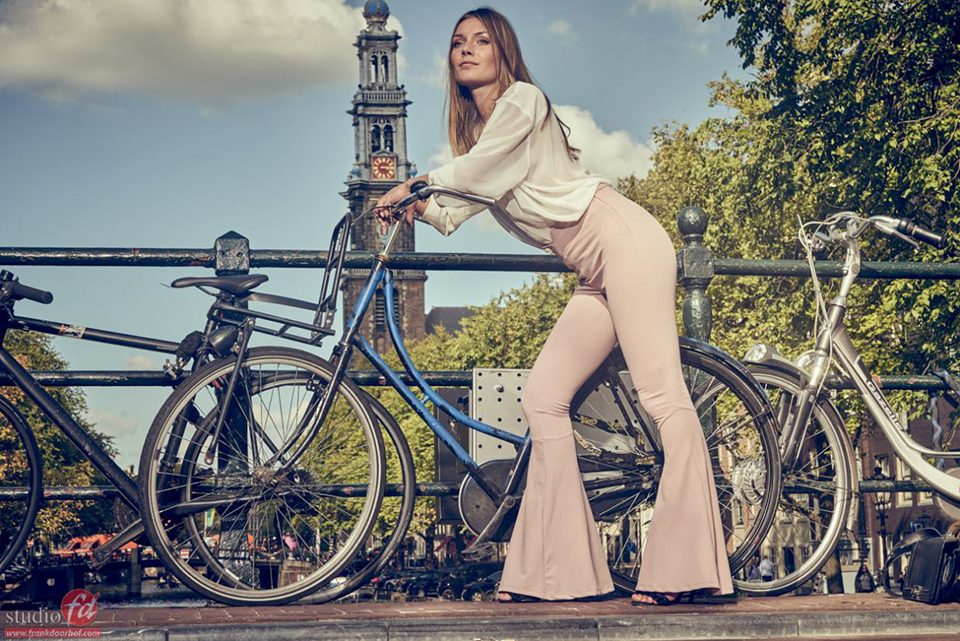
If you remember this, you can start playing with it. For example, when you set up your flashes, you have the final result and want a little more ambient light, simply lower your shutter speed.
Now there is a small problem with this. Lowering your shutter speed is easy, as it lets in more ambient light. Increasing it is a completely different story. In essence, most systems and cameras are limited to a maximum shutter speed with flash of 1/125 to 1/200th of a second.
Some cameras claim 1/250, the synchronisation speed, but this is often with speedlights, not the larger flash heads.
HSS and HS
There are solutions for this, though! HSS uses a stroboscopic effect. The flash fires very quickly in succession, so to speak.
HS uses a flash with a slow flash duration, for example 1/500, and by correctly adjusting the “cut” and “raise” of the flash, you can use your flash at very high speeds with this technique without too many problems.
This means that you can start, for example, at f/64 and ISO100. But as the shutter speed increases, the final output of the flash in the photo decreases.
And this is where the problem lies for light meters. The flash continues to give the same output, but above a certain shutter speed, the flash duration is no longer long enough to register. Part of the flash is therefore cut off. Think about what happens with ambient light. The faster the shutter speed, the less ambient light you get.
With HS, you can use this as an example. Up to a certain speed, the flash gives its full output, after that it gradually gives less. You can therefore quite comfortably end up at f/2.8 ISO 800 and shoot at full power, for example. This can produce high-contrast and great results.
The aperture is the flash. So do not change it, nor the ISO, unless you change the output of the flash.
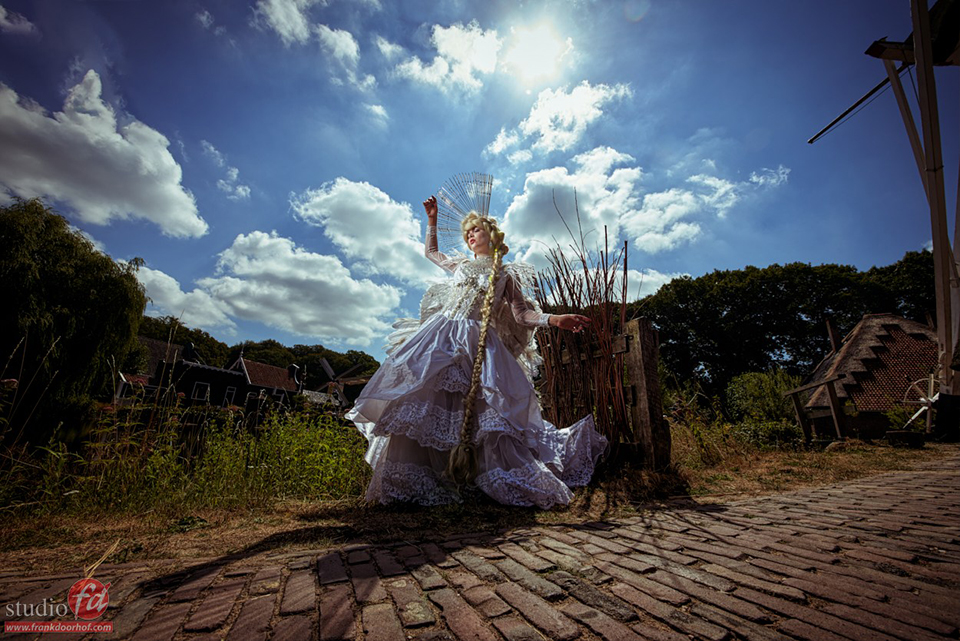
How do you create a day-for-night look?
With HSS and HS, you do not have to worry “much” about the shutter speed. Combine this with systems using ETTL and it gets even better. You can get great results using “exposure and flash compensation”.
With HSS, everything can be measured with a modern flash meter that supports HSS, but with HS it is about “knowing your equipment”. In the past, it was not really difficult either. You only had to deal with x-sync, the maximum shutter speed for flash.
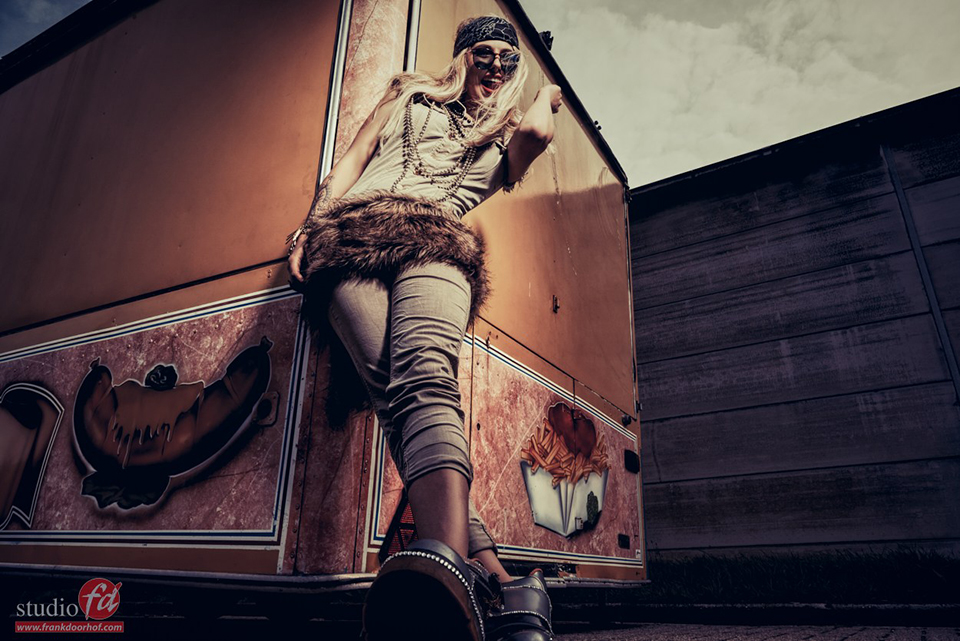
Keeping that leeway works really well in countries such as the Netherlands, where the ambient light can change constantly, for example because of clouds. You can then make quick adjustments.
I hope this helps? If you would like more information about using flash on location, check out my tutorials at www.frankdoorhof.com/videos. Or subscribe to our YouTube channel at www.youtube.com/frankdoorhof.
About the author
Frank Doorhof blogt dagelijks in het Engels op zijn website en geeft wekelijks workshops model fotografie in zijn studio in Emmeloord, maar ook op locatie in binnen en buitenland. Van beginners tot gevorderde, iedereen kan bij Frank terecht. Ook voor specifieke 1 op 1 workshops, of maatwerk voor groepen.
You might also like
-
 Which Strobist kit would you recommend?
by Elja Trum
-
 Motorcyclist with his motorbike, strobist style
by Elja Trum
-
 Remove the light stand and flash from the photo
by Nando Harmsen
-
 Why Asking for EXIF Data Is Pointless
by Nando Harmsen
-
 Create a Night Photo of Your Model During the Day
by Nando Harmsen
-
 Playing with light and white balance during a portrait session
by Nando Harmsen
0 comments
Be the first to share what you think!
Have your say
Please note: Articles older than a week can only be commented on by signed-in visitors.Would you still like to comment? sign in or create a free account.
Become a better photographer every week
A practical photography tip in your inbox every week.
38,937 photography enthusiasts already receive the tips! More about the weekly mail. Or keep up to date via  Facebook.

Elja Trum
Photofacts; everything to do with photography!
Would you like to take better photos and keep up with what is happening in photography? Photofacts publishes articles that teach you something about photography — from a product announcement to a practical shooting tip or a look at a website. Photofacts covers photography every day and is a hobby project of Elja Trum's that got out of hand. The articles are written by a team of volunteer authors. If you would enjoy writing one or more articles for Photofacts, do get in touch.More about PhotofactsPhotofacts is made possible in part by
