

5 Reasons for an L-bracket, and 5 reasons against one
Monday 21 August 2023, 20:10 by Nando Harmsen | 7,680 views | 24 commentsThis article was translated from Dutch with the help of AI. Read the original.
I've always been a fan of L-brackets, ever since I first fitted one to my camera. There's a good reason why I recommend one to everyone. In this article, I give 5 reasons why you should use one. And 5 reasons why you shouldn't.
My first L-bracket was for the Canon EOS 20D, complete with battery grip. This was back in 2005 and it was made by Kirk Enterprises. It not only gave much better balance on a tripod, but also prevented the battery grip from coming loose accidentally.
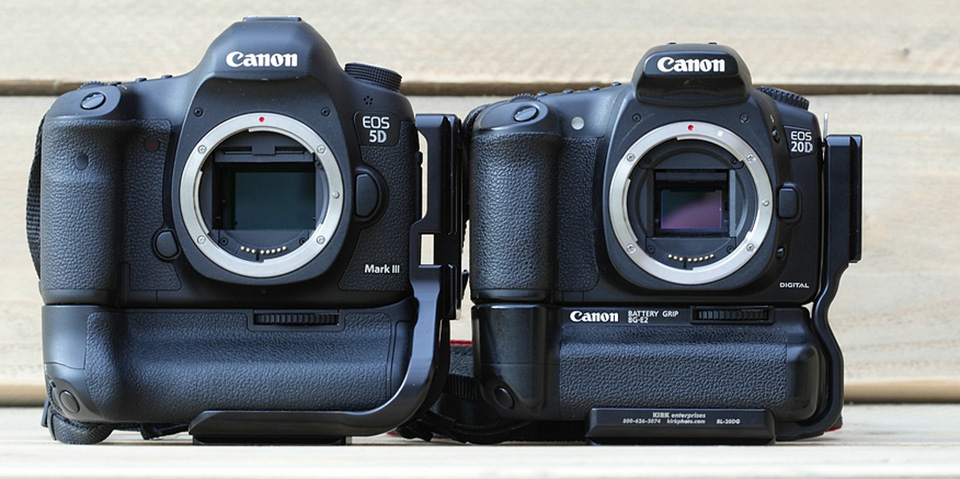
Since then, I've bought an L-bracket for every camera I use. Always one specifically made for the type of camera I had. In other words, when I bought a new camera, I took the additional cost of an L-bracket into account.
Why you should
Why do I consider this small accessory so essential? I have 5 reasons. There may be more, but these are the most important ones in my view.
1. Easily switch orientation on a tripod
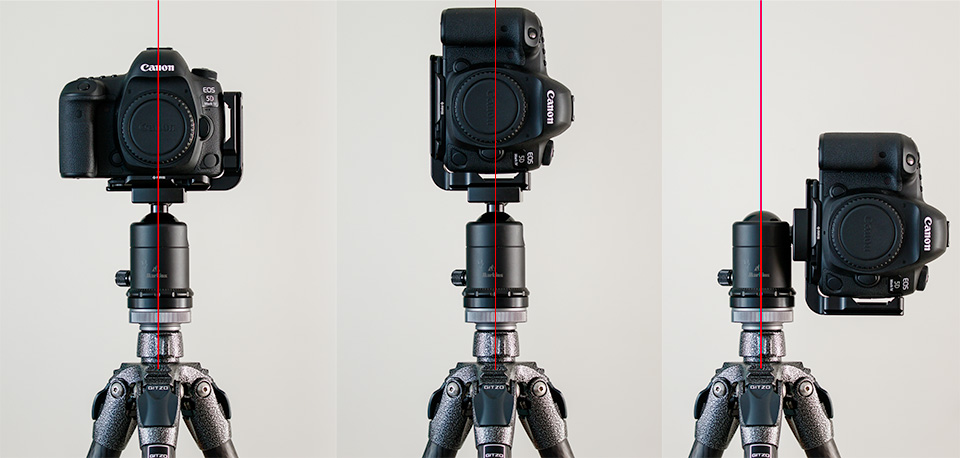
The main function of an L-bracket is the ability to switch orientation directly on a tripod. You don't have to recompose your shot. Disconnect the camera, turn it, and attach it again.
2. Better balance on a tripod
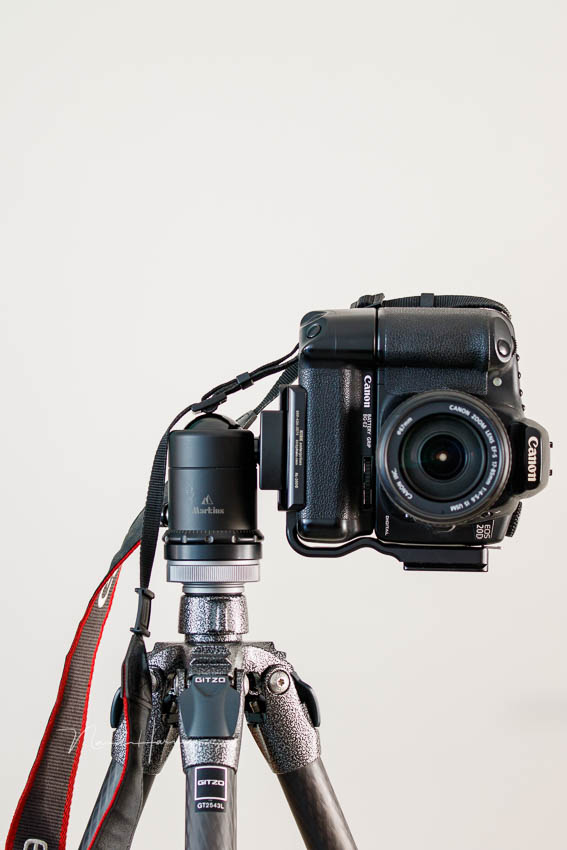
Because the camera is turned, you don't have to tilt the tripod head. This keeps the camera above the centre of your tripod head, giving you the best possible weight distribution. After all, your camera isn't hanging 'next to' the tripod.
3. Rock-solid tripod connection
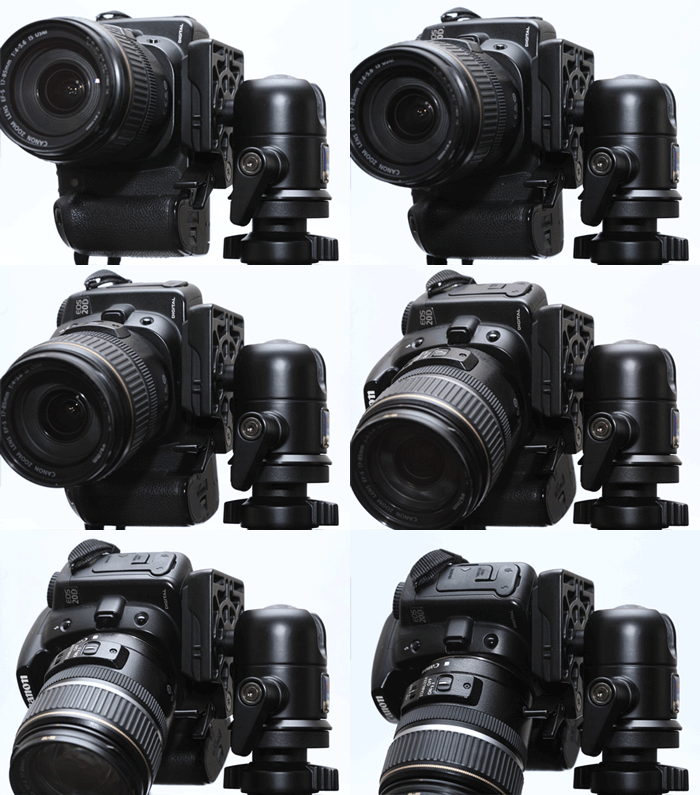
Have you ever had a simple tripod plate under your camera rotate or come loose unintentionally? Especially when using the camera in portrait orientation? Because an L-bracket follows the shape of your camera, this can no longer happen. The L-shape keeps everything in place much better.
4. Essential for panoramas
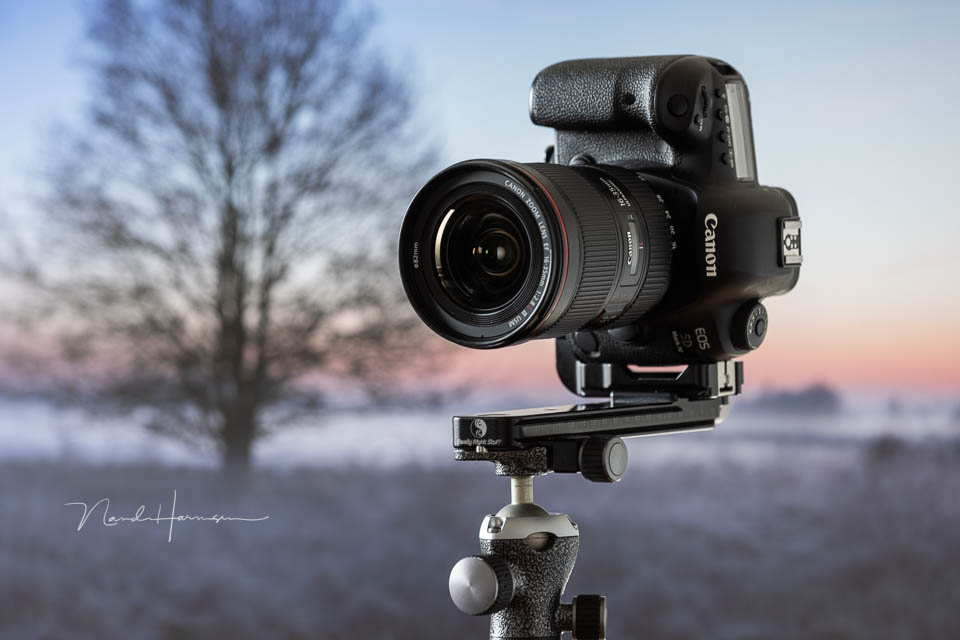
If you shoot a lot of panoramas, you know that it's best to shoot in portrait orientation. This is very easy with an L-bracket, because your camera stays neatly above the rotation point of your tripod head. This also applies when using a nodal slide.
5. Provides extra protection
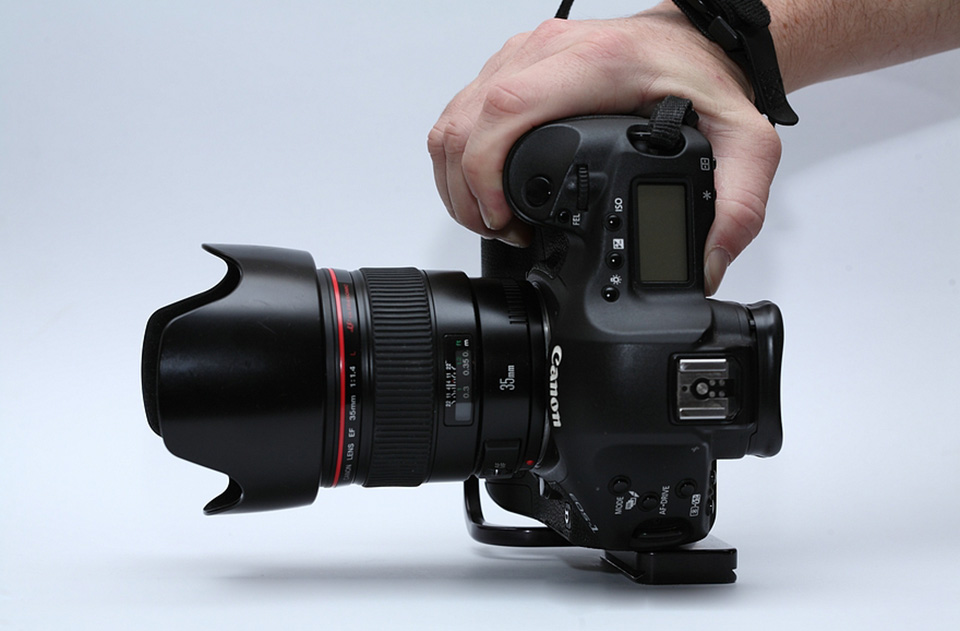
Don't underestimate this last reason. Because an L-bracket always stays attached to your camera, it provides extra protection when putting it down, even during normal use. The bottom and side of the camera are less likely to become damaged.
Why not
There are a few things that could be considered disadvantages. I think the advantages outweigh them many times over, but perhaps that's not true for you. I'll leave that judgement up to you.
1. Adds extra weight to the camera
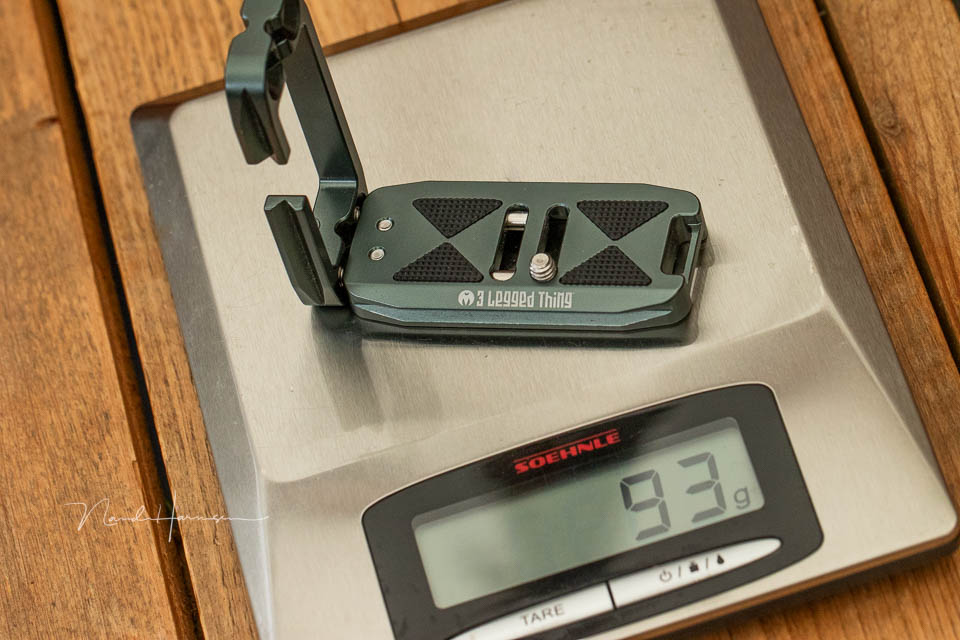
A good L-bracket is designed to keep the weight as low as possible. Even so, it always adds some weight to your camera. This could be 100 grams, or 200 grams. Since an L-bracket is designed to stay on your camera all the time, you always carry this extra weight with you.
2. Can get in the way of cable connections or a tilting screen
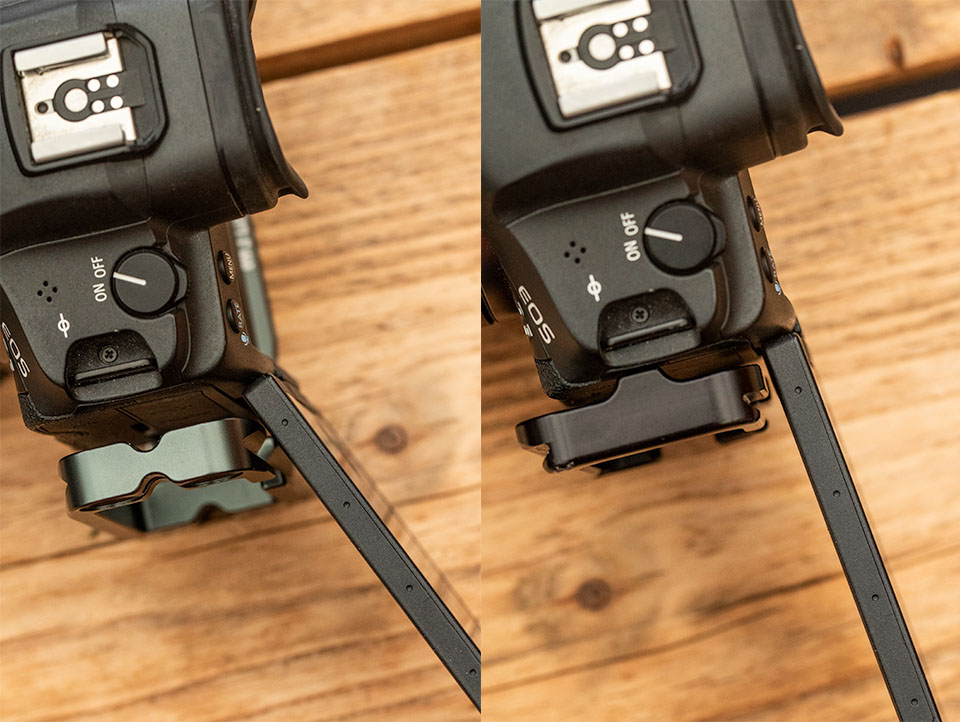
Does your camera have a fully articulating screen that rotates alongside the camera? An L-bracket will usually get in the way. There is a cut-out, but it still creates a limitation. Access to the cable connections can also become more difficult.
If you have a universal or poorly designed L-bracket, access to cable connections or the battery compartment, or the use of a tilting screen, may become completely impossible.
3. Custom L-brackets are often expensive
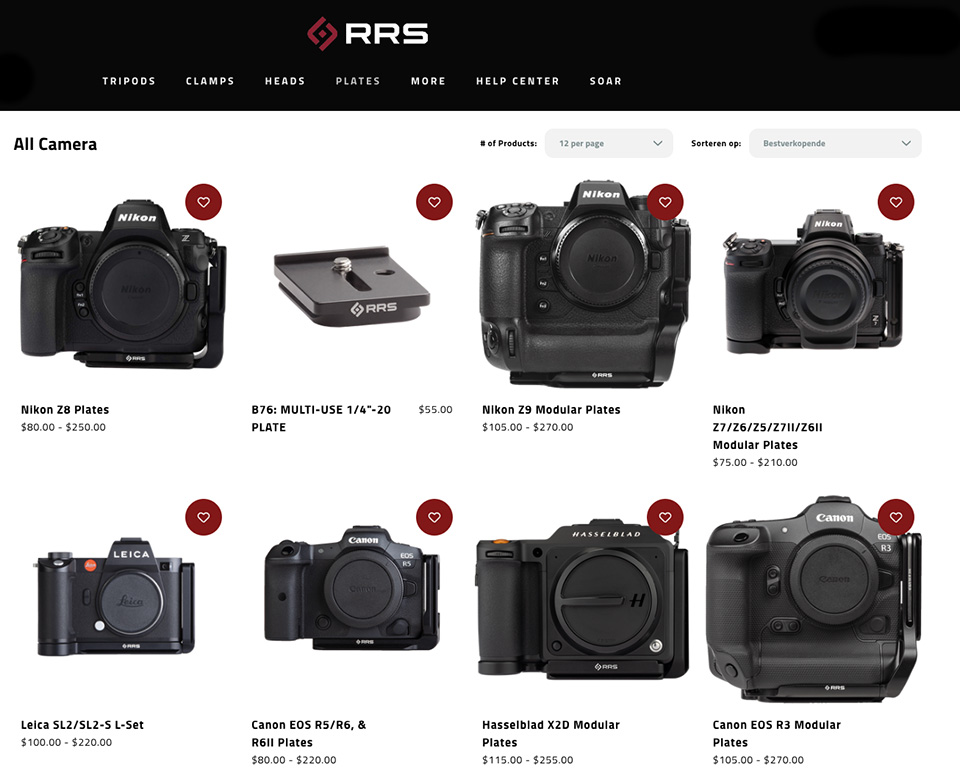
Although a universal L-bracket can be cheap, they often have limitations such as those mentioned in point 2. To avoid this, it's best to choose an L-bracket designed specifically for your camera. However, these are expensive. Sometimes very expensive. Two hundred or even three hundred euros is not unusual.
4. Can get in the way with a video rig setup
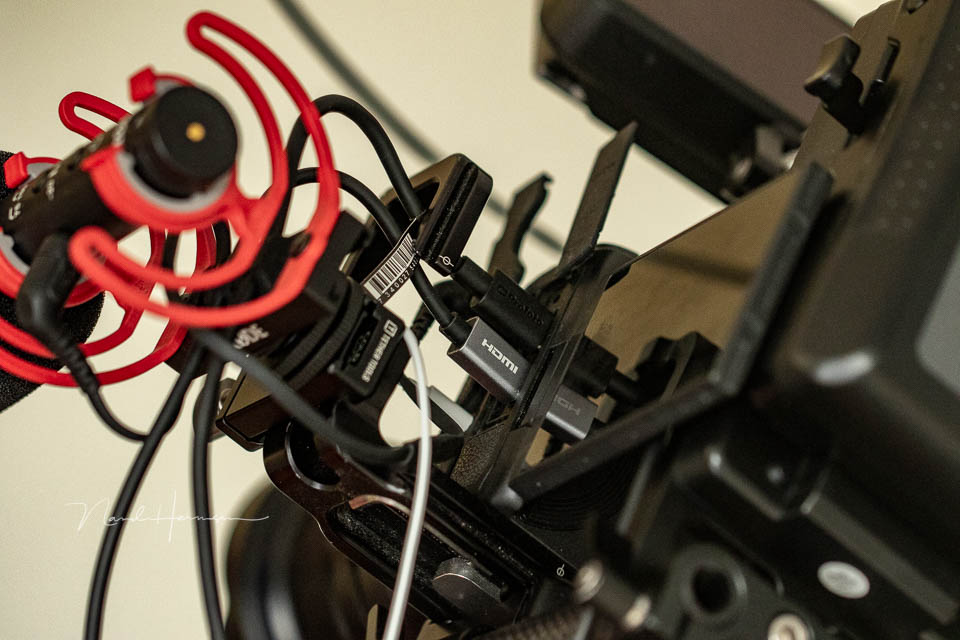
Do you shoot video? Then you may have an external power supply, an external screen, microphone and headphones. Perhaps you use a gimbal or a handgrip.
Using a video cage is recommended in that case. However, this is something different from an L-bracket. If you have an L-bracket, it can limit access to connections. Video tripods and gimbals are also often based on the Manfrotto system. An L-bracket is more likely to get in the way there.
5. If you don't have an Arca-Swiss tripod connection.
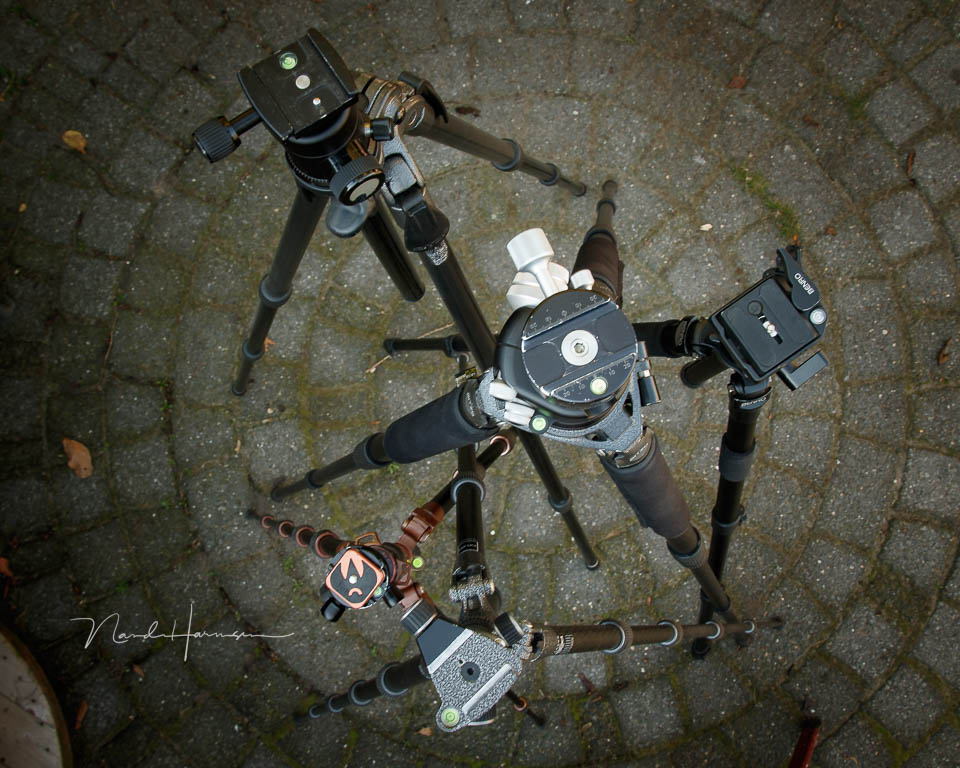
An L-bracket uses an Arca-Swiss connection in almost all cases. If you use a different type of tripod connection, using an L-bracket is usually not possible. Fortunately, more and more manufacturers are adopting the Arca-Swiss system.
L-bracket or no L-bracket?
The disadvantages don't weigh heavily for me. I'm happy to accept some things, and there are always solutions for others. I know one thing for certain: a camera without an L-bracket is incomplete for me.
Do you use an L-bracket, or not? Perhaps you know of more advantages or disadvantages. Let us know in a comment below this post.
About the author
Nando Harmsen has been photographing for more than 40 years. He specialises in wedding photography and landscape photography. Nando also gives talks, workshops, masterclasses and photo trips, and regularly reviews new and interesting equipment.
You might also like
-
 Consider an L-bracket for your camera
by Nando Harmsen
-
 It is impossible to protect photos online
by Nando Harmsen
-
 Photographing an Exposure Bracket Without a Tripod
by Nando Harmsen
-
 Sigma announces a 500mm lens for E and L mount
by Nando Harmsen
-
 Exposure bracketing without a tripod
by Nando Harmsen
-
 Exposure bracketing instead of brightening dark areas
by Nando Harmsen
24 comments
-
 Frans Visser wrote on Tuesday 22 August 2023 at 23:16 | reply
I have a strap and an L bracket, but I notice that I prefer screwing an L bracket under the camera ( and therefore use the bracket much more often).
Translated from Dutch. -

-

-
 guest wrote on Wednesday 23 August 2023 at 07:52 | reply
Another disadvantage, try to find the right model for your camera with battery grip.
Translated from Dutch. -
-
 Bart Schoppers wrote on Wednesday 23 August 2023 at 09:02 | reply
Good morning, I use a universal L-Bracket on both Nikon DSLR cameras. Both from LeoFoto. Really don't want to be without one anymore. Super handy and otherwise I definitely endorse the 5 advantages. The disadvantages hardly at all, actually. Both my cameras with battery pack and lenses are relatively heavy already. I actually find it very pleasant to have something sturdy in the had. Especially with my big hands. As a photographer who never films, I experience no disadvantages from cable connections. I use Nikon WiFi / app and other wireless equipment. I actually only have trouble with it when you have to charge the batteries. The Nikon original l-brackets are not expensive... they are simply scandalously and ridiculously expensive. LeoFoto or similar are very affordable. Especially at Amazon
Translated from Dutch. -
 guest wrote on Wednesday 23 August 2023 at 09:17 | reply
I have a Manfroto tripod plus ball head with a Manfrotto 340 Elbow Bracket, for portrait photography. That portrait position is also ideal for taking a panorama photo.
Translated from Dutch. -
-
 Jonny wrote on Wednesday 23 August 2023 at 10:39 | reply
A good alternative to an L-bracket is the Atoll tripod collar.
Translated from Dutch.
https://silencecorner.net/collections/atoll-series -
 Nando
wrote on Wednesday 23 August 2023 at 11:10
| reply
Nando
wrote on Wednesday 23 August 2023 at 11:10
| reply
I had seen these things before. It is perfect for balancing a camera with a long lens. An alternative to a tripod collar. It doesn't seem very practical to me to keep this on your camera all the time. Do you have more experience with that? Then I'd love to hear more about it.
Translated from Dutch. -
guest wrote on Wednesday 23 August 2023 at 11:22 | reply
Under the following link you can find the pros and cons. I can't put it better myself.
Translated from Dutch.
https://jvn.photo/review-atoll-tripod-collar/ -
Nando
wrote on Wednesday 23 August 2023 at 11:41
| reply
Thanks for the link, Jonny. When I look at the disadvantages, I don't see it as a good alternative to an L-bracket that can remain permanently on your camera, regardless of which lens you use. It wouldn't be my choice.
Translated from Dutch.
Still interesting to read the review. -
guest wrote on Wednesday 23 August 2023 at 11:49 | reply
the l bracket is also a good accessory if you want to use an extra battery for your camera or monitor<that’s what I do when filming
Translated from Dutch. -
Frans Visser wrote on Wednesday 23 August 2023 at 12:13 | reply
Nando, I bought an L-bracket because my long lens slowly tilted downwards when in portrait orientation on a tripod. The L-bracket solved this issue. I can indeed fasten my strap underneath the L-bracket. Since I do a lot of volunteer work, I take a lot of photos in a relatively short time (around 3 hours) and generally use 2 lenses for that. For that I use a dual lens strap and I still find 2 straps quite a bit of (practical) hassle, hence: I prefer 2 fingers through the side of the L-bracket.
Translated from Dutch. -
 Hans van Sterkenburg wrote on Wednesday 23 August 2023 at 14:46 | reply
I am also an RRS user. There is nothing better. Likewise, I have fitted my lightweight Gitzo tripod with an RRS tripod head of 30 mm. Works perfectly. Also in combination with the RRS nodal slide. (I do the exact leveling with a small plastic spirit level which has a v-groove on the underside) For the L-plate, however, I chose the SmallRig. A small ring is included with which you secure the L-plate under the camera. Remarkable advantage: with the same ring you can loosen another screw to slide the vertical part about 3 cm away from the camera, handy for attaching a cable. And indeed Nando, it works perfectly, much better than tilting the camera by tilting it with the tripod head. A strange sight too, such a setup. And strange images, we don't like those, do we?
Translated from Dutch.
Kind regards, Hans. -
Nando
wrote on Wednesday 23 August 2023 at 15:28
| reply
The RRS L-brackets I have had, and still use, all have a standard-size Allen key integrated into the L-bracket. These L-brackets can also be extended using this Allen key to increase the distance to the cable connections. So SmallRig is not unique in that respect.
Translated from Dutch. -
 Paul Lefevere wrote on Wednesday 23 August 2023 at 19:59 | reply
I really do believe in the video capabilities of a camera that was initially designed for photo’ s. But I find it difficult to understand how certain people then want to wrap that camera in a spider’s web of cables, secondary and tertiary little screens and all kinds of rigs, and thus still want to capture “comfortably”. There really are specific video cameras that have less clutter attached to the body. And so the L-bracket gets some breathing room too… 😜
Translated from Dutch. -
Nando
wrote on Thursday 24 August 2023 at 09:56
| reply
For those who only film, a proper video camera is a better choice. Still, the DSLR or mirrorless camera is a good alternative (and cheaper in many cases). You also don't need an L-bracket then.
Translated from Dutch.
An L-bracket is aimed at the photographer. So the possible problem with connections is only for the photographer who also films (a lot) with their camera.
There is, incidentally, an excellent reason for all those connections. This is not only for the person filming with a DSLR or ML, but also for someone using a dedicated film camera. So it's not the case that they have - in your words - that fiddly stuff attached to their body. -
 PvRFotografie
wrote on Wednesday 23 August 2023 at 22:55
| reply
PvRFotografie
wrote on Wednesday 23 August 2023 at 22:55
| reply
I use a Benro Multi Purpose Bracket myself, the MPB180. It is basically an Arca-Swiss L-Bracket that is 18cm long on both sides. I mounted a Leofoto LR-50 quik-release clamp on the vertical side.
Translated from Dutch.
In portrait orientation I put the bracket on a tripod head and within 5 seconds I clamp a camera in place. It then doesn't matter which camera, with or without a grip. I even managed to do it with a Fuji GFX100.
It isn't the prettiest thing, but the advantage for me is that I only have 1 bracket for all cameras and therefore no brackets on the cameras themselves. No extra weight on the cameras and it isn't in the way either. -
 Martin wrote on Thursday 24 August 2023 at 10:50 | reply
Oops, very interesting. But I have never used an L bracket and I can already no longer see the wood for the trees. I have a Canon R5 and I think I can see in the photo in your article that the screen can be flipped out, but can no longer be rotated. Where can I find the best L bracket at a reasonable price. And are there also videos that show its use a little?
Translated from Dutch. -
Nando
wrote on Thursday 24 August 2023 at 11:33
| reply
Dear Martin,
Translated from Dutch.
An L-bracket does indeed limit the use of the tilting screen. It can also be rotated, but not as freely as without an L-bracket.
The best L-bracket at a reasonable price is not easy to answer. I think the best L-bracket cannot be cheap, but you would have to look at some reviews and do some research to determine that for yourself. -
 Willie Kiek wrote on Sunday 18 February 2024 at 20:19
| reply
Willie Kiek wrote on Sunday 18 February 2024 at 20:19
| reply
After some searching, I bought an L-bracket cheaply to try it out. Even if it was only for protecting the camera, this is definitely the case. It was difficult to replace the battery of the Canon R6, but I was able to modify that with some sawing. The screen could not tilt either. After some more sawing, since it is aluminium, this works too. In the end, I bought a battery grip after all, as I had for my previous cameras. So the bracket no longer fits.
Translated from Dutch.
-
Paul wrote on Thursday 24 August 2023 at 11:18 | reply
Oops Nando, you don't have to feel offended, you know, I only want to minimize the disadvantage of an L-bracket in case it would get in the way of filming. I went to Norway in January, together with a friend who has been a cameraman at WTV for years. He produces excellent professional work with a decent mirrorless SONY, one extra screen and one microphone. I also know people here in the village who lug around a whole spiderweb and whose result is simply abysmal. Everyone can do it their own way as far as I'm concerned, but I've always been taught: keep it simple and try to master that first. And once again: if the L-bracket would actually prevent you from filming seriously, then just buy a simple video camera.
Translated from Dutch. -
Have your say
Please note: Articles older than a week can only be commented on by signed-in visitors.Would you still like to comment? sign in or create a free account.
Become a better photographer every week
A practical photography tip in your inbox every week.
39,079 photography enthusiasts already receive the tips! More about the weekly mail. Or keep up to date via  Facebook.

Elja Trum
Photofacts; everything to do with photography!
Would you like to take better photos and keep up with what is happening in photography? Photofacts publishes articles that teach you something about photography — from a product announcement to a practical shooting tip or a look at a website. Photofacts covers photography every day and is a hobby project of Elja Trum's that got out of hand. The articles are written by a team of volunteer authors. If you would enjoy writing one or more articles for Photofacts, do get in touch.More about PhotofactsPhotofacts is made possible in part by
