

It is impossible to protect photos online
Monday 6 April 2026, 20:02 by Nando Harmsen | 3,882 views | 34 commentsThis article was translated from Dutch with the help of AI. Read the original.
You have taken a photo you are proud of and want to show it to everyone. Quite rightly, because you should be proud of your work. But you do not want anyone else to use or misuse the photo. How can you prevent that?
There are websites featuring photos that have been 'borrowed'. No permission has been given to use the photo. You hear it more often than you would like. The naïve reason is often: the photo was on the internet, so we thought it was allowed.
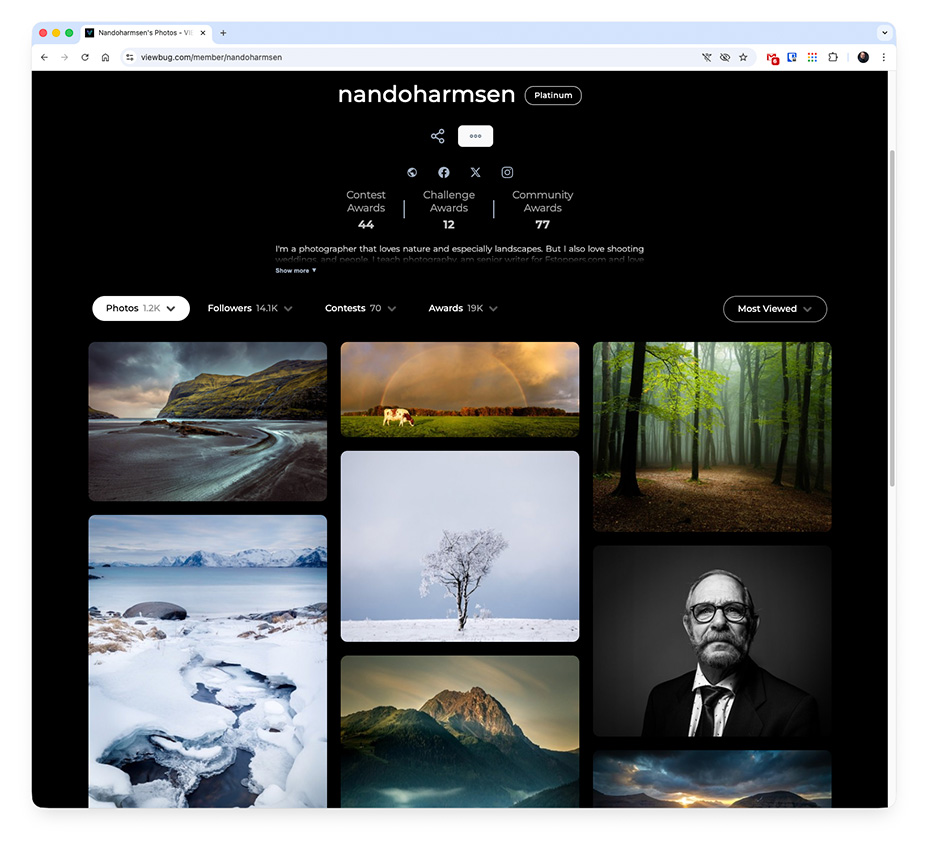
There are many more reasons that make no sense at all. As the creator of images, you do not want this to happen to your photo. So 'we' try to protect photos against unauthorised use. Every trick in the book is used to do this.
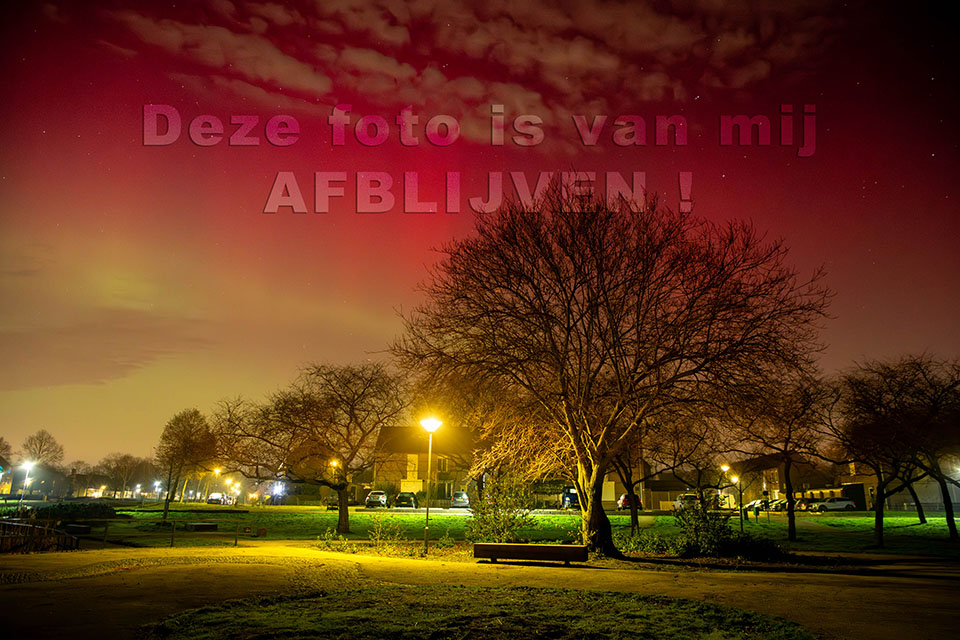
Adding a watermark, in a corner or across the photo. That not only ruins the viewing pleasure, it has little use. Especially with modern techniques such as AI removal, it can be gone in an instant.
Using photos in postage-stamp format is another option. But that does not do the photo justice. In addition, there are techniques for enlarging the photo, again using AI. The quality does deteriorate, but that is simply accepted.
Protecting a web page so that you can no longer use the right mouse button. This prevents someone from saving or downloading the photo to their computer that way. However, this is false security, as it is easy to get around.
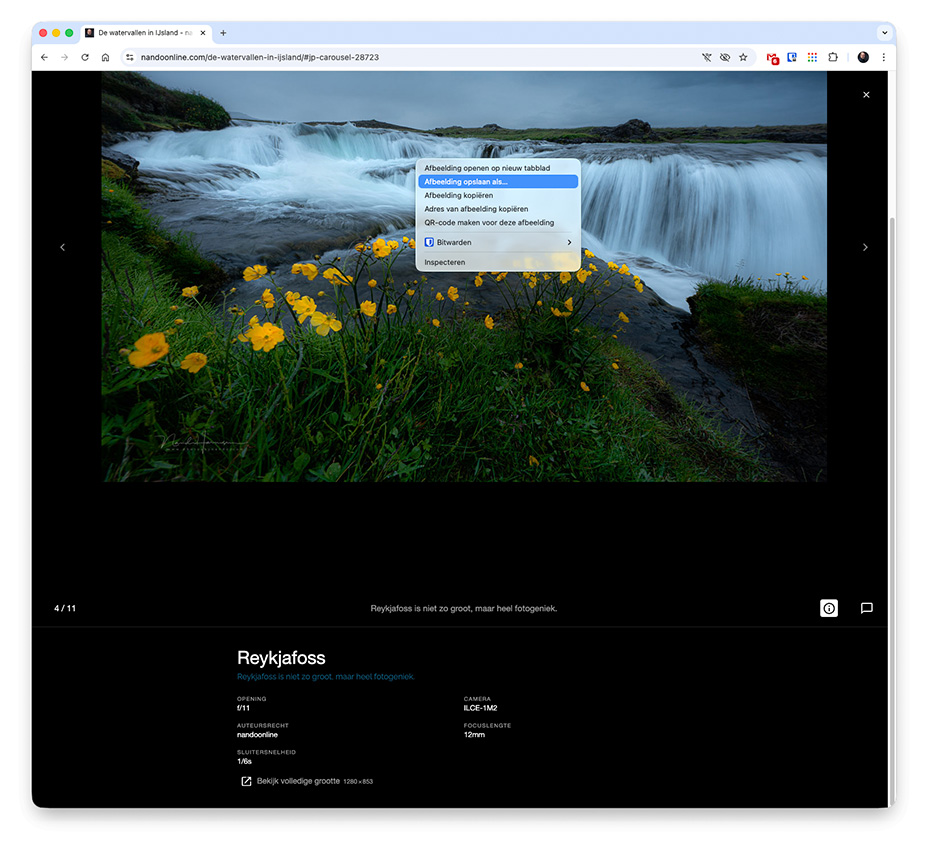
In short, there is no way to protect a photo that is online. In other words, anything you put online can be used or misused by a crook. There is nothing you can do about it.
Although...
There is only one way to prevent a photo from being used by others without permission. Do not put the photo online. Only then can you be sure that nobody will run off with it. The downside of this method is that hardly anyone will ever see your photos.
Do you put your photos online? Do you try to protect them, and if so, how? Or do you accept the risk of 'theft' and enjoy the attention the photo gets? Let us know in a comment below this post.
About the author
Nando Harmsen has been photographing for more than 40 years. He specialises in wedding photography and landscape photography. Nando also gives talks, workshops, masterclasses and photo trips, and regularly reviews new and interesting equipment.
You might also like
-
 5 Reasons for an L-bracket, and 5 reasons against one
by Nando Harmsen
-
 PhotoShelter has made my life as a photographer more enjoyable
by Huub Keulers
-
 The real purpose of a rain cover for your camera backpack
by Nando Harmsen
-
 Nature photography tip: Protect your camera from overheating
by Rob Dijkstra
-
 Everyone photographs in raw, there are no exceptions
by Nando Harmsen
34 comments
-
 Stanny Correwyn wrote on Tuesday 7 April 2026 at 10:35 | reply
I post photos on the website daily, they are for sale but I no longer worry about people taking screenshots
Translated from Dutch.
'there's nothing you can do about it, you hope for honest people, and there are still some. -

-
 wrote on Tuesday 7 April 2026 at 11:07 | reply
What do I do? Make sure that your email address and website details are included in the file info (under copyright). Every now and then, enter these details into Google and see if anything comes up. This way you can occasionally track down misuse of your photos. It works for me!
Translated from Dutch. -
-
 Peter van Dinther wrote on Tuesday 7 April 2026 at 11:11 | reply
You say that the security can easily be bypassed by blocking it, but you don't say how that can be done. The only thing I can imagine is that someone takes a screenshot of the photo.
Translated from Dutch. -
 Nando
wrote on Tuesday 7 April 2026 at 11:24
| reply
Nando
wrote on Tuesday 7 April 2026 at 11:24
| reply
It's just a bit of software code that prevents the right mouse button from being used. Or you look at the webpage code itself and you see the link to the photo itself.
Translated from Dutch.
There are multiple ways, sometimes easy, sometimes more difficult. -
 Jan-Karel Kok wrote on Tuesday 7 April 2026 at 11:15 | reply
Increasingly, I take analogue photos: developing and printing them myself. Those prints are unique.
Translated from Dutch.
I also digitize my analogue negatives and whatever I then edit and put on the internet is 'fair game'. But the print on genuine silver bromide paper is unique, there is only one of it. Maybe not many people see that unique photo, but I don't care. -
-
wrote on Tuesday 7 April 2026 at 11:27 | reply
However, many (mis)users don't know that.
Translated from Dutch. -
-
 kok.f@ziggo.nl wrote on Tuesday 7 April 2026 at 11:35
| reply
kok.f@ziggo.nl wrote on Tuesday 7 April 2026 at 11:35
| reply
Well, it remains a fight against a losing battle. Misuse exists and always will. Personally, I’m very reluctant to post on the internet. You can push back, but if the other person really wants to, in practice you’ll usually come off worse. The harsh reality of the distinction between 'being right' and 'being proven right'.
Translated from Dutch. -
 Ruud Borghmans wrote on Tuesday 7 April 2026 at 11:38 | reply
I post my photos on Facebook with a frame/border and a logo and name. This is in one layer that I can easily place over the photo in Photoshop. This gives my photos their own character. Not so much to "protect" them, but not everyone will simply take the trouble to remove that.
Translated from Dutch.
The photos are of sufficient quality for Facebook, but heavily compressed. When posting them, Facebook also compresses the photos automatically. As a result, any enlargement is of poor quality.
Nevertheless, I realize that my photos can be (mis)used by others. I accept that and it doesn't keep me awake at night. -
guest wrote on Tuesday 7 April 2026 at 12:09 | reply
If someone takes your photo from the internet then he has to prove that it's his photo and he can't because I have the RAW file of my photo and the other person doesn't.
Translated from Dutch. -
 Fritsflow wrote on Tuesday 7 April 2026 at 12:58
| reply
Fritsflow wrote on Tuesday 7 April 2026 at 12:58
| reply
People who pluck your photos from the internet aren't your customers anyway. You'll never earn anything from this kind of people
Translated from Dutch. -
 Ingrid Bergmann wrote on Tuesday 7 April 2026 at 13:02 | reply
Maybe an idea to put your photos online greatly reduced/in low resolution? People can still grab them from the internet, but they aren't suitable for enlarging, for example. To be honest, I generally forget that (partly because of the idea: who would want to steal my photos
Translated from Dutch. ).
). -
 tjen dezutter wrote on Tuesday 7 April 2026 at 13:34 | reply
Oh Nando, this article gives a view full of good possibilities..Now Facebook and the likes are threatening us with using the photos for commercial purposes .We indeed have to make a choice . Visibility on a larger scale (as indicated by the likes..) and take the advertisements as a bonus .Because who checks, if you choose the paid version ,that FB is going to play fair and will use the photos anyway. And...what then?
Translated from Dutch. -
 Hester Wichers Hoeth wrote on Tuesday 7 April 2026 at 14:21 | reply
Unfortunately. If you claim that it is your photo, you will have to prove it.
Translated from Dutch.
"Whoever claims must prove it." -
 Donald Willemsen wrote on Tuesday 7 April 2026 at 14:51 | reply
You can of course start a legal battle if the thief lives in your own country. After all, you own the copyright. But if the thief lives in Farawaystan, you can have all the law on your side, it will still be even more difficult to track down the thief. Let alone sue them. Moreover, the costs will rise higher than the benefits.
Translated from Dutch.
I found a photo of mine years ago being presented as a photo of the thief. He had stolen my photo, removed the watermark and offered it for sale on his page at Hyves. I then contacted Hyves and they immediately removed the photo and also removed the thief's account.
Not all providers are willing to cooperate. It often costs you a lot of time to combat such thefts.
Simply not putting your best photos on the internet is the best solution.
What I have also done before is remove or change the color of individual pixels or a small group of pixels here and there in the photo and then put the photo on the internet in low resolution. If you want to print an enlargement, you will only see the altered pixels then and you can therefore do nothing with such a print.
But..... there is a downside nowadays. And that downside is called AI. It can repair the altered pixels if you give it the right instruction.
So adjusting those individual pixels is fun, but someone who is willing to put in the effort can restore it by using a lot of time. The question then is: Does the thief want to put that much time into it? I don't think so. -
Donald Willemsen wrote on Tuesday 7 April 2026 at 18:41 | reply
Hester, it isn't difficult to prove that a photo belongs to you. More than enough data about your camera is stored in the raw file. So that's not a problem. The thief doesn't have that data.
Translated from Dutch. -
 info@wimwilmers.nl wrote on Tuesday 7 April 2026 at 19:28 | reply
I use copytrack and report the use of my photos by third parties, it is up to me to approve this or outsource it to copytrack. It is a no cure no pay company and suppose you collect 600 for a photo, then they have, I think, off the top of my head, something like 20%. You don't have to do anything yourself and 2 webshops that had borrowed my photos then both paid 600 euros. both companies from England in hunting supplies that had borrowed fox photos from me.
Translated from Dutch. -
 Elja Trum
wrote on Tuesday 7 April 2026 at 20:25
| reply
Elja Trum
wrote on Tuesday 7 April 2026 at 20:25
| reply
I have a terrible hatred of companies like this Copytrack. They go after everyone very aggressively and it is up to you to refute their accusations.
Translated from Dutch.
I have already had a number of 'infringements' from them. And then I have to figure out how I (or the blogger who made the article in question) ever got that photo. Sometimes I can still find that out (e.g. a press release, a winner of a competition that we wrote about, or something), sometimes I can't. Then it's simply a matter of paying. You can't really fight it.
And then I still know how it should be done, but there are many hobbyists who receive hefty bills because, in their ignorance, they picked a photo from the internet. For them, those hundreds of euros are an expensive lesson. For photos that, with a bit of luck, were seen by 25 visitors. -
 Wim wilmers wrote on Tuesday 7 April 2026 at 20:57 | reply
Well Elja, you only get a message from copytrack if the creator of a photo says that it should happen and copytrack doesn't do that on its own. A lot of our photos take part in competitions and then they would all get that message, so I can skip those photos and only the photos of which I say they are really stolen, well, they go after those. They only go after photos on websites. Not, for example, Facebook photos.
Translated from Dutch. -
Elja Trum
wrote on Tuesday 7 April 2026 at 22:35
| reply
I think there are enough creators who simply say yes to everything. It doesn't cost the creator any effort, they just collect the money.
Translated from Dutch.
Facebook photos are, I think, too difficult for Copytrack to approach the person who posted them. Otherwise I have no doubt that they would go after them as well.
There are plenty of small websites (Wordpress sites, for example) that they do go after.
My opinion is that as a photographer you can simply send an email asking for the photo to be removed or asking them to pay for it. Although I know there are plenty of photographers who think differently about that.
Now you suddenly get a bill for hundreds of euros out of nowhere, I find it a despicable way of doing business. If you want to fight it, you're already 1-0 behind and a lawyer who might be able to resolve it for you costs at least as much. So paying is often the quickest option without any hassle.
I think the majority of people who receive such a claim really weren't aware that they were doing something wrong. The percentage that intentionally 'steals' a photo is -in my opinion- very low. If they had known it wasn't allowed, they wouldn't have done it. -
Wim wilmers wrote on Tuesday 7 April 2026 at 23:07 | reply
Commercial sites all know that it's not allowed. Wedding venues know that too, they really do, but oh well, it's nice and easy to just borrow a little photo. They hide behind the fact that they didn't know. I assume that you verify the photos you use first, right? Sending a message along the lines of would you please remove my photo on an actual Commercial site is rather pointless.
Translated from Dutch.
Someone who tries to make money from my photo themselves, I am not going to send them a friendly message first. I hope you can distinguish one from the other, elja. I do this with Commercial parties and not with someone who writes a blog or something. -
Elja Trum
wrote on Tuesday 7 April 2026 at 23:31
| reply
As I said, nice that you don't do that. And I also understand that you get angry as a photographer when someone uses your photo without permission.
Translated from Dutch.
With Photofacts, I'm on both sides of the story. People use my photos, but I also get messages from Copytrack. Often about articles that have already been on the site for 15 years with a tiny photo that another blogger posted back then. On an article that has been read 300 times in 15 years.
And then I spend half a day asking the blogger from back then whether they did have proper permission for the photo they used back then. If I can reach him or her at all, they really don't remember anymore how exactly it was arranged. And try finding a 15-year-old email in which you had permission again, from 3 email addresses ago.
And no, I really didn't check back then whether everything was properly arranged either, I was happy with a new article written by another hobbyist.
When is a site commercial? You can certainly see Photofacts as commercial (nowadays), but I simply started as a hobby blog and I also had to learn the rules. Just like tens of thousands of other hobby blogs that have received Copytrack emails.
Nowadays I keep a close enough eye on it and I still check whether there is permission for a photo if I have doubts. In most cases, the photos were of course taken by the blogger themselves.
I already feel sick when another Copytrack email comes in: which 15-year-old photo have they dug up now.
I've seriously already had them contact me about, for example, photos of Zilveren Camera winners, which I had written an article about, with the photos directly from the organization. Everything according to the rules.
And then when you submit your proof, you don't hear anything more from them. Not even an apology, 'our mistake, apologies for the inconvenience'.
So I don't write those articles anymore either these days: too much hassle. -
Wim wilmers wrote on Wednesday 8 April 2026 at 07:28 | reply
By commercial companies I mean e.g. a store, webshop that used my photos to sell their products. Copytrack wrote years ago already that they only go after that kind of thing. Not after blogs that e.g. write an article about e.g. the fearless competitions...but anyway , it's a tricky thing and I only use it when I have verified and know for sure that someone else is trying to improve professionally using my photos.
Translated from Dutch. -
Donald Willemsen wrote on Wednesday 8 April 2026 at 10:33 | reply
There is a rule of thumb: 'Everyone is supposed to know the law.' So there is no reason whatsoever to invoke: 'I didn't know that'. Photos are always subject to copyright and possibly portrait rights as well. That has been the case for more than a hundred years. So claiming not to know is nonsense. Just have the decency to ask for permission when you want to use someone else's photo. Photographers are not boogeymen who will rip you off if you want to use a photo for whatever purpose.
Translated from Dutch.
That all has to do with norms and values.
Copytrack has nothing to do with norms and values. It is purely profit-seeking in a very aggressive way.
I don't like it when someone steals my photo and uses it for their own purposes. I do address such a person and politely ask them whether they want to pay for the photo or remove it. If neither happens, I address the provider of the person in question because they provide facilitating services. In such a case, they cooperate in the distribution of illegally obtained material.
But now a question for Elja. You are a model/portrait photographer. In the contract that you agree with models, it will state that the model gives you permission to publish her likeness on, among other things, the internet in accordance with portrait rights. You publish a photo of a model on the internet. That is allowed because that is what you agreed in a contract.
Now someone steals your photo for their own website and the model discovers that. She invokes portrait rights and wants compensation. Who is liable then? You published the photo in the first place and so you gave someone else the opportunity to steal the photo. What now?
Legally speaking, there are therefore many snags and complications. Especially because in such a case you are dealing with copyright AND portrait rights.
Elja, I agree with you that copytrack is not a good way to assert your rights because of the aggressive way in which they operate. But entering into a legal battle yourself is going to cost a lot of money. Reporting the theft has, in my view, little point because the police do not spend any time on it and dismiss it as not being a criminal matter but something that belongs in civil law. -
 Doede Douma wrote on Wednesday 8 April 2026 at 11:20 | reply
If you post a photo that you are happy and proud of, then you know it is your photo. You could say of a photo taken by someone else: I took that, while knowing that it is not so. Does that give satisfaction? I am convinced that it does not give satisfaction, because you know that the photo is not your own. Does someone want to use my beautiful photo? No problem.
Translated from Dutch. -
Wim wilmers wrote on Wednesday 8 April 2026 at 11:55 | reply
I only use Copytrack in exceptional cases, as I wrote earlier. Companies, including webshops, that had stolen my photos and used them themselves to make higher profits. So no, I’m not going to write them a nice letter. Those guys really do know that this isn’t allowed and simply take that risk because they hope they won’t be discovered. Another case. Wedding venue uses your photos in advertising and on large banners because the bridal couple has handed over some photos and is offered a dinner or overnight stay in return... smart of the venue and it happens a lot. Then I contact the venue myself and ask what are you offering in return here?
Translated from Dutch. -
 Henri
wrote on Wednesday 8 April 2026 at 12:20
| reply
Henri
wrote on Wednesday 8 April 2026 at 12:20
| reply
Back when I still had my own website with my travel photos, mainly taken in countries outside Europe, I used the "slice" function in Photoshop. You can then divide the photo into a (large) number of pieces, so that when right-clicking and selecting "save as", only a small piece of the photo is saved. Of course, someone who knows Photoshop reasonably well can 'stick' those pieces back together, but that is quite a lot of time-consuming work.
Translated from Dutch.
It is therefore no guarantee, but it is so cumbersome that a number of people probably can't be bothered with it already..... -
 Wim Dooren wrote on Wednesday 8 April 2026 at 19:21 | reply
"If someone takes your photo from the internet, then he has to prove that it is his photo (...)".
Translated from Dutch.
That remains to be seen:
Anyone who accuses someone of a crime must provide the evidence for that accusation himself. The accused does not have to prove his innocence and does not have to cooperate with his own conviction either. -
Fritsflow wrote on Wednesday 8 April 2026 at 21:27
| reply
"Now someone takes your photo for their own website and the model discovers it. She invokes portrait rights and wants compensation. Who is liable then?"
Translated from Dutch.
The person who "stole" it is liable here. Elja had it contractually sorted out properly in this example, after all. The thief didn't.
Incidentally, all this doesn't have much to do with norms and values. It's about business-related, lawful interests. Someone who steals a watch in a shop isn't first politely asked to return the watch, are they? That would be something. -
 Han wrote on Thursday 9 April 2026 at 15:43 | reply
I only take photos for my pleasure, so have no commercial interest. That's why I (occasionally) put them on Unsplash, and then enjoy it when they are viewed and/or downloaded.
Translated from Dutch.
I don't have the illusion that protection is really sufficient (as also indicated above), but I think adding EXIF data and protection against 'right-clickers' does keep quite a few little thieves out. That's something at least. -
Axel wrote on Sunday 12 April 2026 at 09:50 | reply
How to bypass it can be found on the internet. Search for "bypass copying a protected website".
Translated from Dutch.

Have your say
Please note: Articles older than a week can only be commented on by signed-in visitors.Would you still like to comment? sign in or create a free account.
Become a better photographer every week
A practical photography tip in your inbox every week.
39,079 photography enthusiasts already receive the tips! More about the weekly mail. Or keep up to date via  Facebook.

Elja Trum
Photofacts; everything to do with photography!
Would you like to take better photos and keep up with what is happening in photography? Photofacts publishes articles that teach you something about photography — from a product announcement to a practical shooting tip or a look at a website. Photofacts covers photography every day and is a hobby project of Elja Trum's that got out of hand. The articles are written by a team of volunteer authors. If you would enjoy writing one or more articles for Photofacts, do get in touch.More about PhotofactsPhotofacts is made possible in part by
