

The L-bracket: the most useful photography tool ever
Thursday 17 August 2023, 16:03 by Nando Harmsen | 9,773 views | 11 commentsThis article was translated from Dutch with the help of AI. Read the original.
Do you often use a tripod? Then you probably have a tripod plate that you screw to the bottom of your camera, or under the tripod collar of your lens.
There are various types and brands, the best known probably being those from Manfrotto and Arca-Swiss.
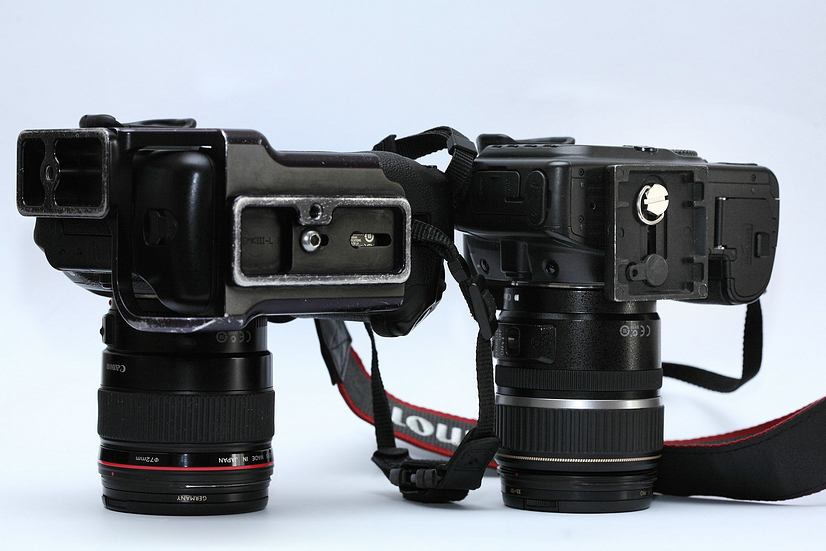
The separate plates have one drawback. When you have the camera in the horizontal position, they work well. It becomes more difficult when you want to use the camera in the vertical position. You then have to tilt the ball head, so the camera hangs beside the centre of the tripod.
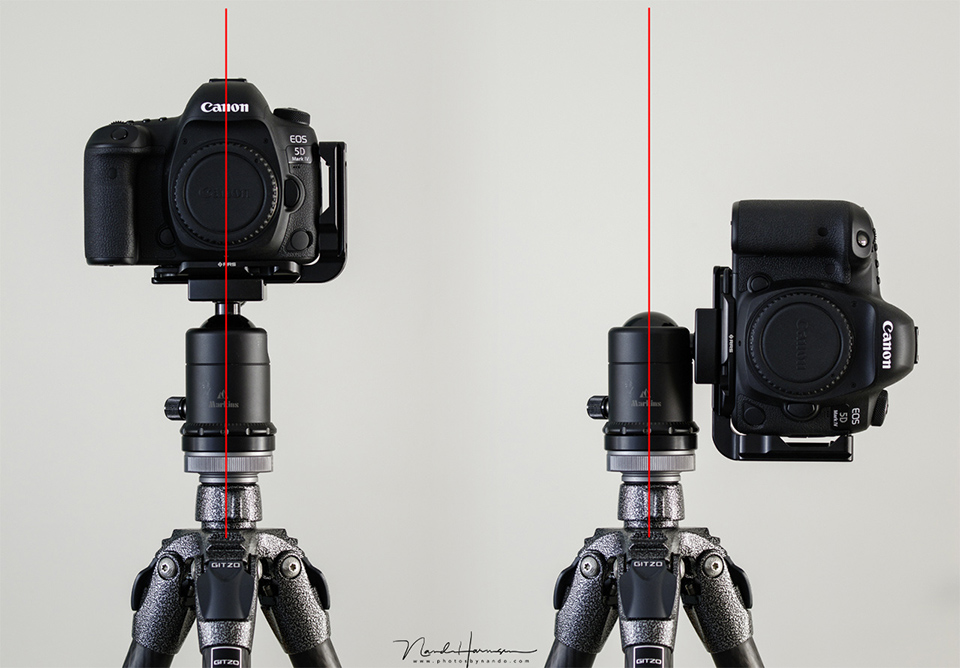
If you do that, three things happen in principle.
The camera gets a different position and height, so you have to compose the image again. The camera ends up off-centre, making it less stable. And the camera can hit the side of the tripod, which in the worst case means that the camera cannot hang completely vertically.
If you have a three-way head, that last problem does not really apply. But there is a fourth possible problem that applies to all tripod heads.
The camera may start to sag. This happens because the tripod plate is not secured properly. Or the camera and lens combination is too heavy.
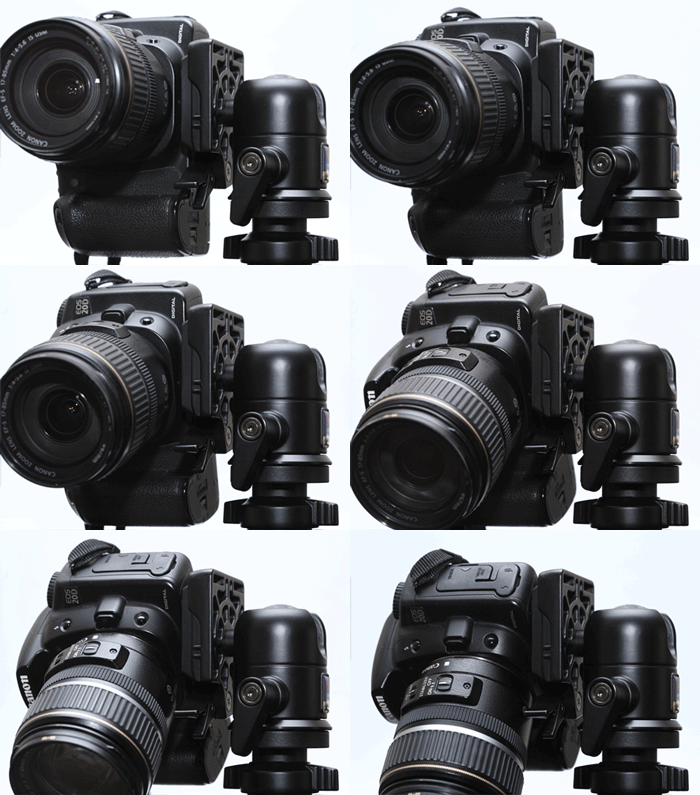
I have been using the Arca-Swiss system since 2005. It is a very flexible and useful system that offers many possibilities, many of which I use. One of those possibilities is the useful L-bracket.
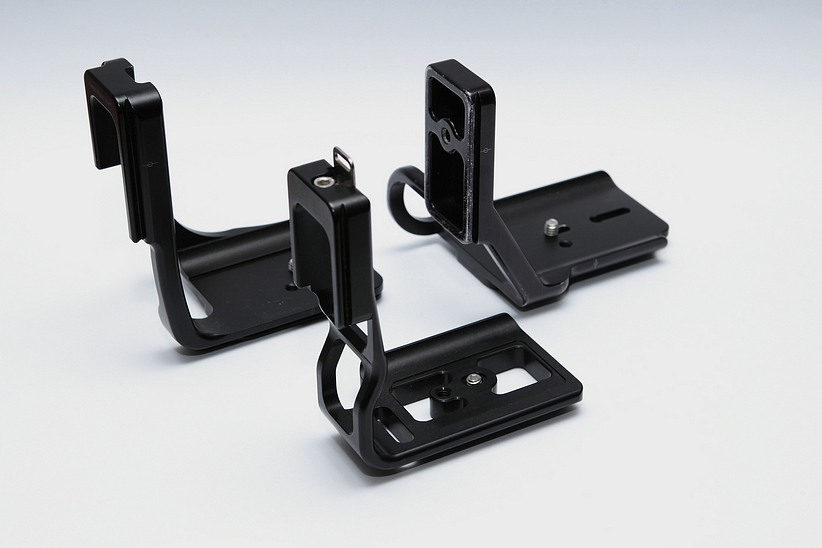
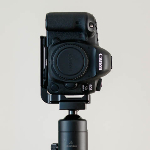
An L-bracket is an L-shaped tripod coupling that stays permanently attached to the camera. It allows you to put the camera on the tripod horizontally or vertically, without having to adjust the tripod head.
As far as I know, they are only available for the Arca-Swiss system, which in my view is the best system for a tripod connection.
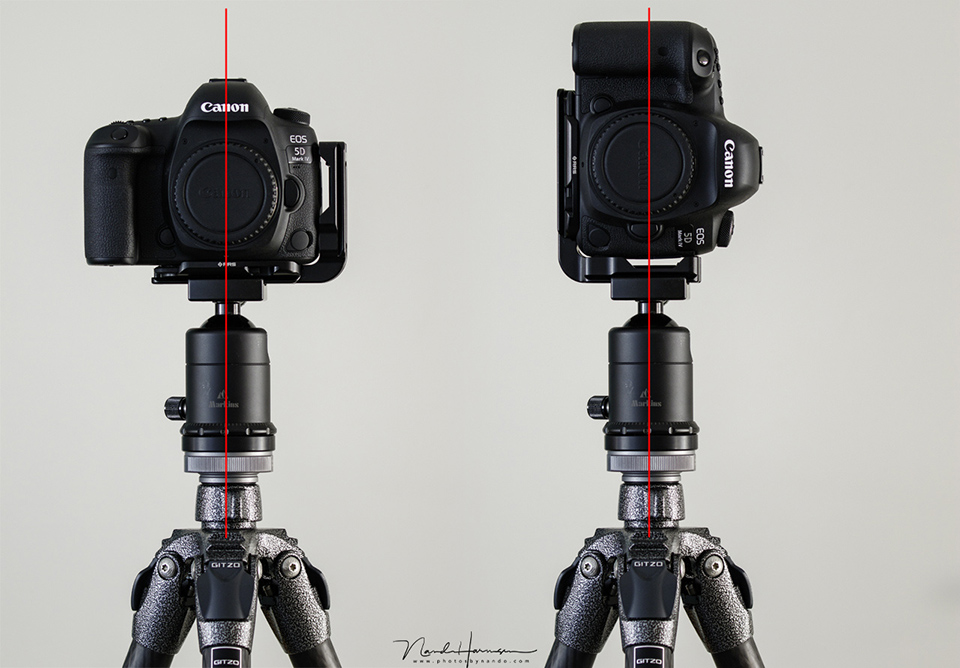
- The L-bracket fits perfectly around the camera, so it cannot rotate or twist.
- No tripod plates sticking out beyond the body
- When changing from horizontal to vertical orientation, the composition is maintained
- The weight of the camera and lens stays neatly centred above the tripod, making everything as stable as possible
- The aluminium of the L-bracket provides extra protection against knocks
- It is perfect for panorama photography in combination with a nodal slide
- There is room for accessories such as a flash bracket, small-rig couplings, and so on
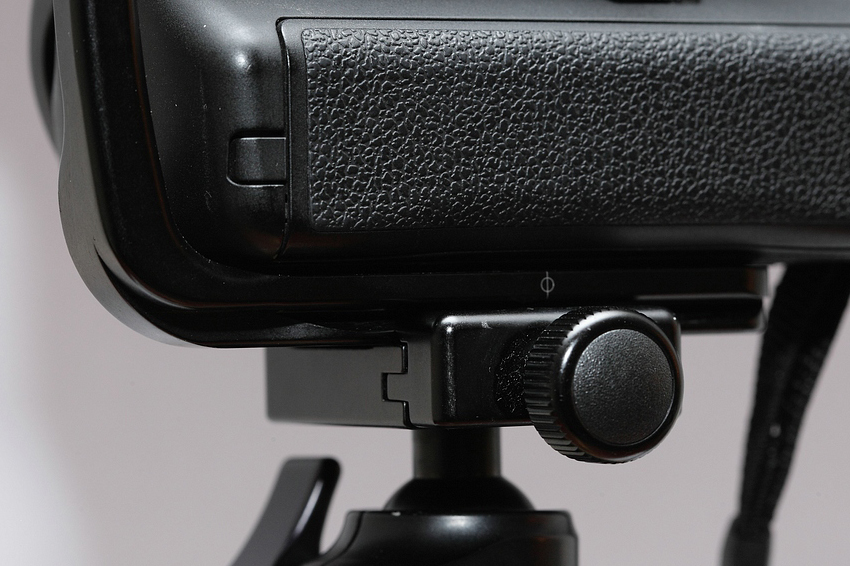
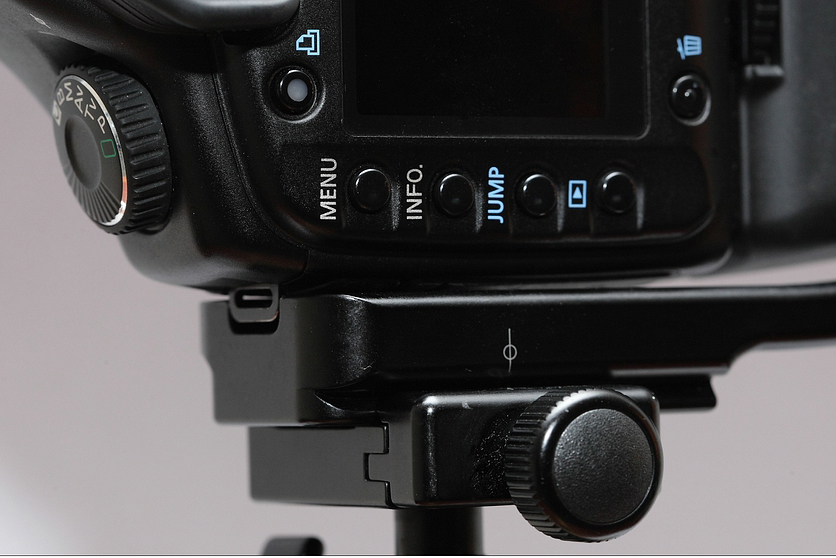
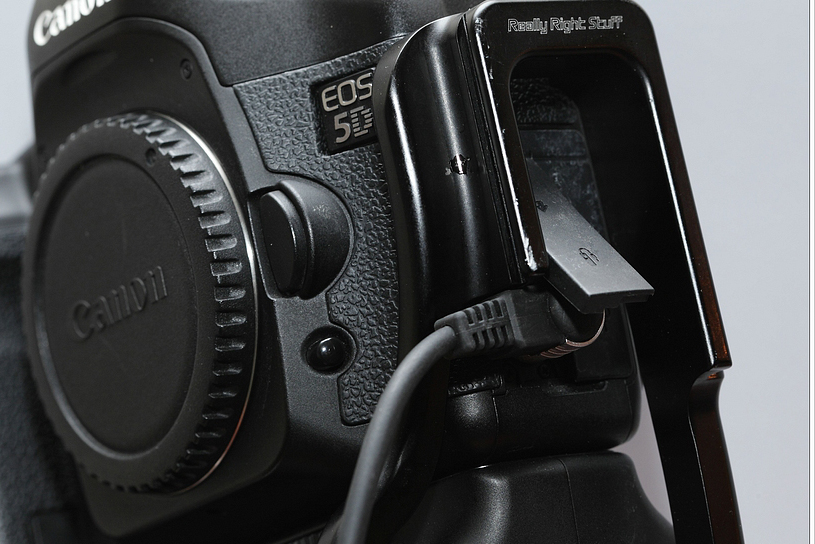
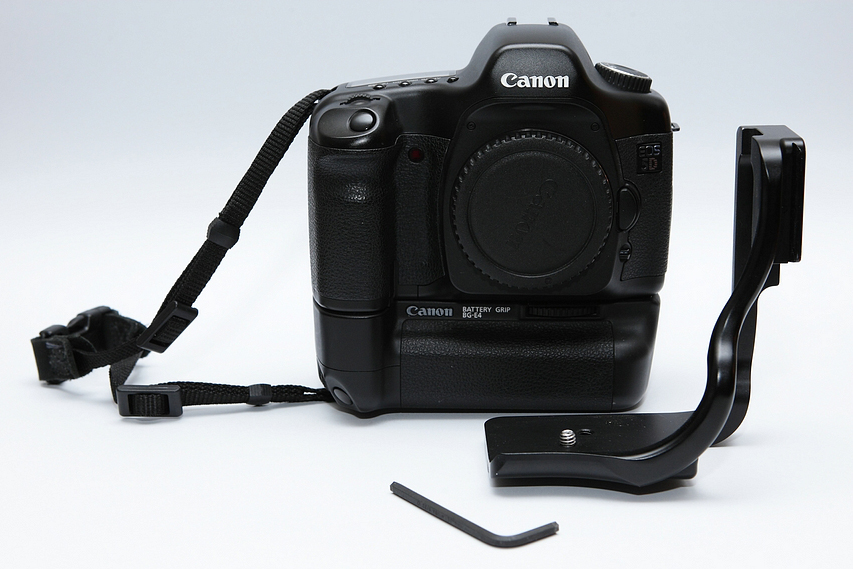
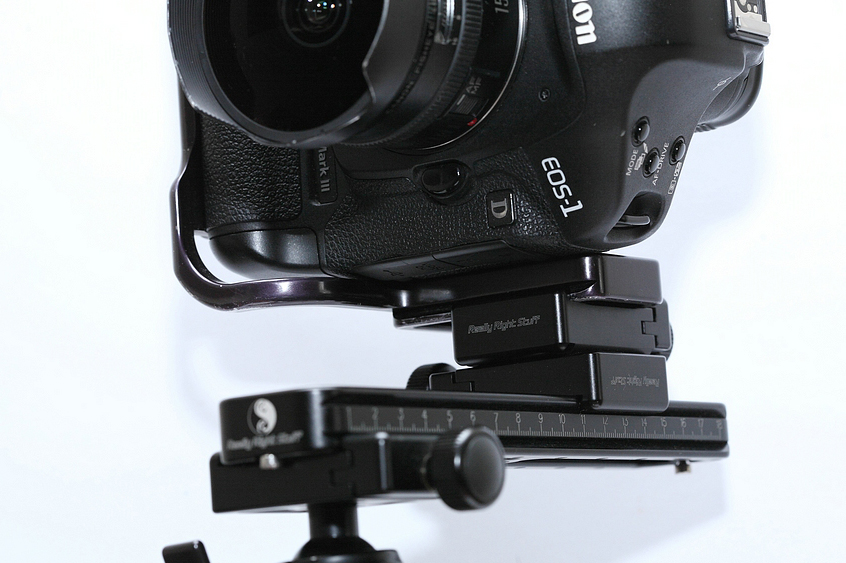
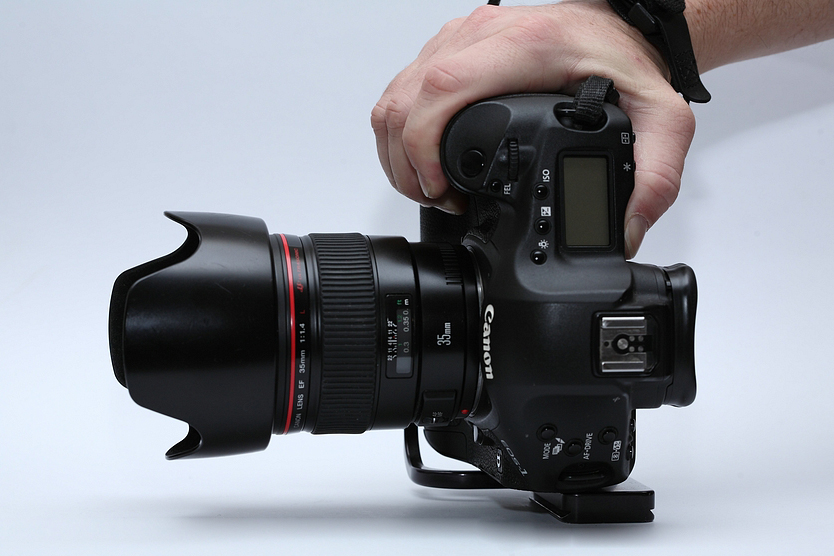
When you choose an L-bracket made specifically for your camera, you can continue to use all the covers and connections, and there is still room to change batteries or memory cards. You can even attach a black-rapid strap to it, if you use one.
The more general L-brackets may not give you free access to all the camera's connections. It is therefore better to spend a little more than to buy a cheap version that never fits perfectly and has to be removed regularly.
There are also some disadvantages to an L-bracket, which in my view do not outweigh the benefits.
- Good, camera-specific L-brackets can be expensive
- They make the camera body a little larger, so it may no longer fit perfectly in your bag.
- Although they are not heavy, they still add a few hundred grams
For me, the L-bracket is the best accessory you can have when you use a tripod a lot. I never want to be without one.
Dit artikel is voor het laatst bijgewerkt op 17 augustus 2023.
De eerste publicatiedatum is woensdag 19 augustus 2020, 23:23.
About the author
Nando Harmsen has been photographing for more than 40 years. He specialises in wedding photography and landscape photography. Nando also gives talks, workshops, masterclasses and photo trips, and regularly reviews new and interesting equipment.
You might also like
-
 5 Reasons for an L-bracket, and 5 reasons against one
by Nando Harmsen
-
 Consider an L-bracket for your camera
by Nando Harmsen
-
 The Most Useful Tool for a Photographer
by Nando Harmsen
-
 Using a tripod? Pay close attention to your tripod plate
by Nando Harmsen
-
 Review: Tether Tools Air Direct for wireless tethered photography
by Nando Harmsen
-
 A critical look at connecting to a camera wirelessly
by Nando Harmsen
11 comments
-

 Tromp Willem van Urk
wrote on Sunday 23 August 2020 at 17:54
| reply
Tromp Willem van Urk
wrote on Sunday 23 August 2020 at 17:54
| reply
Totally agree with Nando. I also had an L-bracket on my 5DMark3. I only screwed it on once. After that it never came off again!
Translated from Dutch.
I am now planning to switch to Canon's R series. And those have a tilting display. I wonder if an L-bracket is still possible then !? -
 Nando
wrote on Tuesday 25 August 2020 at 09:56
| reply
Nando
wrote on Tuesday 25 August 2020 at 09:56
| reply
@Willem:
Translated from Dutch.
Absolutely. L-brackets are also available for the EOS R, which also has a tilting display. That system is no different from the one for the R5 and R6.
Because the camera is so new, the dedicated L-brackets may not be available yet. But they will definitely be coming. -
 guest wrote on Tuesday 25 August 2020 at 14:04 | reply
I have been using Really Right Stuff L-brackets on all my cameras for years.Never experienced any problems. In combination with their ball heads, top material. Only downside : substantial investment. But how many people don’t first start with a cheap tripod / ball head, then a more expensive one, and finally an expensive and solid tripod. All things considered, this is still much more expensive.
Translated from Dutch. -
-
guest wrote on Tuesday 25 August 2020 at 16:01 | reply
How do you maintain the composition when changing from a horizontal to vertical position? The composition changes by definition then, doesn't it?
Translated from Dutch. -
-
 Annemarie wrote on Tuesday 25 August 2020 at 20:39 | reply
I would love to buy one for my Panasonic Lumix GX8 mirrorless camera, but they are unavailable anywhere.
Translated from Dutch.
And if you take a universal model, you can no longer use the display, which is very inconvenient with macro photography (low to the ground).
Does anyone know a solution? -
-
 Paulussie wrote on Tuesday 8 September 2020 at 22:50
| reply
Paulussie wrote on Tuesday 8 September 2020 at 22:50
| reply
It's a solution for the problem I'm experiencing with those loose Arca-Swiss plates, which constantly come loose and twist, but it's only worthwhile if you use your tripod very often.
Translated from Dutch.
And either always or never use a battery pack......
As Johan already said: every disadvantage has its advantage. -
Paulussie wrote on Tuesday 8 September 2020 at 22:51
| reply
I find those arca-swiss plates hopeless, they keep coming loose.
Translated from Dutch. -
Nando
wrote on Wednesday 9 September 2020 at 10:17
| reply
@Paulussie;
Translated from Dutch.
I assume you don't have plates from the Arca-Swiss brand, but from another brand that is arca-swiss compatible.
You're right, there's also a lot of junk among them, plates that are arca-swiss compatible but don't screw on properly.
If you have a good one, then there's no problem. It's just that most people want to go as cheap as possible.
Have your say
Please note: Articles older than a week can only be commented on by signed-in visitors.Would you still like to comment? sign in or create a free account.
Become a better photographer every week
A practical photography tip in your inbox every week.
39,024 photography enthusiasts already receive the tips! More about the weekly mail. Or keep up to date via  Facebook.

Elja Trum
Photofacts; everything to do with photography!
Would you like to take better photos and keep up with what is happening in photography? Photofacts publishes articles that teach you something about photography — from a product announcement to a practical shooting tip or a look at a website. Photofacts covers photography every day and is a hobby project of Elja Trum's that got out of hand. The articles are written by a team of volunteer authors. If you would enjoy writing one or more articles for Photofacts, do get in touch.More about PhotofactsPhotofacts is made possible in part by
