
8 tips to improve your running photography
Wednesday 12 December 2018, 20:59 by Huub Keulers | 18,537 views | 14 commentsThis article was translated from Dutch with the help of AI. Read the original.
I have been photographing various sports with great passion and enthusiasm for quite some time. I see capturing a sport I have not photographed before as a fun challenge.
If you are lacking inspiration, photographing a running race is a great opportunity to broaden your horizons, such as the Meerssen marathon last week.
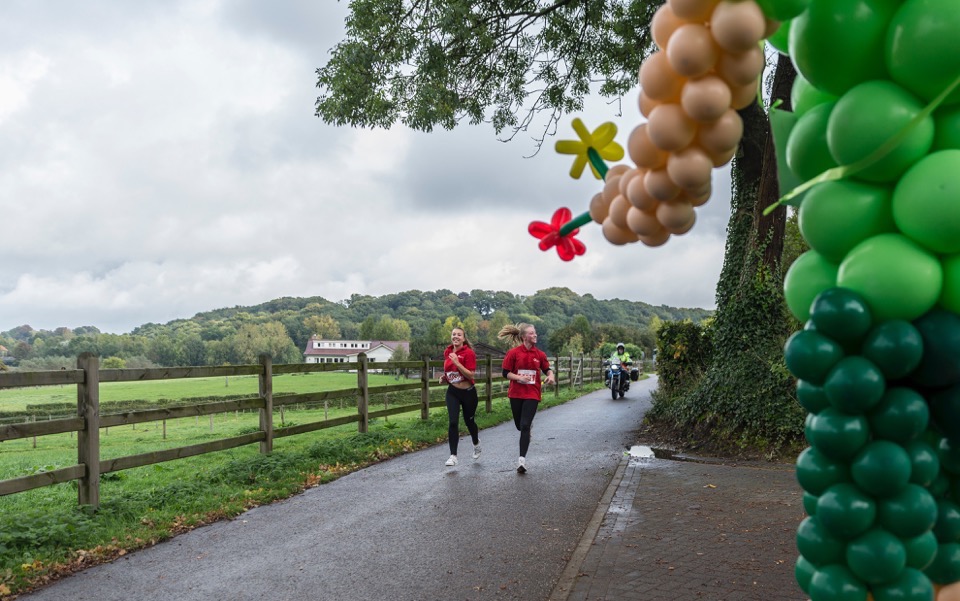
According to many, this is one of the most beautiful, but also one of the toughest running races in the Netherlands. For much of the way, the course winds through the green Limburg countryside, with the runners facing quite a few tough climbs.
Not only the athlete, but also the photographer needs to be reasonably fit if they want to photograph at various places along the course. Besides the physical effort, the main challenges are capturing the images at the right moment and showing the runners' dynamics.
I would like to share how you can achieve this and what you need to pay attention to in this article, using a number of practical tips.
1. Know the course
As with many photography events, good preparation is often half the battle. It is an advantage if you know the interesting, beautiful spots along the route, such as a road with a change in elevation, a beautiful view, a suitable background or decorations along the route.
Let the surroundings tell part of the story. For this marathon, my wife and I explored the course a few days in advance.
2. Check the weather forecast
There is nothing more annoying than being caught by a heavy shower while photographing on location. I speak from experience and can tell you that it is not much fun for you as a photographer or for your equipment.
A camera and lens that are weather-sealed can cope with a small shower, but it is best not to expose most cameras to a load of raindrops unless you own one of the top models from Canon or Nikon, for example.
Make sure you have good rainwear, such as a waterproof poncho or rain suit, and suitable footwear. A so-called 'rain cover' for your camera body and lens is also a useful thing to have.
A water-absorbent cloth and a lens cloth are essential too. You can use the first cloth to remove most of the water from your camera and dab the front element, while you can then use the lens cloth to dry the front element completely.
If you use a monopod, you can also fit it with an umbrella. With a little ingenuity, you can easily attach a so-called golf umbrella, available from almost all golf shops, to your monopod, allowing you to photograph while staying dry.
3. High and low viewpoints
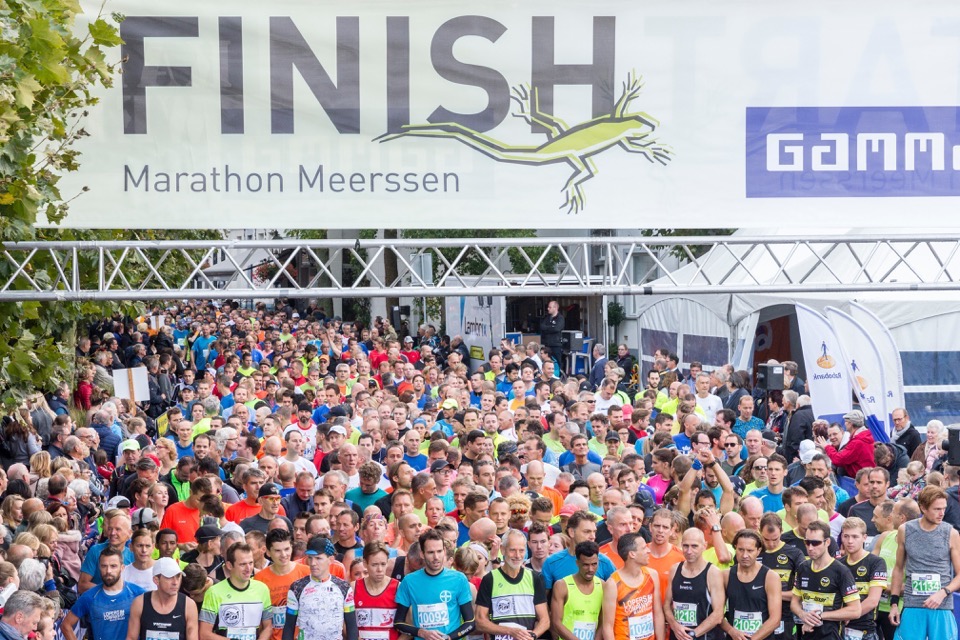
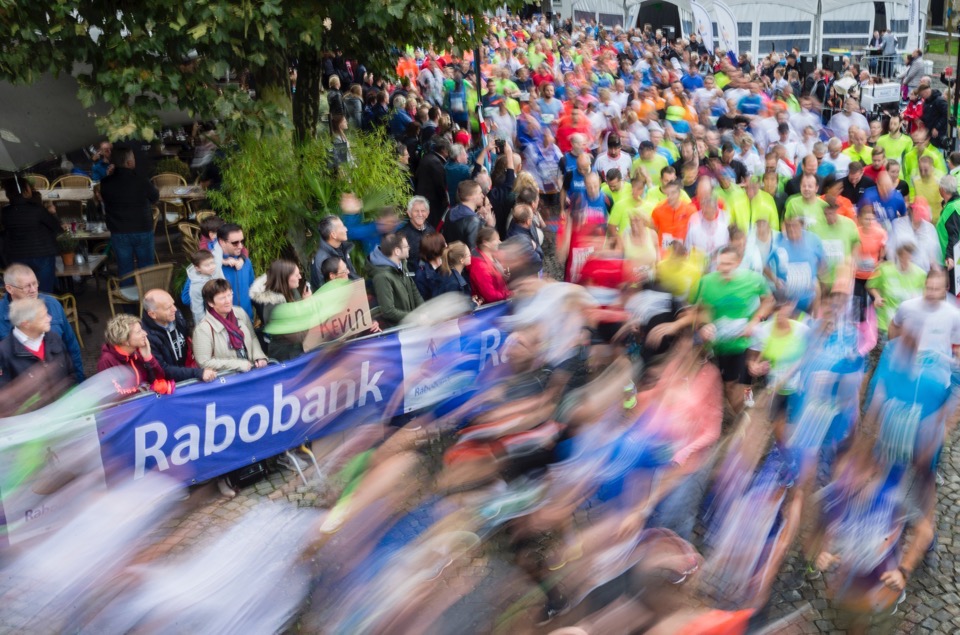
Taking up the right position is crucial for better sports photos. There is often an opportunity to find a higher position at the start or finish.
Photographing a large group of runners from a higher viewpoint produces unusual photos and will please every organiser. It is good promotion for their sporting event.
Another way to add more dynamism to your photos is to use a viewpoint as low as possible. Combined with a wide-angle lens, this gives a photo much more impact.
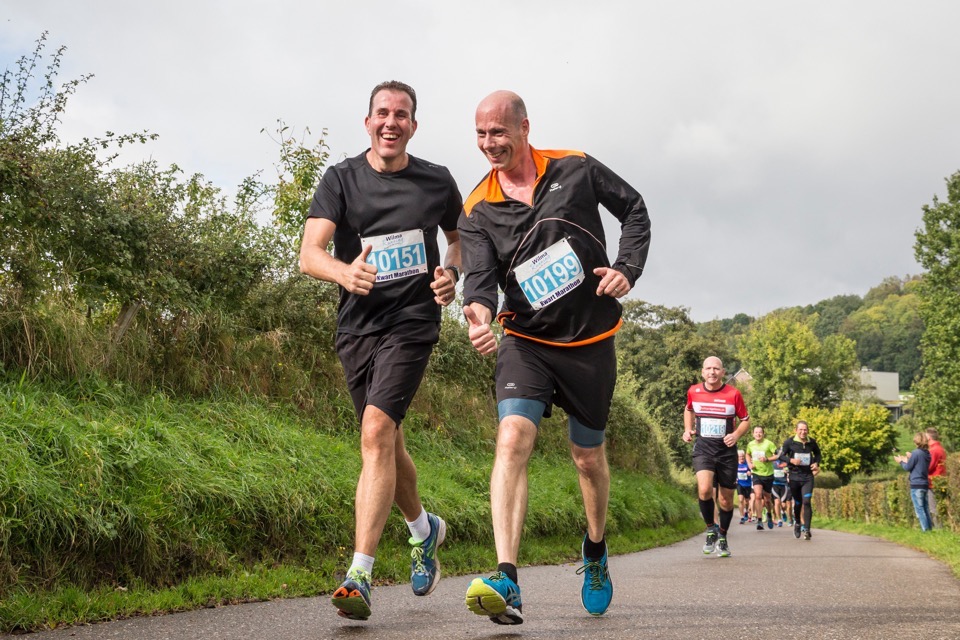
4. Photograph faces from the front
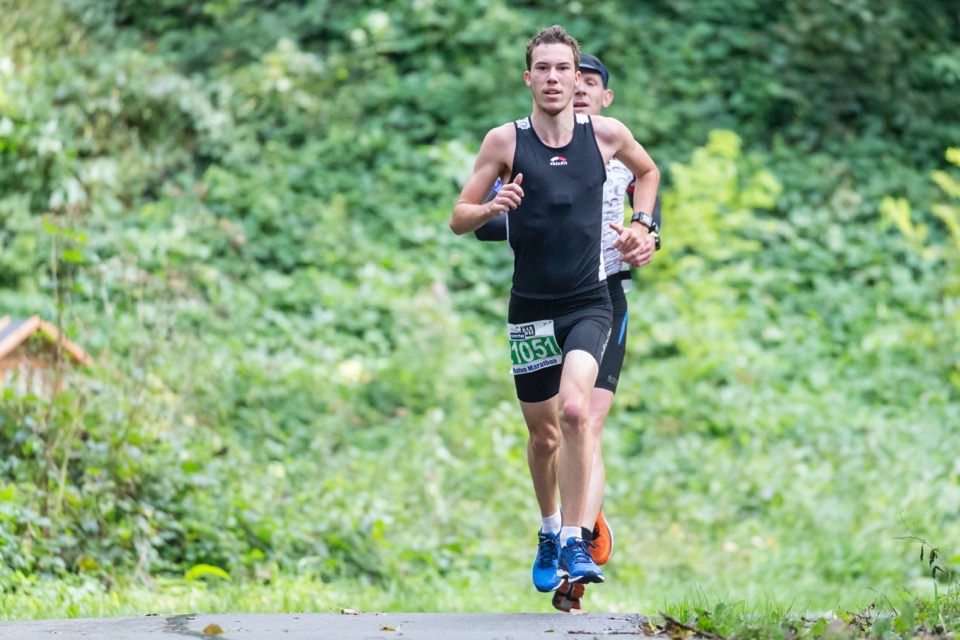
If you want to give viewers the feeling of being present at a sporting event, you can stand in the middle of the action as a photographer. By photographing the runners straight from the front, you get eye contact, see their faces more clearly and show emotion.
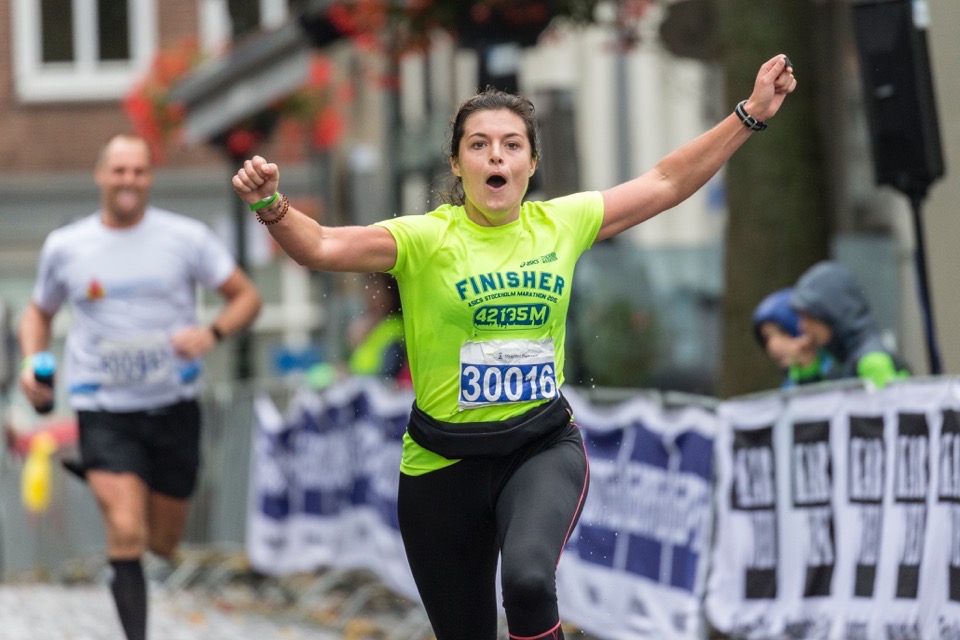
5. Show movement
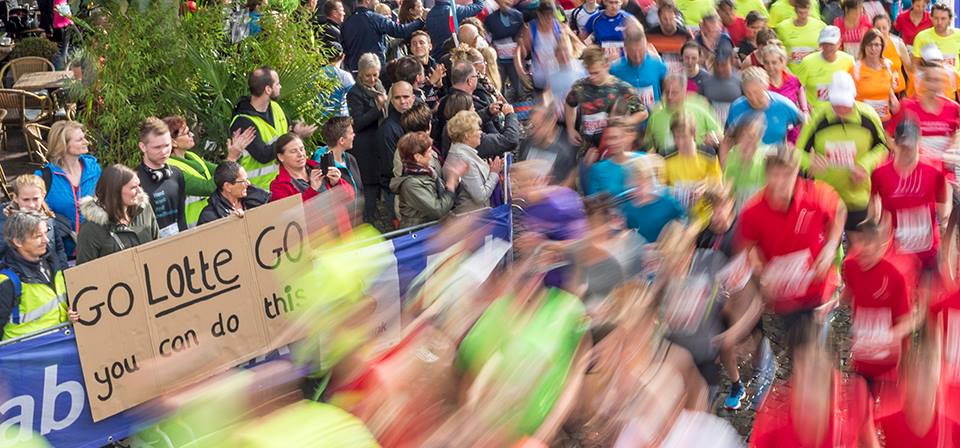
Running is a sport in which speed is important. After all, the fastest runner wins. To show that speed, you can experiment with a slower shutter speed as a photographer.
To keep the surroundings sharp in the photo while making the movement of the runner or runners blurred, you need at least a monopod or a solid support, such as a tree or fence.
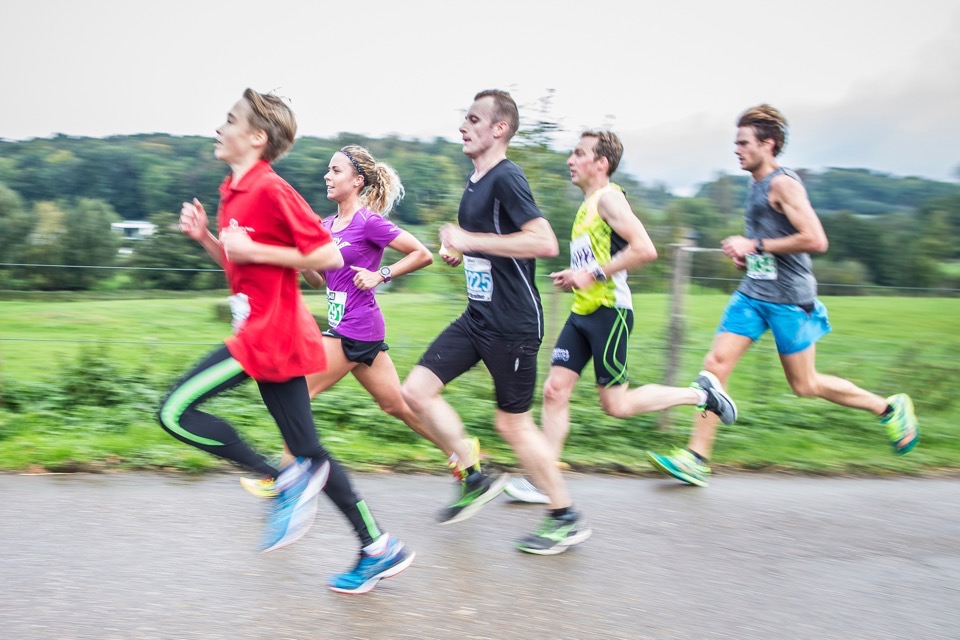
Another method is to follow the runners with your camera, also known as panning. Using a shutter speed of 1/125 - 1/30 of a second makes the background blur while showing the athlete themselves partly or completely sharp in your photo.
6. Get their feet off the ground
Nothing looks as stiff as a runner with one foot on the ground. At that moment, the athlete is not being photographed at their most flattering. The impact of the foot hitting a hard surface can sometimes make the skin on the legs and face 'shake', which the runner will not thank you for.
A much better moment to take the photo is when the runner has both feet off the ground. This makes the athlete appear to float and makes your photo much more interesting.
To achieve this, it is best to activate your camera's Burst mode so that it takes several images per second. At home, all you then have to do is select the photo showing the right moment.
7. Use continuous autofocus
To photograph a moving subject such as a runner sharply, your camera's autofocus needs to keep following the athlete continuously. Set your camera to AF-Servo (Canon) or AF-C (Nikon).
As long as you keep the shutter button or AF-ON button on your camera pressed, it will estimate the athlete's speed and try to keep them in focus. Fellow photographer Erik van Rosmalen explains the use of the AF-ON button clearly in this article.
This focusing method is used by many sports photographers and is also known as Back Button Focus.
8. Pay attention to your surroundings
At a sporting event such as a marathon, there are naturally spectators, family, friends, supporters and coaches too. So do not focus only on the runners, but also on what is happening around them. Spectators and props along the course complete the picture.
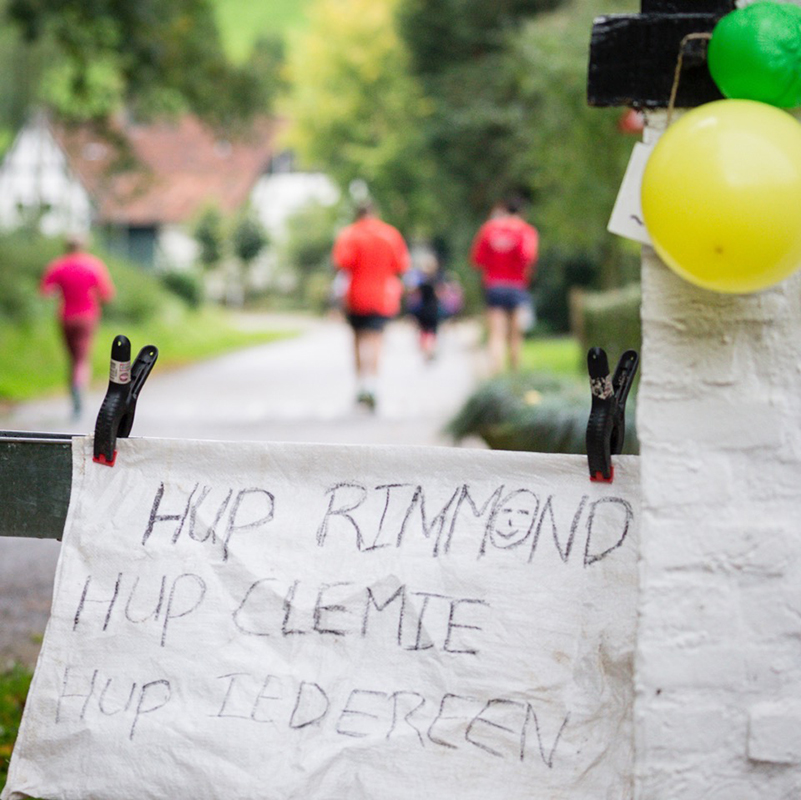
The photos in this article were taken with a Canon 1Dx, Canon 100-400mm f/4-5.6L IS USM II and Canon 24-70mm f/2.8L II USM.
Sports photography course
If you would like to learn more about sports photography, our course on Photofacts Academy may be just what you need.
» Go straight to the Sports Photography course
The course is taught by professional photographer Nico Delmeire. Nico has more than 12 years' experience as a sports photographer and during that time has photographed several major competitions and finals, both nationally and internationally.
Dit artikel is voor het laatst bijgewerkt op 12 december 2018.
De eerste publicatiedatum is maandag 23 oktober 2017, 20:10.
About the author
Huub Keulers is een enthousiasmerende veelzijdige freelance fotograaf woonachtig in Elsloo (Li). Hij is gespecialiseerd in sport-, bedrijfs-, straat-, honden en portretfotografie. Daarnaast is Huub auteur van diverse educatieve fotografieboeken en verzorgt hij allerlei fotoworkshops, masterclasses en lezingen.
You might also like
-
 Review: Book Sport Photography
by Michelle Peeters
-
 20 tips from sports photographer Nico Delmeire
by Michelle Peeters
-
 Sports photography tip: Creating an abstract sports photo
by Nico Delmeire
-
 Photographing the Strong Viking Obstacle Run
by Elja Trum
-
 5 power tips for more exciting sports photos
by Huub Keulers
-
 Sports photography tip: The best position at a football match
by Nico Delmeire
14 comments
-
 Roger Vrancken wrote on Tuesday 24 October 2017 at 07:02 | reply
I can recommend this photographer to everyone if you want photos that are different from usual.
Translated from Dutch. -

 Huub Keulers
wrote on Tuesday 24 October 2017 at 07:49
| reply
Thank you Roger. I really appreciate that!
Translated from Dutch. Your Marathon event in Meerssen is an absolute must for every runner and running fan in the Netherlands and beyond.
-
 Roy Coumans wrote on Tuesday 24 October 2017 at 09:07 | reply
Nice article, good tips. I recently got to photograph a number of participants in the marathon in Eindhoven myself. Friday evening, to be precise. The portraits turned out well, but the action photos not really. What are your tips for photographing the runners in darkness and poor light?
Translated from Dutch.
Regards Roy -
 geerjanssen
wrote on Tuesday 24 October 2017 at 11:35
| reply
Good tips, we can learn from this!
Translated from Dutch. -
 Wim Hendriks wrote on Tuesday 24 October 2017 at 11:36 | reply
Well, because of that autofocus hassle I'm still not satisfied,especially with sports photos, recently tried the Sony A9 ....came close with its 20 frames. Yes I still do it according to my own judgment after so many years..
Translated from Dutch. -
 Annie Snoeren wrote on Tuesday 24 October 2017 at 14:10 | reply
Read your article with great interest. Useful tips. I would like to step out of my comfort zone (macro) sometime. My question to you is: How do you attach a golf umbrella to the tripod
Translated from Dutch. -
Huub Keulers
wrote on Tuesday 24 October 2017 at 14:24
| reply
Thank you Roy. As for photographing runners under decreasing light conditions, the following. A few months ago we photographed the night run of the Ironman in Maastricht. Apart from a few street lamps, it was just completely dark. Even our Autofocus of the Canon 1Dx and the 7D MII sometimes had trouble.
Translated from Dutch.
In principle you have 2 options. Use an aperture as wide open as possible, e.g. F2.8 and no shutter speed shorter than 1/500 to 1/1000 sec. This limits your high-ISO noise in any case. In addition, apply the Expose To The Right method of your Histogram. This means you don't have to brighten your shadows too much in post-processing and prevent even more noise from becoming visible.
Or you can use flash in HiSpeedSync mode. At most running events on the road, however, that is not a problem. That is my preference.
In any case, they are not the most ideal (lighting) conditions. Good luck! -
Huub Keulers
wrote on Tuesday 24 October 2017 at 14:33
| reply
Dear Wim Hendriks.
Translated from Dutch.
There is fortunately absolutely nothing wrong with having your own insight and unfortunately there is no Autofocus system on the market that functions with 100% accuracy. This is sometimes the case particularly in poor lighting conditions and with very varying movement directions of the subject.
The Autofocus system of the latest Canon DSLRs (1Dx, 7D MII, 6D MII and 5D MIV) is among the best in this regard. The number of images per sec. is, however, separate from the accuracy of your AF. It does help to the extent that the chance of a well locked-on AF and therefore sharp photo becomes greater. Plus more chance of having just that photo that is perfectly timed.
Have fun with your photography activities. -
Huub Keulers
wrote on Tuesday 24 October 2017 at 14:51
| reply
Dear Annie,
Translated from Dutch.
Thank you for your response. There are various ways to attach a rain umbrella to a tripod or monopod, but most require some DIY work. Via the link below you can buy one of the options online. I made one myself using a studio clamp from a flash head. Umbrella and leg clamped in studio clamp.
Link: https://www.amazon.com/Selens-Camera-Umbrella-Bracket-Support/dp/B01F8I4MPM.
Good luck. -
 Jan Koster wrote on Tuesday 24 October 2017 at 15:45 | reply
Nice and clear explanation, thanks.
Translated from Dutch. -
 Peter lefèvre wrote on Tuesday 24 October 2017 at 22:44 | reply
Nice article, definitely worth reading and trying sometime. I'm going to take a look at my running photos to see what I could have done better.
Translated from Dutch.
Regards Peter -
Huub Keulers
wrote on Wednesday 25 October 2017 at 13:40
| reply
Jan and Peter, thanks for your response too. Have fun and find inspiration while photographing. If you have any more questions, feel free to ask them in this blog.
Translated from Dutch. -
 Nico van Hoorn wrote on Wednesday 25 October 2017 at 20:41 | reply
Thanks for your tips
Translated from Dutch. -
Wim Hendriks wrote on Wednesday 25 October 2017 at 22:32 | reply
Dear Huub,after winning 1st prize for sports photo, the Silver Camera from the NVF/NVJ, there was no more excitement in photography for me after 2000 I still went to the World Cups and European Championships football, swimming and to the Olympics but could no longer muster the drive...certainly not when my good friend Guus de Jong passed away,who really taught me the tricks of sports photography I thought that I might now be able to get some drawings off my chest to you?
Translated from Dutch.
It goes too far to say that the Dutch photographers in the 70s and 80s who were allowed to give advice to Canon about the AF system were the deciding factor,but they certainly provided the impetus,especially...the sports photographers,Robbert Collet,Guus de Jong,Piet vd Klooster,Soenar Chamid and the undersigned.It wasn't going too fast for us..and still isn't,maybe after a while when they make chips that are faster than light..? Quattro technology...? so I think that technology certainly matters if you want to produce good photos,then you no longer pay attention to technology but to your image.
Well and the rest is for those for whom it is intended.
What I do now...filming,still can't resist making images,with another fellow photographer Thed Lenssen,who ALSO no longer photographs,we have done some projects.And sports,yes some little things,rubber granules on the artificial grass and so on...
Have your say
Please note: Articles older than a week can only be commented on by signed-in visitors.Would you still like to comment? sign in or create a free account.
Become a better photographer every week
A practical photography tip in your inbox every week.
38,764 photography enthusiasts already receive the tips! More about the weekly mail. Or keep up to date via  Facebook.

Elja Trum
Photofacts; everything to do with photography!
Would you like to take better photos and keep up with what is happening in photography? Photofacts publishes articles that teach you something about photography — from a product announcement to a practical shooting tip or a look at a website. Photofacts covers photography every day and is a hobby project of Elja Trum's that got out of hand. The articles are written by a team of volunteer authors. If you would enjoy writing one or more articles for Photofacts, do get in touch.More about PhotofactsPhotofacts is made possible in part by
