

Working with strong backlighting
Thursday 8 December 2016, 16:32 by Frank Doorhof | 8,744 views | 2 commentsThis article was translated from Dutch with the help of AI. Read the original.
They knew what they were doing in the 1970s. Using backlighting can be really great, it creates great lens flares and gives a shot that little bit extra. That is why I thought it would be great to write a short article about it.
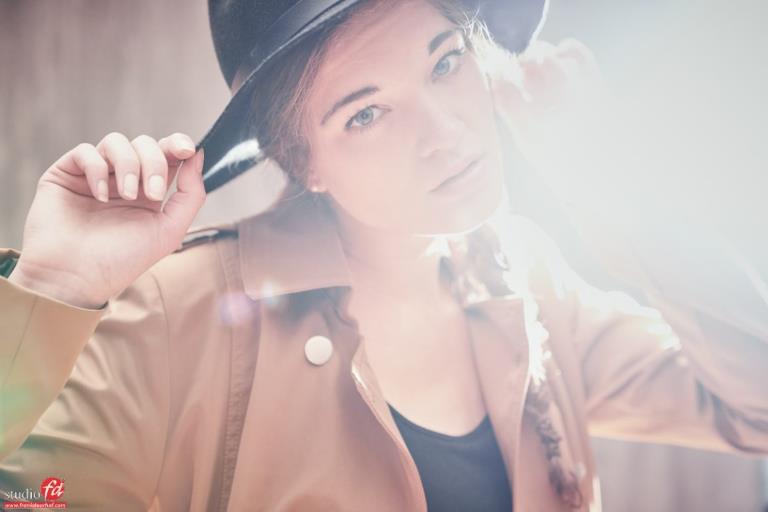
I am not saying that everything became worse after the 1970s, but, in all honesty, I am sometimes amazed by the questions I get during a workshop about lens flare and backlighting.
When I post a photo with strong backlighting, people ask me which filter I used. Don't get me wrong, I do use filters. I like DxO filmpack and Alien Skin Exposure to give my photos a tint.
I also regularly use MacPhun intensify to bring the image to life even more, but the lens flares in my photos are real 99 times out of 100.
I took the photo above last week during a workshop with Iris. The only thing used here was a bare flash positioned directly behind the model.
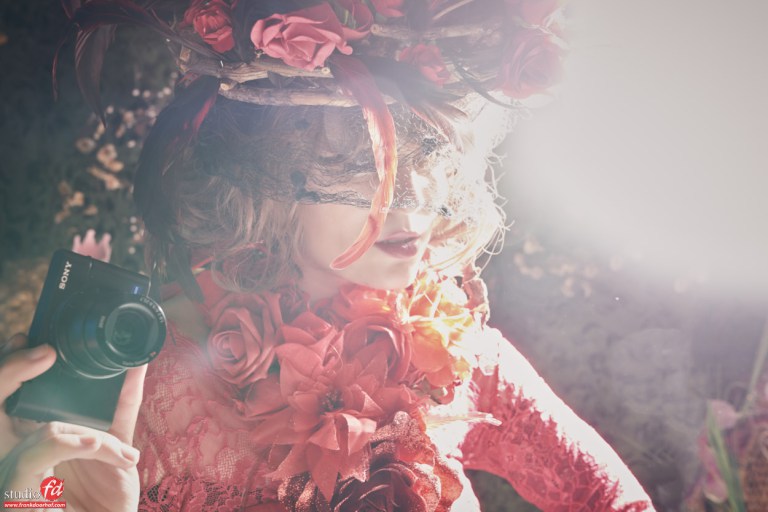
If you measure the light directly in front of the model, aimed at the camera in this case, the exposure on her face is correct. In fact, it is the reflection of the light in the studio that lights up her face.
This is the great thing about using an incident light meter, a Sekonic in my case. If you hold it in front of the spot you want to expose correctly, you get an accurate reading. You can then decide what look you want to give your photo.
In this case I used only one flash, so the backlight from the flash can be too bright. There are a few things you can do: you can 'feather' it, turning the flash so that most of the light shines in another direction.
Another solution is to use a reflector, so that more light is bounced back onto the model.

About the author
Frank Doorhof blogt dagelijks in het Engels op zijn website en geeft wekelijks workshops model fotografie in zijn studio in Emmeloord, maar ook op locatie in binnen en buitenland. Van beginners tot gevorderde, iedereen kan bij Frank terecht. Ook voor specifieke 1 op 1 workshops, of maatwerk voor groepen.
You might also like
-
 Don't be afraid of backlighting and light meters
by Frank Doorhof
-
 Portrait photography tip: Playing with backlighting
by Elja Trum
-
 How to prevent flare in a photo with the sun in it
by Nando Harmsen
-
 Lens flares: a nudge in the wrong direction
by Michelle Peeters
-
 Portrait photography tip: Use a window as backlight
by Elja Trum
2 comments
-
 Eduard wrote on Wednesday 14 December 2016 at 00:54 | reply
With a mirrorless system camera, you can see right away how it turns out, can't you?
Translated from Dutch. -
 Frank Doorhof wrote on Wednesday 14 December 2016 at 08:26 | reply
In fact (if you do it often enough) you can see how the flare falls with every camera. An advantage of a mirrorless camera is that you often see the preview in your viewfinder immediately after taking the photo.
Translated from Dutch.
With other cameras, you'll have to "chimp" (look at the back), which means you have to take the camera away from your eye.
Have your say
Please note: Articles older than a week can only be commented on by signed-in visitors.Would you still like to comment? sign in or create a free account.
Become a better photographer every week
A practical photography tip in your inbox every week.
38,783 photography enthusiasts already receive the tips! More about the weekly mail. Or keep up to date via  Facebook.

Elja Trum
Photofacts; everything to do with photography!
Would you like to take better photos and keep up with what is happening in photography? Photofacts publishes articles that teach you something about photography — from a product announcement to a practical shooting tip or a look at a website. Photofacts covers photography every day and is a hobby project of Elja Trum's that got out of hand. The articles are written by a team of volunteer authors. If you would enjoy writing one or more articles for Photofacts, do get in touch.More about PhotofactsPhotofacts is made possible in part by
