

A high ISO value? Or corrected underexposure?
Saturday 27 April 2024, 14:28 by Nando Harmsen | 3,830 views | 1 commentThis article was translated from Dutch with the help of AI. Read the original.
Sometimes you need to use a fast shutter speed. This may mean increasing the ISO value to achieve it. Is it better to take an underexposed photo and correct it, or should you simply choose a high ISO value?
A high ISO value causes noise. This is well known, and is why many people never use a high ISO value. But what if the shutter speed still needs to be faster? Then they take an underexposed photo and correct it later.
Which is better? A photo with a higher ISO value or a corrected underexposed photo? It really comes down to the following question: what causes the most noise?
A high ISO value produces noise. But a corrected underexposed photo does too. It is very easy to test which works best. Take a photo with a high ISO value, then take the same photo again with underexposure.
Do this in steps, keeping the shutter speed and aperture the same and only lowering the ISO value. Then correct the underexposed photos and compare them. You will immediately see which produces the most noise.
Is it the same? Then your camera is ISO-invariant. In other words, correcting underexposure produces just as much noise as using a comparable high ISO value. In that case, you can simply use high ISO values, because there is just as much noise as in a corrected underexposed photo.
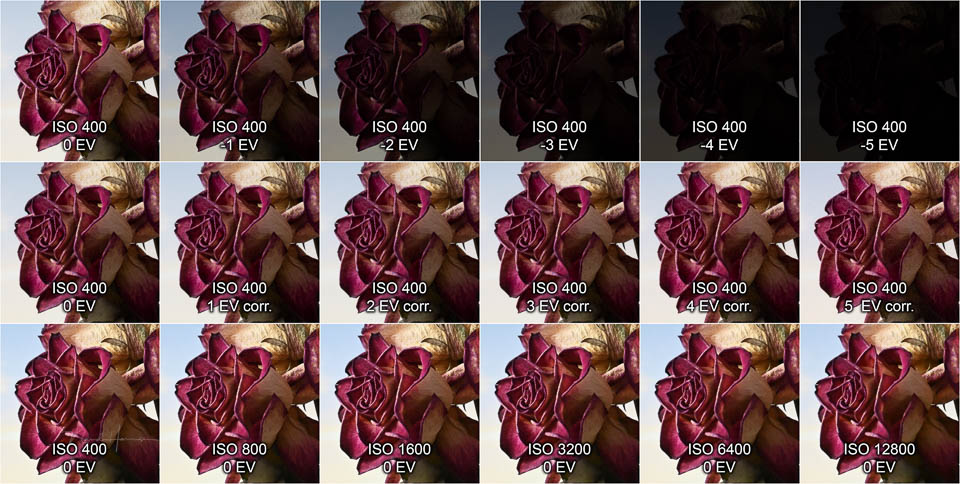
However, it can also turn out differently. Often, correcting an underexposed photo will show more noise than using a comparable high ISO value. In that case, the camera is not ISO-invariant. But this does mean that you are better off setting the ISO value high for the best result.
In almost all cases, it is better to set the ISO value high and expose correctly than to use a low ISO value and underexpose. Of course, this also depends on the degree of underexposure. The best thing is to try it out for yourself.
Are you a photographer who often underexposes to avoid using a high ISO value? Share your experiences in a comment below this post.
About the author
Nando Harmsen has been photographing for more than 40 years. He specialises in wedding photography and landscape photography. Nando also gives talks, workshops, masterclasses and photo trips, and regularly reviews new and interesting equipment.
You might also like
-
 What can you do with EV (Exposure Value)
by Michelle Peeters
-
 Be careful that low-key does not turn into underexposure
by Nando Harmsen
-
 Low-key is an edit, not underexposure
by Nando Harmsen
-
 A panorama should add value
by Nando Harmsen
-
 How high can your camera go in ISO?
by Nando Harmsen

1 comment
-

 Liesbeth Verkade wrote on Tuesday 30 April 2024 at 13:44
| reply
Liesbeth Verkade wrote on Tuesday 30 April 2024 at 13:44
| reply
Hi Nando,
Translated from Dutch.
I'm one of those photographers who usually avoided using a high ISO. Now with my current camera (Canon Eos 90 D), that is actually no longer necessary, but old habits.....
Good that you remind us once again!
Have your say
Please note: Articles older than a week can only be commented on by signed-in visitors.Would you still like to comment? sign in or create a free account.
Become a better photographer every week
A practical photography tip in your inbox every week.
39,013 photography enthusiasts already receive the tips! More about the weekly mail. Or keep up to date via  Facebook.

Elja Trum
Photofacts; everything to do with photography!
Would you like to take better photos and keep up with what is happening in photography? Photofacts publishes articles that teach you something about photography — from a product announcement to a practical shooting tip or a look at a website. Photofacts covers photography every day and is a hobby project of Elja Trum's that got out of hand. The articles are written by a team of volunteer authors. If you would enjoy writing one or more articles for Photofacts, do get in touch.More about PhotofactsPhotofacts is made possible in part by
