

Low-key is an edit, not underexposure
Monday 24 March 2025, 15:51 by Nando Harmsen | 5,484 views | 6 commentsThis article was translated from Dutch with the help of AI. Read the original.
We all know the terms high-key and low-key. These are photos that are mainly made up of highlights (high-key) or shadows (low-key). This is not overexposure or underexposure, though. I explain how I edited a low-key photo.
I often see photos labelled low-key and think: they're just underexposed. There are no light tones in them at all. Even things that would normally be white have a dark grey appearance.
Low-key is not underexposure. It is a photo that mainly consists of dark tones. So mainly the tones that sit to the left of the middle in a histogram. That does not mean there cannot be any highlights in it, though.
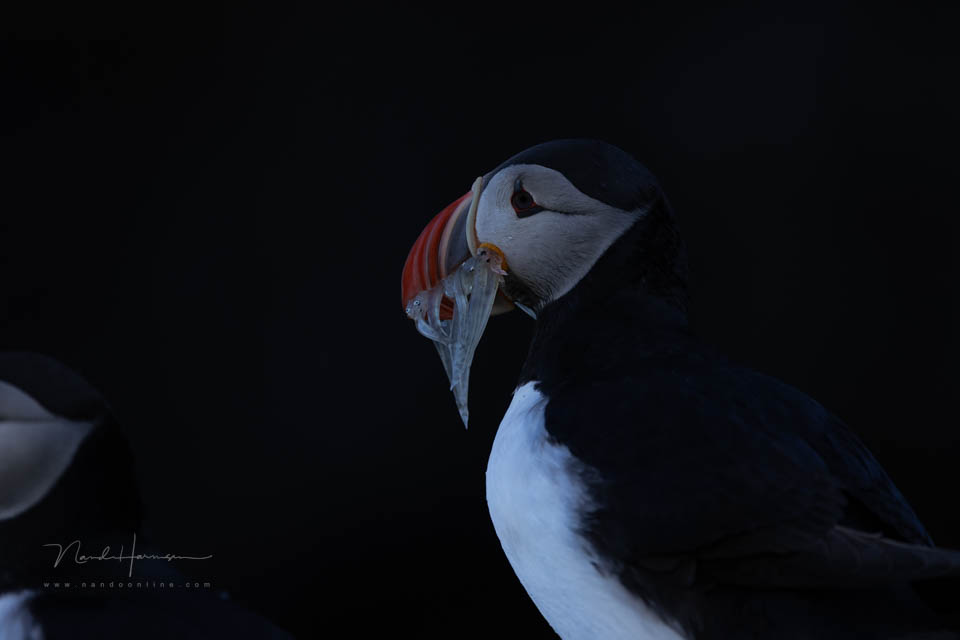
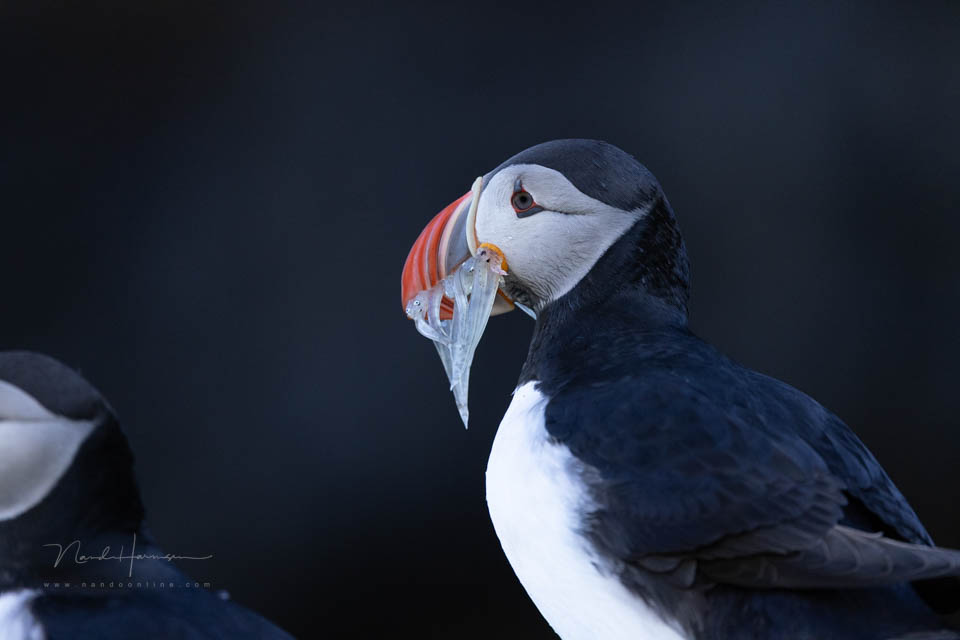
A photo must be suitable for editing into a low-key image. The photo must already be dark. But it must not be underexposed. The exposure has to be right. The low-key look comes from the edit.
For this example, I chose a puffin against a dark blue background. The photo is exposed for the light parts, so it is correctly exposed. I cropped it to keep the second bird out of the frame. This creates a nice portrait.
After cropping, it is a matter of editing the photo. The head can be made a little lighter, while the breast should be darker, with a gradient down to very dark. The contrast needs to be optimal. In Lightroom, I achieved this edit with masks.
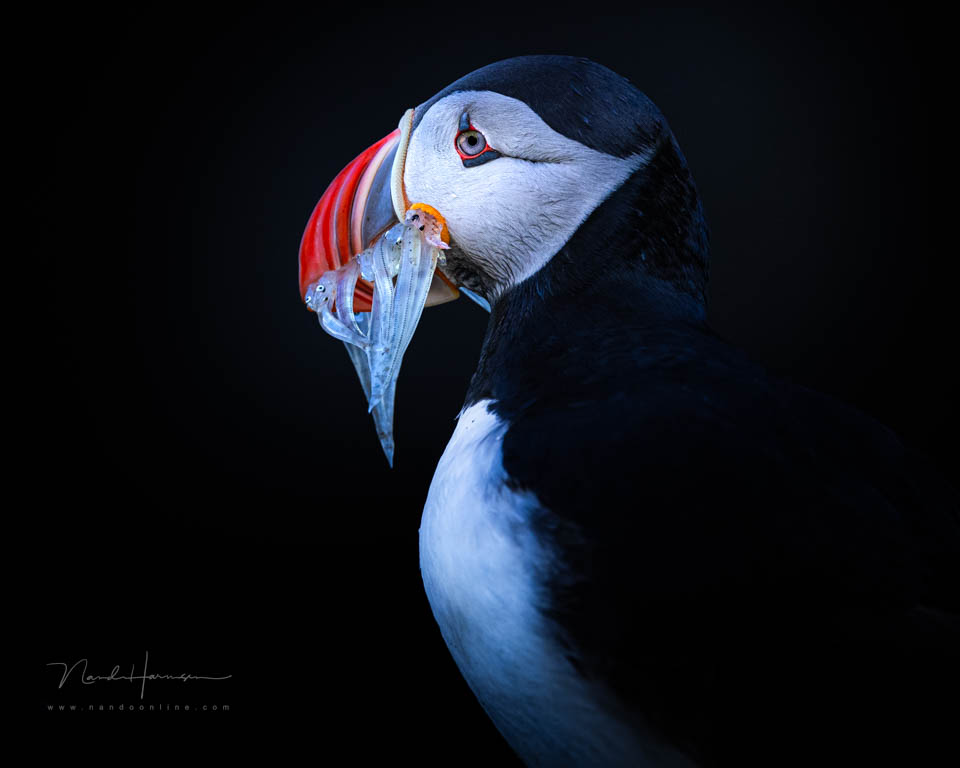
Although low-key photos can be presented perfectly well in colour, we often associate low-key with black and white. I think that would also look very good with this photo. I decide to create a powerful black-and-white version of the photo.
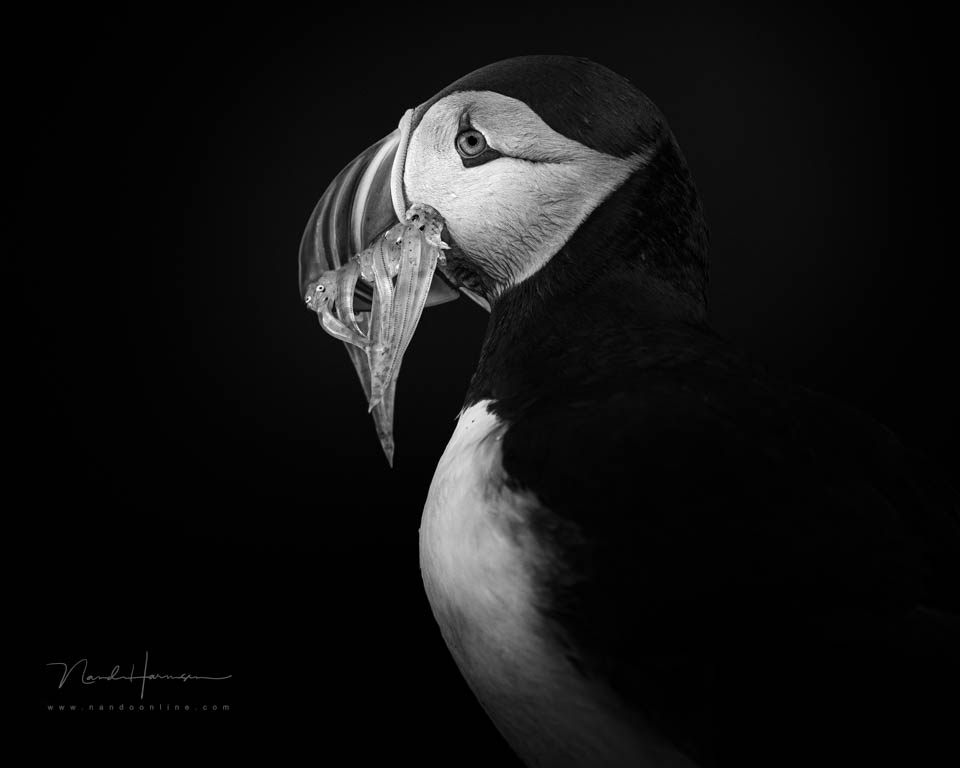
If you have set the exposure correctly, you still have the option of not turning it into a low-key photo. That is of course fine too. The choice is yours. But if the photo was already underexposed, it becomes very difficult or even impossible.
About the author
Nando Harmsen has been photographing for more than 40 years. He specialises in wedding photography and landscape photography. Nando also gives talks, workshops, masterclasses and photo trips, and regularly reviews new and interesting equipment.
You might also like
-
 When Is a Dark Photo Not Low-Key?
by Nando Harmsen
-
 Be careful that low-key does not turn into underexposure
by Nando Harmsen
-
 Editing a high-key photo
by Nando Harmsen
-
 5 tips to work faster in Lightroom Classic
by Thijs Schouten
-
 Playing with black and white contrast in Lightroom Classic
by Nando Harmsen
-
 4 Lightroom Classic Tips for Experienced Users
by Elja Trum
6 comments
-
 Donald Willemsen wrote on Monday 24 March 2025 at 22:25 | reply
I mainly have experience making low-key portraits in the studio and in black and white. With a good lighting setup in the studio, you almost immediately get a low-key photo that you don't have to edit into it again in post-processing. Of course, it doesn't work that way when you photograph outdoors in nature. After all, the light often comes from several directions there.
Translated from Dutch. -

-
 Bob wrote on Tuesday 25 March 2025 at 11:20 | reply
With strong contrasts in nature (usually not desirable, but definitely handy now), you can also create low key in the field. Just think of a great egret in the sunshine against a dark bank, for example.
Translated from Dutch. -
-
 Thierry Hoornaert wrote on Wednesday 26 March 2025 at 13:20 | reply
With high/low key, may the background be purely white/dark, or is it supposed to remain entirely within the range? I recently did a photoshoot with a white background in which the model wore an (almost) white dress with even whiter accents at the seams. The photo was predominantly white, without being overexposed. It was praised by the group as a perfectly exposed photo, but rejected as high-key. Same for the black background and dress.
Translated from Dutch. -
 Nando
wrote on Thursday 27 March 2025 at 00:51
| reply
Nando
wrote on Thursday 27 March 2025 at 00:51
| reply
Without seeing the photo itself, it's impossible to judge that. I do know that the criteria of groups, clubs and individuals sometimes take strange (and extreme) forms.
Translated from Dutch.
Pure black or white should usually not be a problem. It does depend on the image.
Have your say
Please note: Articles older than a week can only be commented on by signed-in visitors.Would you still like to comment? sign in or create a free account.
Become a better photographer every week
A practical photography tip in your inbox every week.
39,079 photography enthusiasts already receive the tips! More about the weekly mail. Or keep up to date via  Facebook.

Elja Trum
Photofacts; everything to do with photography!
Would you like to take better photos and keep up with what is happening in photography? Photofacts publishes articles that teach you something about photography — from a product announcement to a practical shooting tip or a look at a website. Photofacts covers photography every day and is a hobby project of Elja Trum's that got out of hand. The articles are written by a team of volunteer authors. If you would enjoy writing one or more articles for Photofacts, do get in touch.More about PhotofactsPhotofacts is made possible in part by
