

Does the Smartphone Camera Make the Compact Camera Obsolete?
Tuesday 30 May 2017, 17:17 by Jasper van Wezel | 9,724 views | 9 commentsThis article was translated from Dutch with the help of AI. Read the original.
The smartphone has become commonplace in recent years. An added advantage is that everyone can now take a photo anywhere. No wonder the cameras in mobile phones have undergone huge development.
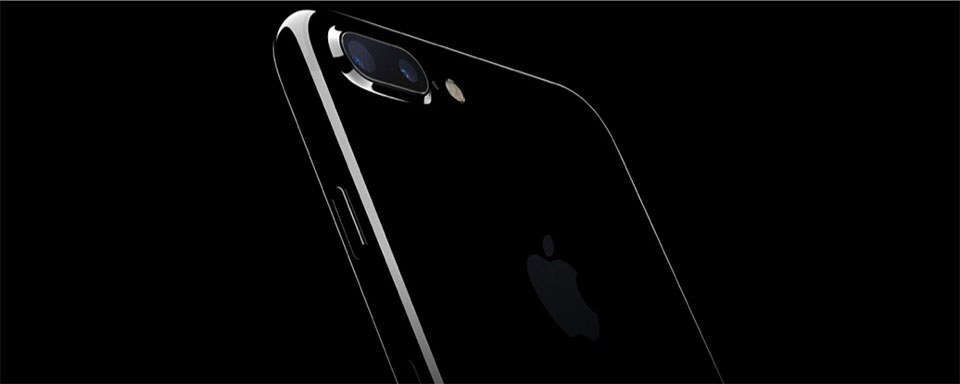
Slowly but surely, they are completely taking over the role of the compact camera. In recent years, more and more professional photographers have also become fans of the smart devices you always have with you. Will a toddler today ever be handed a compact camera?
Is the huge development of the smartphone camera a serious threat to compact camera manufacturers? The comparison site Telefoon.nl certainly thinks so. In five years, the website has seen the quality of smartphone cameras improve by leaps and bounds.
A development driven entirely by consumer demand. They see the benefits of having a good camera with you at all times. You can now even see a trend among young people towards good selfie cameras. It is hardly surprising that smartphone manufacturers are responding smartly, and you now even see professional photographers speaking at the launch of a new flagship.
Smartphone camera from 2 to 24 megapixels
Ten years ago, Apple introduced the iPhone. The magical device combined calls with the internet and, you guessed it, photography. The first iPhone had a 2-megapixel camera that could not do anything particularly special.
Ten years later, the iPhone 7 was launched with a 12-megapixel camera featuring almost every feature available in the camera world. We also saw the iPhone 7 Plus with two 12-megapixel cameras and the ability to zoom in up to 10x without any loss of quality.
The latter in particular deals a slight blow to the compact camera. Jason Nocito is a professional photographer, and he praised the capabilities of the iPhone camera, such as Depth of Field. He says the following about this flagship:
I loved the depth of field capabilities and the ability to shoot fast without losing sharpness. This iPhone proves you don't need a five-figure rig to be a great photographer. This camera is going to change the game.
The development does not stop at zooming. Sony presented the Xperia XZ Premium with a 19-megapixel Motion Eye camera. A camera that even has its own memory module.
Even the biggest novice can now take beautiful photos thanks to the camera's predictive capabilities and fast image processing.
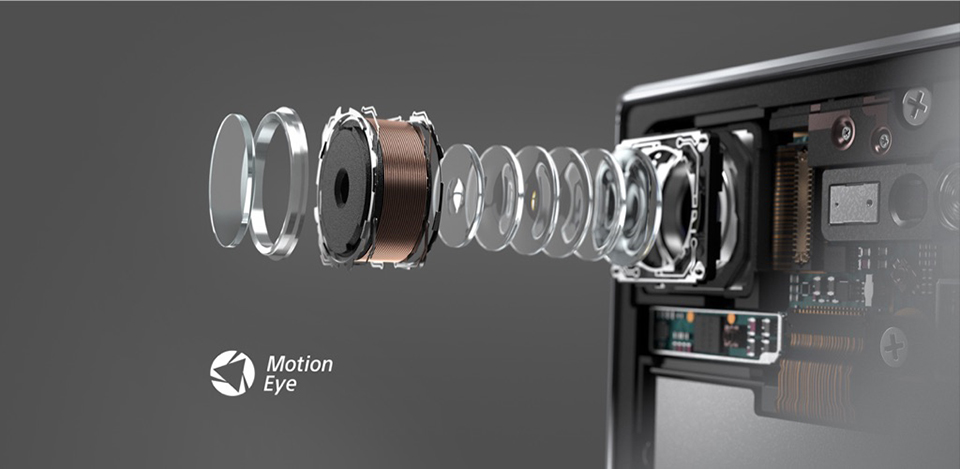
You can even make super slow-motion films with it at 960 frames per second.
Zooming in on the advantage of the compact camera
For now, the biggest advantage of a compact camera is its optical zoom. You want to get as close to your subject as possible, and zooming in is very important for that.
Modern compact cameras zoom in up to 30x with ease. With a little software assistance, even up to 60x. Who needs binoculars these days to spy on the neighbours? But is that really still an advantage?
In almost every other respect, smartphone cameras are completely up to date. In fact, if we look at DxO Mark, we see higher scores for smartphone cameras than for compact cameras costing between 500 and 800 euros.
But perhaps the biggest disadvantage of the compact camera is the worldwide web. Young people today do not care that you cannot zoom in. They are certainly not going to zoom in on that one church clock in the cityscape.
Every day, young people see hundreds of photos pass by on Instagram, Facebook, Twitter and Snapchat. They are not going to zoom in on all of them, and they often appear on 5.5-inch screens. The smartphone camera is perfectly suited to this and may even produce more beautiful and colourful images than the compact camera.
Professionals and the smartphone
As early as 2013, you could read about smartphone photography and smart tips for taking photos at Photofacts. The main shortcomings at the time were the lack of manual settings and stability.
It seems as though the manufacturers were reading along, because almost all premium flagships now have a Pro Mode in which photographers can adjust the settings to their heart's content. With the new HTC U11, you can take stable photos, but you can also make super-stable 4K films.
To give you an idea of what is now on the market and how professional photographers can really enjoy the possibilities offered by modern smartphones, here are two videos from professionals about the new Huawei P10 and iPhone 7 Plus.
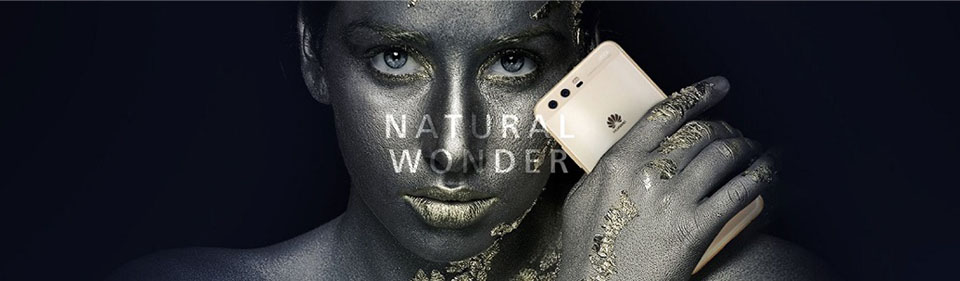
Huawei P10
The Chinese manufacturer Huawei has understood the importance of a good camera for years. It even struck a deal with one of Germany's best-known camera manufacturers, Leica. The two have already made three phones together, and the latest has three excellent Leica cameras.
Yes, even the selfie camera on the smart Huawei P10 is a Leica. The flagship has two f/2.2 main cameras, one with 20 megapixels and the other with 12 megapixels. There is phase detection and laser autofocus, image stabilisation and a dual-tone LED flash. You take selfies with the 8-megapixel f/1.8 camera.
It will not be long before the smartphone camera makes the compact camera completely obsolete. In the video above and below, professional photographers Manfred Bauman and Benjamin Lowy are happy to explain what you can do with the Huawei P10 and the iPhone 7 Plus.
About the author
Jasper van Wezel is redacteur bij de vergelijkingssites Telefoon.nl en Telefoonabonnement.nl. Schrijft graag over alles wat er speelt rondom mobiele telefonie en heeft een voorkeur voor smartphones met een kwalitatieve camera.
You might also like
-
 7 tips for photographing with a smartphone
by Nando Harmsen
-
 Is my smartphone replacing my system camera?
by Laura van der Burgt
-
 Review: Pictar grip for the iPhone
by Michelle Peeters
-
 Choosing between a camera and a smartphone
by Nando Harmsen
-
 Learn to film better with your iPhone
by Michelle Peeters
9 comments
-

 martinphili wrote on Wednesday 31 May 2017 at 11:40
| reply
The answer to the opening question will have to be Yes! I think the DSLR has also had its longest time in the same developments. Undoubtedly there will be photographers who will start shouting that the SLR will never be replaced by the smartphone, but perhaps those are the same people who shouted that the analogue camera would never be replaced by the digital one.
Translated from Dutch.
Precisely because the lion's share of the photos taken are no longer printed or even viewed on a computer screen, the future belongs to the phone. The best camera is the camera you have with you, after all.
Photography is changing, and it is doing so at a rapid pace. The sky is the limit. You'd better put your polarising filter on tight
-
 Robert wrote on Wednesday 31 May 2017 at 17:46 | reply
Smartphones are already being used for the covers of major international magazines. See recently singer Camila Cabello on Billboard (iPhone), plus footballer Messi on Esquire and pop star INNA on Elle (2x Huawei).
Translated from Dutch.
The photographer of the Billboard cover says that photographing with a smartphone works especially well with young people. They already take selfies with a mobile all day, so they don't feel intimidated at all during a shoot with a smartphone.
So yes, the compact has actually already been wiped out by the mobile camera. But the smartphone will also increasingly become an alternative tool for the pro, alongside his dSLR. -
 Eugène wrote on Thursday 1 June 2017 at 03:08 | reply
Canon and Nikon should really start producing smartphones instead of continuing to snore on shamelessly for ever. Sony has always proved to be more innovative. Nokia also just couldn't get off the wrong track, and we all know how that turned out. What probably none of the readers wants to hear is that the profession of professional photographer for private individuals has probably also entered its final period. The younger generation is more "do it yourself' in this area than ever before.
Translated from Dutch. -
guest wrote on Thursday 1 June 2017 at 10:32 | reply
When the end of the (D)SLR was predicted in 2004, those people were declared crazy. Compact cameras with small sensors would never achieve the quality of a 35mm sensor. And so far, that is still the case. The more pixels you cram onto a sensor, the more noise is your share.
Translated from Dutch.
In a smartphone there is an even smaller sensor. Would those things manage it then?
People who think that everything will always remain as it was are rarely right. The same goes for people who preach revolution with every development. Photography is not changing all that quickly. -
Robert wrote on Thursday 1 June 2017 at 11:30 | reply
@guest: Might be good to take a look at this little graph. It only goes up to 2015, but even then compact cameras, dSLRs and mirrorless cameras were dwarfed by smartphones.
Translated from Dutch.
There are now generations who have never used (and will not use) any other camera than the smartphone. They don't care about pixels or noise - instant sharing is what matters. That is an irreversible change in visual culture. Not from one year to the next. But it is happening fast. -

-
 Theotje wrote on Tuesday 6 June 2017 at 19:25
| reply
I bought the Nikon DF retro from 2013 on sale . The image quality is amazing and as long as I appreciate it myself, that's fine by me. I enjoy it.
Translated from Dutch. -
 geerjanssen
wrote on Wednesday 7 June 2017 at 11:53
| reply
I pointed this out years ago, but there is another important factor: that you enjoy photography!
Translated from Dutch. -
 info@trigona.nl
wrote on Monday 16 December 2019 at 09:28
| reply
The big advantage of a real camera for me is definitely the number of different lenses I can use. Besides that, a good /real flash is also unthinkable. Mirrorless cameras are also getting smaller and lighter, so the two are getting closer together. As a web designer, I am increasingly being offered photos from smartphones by clients for the website. Yet you can still see a difference in quality here.
Translated from Dutch.

Have your say
Please note: Articles older than a week can only be commented on by signed-in visitors.Would you still like to comment? sign in or create a free account.
Become a better photographer every week
A practical photography tip in your inbox every week.
38,766 photography enthusiasts already receive the tips! More about the weekly mail. Or keep up to date via  Facebook.

Elja Trum
Photofacts; everything to do with photography!
Would you like to take better photos and keep up with what is happening in photography? Photofacts publishes articles that teach you something about photography — from a product announcement to a practical shooting tip or a look at a website. Photofacts covers photography every day and is a hobby project of Elja Trum's that got out of hand. The articles are written by a team of volunteer authors. If you would enjoy writing one or more articles for Photofacts, do get in touch.More about PhotofactsPhotofacts is made possible in part by
